

创作上传
VIP
收藏下载
登录 | 注册有礼
查看完整案例

收藏

下载

分享

翻译
Architects:XXXI.studio
Area:71m²
Year:2025
Photographs:Francisco Nogueira
Category:Hospitality Architecture,Restaurant
Design Team:Carlos Aragão, Teresa Cayatte, Manuel Amigo.Constuction Team: Hugo Maia, Teresa Cayatte, Elena Rossi, Rafaela Marques
City:Lisboa
Country:Portugal

Text description provided by the architects. Lupita, now a Lisbon staple known for its high-volume, authentic Neapolitan pizza, has unveiled its latest architectural project. Following the success of their intimate, original location in Cais do Sodre (also designed by XXXI.studio), the new space in Alvalade transcends traditional restaurant layouts, whilst transforming the act of pizza-making into an honest, and compelling performance.

XXXI.studio prioritises conservation and adaptability by focusing on either preservation of original features or, when absent, inventing the magic of pre-existing beauty. This commitment supports ecological goals, ensuring flexible architecture that could host successive businesses without structural changes, instead each owner's identity is defined solely by moveable objects.

Driven by the need to support immense production demands, the design brief was singularly focused on operations. The environment was constructed to facilitate workflow, ensuring the space could manage the high volume required for both dine-in and takeaway. This focus was further refined after the client acquired a neighbouring shop, establishing a dedicated 'factory' for pre-production and storage, allowing the main space to be devoted entirely to a customer-facing experience.

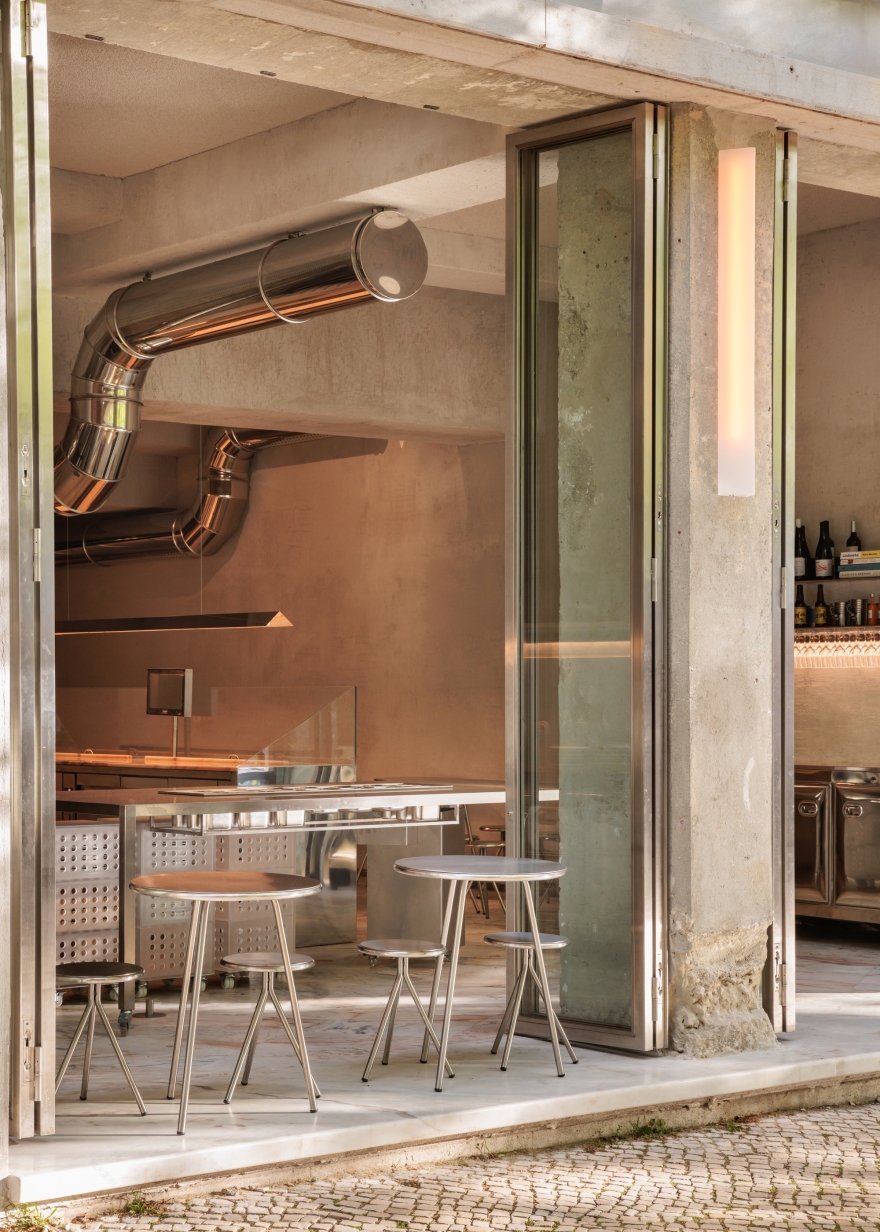
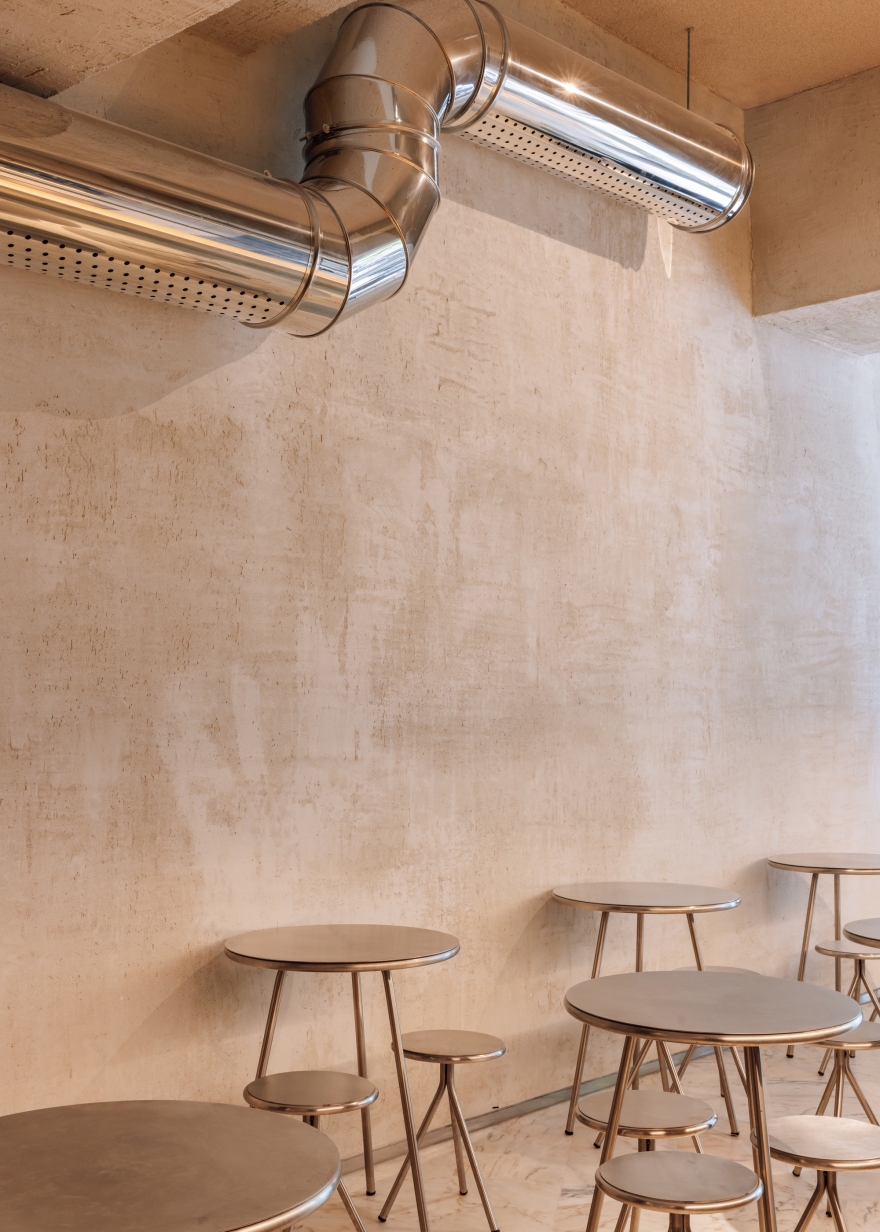
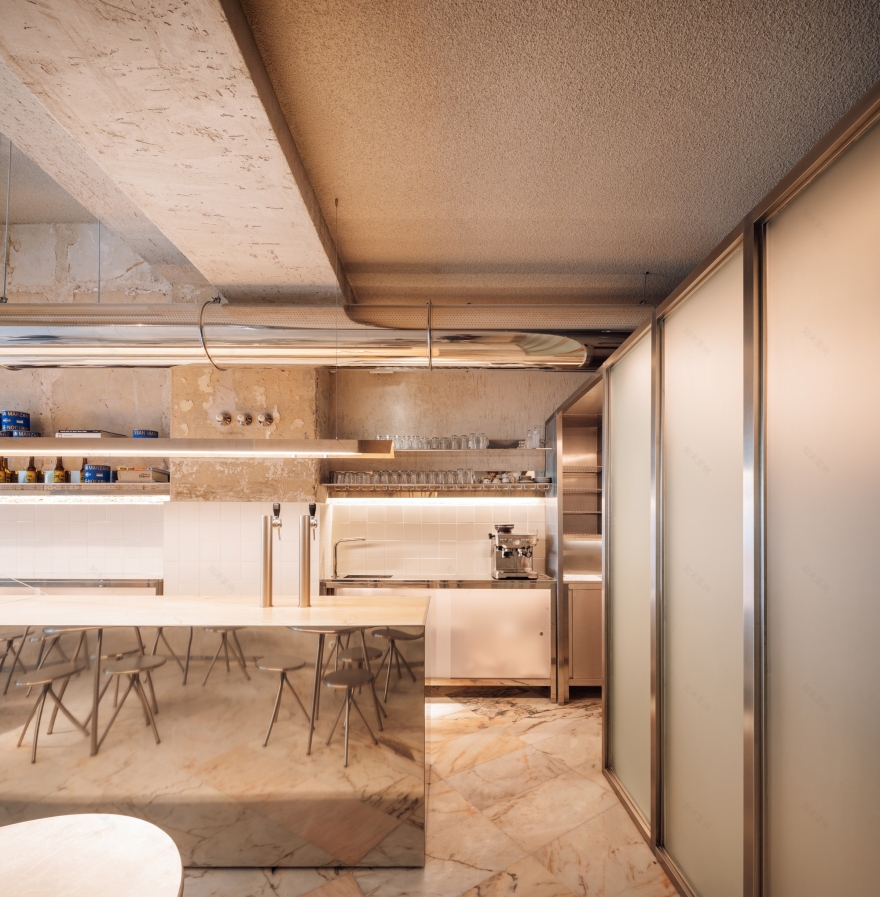
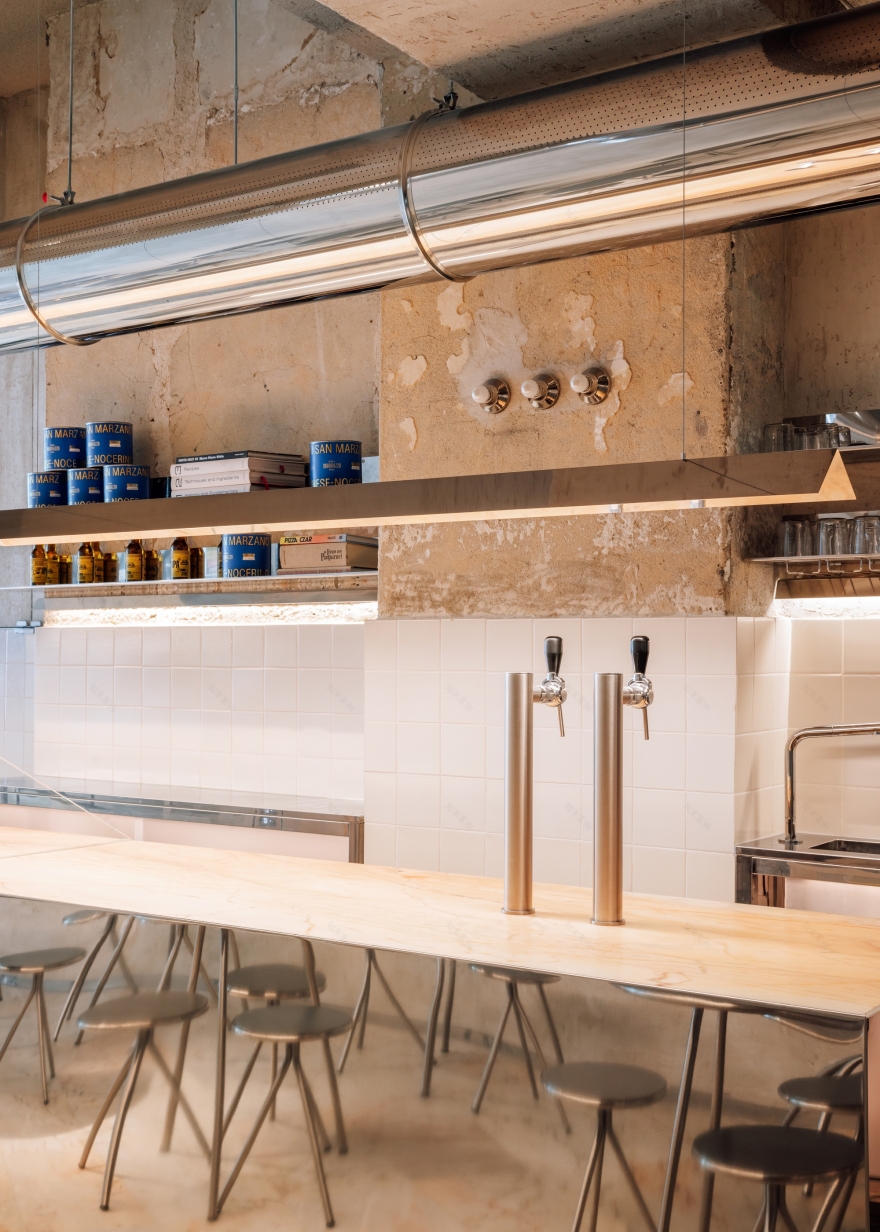
Internally, the design employs a strategy of deliberate simplicity. Despite significant technical challenges, the space presents a stripped-down room where stainless steel production counters are strategically placed for function. The 'effortlessly' placed long counter was specifically designed to answer to the multiple stages of pizza production, and contrasts with the raw, original walls behind it that were restored during the project. There is minimal seating inside, stainless steel tables and stools are placed inside and on the curb. This enables a totally open conversation with the customer, where the entire process of pizza-making is visible. Elsewhere, stainless steel walls wrap the bathroom, creating an unusual sense of warmth, whilst the custom-cut mirror provides a subtle nod to the food. A grid ceiling, inspired by the local area's 1960s history, casts warm light. This historical element contrasts with the modern stainless steel walls, chosen to endure high usage.


On a street of conventional commercial spaces, Lupita's design is a deliberate anomaly. The exterior features a fully open façade, a strategic choice that bypasses conventional commercial signage to achieve maximum street-level visibility. The facade also allows customers to immediately witness the design's material philosophy: a plethora of raw, unpainted materials - glass, concrete, steel, and marble - all visible from the street. The studio's classical principle to open all spaces as much as possible culminated in a restaurant that is completely open to the street. "When you walk by, it's like the rest of the street has stores and then this is a theatre," Carlos Moniz de Aragão, co-founder XXXI.studio.

This transparency cements the project as a case study in how design can enhance operational flow and build an authentic brand narrative.

Project gallery




南京喵熊网络科技有限公司 苏ICP备18050492号-4知末 © 2018—2020 . All photos and trademark graphics are copyrighted by their owners.增值电信业务经营许可证(ICP)苏B2-20201444 苏公网安备 32011302321234号
苏公网安备 32011302321234号客服
消息
收藏
下载
最近