

创作上传
VIP
收藏下载
登录 | 注册有礼
查看完整案例

收藏

下载

分享

翻译
Architects:Hinzstudio
Area:284m²
Year:2025
Photographs:Quang Trần
Category:Houses
City:Ho Chi Minh City
Country:Vietnam

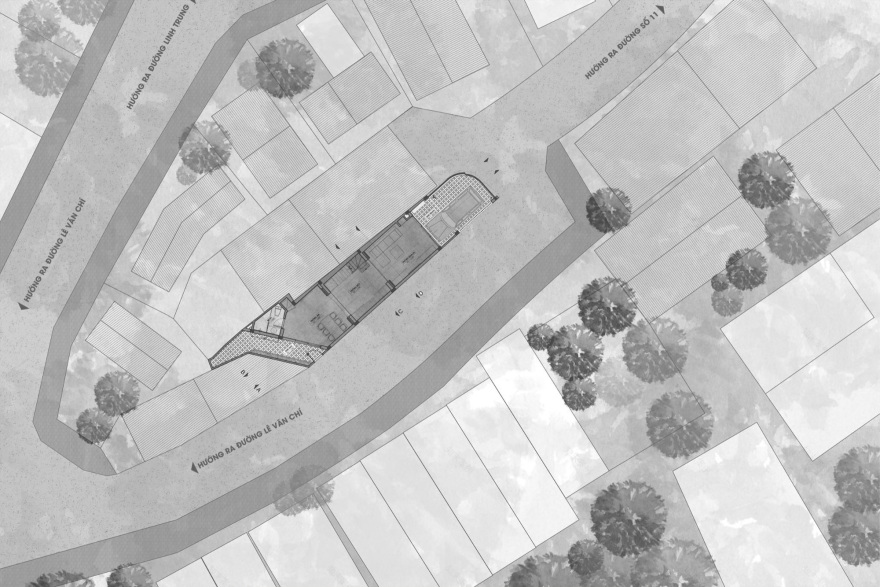
Text description provided by the architects. The project explores spatial organization as a way to nurture family connection and faith within everyday life. The house is situated on a 4 × 20 meter plot that gradually narrows toward the rear, presenting familiar constraints of Vietnam's tube houses: a deep, elongated layout with limited access to natural light and ventilation. The building has only two open sides: an east-facing frontage that receives morning sunlight and a side façade bordering a narrow alley, offering an opportunity to introduce additional daylight into the interior.

The clients are a young Catholic couple with two daughters, seeking a home that goes beyond basic living requirements to become a shared environment where daily routines and spiritual life can coexist and be continuously nurtured.

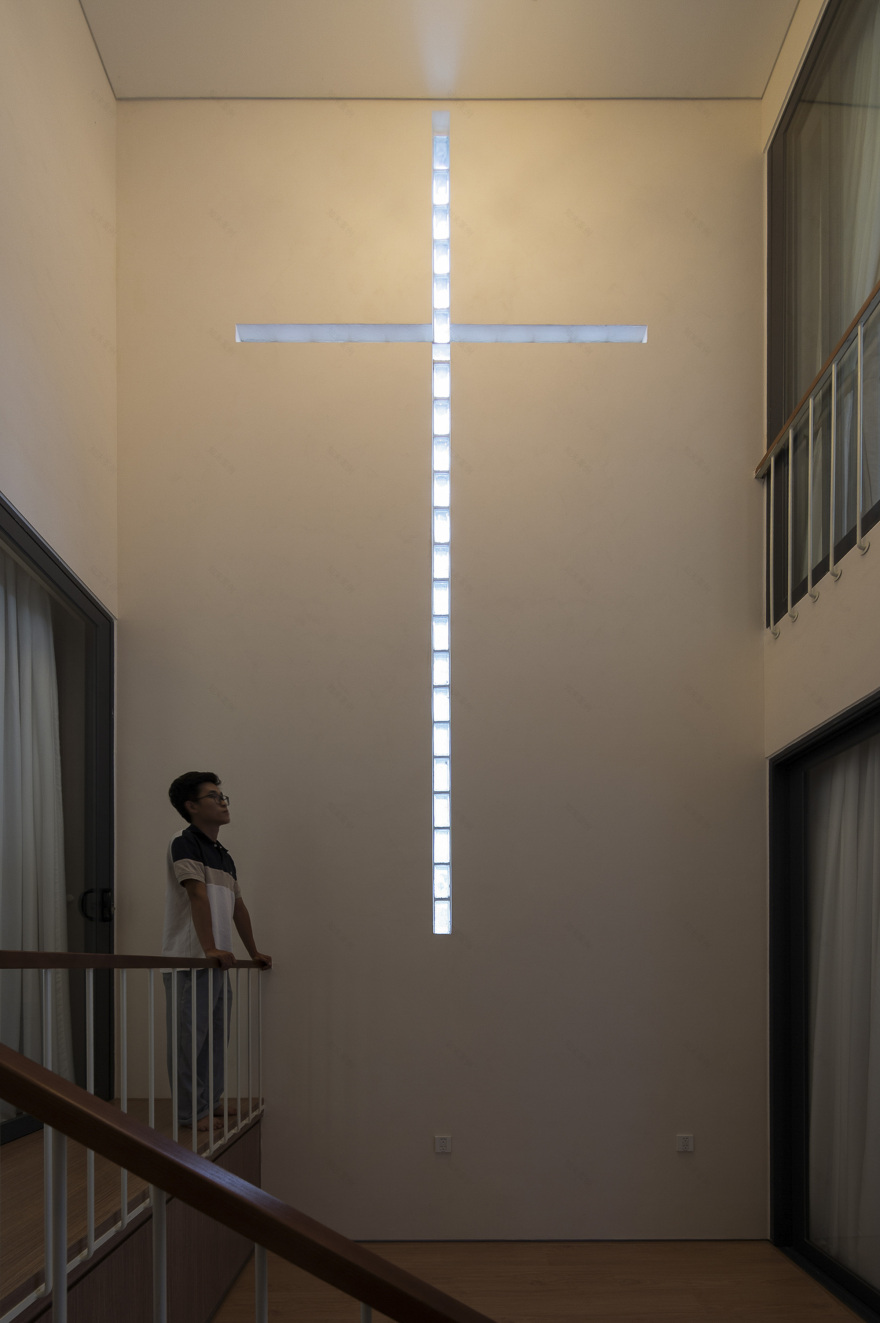
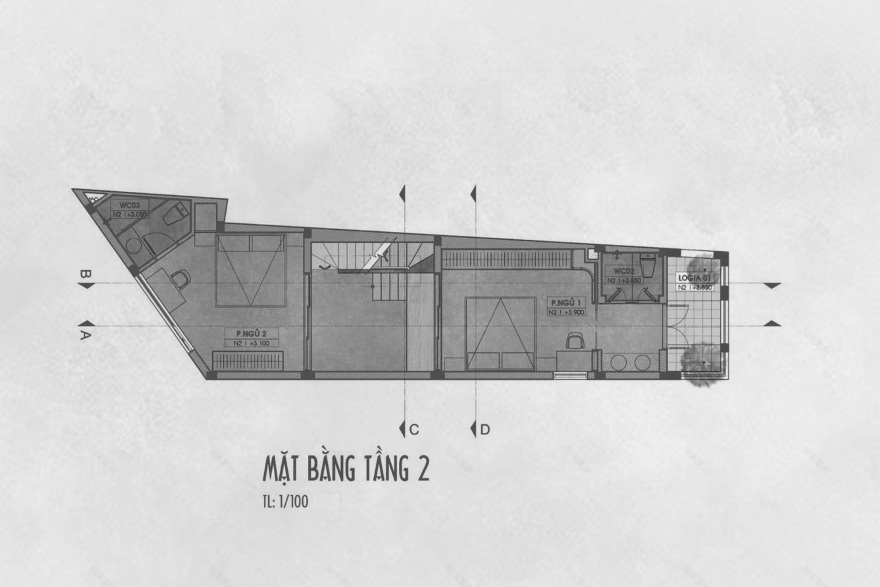
Spatial Organization – The design prioritizes continuity and connection among family members. On the ground floor, the living room, kitchen, and dining area are arranged as a continuous sequence. The second floor adopts a split-level configuration, creating a shared landing between the parents' bedroom and the children's rooms. Glass door systems are used for the bedrooms to extend visual openness and encourage interaction, while still allowing spaces to be enclosed when privacy is required. This shared landing becomes the focal point of the house, accommodating prayer, study, and everyday activities, and is marked by a large cross as a central spiritual symbol.


Daylight, Ventilation, and Vertical Connectivity – The narrowed rear portion of the plot is transformed into a small garden, creating a setback that brings daylight and airflow deeper into the interior while offering a calm view for the dining area. On the upper levels, floor areas are reduced to essential circulation paths, forming a vertical void that directly connects to the shared landing. Along this void, a system of glass blocks is arranged to form a cross-shaped composition, allowing soft daylight to filter through while establishing a spiritual focal point visible from multiple spaces throughout the house.


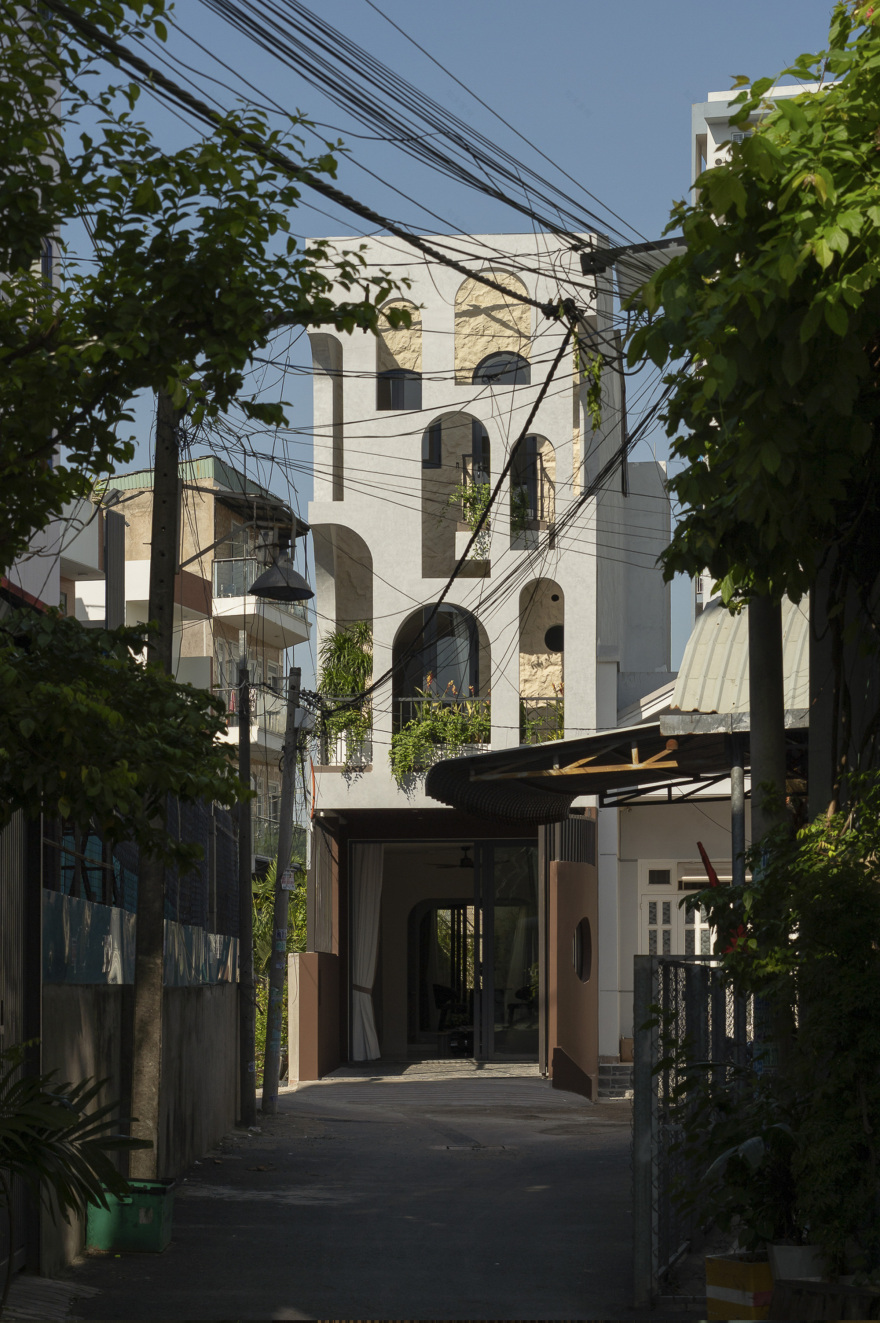
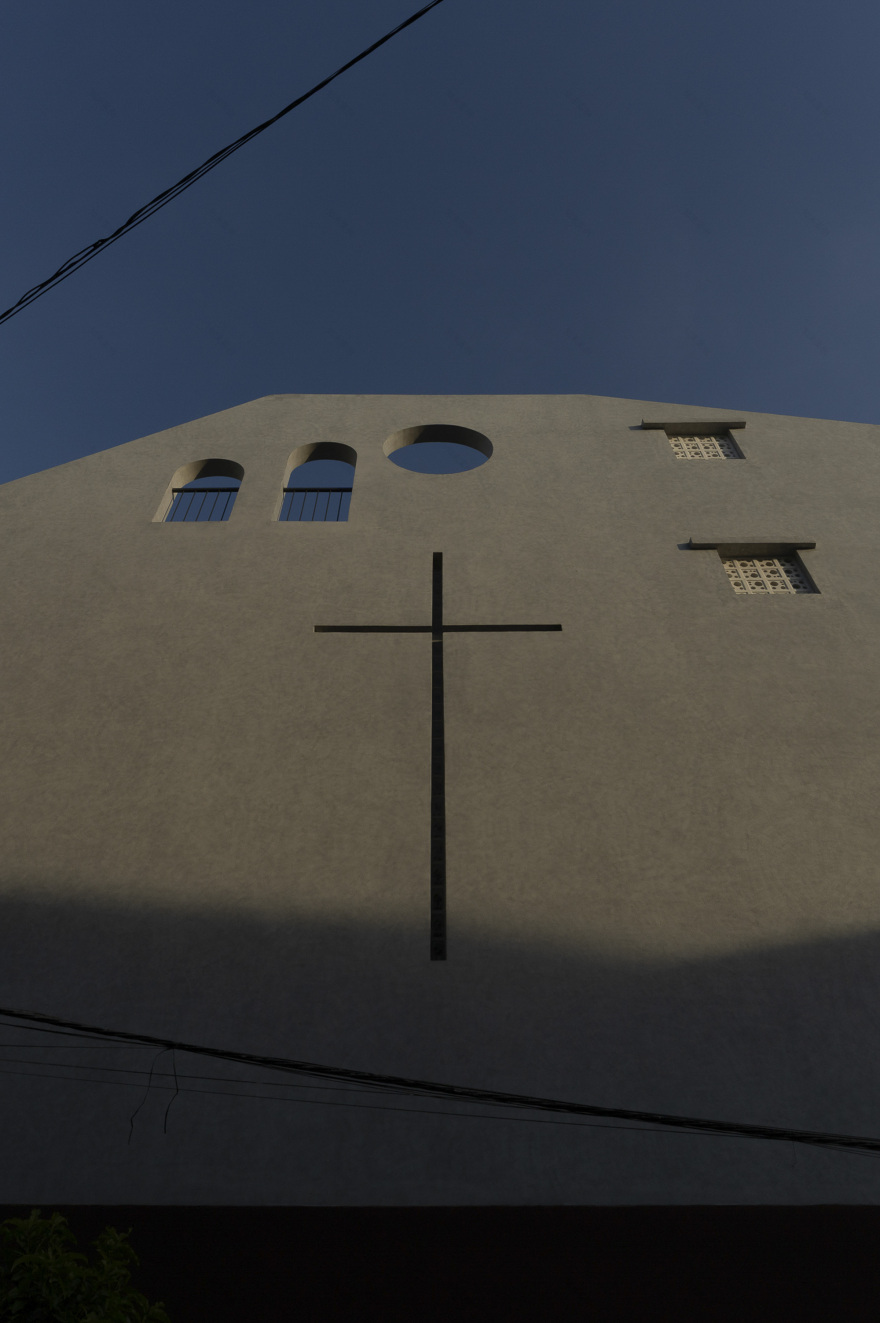
Façade Strategy – Due to the east-facing orientation, the master bathroom is positioned toward the front rather than in a concealed corner, as is commonly seen. This arrangement allows the space to receive morning sunlight for natural ventilation while reducing heat gain in the rooms behind.The façade employs a double-layered structure: an outer screen composed of arched elements and details that reference religious architecture. This layer filters daylight, provides privacy, promotes airflow, and mitigates heat gain. The arched elements are constructed using a combination of brickwork and in-situ concrete formwork, ensuring structural stability and long-term durability.
Material Palette – The selected material palette includes steel, wood, ceramic tiles, and terrazzo, contributing to a warm atmosphere that aligns with the home's calm and contemplative character. By aligning spatial organization with the family's lifestyle and spiritual needs, the project creates an environment that encourages communication and connection. The house not only addresses the constraints of a challenging site but also supports the continuity of family values and spiritual life through everyday living.

Project gallery







南京喵熊网络科技有限公司 苏ICP备18050492号-4知末 © 2018—2020 . All photos and trademark graphics are copyrighted by their owners.增值电信业务经营许可证(ICP)苏B2-20201444 苏公网安备 32011302321234号
苏公网安备 32011302321234号客服
消息
收藏
下载
最近