

创作上传
VIP
收藏下载
登录 | 注册有礼
查看完整案例

收藏

下载

分享

翻译
Architects:Patrick Arotcharen Architecte
Photographs:Mathieu Choiselat,Sandrine Iratçabal,Jean-François Tremege,Agnès Clotis,Cléa Meksvanh,Pierre Chambion
Category:Stadiums
City:Bayonne
Country:France
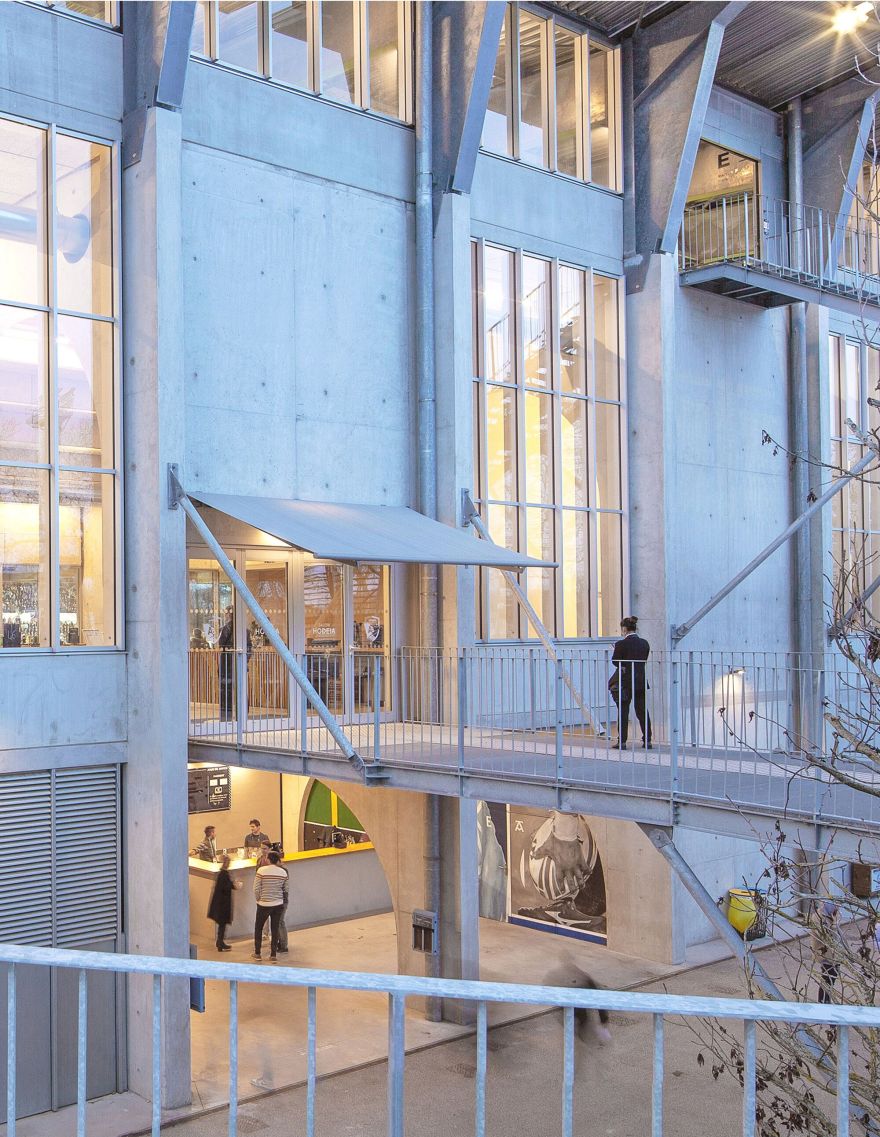
Introduction — The redevelopment of the Jean Dauger sports complex is an integral element in considering Bayonne's green belt. Reclaimed from ground originally used for military manœuvres and occupied by moats at the foot of the ramparts, this green space, with pleasure gardens and open-air sports facilities, has benefited from its historic and cultural status, giving it a sense of significance and protecting it from invasive urban development.
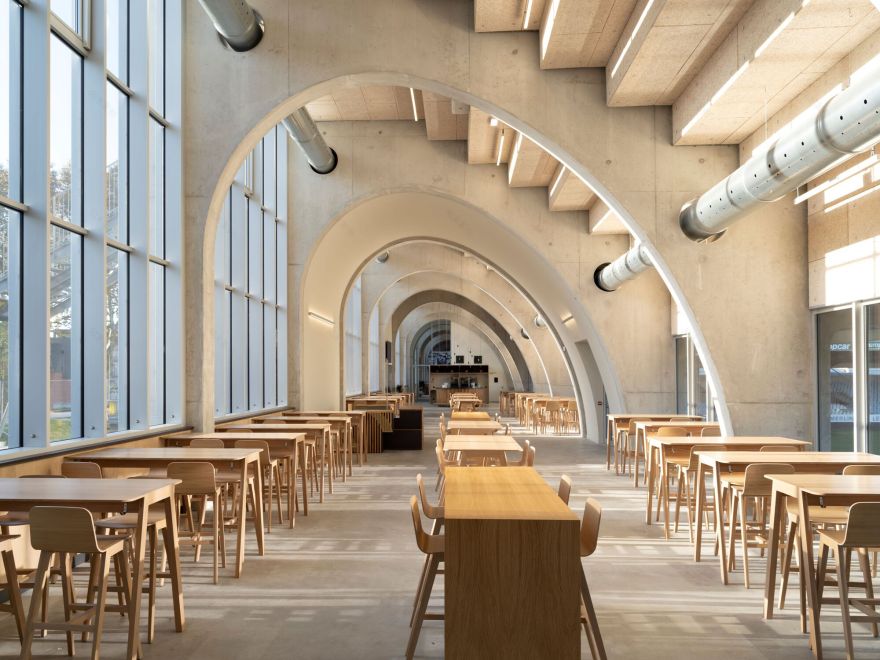
This status has also helped to establish it as an urban divide between the old town and the surrounding neighbourhoods. Today, as cycle and pedestrian routes are given pride of place in urban development and transport projects, and green cooling islands are recognised an essential ingredient to comfortable city living, this green belt is more relevant than ever. It is being reclaimed by pedestrians and cyclists who cross or skirt it in its leafy shade. The Jean Dauger sports ground is an integral part of this green belt, forming its southern section.

Each individual project in this area is part of an overall strategy aiming to facilitate active transport along and through the sports facilities and in their surrounding parkland, as well as to create public space around the edges. The idea is that when they are not being used during the rugby season, the stadium's stands and their annexe buildings should be used for urban life.

The concept of a park — The Jean Dauger sports complex is first and foremost a sports facility set within a green space connected to the historic old town and in the centre of the city. Its urban and landscaping features make the rugby stadium a unique setting for sporting events and the vibrant atmosphere that they generate.

The rugby stadium — The project transforms a stadium based on the geometry of cycling and athletics tracks encircling a rugby pitch, into a 'cauldron' type stadium. The distance between stands and pitch is reduced to a minimum for a more intense atmosphere and relationship between players and fans. This transformation has been achieved by preserving the original stand, the 'grandstand', to which the pitch comes closer, and grouping the stands on the other three sides as close as possible to the touch lines and dead ball line This centripetal approach frees up space behind the stands, which has been used to create a park, public areas to welcome spectators to games, and raised walkways on the embankment around the stadium.

Built on slightly sloping ground running south–north, the stadium's relationship to its surrounding landscape is perceived differently depending on orientation. The collective memory retains the image of a ground enclosed by the slopes of the cycle track, placing spectators above the playing field. The new project takes advantage of this elevated position of the stand on the south side and introduces a peripheral embankment, thereby reducing the perceived height of the stands as seen from the surrounds and reducing its impact on the public space.

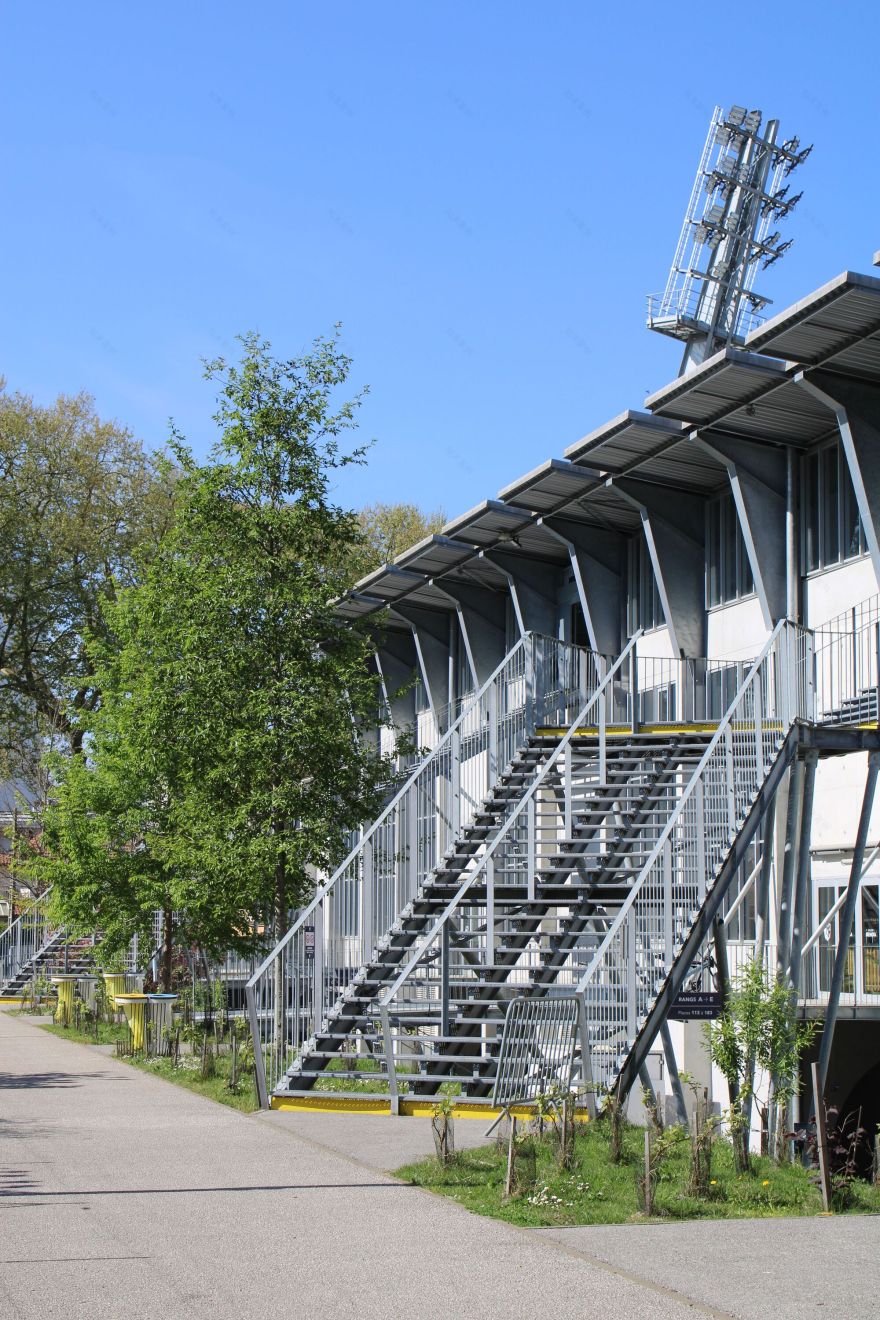
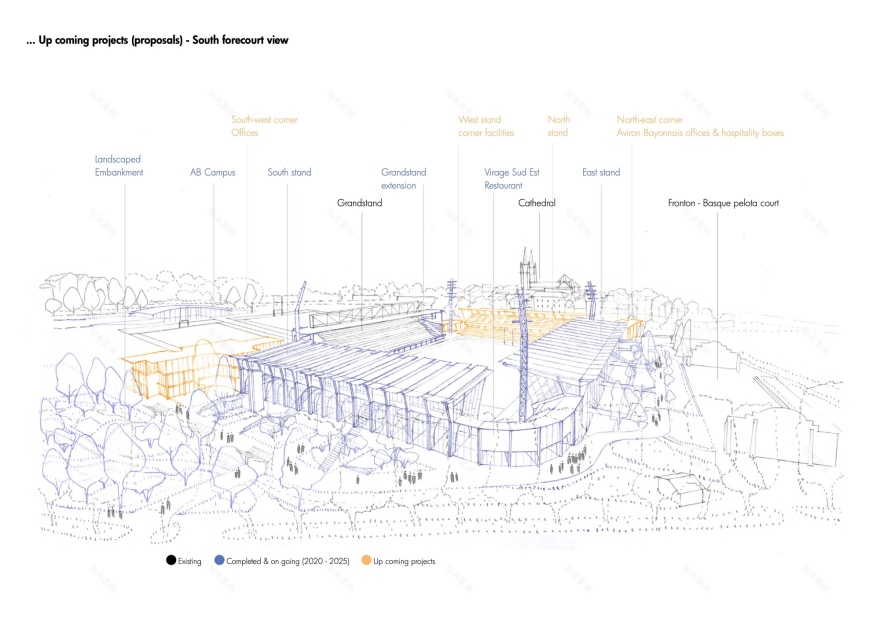
East stands + Embankment — To break with the usual design of stands, which houses the vertical circulation within the depth of the structures and terraces, the stairs and walkways providing access to seating are placed externally. They rise through the foliage of the trees in the park on spidery metal structures. The forecourts and embankments, which service the entrance points, are enlivened by the surrounding architectural and vegetal profusion, as well as by the activity glimpsed through the windows of the stands, establishing links between the stadium and the city.

The aim here was to open the stands up to a potential variety of uses and create a place for people to congregate, for festivities and conferences, so extending their use beyond rugby matches. The interior spaces thereby opened up, visible from both the park and the pitch, are contained between powerful arches in exposed concrete. This display of the stands' structures and innards, combined with the play of lightweight structures within the foliage, creates a succession of visual planes of the stadium and its stands through the park.

East stands — The new stands are all identical, based on a system of indented structural elements supporting the terraces. They are very upright in appearance, and the effect of overhanging the pitch is accentuated by increasing the height/width ratio of the terraces. The stands are composed of a lower terrace and a balcony supported by transversal walls, which are perforated with asymmetric arches that rhythm the interior space beneath the terraces.
South stands + South-east corner — The south stand offers lower terraces which are dug out below the natural surface level and Avenue du Docteur Léon Moynac. At balcony level, the hospitality lounges overlooking the pitch connect directly with the public space at street level. Glazed in order to be visible from the park and the pitch, the hospitality lounges benefit from the majestic arcades that support the upper terraces.

This sequential reading from the public space of the different layers of forecourt, hospitality suites and pitch, creates an urban event for pedestrians or cyclists as they pass beneath the great plane trees along the avenue. The curved form of the south-east corner links the hospitality suites of the east and south stands. It houses a restaurant, which in cross-section continues the line of the arcades supporting the upper stands. The resulting vaulted volume liberates visibility of the glazed screens in the end walls of the stands.
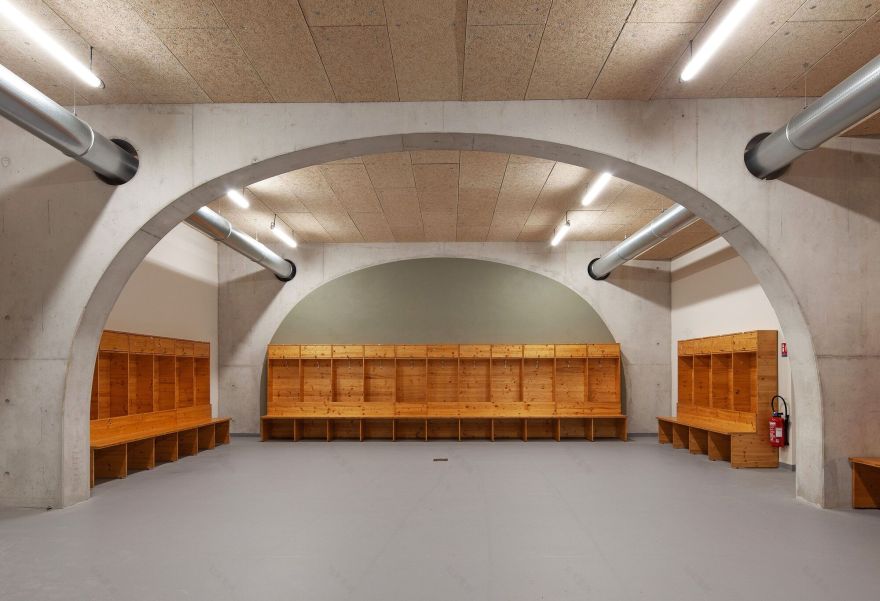
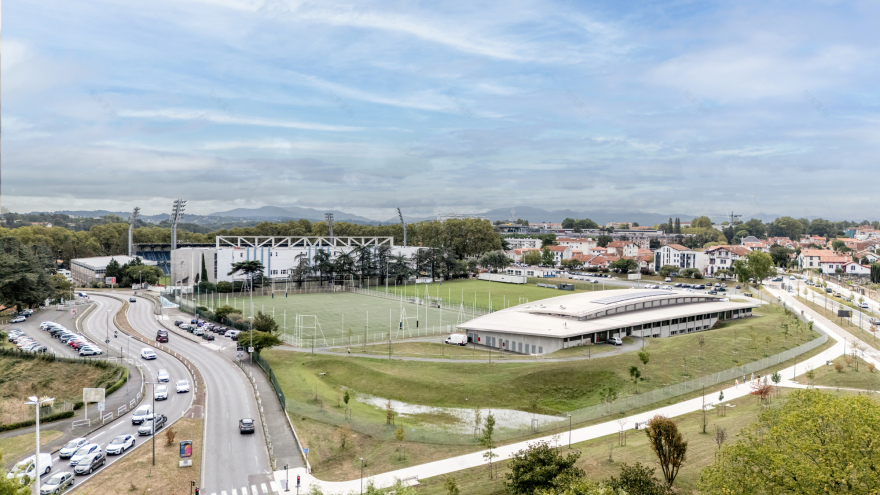
AB Campus — This project is situated on the western edge of the Jean Dauger sports complex and is part of the redevelopment of the stadium and its surroundings. The AB Campus is home to the training and performance centre for the Aviron Bayonnais rugby players, accommodating both amateur and professional players under the same roof. Organised around a large covered hall, it houses training, weight-training, fitness and leisure facilities, as well as medical treatment facilities for players. These include a balneotherapy centre, physiotherapy rooms, changing rooms and showers/toilets. Upstairs, the project incorporates office space, workspaces for the coaching staff, and a canteen with kitchen for players and coaching staff. The building moves away from pure architectonic expression to form a vault, whose form accompanies the urban landscaping project of the city's dedicated bus lane.

It is integrated into a series of landscaped mounds along the route, echoing their curve and bulge, replacing their green lawned surfaces with the sheen of metal. This effacement of architecture in favour of landscape allows the force of the original grandstand to emerge within the urban environment, with in the distance the cathedral spires and the outline of the ramparts. The trees that have been planted along the cycle paths and pedestrian walkways form a canopy that extends the green belt, the moats and the Avenue des Allées Paulmy. The project is based on the idea of lowering the sports ground to below the level of the urban transport network. It aims to conceal the built mass seen from the west, but is visible to visitors from the rugby grounds to the east. Seen from this direction, a single large roof structure envelops all the constructions, revealing the large covered hall at its centre.

The architectural language is of an absolute simplicity, marrying raw concrete and natural wood with masonry painted dark green, beneath a large aluminium roof. This restraint in architectural expression enhances the reading of the project within the landscape, avoiding any decorative or striking effects that would disrupt its simplicity.

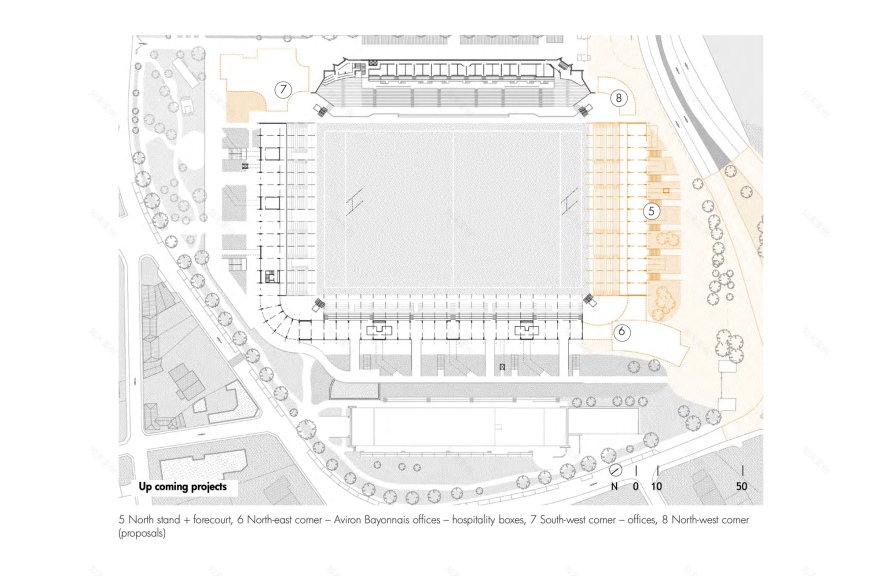
Projects — While the overall stadium project has been conceived to ultimately increase capacity from 13,500 to 16,500 spectators, it has been carried out in phases, stand by stand, corner by corner. This decomposition into a series of completed and interconnected objects has been guided by the budget available at a given moment, as well as the uncertainties of the future, avoiding completing a project that requires a sequel to make sense.

From east to north, the first level of the stands looking over the embankment houses commercial units and, in the future, is set to accommodate a higher education facility that will confer a new status to the terraces.

Project gallery






南京喵熊网络科技有限公司 苏ICP备18050492号-4知末 © 2018—2020 . All photos and trademark graphics are copyrighted by their owners.增值电信业务经营许可证(ICP)苏B2-20201444 苏公网安备 32011302321234号
苏公网安备 32011302321234号客服
消息
收藏
下载
最近