

创作上传
VIP
收藏下载
登录 | 注册有礼
查看完整案例

收藏

下载

分享
天府人居馆是2024年成都世界园艺博览会的主要场馆之一。世园会选址于东部新区开阔的平缓浅丘之中。人居馆作为其中天府展区的中心建筑,将集中展示成都平原的自然与人居的关系。“人居”意味着人工居所、自然生态与社会文化的综合呈现,特别对于成都这样以宜居闻名的地方,如此广博的内容几乎不可能仅依靠一个单体展馆来整体包络,传统静态的展陈方式也是失效的。人居是鲜活的现实而不是静态的标本;因此设计任务书被转译为如何创造一个容纳生活的场所容器,而不是孤立的建筑物。四川传统院坝成为空间赋形的原型,建筑不再是一个独立于环境的体量,而是首先被拉长——成为线性的长廊,再外推到红线边界,以围出一个尽可能大的场域,让生活与自然在其中彼此滋养。
The Tianfu Habitat Pavilion serves as one of the principal exhibition venues of the International Horticultural Exhibition 2024 Chengdu. Situated on a site encompassing a gentle hill, the pavilion integrates seamlessly with the natural topography through a design that employs circular courtyards to define spatial zones and highlight aspects of local cultural life. The architectural expression prioritizes experiential engagement over spectaclebuilding, directing attention toward the curated scenes unfolding within the courtyards.
▼项目概览,overview of the project© 存在建筑

▼项目鸟瞰,aerial view of the project© 存在建筑


人居馆用地面积约4.3万平方米,地界范围内有一处小山丘。设计完整地保留了原始地形,顺应高差用倾斜的环形院子围合场地,成为一个微缩的盆地景观,容纳地方生活的展示。任务书中的功能被置换为人的活动,所有的展览都构想为一种互动式的现场体验,都尽量在户外和半户外进行——民俗表演、非遗展示、特产销售……以再现四川温和气候下的户外生活传统。考虑到世园会期间的服务配套与闭幕以后的永续利用,一半的建筑面积被设计为精品民宿酒店,作为可居的场所,提供在地居住的体验。其余的室内小展厅,连同周边的环廊空间都在会后转换为民宿的配套,避免建筑空置。建筑环形构图来自于对“成都”的抽象描摹:从四川盆地到市区地图,从火锅到盖碗茶,从熊猫到太阳神鸟,如果要用一种形态来诠释成都,那一定是“圆”。设计用三个相互交织的圆环,构建出代表成都的三处情景空间——院坝,荷塘与竹山。圆环的围合致敬了家琨老师的西村大院:一个微缩的四川盆地,一个放大的成都火锅。
A recurring motif throughout Chengdu’s geographyand cultural landscape—the circle—serves as the foundational concept for the pavilion’s design.From the Sichuan Basin to maps of Chengdu, from communal hotpot to the traditional covered-bowl tea ,thecircleform emerges as a unifying symbol.This conceptual framework is materialized through three interlocking circular rings that generate distinct symbolic spaces representing Chengdu—courtyard, lotus pond, and bamboo hills. The circular courtyard draws inspiration from Mr. Liu Jiaqun’s Xicun Courtyard, evoking both a miniature representation of Sichuan Basin anda magnified Chengdu hotpot, thereby reinforcing cultural continuity through spatial typology.
▼交织的圆环,interlocking circular rings © 存在建筑

院坝 Courtyard
围院而居,是川西民居的传统。多元的活动以院坝为核心展开,环形建筑圈起来的院坝成为生活百态的展示地,提供“观、听、品、登”的游历体验。
The courtyard represents the archetypal spatial organization of residential architecture in Western Sichuan. At the pavilion, this typology is reinterpreted to facilitate immersive experiences centered on viewing, listening, tasting, and ascending.
▼环形建筑,circular building © 存在建筑

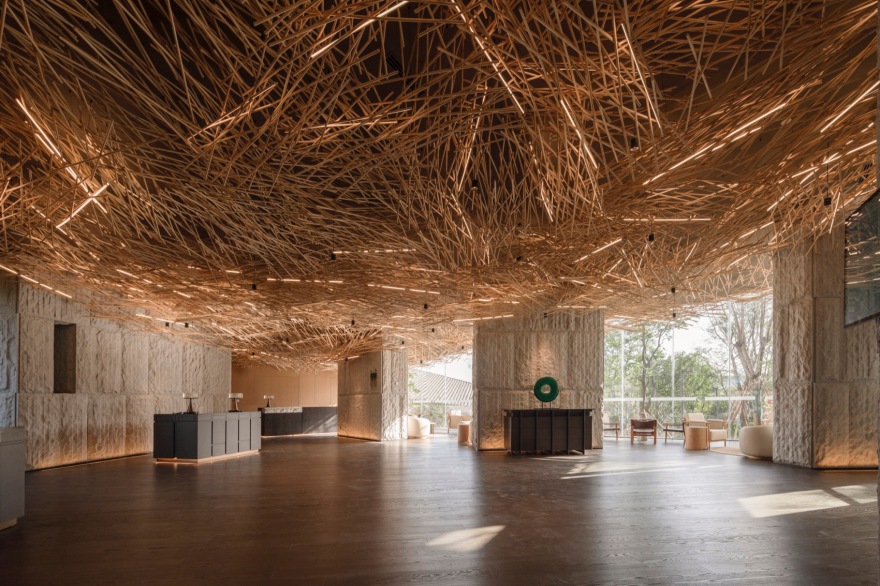
“观”——室内小展厅为呼应圆环屋面的扇形平面,也是展示区唯一提供空调的空间。钢结构的无柱房间为日后灵活使用提供了便利。房间吊顶的形态参考了四川特色的竹编,错位排列的折面铝板形成交织起伏的肌理,从室内延伸到室外廊道,成为空间的背景。
Viewing—Indoor Exhibition Hall
The fan-shaped exhibition hall aligns geometrically with the overarching circular roof structure. Its large-span steel framework ensures structural efficiency and adaptability for future functional requirements. The ceiling design references traditional Sichuan’s distinctive bamboo weaving techniques, employing folded aluminum panels to create an interwoven texture that extends visually from indoors to outdoors, enhancing continuity between built and natural environments.
▼室内小展厅,Indoor Exhibition Hall © 存在建筑

▼编织吊顶,Woven ceiling

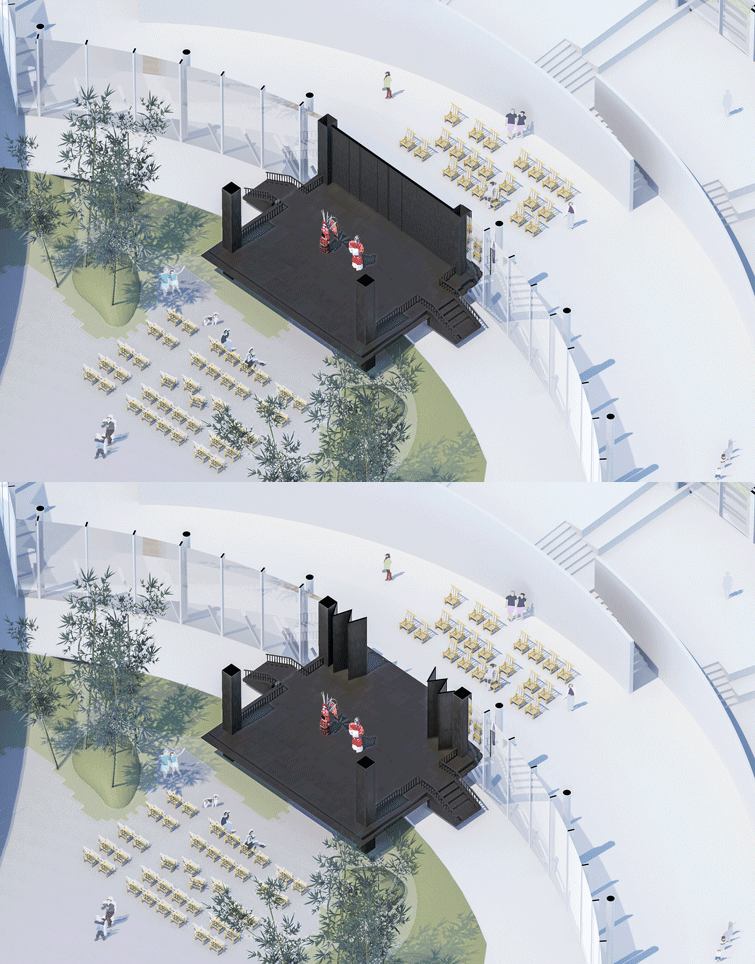
“听”——小展厅面向院坝一侧设有双向开合的戏台,满足不同天气条件下,举办室内或者室外曲艺的演出。黑色的亭式舞台参考了地方戏台型制,折叠的金属推拉门实现了内外舞台的分合。▼双向开合戏台,dual-directional stage©中国建筑西南设计研究院有限公司
Listening—Sichuan Opera and Storytelling
A dual-directional stage opens toward the courtyard, allowing performances to unfold indoors or spill into the open air. Whether under shelter or beneath the stars, the haunting melodies of Sichuan opera and the rhythmic cadence of storytelling echo through the space, preserving oral traditions in a dynamic setting attuned to shifting weather and moods.
▼院坝局部书画展,A partial calligraphy and painting exhibition in the courtyard© 刘艺

“品”——林下喝茶是川西常见的生活场景。考虑到世园会在夏季举行,需要更多遮阴的空间。设计以成都著名的鹤鸣老茶馆为原型,周边长廊环绕,中间院坝种下一片竹林,林下放满高背竹椅,游客在此悠闲品茶,成为世园会一处安逸的休憩避暑空间。
Tasting—Bamboo Tea Room
Modeled after Chengdu’s famous Heming Teahouse, the tea room provides a culturally resonant environment where visitors can watch Sichuan opera face-changing within a bamboo-enclosed courtyard space, or sip tea along the surrounding circular veranda. This arrangement offers a tranquil retreat within the broader exposition context, promoting relaxation and cultural immersion.
▼茶馆,tea room © 存在建筑


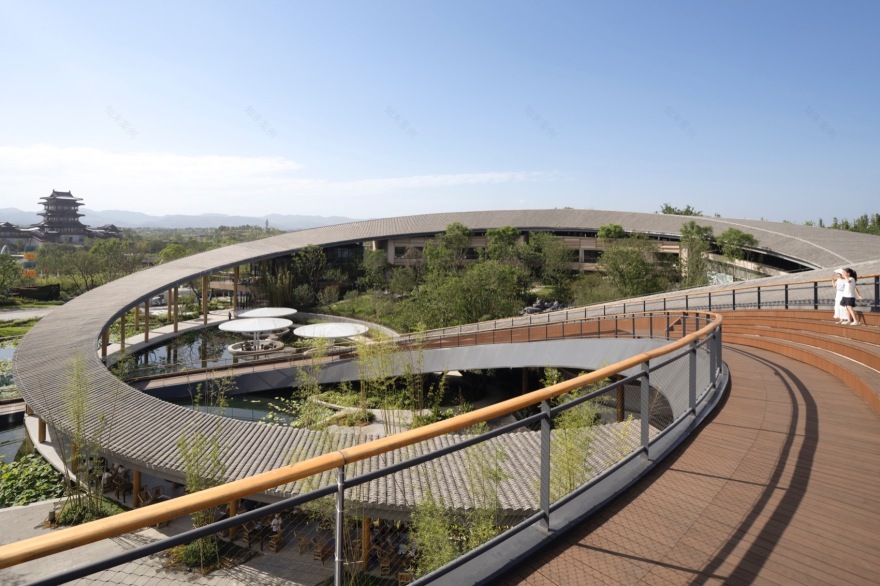
“登”——环形的屋盖倾斜接地,形成一个通往天空的圆环,小青瓦覆盖的屋面宛如人工的小山,其间留出一条步道,游客可从地面沿着环形台阶缓缓而上,登顶远望,打卡留念。斜面交织的屋顶环环相扣,提供了步移景异的丰富视角,水平的院坝转换为立体的园林。
Ascending—Rooftop Pathway
The inclined circular courtyard transitions gradually into an elevated pathway, guiding visitors to leisurely ascend along the winding path, enjoying panoramic views and capturing memories.
▼环形台阶,winding path © 存在建筑
荷塘
Lotus Pond
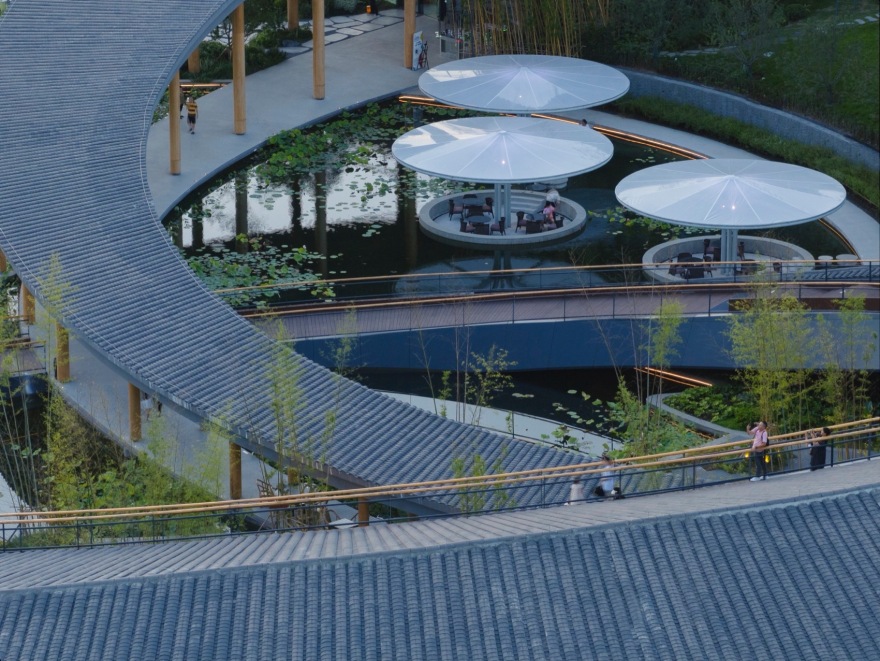
荷塘是成都乡郊的常见景观。设计将其收纳于场馆之中,以水为院,以荷为景,形成“长廊”与“浮岛”的特色场景。“赏”——圆形水池是诗意之镜,盛满荷塘的秀色与清风,环形长廊跨越水面,游客穿水而过,如鱼儿游戏于荷叶之间,也可临池而坐,品茶观荷。
The lotus pond embodies a quintessential feature of Chengdu’s rural scenery. The design uses water to form a courtyard and lotus to create a scene, resulting in distinctive “corridor” and “floating island” features. Appreciating—Moonlit Lotus Pond A slender corridor glides over the water, inviting visitors to go across, or to sit beside the lotus, and lose themselves in the hush of rippling reflections.
▼“长廊”与“浮岛”,“corridor” and “floating island” © 存在建筑

“享”——荷塘中漂浮着几处浮岛,以圆形汀步相连。荷叶般的凉亭覆盖着轻盈的ETFE膜。作为民宿餐厅的外摆区,浮岛提供水中品尝火锅美食的体验。廊、亭建筑与荷塘景观彼此交融,人工与自然的和谐是天府人居的真意。荷塘不仅是诗情画意之地,也兼顾场地雨水的收集调蓄与蒸发冷却,改善人居馆的环境微气候。
Enjoying—Floating Island Hotpot
Circular floating platforms, designed to resemble lotus leaves, function as outdoor dining areas for the adjacent restaurant, where guests can enjoy hotpot delicacies on waterborne islands.
▼荷塘,lotus pond© 存在建筑

山居
Mountain Retreat
考虑会后的持续运营,依山而建的环形民宿围合了一座“竹山”。竹是四川的代表性植物。以竹成山,配以多彩叶林的点缀,营造出地域特色的生态景观。
Anticipating post-expo utilization, a series of circular inns are integrated into the hillside, ensuring long-term functionality. Bamboo, being a representative plant of Sichuan, forms a mountain landscape complemented by colorful foliage, creating an ecosystem unique to the region.
▼竹林,bamboo forest

“栖”——民宿环抱山林,与院坝展区动静分离。客房采用宽厅布局,室外附带庭院和阳台,以最佳的视野收纳景致,体验山居生活。
Resting—Mountain Living
Tucked deep within the forest, the inn embraces the forest, offering separation from the exhibition area. Spacious rooms frame breathtaking views of emerald bamboo hills, their large windows dissolving the boundary between interior comfort and wild serenity.
▼民宿内环,The inner ring of the homestay

▼客房,Spacious rooms © 存在建筑

“泡”——沿山林高差,将人工温泉引入其中。溪流蜿蜒向下,沿途设置了室外泡池和室内水疗,冬日泡汤,夏日玩水,体验微度假生活。
Soaking—Bamboo Forest Hot Springs
A man-made stream winds down the slope, threading through secluded outdoor soaking pools and intimate indoor hot springs. Guests can relax in warm baths in winter or enjoy refreshing dips in summer, experiencing Chengdu-style mini-vacations.
▼温泉,hot spring© 建筑学长

圆、院、源、缘
Circle—Source—Courtyard—Bond
天府人居馆的设计用一种轻松安逸的态度,一种集锦式的场景拼贴,传递成都在地的生活方式和价值观念。这里重要的不是建筑本身,而是其中容纳的生活——以“圆”筑“院”,以生活之“源” 塑造成都之“缘”。
Through a deliberate integration of circular geometry and vernacular spatial principles, the design enables visitors to engage with Chengdu’s cultural “source” through the contemporary manifestation of the “circle.” By reinterpreting the “courtyard” as “circle,” and positioning the international “horticultural” exposition as a platform for global connection, the courtyard establishes a meaningful “bond” between tradition, place, and international exchange.
▼总平面图,Master plan© 中国建筑西南设计研究院有限公司

▼一层平面图,groung floor plan©中国建筑西南设计研究院有限公司

▼二层平面图,first floor plan©中国建筑西南设计研究院有限公司
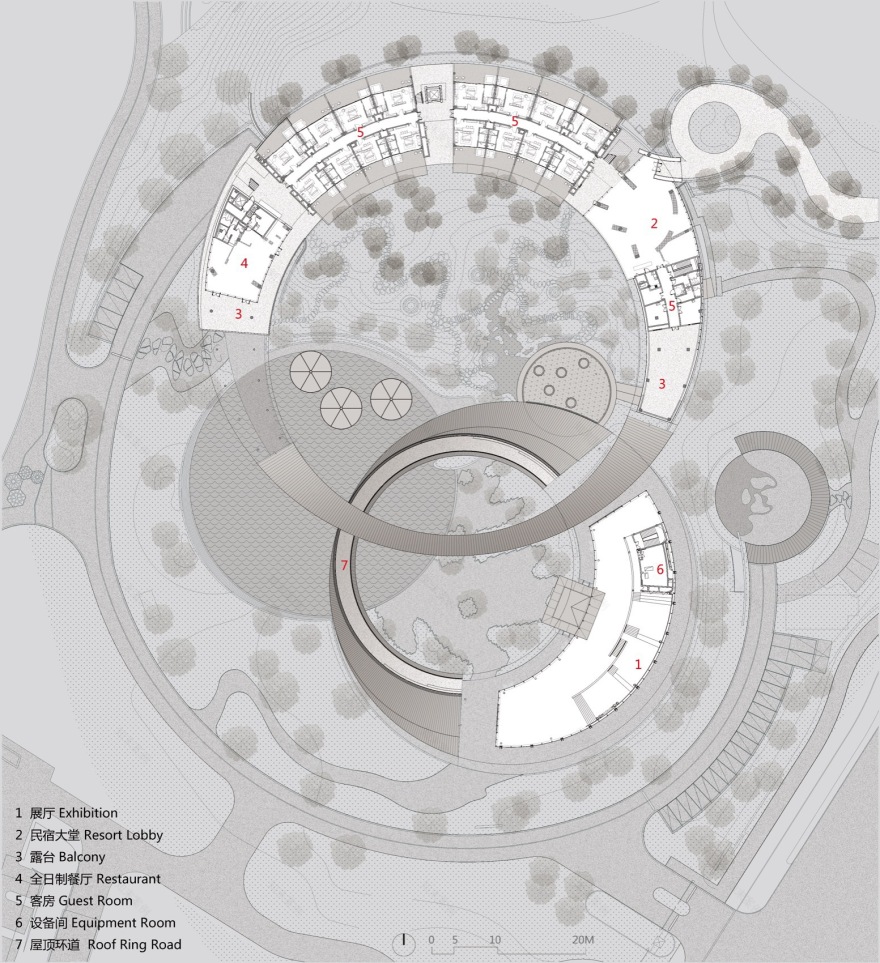
▼三层平面图,second floor plan©中国建筑西南设计研究院有限公司

▼剖面图,section©中国建筑西南设计研究院有限公司

▼立面图,elevation©中国建筑西南设计研究院有限公司

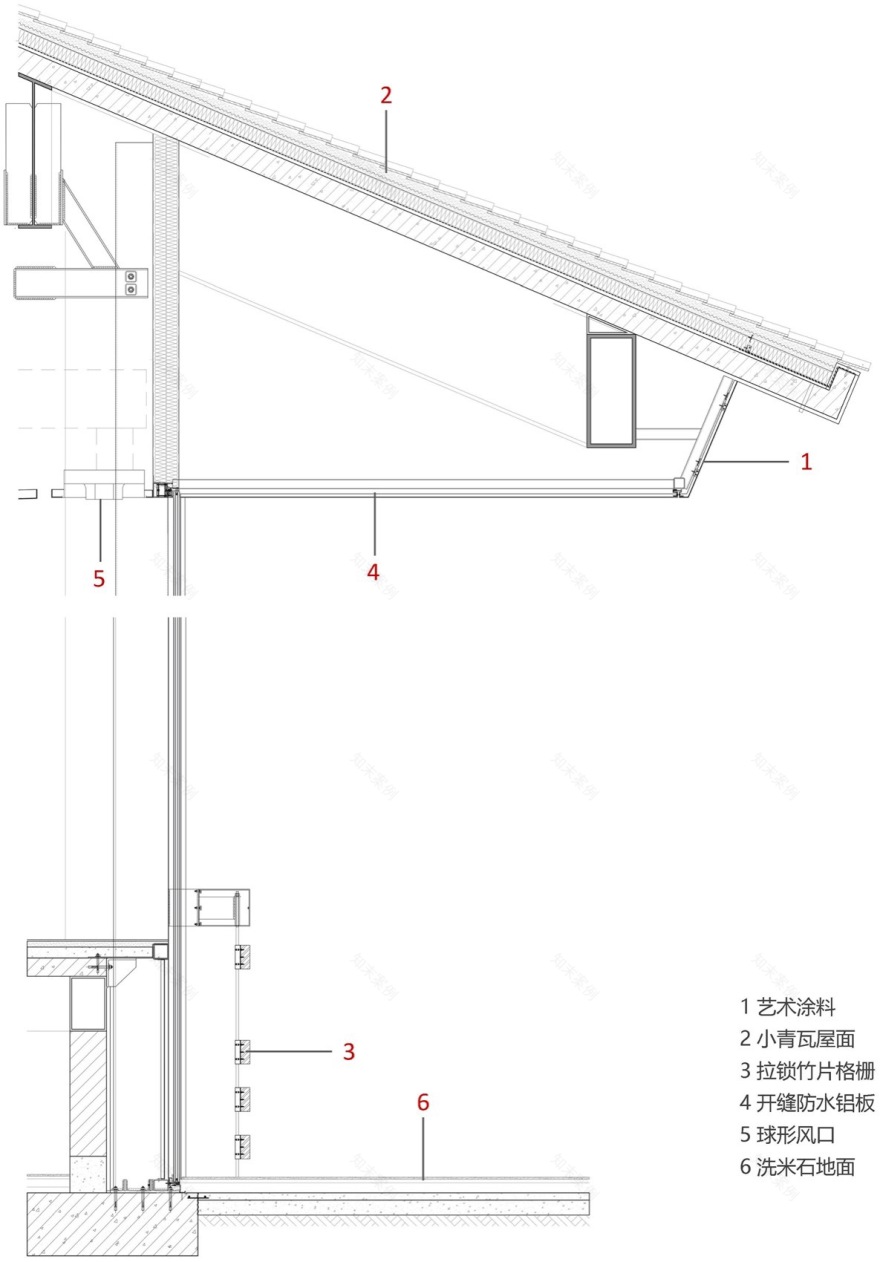
▼节点详图,node details©中国建筑西南设计研究院有限公司

设计单位:中国建筑西南设计研究院有限公司
项目地点:成都市东部新区2024年成都世界园艺博览会园区
建成时间:2024年
建筑面积:10574.89㎡
完整项目信息
项目名称:2024年成都世界园艺博览会园区项目-天府人居馆
项目类型:展览/酒店
项目地点:成都市东部新区2024年成都世界园艺博览会园区
设计时间:2022年-2023年
竣工时间:2023年-2024年
用地面积:42763.03m²
建筑面积:10574.89㎡
项目业主:成都园艺博览发展运营有限公司
设计单位:中国建筑西南设计研究院有限公司
主持建筑师:刘艺
项目建筑师:隆炎君、王中正
建筑设计:杨明语、王宇实、石璠、张茜、周令熙
结构设计:夏循、罗磊、胡昊宇、全程浩、詹本强、李刚
暖通设计:刘志强、卿菁、付召、雷洁
给排水设计:邓然、刘杨、周强建、周小明
强弱电设计:姚锋、陆萌、李江涛、雷兰、张聪、殷博
绿建设计:彭治霖、罗晶
幕墙设计:殷兵利、莫红梅、鲜晗
照明设计:叶东航、胡钰微
室内设计:四川创视达建筑装饰设计有限公司
室内团队成员:张灿、李文婷、周小辉、赖威、刘文静、王良芬、杨颜、范晋丽
景观设计:四川景度环境设计有限公司
景观团队成员:李迅、韩郁青、周鑫、张侠、江昊烨、李俊华、饶奇
建筑摄影:存在建筑、中国建筑西南设计研究院有限公司
南京喵熊网络科技有限公司 苏ICP备18050492号-4知末 © 2018—2020 . All photos and trademark graphics are copyrighted by their owners.增值电信业务经营许可证(ICP)苏B2-20201444 苏公网安备 32011302321234号
苏公网安备 32011302321234号客服
消息
收藏
下载
最近