

创作上传
VIP
收藏下载
登录 | 注册有礼
查看完整案例

收藏

下载

分享
这座房屋坐落在科希采尔斯科村的一块风景如画的地块上,是对波德哈勒地区传统建筑的创意再诠释,也是对塔特拉山脉景观的致敬,特别是通往吉旺特山的标志性徒步路线。
Set on a scenic plot in Kościelisko village, this house is both a creative reinterpretation of Podhale region’s traditional architecture and a tribute to the Tatra Mountains landscape – especially the iconic hiking trail to Giewont Mountain.
▼项目概览,overview of the project©Piotr Krajewski
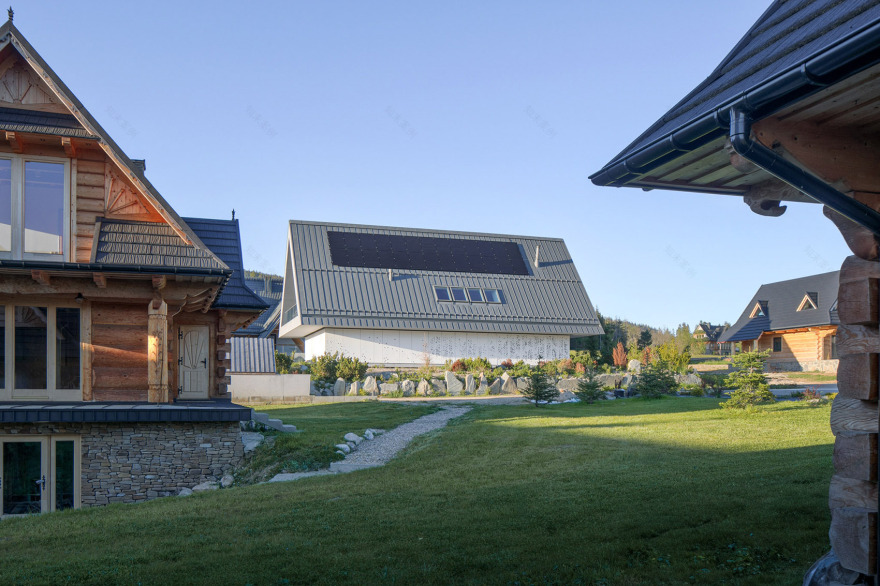
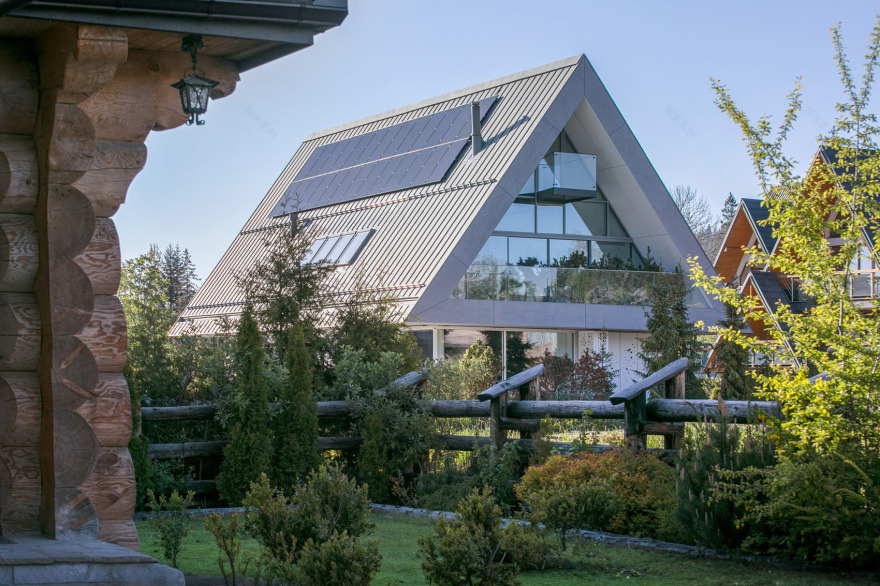

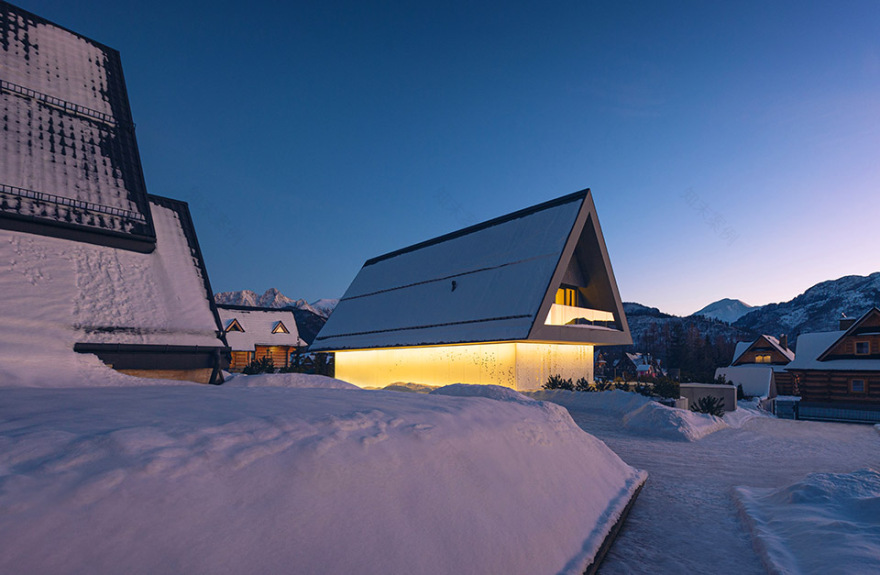
设计上,房屋象征性地反映了一次登山徒步旅行,塑造了周围的路径和花园,尤其是房屋的核心部分:一个垂直的流线布局,最终呈现出吉旺特山的壮丽景观。“Private Giewont山的房子”的形态灵感来自波兰南部波德哈勒地区常见的传统木制牧羊小屋。它的颜色、质感和材料感唤起了塔特拉山脉的景观——灰色、崎岖的岩石和覆盖雪的白色山峰。▼形态灵感,form inspiration©BXB studio


The design metaphorically reflects a mountain hike, shaping not only the surrounding path and garden, but above all, the home’s core: a vertical circulation layout that culminates in a spectacular view of Giewont.The form of the House with a Private Giewont draws inspiration from traditional wooden shepherd’s huts common in the Podhale region of southern Poland. Its color, texture, and materiality evoke the Tatra landscape – grey, rugged rocks and snow-covered white peaks.
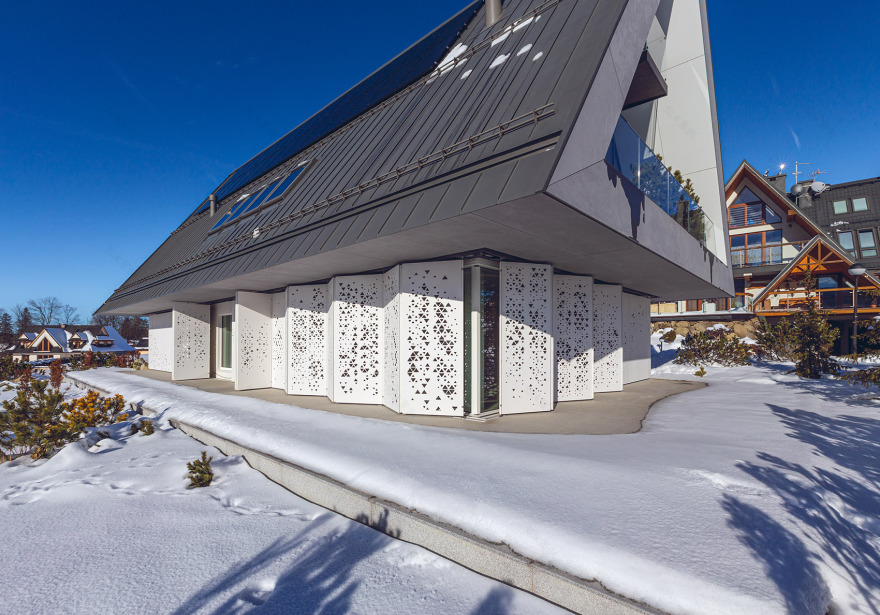
▼冬季雪景外观,exterior under snow at winter©Rafał Barnaś

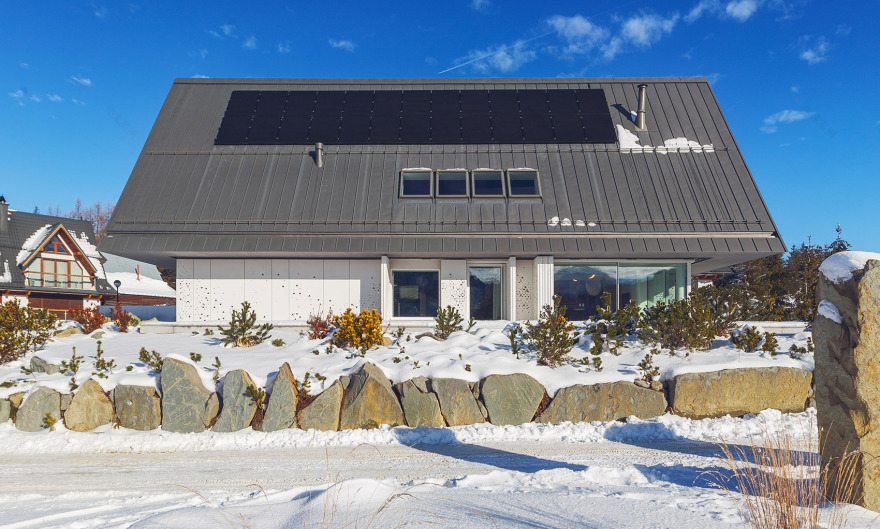

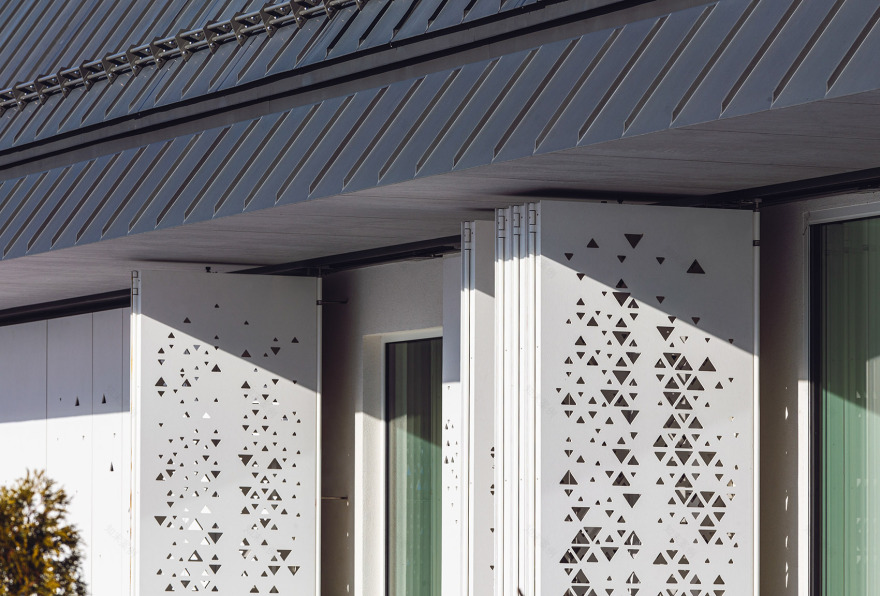
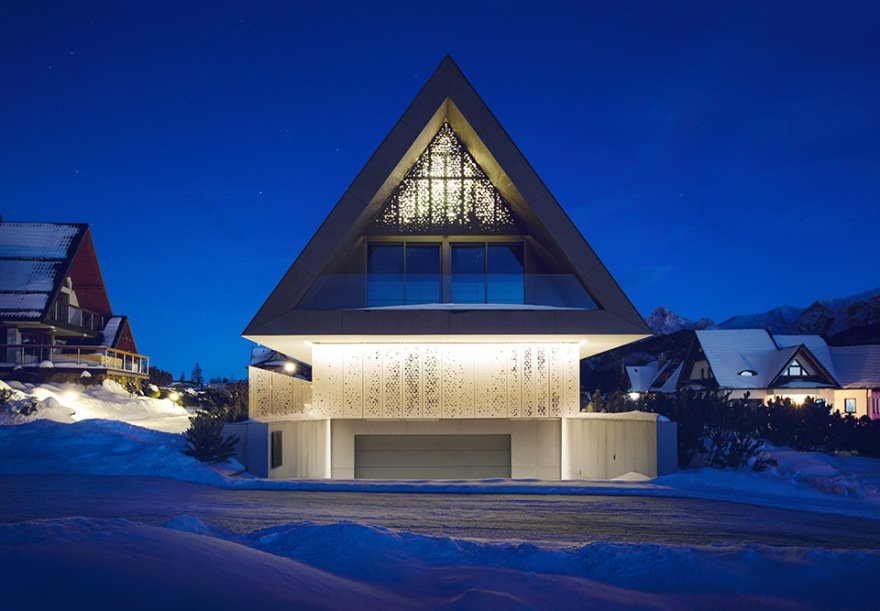
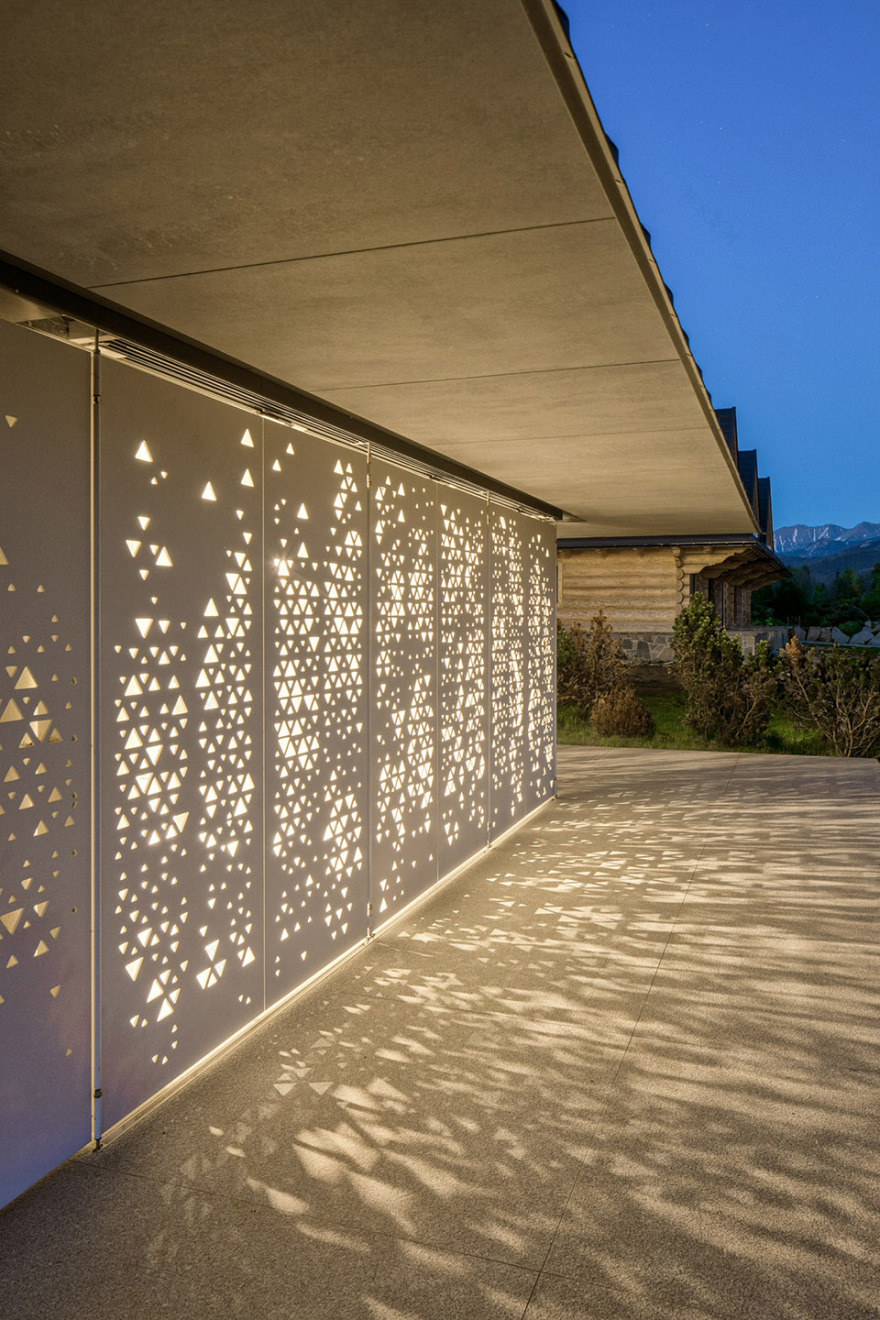
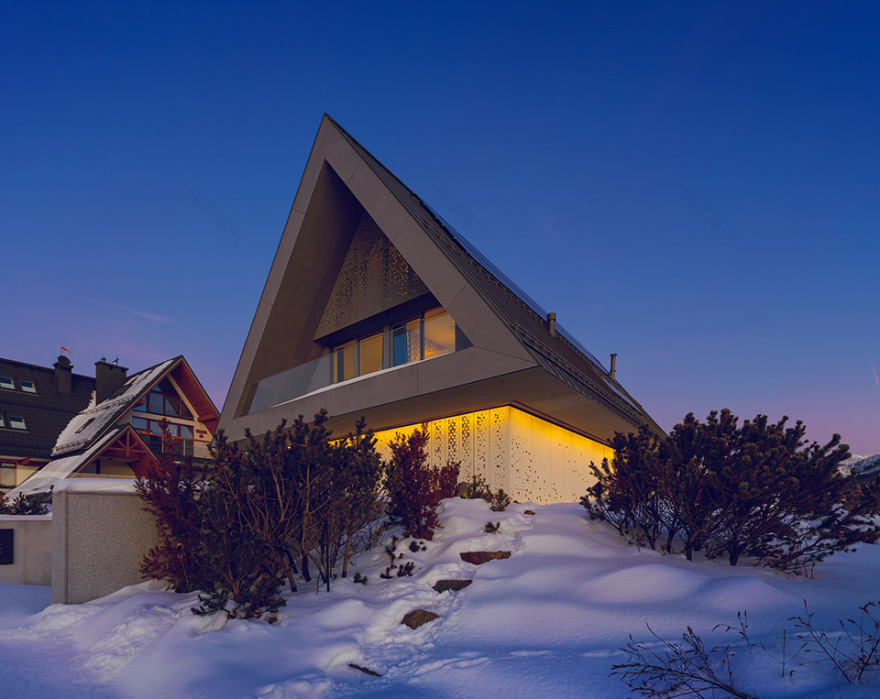
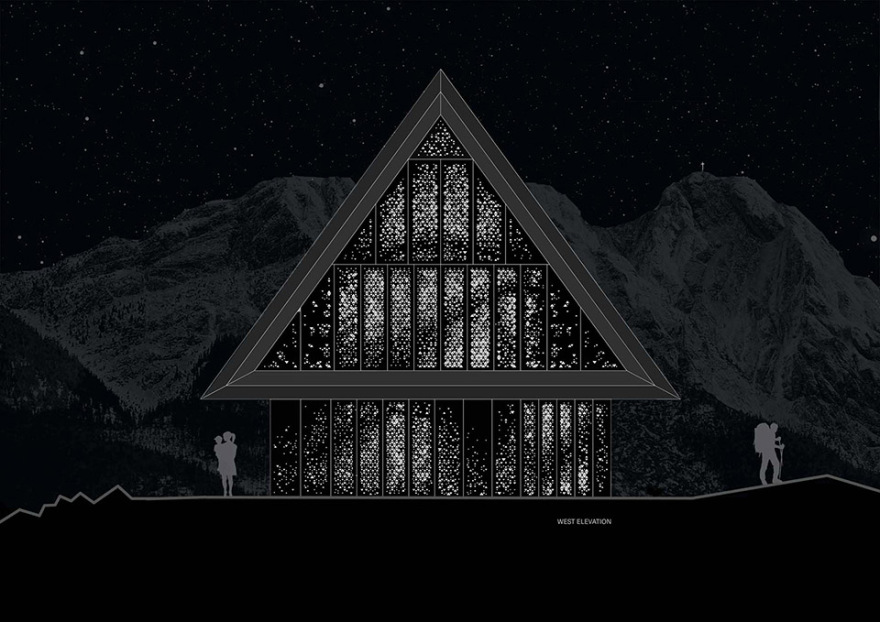
屋顶覆有ZM Silesia生产的钛锌金属板,立面采用定制设计的可移动面板,具有开放结构,允许房屋自由开合。与Equitone品牌合作开发的原始穿孔图案达到了多个目的:将自然光过滤进室内,创造一种立面纹理和颜色调色板,灵感来自塔特拉山脉的雪覆盖山峰,并参考当地的装饰性图案。得益于设计的照明,夜晚时建筑物呈现出如同灯笼般的效果,既发出内部的光线,又有反射的外部光线,巧妙地隐藏在拱廊结构中。
The roof is clad in titanium-zinc sheet metal manufactured by ZM Silesia, and the façade features custom-designed, mobile panels with an openwork structure that allow the house to be freely opened or closed. The original perforation pattern, developed in collaboration with the Equitone brand, achieved several objectives: filtering natural light into the interior, creating a façade texture and color palette inspired by the snow-covered peaks of the Tatra Mountains, and referencing local ornamental motifs. Thanks to the designed lighting, the building resembles a lantern after dark, emitting both light from within and reflected exterior illumination discreetly concealed within the arcade’s structure.
▼屋顶细部,roof detail©Piotr Krajewski
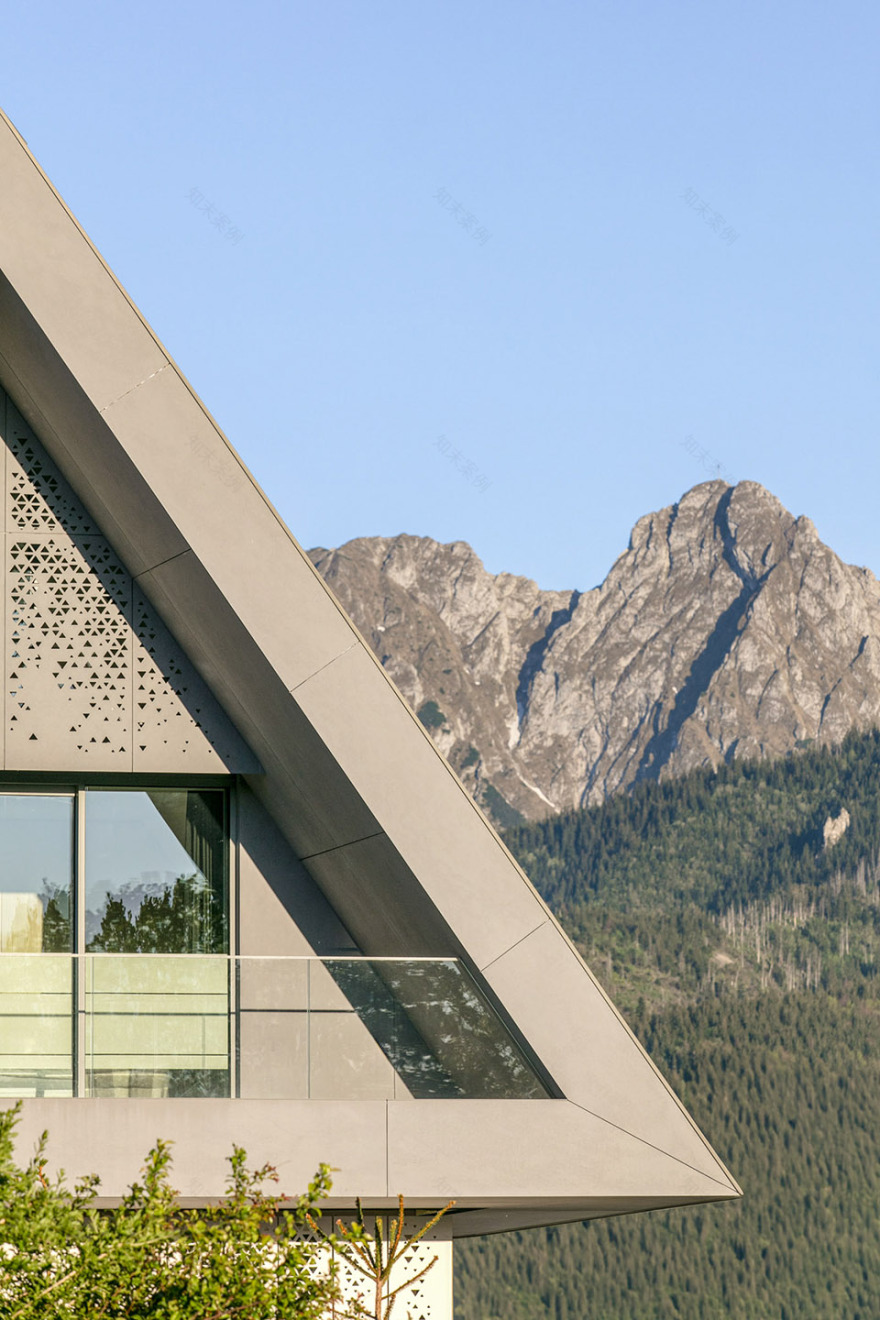

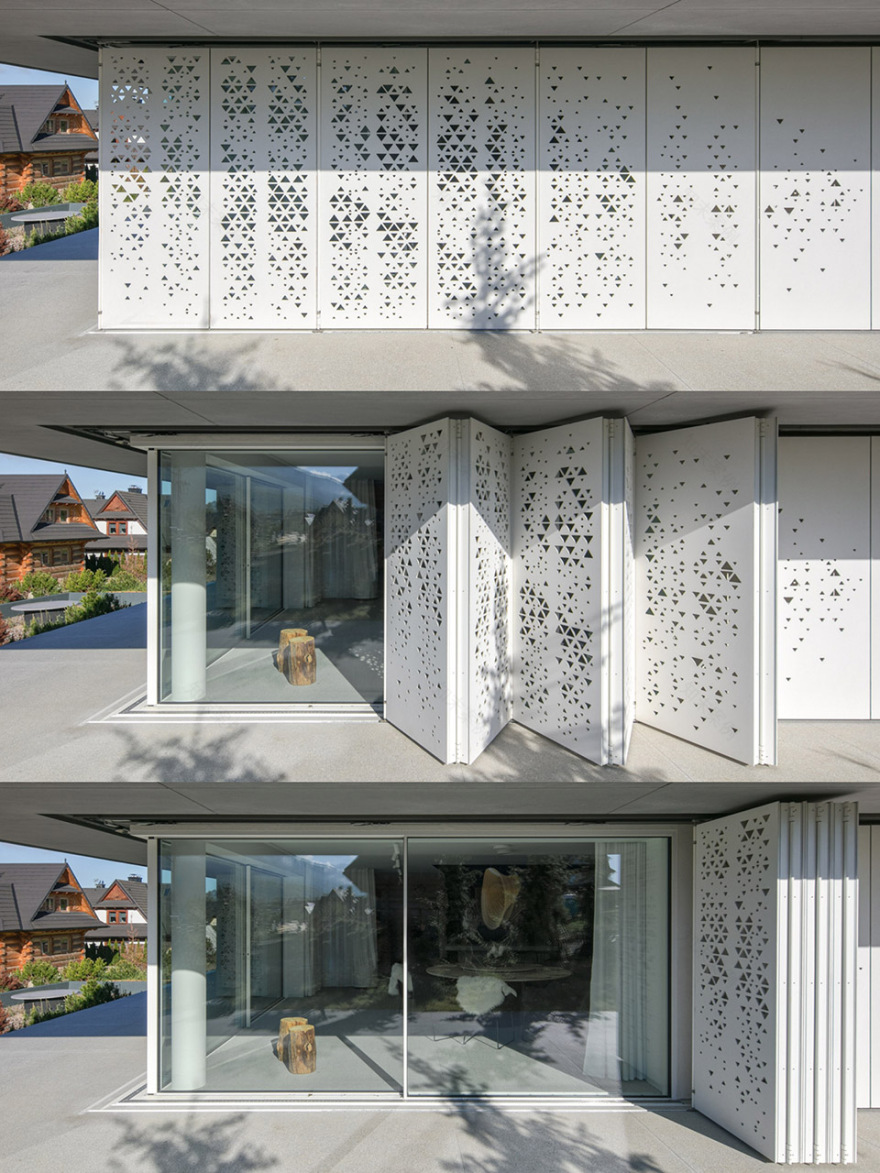
▼可开合的穿孔图案图板,the façade features custom-designed, mobile panels ©Rafał Barnaś


这些面板安装在自动化系统上,可以自由开合。这个可变的立面还起到安全围护的作用,允许建筑物自行关闭,形成一个与最小周边对齐的边界。
The panels, mounted on automated systems, can open and close freely. This transformable façade also acts as a secure enclosure, allowing the building to close in on itself, forming a boundary aligned with the smallest possible perimeter.
▼可以自由开合的面板,The panels, mounted on automated systems©Rafał Barnaś

▼形成安全围护的作用,acts as a secure enclosure©Piotr Krajewski

我们还设计了花园,使用了当地的岩石和山松。通往房屋的小路由大型石板铺成,回忆起塔特拉山脉的步道。景观设计注重低维护,并与山脉景观融为一体。边界通过自然材料——绿化和石材——巧妙定义。
We also designed the garden using local rocks and mountain pines. The path to the house is made of large stone slabs, recalling Tatra Mountain trails. The landscaping is low maintenance and blends with the mountain scenery. Boundaries are defined subtly through natural materials – greenery and stone.
▼使用了当地的岩石和山松的花园,the garden using local rocks and mountain pines©Rafał Barnaś

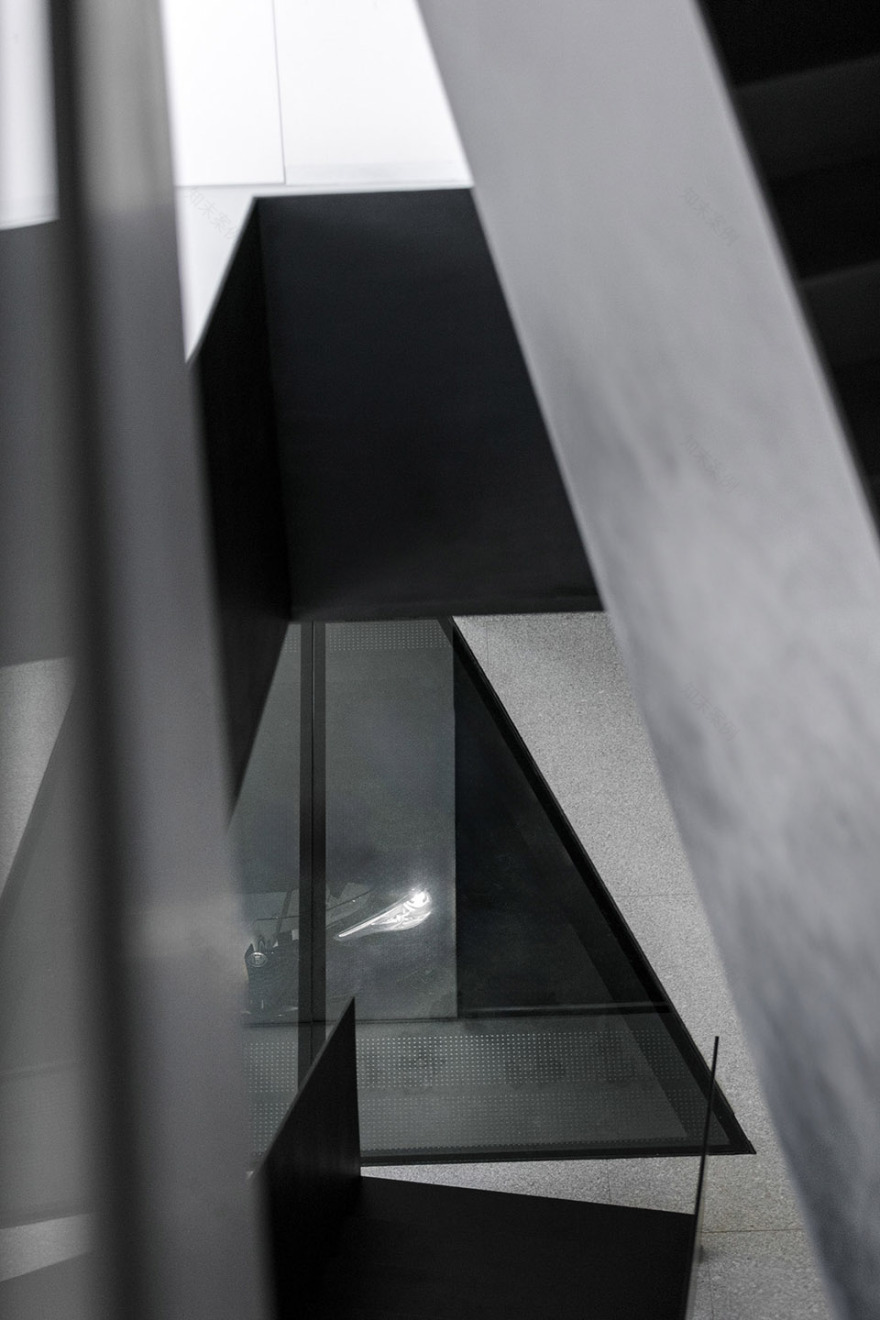
室内,山脉路径的概念体现在戏剧性的流线结构上:一条黑色钢结构贯穿四个层次。在其顶部,一座桥横跨客厅,穿过玻璃坡屋顶的墙壁,延伸到户外观景平台。整座房屋围绕这条路径设计,几乎每个房间都可以看到这条路径——即使是车库,通过地下楼层上方的玻璃天花板也可以看到。
▼结构轴测图,structure axonometric©BXB studio
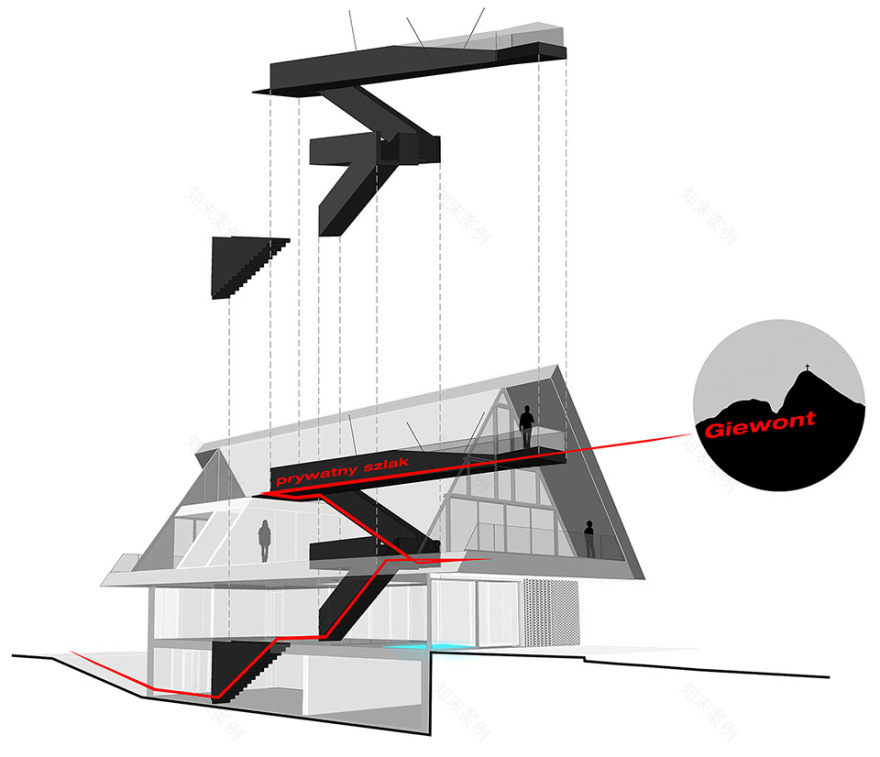
Inside, the concept of a mountain trail is reflected in a dramatic circulation spine: a black steel structure winding through all four levels. At its peak, a bridge crosses above the living room, pierces the glazed gable wall, and extends into an outdoor viewing platform. The entire house is designed around this path, which is visible from nearly every room – even the garage, thanks to a glazed ceiling over the underground floor.
▼黑色钢结构贯穿四个层次,a black steel structure winding through all four levels©Piotr Krajewski

▼黑色钢结构贯穿四个层次,
a black steel structure winding through all four levels©Piotr Krajewski


最终的效果是,一座深深扎根于其环境中的房子,既是情感上的,也是物理上的。主起居空间位于上层,享有最佳视野。一个完全玻璃的坡屋顶墙框住了吉旺特山的山峰,将其融入室内,进一步强化了房屋的山脉氛围。
The result is a house deeply rooted in its environment, emotionally and physically. The main living space, with the best view, is situated on the upper floor. A fully glazed gable wall frames the Giewont peak, integrating it into the interior and reinforcing the home’s mountain atmosphere.
▼深深扎根于其环境中的房子,a house deeply rooted in its environment©Rafał Barnaś

从全景客厅向上,路径继续延伸至夹层和桥梁。桥梁由三根细钢缆悬挂,巧妙地锚固在窗框中,创造出一种漂浮在室内的超现实效果。桥梁缓缓上升,其钢制栏杆逐渐消失,变成完全玻璃的结构,最终转变为屋顶脊顶上的最后户外平台。
From the panoramic living room, the path continues up to a mezzanine and the bridge. Suspended by three thin steel cables and anchored discreetly into the window framing, it creates a surreal effect of floating above the interior. The bridge gently rises, and its steel railing gradually disappears, becoming fully glazed as it transforms into the final outdoor platform—set at the ridge of the roof.
▼创造出一种漂浮在室内的超现实效果,
creates a surreal effect of floating above the interior©Piotr Krajewski
在这座房屋中,吉旺特山成为建筑的不可分割的一部分——无论是字面上,作为室内设计的塑造元素,还是情感上,作为一种通过设计的路径带领人们体验通向全景顶峰的感受。
In this house, Giewont becomes an inseparable part of the building—both literally, as it shapes the interior, and emotionally, as it allows one to experience the feelings evoked by the designed trail leading to a panoramic summit.
▼夏季夜景,night view at summer©Piotr Krajewski


▼冬季夜景,night view at winter©Rafał Barnaś
▼模型,model©BXB studio


▼平面图,plan©BXB studio

▼剖透视,perspective section©BXB studio

Design: BXB studio Bogusław Barnaś
Location: Kościelisko, Poland
Team: Bogusław Barnaś, Magdalena Fuchs, Łucja Janik, Justyna Duszyńska-Krawczyk, Urszula Furmanik, Bartłomiej Mierczak, Yousra Bouras, Mateusz Zima, Michał Kiercz, Jakub Dunal, Edyta Ptasznik
Roofing manufacturer: ZM Silesia
Manufacturer of perforated facade panels: Equitone
Window Architecture: Multiko
Film production: Unique Vision Studio Rafał Barnaś
Photos: Rafał Barnaś, Piotr Krajewski
Graphic design: BXB studio
Area: 327 m²
Date: 2018-2024
Client: Private





南京喵熊网络科技有限公司 苏ICP备18050492号-4知末 © 2018—2020 . All photos and trademark graphics are copyrighted by their owners.增值电信业务经营许可证(ICP)苏B2-20201444 苏公网安备 32011302321234号
苏公网安备 32011302321234号客服
消息
收藏
下载
最近