

创作上传
VIP
收藏下载
登录 | 注册有礼
查看完整案例

收藏

下载

分享
在南蒂罗尔自治区巴尔比亚诺 / Barbiano 市镇的南入口处,Roland Baldi Architects 打造了一座引人注目的多功能新建筑。该建筑综合体集幼儿园、托育中心、儿童餐厅、旅游咨询中心及公共基础设施于一体,体现了在设计与功能两个层面重新思考乡村空间的愿望。
At the southern entrance to the South Tyrolean municipality of Barbian/Barbiano, Roland Baldi Architects have created a remarkable, multifunctional new building. The ensemble, comprising a kindergarten, daycare centre, children’s restaurant, tourist office, and public infrastructure, embodies the desire to rethink rural space in terms of both design and function.
▼项目概览,overview of the project © Oskar Da Riz

▼项目鸟瞰,aerial view of the project © Oskar Da Riz

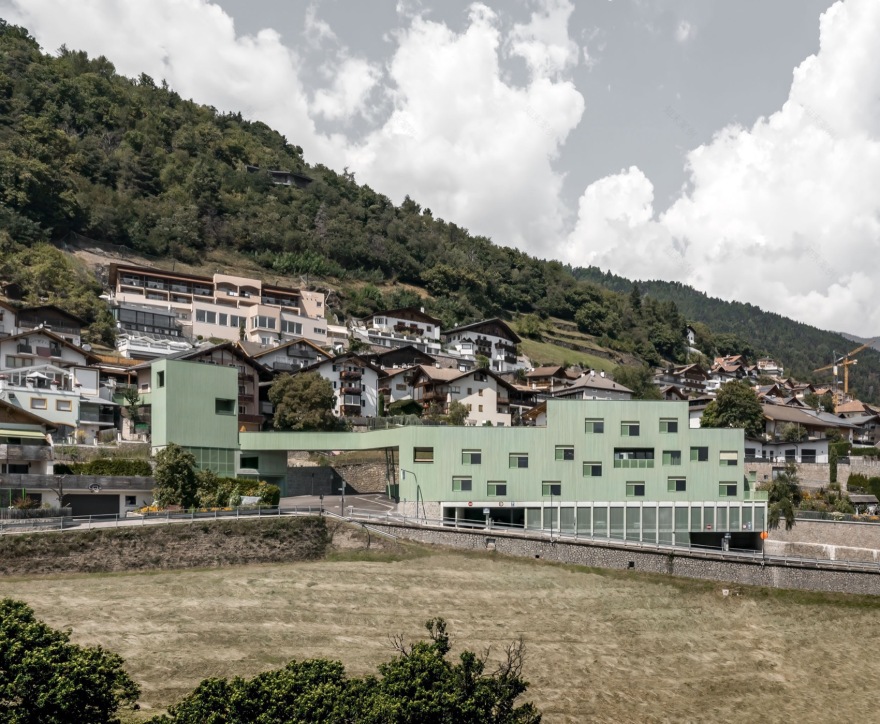
该项目是意大利“复苏与韧性计划”(PNRR)的一部分,并由欧盟在“下一代欧盟”(NextGenerationEU)框架下提供资金支持。新建筑在清晰而明确的建筑结构中融合了教育、交通、社会互动与地方发展,成为一处回应当下需求、并为乡村地区打开全新视野的绿色地标。
The project is part of Italy’s Recovery and Resilience Plan (PNRR) and was financed by the European Union as part of NextGenerationEU. The new building combines education, mobility, social interaction, and local development in a clearly defined architectural structure. The embodiment of a green landmark that meets the demands of the present and opens up new perspectives for rural areas.
▼绿色地标,green landmark © Oskar Da Riz

两座建筑,一个理念
Two buildings, one idea
该综合体由分布在道路两侧的两座独立建筑组成:位于山坡一侧的是幼儿园、托儿所、餐厅以及受保护的儿童活动场地;道路对面则是旅游咨询中心及公共卫生间。紧邻其旁的是一座楼梯与电梯塔,为游客和村民提供从地下停车库直达村庄中心的无障碍通行路径。整个建筑体量坐落于一座既有的两层地下停车库之上。陡峭的地形条件促使功能沿水平方向进行分层布置——从底部的技术用房,到教育空间,再到作为安全户外活动场地的屋顶。横跨道路的连桥将两座建筑连接在一起,成为在功能与设计层面均具有决定性意义的元素。
The complex consists of two separate buildings located on opposite sides of the street: the kindergarten, nursery, cafeteria, and a protected play area are located on the hillside; opposite is the tourist office with public restrooms. Directly adjacent to this is a staircase and elevator tower that provides barrier-free access for visitors and villagers from the underground parking garage directly to the village centre. The entire building volume rests on an existing two-story underground parking garage. The steep slope necessitated a horizontal layering of functions – from technical rooms at the base of the complex to the educational areas and the roof, which serves as a safe outdoor play area for the children. A bridge spanning the street connects the two buildings and forms a functional and design-defining element.
▼综合体,the complex © Oskar Da Riz


▼从下向上看连桥,Look up from the bottom of bridge © Oskar Da Riz

▼连桥,bridge © Oskar Da Riz


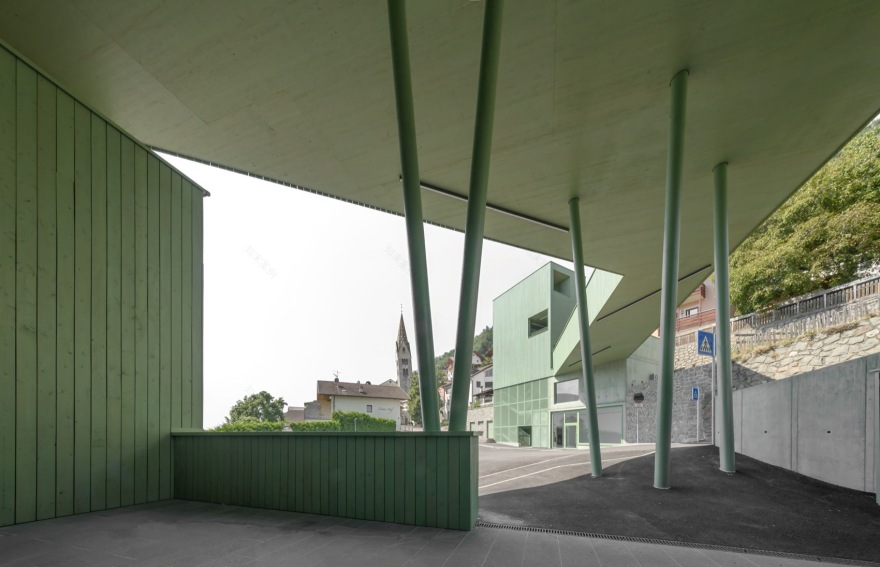
面向新型教学方式的开放空间
Open spaces for new teaching methods
建筑空间支持一种强调运动性、开放性与自主学习的教学理念。传统教室的单一空间类型被可渗透、主题化的功能区域所取代:创作与研究区、安静空间以及角色扮演区域,将建筑组织为以学习与体验为导向的不同空间分区。走廊在多处被拓宽,形成小型交流岛,可作为休憩与游戏空间,同时也提供退隐的角落——多样化的空间类型丰富了日常教学体验。在完全向山谷一侧打开、并享有自然采光的地下一层,设置了两间活动室以及配有厨房的儿童餐厅,该餐厅同时也为邻近的小学提供服务。首层设有另一组托育空间,以及一个独立运营的日托中心,包含活动室与安静室、小厨房、衣帽间、卫生设施及室内露台。顶层则设置了一间多功能运动室,并可直接通往受保护的户外游乐场,该空间仅供该设施内的儿童使用。
The architecture supports a teaching concept that focuses on movement, openness and self-directed learning. The classic class room typology has been replaced by permeable, thematically designed functional areas: creative and research zones, quiet rooms and role-play areas structure the building into learning and experience-oriented zones. The corridors repeatedly widen into small meeting islands that are used as lounge and play areas as well as retreat niches – a variety of spaces that enrich everyday teaching. On the first basement level, which is completely open to the valley side and has natural lighting, there are two group rooms and the children’s restaurant with kitchen, which also serves the neighbouring primary school. The ground floor houses another nursery group and the independently organised daycare centre with a group and quiet room, kitchenette, cloakroom, sanitary facilities and an indoor terrace. On the top floor, there is a multifunctional exercise room with direct access to the sheltered playground – exclusively for the children of the facility.
▼向山谷一侧打开,open to the valley © Oskar Da Riz

▼托育中心走廊,the nursery corridors © Oskar Da Riz


▼活动空间,activity space © Oskar Da Riz

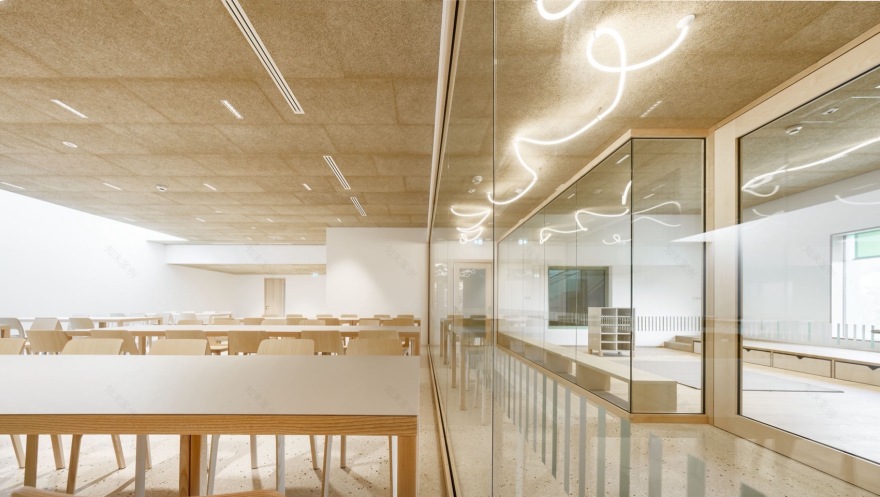
▼儿童餐厅,children’s restaurant © Oskar Da Riz

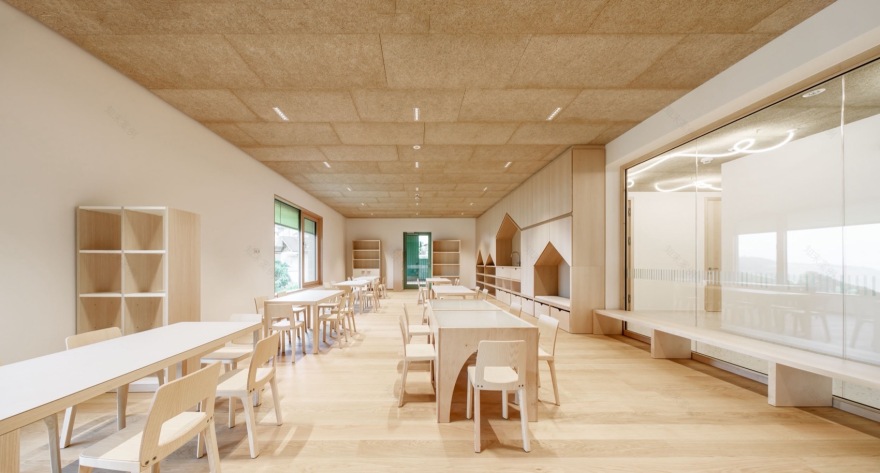
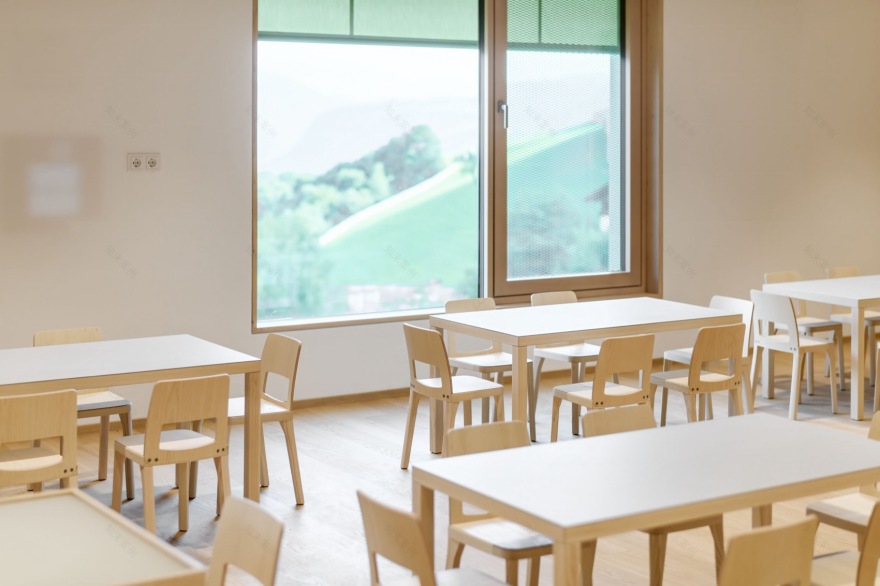

▼衣帽间,cloakroom © Oskar Da Riz

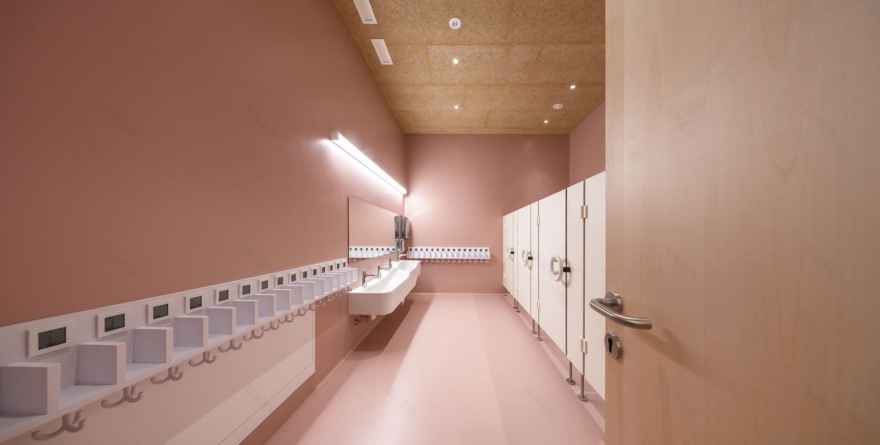
▼托育中心无障碍卫生间,the nursery barrier-free toilet facilities © Oskar Da Riz

旅游咨询中心、公共设施与无障碍连接
Tourist office, infrastructure and barrier-free connection
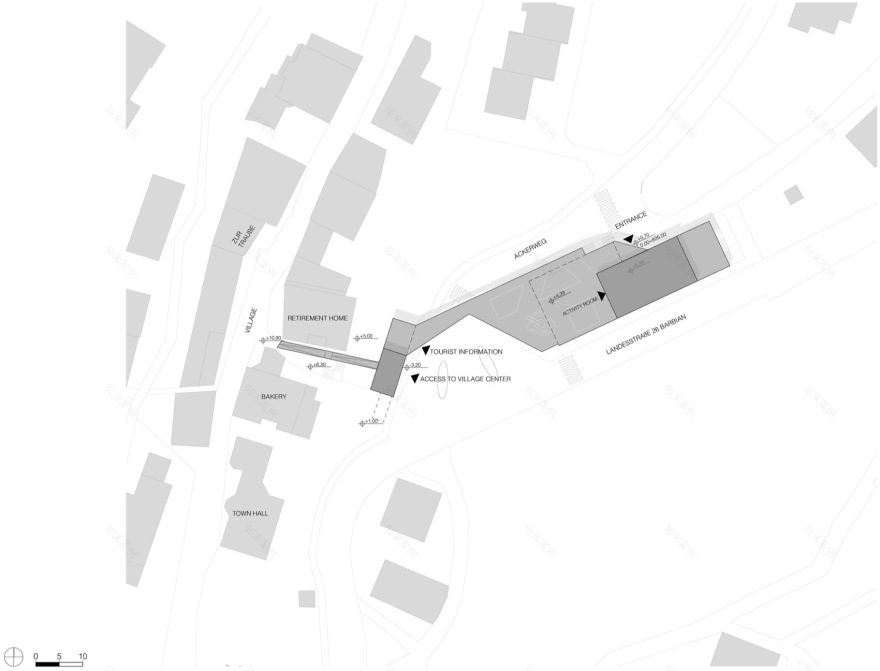
在托育中心的道路对面,新建了一座独立的旅游咨询中心,建筑内部不仅设置信息服务空间,还配备了供游客使用的无障碍卫生间。其正前方是一处重新设计的公交站点,两道减速带有效降低车速,保障所有到达者的安全,同时对交通与行人区域进行了清晰划分。旅游咨询中心旁设有楼梯与电梯塔,为人们从地下停车场直达村庄中心提供无障碍通行。横跨道路的连桥通向幼儿园,首先抵达一层的运动室,随后再连接至首层空间。
Across the street from the nursery, sits a new tourist office, a separate structure that houses not only the information office but also barrier-free toilet facilities for visitors. Directly in front: a newly designed bus station. Two speed bumps slow down traffic and ensure safety for all arrivals and the traffic and pedestrian zones are clearly structured. Adjacent to the tourist office is the staircase and lift tower, which provides barrier-free access from the underground car park directly into the village centre. A bridge spans the road and leads to the kindergarten, first to the exercise room on the first floor, then to the ground floor.
▼楼梯与电梯塔,staircase and lift tower © Oskar Da Riz


作为设计生成器的景观
Landscape as a design generator
陡峭的坡地成为项目的核心设计母题。基于独特的地形条件,建筑沿水平方向分层展开——从结构底部的技术空间,到教育层,再到屋顶的游乐场。坚实的清水混凝土基座将建筑稳固地锚定于坡地之上,其上部则采用轻质木结构体系。立面以垂直分割的绿色釉面木构成,使整体在远处即可被辨识,并在村庄入口处形成鲜明而独特的形象。
A steep slope: a central design motif. Owing to its unique topography, the building is layered horizontally – from the technical rooms at the base of the structure to the educational levels and the play area on the roof. A robust exposed concrete foundation anchors the building to the slope, above which the structure has been developed in a light wood construction. The vertically structured, green-glazed timber façade makes the ensemble recognisable from afar – and gives it a distinctive appearance at the entrance to the village.
▼立面,facade © Oskar Da Riz

可持续性与建筑
Sustainability and architecture
建筑按照“气候之家金级”(Climate House Gold)标准建造。供暖系统采用热泵,并辅以带热回收功能的可控通风系统。室内空间以浅色材料、均衡的自然采光以及大量木材的运用为特征:经油处理的地板、实木家具以及具有良好声学性能的木质天花,共同营造出宁静且适合儿童的空间氛围。建筑与教育在此实现了无缝融合。
The building was constructed to the Climate House Gold standard. Heating is provided by a heat pump, supported by controlled ventilation with heat recovery. The interiors are characterised by light-coloured materials, consistent daylighting and use of wood: oiled floors, solid wood furniture and acoustically effective wooden ceilings create a calm, child-friendly atmosphere. Architecture and education are seamlessly intertwined.
▼夜景,night view © Oskar Da Riz


面向未来的场所
A place for the future
在Barbian / Barbiano的这一项目中,Roland Baldi Architects成功将功能性的空间需求转化为富有叙事性的建筑表达。教育建筑、可持续交通与旅游基础设施的结合,塑造了一处具有影响力的场所——既是交流的节点、灵感的源泉,也是村庄入口处的新地标。一座滋养当下、开辟新路径,并助力乡村地区变革的绿色之桥。
With the project in Barbian/Barbiano, Roland Baldi Architects has succeeded in transforming a functional spatial programme into an architectural narrative. The combination of educational building, sustainable mobility and tourist infrastructure creates a place with impact – as a meeting place, a source of inspiration and a new landmark at the entrance to the village. A green bridge that nurtures the present, opens up new paths and helps shape change in rural areas.
▼场地平面,SITE PLAN © Roland Baldi Architects
▼地下室,BASEMENT © Roland Baldi Architects

▼一层,GROUND FLOOR © Roland Baldi Architects
▼二层,1ST FLOOR © Roland Baldi Architects

▼三层和四层,2ND AND 3RD FLOOR © Roland Baldi Architects

▼剖面,SECTION © Roland Baldi Architects

南京喵熊网络科技有限公司 苏ICP备18050492号-4知末 © 2018—2020 . All photos and trademark graphics are copyrighted by their owners.增值电信业务经营许可证(ICP)苏B2-20201444 苏公网安备 32011302321234号
苏公网安备 32011302321234号客服
消息
收藏
下载
最近