

创作上传
VIP
收藏下载
登录 | 注册有礼
查看完整案例

收藏

下载

分享
当前,我国许多学校正面临废旧家具堆积的普遍难题。由于传统回收报废流程周期较长,这些闲置资产长期占用校园空间,部分学校甚至需租用外部场地存放。随着新生人口下降,生源减少,这一问题日益凸显。
Currently, many schools in China face the wchenlong@atidespread challenge of accumulating obsolete furniture. Due to the lengthy traditional recycling and disposal processes, these idle assets occupy campus space for extended periods, with some schools even needing to rent external storage facilities. As student enrollment declines, this issue is becoming increasingly prominent.
▼项目概览,Overview of the project © 吕晓斌


为此,我们启动了“校园闲置资产再利用计划”,意在探索校园资产有效优化的新路径。以上海甘泉外国语中学为试点开展创新实践:将废弃餐椅与闲置食堂改造为集学习、生活、休闲为一体的多功能综合活动中心。
▼回收废弃餐椅,Discarded Cafeteria Chairs © 内里设计创研所

To address this, we launched the “Campus Idle Asset Reuse Initiative,” aiming to explore new pathways for optimizing campus assets. We conducted an innovative pilot project at Shanghai Ganquan Foreign Language Middle School: transforming discarded cafeteria chairs and unused dining halls into a comprehensive activity center integrating learning, living, and leisure.
▼项目外观,Overview of the exterior © 吕晓斌

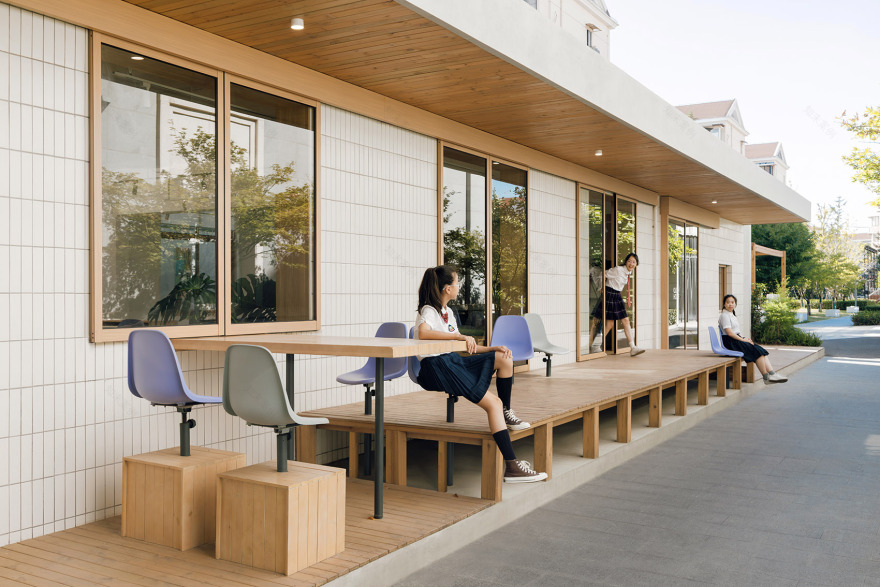
▼废弃餐椅改造,Transforming discarded cafeteria chairs © 吕晓斌


在改造策略上,我们兼顾了情感留存与功能创新:餐椅主体保留了原有形态,以唤起记忆,建立情感连接;底座则进行全新改造,通过旋转升降结构的设计实现高度与朝向的多维调节。结合高低错落的平台与模块化家具设计,共同塑造出能灵活适配多种校园生活模式的场景。熟悉的物品与环境以创新形态重现,既承载过往记忆,又赋予使用新意。
▼家具分析,Furniture analysis © 内里设计创研所

Our renovation strategy balanced sentimental preservation with functional innovation: the chairs’ main body retain their original form to evoke memories and foster emotional connections, while their bases underwent complete transformation. A rotating and height-adjustable mechanism enables multidimensional adjustments in both height and orientation. Combined with staggered platforms and modular furniture design, this creates flexible scenarios adaptable to diverse campus lifestyles. Familiar objects and environments are reimagined through innovative forms, preserving past memories while introducing fresh functionality.
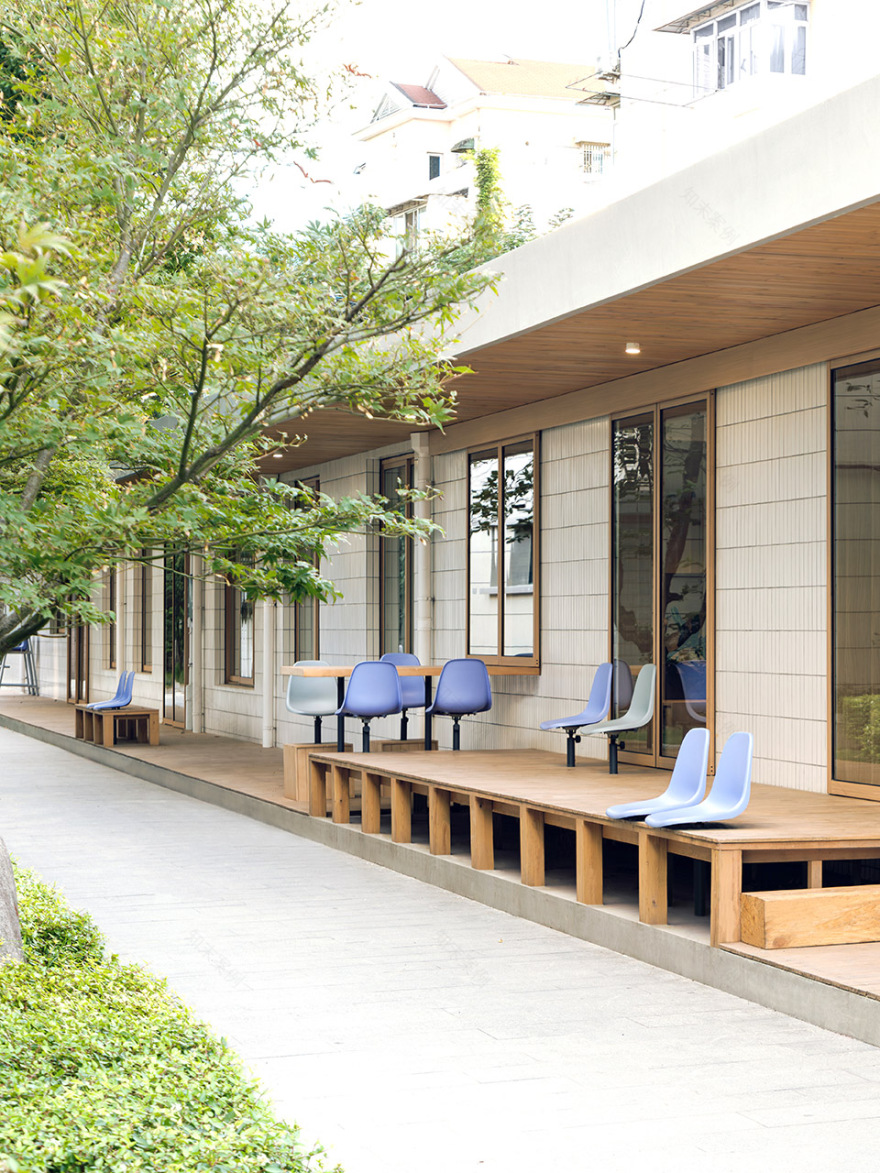
▼高低错落的平台,Staggered platforms © 吕晓斌


▼灵活适配多种校园生活模式,Flexible scenarios adaptable to diverse campus lifestyles © 吕晓斌


与 “回收报废-采购新品”的传统方式相比,“就地改造、循环利用”的新模式不仅能快速释放空间、降低运营成本,更赋予了闲置资产新的使用价值。同时也减少了新品采购与长途运输带来的资源消耗与碳排放,实践了可持续环保理念。
Compared to the traditional approach of “discarding old items and purchasing new ones,” this new model of “on-site renovation and circular reuse” not only rapidly frees up space and reduces operational costs but also gives idle assets new utility value. It simultaneously reduces resource consumption and carbon emissions associated with new product procurement and long-distance transportation, putting sustainable environmental principles into practice.
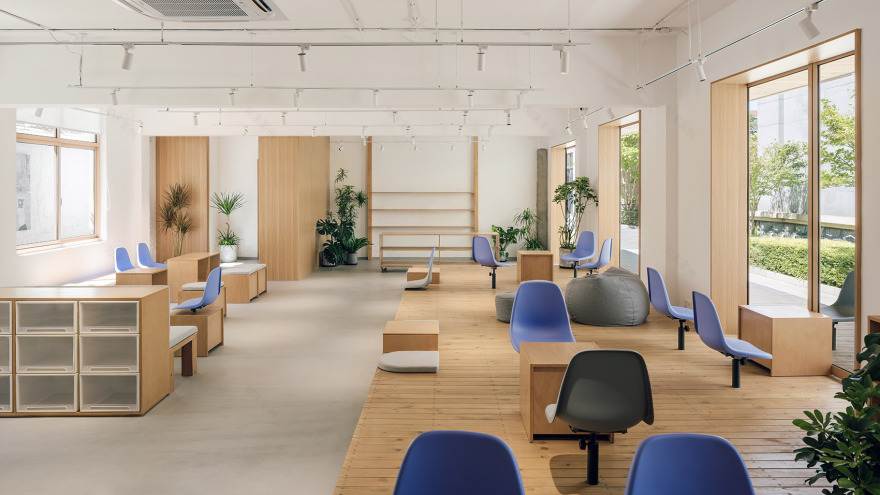
▼自习空间,Self-study space © 吕晓斌


▼走廊,Corridor © 吕晓斌

设计将绿色理念融入日常设施,潜移默化地发挥环境育人功能,培养学生的环保责任感,同时也有助于强化学校创新、环保的品牌形象。
By integrating green principles into daily facilities, the design subtly fosters environmental education, cultivating students’ ecological responsibility while strengthening the school’s innovative and eco-conscious brand image.
▼户外凉亭,Outdoor pavilion © 吕晓斌


我们期望,这一将闲置资产问题本身转化为解决方案的可持续校园资产管理新模式,能为更多学校提供可复制的范例,共同探索以创新、可持续方式优化校园资源的可行路径。
We hope this new sustainable campus asset management model—which transforms the idle assets issue itself into a solution—will provide a replicable example for more schools, enabling us to jointly explore viable pathways for optimizing campus resources through innovative and sustainable approaches.
▼平面图,Outdoor pavilion © 吕晓斌

项目名称:甘泉外国语中学综合活动中心
项目类型:建筑
设计方:内里设计创研所
项目设计:2023.10
完成年份:2024.10
设计团队:吴佳青 林佳
项目地址:上海市普陀区
建筑面积:800㎡
摄影版权:吕晓斌
客户:上海市甘泉外国语中学
材料:木材 回收家具
Project name:Ganquan Foreign Language Middle School Comprehensive Activity Center
Project type:Architecture
Design:Neili Design Lab
Design year:2023.10
Completion Year:2024.10
Leader designer & Team:Jiaqing Wu,Jia Lin
Project location:Putuo District, Shanghai
Gross built area: 800㎡
Photo credit: xiaobin Lu
Clients:Shanghai Ganquan Foreign Language Middle School
Materials:Wood、Recycling Furniture


南京喵熊网络科技有限公司 苏ICP备18050492号-4知末 © 2018—2020 . All photos and trademark graphics are copyrighted by their owners.增值电信业务经营许可证(ICP)苏B2-20201444 苏公网安备 32011302321234号
苏公网安备 32011302321234号客服
消息
收藏
下载
最近