

创作上传
VIP
收藏下载
登录 | 注册有礼
查看完整案例

收藏

下载

分享

翻译
Architects:David Chipperfield Architects,Studio Mark Randel
Area:2453m²
Year:2022
Photographs:Simon Menges
Manufacturers:Boehmler,Cinca Mosaic,Renner Bau,Soreg Glide,Wigglesworth Weider
Lead Architect:Mark Randel
Structural Engineer:TBU Ingenieurbüro, Karlsfeld
MEP:A-engineering, München; ITG, Eching
Landscape Architects:Levin Monsigny Landscape architects; P-38 Landscape architects, München
Building Physics:PMI, Unteraching
Category:Housing
Project Architect Design Phase:Christoph Michael
Project Architect Execution Phases:Philipp Kring
Team Members:Gunda Schulz, Hans Buhl, Judith Engel, Max Werner, Alexandr Minkin, Mari Takahashi
Local Architects:Weickenmeier, Kunz + Partner Architekten Ingenieure, München
Fire Consultant:KAUPA Ingenieure
City:München
Country:Germany

Text description provided by the architects. In a tranquil residential street in the Munich district of Altschwabing, between the Münchner Freiheit and the englischer Garten, our client purchased a property with an atypical, lowrise 1920s building, with a view to developing a new apartment block. Even if the quarter and its demographics have changed significantly in recent decades, Schwabing still holds onto an artistic and free-thinking atmosphere. The quarter is vibrant with pubs, local and international eateries, cinemas, galleries, long-established theatres, day-care centers, and schools.

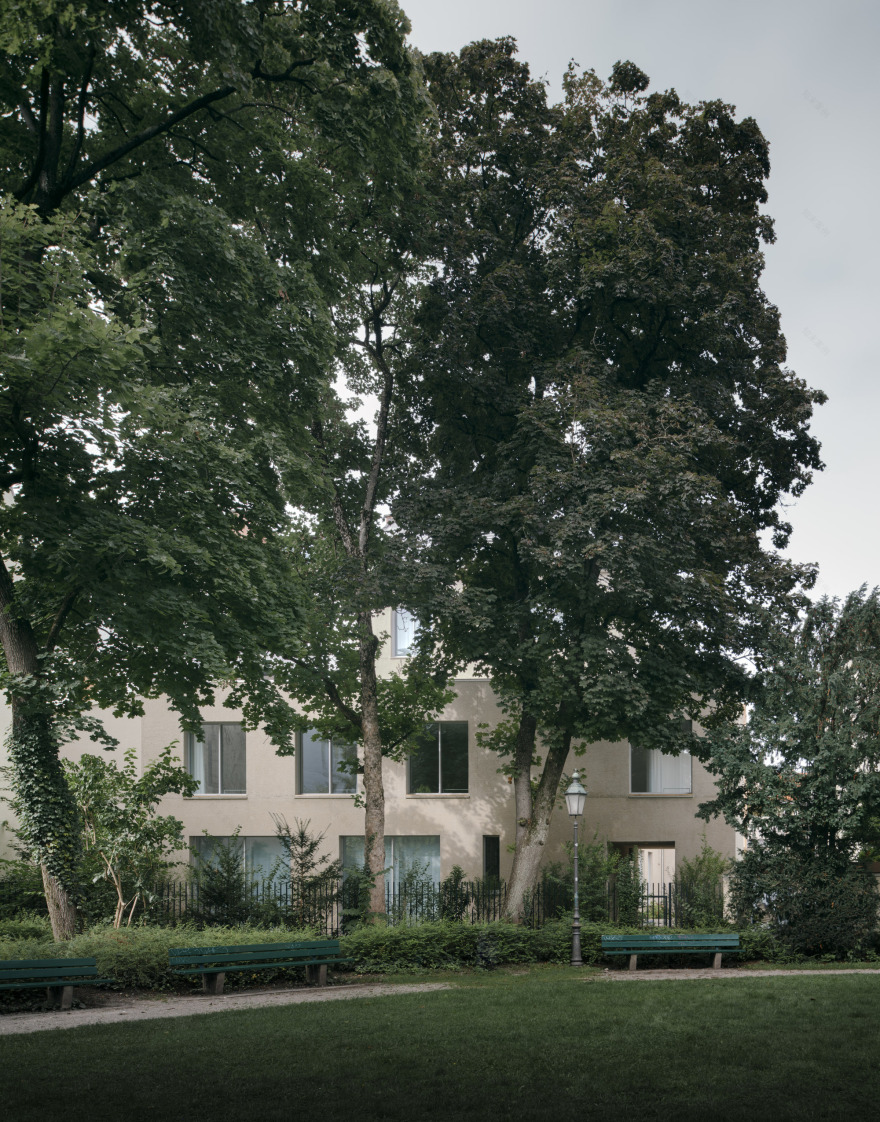
The property sits in the middle of a street largely characterized by intact buildings from the 19th to early 20th centuries. Some ground floor units are occupied by restaurants, cafes, and shops, but even with a lively gastronomy scene, the short cobblestone street has a quiet vibe. There is a sense of established community and neighborly relations. The background noise is characterized by birdsong, children playing, and the ringing of church bells.
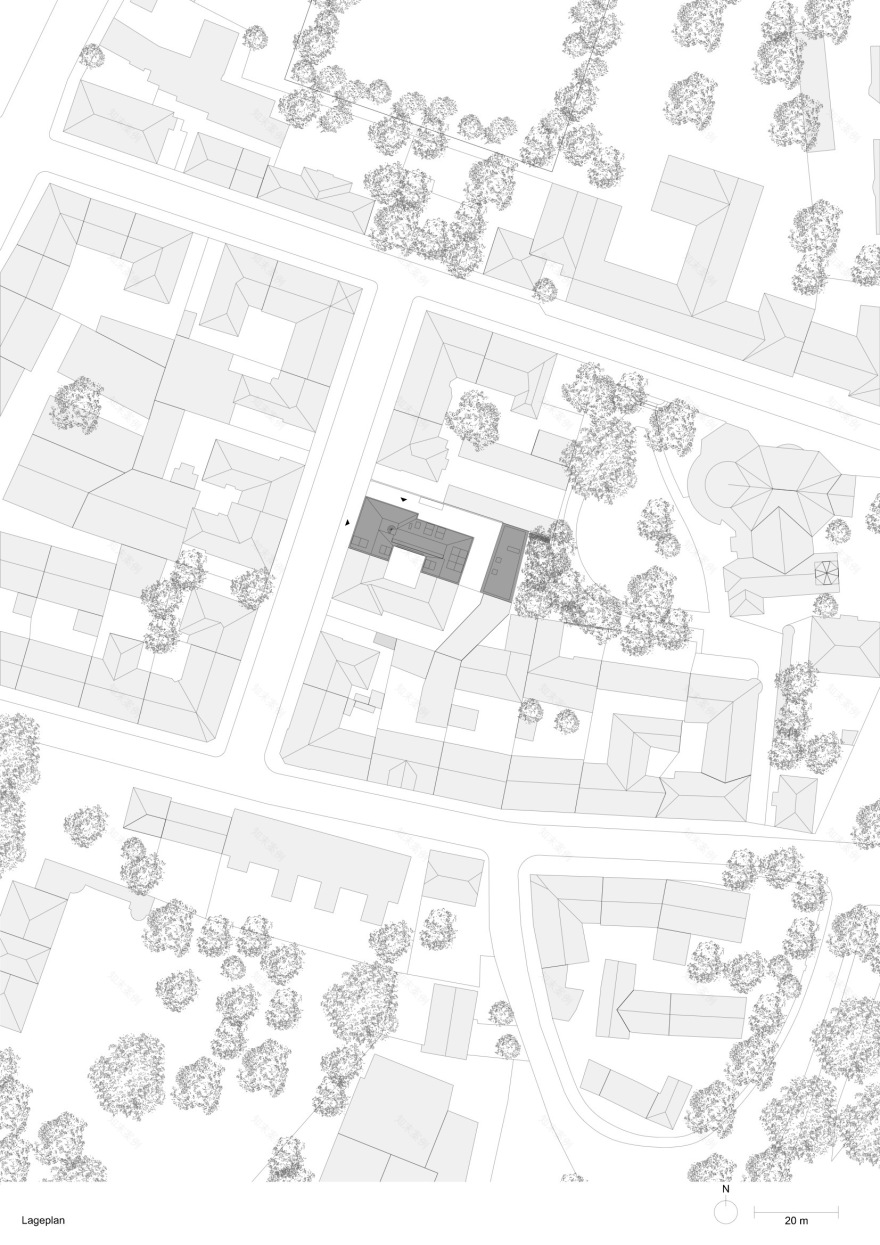
The property extends from the street at the front to a small church park around the historic Sankt Silvester church at the back. We developed the building to form a complete city block with the adjacent property. Our starting point was the socalled "pavilion plan" by Theodor Fischer, in which we found many qualities that remain relevant to contemporary urban development. City planner Fischer penned his urban designs between 1893 and 1902. They served as a guideline for building regulations in many parts of Munich until the 1970s. The pavilion plan envisages two U-shaped residential buildings which together form a city block with a shared inner courtyard. Tree-lined driveways between the blocks and two-storey coach houses in the rear break up the roadside facades. Views open up into semi-private spaces.
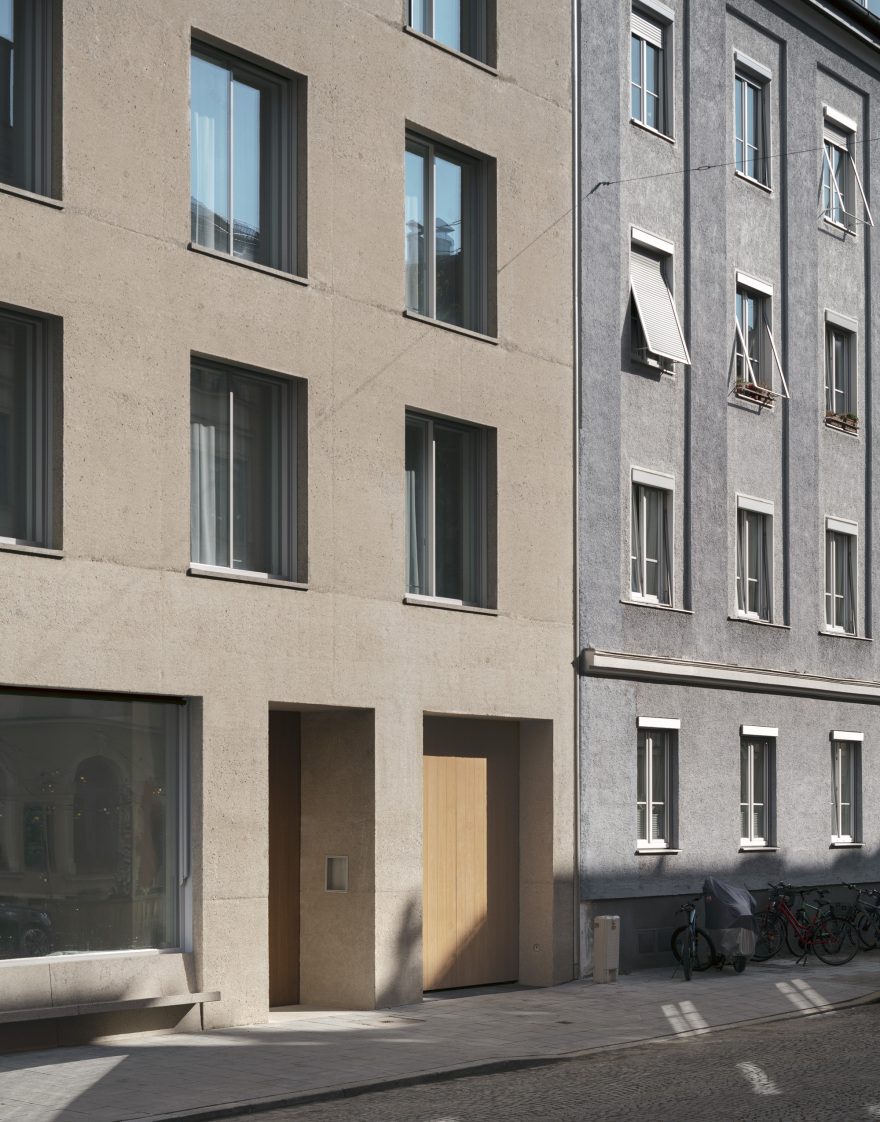
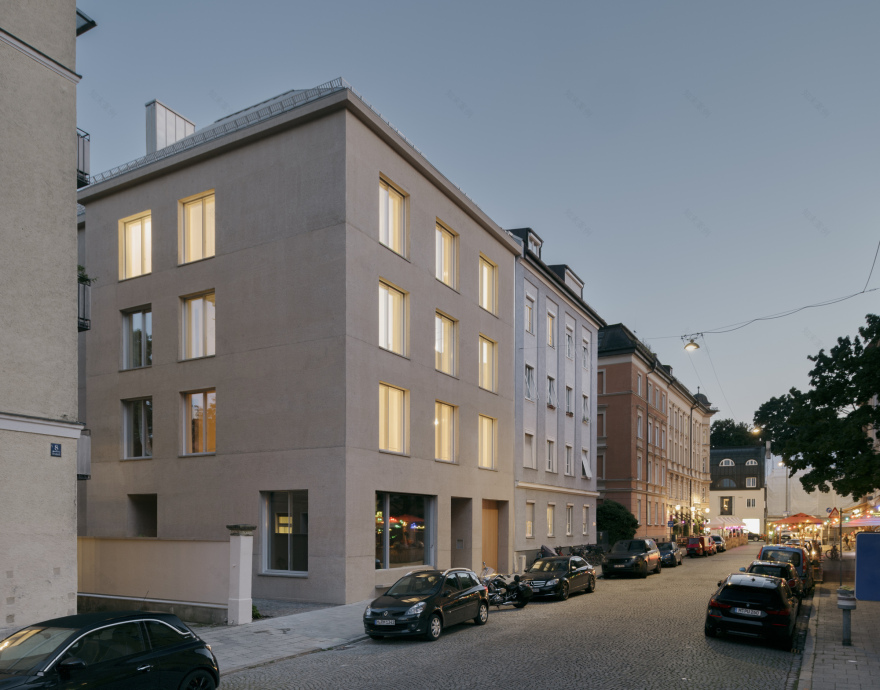
We decided to follow Fischer's concept and complete the urban planning of the time over 100 years later. In doing so, the building's floor plan and roof shape were taken as given – they are the exact replica of the neighboring building and thus the fulfilment of the originally-intended urban form. By aligning the floor heights and the eaves, the new building completes the urban block. This could only work if we maintained the ceiling height of apartments built in the 18th and 19th centuries. Luckily, our client saw this in the same way, and did without the additional floor. An underground garage in the basement is accessed via an inconspicuous car elevator.

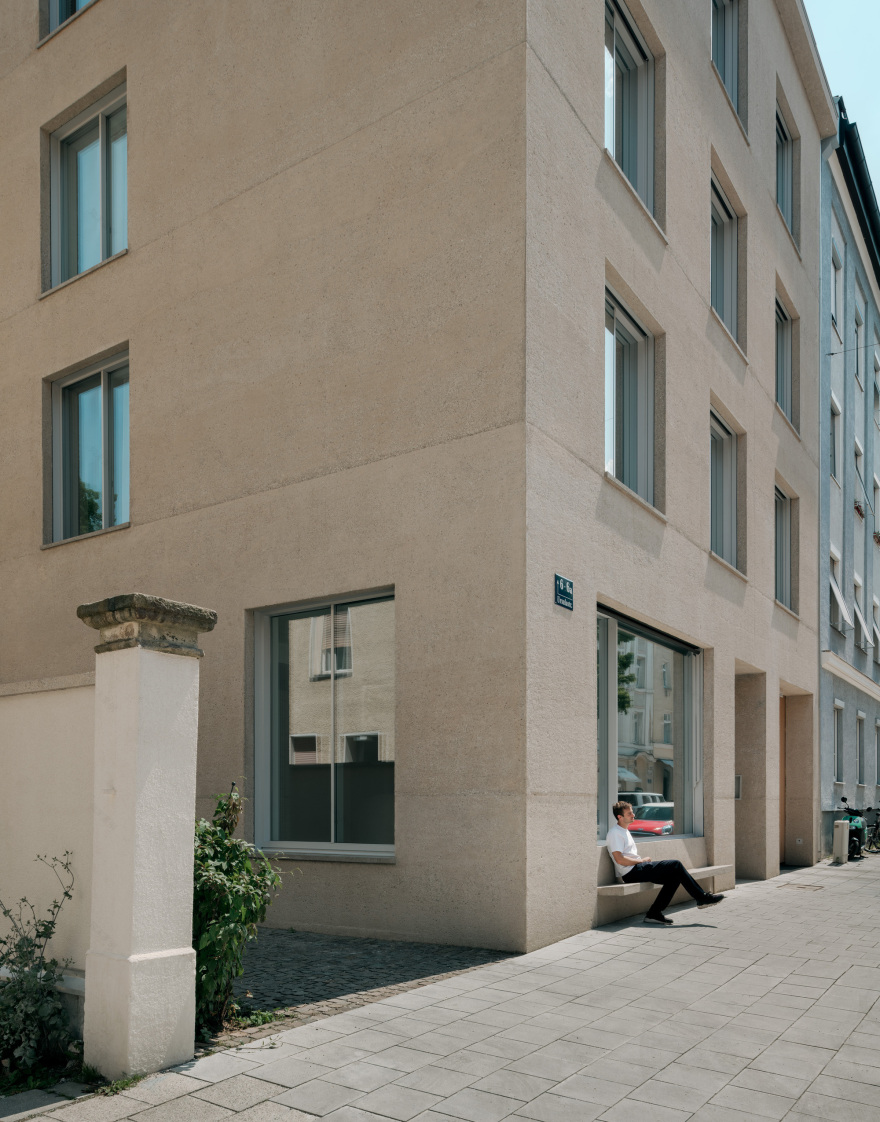
The building contributes to the neighborhood community with two welcoming gestures on the ground floor. First, a café that opens generously onto the street, becoming part of the street space and filling it with life. Secondly, a permanentlyinstalled bench which invites people to linger at all times of the day and night, and offers both passersby and residents a spot in the evening sun.


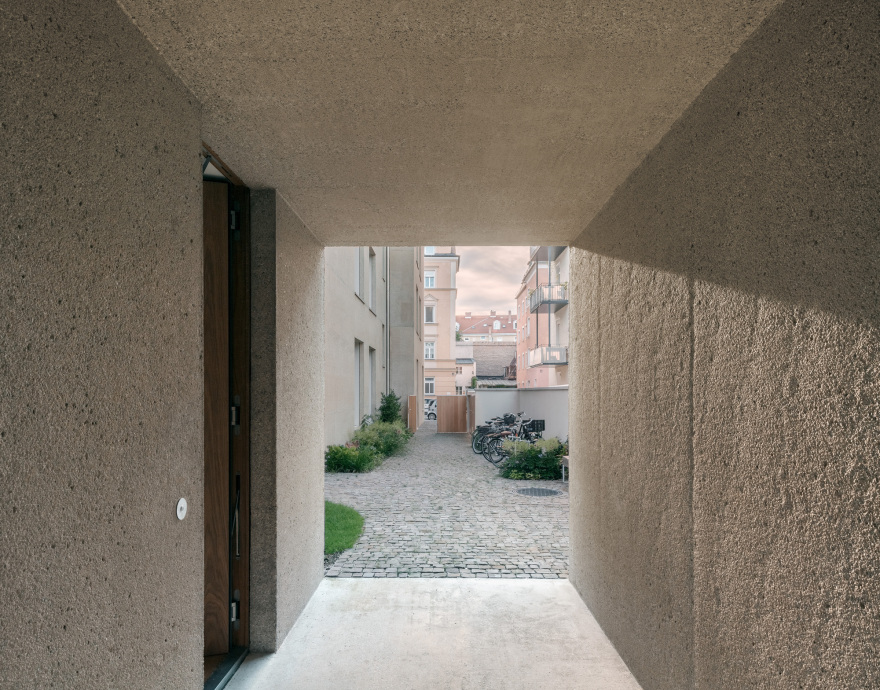
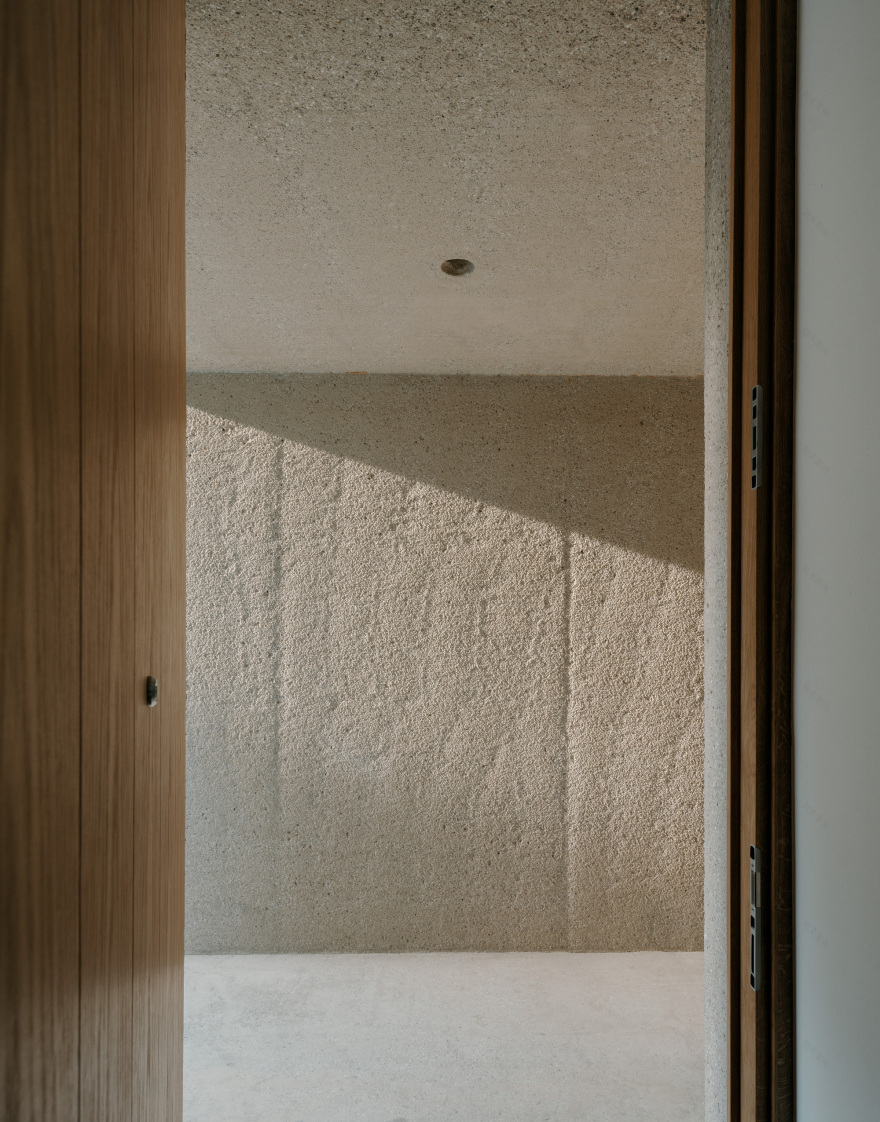
The building's façade conveys the feeling of permanence and protection, while the plasticity and perceived heaviness of the bush-hammered concrete blends in with the roughly plastered buildings of the neighborhood. The play of light and shadow in the old buildings is mirrored in the handcrafted irregularity of the concrete surface. The traces of manual work, visible in the grazing light, gives the building a special human touch.

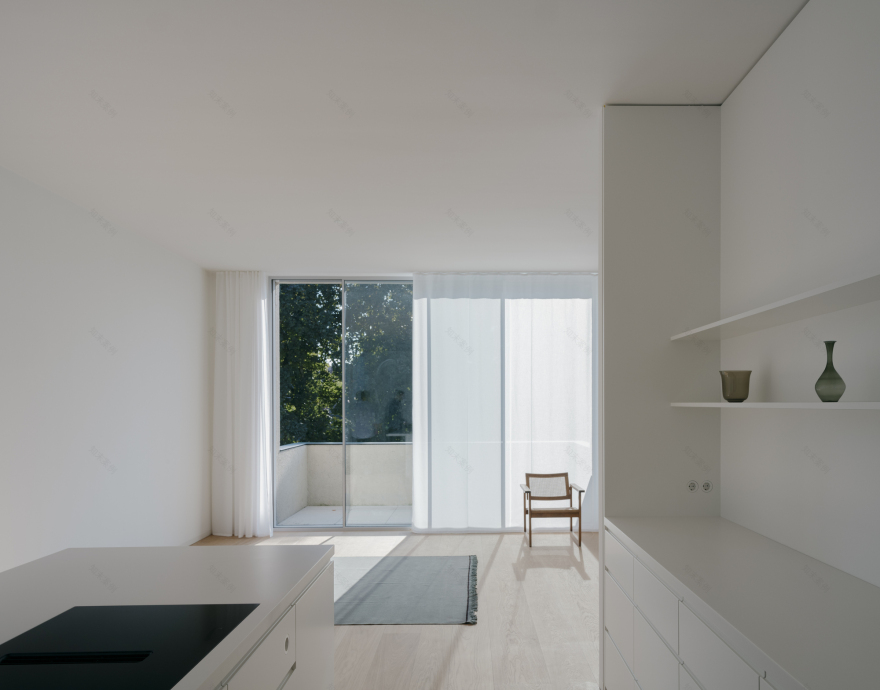
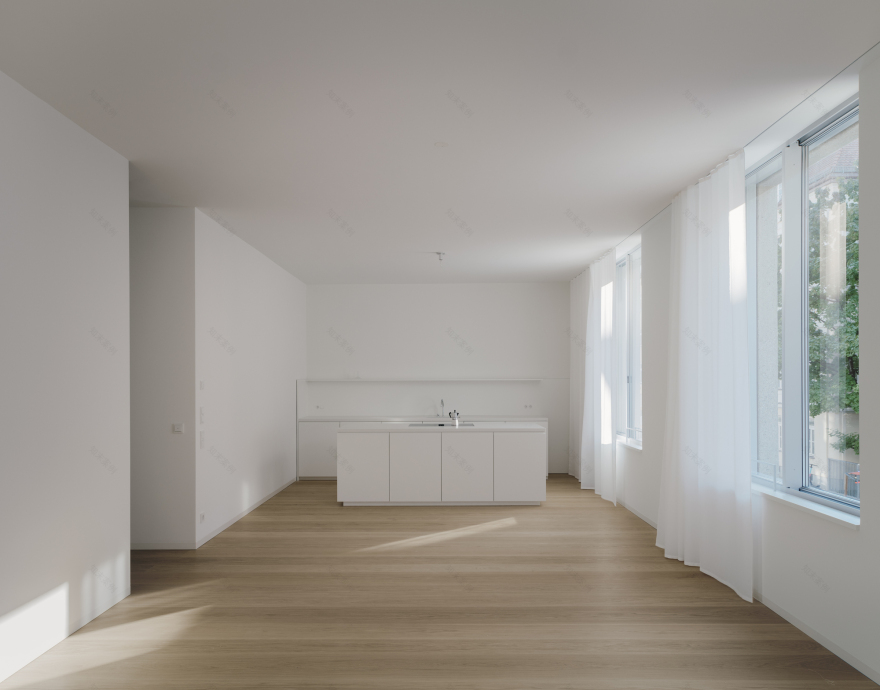
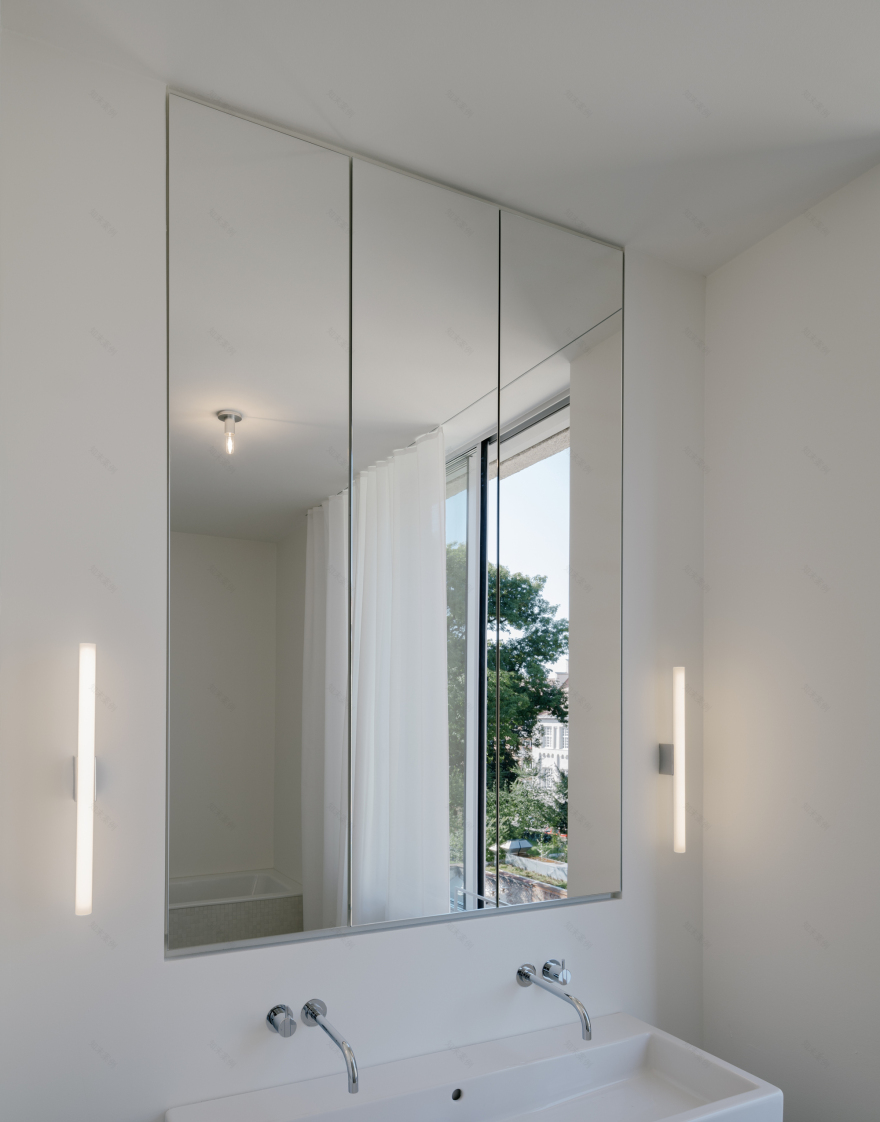
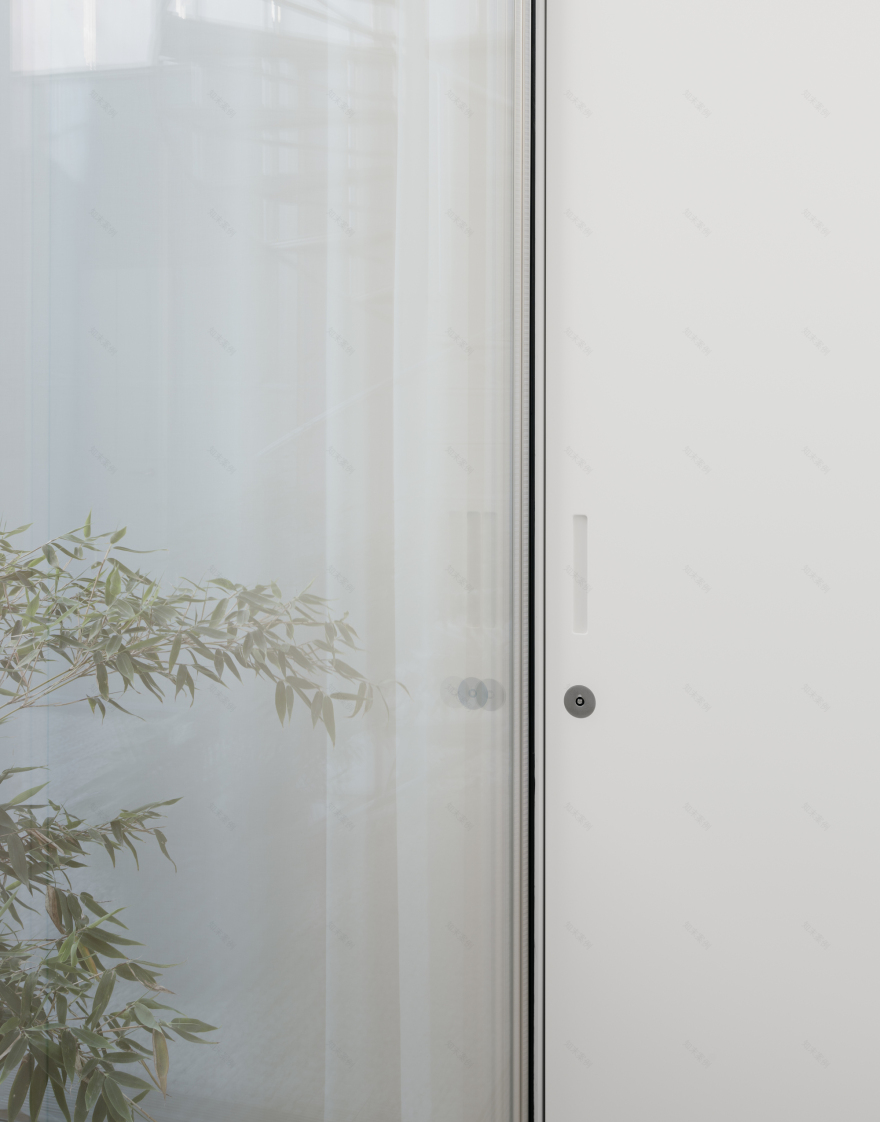
We paid particular attention to the positioning and size of the windows. While the room heights correspond to the neighboring building, the windows in the new building are significantly larger. A low balustrade and use of the full room height increases the view to the outside. As a result, the surroundings become a defining part of the interior and the sun reaches deep into the rooms. The proximity of the opposite buildings and the trees reinforces a sense of connection with the area and its history, lending the living spaces a special atmosphere of tranquility.

At the back of the property is a sheltered two-floor coach house with its own garden. A passage connects the private garden with the main entrance and will in future offer the possibility of entering the small church park via a garden gate.

Project gallery











南京喵熊网络科技有限公司 苏ICP备18050492号-4知末 © 2018—2020 . All photos and trademark graphics are copyrighted by their owners.增值电信业务经营许可证(ICP)苏B2-20201444 苏公网安备 32011302321234号
苏公网安备 32011302321234号客服
消息
收藏
下载
最近