

创作上传
VIP
收藏下载
登录 | 注册有礼
查看完整案例

收藏

下载

分享

翻译
Architects:taller de arquitectura de bogotá
Area:19992m²
Year:2020
Photographs:Alejandro Arango
Category:University
Architects In Charge:Daniel Bonilla & Marcela Albornoz
Contributors:Cesar Grisales, Christian Durango, Maria A Echeverri, Laura Zapata, Andres Gutierrez, Juan M Lopez, Alexander Roa, Laura Bermudez, Gabriela Ortiz, Pablo Negret, Laura Gutierrez, Manuela Amado, Mateo Franco, Juan Camilo Baquero
Interns:Susana Garzón, William Pauwels, Ricardo Stahelin, Valentina Carreño, Diego Cardona, Carolina Zapata, Santiago Castillo, Santiago Alfaro, Angelica Ruiz, Gabriela Barreto, Manuel Rico, Santiago Gomez, Cesar Antia, David Hurtado, Sebastian Rojas, Natalia Perico, Luisa Velasquez, Juan D Ramirez, Andrea Zamora, Vanessa Regino, Federico Lozano, Camila Dussan.
Construction:Conconcreto
Structural Design:CNI Ingenieros - Nicolás Parra
City:Bogotá
Country:Colombia

Text description provided by the architects. The design of the new Faculty of Sciences at the Pontificia Universidad Javeriana faced unique challenges, such as achieving a harmonious balance with the historic Pablo VI building, activating the urban edge of Carrera Séptima, and coherently articulating the campus. The comprehensive project was structured around three fundamental components: A) A linear platform that establishes a human-scale front along Carrera Séptima, B) A tall tower with a broad and fluid base, defining a new iconic entrance to the campus, and C) An extensive landscape intervention and collective spaces that serve as a connector between different areas of the campus.


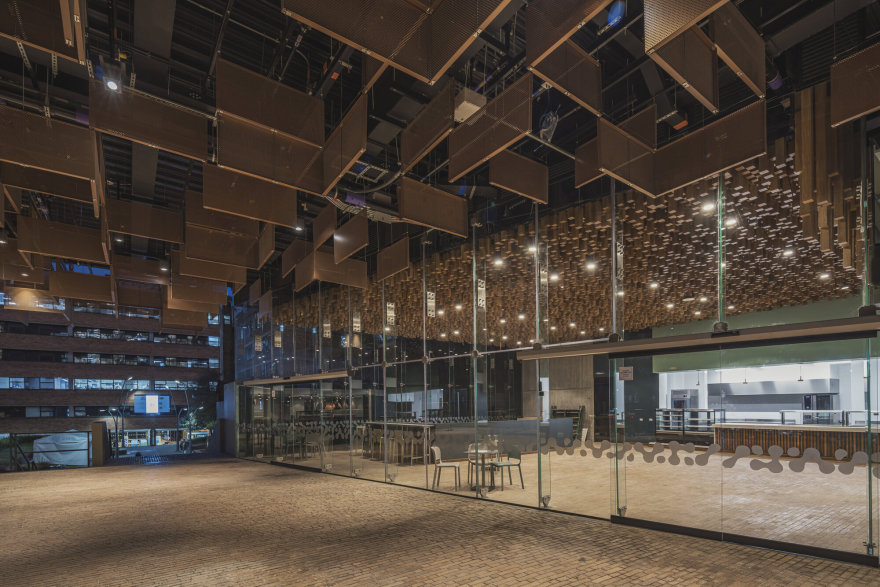
The simplicity and strength of this proposal — based on the combination of platform/tower — not only highlights the presence of the historic Pablo VI building (1967), designed by architect Aníbal Moreno and the only listed property of the university complex, but also reinforces its value by integrating it respectfully into the ensemble. The platform, extending northward, revitalizes the forecourt of the historic building, offering an open space that integrates vegetation and amplifies the use of its predominant material, brick. The tower, strategically located at the northern edge of the site, is positioned in a way that avoids confronting Pablo VI, acting as a visual backdrop that closes the pathway that begins at the Central Library.


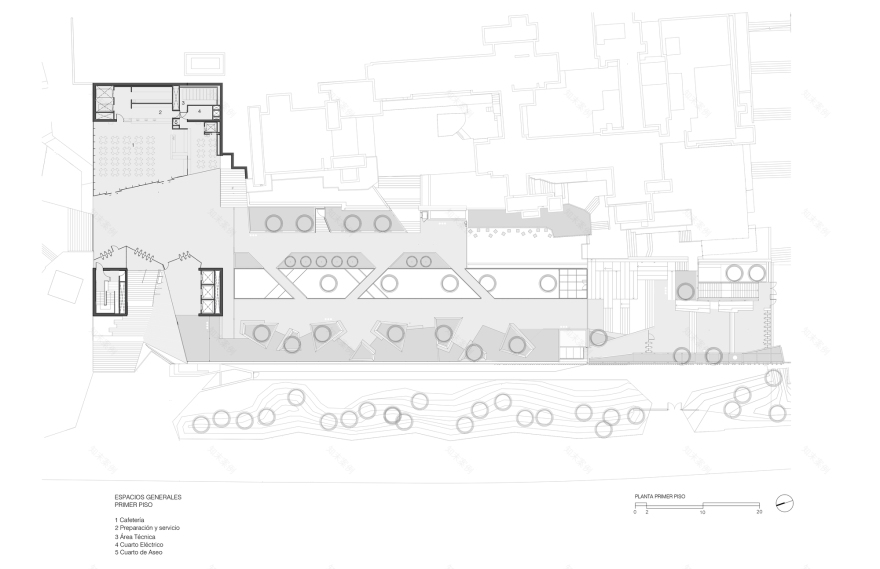
The linear platform defines and consolidates a new front for the campus toward one of Bogotá’s iconic avenues, while housing the training laboratory program. To ensure high-quality interior spaces, natural light and ventilation are optimized through the use of two "English" courtyards, which create a longitudinal garden that runs through the interior of the building.
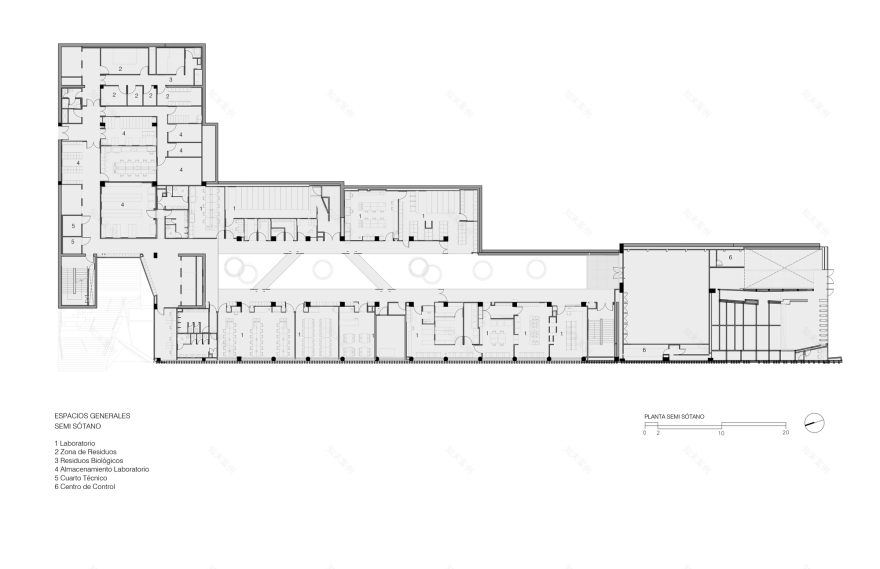

As for the tower, it is organized through a system of four large concrete cores and Vierendeel trusses at the perimeter, maximizing usable area and significantly contributing to design flexibility. This system facilitates the future adaptation of the building to the changing needs of specialized laboratories. The four facades are clad with sun-shading metal panels with variable density in their micro-perforation, which help mitigate solar incidence according to the orientation of each side, while also providing a uniform appearance to the building.


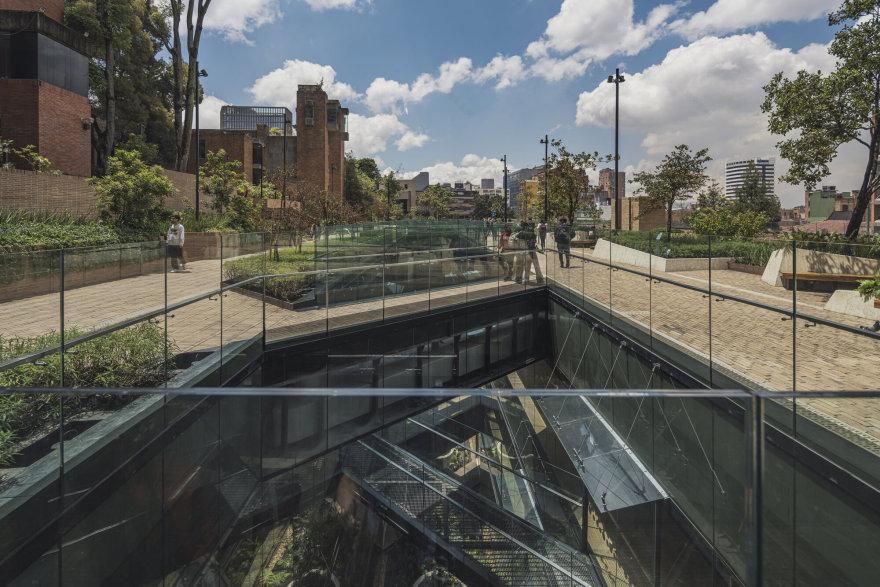
Finally, the large public space located on the walkable roof of the platform connects the various areas of the campus with ample outdoor spaces for gathering and lingering. This strategy allows for the use of less than 30% of the occupied area, achieving the functional requirements of the program while promoting the idea of a green campus that enhances university well-being.

Project gallery






南京喵熊网络科技有限公司 苏ICP备18050492号-4知末 © 2018—2020 . All photos and trademark graphics are copyrighted by their owners.增值电信业务经营许可证(ICP)苏B2-20201444 苏公网安备 32011302321234号
苏公网安备 32011302321234号客服
消息
收藏
下载
最近