

创作上传
VIP
收藏下载
登录 | 注册有礼
查看完整案例

收藏

下载

分享
项目名称:中海大吉巷
位置:北京
设计单位:AECOM
图片数量:56张

位于北京二环核心区、距故宫骑行约15分钟的中海大吉巷,占地约6公顷:约8万平的商业与1.2万平的开放绿地相嵌交织,文保院落、胡同街巷、城市绿地与办公楼宇联动运行。AECOM以公共空间为桥,重织历史肌理与当代生活,激活片区更新与活力,让历史文化照进日常,并将文化从“观赏”迈向“参与、共创”,塑造真正属于市民的“城市文化客厅”。
▼ 项目区位,Project location© AECOM

▼ 通过时间轴线,将历史文保、商业办公、绿地空间串联起来,Usingthe timeline to connect historical conservation,commercial offices, and green spaces© AECOM
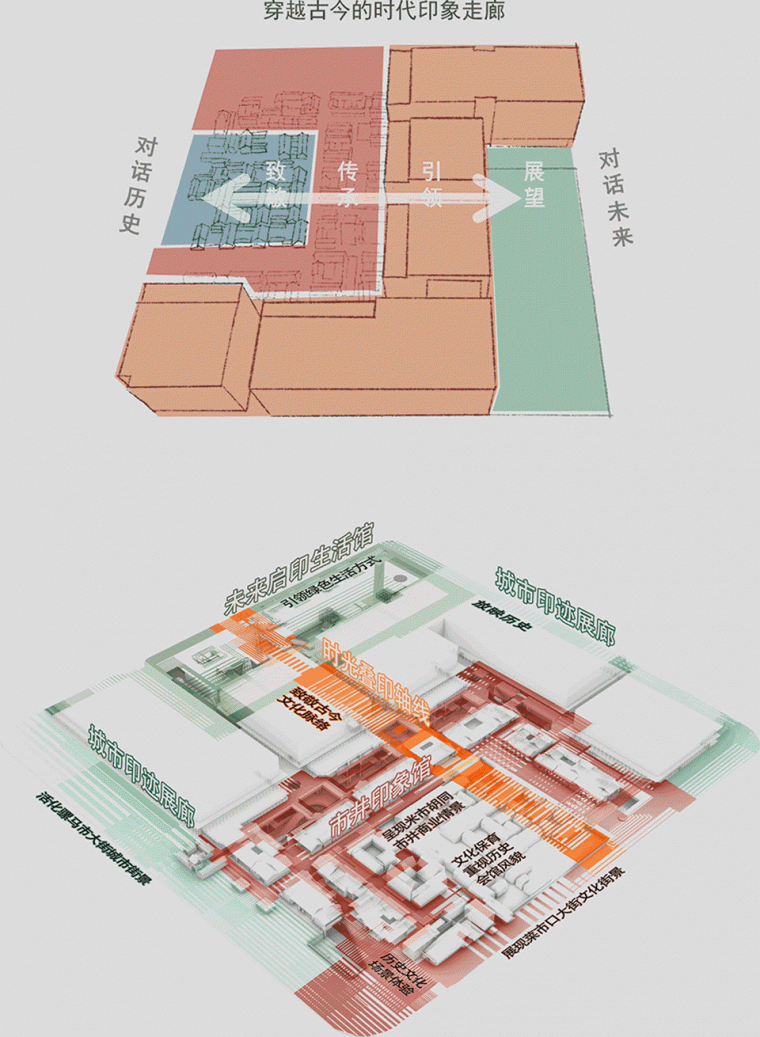

Located in the heart of Beijing’s Second Ring Road, just a 15-minute bike ride from the Forbidden City, Zhonghai Daji Alley spans approximately six hectares. The project integrates around 80,000 square meters of commercial space with 12,000 square meters of open green space, weaving together heritage courtyards, hutong alleyways, urban landscapes, and office buildings into a dynamic, interconnected district. Using public space as a catalyst, AECOM reconnects historical fabric with contemporary urban life — revitalizing the district and injecting new energy into its daily rhythms. Cultural heritage is transformed from something to be merely observed into something to be actively experienced, co-created and shared, shaping a true “urban cultural living room” for the city.
▼ 街区鸟瞰,Street block aerial view© 河狸景观摄影, AECOM


01 文化唤醒 | 编织历史遗产与未来的时空纽带Cultural Awakening | Weaving a Spatial and Temporal Link Between Heritage and the Future
对一座城市而言,文化不仅封存于博物馆与书页之中,更流淌在街道肌理和院落格局之内。中海大吉巷所在的宣南片区,曾是北京历史文化的重要承载地。康有为故居、《每周评论》旧址、便宜坊旧址,会馆文化、胡同记忆与士人精神在此交汇。
▼ 历史与文化背景,Historical and cultural context© AECOM

For a city, culture does not reside solely in museums or books — it flows through its streets, courtyards and urban patterns. Zhonghai Daji Alley sits within Beijing’s historic Xuan’nan district, long recognized as a cultural heart of the city. Landmarks such as Kang Youwei’s former residence, the site of Weekly Review and the historic Bianyifang restaurant converge here, alongside guild hall traditions, hutong memories and the enduring spirit of intellectual life.
▼ 街区概览,Street block overview©河狸景观摄影, AECOM

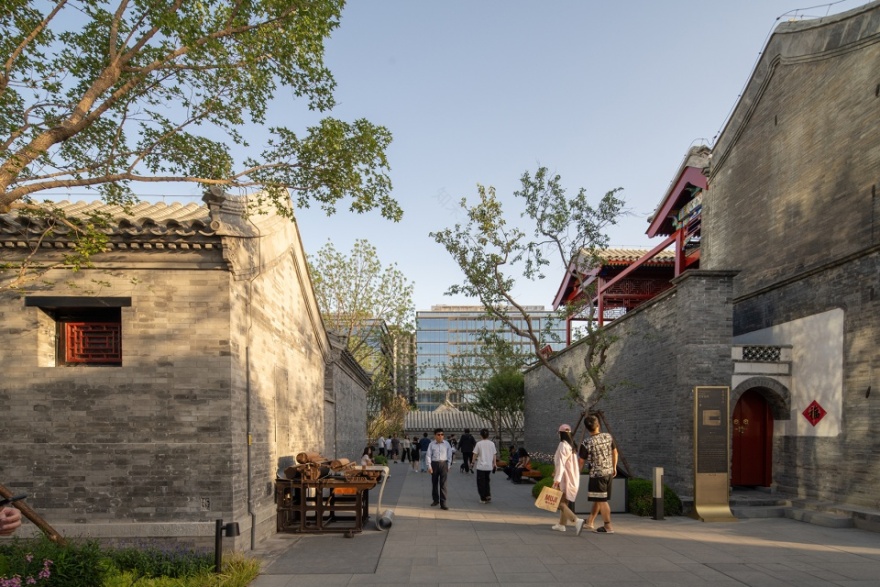
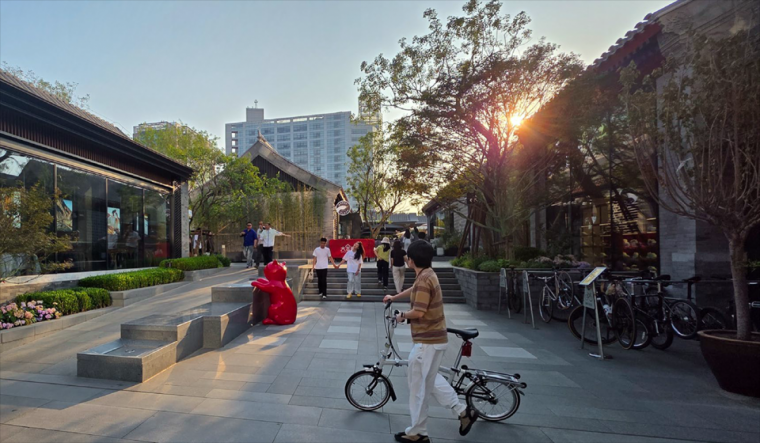
▼ 街景,Street view© 河狸景观摄影, AECOM


AECOM设计团队以三大历史院落为核心,确立了“以点串线、融入日常”的核心思路,通过一条“人文故事线索”将胡同街巷与生活场景串联起来,在还原历史氛围的同时延续场所精神;又深入研究了北京传统院落与古树的空间关系,巧妙将绿化融入建筑界面,提升了街道视觉品质和胡同生态;并通过精选本地植物,打造沉浸式“逐景”体验,真实再现米市胡同与银杏堂街的生活场景。
▼ 概念图,Concept diagram© AECOM
▼ 渲染图,Rendering© AECOM

Centered around three key heritage courtyards, the AECOM design team established a core strategy of “connecting points into lines and integrating heritage into daily life.” A curated cultural narrative links hutong alleyways with everyday urban scenes, preserving historical atmosphere while extending the site’s spirit into the present. The team also studied the spatial relationship between traditional Beijing courtyards and ancient trees, thoughtfully integrating greenery into building edges to enhance street character and hutong ecology. Carefully selected native planting creates immersive, unfolding journeys that vividly recreate the lived scenes of Mishi Hutong and Ginkgo Hall Street.
▼ 历史肌理与当代城市生活交织,Historic fabric intertwined with contemporary life© 河狸景观摄影, AECOM
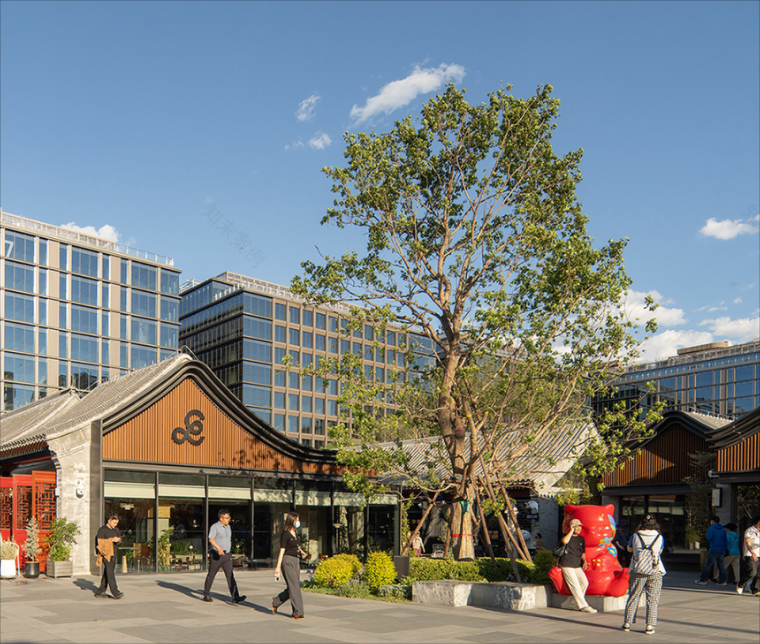

▼ 历史院落串联生活场景,Heritage courtyards connecting daily life© 河狸景观摄影

▼ 绿化融入建筑界面,Integrating greenery into building edges©河狸景观摄影
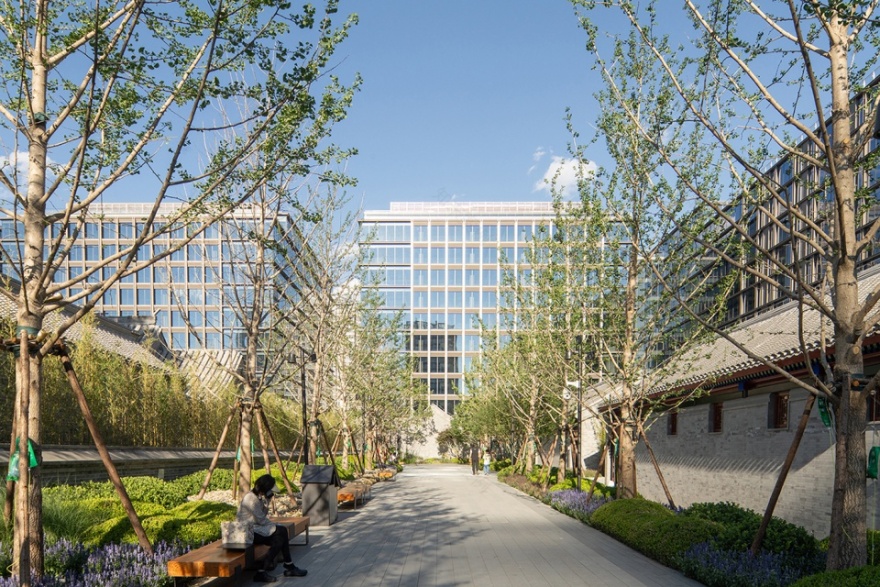

▼ 沉浸式“逐景”体验,Immersive unfolding journeys© AECOM,河狸景观摄影

公共空间Public Spaces
在公共空间层面,团队提炼“三大时代地图”的叙事元素,通过铺装与艺术装置将其嵌入其中,不仅激活了场所精神,更形成一条“可读、可感”的城市时间轴。
▼ 铺装与装置构成的城市时间轴,A readable urban timeline through paving and art©AECOM

Narrative elements drawn from “three historical era maps” are embedded into paving patterns and public art installations, activating the site’s cultural identity while forming a readable and experiential urban timeline.
▼ 公共空间,Public space© 河狸景观摄影

▼ 公共空间近景,Public space close view© 河狸景观摄影

文化图腾Cultural Totems
位于城市形象展示窗口的文化图腾,其代表的“士聚宣南、骡马市集、报业兴源、胡同记忆”如同连接着过去与现在的文化支柱。其中,时代地图所展现的明朝五城三十六坊街巷场景,与精神堡垒的时代内涵相呼应,共同构成激发场所认同感的 “城市文化热点”。
Positioned at key gateways and visual focal points, cultural totems represent themes such as scholarly life in Xuan’nan, historic horse markets, the rise of journalism and hutong memory. These symbolic anchors connect past and present, transforming historical references into vibrant cultural landmarks that strengthen identity and belonging.
▼文化图腾,Cultural totems© 直译摄影

大吉之心The Heart of Daji
而致敬传统戏楼的“大吉之心”中心节点,则以创新设计重新诠释历史记忆,其铺装复刻了民国时期大吉巷的街景地图,饱经风霜的纹理诉说着时光的流逝,引领游客步步穿梭于历史的长河之中。
▼ “大吉之心”诠释历史记忆,The Heart of Daji reinterprets collective memory © AECOM

Inspired by traditional opera stages, “The Heart of Daji” reinterprets collective memory through contemporary design. Its paving replicates the street map of Daji Alley from the Republic of China era, with weathered textures that speak to the passage of time and guide visitors through layers of history.
▼ “大吉之心”概览,The Heart of Daji overview© 河狸景观摄影
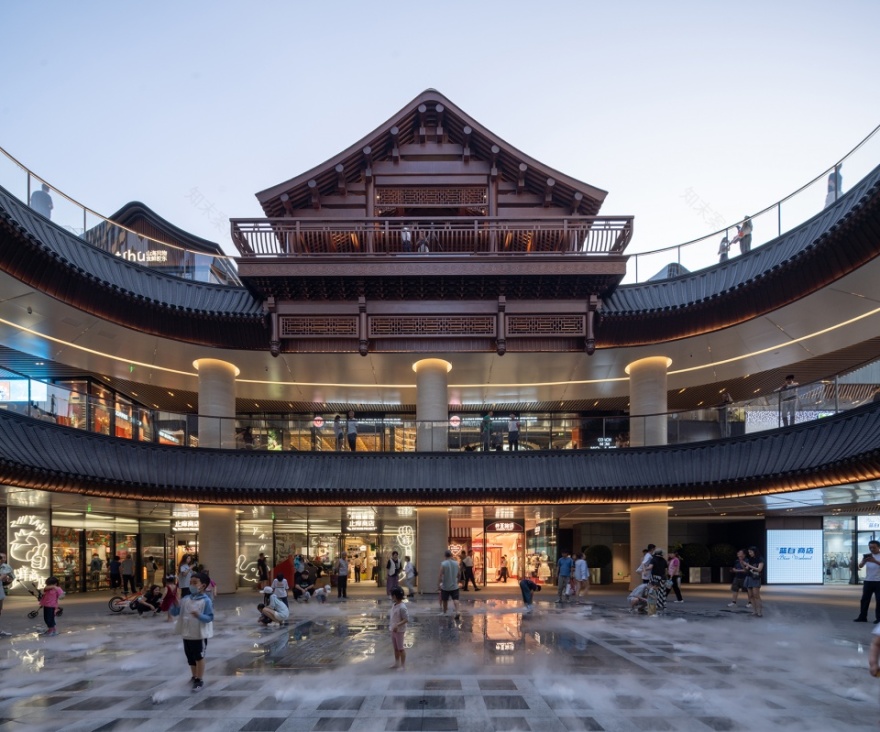
最终,设计团队以宣南的 “文化肌理” 为隐线,将这些分散的设计节点与城市要素编织成有机整体。自西向东,文保建筑、商业街区与办公区域沿景观脉络渐次展开,形成一条从历史走向现代的 “时光长廊”。伴着宣南璀璨的历史星光,展开自然开放的城市活力新篇章。
Using Xuan’nan’s cultural fabric as an underlying thread, the design weaves these individual moments into a cohesive whole. From west to east, heritage buildings, commercial streets and office areas unfold along a continuous landscape sequence, forming a “corridor of time” that transitions seamlessly from history to modern urban life — opening a new chapter of inclusive, vibrant public space.
▼ “大吉之心”公共核心空间,The Heart of Daji as a civic centerpiece© 河狸景观摄影
榫卯之合Mortise-and-Tenon Harmony
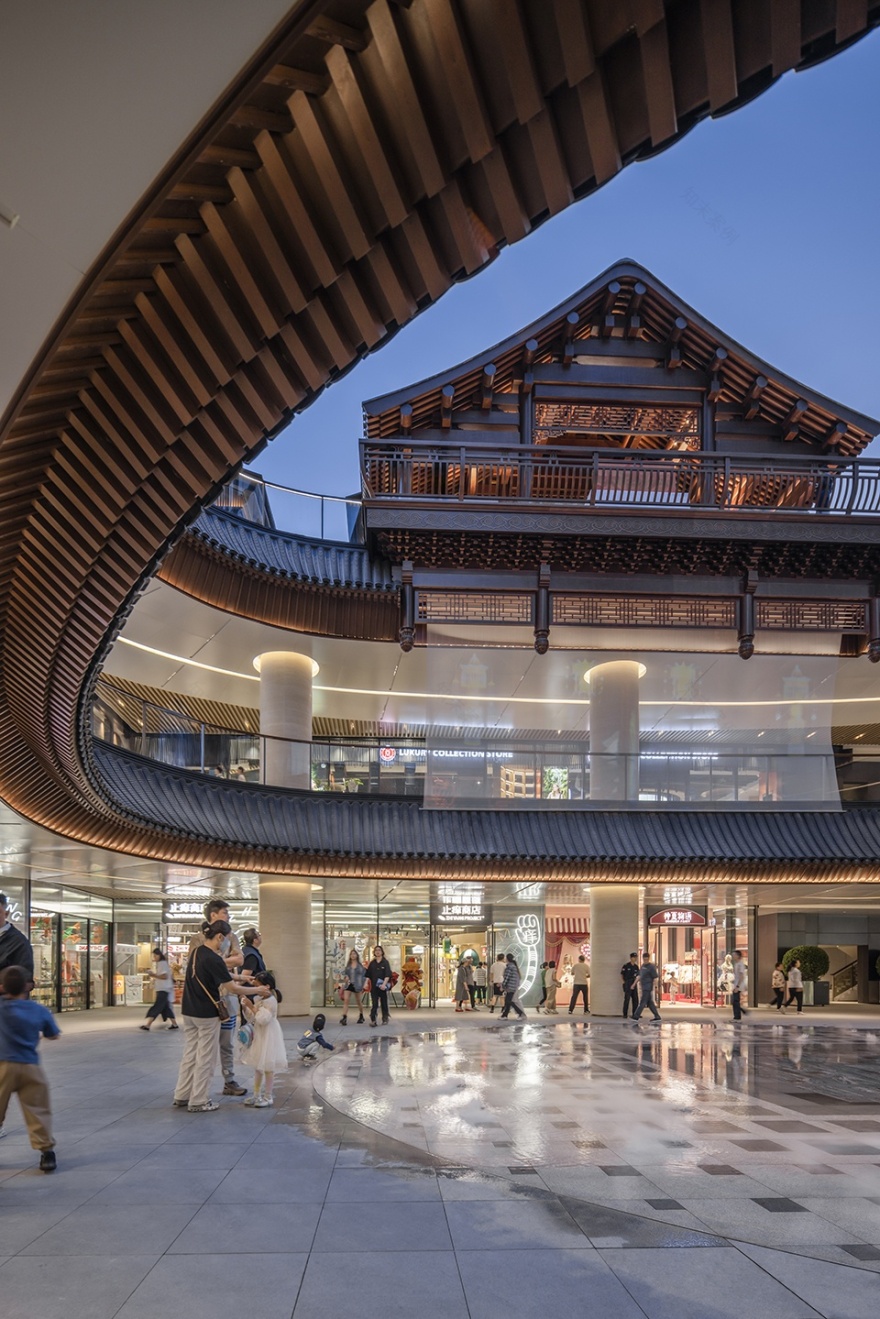
团队以传统 “榫卯之合” 的巧思,构建起 “空间 — 场景 — 行为” 的共振;又以 “吉印” 为精神符号,贯穿于雕塑、历史地图与节点构筑之中,让每一处空间都承载着可感知的故事,成为当下可触摸的记忆。
Drawing inspiration from traditional mortise-and-tenon craftsmanship, the design establishesa resonance betweenspace, scene and human behavior.The“Ji Seal”serves as a symbolic motif embedded throughout sculptures, historical maps and architectural nodes, ensuring each space carries a tangible narrative — transforming memory into something that can be felt and experienced today.
▼ 空间与文化符号的共振,Resonance of space and cultural symbols© AECOM

同时,结合整体空间动线,团队还精心控制景观IP与植物的定位,营造出步移景异的变幻体验;并对建筑临街界面进行整合优化,化零散为整体,为胡同街巷以及商街界面打造出惊喜打卡点和连续的游览空间。
▼ 步移景异的体验,Constantly shifting visual experience© AECOM

Landscape elements and planting are carefully positioned along movement routes to create a constantly shifting visual experience. Street-facing building edges are consolidated and refined,transforming fragmented spaces into cohesive, engaging environments. The result is a sequence of memorable moments and inviting destinations across hutong alleys and commercial streets alike.
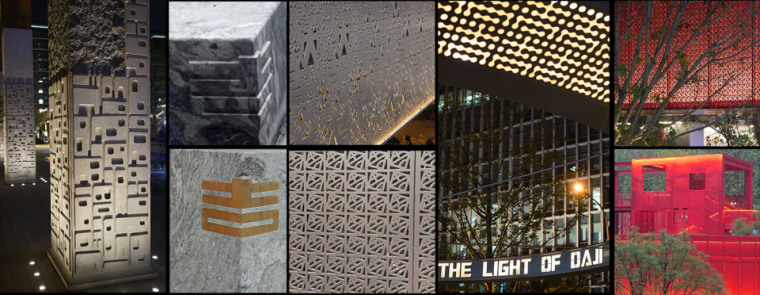
▼ 文化符号细部,Cultural symbols details© AECOM
02 公共焕新 |立体场景激活城市公共生活Public Renewal | Activating Urban Life Through Multilayered Scenarios
传统商场往往边界清晰、动线封闭,而大吉巷的设计打破了这一固定模式,赋予项目强烈的公共属性。基于立体商业的结构特点,团队将地下商业走廊转化为具有文化沉浸感的步行街景,绿色基础设施甚至延伸至地下二层,模糊了商业与自然的界限。
Traditional shopping malls often rely on closed circulation and rigid boundaries. Zhonghai Daji Alley breaks from this model, embracing a strong public dimension. Leveraging the project’s layered commercial structure, underground retail corridors are reimagined as culturally immersive pedestrian streets. Green infrastructure extends down to the second basement level, blurring the line between commercial space and nature.
▼下沉商街,Sunken retail street© 河狸景观摄影, 直译摄影


▼ 地下空间转化为沉浸式公共街景,Sunken retail reimagined as public streets© 直译摄影


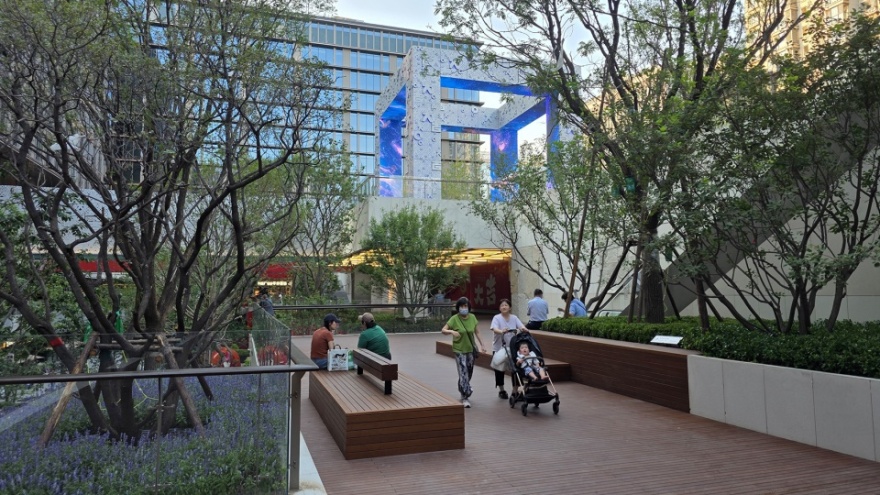
在绿地稀缺的内城,项目以1.2万平米平面绿地为底盘,“地面公园—台地森林—商业露台”三层联动:台地接入商业双层动线,地面融入社区公园网络并承载社区活动。多维贯通最大化空间效能,公共开放空间的转为一个立体漫游森林枢纽,商业活力,自然体验与邻里交往由此重构。“森林露台”被定位为游客与社区居民的日常休闲载体:层叠树荫下,儿童自然游戏、老人静坐交谈、邻里小聚交流、品牌路演和小市集在分区不打扰、分时可切换的组织中共生。绿地真正成为承载日常温度的生活容器,也是商业与社区共享的公共交流舞台。
▼立体漫游森林枢纽,Vertical and walkable forest hub© AECOM

In Beijing’s dense inner city — where green space is scarce — the project organizes 12,000 square meters of landscape into a three-tier system of ground-level parks, terraced forests and rooftop commercial terraces. The terraces connect seamlessly with the dual-level retail circulation, while ground-level green spaces integrate into the surrounding community park network and support neighborhood activities. This multidimensional approach maximizes spatial efficiency, transforming public open space into a vertical, walkable forest hub where commerce, nature and social interaction coexist.
The “forest terraces” are conceived as everyday leisure spaces for both visitors and residents. Beneath layered tree canopies, children play, seniors gather and converse, neighbors meet, and brands host showcases and pop-up markets. Flexible zoning allows different activities to coexist without conflict, enabling green spaces to become living containers of daily life and shared platforms for community and commerce.
▼与自然相融的公共空间,Public spaces in harmony with nature©AECOM, 直译摄影


▼ 街角,Street corner© 河狸景观摄影

▼ 屋顶之上,Above the roofs© 河狸景观摄影

把被忽略的桥下空间“挖”成一座多场景、可策展的城市剧场:东侧开放绿地在品牌发布、社区活动与宠物友好之间快速切换;桥下下沉广场承载市集、快闪演出与日常停留远眺。借助可切换动线与可组合设施,让商业与社区在同一舞台高频相遇,全天候放大公共交流,最大化创造价值。
Previously overlooked spaces beneath bridges are transformed into multi-scenario, programmable urban theaters. The eastern open green space can quickly shift between brand launches, community events and pet-friendly activities, while the sunken plaza beneath the bridge hosts markets, pop-up performances and informal gathering. Adaptable circulation and modular facilities allow commerce and community to intersect on a shared stage, amplifying public interaction throughout the day.
▼ 大吉剧场,Daji theatre©河狸景观摄影, AECOM


03生态共荣 | 构建可持续的绿色网格Ecological Harmony | Building a Sustainable Green Network
项目通过 “保留 + 重塑” 既有树木网格,并新种植约 420 棵乔木,将每一棵树的点位与日照、风向、视廊、建筑开口及界面退让进行精确对位,形成合理的冠幅 — 间距 — 高度比例:既能塑造舒适的人行体验与界面尺度,又能最大化发挥蒸腾降温、遮阴及导风等微气候调节效益。东侧台地森林公园以树木+高差组织出立体森林露台,把地面—台地—露台连续缝合为一片树荫网络。以树网为骨架叠加地被与灌丛,构建面向城市低碳运行的“绿色网格”;其中本土耐旱植物占比>30%,显著降低灌溉需求与养护成本。
The project combines the preservation and reconfiguration of existing trees with the planting of approximately 420 new trees. Each tree is precisely positioned in relation to sunlight, prevailing winds, sightlines and building setbacks, achieving optimal canopy coverage, spacing and height. This strategy enhances pedestrian comfort while maximizing microclimatic benefits such as cooling, shading and ventilation. The eastern terraced forest park uses tree layers and elevation changes to form a three-dimensional landscape, stitching together ground-level parks, terraces and rooftops into a continuous shaded network. Native, drought-resistant species account for more than 30% of the planting palette, significantly reducing irrigation demand and long-term maintenance costs while supporting low-carbon urban operation.
▼台地森林形成的立体绿色网格,A terraced green grid in three dimensions© 河狸景观摄影, AECOM, 直译摄影


在技术层面,团队尝试创新工艺提升场地的生态属性,以“光伏+景观”一体化提升生态性能:“大吉之门”、低碳花园光伏亭,以及台地公园构筑物均嵌入光伏板,所发电能直接供给园区照明,形成“自发自用”的清洁能源循环。光伏材料同时作为构筑屋顶、遮阳顶棚与艺术装置的表皮,实现功能与美学的统一,在传递可持续理念的同时,也增强公众对新能源的认知与参与感。
Innovative “solar + landscape” strategies further enhance ecological performance. Photovoltaic panels are integrated into structures such as the “Daji Gate,” low-carbon garden pavilions and terraced park installations, generating clean energy for on-site lighting through a self-sustaining system. These solar elements also serve as architectural and artistic surfaces, unifying function and aesthetics while increasing public awareness and engagement with renewable energy.
▼ 大吉之门及低碳花园中均嵌入了光伏板,实现能源循环,Great Fortune Gate and the Low-Carbon Garden embeddedwith photovoltaic panelsfor energy recycling© AECOM

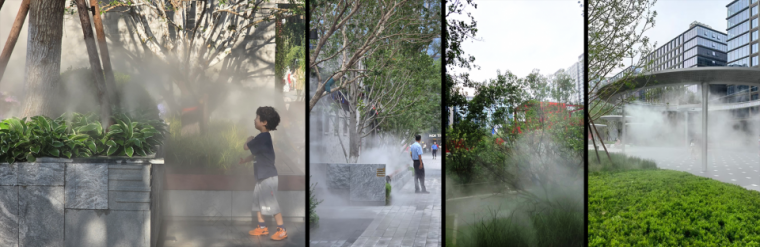
项目以主动式降温系统叠加林下绿荫、树冠遮蔽与雾森协同,削弱夏季热岛、优化热环境,显著提升气候适宜性与热舒适度。公共空间由“可达”升级为“可久留”,为市民提供更健康、宜人的户外场景,重塑人本尺度的城市体验。
Active cooling systems work in tandem with tree canopy shading and misting installations to mitigate summer heat and improve thermal comfort. Public spaces evolve from being merely accessible to genuinely inviting — encouraging people to linger, socialize and enjoy healthier outdoor environments at a human scale.
▼ 雾森,Mist and canopy© AECOM
结语Conclusion
AECOM以公共空间为桥梁,把历史叙事接入当代日常,把多样的存量空间接入“地面—下沉—台地”的三维网络,把单一功能接入多场景的运营体系。这一实践也表明,在人口密集的城市核心区,真正的空间 “增量” 并非来自新增建设,而是源于对存量空间的重新组织与叠加。桥下、下沉区域、屋顶及台地等原本被忽略的空间,被转化为可直接使用的生活场景,实现对空间价值的最大化利用。
At Zhonghai Daji Alley, AECOM uses public space as a bridge — connecting historical narratives with contemporary life, integrating diverse existing spaces into a three-dimensional network and transforming single-use areas into multi-scenario systems. The project demonstrates that in dense urban cores, meaningful spatial “growth” does not come from new construction alone, but from the thoughtful reorganization and layering of what already exists. Underpasses, sunken spaces, rooftops and terraces — once overlooked — are reimagined as active, everyday environments, maximizing spatial value and unlocking new possibilities for urban life.
▼ 建筑立面近景,Building facade close view© AECOM

▼每周评论旧址,The site ofWeekly Review© AECOM

在北京的城市版图上,大吉巷不只是完成了一次空间更新,而是塑造了新的城市目的地:把内城公共性重组为可抵达、可停留、可再访的连续体验;用公共空间之“桥”贯通时间、功能与尺度;在时间上连接过去与未来,在功能上连接文化与城市生活,在尺度上连接胡同街巷与城市网络——让大吉巷重新被认识,也被不断的重新想象。
Within Beijing’s evolving urban landscape, Zhonghai Daji Alley represents more than a renewal — it is a new destination. Public space is restructured into a continuous experience that is accessible, engaging and worth returning to. By bridging time, function and scale, the project links past and future, culture and daily life, hutong alleyways and the wider city — allowing Zhonghai Daji Alley to be rediscovered and continually reimagined.
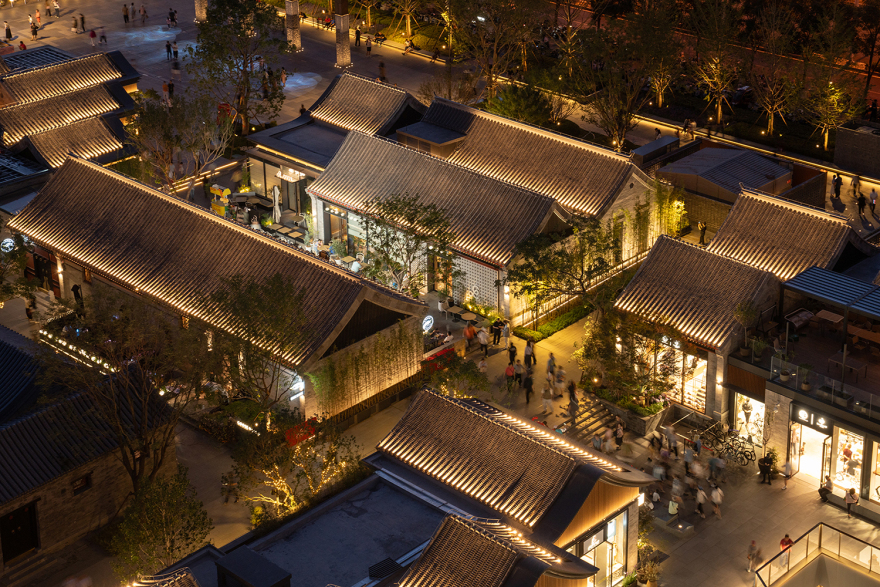
▼ 鸟瞰夜景,Aerial night view©河狸景观摄影
▼下沉商街夜景,Sunken retail street night view© 直译摄影
▼ 大吉剧场夜景,Daji theatre night view©AECOM

▼绿地夜景,Green space night view© 直译摄影

▼ 夜晚的街区,Street block at night© AECOM, 河狸景观摄影

▼ 夜晚亮起的文化图腾,Illuminated cultural totems at night©AECOM

项目名称:北京中海大吉巷 Daji Alley Beijing
项目类型:商业办公公共景观
项目地点:中国北京
设计单位(联合设计请注明所有设计方,并确认各设计单位已认可发布内容):景观方案设计:艾奕康设计与咨询(深圳)有限公司北京分公司 景观施工图设计:景立方(北京)景观规划设计有限公司 建筑设计:北京市建筑设计研究院股份有限公司 精装设计:Lead8 Hong Kong Limited 古建顾问:北京清华同衡规划设计研究院有限公司
施工单位:天津璟樾市政园林工程有限公司
项目负责人:梁钦东
项目总监:胡星星
项目经理:许天韵
设计团队人员:张宇薇、范文鹭、张施雨、许蓓蕾、吴艳雯、张筱婷、刘力玮、郑振波、韩军龙、李娜;
业主:中海北京新城公司
建成状态:2025.05建成
设计时间(起迄年月):2022.01
建设时间(起迄年月):2024.02
用地面积(平方米):7.2万平方米
摄影:直译建筑摄影、河狸景观摄影、北京新城公司
南京喵熊网络科技有限公司 苏ICP备18050492号-4知末 © 2018—2020 . All photos and trademark graphics are copyrighted by their owners.增值电信业务经营许可证(ICP)苏B2-20201444 苏公网安备 32011302321234号
苏公网安备 32011302321234号客服
消息
收藏
下载
最近