

创作上传
VIP
收藏下载
登录 | 注册有礼
查看完整案例

收藏

下载

分享
历史的课题:被低估的蜀地先贤
Historical Challenge: An Underestimated Pioneer of Shu
文翁,一位位列四川历史名人榜首却常被低估的西汉政治家与教育家。汉景帝末年,他任蜀郡守,以修水利、兴教育、举贤能之政绩,被《汉书》尊为《循吏传》第一人。他在彭州湔江河畔修建了湔江堰,造良田千顷,使成都平原富庶超越关中。他创办了中国第一所地方官学“石室精舍”,即今成都石室中学的前身,他垒石为室,亲自执教,开创了全国地方办学先河,令巴蜀文风大化。清光绪十四年(1888年),蜀地百姓感怀其德,于湔江堰西侧寿阳山麓建祠。祠内石柱镌刻“东流不尽汉时水,西望常陪太守祠”,将文翁与李冰并列。然而历经百年,祠宇倾颓。2017年,彭州市结合湔江小火车线路恢复工程对文翁祠进行了原址修复与扩建。遗憾的是,因缺乏对文化价值的深度挖掘,加之疫情阻隔,扩建后的文翁祠虽有形制却无“人气”,渐显荒芜。
© 刘松恺
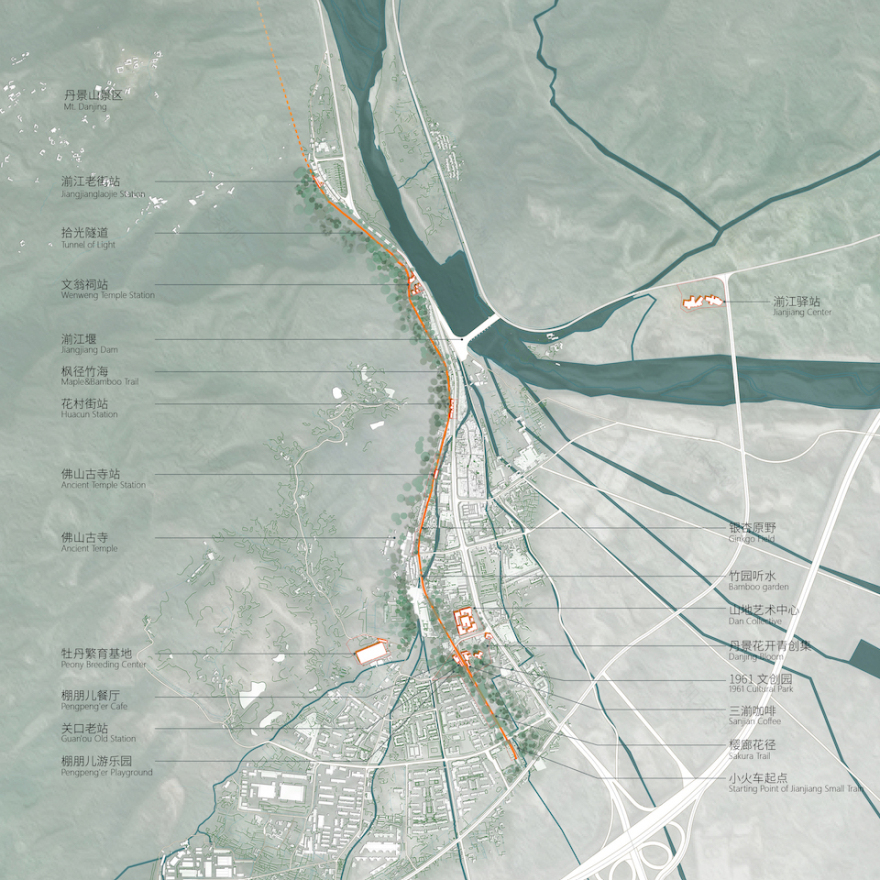
▼区位图,site location©UN-GROUP未集建筑
Wen Weng was a statesman and educator of the Western Han Dynasty who, despite ranking first among Sichuan’s historical figures, is often underestimated. In the late years of Emperor Jing of Han, he served as the Governor of Shu Commandery. Distinguished by his achievements in constructing water conservancy projects, promoting education, and recommending talented individuals, he was honored as the very first figure in the “Biographies of Upright Officials” in the Book of Han (Hanshu). He constructed the Jianjiang Weir by the Jianjiang River in Pengzhou, creating thousands of hectares of fertile land and elevating the prosperity of the Chengdu Plain beyond that of the Guanzhong region. He founded China’s first local public school, “Shishi Jingshe” (Stone Chamber Academy)—the predecessor of today’s Chengdu Shishi High School. By stacking stones to build classrooms and teaching personally, he pioneered the model of local government-run education in China and brought about a great flourishing of culture in the Ba-Shu region. In the 14th year of the Guangxu reign of the Qing Dynasty (1888), the people of Shu, grateful for his virtues, built a shrine at the foot of Shouyang Mountain, west of the Jianjiang Weir. A stone pillar within the shrine was engraved with the couplet, “The eastward flow is the endless water of Han times; looking west, one always accompanies the Governor’s Shrine,” placing Wen Weng on par with the legendary Li Bing. However, over the span of a century, the shrine fell into disrepair. In 2017, in conjunction with the restoration project of the Jianjiang Mini-Train Line, Pengzhou City carried out an in-situ restoration and expansion of the Wen Weng Shrine. Regrettably, due to a lack of deep excavation into its cultural value, combined with the isolation caused by the pandemic, the expanded shrine possessed the physical form but lacked vitality, gradually becoming desolate.
▼项目概览,overview of the project© 刘松恺


▼文翁祠,Wen Weng Shrine © 品鉴彭州

2024年,随着湔江堰申报世界灌溉工程遗产,停运两年的小火车蓄势重发,我们的核心课题是:如何让厚重的历史被重新“看见”,将文化符号转化为当代的空间价值。
In 2024, as the Jianjiang Weir bids for the World Heritage Irrigation Structures listing, the mini-train—suspended for two years—is poised for a relaunch. Our core challenge is: how to make this profound history “visible” again and translate cultural symbols into contemporary spatial values.
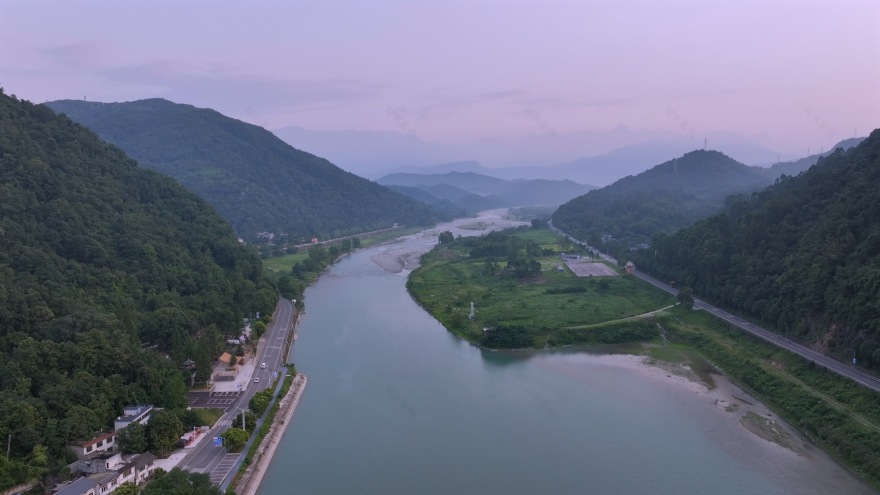
▼湔江堰鸟瞰图,Jianjiang Weir aerial view© 刘松恺
被看见:重塑第一印象
Being Seen: Reshaping the First Impression
寿阳山下的彭白路年过境人流超千万,但2017年修建的旧大门如同一道封闭围墙,将文翁祠隐匿于视线之外。“被看见”是破题第一步。我们拆除旧门,代之以更开放、具昭示性的入口。新大门汲取传统飞檐灵感,将二维的“门”转化为三维的立体廊道。
Although Pengbai Road at the foot of Shouyang Mountain sees an annual flow of over 10 million people, the existing gate built in 2017 acted as a sealed barrier, completely obscuring Wen Weng Shrine from view. ‘Being seen’ was the first step in unlocking the site’s potential. We demolished the old structure and replaced it with a more open and iconic entrance. Drawing inspiration from traditional flying eaves, the new design transforms a two-dimensional ‘gate’ into a three-dimensional spatial corridor.
▼入口,entrance© 刘松恺
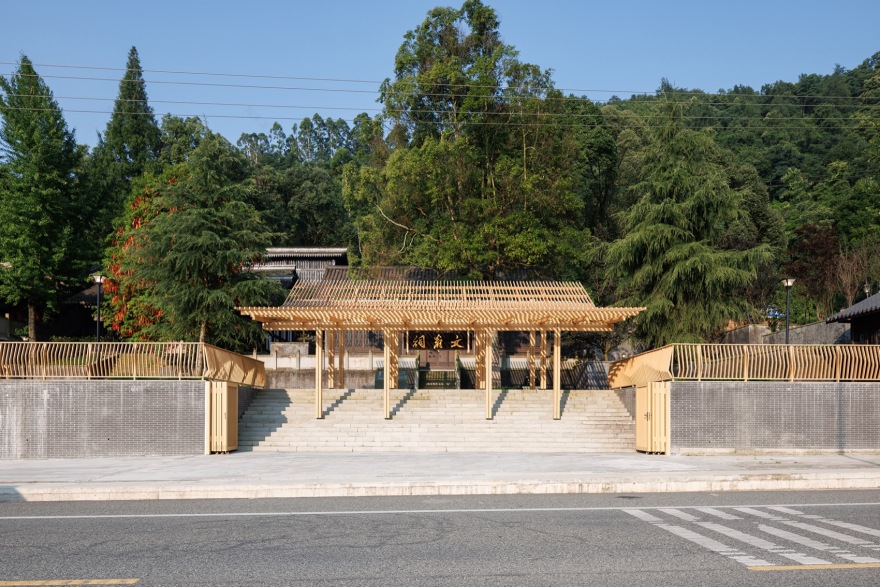

大门占据整个阶梯形成一个立体的入口廊道,飞檐在道路侧轻微伸出,以谦逊的姿态和亲人的尺度欢迎游人。屋顶顺着阶梯飞起,弧度呼应背后的文翁祠主殿,引导人流向上。飞起的屋檐象征着腾飞,四柱三间两跨的制式营造出拜访文翁的神圣感和仪式感,柱与梁共三百根,寓意“博学三百”。
▼平面图,Ground floor plan©UN-GROUP未集建筑
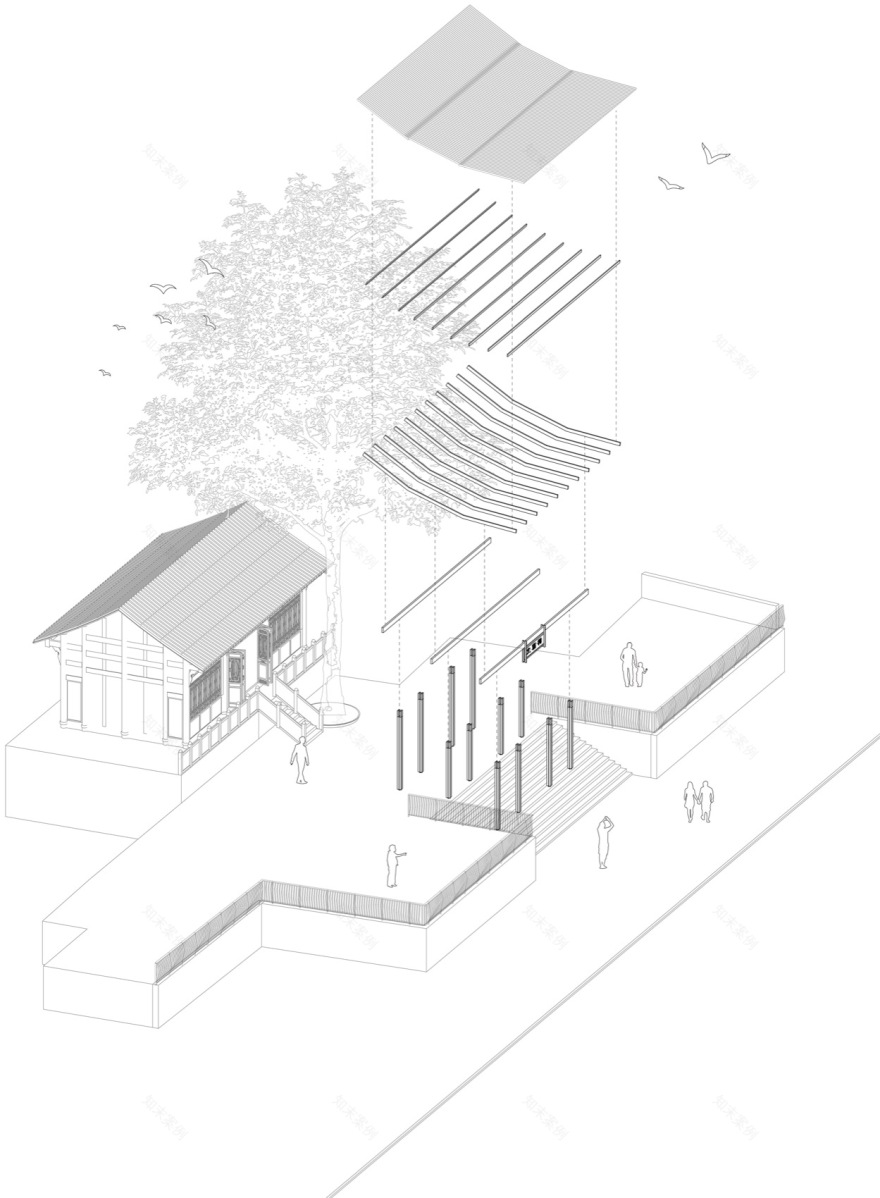
The gate occupies the entire width of the staircase, forming a volumetric entrance corridor. On the street side, the flying eaves cantilever slightly, welcoming visitors with a humble gesture and an intimate human scale. The roof ascends along with the steps, its curvature echoing the Main Hall of Wen Weng Shrine in the background, naturally guiding the flow of people upward. The soaring eaves symbolize ‘taking flight.’ The structural logic—adopting a traditional ‘four-pillar, three-bay’ configuration—cultivates a sense of sacredness and ritual for the pilgrimage to Wen Weng. Comprising exactly 300 columns and beams, the structure embodies the metaphor of ‘Broad Learning of Three Hundred’ (Bo Xue San Bai).
▼入口廊道,entrance corridor © 刘松恺

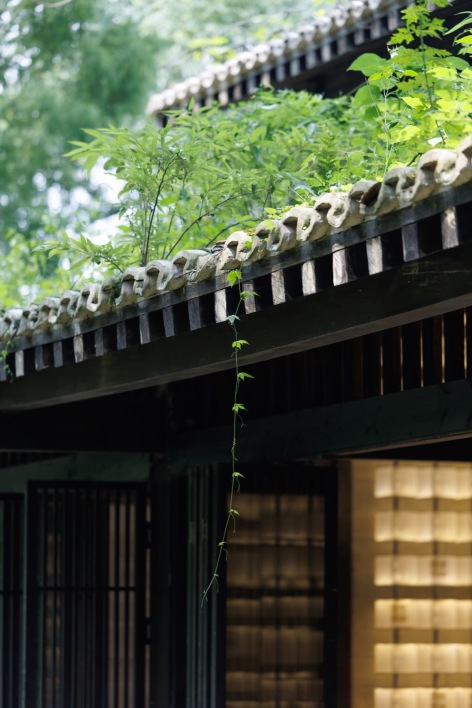
▼飞檐,flying eaves© 刘松恺


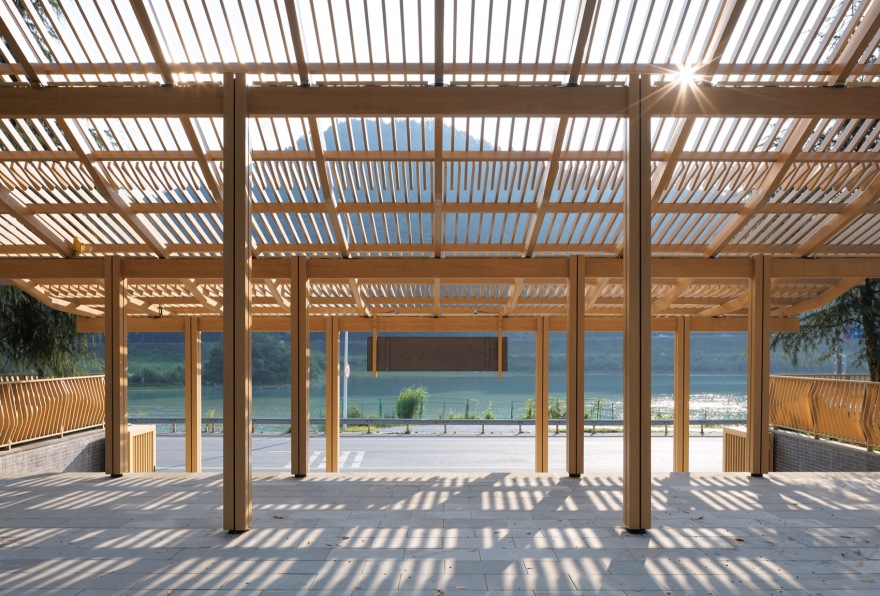

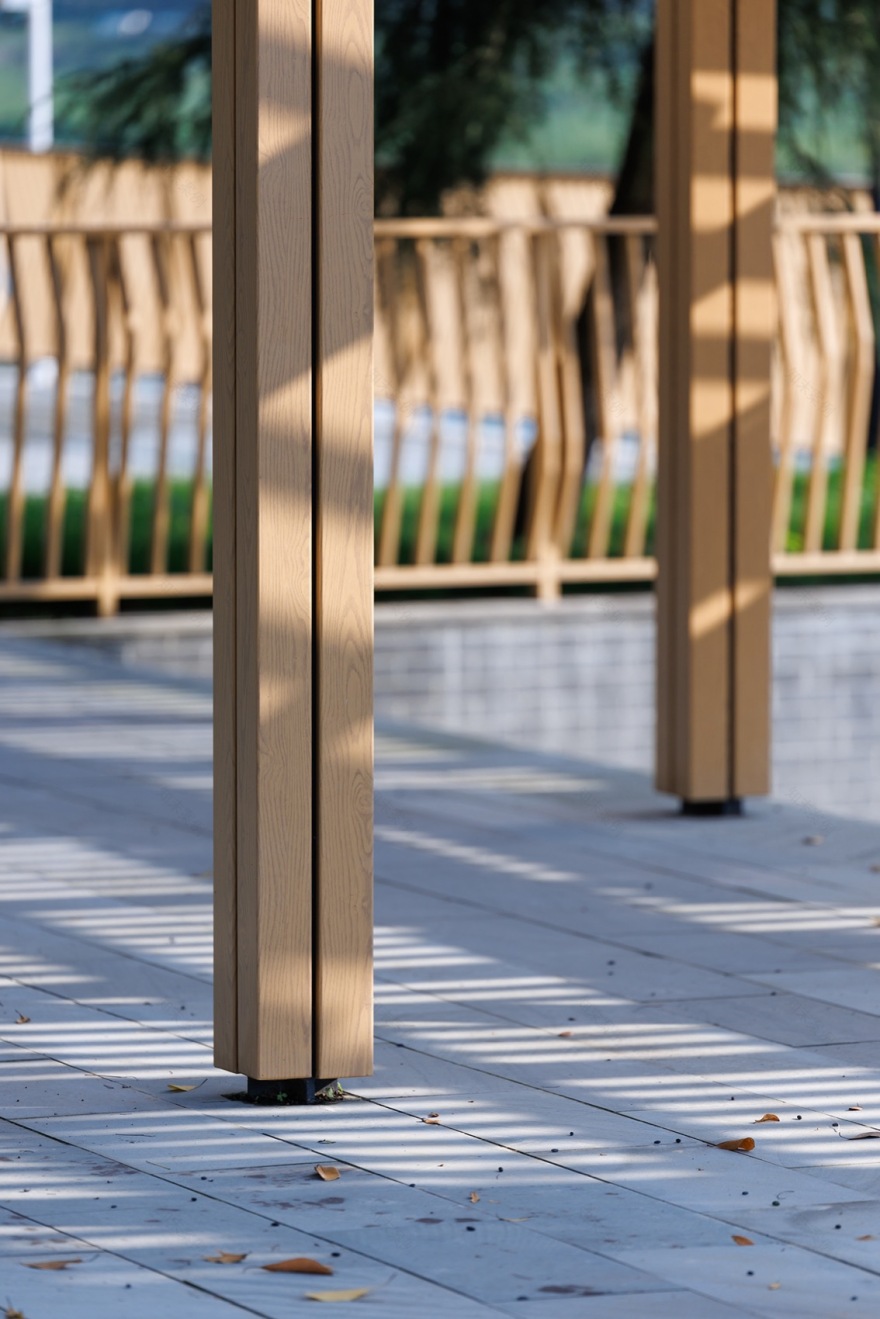
浅木色的新构筑在葱郁绿树中与古祠深色形成对话,在茂密葱郁的绿树掩映下成为彭白路上不可错过的新地标。
The new structure, rendered in light wood tones, engages in a quiet dialogue with the deep, dark hues of the ancient shrine. Nestled amidst lush greenery, it emerges as an unmissable new landmark along Pengbai Road.
▼飞檐细部,flying eaves details© 刘松恺


如何游:重梳空间动线
How to Visit: Restructuring Circulation
原园区存在三个分散的出入口,导致动线混乱且缺乏停车空间。同时,南侧长游廊虽连接山顶,却分流了主祠堂的热度。为此,我们对动线进行了大胆的合并与重组,构建清晰的内部游览环线。整合入口:拆除游廊下段,改建为停车场,确立新大门为唯一主入口。构建环线:切断山顶原候车厅与站台的直接联系,迫使动线导向北侧新建的综合驿站——“石室新序”。调整后,所有游客均沿顺时针环线游览,主要流线先沿山势往上再逐步回落,必经“石室新序”才能抵达车站或返回。这一策略不仅理顺了体验,更为园区植入了必要的消费业态,奠定了可持续经营的基础。
Originally, the site featured three dispersed entrances, resulting in chaotic circulation and a lack of parking spaces. Furthermore, while the long corridor on the south side connected to the summit, it inadvertently diverted footfall away from the Main Shrine. To address this, we boldly consolidated and restructured the circulation system, establishing a clear internal loop.
Consolidating Entrances: We demolished the lower section of the corridor to create a parking area, establishing the new gate as the sole main entrance.
Establishing the Loop: We severed the direct connection between the original hilltop waiting hall and the platform, redirecting the circulation toward the new northern service hub—”Shi Shi Xin Xu” (Stone Chamber New Preface). Post-adjustment, visitors follow a clockwise loop that ascends with the terrain before gradually descending. Passing through “Shi Shi Xin Xu” becomes a mandatory route to reach the station or exit. This strategy not only streamlines the visitor experience but also strategically implants essential commercial functions, laying a solid foundation for sustainable operation.
▼鸟瞰,aerial view©刘松恺

如何念:沉浸式精神空间
How to Commemorate: An Immersive Spiritual Space
文翁精神应当通过空间叙事层层揭示。游览序列始于主殿“文翁纪念馆”与二层的“湔江堰展陈馆”,通过多媒体与文物梳理其生平与水利功绩。
The spirit of Wen Weng is unveiled layer by layer through a spatial narrative. The visitor sequence begins at the Main Hall—the “Wen Weng Memorial Hall”—and continues to the “Jianjiang Weir Exhibition Hall” on the second floor. Here, a combination of multimedia and historical artifacts chronicles his life story and his monumental achievements in water conservancy.
▼文翁纪念馆,Wen Weng Memorial Hall ©刘松恺


展馆南侧,一条红色“跃龙门廊”盘卧山间。我们在原本漫长而枯燥的游廊中加入一系列大红色格栅。
To the south of the exhibition hall, a crimson ‘Dragon Leap Corridor’ coils along the mountainside. We transformed the originally long and monotonous walkway by inserting a series of bold red grilles.
▼游廊中加入一系列大红色格栅,walkway by inserting a series of bold red grilles ©刘松恺
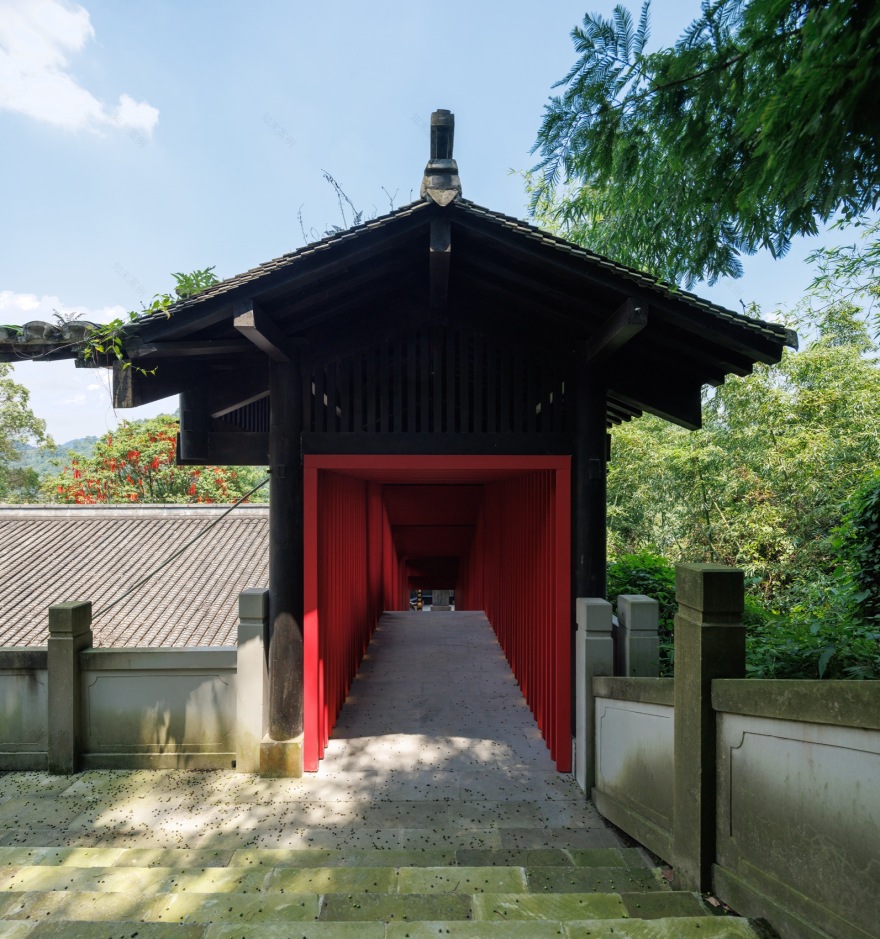


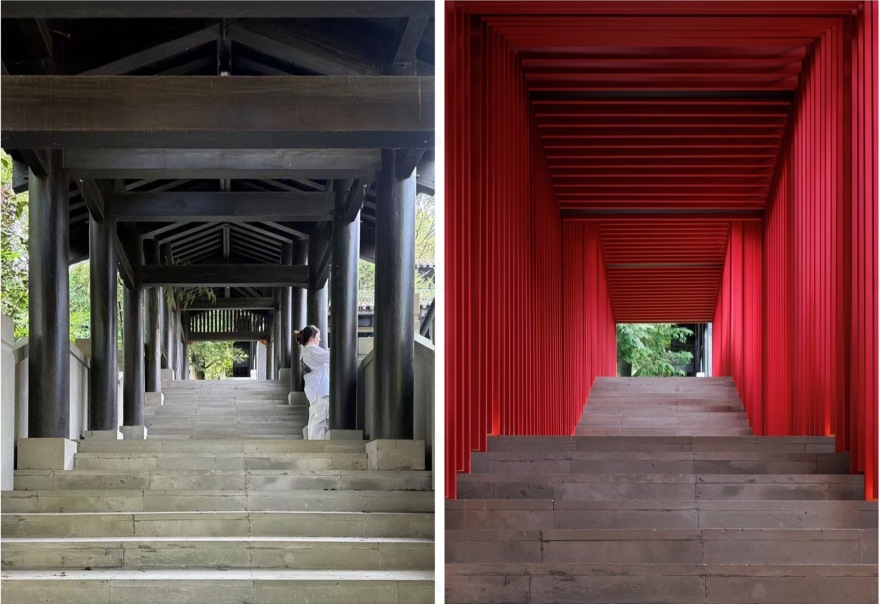
游客沿廊拾级而上,如锦鲤逆流,最终抵达——“石室文风”殿堂。
Visitors ascend the steps—likened to koi swimming upstream—ultimately arriving at the sanctuary of the ‘Shi Shi Wen Feng’ Hall.
▼石室文风,Shi Shi Wen Feng ©刘松恺


殿堂入口刻意压低,以示尊崇。步入殿内,一尊深色四面罩半掩文翁铜像,罩壁投影着石室十三经之一的《宋拓蜀石经公羊传》,重现翰墨书香。参拜者需趋步向前,方可一睹先贤全貌。回身退出时,殿门正对龙门山余脉牛心山,翠色峰峦如画卷映入眼帘,“高山仰止”的意象在此刻具象化。
The entrance to the hall is deliberately lowered to evoke a sense of reverence. Upon entering, a dark, four-sided enclosure partially veils the bronze statue of Wen Weng. Projected onto this shroud is the Gongyang Commentary from the ‘Song Rubbing of the Shu Stone Scriptures’ (one of the Thirteen Classics), recreating a profound scholarly atmosphere. Visitors must step forward to behold the sage’s full presence. Turning to exit, the doorway frames Niuxin Mountain, a spur of the Longmen range. The verdant peaks unfold before the eyes like a landscape scroll. Here, the ancient idiom ‘High Mountains Are Looked Up To’—symbolizing the admiration of noble character—is materialized into a physical reality.
▼文翁铜像,the bronze statue of Wen Weng ©刘松恺


殿堂两侧设祈福灯廊,每侧灯廊悬666盏成语方灯与祈福鼓。在参拜者可以企及的高度设置共计100个可以求取的福签,或祝福学业有成、或祝福飞黄腾达、或祝福幸福美满。祈福灯廊尽头分别设置祈福鼓一面,击鼓鸣志,一响耳聪目明 ,二响茅塞顿开,三响志存高远。
Flanking the main hall are the Prayer Lantern Corridors, each adorned with 666 square lanterns inscribed with idioms and accompanying prayer drums. Within easy reach of visitors, 100 ‘Fortune Tags’ are placed for collection, offering blessings for academic excellence, career advancement, and domestic bliss. At the end of each corridor stands a ceremonial drum for the ritual of ‘Striking the Drum to Declare Ambition.’ The rhythm carries profound symbolism: the first strike signifies clarity of mind and perception; the second brings sudden enlightenment; and the third represents lofty aspirations.
▼祈福灯廊,Prayer Lantern Corridors ©刘松恺


▼祈福灯廊细部,Prayer Lantern Corridors details© UN-GROUP未集建筑


灯盒做法和打光方式经过多次试验,竖向灯盒在高度1.7m以上采用灯带在盒内朝上,在1.7m以下则灯带在上朝下打光,针对大多数人的眼睛高度避免了灯珠外露。磨砂亚克力的朦胧质感将灯光模糊,不锈钢上下扣板又将光影巧妙反射。
The fabrication and lighting details of the vertical light boxes underwent rigorous mock-up testing. To prevent direct exposure of LED nodes at the average eye level, a split-lighting strategy was adopted: above 1.7 meters, the internal LED strips face upward; below 1.7 meters, they are mounted at the top facing downward. Material-wise, the frosted acrylic diffuses the light into a soft haze, while stainless steel caps at the top and bottom cleverly reflect the interplay of light and shadow.
▼灯盒,light boxes ©刘松恺


殿内铺地我们做了有意的设计:文翁像置于亮面黑色石材铺装之上,十八盏水晶灯环绕,镜面效果映出灯的倒影仿佛置于一潭静水之上。参拜者环绕的步道则用红色水磨石抬高一步,在强调仪式感的同时又强化文翁像的中心地位。
The interior flooring features a deliberate design strategy. The statue of Wen Weng rests upon polished black stone, encircled by eighteen crystal lights. The stone’s mirror-like finish reflects the illumination, creating the illusion of the statue floating above a pool of still water. In contrast, the surrounding visitor walkway is executed in red terrazzo and elevated by a single step. This subtle change in level not only heightens the sense of ritual but also spatially reinforces the statue’s absolute centrality.
▼亮面黑色石材铺装和水晶灯,polished black stone andcrystal lights©刘松恺


四面罩背后是根据汉代画像《石室讲经图》设计的铜质浮雕。
Behind the four-sided screen lies a bronze relief, designed based on the Han Dynasty pictorial scene ‘Shi Shi Jiang Jing Tu’ (Lecturing in the Stone Chamber).
▼汉代画像《石室讲经图》设计的铜质浮雕,Han Dynasty pictorial scene ‘Shi Shi Jiang Jing Tu’(Lecturing in the Stone Chamber)© 刘松恺

后院古树下设石缸,重现文翁少时“掷斧定志”的典故——游客可投掷斧形文创于缸中,以此祈愿立志,完成跨越时空的对话。
Under the ancient tree in the rear courtyard, a stone vat is placed to reenact the legend of Wen Weng’s youth: ‘Casting the Axe to Declare Ambition.’ Visitors are invited to toss axe-shaped tokens into the vessel as a ritual to express their aspirations, engaging in a dialogue that transcends time and space.
▼后院古树下设石缸,Under the ancient tree in the rear courtyard ©刘松恺


新秩序:石室新序与未来
New Order: Shi Shi Xin Xu and the Future
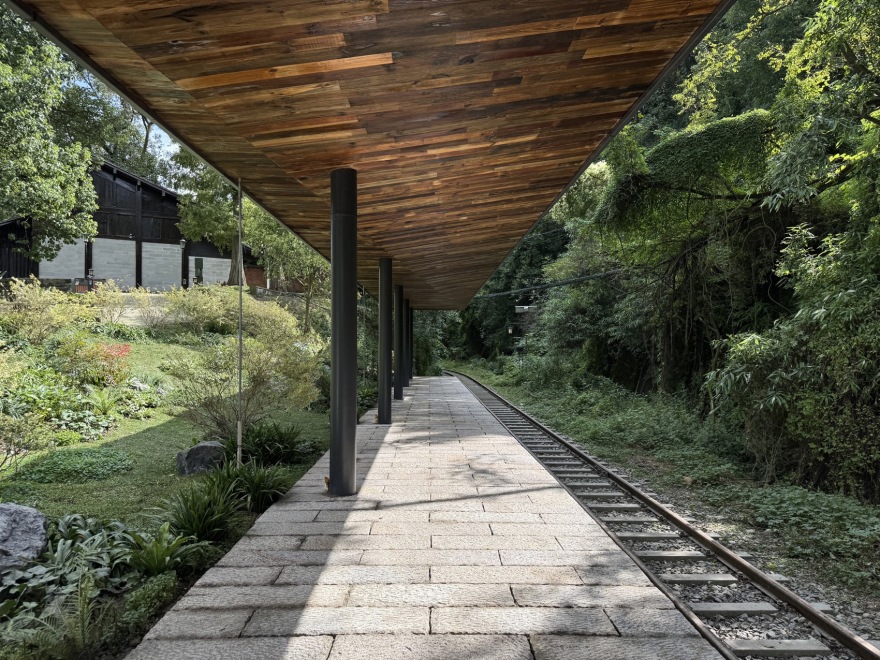
由殿堂而下,是连接历史与现代的枢纽——“石室新序”与“湔江百草园”,建设正如火如荼。“石室新序”未来将集湔江小火车站点、茶馆、书店、文创与研学于一体。建筑连续起伏的屋顶从站台延伸而出,可容纳150人,通过大台阶连接百草园。这里不仅是研学空间,更是眺望湔江堰、拍摄小火车的绝佳打卡点。
Descending from the Main Hall, we arrive at the pivotal hub bridging history and modernity: “Shi Shi Xin Xu” (The New Order of Stone Chamber) and the “Jianjiang Herb Garden.” Construction is currently in full swing. In the future, “Shi Shi Xin Xu” will serve as a mixed-use complex integrating the Jianjiang Mini-train Station, a teahouse, a bookstore, cultural retail, and educational tourism facilities. The building features a continuous undulating roof that extends from the platform. It creates a semi-outdoor venue accommodating 150 people, seamlessly connected to the Herb Garden via grand steps. This area is designed not only as a space for study tours but also as a prime vantage point for overlooking Jianjiang Weir and capturing photos of the passing mini-train.
▼百草园,Herb Garden © UN-GROUP未集建筑
结语
Epilogue
2025年9月10日,于马来西亚吉隆坡召开的国际灌排委员会第76届国际执行理事会会议上,四川彭州湔江堰成功入选2025年世界灌溉工程遗产名录。更新后的文翁祠作为申遗过程中重要的一个考察点为湔江堰申遗做出了巨大贡献。如今的文翁祠,已从单一的传统纪念场所,跃升为一座多功能文化聚合体。它融汇了瞻仰、展陈、研学、祈福与茶憩,既是湔江小火车线性公园的重要站点,也是彭州山水画卷中的人文明珠。未来,这里将不再只是历史的回响,更将成长为彭州“崇文重教”的新时代文化高地。古老的智慧可以与当下的生活产生连接,文翁祠更新通过文化、生态、旅游的深度融合,使遗产不再是静止的标本,而是持续产生经济、社会、文化效益的活水源。
On September 10, 2025, at the 76th International Executive Council meeting of the International Commission on Irrigation and Drainage (ICID) in Kuala Lumpur, Malaysia, the Sichuan Pengzhou Jianjiang Weir was successfully inscribed on the 2025 List of World Heritage Irrigation Structures. As a crucial inspection site during the application process, the revitalized Wen Weng Shrine made a significant contribution to this successful bid. Today, Wen Weng Shrine has evolved from a singular traditional memorial site into a multi-functional cultural complex. Integrating worship, exhibitions, educational tours, prayer rituals, and tea leisure, it stands not only as a vital station in the Jianjiang Mini-train Linear Park but also as a cultural gem amidst Pengzhou’s scenic landscape. Looking ahead, it will be more than a mere echo of history; it is poised to grow into a new cultural highland symbolizing Pengzhou’s era-defining “reverence for culture and education.” Ancient wisdom can indeed connect with contemporary life. Through the deep integration of culture, ecology, and tourism, the renewal of Wen Weng Shrine ensures that heritage is no longer a static specimen, but a living source continuously generating economic, social, and cultural benefits.
▼平面图,master plan©UN-GROUP未集建筑

▼平面图,floor plan©UN-GROUP未集建筑

▼剖面图,section©UN-GROUP未集建筑


业主: 四川龙门山文化旅游发展有限公司
运营方:彭州市九陇新创文化旅游发展有限公司
施工图团队:中联西北工程设计研究院
结构顾问: iStructure
灯光顾问:陈樱鹦
文翁纪念馆、湔江堰展陈馆展陈:成都方和数字科技有限公司
施工方: 彭州建工集团有限公司
主创设计师:王晓宇
设计团队: 魏然、徐慕义、李雪融
驻场设计师:谢雨桐


南京喵熊网络科技有限公司 苏ICP备18050492号-4知末 © 2018—2020 . All photos and trademark graphics are copyrighted by their owners.增值电信业务经营许可证(ICP)苏B2-20201444 苏公网安备 32011302321234号
苏公网安备 32011302321234号客服
消息
收藏
下载
最近