

创作上传
VIP
收藏下载
登录 | 注册有礼
查看完整案例

收藏

下载

分享


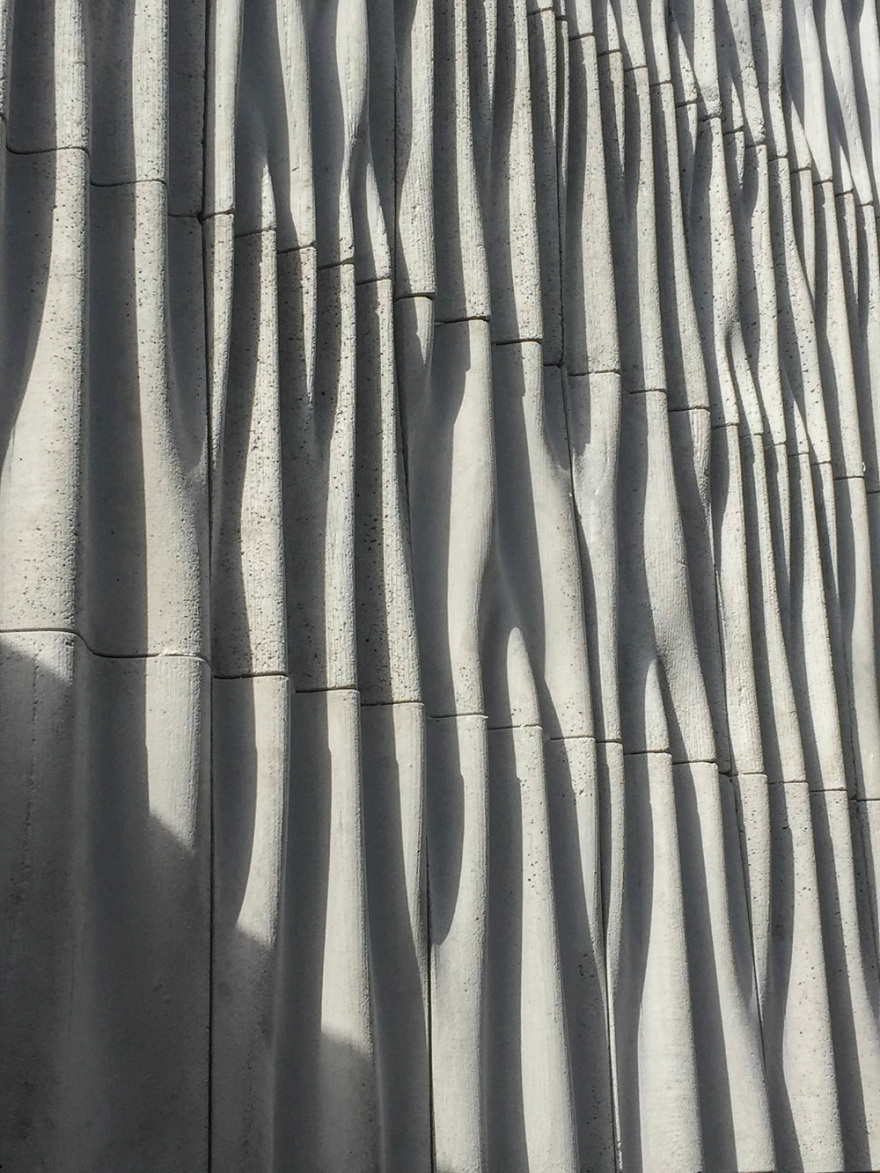


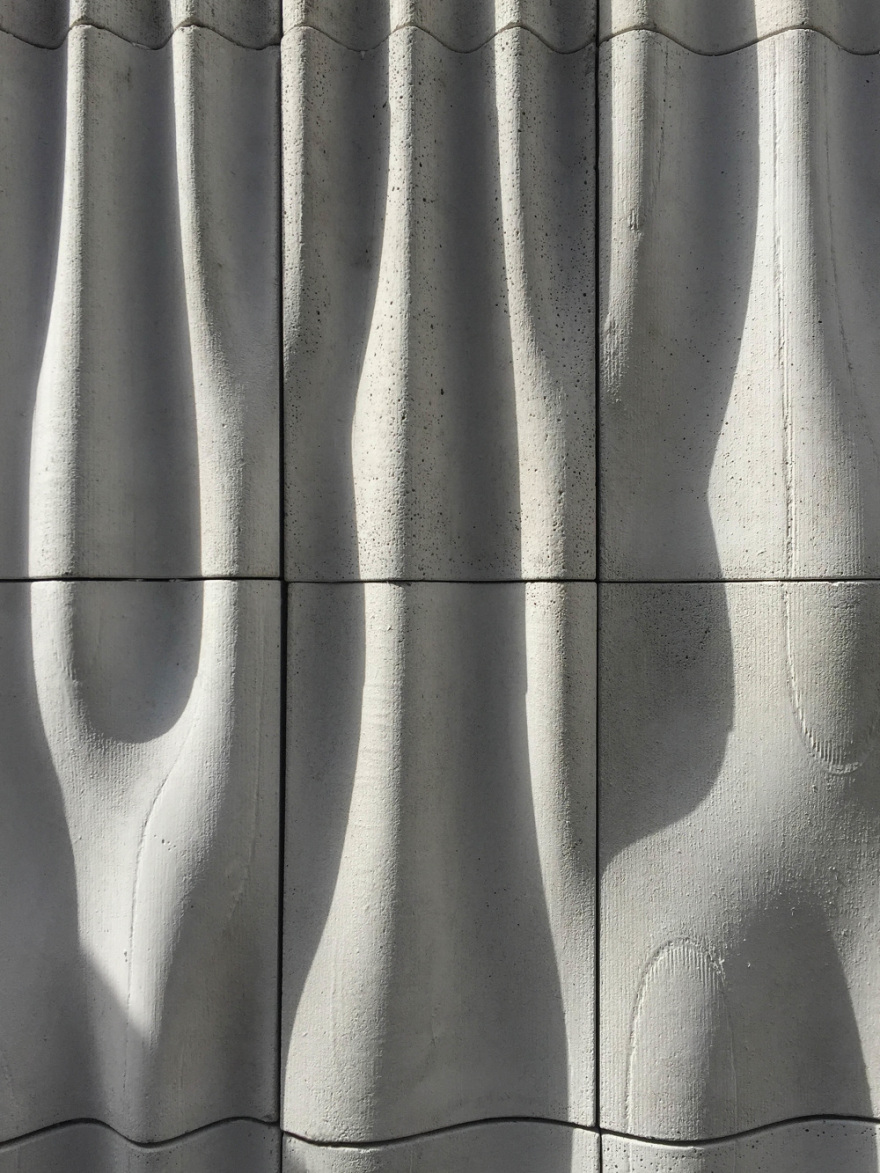


Plural Facades
Sinusoidal Morphologies for Self-Shading Tiles
“Una de las partidas más importantes para que la arquitectura tenga cualidades bioclimáticas, es decir, se adapte al entorno, se juega en las características de la piel: que sean membranas semipermeables, transformables y versátiles; que la fachada sea un filtro transpirable, practicable y traslúcido. Se trata de proyectar fachadas que no sean unívocas sino plurales, empezando porque cada una sea distinta en función de la orientación.” (Montaner, 2011, p.167)
As Joseph Ma. Montaner mentions in La Modernidad Superada, nowadays there’s still a missing dialogue between the buildings envelope and its specific surroundings, we still consider the formal qualities of a building a more valuable aspect rather than its energetic cost of production, its energy saving qualities or its relation and contribution to the environment.
If we come to analyze buildings skin, we realize that mostly, they are composed by a series of homogeneous elements which respond in a deficient manner to the environmental conditions according to their specific cartesian location in the facade and its relation to their own orientation. It is then of essential consideration to evaluate and reconsider the performance and design of these elements.
A fundamental aspect that has to be considered is the differentiation not only between facades, as Montaner suggests, but also of the areas of a facade itself according to its specific location. The effect of environmental conditions on a single surface won’t be the same at the top or bottom part of it, or in the areas closer to the west or east sides. Then a variety of elements have to be designed with similar but not identical response to the environmental characteristics.
The design of a large amount of unique elements gives the possibility to respond specifically and plurally to the conditions determined by the orientation and location of each element which forms the facade. However, considering the industry desirable repetition and homogeneity for quality assurance, time and cost control, in order to develop a system suitable for industrial integration with large-scale production, the investigation aims to produce maximum variation with minimum material and labor.
The aim of the research is to demonstrate how design strategies can be tightly coupled with thermal analysis in which morphological manipulation of vertical surfaces could allow specific variation beyond common thermal performances. In the context of the Central-America climate, with regions characterized by extreme summer heat periods, passive architectural systems with high envelope performance could have relevant advantages on reducing the use of cooling systems and their energy consumption.
The research focuses on the exploration of the plurality of a facade through the segmentation of the surface in curvilinear modules which can respond in individual and specific manner to its orientation, in relation to sun exposure. Through the use of digital tools, for design and environmental solar simulations, self-shading patterning strategies were developed to generate undulating smooth morphologies based on trigonometric functions of sin and cos. The tile design explores the texture resolution, understanding how the magnification of a pattern can modulate the surface depth to a two and a half dimension, bringing the texture to a morphological extension of the body.
The manufacturing of double curved molds for concrete casting of reusable and affordable foam was developed in order to allow the industrialization of the elements. The three-axis CNC milling machining space available defined the maximum formwork depth. Finally the research on material composition focused on three main factors: weight, resistance and thermal conductivity. The tiles proportions of the concrete mixtures were designed according to their location in the facade.
A full-scale panelized wall prototype of 5 x 3 m was realized to demonstrate how surface morphology affects thermodynamic performance and how material composition can reduce heat absorption and conduction. The reconfigurability of the tile design proved to be a great deal of formal flexibility showcasing new expressive design opportunities for buildings with underperforming facades.
Institution
Universidad Autónoma de Nuevo León UANL
Facultad de Arquitectura
Course
Computational design and digital fabrication studio, 2017
Professor
Yessica Mendez
Students
Andrés Agredano, Bryan Acosta, Dirce Gómez, Kassandra Hernández, Alan Rivera, Gustavo Saucedo, Calixto Pérez, Abigail Mauricio, Victor Macias, Jaressy Hernández, Orlando Azael, Rogelio Barrientos.
Awards
- 1st Prize at Bienal de Arquitectura de Nuevo León XX, category G. INNOVACIÓN TECNOLOGICA - Fabricación Digital /Geometrías Complejas
Photography by ME-ST
南京喵熊网络科技有限公司 苏ICP备18050492号-4知末 © 2018—2020 . All photos and trademark graphics are copyrighted by their owners.增值电信业务经营许可证(ICP)苏B2-20201444 苏公网安备 32011302321234号
苏公网安备 32011302321234号客服
消息
收藏
下载
最近