

创作上传
VIP
收藏下载
登录 | 注册有礼
查看完整案例

收藏

下载

分享
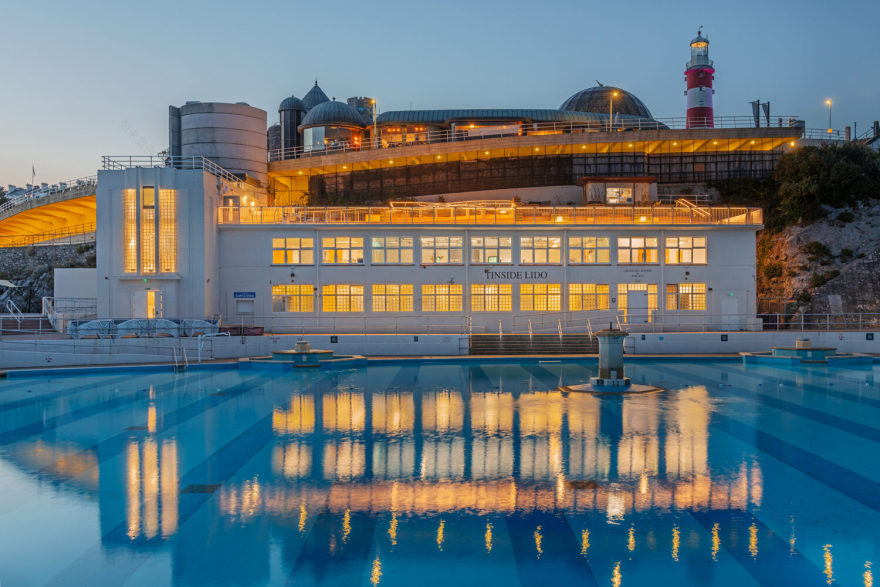
Plymouth Tinside Lido
Reimagining an Art Deco Icon
At the edge of Plymouth Hoe, Tinside Lido has been a defining feature of the city’s seafront since 1935, but years of exposure and underutilised spaces left this Grade II listed building in need of a sensitive transformation, unlocking its full potential through adaptive reuse.
As part of Plymouth City Council’s bold vision for the UK’s first National Marine Park, LHC Design were Design Lead on the collaborative transformation, restoring historic features while unlocking underused spaces to create a vibrant, year-round community destination.
This project combines heritage conservation, adaptive reuse, and marine resilience to safeguard a much-loved landmark and reconnect Plymouth with the water on its doorstep
Location
Plymouth, Devon
Client
Currie & Brown
Service
Architecture, Conservation, Interior Design, Landscape
Sector
Education, Health, Leisure, Public Realm, Refurbishment
Value
£4.5 Million
Completed
July 2025
Project Vision
The vision was clear to adapt and reuse the heritage building to create a welcoming, sustainable, and resilient destination at the heart of Plymouth’s waterfront.
The scheme aimed to: Celebrate and restore original Art Deco details while integrating modern design elements. Unlock the potential of underused internal and external spaces to expand functionality beyond seasonal use. Enhance energy performance. Improve accessibility and inclusivity, ensuring the Lido is welcoming to all. Increase resilience to coastal challenges by specifying floor-resistant and marine -grade materials.


Design Approach
Our design approach combined a heritage-led methodology with modern adaptation:
Restoring Historic Character:
Key architectural features were sensitively repaired, and new interventions were designed to complement the Lido’s Art Deco language.
Unlocking Underused Spaces:
The first floor was reimagined as a flexible hub for community activities, education, and events, while the roof terrace was redesigned as an active public realm with a café pod, seating, and spaces for gathering and reflection whilst overlooking the Sound.
Sustainability and Thermal Performance:
Upgrades, including adapting existing windows frames with Fineo vacum sealed glazing and internal insulation. Along with MVHR and air source heat pumps significantly improved the building’s energy rating, reducing operational energy and costs taking the internal EPC rating of the first floor from unclassified to B. Biodivestity net gain achieved from the terrace interventions.
Marine and Flood Resilience:
Given its coastal location in Flood Zone 3, all works used marine-grade, flood-resistant materials, ensuring durability and protection against overtopping events.
Inclusive Design:
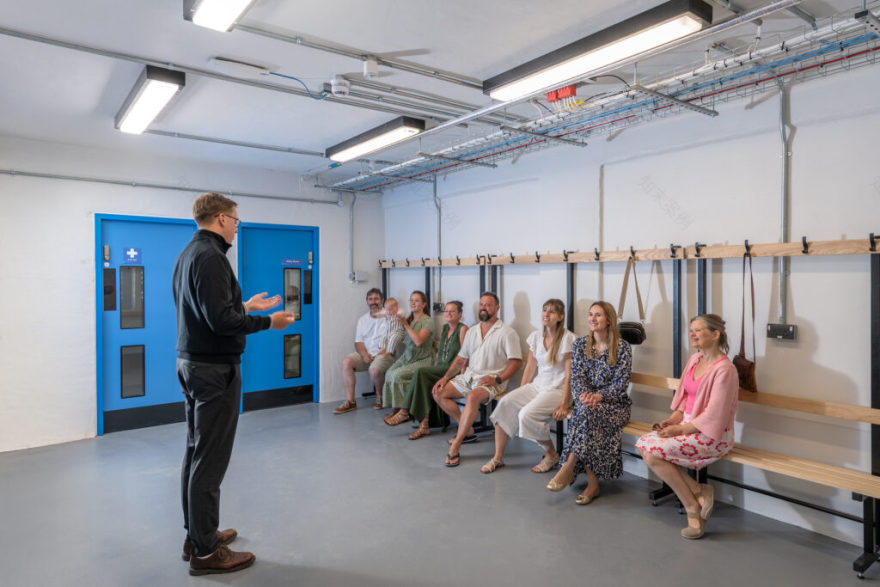
Circulation routes, permanent ramps, and changing facilities, braile signange ensure the Lido is accessible and inclusive to all visitors.
Material Strategy:
Honest, low-embodied-carbon materials were prioritised. Timber, copper, and recycled ceramic finishes were chosen for durability, sustainability, and their ability to complement the Lido’s heritage.


Sustainability Approach
Sustainability at Tinside Lido was about more than reducing carbon; it was about futureproofing a heritage landmark while respecting its historic significance. The project balanced careful conservation with bold environmental upgrades, ensuring the building will thrive for decades in a challenging coastal setting.
Key principles included:
Re-use over replacement: By retaining and restoring the majority of the original structure and finishes, the project significantly reduced embodied carbon. Historic features were carefully repaired rather than replaced wherever possible.
Marine and flood resilience: Located in Flood Zone 3 and regularly exposed to salt spray, all interventions used marine-grade, flood-resistant materials such Accoya timber, stainless steel, and robust natural stone, extending the building’s lifespan and reducing long-term maintenance.
Improved thermal performance: Targeted upgrades to glazing, internal insulation, and building fabric raised the building’s energy rating from unclassified to B, reducing operational energy use while maintaining the Art Deco aesthetic.
Sustainable material palette: Materials were chosen for durability, local sourcing potential, and environmental performance, including recycled ceramics, FSC-certified timber, and low-VOC finishes.
Biodiversity and landscape resilience: Planting on terraces and public areas uses salt-tolerant species suited to the harsh marine environment, requiring less irrigation and supporting pollinators.
The result is a building that honours its 1935 heritage while embracing a low-carbon, climate-resilient future.


南京喵熊网络科技有限公司 苏ICP备18050492号-4知末 © 2018—2020 . All photos and trademark graphics are copyrighted by their owners.增值电信业务经营许可证(ICP)苏B2-20201444 苏公网安备 32011302321234号
苏公网安备 32011302321234号客服
消息
收藏
下载
最近