

创作上传
VIP
收藏下载
登录 | 注册有礼
查看完整案例

收藏

下载

分享

翻译
Architects:Mountain Soil Interior Design
Area:105m²
Year:2025
Photographs:Wen Studio
Manufacturers:Osvaldo Borsani,Pierre Guariche,Pierre Jeanneret,Studio Oliver Gustav
Category:Houses,Renovation
Design Director:Tiantian Dong
City:Shanghai
Country:China

Text description provided by the architects. Urban living is largely defined by a settled lifestyle. Typically, people anchor their lives around the home, radiating outward to the street and further connecting to workplaces and social activities—together forming a tightly woven living grid. As the starting point of family life, a residence is not merely a place for basic daily functions; it often doubles as a space for professional activity as well. A comfortable living environment often unfolds from the ordinary and familiar acts: dining, sleeping, washing, connecting with others, or engaging in hands-on labor. These moments of daily life construct a complex and secretive spatial structure.
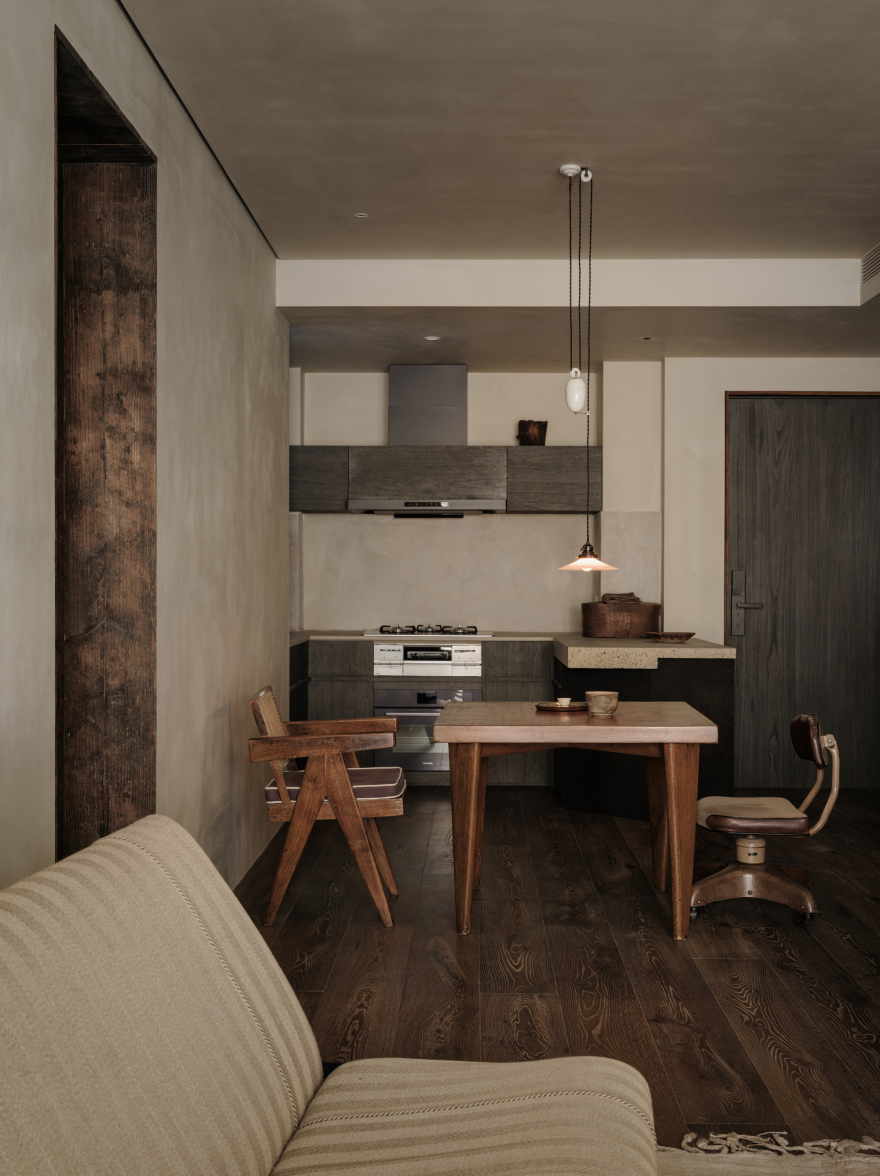
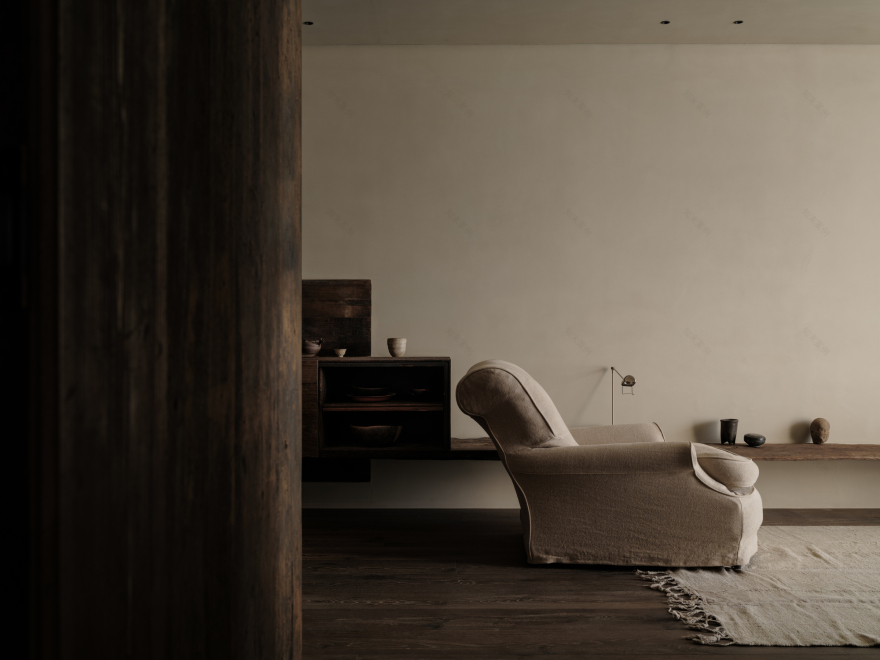
The client for this project is a young artist whose vision for the residence was to preserve as much of the natural texture of the space as possible, while integrating personal collection to create a home that invites dialogue—a return to the essence of dwelling.

Our design direction focused on preserving the authenticity of daily life through design and fostering intimate connections between the spatial qualities and the people living within. Most of the furniture, artworks, and decorative objects in the space come from the client's personal collection or are his own creations and designs. He brought them directly from his studio showroom or storage, having long envisioned how these pieces would one day be placed throughout his home.

Located in Jiading District, Shanghai, the project occupies a fully furnished 105-square-meter apartment. The original layout followed a standardized urban template: three bedrooms and one living room. In response to the client's brief, we sought to reconstruct and reimagine the interior spatial organization.


In terms of spatial planning, we combined three bedrooms into two to better meet the owner's functional needs, correcting the previous layout to allow for ample storage capacity. For household appliances, we concealed the bulky refrigerator at the front of the hallway, with finishes that visually blend into the surrounding space to reduce its oppressive visual impact. The kitchen connects seamlessly to the dining and living areas, where we employed a subtractive design approach to erase unnecessary walls and expand the usable space.

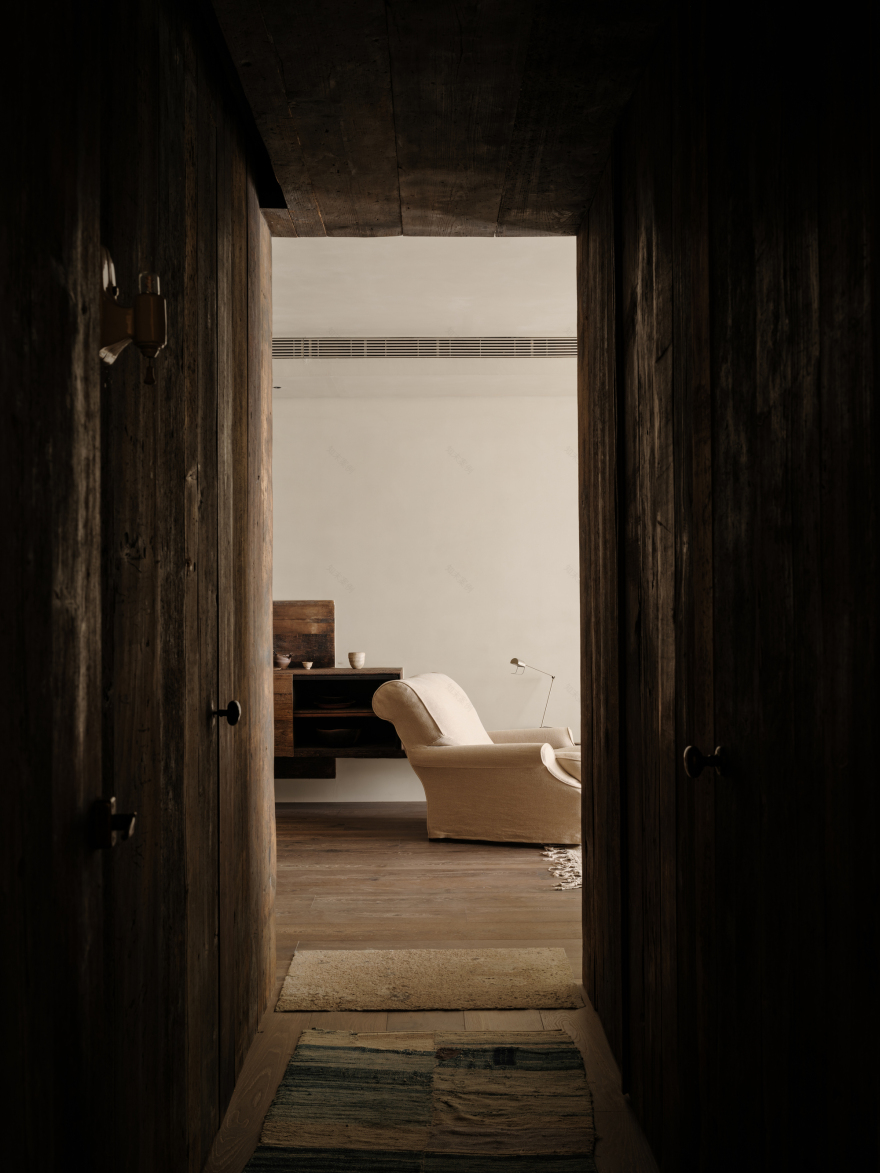
The corridor plays a crucial connective role in the family space, and the stone slab at the entrance serves as a significant transitional element in this area. In urban life, we are often guided through multiple spatial layers—elevated walkways, underground passages, or stairwells—where a single step initiates the journey from one place to another. In this residence, the corridor performs in the same way. We adjusted its elevation and used natural stone slabs as a substitute, and then, combined with the overall space, the corridor was wrapped with timeworn wood to give it a unique material texture.


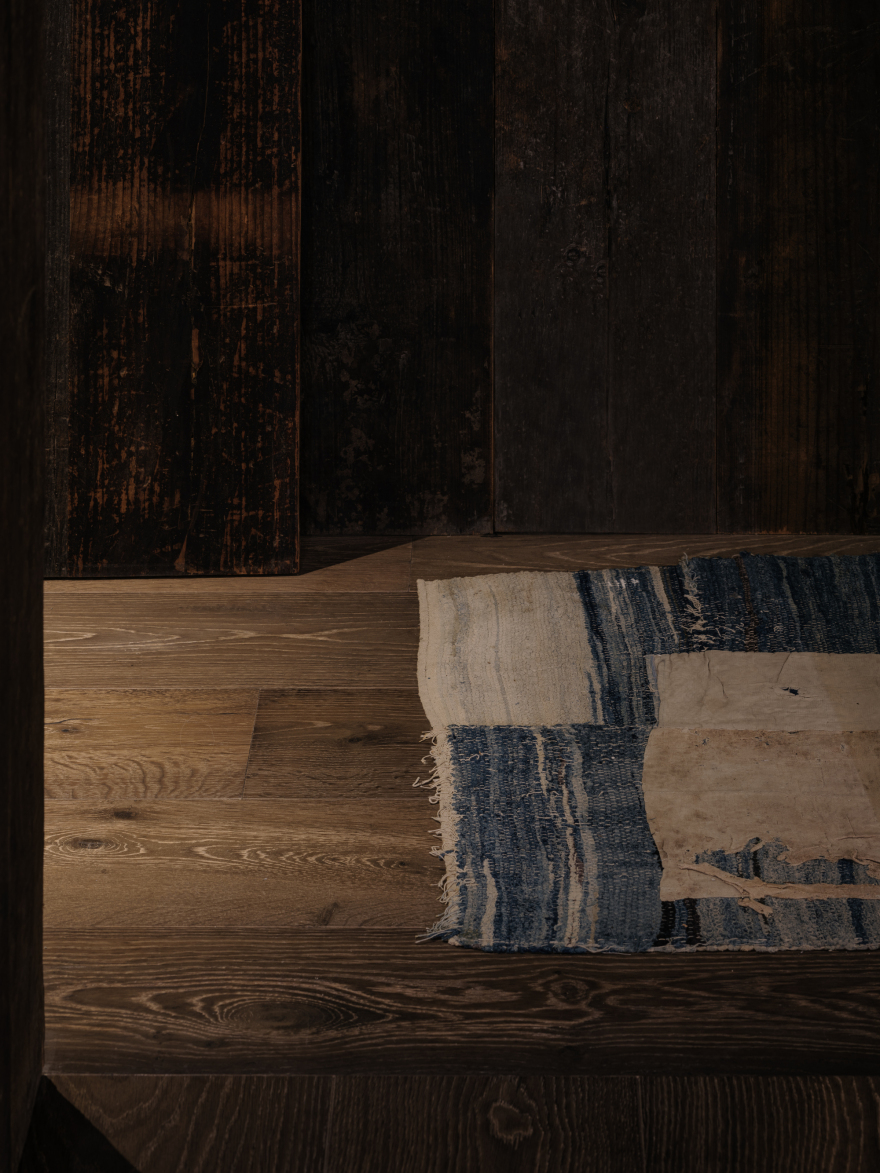
For materials, we emphasized the use of recycled and sustainable resources, giving them renewed life through thoughtful integration. Wall panels, door handles, fabric selections, as well as the basin and shower partitions in the bathroom, are crafted from weathered stone slabs that have undergone natural oxidation over decades. Much of the furniture is vintage, evoking a retro sensibility while preserving local character and historical continuity. This approach not only supports the overall design vision but also significantly reduces material waste.
Project gallery





南京喵熊网络科技有限公司 苏ICP备18050492号-4知末 © 2018—2020 . All photos and trademark graphics are copyrighted by their owners.增值电信业务经营许可证(ICP)苏B2-20201444 苏公网安备 32011302321234号
苏公网安备 32011302321234号客服
消息
收藏
下载
最近