

创作上传
VIP
收藏下载
登录 | 注册有礼
查看完整案例

收藏

下载

分享

翻译
Architects:Tad.atelier
Area:96m²
Year:2024
Lead Architects:Vu Tien An
Category:Houses
Lead Team:Vu Tien An, Nguyen Nhat Hao
Design Team:Dang Quang Luan, Nguyen Doan Kim Hau
City:Lam Dong
Country:Vietnam

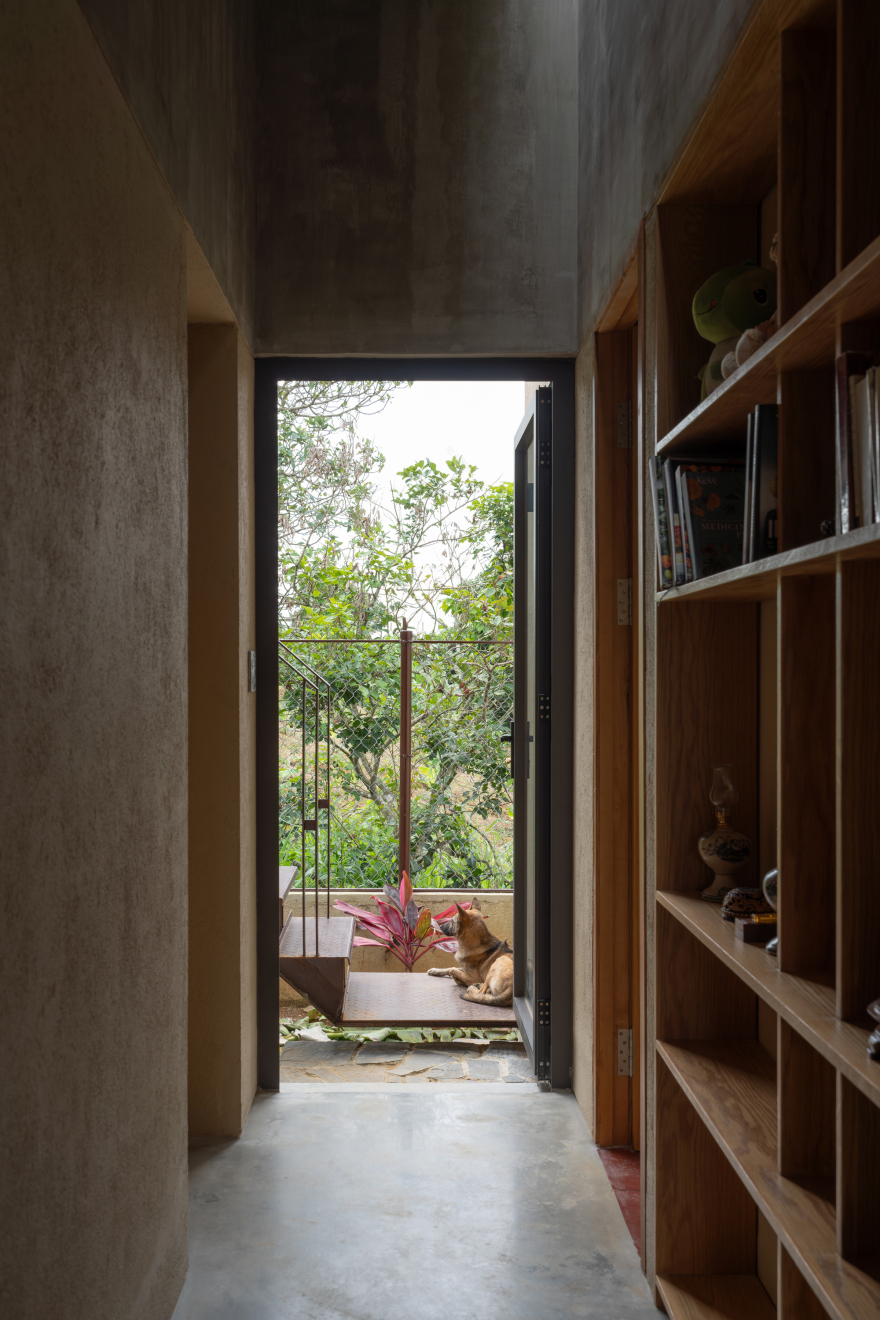
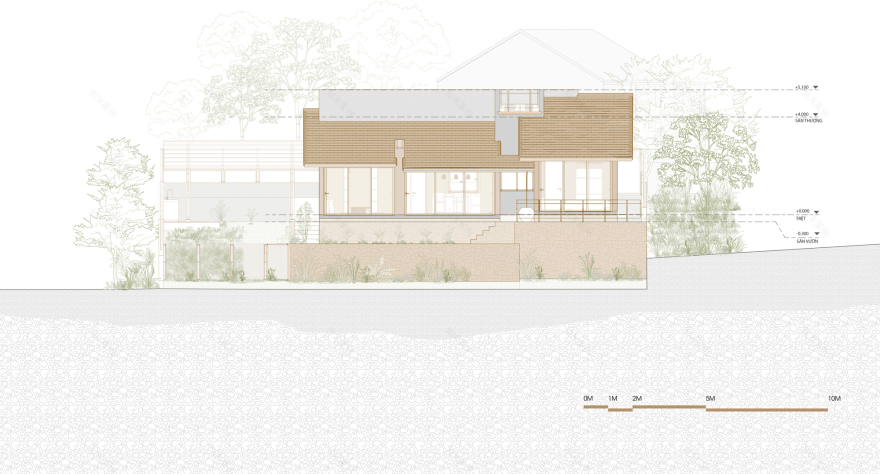
Text description provided by the architects. Bao Loc House is a small residence located in the suburban area of Bảo Lộc, where the characteristics of an agricultural rural landscape remain largely unaffected by urbanization. The site is situated on gently sloping terrain leading to a river, providing favorable natural conditions for creating a living environment closely integrated with the surrounding landscape.


The project is designed for a young couple who require a home that accommodates both living and remote working. With a floor area of approximately 90m², the house is built on a simple spatial structure, using local materials and ensuring essential yet flexible living spaces. It functions not only as a basic dwelling but also as an exploration of a modern rural housing model.


Off-grid and Self-sufficient Model – The house aims to reduce dependence on external resources, aligning with principles of sustainable rural living. A solar energy system provides part of the electricity needed for daily use and remote work, helping to reduce household energy costs. Rainwater is collected and reused partly for irrigation. Vegetable gardens and fruit trees are arranged across the site, supporting a degree of food self-sufficiency and meeting part of the family's nutritional needs. These combined strategies help optimize available natural resources and create a living environment that is more closely connected to the ecological context.

Live–Work Model – The house is organized according to a live–work model, responding to the increasing prevalence of remote work. Living and working spaces are arranged compactly but remain a balance between professional and personal life. The design allows the occupants to use the spaces in different ways depending on their needs.


Flexibility – Flexibility is a key design criterion of the house. Spaces are multi-functional and adaptable to different family needs. Common areas such as the living room and kitchen are designed as open spaces that can be converted into working, studying, or leisure areas when required. Simple and movable furniture improves spatial efficiency and reduces constraints in interior organization. Transitional spaces, such as the veranda and garden, play an important role in extending usable areas, creating a sense of connection to nature while maintaining privacy.


Local Materials and the Rural Housing Model 2.0 – The house is built using commonly available local materials such as wood, clay tiles, and bricks. These materials reduce transportation costs and suit local climatic conditions as well as local construction techniques. The design draws from traditional rural architectural elements—such as sloped tile roofs and the house–garden typology—to create harmony between the building and its context.

Spiritual Value – As a home for both living and remote working, the house plays an important role in supporting the residents' emotional and mental well-being. With its open layout, interior spaces remain strongly connected to nature, offering a sense of calm and balance. Outdoor areas such as the garden, veranda, and rooftop terrace are arranged to encourage light activities, recreation, and small-scale production, supporting a lifestyle that is both dynamic and appreciative of tranquility.

Project gallery






南京喵熊网络科技有限公司 苏ICP备18050492号-4知末 © 2018—2020 . All photos and trademark graphics are copyrighted by their owners.增值电信业务经营许可证(ICP)苏B2-20201444 苏公网安备 32011302321234号
苏公网安备 32011302321234号客服
消息
收藏
下载
最近