

创作上传
VIP
收藏下载
登录 | 注册有礼
查看完整案例

收藏

下载

分享
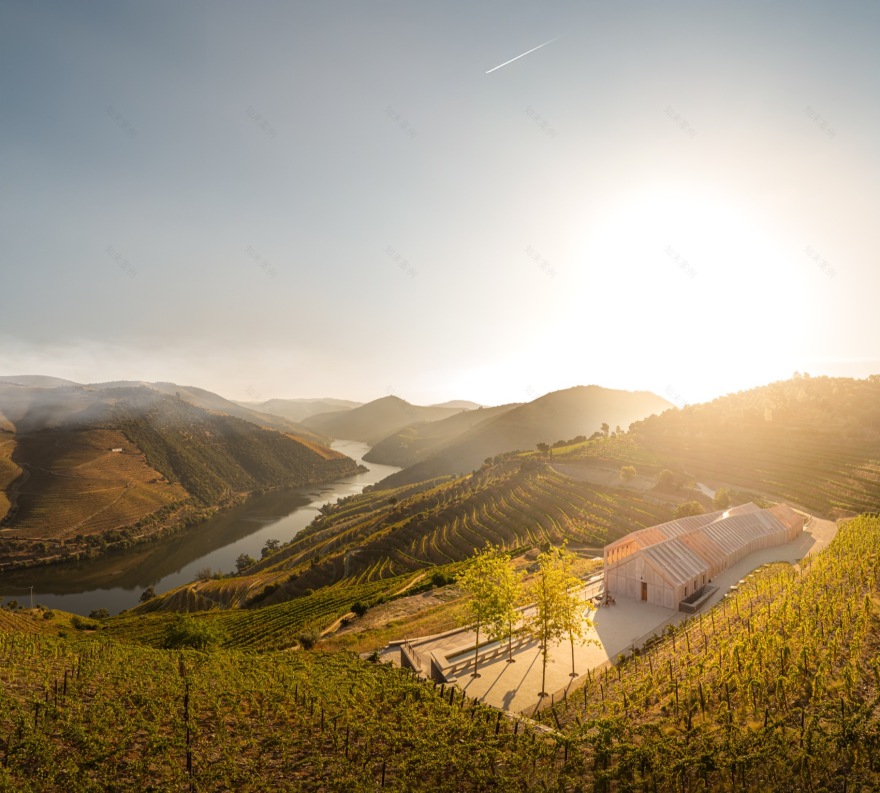
Quinta de Adorigo酒庄于2024年建成,是一个家族葡萄酒旅游综合开发项目的重要组成部分,该项目还包括一座目前仍在建设中的酒店。庄园位于葡萄牙最负盛名的葡萄酒产区——上杜罗河谷(Alto Douro Vinhateiro),该地区自2001年起被联合国教科文组织列为世界自然与文化遗产。
The winery at Quinta de Adorigo was completed in 2024 and is part of a family wine tourism development that also includes a hotel, which is still under construction. This quinta is located in the Alto Douro Vinhateiro, Portugal’s most prestigious wine-growing area, listed by UNESCO as a World Natural and Cultural Heritage Site since 2001.
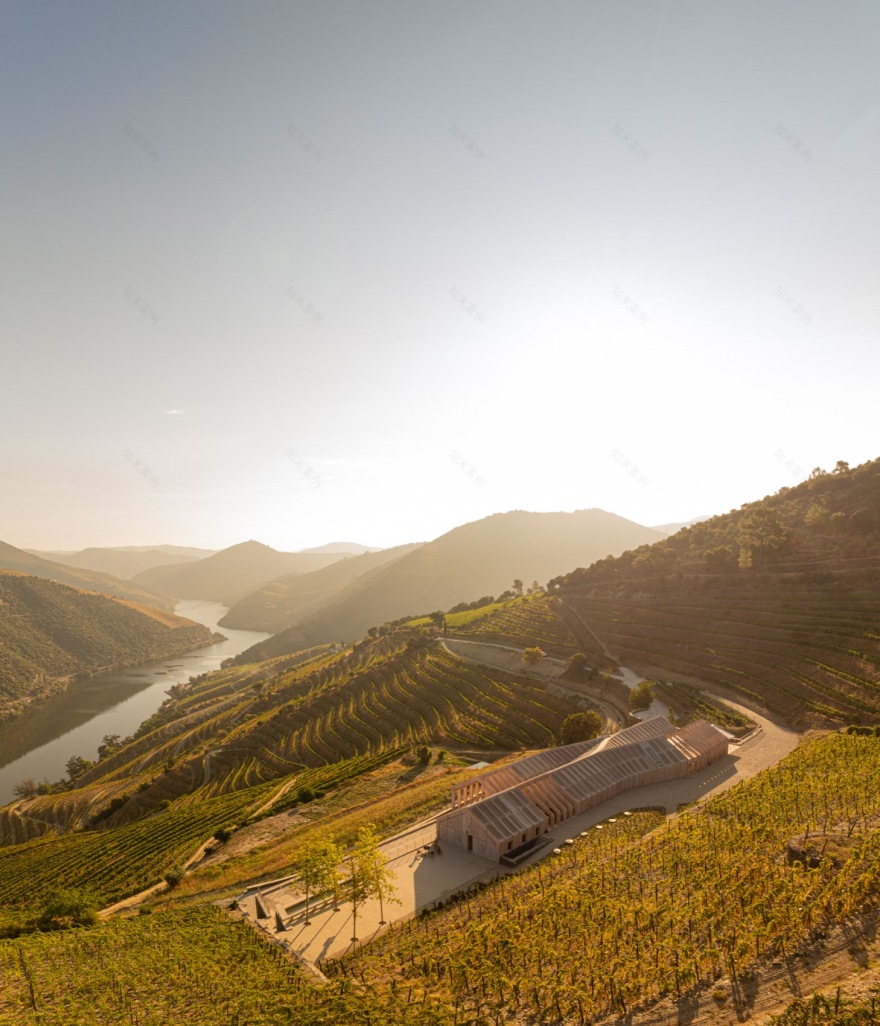
▼鸟瞰,aerial view© Fernando Guerra

▼顶视图,top view© Fernando Guerra

▼顶视图,top view© Fernando Guerra

▼远景鸟瞰,aerial view at distance© Fernando Guerra


周边自然环境所呈现出的非凡之美、延续千年的人工活动痕迹以及数百年来的酿酒传统,共同促成了这一建筑方案的诞生。项目旨在尊重景观与地方文化的同时,引入创新的建造策略与高效的可持续实践。
The exceptional beauty of the natural surroundings, the millennia-old human occupations and the centuries-old tradition of wine production motivated an architectural project that honors the landscape and local culture and presents innovative construction strategies and effective sustainability.
▼建筑与周围环境相融,
the building blends in with the surrounding environment© Fernando Guerra

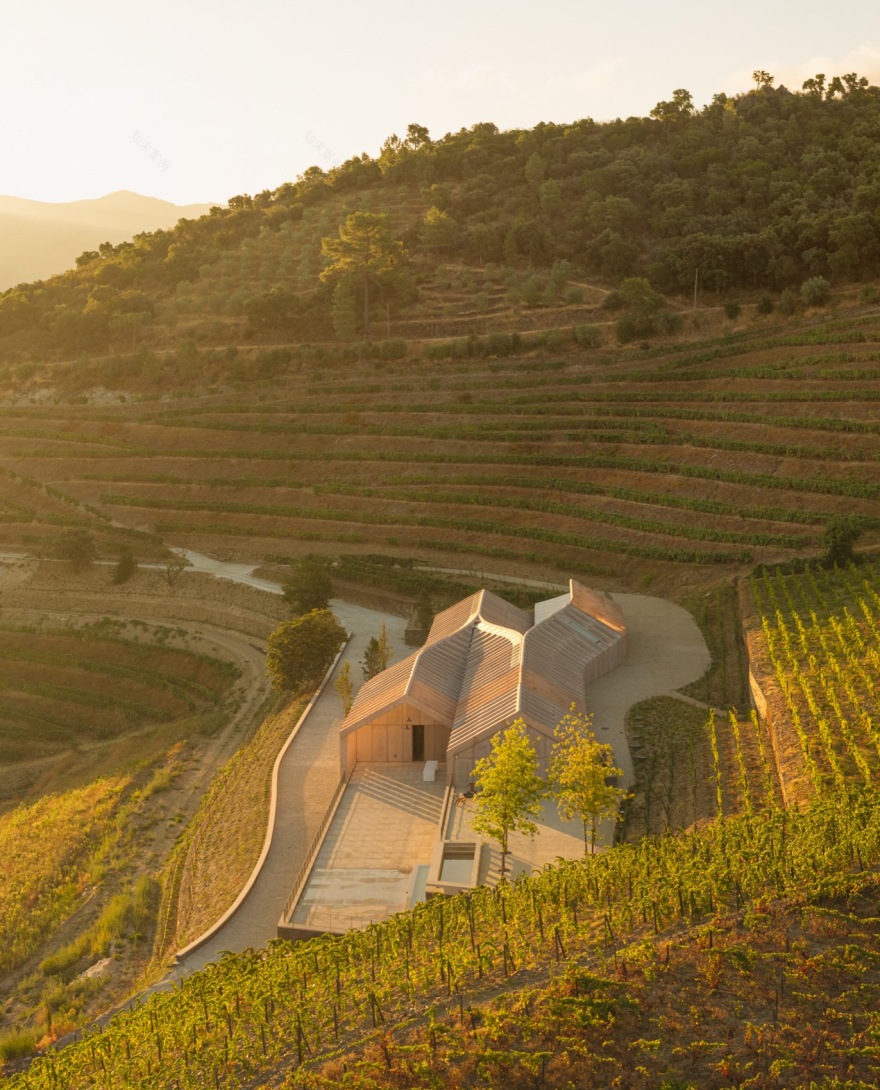

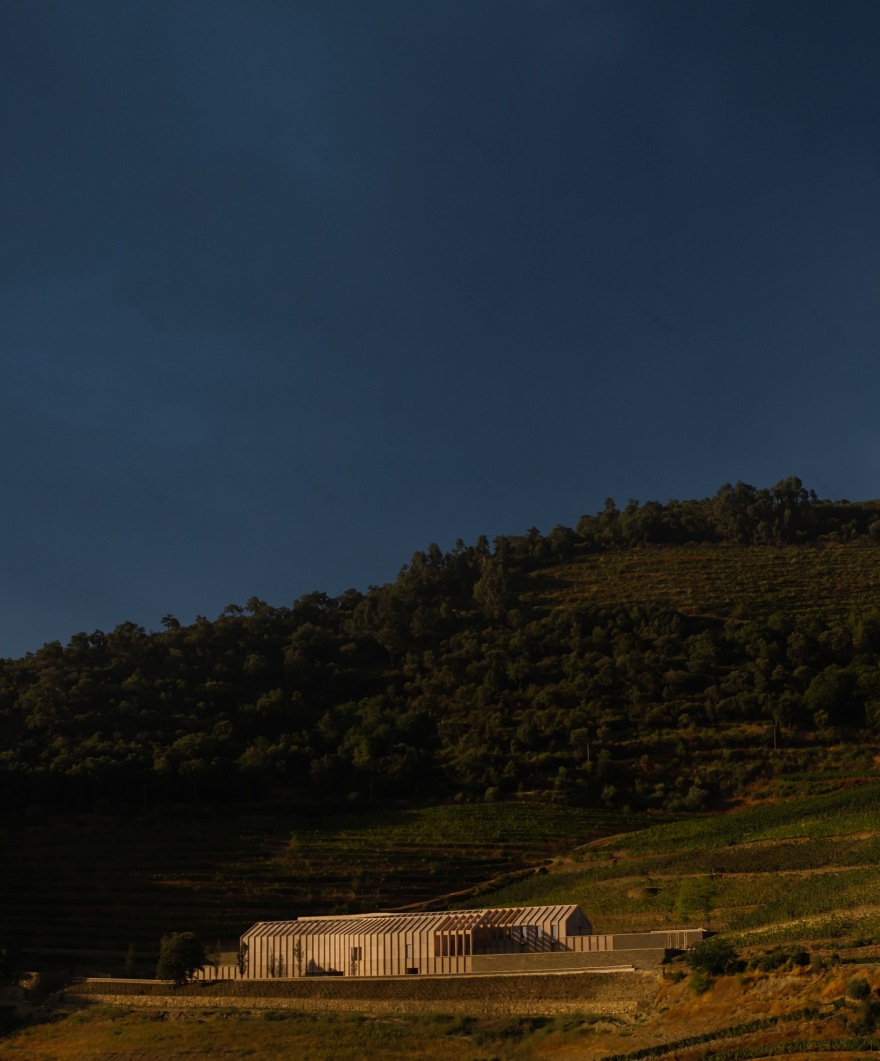
▼建筑外观,exterior view© Fernando Guerra

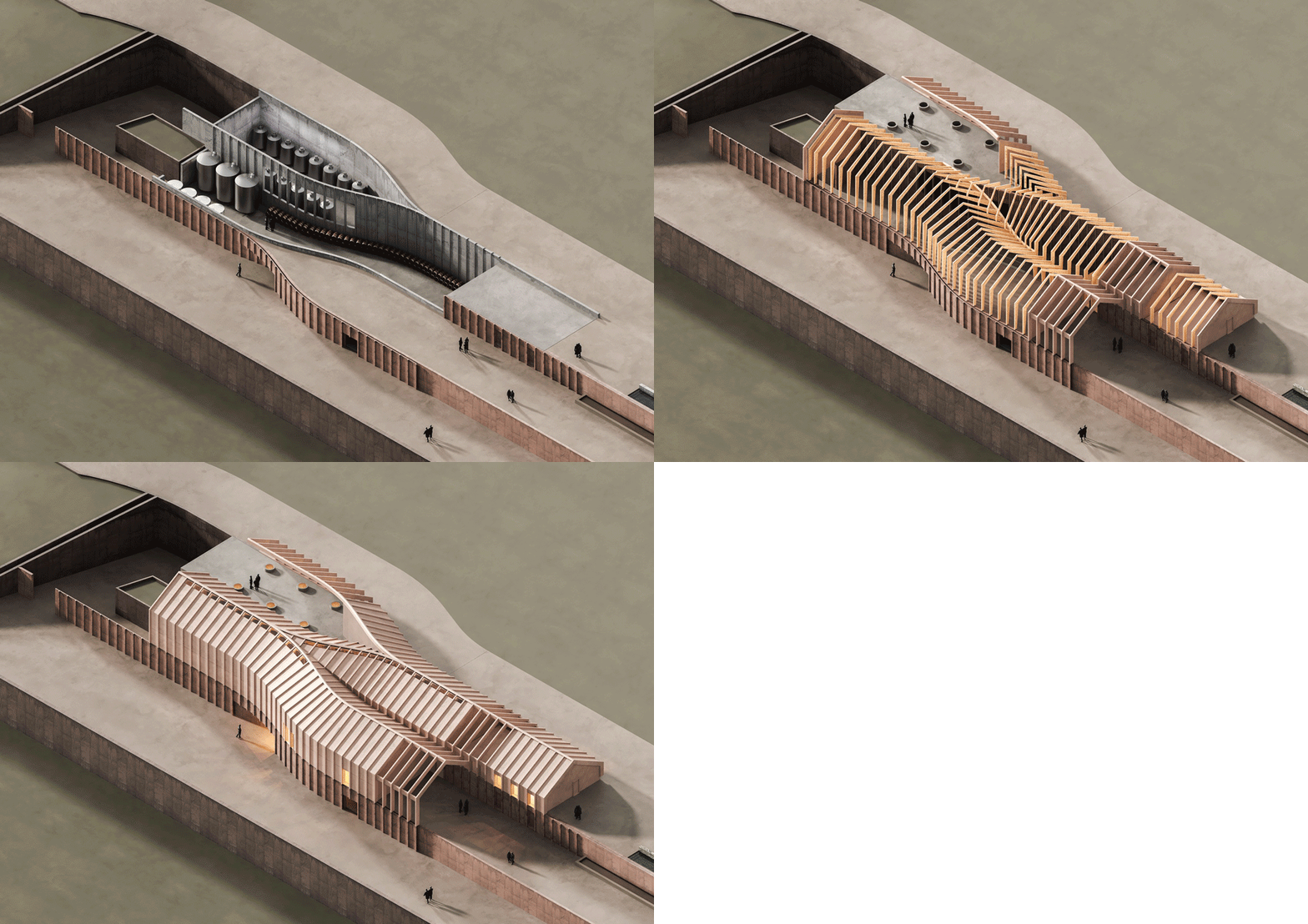
酒庄水平延展的曲线体量,以及不同功能区之间的流线组织,呼应了周边山谷与丘陵中葡萄园的锯齿形纹理。然而,设计并未对景观进行直接的形式化复刻,以免影响日常运作、交通与沟通效率。相反,建筑顺应地形台地向下展开,其空间序列映射了内部酿酒工艺的运作逻辑——借助重力完成酿造流程,这也是杜罗河沿岸地区普遍采用的方式。酒庄在此以当代运营条件,清晰展现了这一极具地域特色的重力酿酒体系。建筑的整体构成因此呈现为一组相互交织的“船仓”式空间,顺着既有地形坡度展开,并在不同室内标高层面中加以复现。▼草图,sketches© Atelier Sergio Rebelo
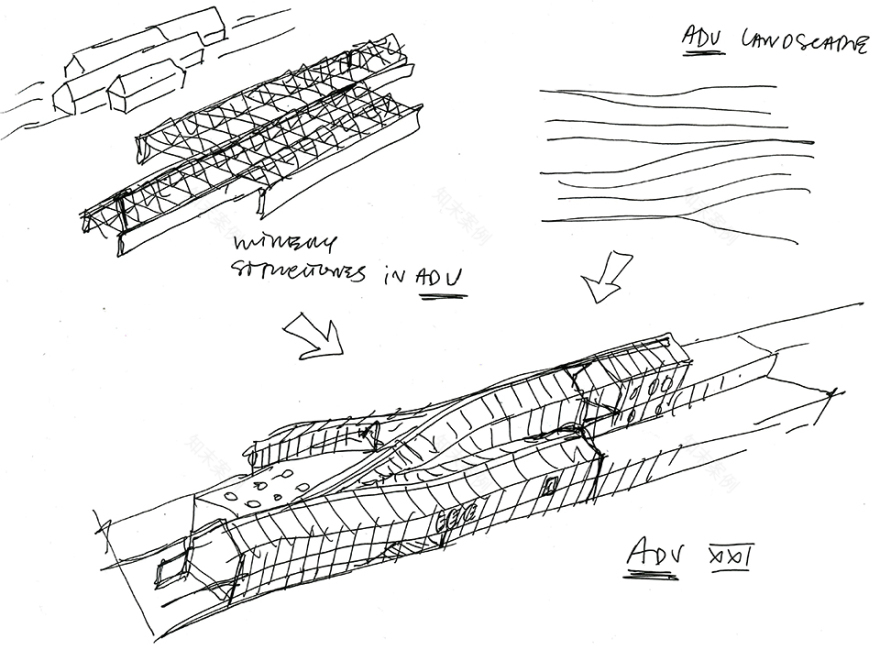

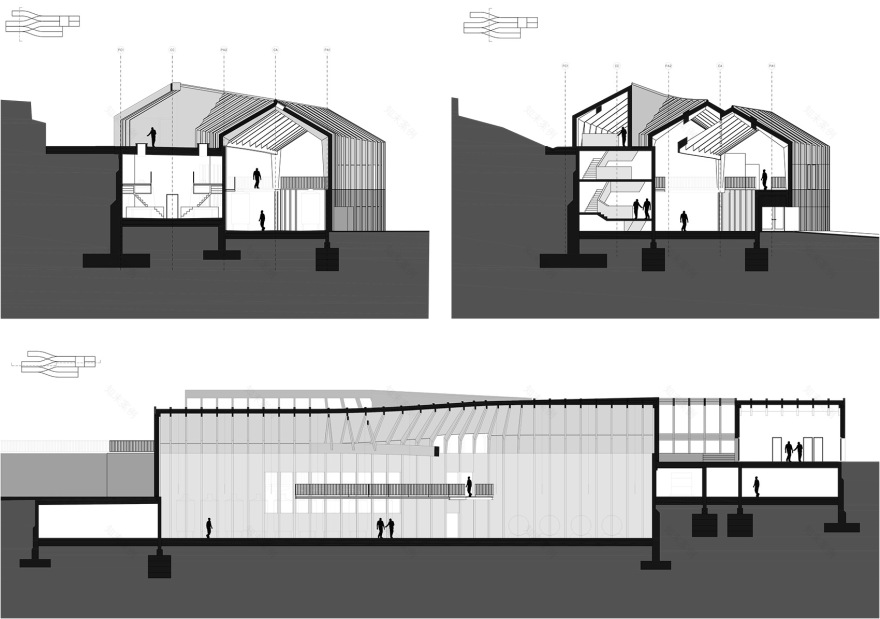
The horizontal curvilinear shapes of the winery and the circuits between areas mirror the zigzags of the vineyards in the surrounding hills and valleys. However, we avoided literally quoting the landscape, compromising daily routines, circulation and communication. On the contrary, the downward movement of the building on the terraces of the land reflects its internal mechanics, where the winemaking process takes place by gravity, a common procedure on the banks of the River Douro. The gravitational wine production system, so characteristic of the region, is demonstrated here with its current operational capabilities. The configuration of the building is therefore a set of interwoven naves that follow the existing topographic slope, replicated on the various interior levels.
▼建筑外观,exterior view© Fernando Guerra


▼建筑界面,interface of the building© Fernando Guerra
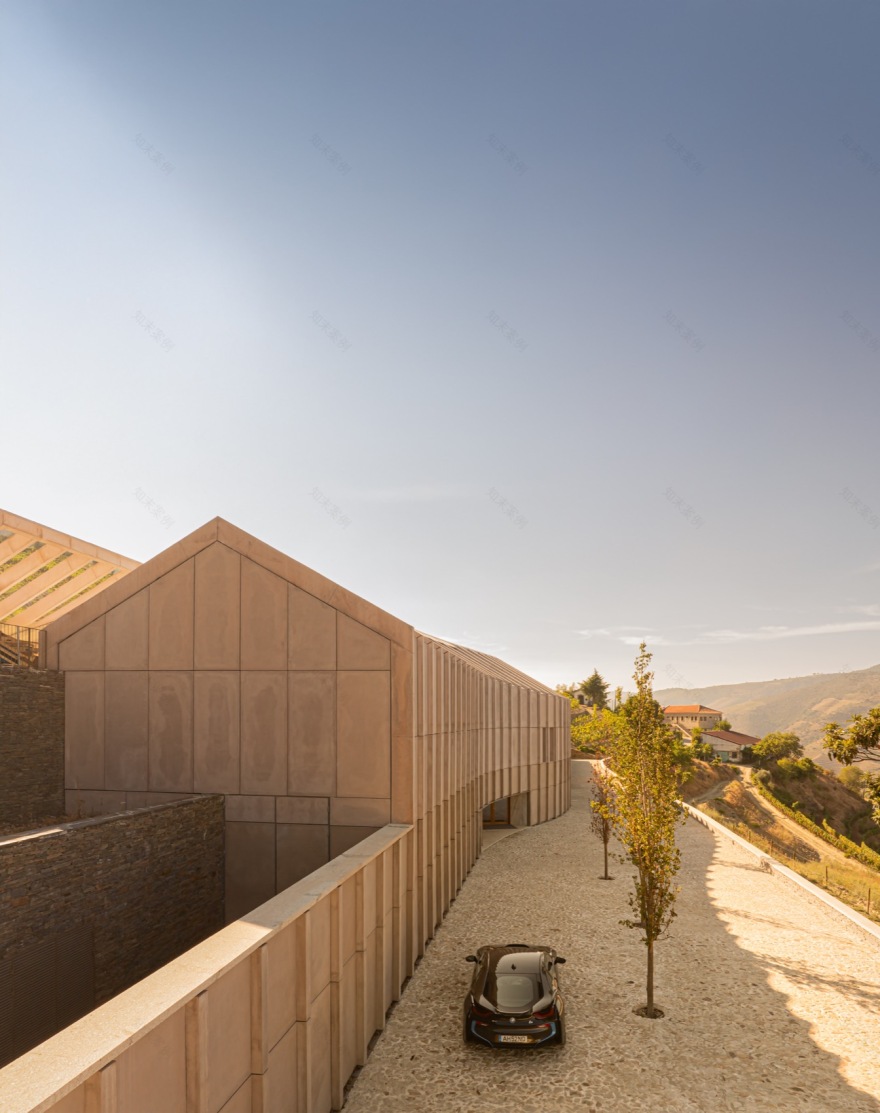
▼立面,facade© Fernando Guerra

▼由屋顶看山脉,viewing the mountain from the roof© Fernando Guerra

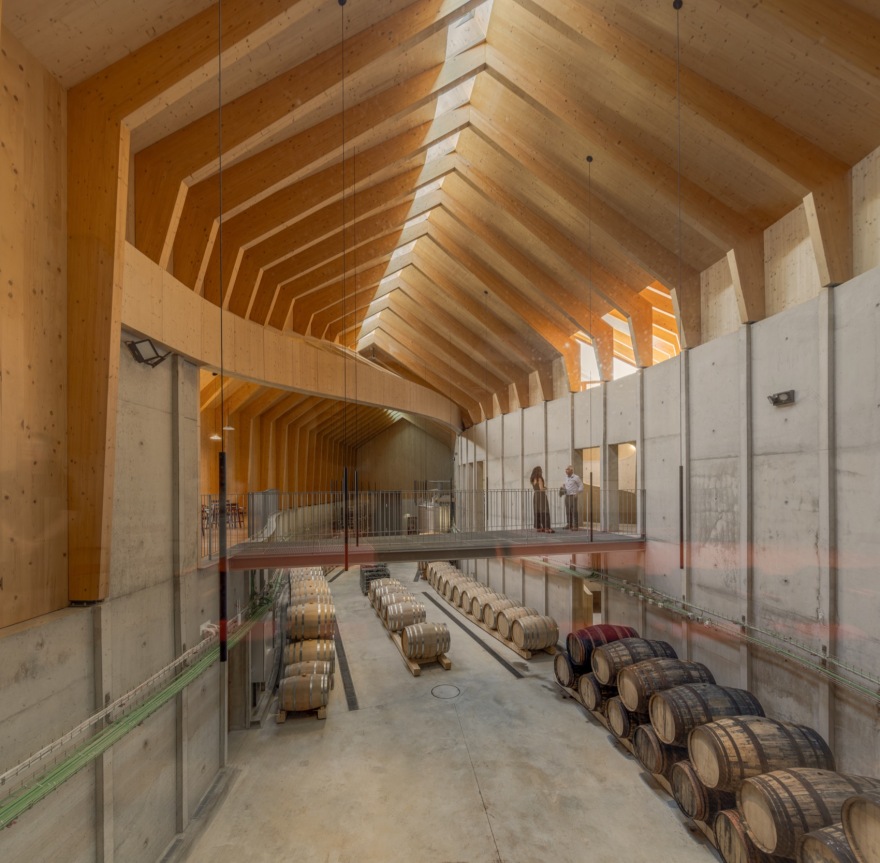
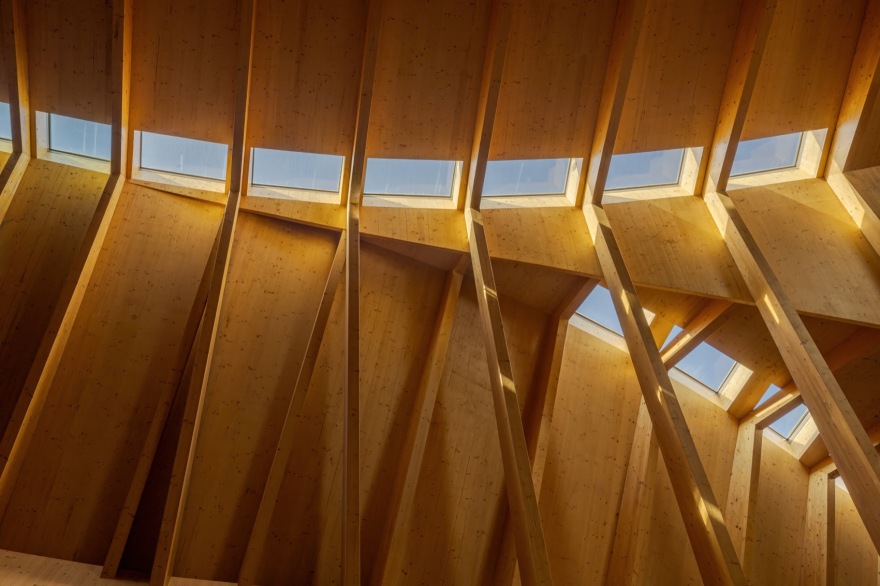
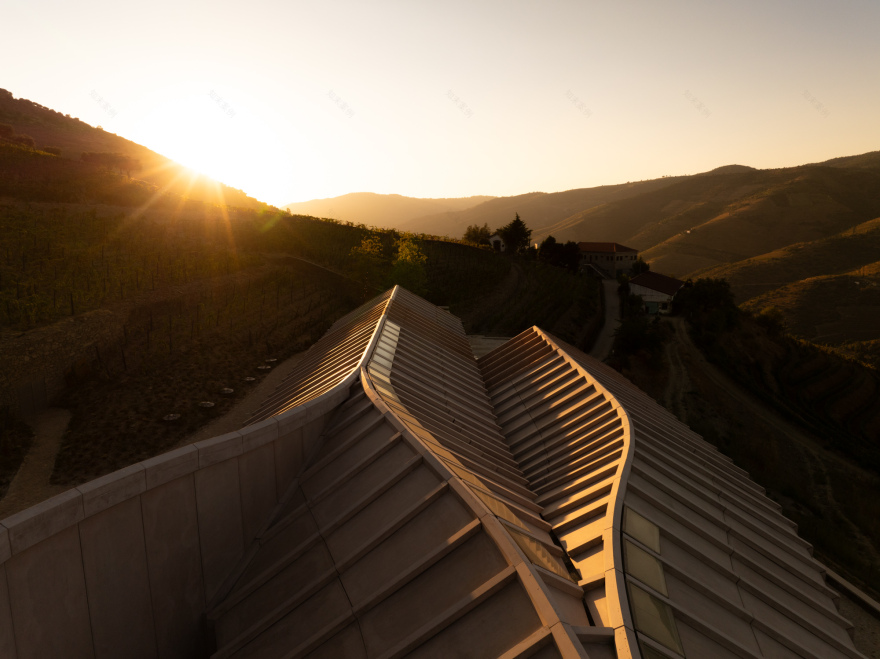
酒庄屋顶的几何形态源自当地传统的木结构双坡屋顶。这一结构被完整继承并直接暴露在建筑中,转化为一条起伏流动、连续而有机的雕塑性元素,顺着葡萄园坡地的切向曲线自然延展。
The geometry of the winery’s roof interprets the vernacular gable roof structured in wood. This structure has been taken over and exposed in this winery and has become a sinuous, continuous and organic sculptural element that flows through the tangential curves of the vineyard slopes.
▼木结构双坡屋顶,the vernacular gable roof structured in wood© Fernando Guerra


▼屋顶,roof© Fernando Guerra

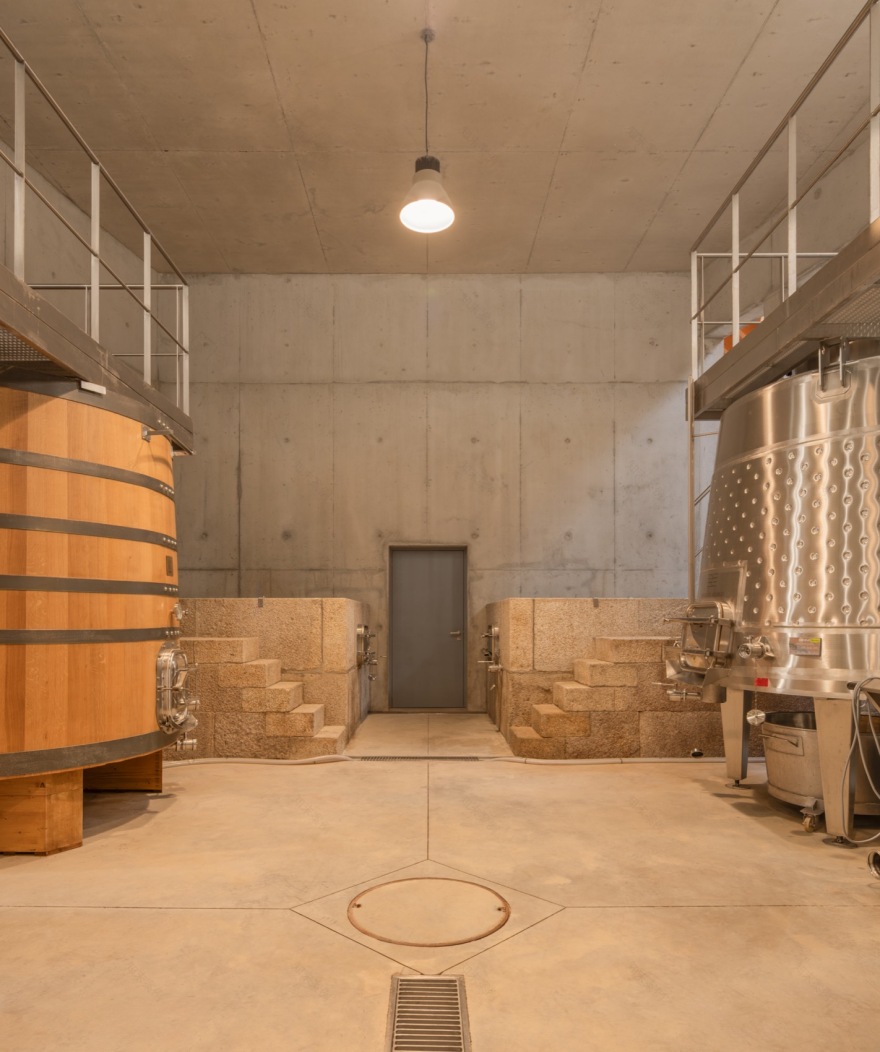
酒庄在材料选择上呼应了当地自然环境中粉褐色、绿色与灰色的色彩谱系,强调传统工艺与手作技艺,同时借助现代技术加以更新。片岩与花岗岩被用于建筑外部构件及室内混凝土挡土墙。主体空间结构采用胶合木框架与CLT(正交胶合木)板材,并覆以预制GRC(玻璃纤维增强混凝土)幕板,这些构件均产自酒庄以北不足150公里的地区。
The winery’s materials replicate the natural palette of pinkish browns, greens and greys, underlining traditional skills and crafts, but updated by modern technologies. Schist and granite were used in the exterior elements and in the interior concrete retaining walls. The structure of the building’s naves is made of laminated wood frames and CLT (Cross Laminated Timber) panels, covered with prefabricated GRC (Glass-Fiber Reinforced Concrete) cladding panels, produced in the north, less than 150 km from the winery.
▼建筑外观,exterior view© Fernando Guerra
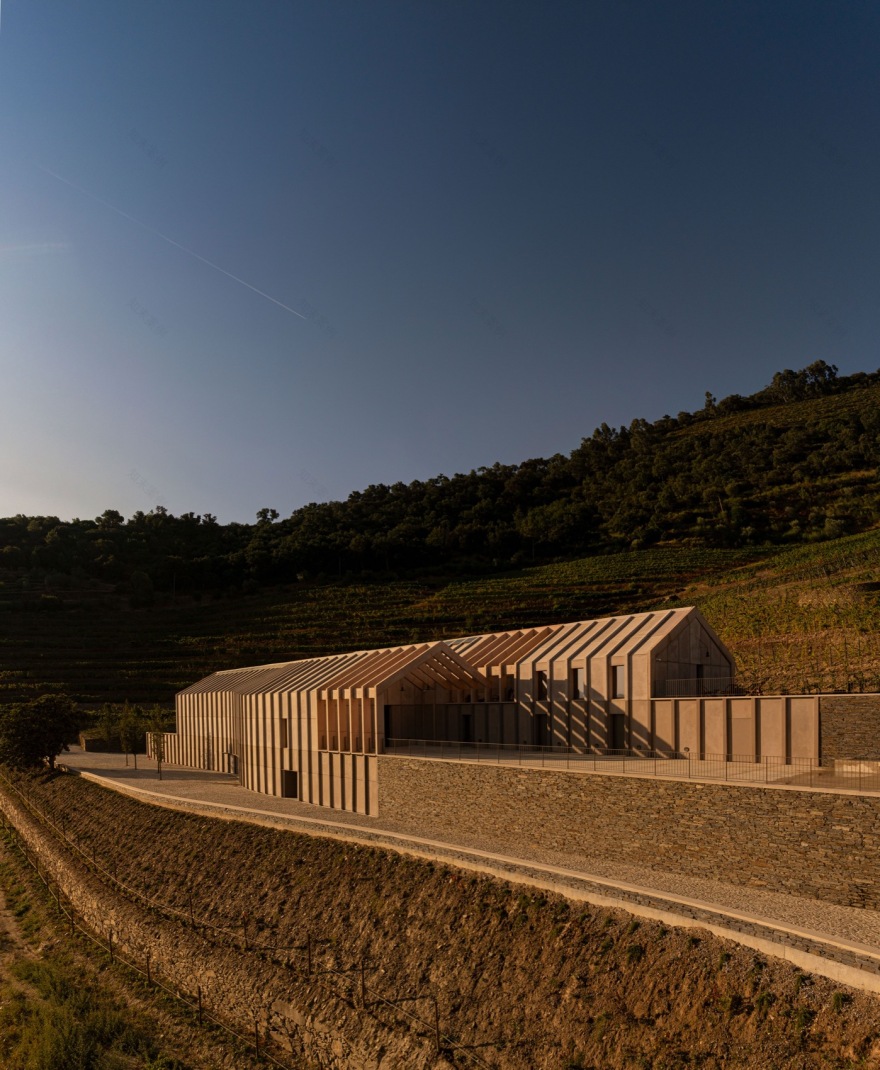

▼建筑外观近景,closer exterior view© Fernando Guerra

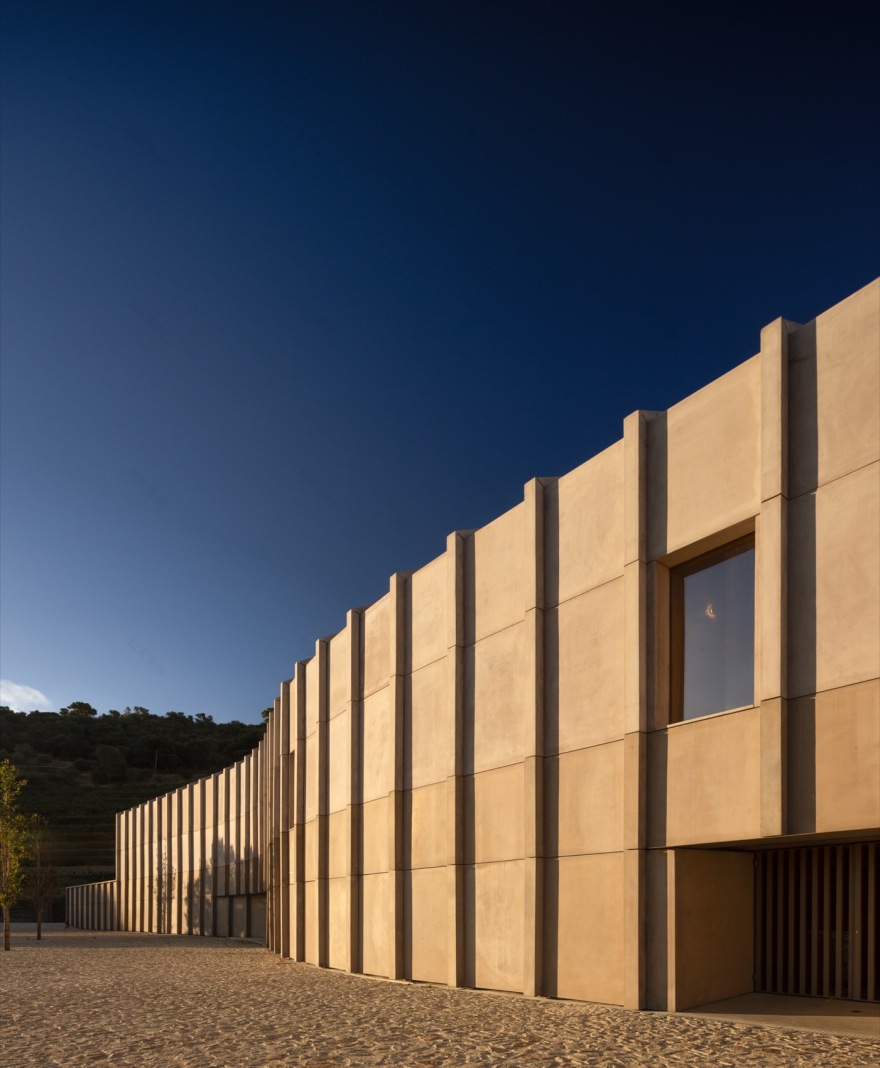
这一策略既支持了北部地区的产业与社区,也体现了通过减少长距离运输来降低环境负担的可持续理念。预制构件的使用显著缩短了现场施工周期,并减少了施工期间的交通压力。在建筑不与地面直接接触的部位,采用木结构以尽量减少混凝土用量,与全混凝土结构相比,该做法使二氧化碳排放量降低了约40%。
This benefits the northern industry and community and reflects the sustainable practice of cutting down on the long-distance transportation of materials. These prefabricated building elements also saved on-site construction and reduced traffic on the property. Wooden structures have been used at the points where the building does not touch the ground, to also minimize the use of concrete, which has reduced CO2 emissions into the atmosphere by 40%, compared to what a building completely made of concrete would emit.
▼室内概览,overall of interior© Fernando Guerra
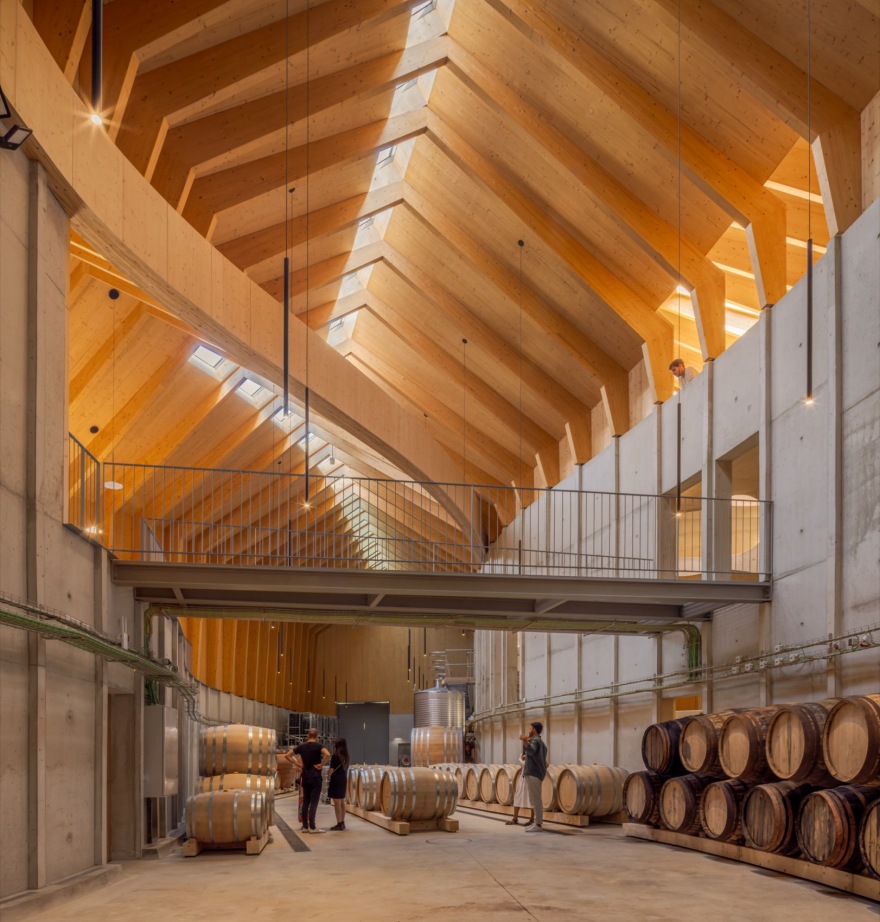
▼酿造大厅,the production hall© Fernando Guerra


▼通高空间与空中连桥,the double-height space and the bridge© Fernando Guerra


▼木材与混凝土的对比,contrast between wood and concrete© Fernando Guerra

在气候长期作用下,这些材料会逐渐呈现出更加丰富而细腻的色调与肌理,使酒庄更好地融入自然环境,并随着时间推移不断提升自身品质,正如一瓶优质的波特酒。建筑通过框取内外景观,引导人与自然的互动;在室外,步道、角落与庭院为沉思、观景、冥想、漫步与社交活动提供了多样化的空间场所。
Exposed to the effects of the climate, all these materials take on beautiful shades of tone and texture, that better integrate the winery into its natural surroundings and allows the building to improve its quality over time, just like a good Port wine. This building encourages an involvement with nature by framing views from inside the winery and, outside, there are trails, nooks and patios that invite introspection, contemplation, meditation, walking and socializing.
▼室内空间,interior space© Fernando Guerra

▼蒸馏室,distillation chamber© Fernando Guerra

▼连桥,circulation© Fernando Guerra

酒庄在能源优化方面,将保护性策略与能源生产方案相结合,优先选择低能耗系统,以减少温室气体排放。能源系统充分利用建筑的被动设计潜力,使酒窖陈酿空间全年维持在14至16摄氏度之间,而室外气温在冬夏之间可在-5℃至45℃之间变化。为此,建筑南侧围护结构与土地接触,利用土壤的热惰性,同时将主要立面朝向日照较少的北侧,即使在夏季亦能有效控制热量进入。▼楼梯,staircase© Fernando Guerra


▼楼梯细部,details of the staircase© Fernando Guerra


▼楼梯间,staircase© Fernando Guerra

项目还引入了由中央系统管理的本地发电方案,以实现能源节约及更精准的运行监测。半埋式建筑充分利用地下热稳定性,并通过低焓地热系统实现能源的生产、回收与储存。尽管该能源系统初期投入较高,但其可再生潜力大、维护需求低,并能为酿酒生产与人员舒适度提供理想的水热环境,因此可在较短时间内收回成本。
Local electricity production solutions managed by a central system were implemented and combined to save energy and better control and monitor the energy modus operandi. The partially buried building takes advantage of the thermal stability of the ground and a low enthalpy geothermal solution produces, recovers and stores electricity. The high initial cost of this energy program is recovered in the short term, as it has high renewable potential, requires little maintenance and ensures ideal hydrothermal levels for the wine industry and human comfort.
▼品酒空间,tasting room© Fernando Guerra


▼室内空间,interior space© Fernando Guerra


▼酒桶,storage space© Fernando Guerra

被动与主动系统的协同运作,大幅降低了建筑机电系统所需的热功率与总体能耗。由于场地未接入公共供水系统,项目制定了雨水收集、深井取用饮用水以及水资源处理与再利用方案,用于灌溉、清洁与消防。为避免水资源浪费,室外人行道、路径与公园均采用透水铺装,使雨水得以回归农业系统。
This combination of passive and active systems has significantly reduced the thermal power and energy consumption of the mechanical systems installed. For this winery with no public water supply infrastructure, solutions were created to use rainwater, obtain drinking water from artesian boreholes and treat and recycle water for irrigation, cleaning and firefighting. To avoid wasting water, the exterior sidewalks of sidewalks, paths and parks are permeable, and rainwater is returned to agricultural activities.
▼楼梯间与走廊,staircase and hallway© Fernando Guerra

▼楼梯,staircase© Fernando Guerra


景观设计恢复并引入本地原生植物,不仅为场地增添色彩与香气,也为有益于葡萄园生态的动物提供栖息环境,同时支撑与酿酒并行展开的多种活动。
The landscape design recovers species of native flora that add color and perfume to the landscape, which serve as a habitat for animals that are beneficial to the vineyards, and which support activities that run parallel to wine production.
▼屋顶细部,details of the ceiling© Fernando Guerra

▼木结构,wooden structure© Fernando Guerra

▼走廊,hallway© Fernando Guerra

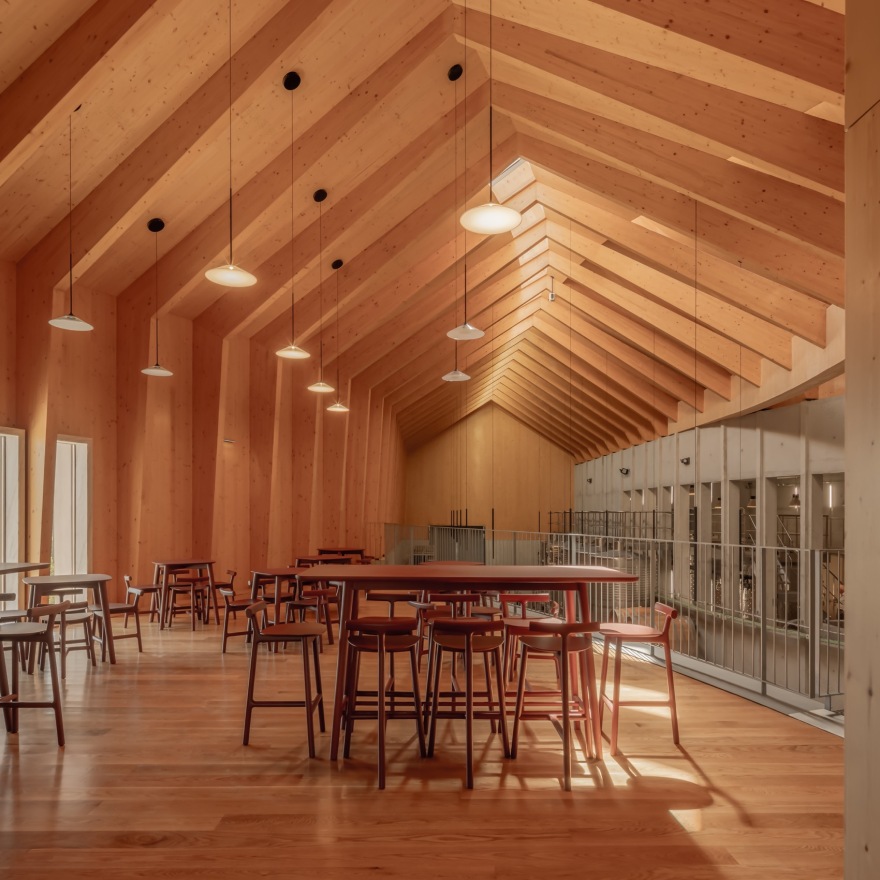
酒庄主立面设有访客中心入口,包含接待区与酒品商店。由此向上可抵达设有全玻璃立面的会议室,以及位于宽敞阳台式廊道中的品酒空间,俯瞰建筑中央船仓内的酒窖陈酿区,同时远望葡萄园与河流。这些空间可直接通往室外,通过一处面向杜罗河的大型露台连接葡萄园与小教堂。这里定期举办推广酒庄与地区形象的活动,在赞颂景观与建筑的同时,推动高端葡萄酒旅游的发展。
On the main façade of the winery is the entrance to a visitor center with a reception desk and a wine store. From here you go up to a meeting room with an all - glass wall and to the wine tasting area in a spacious balconied gallery, overlooking both the wine aging area in the central nave of the building and the vineyard and river. These rooms have access to the outside, to the vineyards and the chapel, via a large terrace overlooking the Douro. Events are hosted here that promote the winery and the region, celebrating both the landscape and the architecture and promoting prestigious wine tourism.
▼夜景鸟瞰,aerial view at night© Fernando Guerra

▼夜景,night views© Fernando Guerra


▼模型,model© Atelier Sergio Rebelo
▼总平面图,site plan© Atelier Sergio Rebelo

▼一层平面图,ground floor plan© Atelier Sergio Rebelo

▼二层平面图,first floor plan© Atelier Sergio Rebelo

▼立面图,elevation© Atelier Sergio Rebelo

▼剖面图,sections© Atelier Sergio Rebelo
TECHNICAL DATA
NAME OF THE PROJECT: Wine Cellar of the Quinta de Adorigo
CLIENT: Quinta de Adorigo
TIPOLOGY: Wine Industry and Hospitality
STATUS: Built
BUDGET: (Confidential – 4.5 million euros)
LOCATION (City, State, Country): Tabuaço, Alto Douro Vinhateiro, Portugal
LAND AREA: 24 Hectares
BUILDED AREA: 1100 m2
START DATE OF THE PROJECT: 2019
COMPLETION DATE OF CONSTRUCTION: 2024
ARCHITECTURE DESIGN AUTHOR AND TEAM MEMBERS: Sérgio Rebelo, Nuno Borges, Tiago Pinto de Carvalho, Joana Portela, Tiago Martins, Ricardo Gouveia, La-Salete Carvalho, Lourenço Barreto, Catarina Araújo, Bruna Campos, Fátima Séneca, Paulo Cunha Martins
COLLABORATORS
Landscape Design: Sofia Pera
Concept of Structures and Sustainability: Thornton Tomassetti, Scott Lomax, Gunnar Hubbard
Concrete Structure, Hydraulics, Electricity, ITED, SADI and Electromechanical Design: Pormin, José Guedes, João Guedes, Henrique Araújo, Carolina Freixo, Susana Fernandes
Wooden structure project: Portilame, Marcos Oliveira, José Esteves
Mechanical Design: Greenbeelt, João Sousa, Filipa Sucena, Rúben Avelar
Graphic Design and Signage: Eduardo Aires Studio
Interior Design: Atelier Sérgio Rebelo
Enology: Luís Seabra
History: Natália Fauvrelle
History of Art, Text and Translation: Fátima Séneca
CONTRACTOR(S)
General Construction: Teixeira, Pinto e Soares SA
Wooden Structure: Portilame
GRC Panels: Betoncrete
PHOTOGRAPHER: Fernando Guerra
3D VISUALIZATIONS: MIR and 24 Studio
Furniture: Mattiazzi, Nobilis
Art/ Tapestry: Tomek Sadurski /Tapetes Beiriz










南京喵熊网络科技有限公司 苏ICP备18050492号-4知末 © 2018—2020 . All photos and trademark graphics are copyrighted by their owners.增值电信业务经营许可证(ICP)苏B2-20201444 苏公网安备 32011302321234号
苏公网安备 32011302321234号客服
消息
收藏
下载
最近