

创作上传
VIP
收藏下载
登录 | 注册有礼
查看完整案例

收藏

下载

分享
1. 窗口与地标
1. Window and Landmark
北京友谊商店位于长安街东段延线的第一使馆区内,是新中国首家专门服务外事人员的大型特供商店。作为计划经济时期中外交流的特殊窗口,它直至上世纪80年代末才逐步对公众开放,在几代北京市民心中极具象征意义。千禧年后,商店发展渐趋式微,于2023年启动全面转型改造,将原后勤内院改造成商业园区,Jetlag Books作为唯一一家书店品牌入驻。
▼北京友谊商店南立面改造历史反映时代变化,The renovation history of the south facade of Beijing Friendship Store reflects the changes of The Times©不也设计工作室

The Beijing Friendship Store, located in the First Embassy District along the eastern extension of Chang’an Avenue, was the first large-scale special supply store established in China to serve foreign diplomatic personnel. As a unique window for Sino-foreign exchanges during the planned economy era, it gradually opened to the public only since the late 1980s. A symbolic landmark to generations of Beijing citizens, the store failed to adjust itself to the new Chinese consumerist market after the millennium, and its decline led to a comprehensive renovation started in 2023, in which the former service backyard was transformed into a commercial park, with Jetlag Books being the sole bookstore tenant.
▼书店以长安街沿线多个地标性建筑为背景,the site of this bookshop with Beijing’s landmark builings in the backdrops© 刘松恺
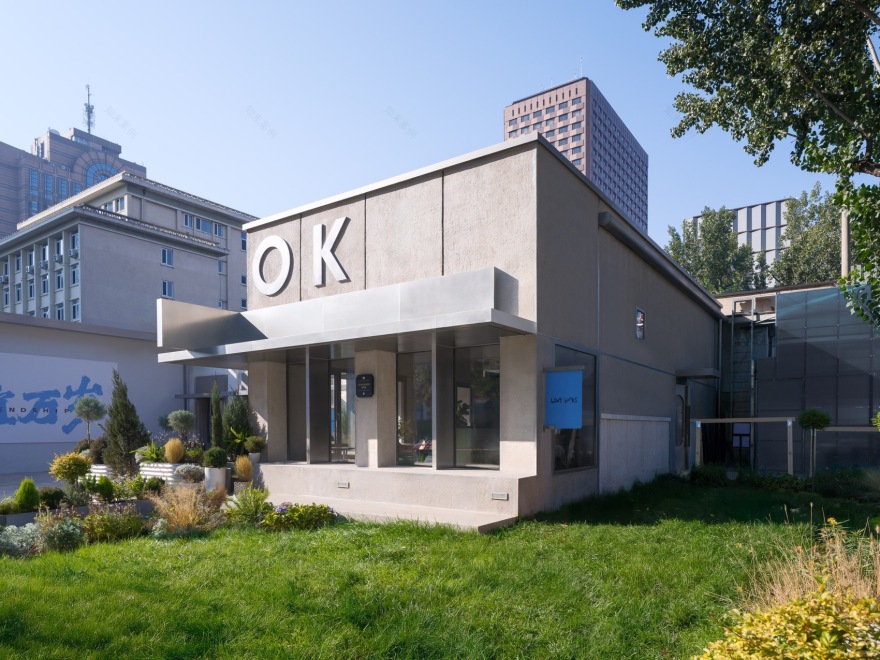
友谊商店建筑群以其包豪斯式的不对称体量,结合极具时代特色的所谓“苏联式”立面,自1972年竣工后便成为长安街轴线上的重要地标。Jetlag Books的基地由一栋1970年代末建成的后勤用房与一栋更晚期盖的钢结构建筑连缀而成。前者毗邻主楼东北角,对外仅露出一面保留较好的“苏联式”东立面,后者则仅余结构骨架、屋顶及北侧砖砌外墙。两者坐西朝东呈“「”型布局,北邻园区主入口通道,南侧与主楼裙房合围出一片临街小广场,令夹在两块空地间的钢结构基地成为探向东侧道路的“门面”与“展示窗口”。
▼在1973年版友谊商店原始平面图上标注的书店基地区位,The location of the bookstore site marked on the original floor plan of Friendship Store in 1973© 不也设计工作室

The Friendship Store complex, with its Bauhaus-inspired asymmetrical volumes and a distinctive “Soviet-style” facade, has been a landmark along Chang’an Avenue since its completion in 1972. Jetlag Books’ site combines an original service building constructed in the late 1970s and a steel-structured building added afterwards. The former, adjacent to the northeast corner of the main building, retains only its well-preserved eastern “Soviet-style” facade, while the latter preserves only its structural skeleton, roof, and northern brick exterior wall. Facing eastward, the two buildings form a L-shaped layout. The site’s north side borders the park’s main entrance passage, while its south side encloses a tiny street-facing plaza with the main store building. These two empty lots positioned the steel-structured site building as a “frontier” or “display window” projecting towards the street to the east.
▼老建筑外立面被保留修复,并调整门窗比例以获得沿街店铺的昭示性和亲人尺度,The exterior facade of the old building was preserved and restored, and the proportion of doors and Windows was adjusted to achieve the visibility and family-like scale of the shops along the street © 刘松恺

2. 连接与对话
2. Connection with Dialogue
于是,我们很自然地从外立面开始切入设计:如何为新旧两部分基地找到一种能够兼顾周边环境与室内功能的立面表达?友谊商店拥有独特的涉外历史,而Jetlag Books也以“分享世界资讯”为宗旨,选品围绕旅行主题呈现全球视野——两者在各自时代以不同面貌承担着对外连接的窗口角色。设计的主要概念由此被确定为“连接、对话”,我们与业主以审慎态度处理基地与地标性建筑遗产之间的关系,希望书店的建筑形象既能延续友谊商店承载的浓厚集体记忆,又不囿于“怀旧”,而能符合今天的文化消费空间形态,需要“既旧又新”。
Our design thus began with the facade: what is the most appropriate elevational expression for both the old and new parts of the site that could harmonizes with the surroundings and interior programs? We were inspired by the Friendship Store‘s unique history of diplomatic exchange, as well as Jetlag Books’ aim to “share global knowledge” and its travel-themed selections. They both served as a window connecting to the outside world in their respective roles and eras. The core design concept thus crystallized around “connection” and “dialogue.” We took great care to balance the relationship between the site and its historic landmark neighbor, aiming for a bookstore that honors the collective memory of the Friendship Store while transcending stylish nostalgia to align with contemporary expectations of cultural consumption spaces—the bookstore should be simultaneously “old” and “new”.
▼从临街小广场望向改造后的书店外立面,Looking at the renovated exterior of the bookstore from the small square facing the street© 刘松恺

设计保留了老建筑外立面,清洗修复其水刷石饰面,并降低原门窗高度以获得沿街店铺的昭示性和亲人尺度。钢结构部分的新建外立面则尝试转译老建筑的“苏联式”风格气质,以厚墙、深窗、挑檐、宽基座和高女儿墙为特征的体量带来厚重的纪念性,通体凿毛混凝土饰面则呼应了老建筑粗粝的水刷石立面。
The original Shanghai-Plaster-finished (exposed stone aggregates mixed with cement to form a gentle and rough texture) facade of the old site building was preserved, cleaned and restored. Door and window heights were lowered to create a more inviting and human-scale commercial street presence. The newly designed facade of the steel-structured site building reinterprets the “Soviet-style” aesthetic of the Friendship Store and the old site building, with its thick walls, deep-set windows, overhanging eaves, wide bases, and high parapets evoking a sense of monumentality, while its bush-hammered concrete finish echoes the rough facade texture of the old site building.
▼新建外立面尝试转译老建筑的“苏联式”风格气质,The newly built facade attempts to translate the “Soviet” style and temperament of the old building © 刘松恺

▼以厚墙、深窗、挑檐、宽基座和高女儿墙为特征的体量带来厚重的纪念性,The volume characterized by thick walls, deep Windows, overhanging eaves, wide bases and high parapet walls brings a sense of weighty monumentality © 刘松恺

▼新建外立面的凿毛混凝土饰面呼应老建筑粗粝的水刷石立面,The roughened concrete finish of the newly built facade echoes the rough water-washed stone facade of the old building © 刘松恺

东、南向门窗上方的一系列挑檐设计来源于我们对友谊商店及其他同时代“苏联式”建筑的资料研究:友谊商店东南侧裙房原有一道通长的挑檐包绕于窗洞之上,类似构造也常见于当时同风格的商场、书店、饭店等商业建筑的沿街立面中。本项目设置的挑檐即是对这种历史风格的转译延续,其中,老建筑上的挑檐仅填充于原有门窗洞口内,不打破原立面的构图节奏;新建筑上的挑檐则使用了与友谊商店原裙房挑檐类似的通长包绕做法,并在伸向街道的体量东南角做了一处立板悬挑处理,配合其上方墙面由业主设置的“BOOK”字样,成为书店外观的视觉焦点,也强化了基地区位的“橱窗”属性。
▼友谊商店东侧裙房原有一道通长的挑檐由南立面包绕至东立面,今已不存,The east podium of the Friendship Store originally had a long eave that ran from the south side to the east facade, but it no longer exists now © 不也设计工作室

▼北京1960-70年代建成的“苏联式”风格公共建筑沿街立面普遍使用挑檐构造,The street-facing facades of public buildings in the “Soviet style” constructed in Beijing during the 1960s and 1970s generally adopted overhanging eaves © 不也设计工作室
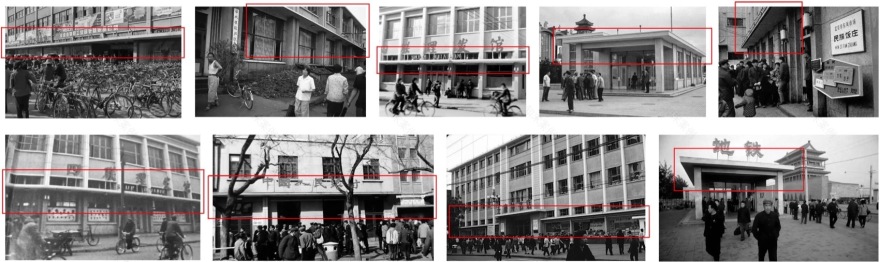
The design of the cantilevered steel overhangs above the doors and windows derived from our research on the original Friendship Store architecture and its “Soviet-style” contemporaries: the original Friendship Store east wing building featured a continuous concrete overhang above its window openings—a design commonly adopted in 1960-70s’ commercial architecture of the same style. The steel overhangs of Jetlag Books extend this historical motif, with those on the old site building confined within existing window openings, preserving the original facade compositional rhythm, and those on the new site building as a continuous overhang wrapping around the entire structure, similar to that on the original Friendship Store wing building. At the southeast corner of the new site building, an extended vertical panel of the overhang cantilevers out, together with the “BOOK” inscription installed by the client on the wall above it, becoming a visual focal point to enhance the site’s quality as a “display window”.
▼老建筑上的挑檐仅填充于原有门窗洞口内,不打破原立面的构图节奏,The eaves on the old building are only filled in the original door and window openings, without disrupting the composition rhythm of the original facade © 刘松恺

▼挑檐上方的垂直金属面暗示原有门窗洞口高度,The vertical metal surface above the eave suggests the height of the original door and window openings© 刘松恺

▼窗户两侧及下方的新建填充墙体使用凿毛混凝土,与老建筑的水刷石立面得以区分,The newly built infill walls on both sides and below the Windows are made of roughened concrete, which distinguishes them from the water-washed stone facades of the old buildings © 刘松恺

▼新建立面上的通长包绕挑檐在东南角做立板悬挑处理,成为书店外观视觉焦点,The full-length overhanging eaves on the newly built facade are treated with a vertical cantilever at the southeast corner, becoming the visual focus of the bookstore’s exterior © 刘松恺

▼折复交错的乱纹不锈钢挑檐、水刷石立面、凿毛混凝土外墙、屋顶的logo天窗与周边地标建筑形成多个时代间的对话,The staggered and interwoven stainless steel eaves, water-washed stone facades, roughened concrete exterior walls, and the logo skylight on the roof form a dialogue with the surrounding landmark buildings across multiple eras © 刘松恺

▼新建立面充分利用基地区位的“橱窗”属性,在靠近街道的东立面营造出稳重而略带活泼的建筑形象,The newly built facade makes full use of the “showcase” attribute of the site location, creating a stable yet slightly lively architectural image on the east facade close to the street © 刘松恺
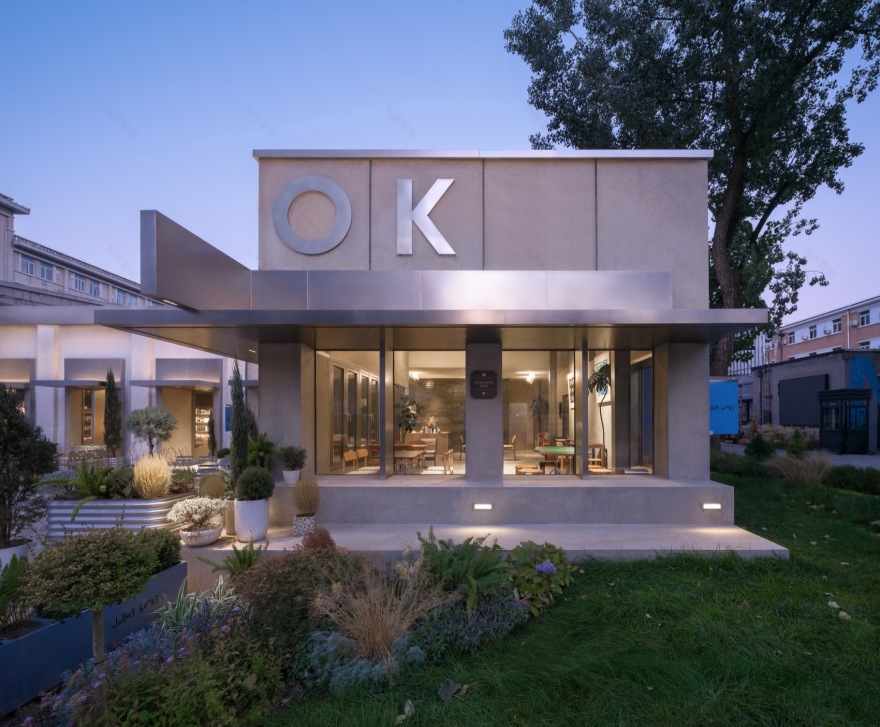
在新建挑檐下,我们结合深窗设计了可供憩坐的台基,满足业主提出的通过檐下灰空间塑造社区友好立面的需求。新老两部分外立面上的挑檐、檐下竖梃及门窗框均采用更为当代的乱纹不锈钢材质,轻盈而细腻,既与水刷石及凿毛混凝土形成反差,也将新老两部分外立面连为整体。新建外立面的窗洞及檐口高度也与改造后的老建筑保持一致,进一步加强两者的连接。
Under the new eaves, we integrated window sills with seating to fulfill the client’s request for a community-friendly facade. All of the overhangs, vertical mullions, and window frames on the facades are crafted from matte stainless steel, contrasting with the rough stone and concrete wall finishes with its lightweight and delicate materiality, and unifying the two parts of the site. The window and overhang heights of the new facade align with the renovated old site building, further strengthening their visual connection.
▼新建挑檐下结合深窗设计的可供憩坐的台基,A new platform for sitting under the eaves, combined with deep Windows, has been built © 刘松恺

▼内凹的入口门斗提供空间缓冲,侧墙上设置展示书龛,The concave entrance vestibule provides space buffering, and display book niches are set on the side walls © 刘松恺

▼轻盈、细腻的乱纹不锈钢材质,与水刷石及凿毛混凝土形成反差,营造符合当代消费空间需要的视觉性格,The light and delicate stainless steel material with random patterns contrasts with water-washed stone and roughened concrete, creating a visual character that meets the needs of contemporary consumer Spaces © 刘松恺

北立面紧邻园区主入口通道,设计保留基地砖墙,在其两侧浇筑混凝土加固并做表面凿毛,更考古般清理呈现出两段原本砌入墙体的园区原水刷石围墙,作为外立面的墙裙。此立面仅在东端新开一面大窗以吸引入园访客,而利用原排风扇洞口设置了一面小高窗、利用原后勤门洞设置了新的外门,门上设计了飞机舷窗形式的视窗,暗示Jetlag Books的旅行主题。因北立面前的景观条件不适合访客停留,所以此处门窗相应未做内凹处理,而是与墙面上的落水管、不锈钢装饰线及墙裙一起构成一幅平面图案。
The existing brick wall of the northern facade facing the commercial park’s main entrance passage was preserved and reinforced with bush-hammered concrete on both sides. Two sections of the park’s original fence walls embedded within the existing brick wall were revealed and cleaned, becoming “wainscotings” on the facade. A large new window at the eastern end invites visitors at the park’s entrance, while the original exhaust fan opening and service door were repurposed into a small clerestory window and a new entrance door with a lite in the shape of an airplane window, subtly nodding to Jetlag Books’ travel theme. Since the landscape condition in front of the northern facade made it unsuitable for visitors to stay, the windows and doors on this facade were designed to be flush with the wall finish, forming a two-dimensional composition with the wainscot, the stainless-steel decorative lines, and the drainage gutter and downspout.
▼北立面仅在东端转角处新开一个面积较大的窗口以吸引入园访客,Only a larger window is newly opened at the eastern corner of the north facade to attract visitors entering the park © 刘松恺

▼设计考古般清理呈现出两段原本砌入墙体的园区原水刷石围墙,作为外立面的墙裙,The design’s archaeological clean-up reveals two sections of the original water-washed stone walls of the park that were originally built into the walls, serving as the wall skirts of the exterior facade © 刘松恺

▼利用原后勤门洞设置的新外门上设计了飞机舷窗形式的视窗,暗示书店品牌的旅行主题,The new outer door, which was set up by utilizing the original logistics door opening, features a window in the form of an aircraft porthole, hinting at the travel theme of the bookstore brand © 刘松恺
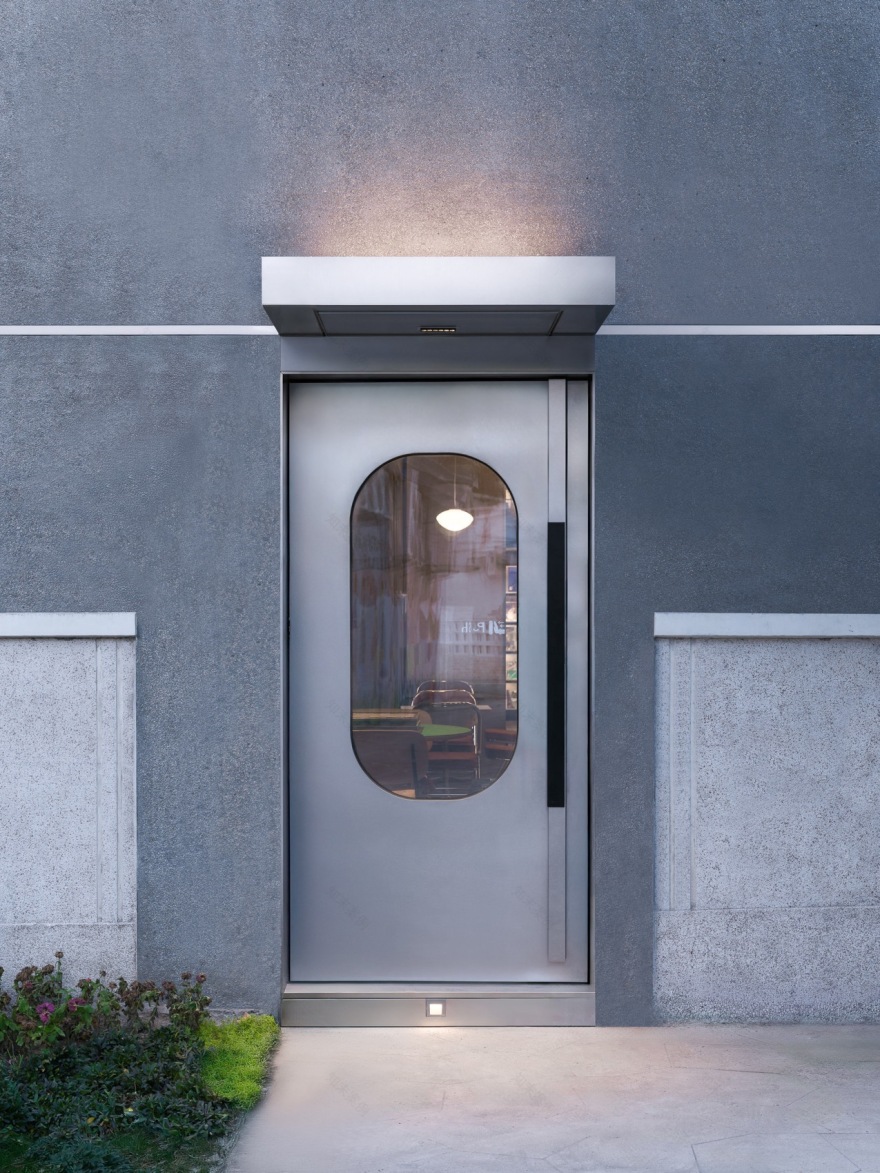
▼利用原排风扇洞口设置的小窗、不锈钢装饰线条及清理出的水刷石围墙共同构成平面图案,The plane pattern is jointly formed by the small window set at the original exhaust fan opening, the stainless steel decorative lines and the water-washed stone wall cleared out © 刘松恺

3. 穿梭与缝合
3. Shuttle to Stitch
从正门进入书店,迎面看到的便是悬挑的吧台尽端。这条通长8.5米的吧台从老建筑基地内的展书区贯穿到钢结构基地内的多功能区,如同一根缝衣针连接起两个空间。
Upon entering the bookstore’s main entrance, visitors will encounter a cantilevered end of the 8.5-meter-long bar counter that stitches the book display area in the old site building and the multi-functional area in the new site building together like a needle.
▼从正门进入书店,迎面看到的便是悬挑的吧台尽端,Entering the bookstore through the main entrance, the first thing you see is the end of the cantilevered bar counter © 刘松恺

▼利用基地原有屋顶楼梯间玻璃房改造成的高天窗内悬挂发光标识,成为外立面上极具辨识度的特征,The high skylights created by transforming the glass rooms in the original roof stairwells of the base with illuminated signs have become a highly recognizable feature on the exterior facade© 刘松恺

▼通长8.5米的吧台从老建筑基地内的展书区贯穿到钢结构基地内的多功能区,如同一根缝衣针连接起两个空间,The 8.5-meter-long bar counter runs from the book exhibition area within the old building site to the multi-functional area within the steel structure site, like a sewing needle connecting the two Spaces © 刘松恺

展书区采用黑色釉面瓷砖墙裙及黑色哑光瓷砖铺地,以衬托书籍与文创商品。墙面的乱纹不锈钢书架采用模块化设计,形成层叠的水平线,随墙体折复展开,与外立面挑檐的材质及形式相呼应。六个地柜展台可以根据功能需要灵活拆分组合。展书区南侧的小储藏间实际位于友谊商店主楼裙房内,地坪高过作为后勤用房的老建筑较多,其门扇被处理成融入墙裙的暗门,并在门口设置三级踏步小平台,兼做举办活动时的临时讲台。
The book display area features black glazed tile wainscoting and matte black floor tiles to highlight the displayed books and products. The modular matte stainless-steel bookshelves extend with the folded walls, creating layered horizontal lines that echo with the material and form of the exterior overhangs. Six display units can be flexibly arranged according to functional requirements. The small storage room at the south of the display area is located within the Friendship Store’s main building, with a higher floor level than the site. Its door panel is designed as a hidden door integrated into the black-tiled wainscoting, and a three-step platform was installed beneath the door which also serves as a temporary stage for events.
▼展书区采用黑色釉面瓷砖墙裙及黑色哑光瓷砖铺地,以衬托书籍与文创商品,The book exhibition area features black glazed tile wall skirts and black matte tiles on the floor to complement the books and cultural and creative products © 刘松恺

▼墙面的乱纹不锈钢书架形成层叠的水平线,随墙体折复展开,与外立面挑檐的材质及形式相呼应,The randomly patterned stainless steel bookshelves on the wall form layered horizontal lines, unfolding as the wall folds, echoing the material and form of the eaves on the facade © 刘松恺

▼书架采用模块化设计,可以根据展示需求灵活调整,The bookshelf adopts a modular design and can be flexibly adjusted according to the display requirements © 刘松恺
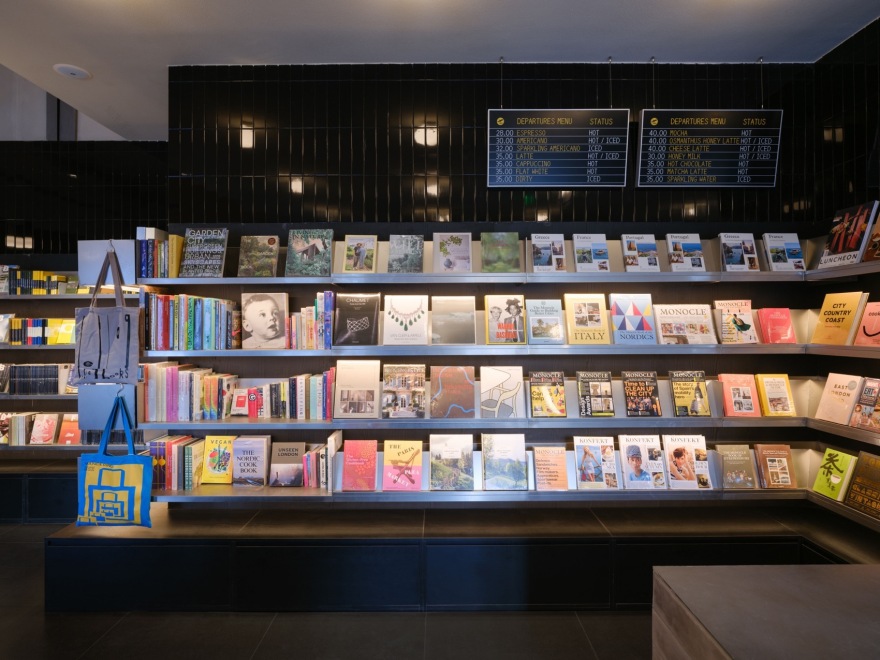
▼窗框与室内完成面齐平,从室外则不可见,The window frame is flush with the interior finish surface and is not visible from the outside © 刘松恺

吧台区作为缝合新旧的枢纽,分别采用与展书区同规格的墨绿色及米褐色瓷砖作为墙面及吧台饰面,营造空间的渐进过渡。我们保留了此处基地原有的一道楼梯在结构顶板的开洞,并将原屋面玻璃楼梯间改造成天窗,为其下的吧台带来戏剧性的天光。玻璃房内悬挂的发光标识则成为外立面上极具辨识度的特征。根据基地原有高差,吧台南北两端各设置了一级台阶,进一步限定出吧台区域边界,也令这里成为书店中形式变化最丰富的空间。
The bar area, a pivot connecting the old and new, utilizes dark green and beige brown tiles of the same size as the black tiles in the book display area, respectively for the walls and bar counter finishes, to create a gradient transition of spaces. We preserved an existing staircase opening in the structural roof slab and transformed the original glass stairwell on the roof into a skylight, bringing dramatic natural light to the bar below. The illuminated signage suspended in the glass skylight becomes a distinctive facade feature. According to the existing level differences of the site, one step was added at each end of the bar counter, further defining the boundaries of the bar area and making it the most visually dynamic space in the bookstore.
▼展书区墙裙、吧台区墙裙及吧台饰面以同规格而不同色的瓷砖装饰,形成渐进的空间过渡,The wall skirts of the book exhibition area, the bar counter area and the bar counter finish are decorated with tiles of the same specification but different colors, creating a gradual spatial transition© 刘松恺

▼吧台区丰富的材料、造型与采光方式,令这里成为书店中形式变化最丰富的空间,The rich materials, shapes and lighting methods in the bar area make it the space with the most diverse forms in the bookstore © 刘松恺

▼利用基地原有的楼梯开洞改造成的天窗为吧台区带来戏剧性的天光,The skylight transformed from the opening of the original staircase on the base brings dramatic natural light to the bar area © 刘松恺

▼吧台区东侧的高大外窗将小广场景色及光线引入室内,The tall exterior Windows on the east side of the bar area bring the view of the small square and the light into the interior © 刘松恺
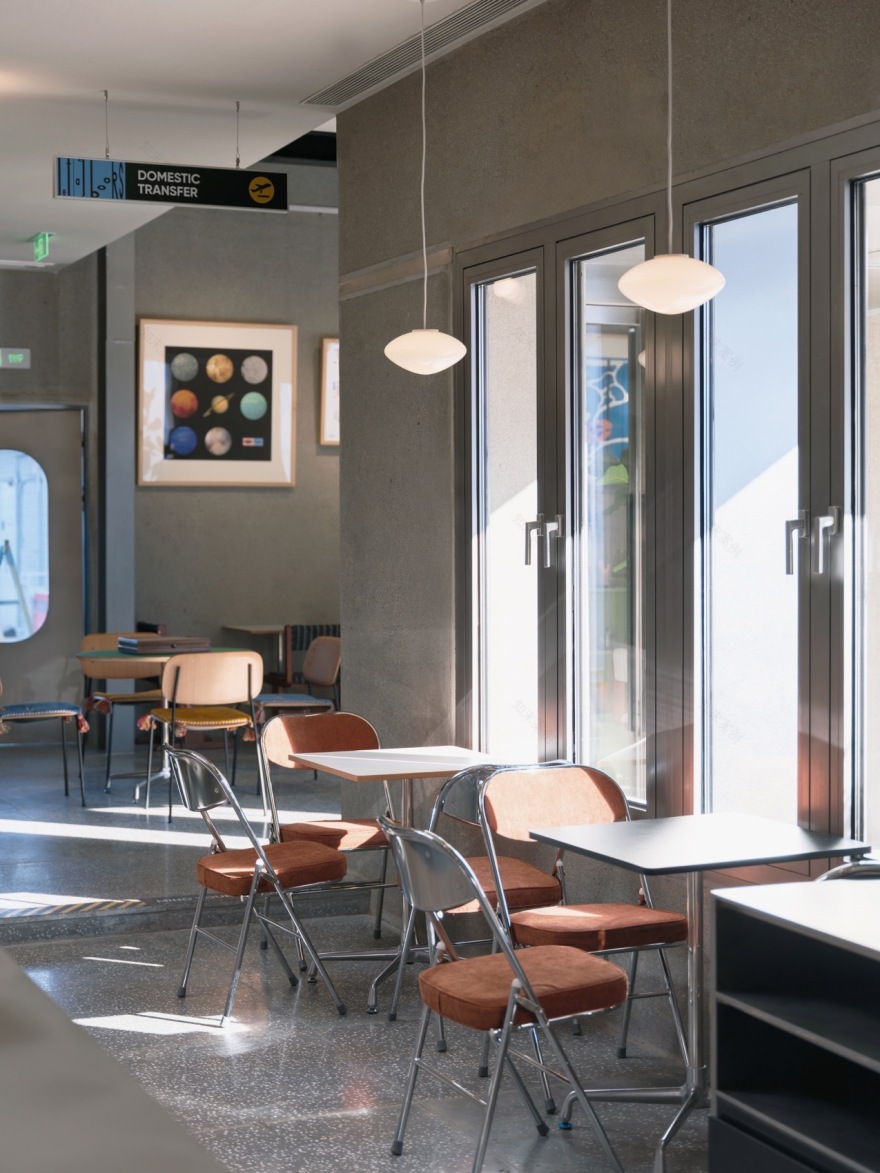
▼外立面的窗户如同舞台,框出被天光照亮的吧台区,The Windows on the facade are like stages, framing the bar area illuminated by the sky © 刘松恺

书店最北侧体量为多功能区,除日常作为咖啡座位区外,还需满足展览、活动、快闪等多元功能需求。南北两侧设置的两扇外门分别联通小广场及园区主入口,令此空间可以独立对外运营。这里室内仅设置移动家具,墙地面则采用灰色调的凿毛混凝土及水磨石材质,为使用留出最大灵活度之余,也呼应了友谊商店原始外立面及室内铺地的材料。
The northernmost section of the bookstore is a multi-functional area, which, in addition to serving as a seating area for the café, also needs to accommodate diverse functions such as exhibitions, events, and pop-up activities. The two exterior doors located on the south and north sides connect respectively to the small plaza and the park’s entrance passage, allowing the multi-functional area to be operated independently. The interior features only movable furniture, while the walls and floors are finished with gray-toned bush-hammered concrete and terrazzo, allowing for maximum flexibility in use and echoing the original facade and interior flooring materials of the Friendship Store.
▼多功能区日常作为咖啡座位区,局部吊顶呈现出钢结构楼承板原貌,The multi-functional area is used as a coffee seating area on a daily basis, and the partial ceiling presents the original appearance of the steel structure floor deck © 刘松恺

▼多功能区室内的窗框、不锈钢装饰线条及定制挂画线将凿毛混凝土墙面分割成一幅平面构成,The window frames, stainless steel decorative lines and custom hanging lines in the multi-functional area divide the roughened concrete wall into one plane © 刘松恺

多功能区和展书区均采用了局部吊顶,分别显露出前者的钢结构楼承板和后者的混凝土空心预制板屋顶,既创造出较高的挑空,也向访客展现基地的建设历史。相似的处理还有卫生间洗手区:我们保留了一段老建筑原有外窗“遗迹”的层叠内退构造,定制了与其形式嵌合的洗手池、镜子及壁灯。
Both the multi-functional area and book display area use partial suspended ceilings to expose the steel roof deck in the former and precast concrete hollow-core roof slabs in the latter. This not only creates a high ceiling space, but also reveals the site’s construction history. A similar approach was applied in the bathroom sink area: we preserved a section of the layered, recessed structure of an original exterior window, and custom-designed the sink, mirror, and wall lamp to fit seamlessly into its form.
▼展书区局部吊顶呈现出加固钢结构及老建筑预制板屋顶原貌,储藏间外的小阶梯平台兼做活动时的临时讲台,The partial ceiling of the book exhibition area presents the original appearance of the reinforced steel structure and the prefabricated slab roof of the old building. The small stepped platform outside the storage room also serves as a temporary podium during activities © 刘松恺

▼卫生间洗手区墙面直接呈现了保留的一段老建筑外窗“遗迹”的叠层内退构造,The wall of the washbasin area in the bathroom directly presents the stacked and recessed structure of a preserved section of the old building’s exterior window “relic” © 刘松恺
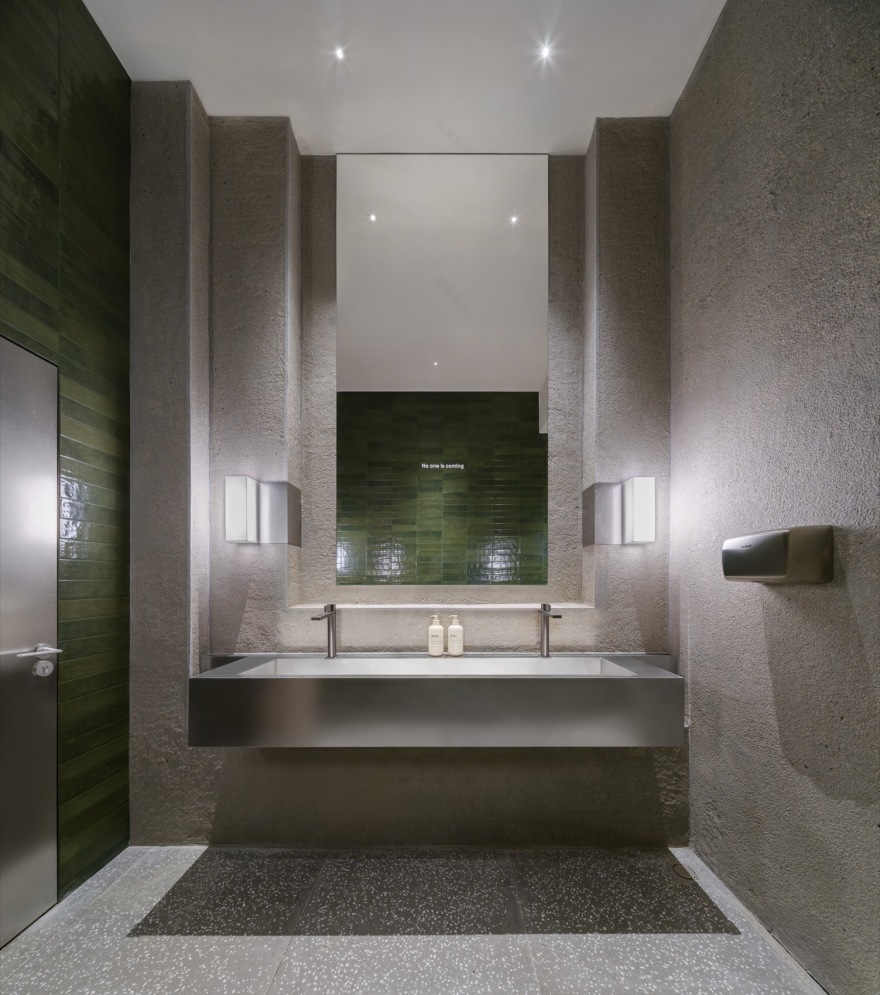
▼利用原排风扇洞口设置的高窗将园区内的树影引入室内,Use the high Windows set at the original exhaust fan openings to bring the tree shadows in the park into the room © 刘松恺

▼克制的形式及材质创造出细腻的空间层次,Use the high Windows set at the original exhaust fan openings to bring the tree shadows in the park into the room© 刘松恺

4. 时空混同
4. A Mixed Space-time
作为针对北京核心区地标进行的城市更新项目,Jetlag Books书店以一种对历史文脉高度敏感的自觉性,平衡着基地历史与当代使用功能、基地与周边环境、以及基地内部新旧之间的关系。友谊商店在过去50年内经历了多次大刀阔斧的改造,很多原始建筑特征已经遗失。不过对我们而言,这却恰是这座有着特殊起源的商业建筑在历史洪流中努力适应时代变化、不断生长的真实见证,也是本次设计所追寻、延续的鲜活生命线。
Over the past 50 years, the Friendship Store has undergone numerous drastic renovations, and many of its original architectural features have been lost. However, for us, this is precisely a true testament to how this commercial building with its unique origins has strived to adapt to the changing times and continuously evolve within the currents of history. It is also the vibrant narrative that this design seeks to preserve and continue.
▼书店背衬友谊商店,两者既呈现出整体感又不尽相同,让访客难以辨别建成时间,The bookstore is set against the backdrop of the Friendship Store. The two present a sense of unity yet are not exactly the same, making it difficult for visitors to tell when they were built © 刘松恺

▼从街道望向改造后的书店东立面,新老两部分相互参考,在保留各自特点的同时模糊时空界限,Looking at the renovated east facade of the bookstore from the street, the new and old parts refer to each other, blurring the boundaries of time and space while retaining their own characteristics © 刘松恺

▼改造后的书店以一种混同时空的中间态,将往昔故事融入当代日常,The renovated bookstore integrates past stories into contemporary daily life in an intermediate state that blends time and space © 刘松恺

▼友谊商店主楼、1970年代末加建的后勤裙房与新建书店外立面同框,The main building of Friendship Store, the logistics podium added in the late 1970s and the facade of the newly-built bookstore are framed together © 刘松恺

从建华路上自北向南望去,Jetlag Books书店背衬高大的友谊商店,两者既呈现出连续的整体感,又不尽相同,在似与不似之间,让访客难以辨别各部分的建成时间。设计既未刻意保留破败痕迹、成为“时间胶囊”,也没有无视岁月遗存、兀自“割裂创新”,而是以一种混同时空的中间态,将往昔故事融入眼前日常,连接建筑与街道、品牌与社区、过去与当下。
Viewed southward along Jianhua Road, Jetlag Books stands against the towering Friendship Store “backdrop”. The two buildings present a sense of continuity and overall unity, yet they are also distinctly different, creating a sense of ambiguity that makes it difficult for visitors to discern when each part was built. The design neither deliberately preserved every trace of decay to become a “time capsule,” nor did it ignore the remnants of the past and pursue “disruptive innovation.” Instead, it adopts an intermediate state that blends past stories into the present daily life, connecting building and street, brand and community, past and present.
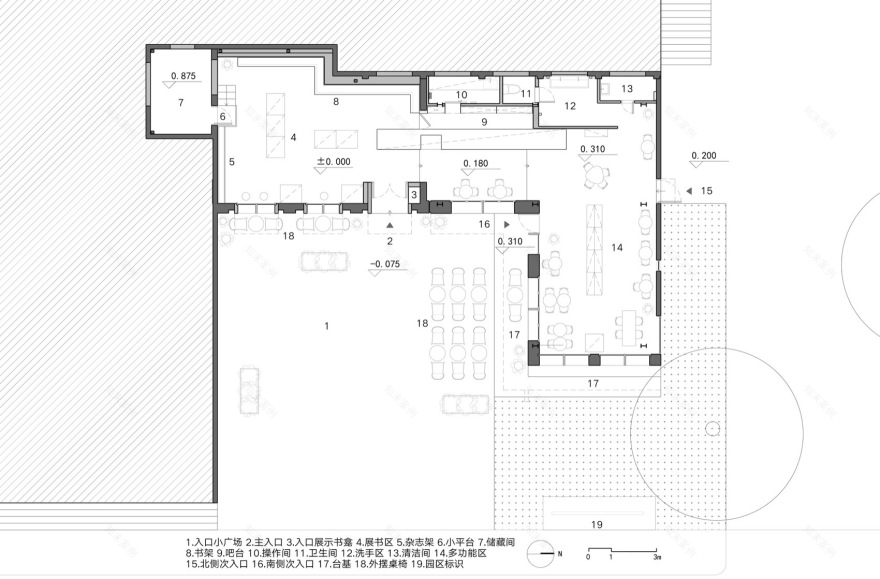
▼平面图,master plan© 不也设计工作室
项目名称 Jetlag Books书店友谊店
设计方 不也设计工作室
项目设计 & 完成年份 2025
主创及设计团队 “主创:姜伯源 王静雯 杨硕 设计团队:甘锦 金一尘 闫辰霄”
项目地址 中国 北京
建筑面积 180平方米
摄影版权 刘松恺
合作方 “施工单位:中颐建业建筑工程(北京)有限公司 照明:不热独立灯光设计 施工图深化: 上海呈煜空间设计有限公司 平面导视设计:L3branding 软装设计:Jetlag Books”
客户 Jetlag Books 书店

南京喵熊网络科技有限公司 苏ICP备18050492号-4知末 © 2018—2020 . All photos and trademark graphics are copyrighted by their owners.增值电信业务经营许可证(ICP)苏B2-20201444 苏公网安备 32011302321234号
苏公网安备 32011302321234号客服
消息
收藏
下载
最近