

创作上传
VIP
收藏下载
登录 | 注册有礼
查看完整案例

收藏

下载

分享
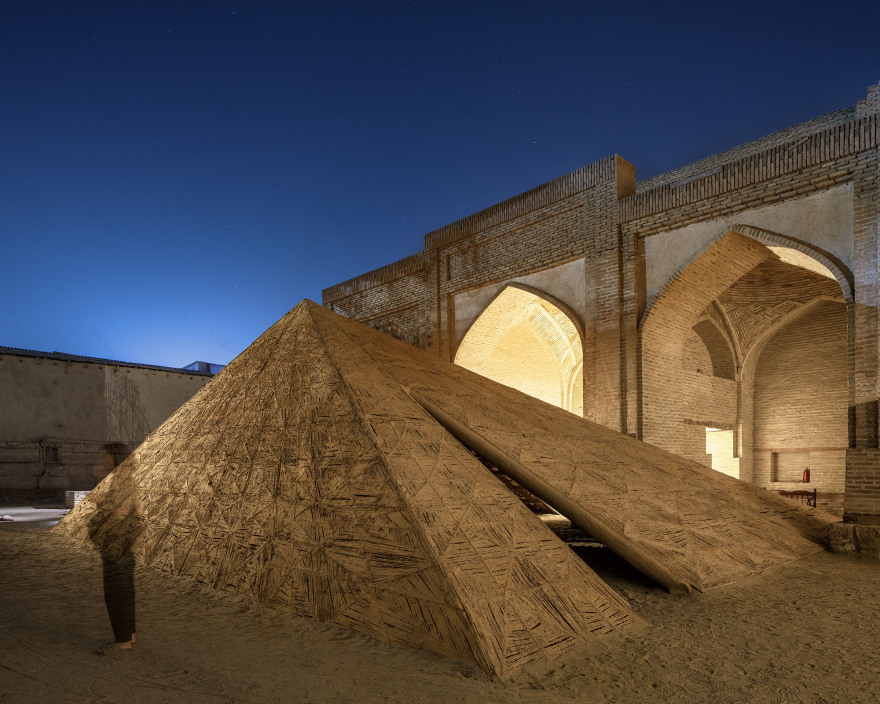
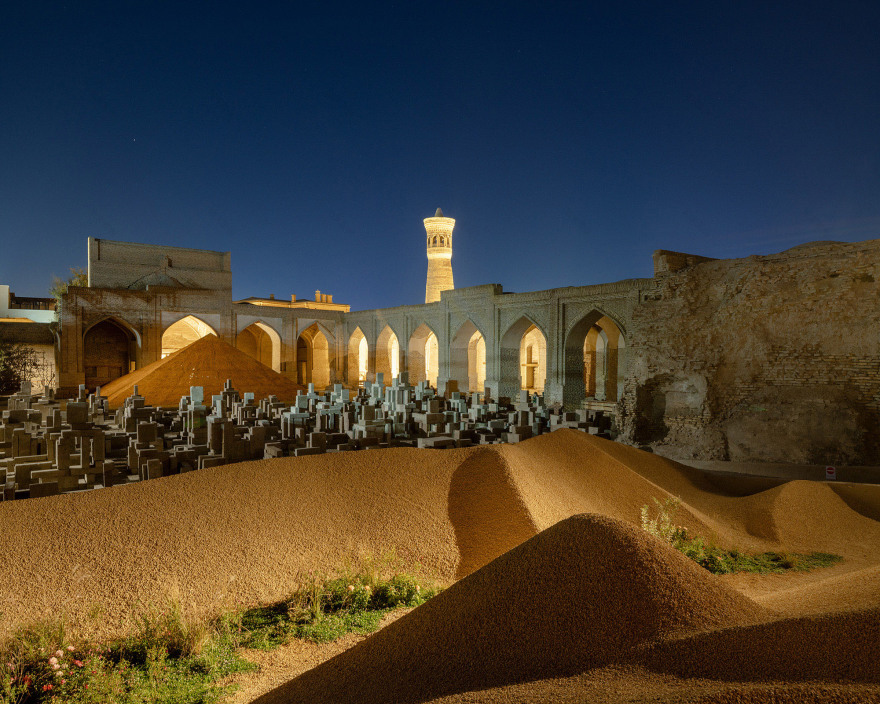
布哈拉历史城区的复兴是一项多层次的综合性行动,旨在在联合国教科文组织世界文化遗产的语境中,引入一种当代城市空间的可能性。waiwai 受委托为这一核心历史遗产区制定总体规划,并于 2025 年 9 月首届布哈拉双年展期间正式启用。纵观历史,布哈拉始终受到多元文化力量的塑造。自九至十世纪在丝绸之路上繁盛发展以来,这座城市从未孤立存在,而是始终通过商业、思想与精神层面的联系,与近邻和远方世界紧密相连。该项目希望在二十一世纪重新将布哈拉连接回世界,使其再次成为文化交流的平台。
The revitalization of Bukhara’s historical district is a multi-layered initiative that proposes a contemporary urban space within a UNESCO World Heritage Site. waiwai was commissioned to develop a masterplan for the restoration of the central heritage district, which was inaugurated with the first edition of the Bukhara Biennial in September 2025. Throughout its history, Bukhara has been shaped by a vast range of cultural influences. Beginning with its period of flourishing along the Silk Routes in the ninth and tenth centuries, the city has never existed in isolation but always in relation to the commercial, intellectual, and spiritual ties that bind it to its near and distant neighbors. The project aims to reconnect Bukhara with the world as a platform of cultural exchange in the twenty-first century.
▼项目概览,Overview of the project © Deed Studio


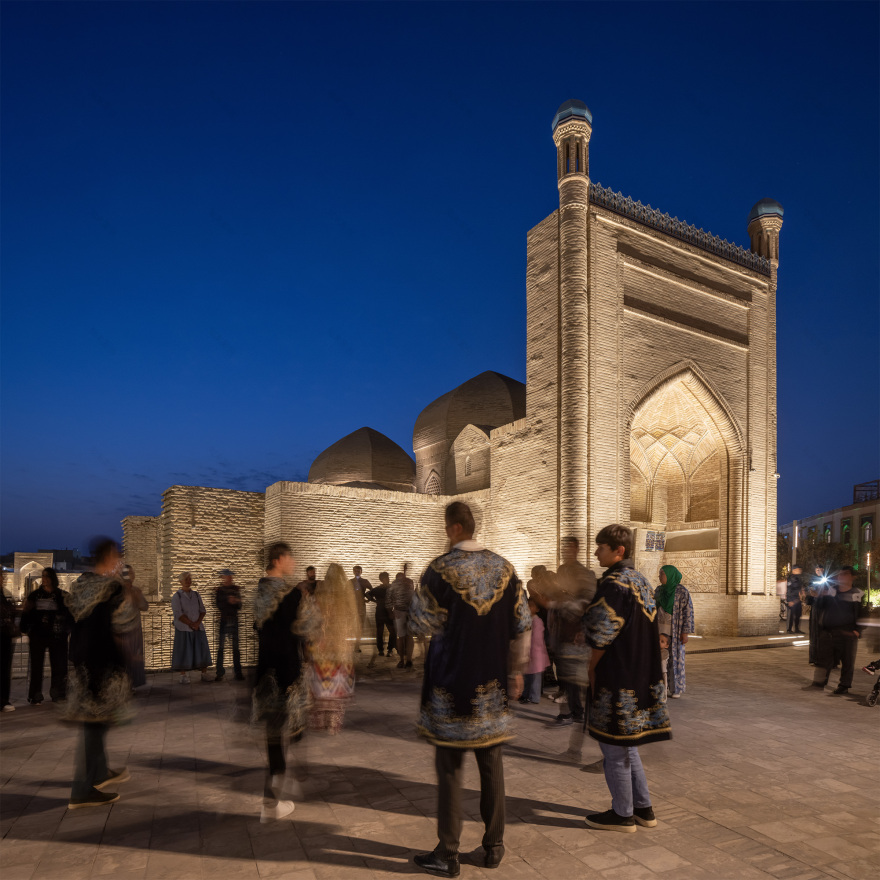
▼清真寺入口处,the entrance to Mosque © Deed Studio

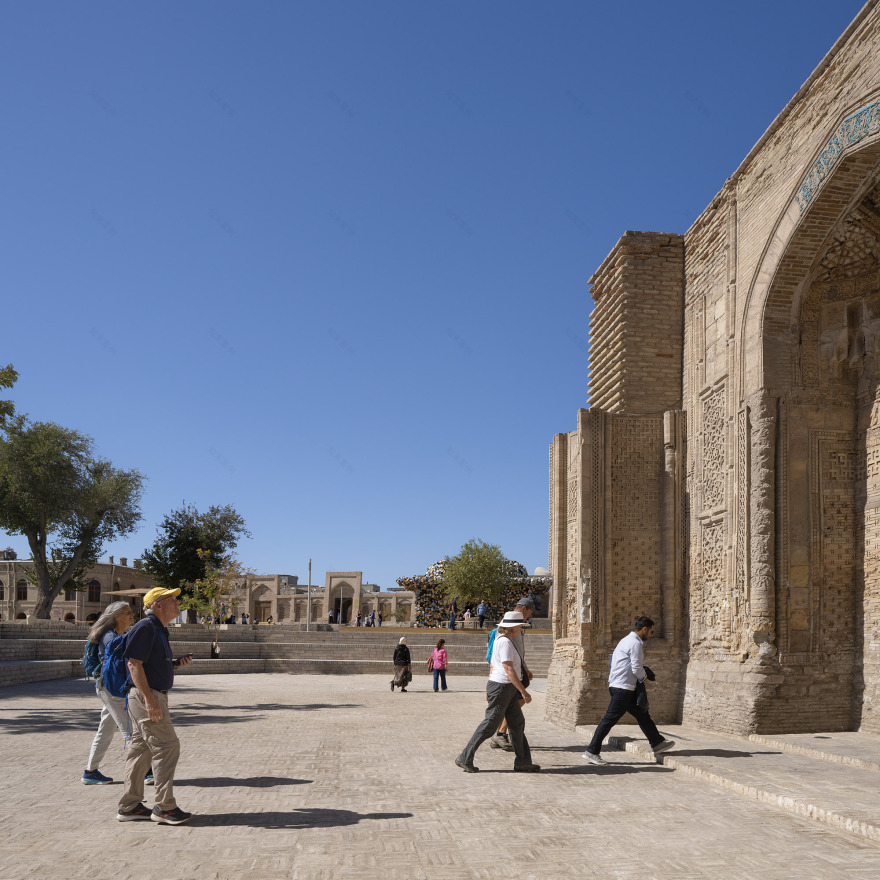
▼石灰石露天剧场,The amphitheatre in limestone © Deed Studio


▼周边上层平台,Surrounding upper terrace © Deed Studio


▼土耳其浴场的考古遗址,he archeological excavation of hammam © Deed Studio
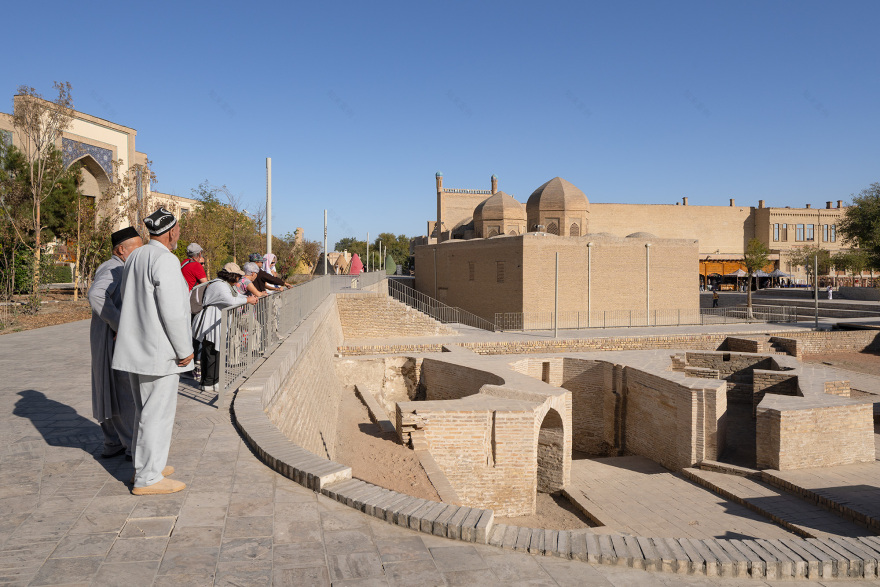
在总体规划的制定过程中,团队开展了大量现场调研工作,通过地图梳理与摄影记录,为规划决策提供依据。这些研究促成了对城市步行流线的重新定义,重新连接因不同历史时期而产生高差变化的地面层级,统一材料的使用方式,并引入新的照明条件。对庭院与广场的修复不仅为双年展期间的活动与场地特定艺术装置创造了空间,也为未来持续发生的文化事件预留了场所。整个修复过程依托于长期以来构成布哈拉设计、工艺与建筑核心的材料与技艺,例如砖、石灰石、灰泥、瓷砖、黏土以及装饰性陶土。
To develop the masterplan, on-site research with maps and photographic records was conducted, informing the decision to define routes for pedestrian circulation through the city, reconnect ground levels that varied across historical periods, unify the way materials are used, and create new lighting conditions. The restoration of courtyards and plazas was carried out to create space for activities and site-specific art installations at the biennial, as well as for future cultural events. The work relied on elements and techniques that have long been central to design, craft, and architecture in Bukhara, such as brick, limestone, plaster, tile, clay, and decorative terracotta.
▼石灰石铺装公共空间,Public realm with limestone pavement © Deed Studio

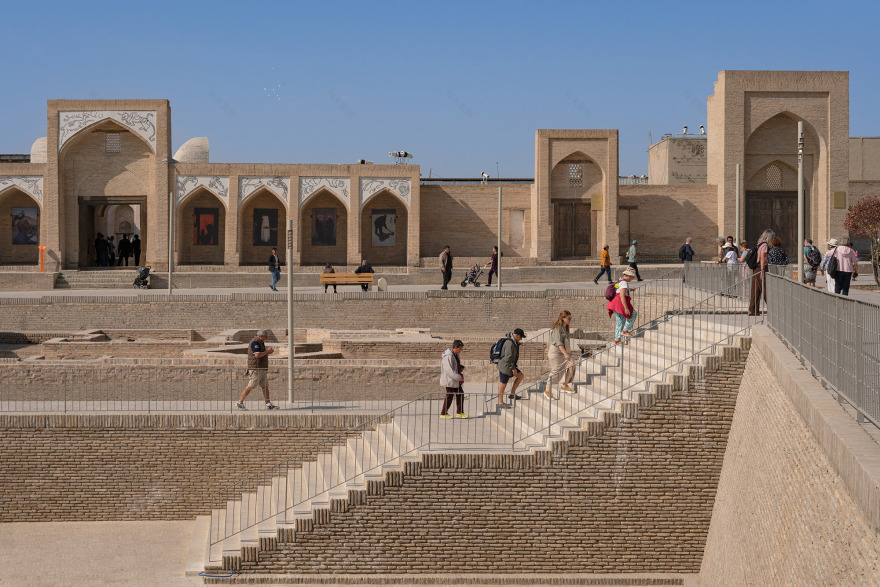
▼阶梯与下沉广场,Stairs & Sunken square © Deed Studio


▼广场全景,Overview of the plaza © Deed Studio


▼驿站建筑群,The caravanserai complex © Deed Studio
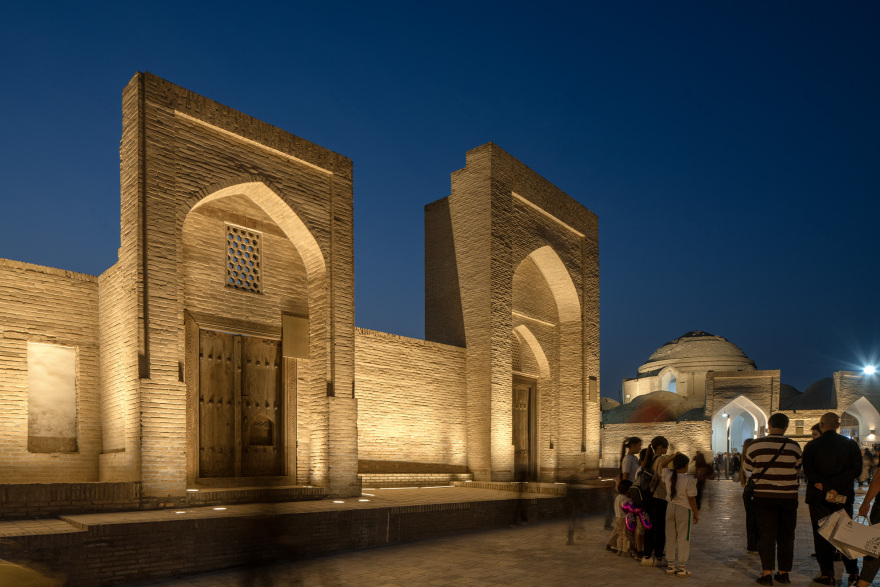
例如,在马戈基·阿托里清真寺周边的所有地面与立面处理中,均使用了回收的古砖,其铺砌纹样呼应了在乔尔·巴克尔陵园发现的十世纪铺地图案。这种深植于当地建筑与手工艺传统之中的策略,彰显了动态且具有适应性的更新潜力。布哈拉的更新被视为一个开放而持续的过程,是一项面向城市未来的长期工程——既具有持久性,又始终处于变化之中。
For example, antique bricks were used to construct all surfaces around the Magoki Attori mosque, with patterns that resemble pavements from the tenth century found at the Chor Bakr necropolis. Grounded in the architectural and craft traditions of the place, this approach highlights the potential of dynamic, adaptable renewal. The renovation of Bukhara is conceived as an open, ongoing process and a long-term project for a city, one that is enduring but ever changing.
▼双年展现场照片,Biennial © Deed Studio


▼树下用餐区域,Dining area © Deed Studio

▼清真寺夜览,Nightview of mosque © Deed Studio


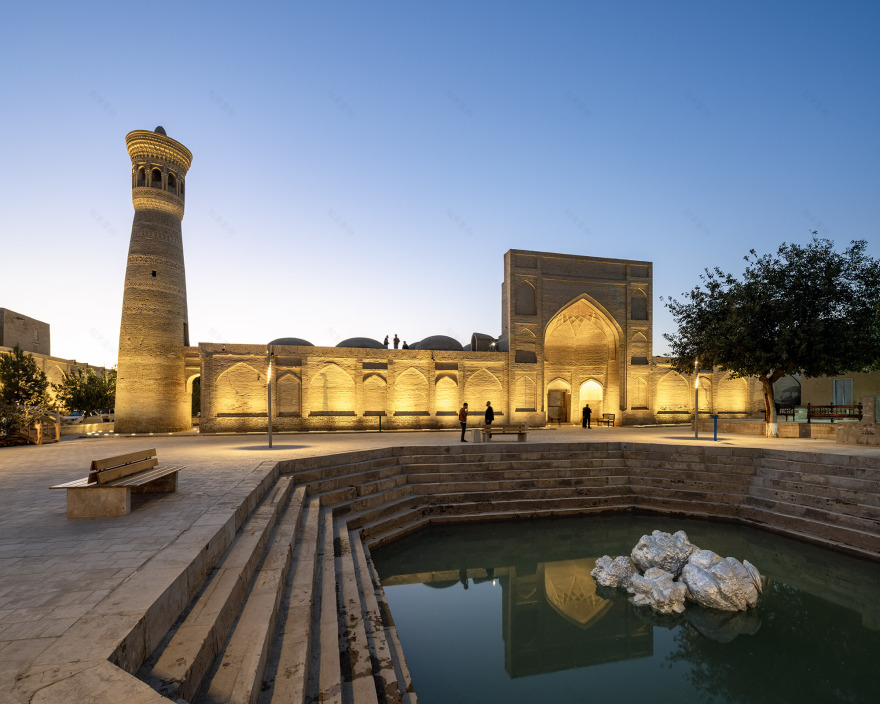
▼广场夜览,Nightview of square © Deed Studio

PROGRAM Cultural
CLIENT Uzbekistan Art and Culture Development Foundation (ACDF)
YEAR 2025
SITE AREA 37,043sqm
BUILT-UP AREA 26,558sqm
STATUS Completed
PHOTO © Deed Studio





南京喵熊网络科技有限公司 苏ICP备18050492号-4知末 © 2018—2020 . All photos and trademark graphics are copyrighted by their owners.增值电信业务经营许可证(ICP)苏B2-20201444 苏公网安备 32011302321234号
苏公网安备 32011302321234号客服
消息
收藏
下载
最近