

创作上传
VIP
收藏下载
登录 | 注册有礼
查看完整案例

收藏

下载

分享
地平线展馆
Horizon Pavilion
在城市之巅,一只鸟儿长途跋涉后降落;在群山与岩石之间,它敬畏地俯瞰着这座伟大的都市……这座展馆邀请人们从内部进行沉思和探索,框取只有从高处才能欣赏到的独特景观和空间。这是一个可以驻足欣赏城市景观的场所,一个光线、结构和几何形状完美融合的独特形式元素:“一个用于长久记忆的临时空间。”
At the highest point of the city, a bird lands after a long flight; among hills and rocks, it seeks to observe the great metropolis in awe… A pavilion that invites contemplation and discovery from within, framing unique views and spaces that can only be appreciated from great heights. A place to pause and delight in the urban landscape, a unique formal element where light, structure, and geometry merge: “A temporary space for prolonged memory.”
▼地平线展馆远景,viewing the Horizon Pavilion at distance© Eletres Studio

▼远景,distant views© Eletres Studio


理想之地|Ideal Territory
这座展馆位于瓜亚基尔市,是一个城市实验观测站。它坐落在圣地亚哥天主教大学校园的最高点,海拔超过70米,占据着得天独厚的地理位置。此地的地形特征赋予了它与世隔绝、宁静祥和的氛围,激发了人们与环境深度联结的渴望。周围的元素,例如干旱的植被和岩石,更增添了冥想的意境。各种元素的巧妙结合,造就了一个拥有独特城市景观的空间。这座作品的结构和形式宣言,旨在唤起人们对“栖居空中:与地平线相连”的体验。
▼轴测图,axonometric drawings© Eletres Studio


▼场地模型,model of the site© Eletres Studio


Located in the city of Guayaquil, the pavilion functions as an experimental observatory of the city. Its location at the highest point of the campus of the Catholic University of Santiago de Guayaquil, more than 70 meters above sea level, positions it in a privileged space. The topographical nature of this site offers characteristics of isolation and complete serenity, evoking a desire for deep connection with the environment. The surrounding elements, such as arid vegetation and rocks, enhance the feeling of meditation. The result of this combination of elements is a space with unique views of the city, a work whose constructive and formal manifesto evokes inhabiting the air: joining the horizon.
▼外观,exterior views© Eletres Studio


栖居悬链线|Inhabiting the Catenary
悬链线是一种自由的几何形式,难以表达,其描述也颇具数学复杂性。地平线展馆被描述为一条支撑于虚空中的悬链线,其反向几何形状和中心压缩形成了一个开口,从而创造出两个平行的可居住空间,构成了游客的游览路径。展馆强调其几何上的轻盈感,力求栖居于构成其轮廓的凹陷处和较低的空间。它是一个延伸至地平线的象征性门槛,一座在山丘、城市和河流之间拔地而起的人造物。
▼场景分析图,scenario illustrations© Eletres Studio


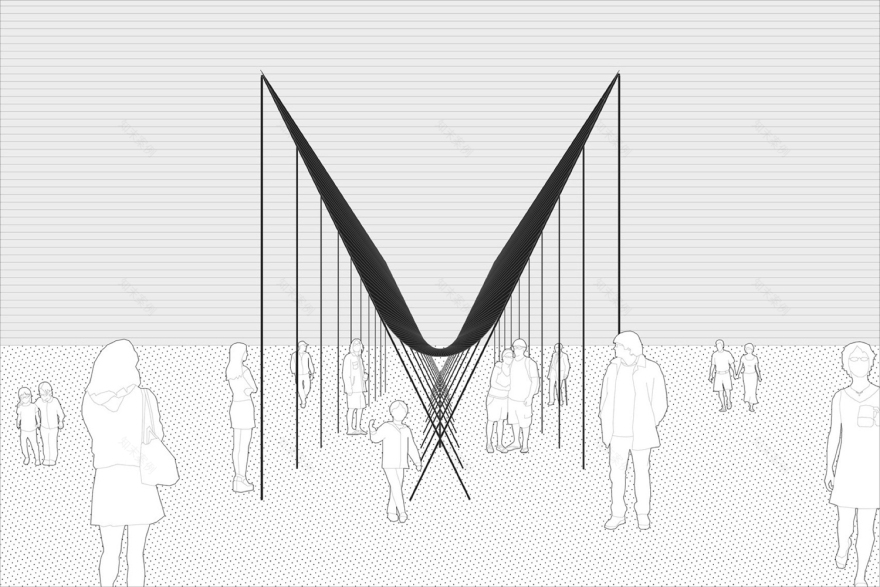
The catenary is a free-form geometric form, difficult to express and mathematically complex in its description. Horizon Pavilion is described as a catenary supported in a void, whose inverse geometry and compression in the center generate an opening, resulting in two parallel habitable spaces that form the path for visitors. The pavilion emphasizes its geometric lightness, seeking to inhabit the concavity and the lower spaces that define it. It is a symbolic threshold that extends to the horizon, an artifact that rises between the hills, the city, and the river.
▼外观,exterior views© Eletres Studio


结构限制|Structural Limits
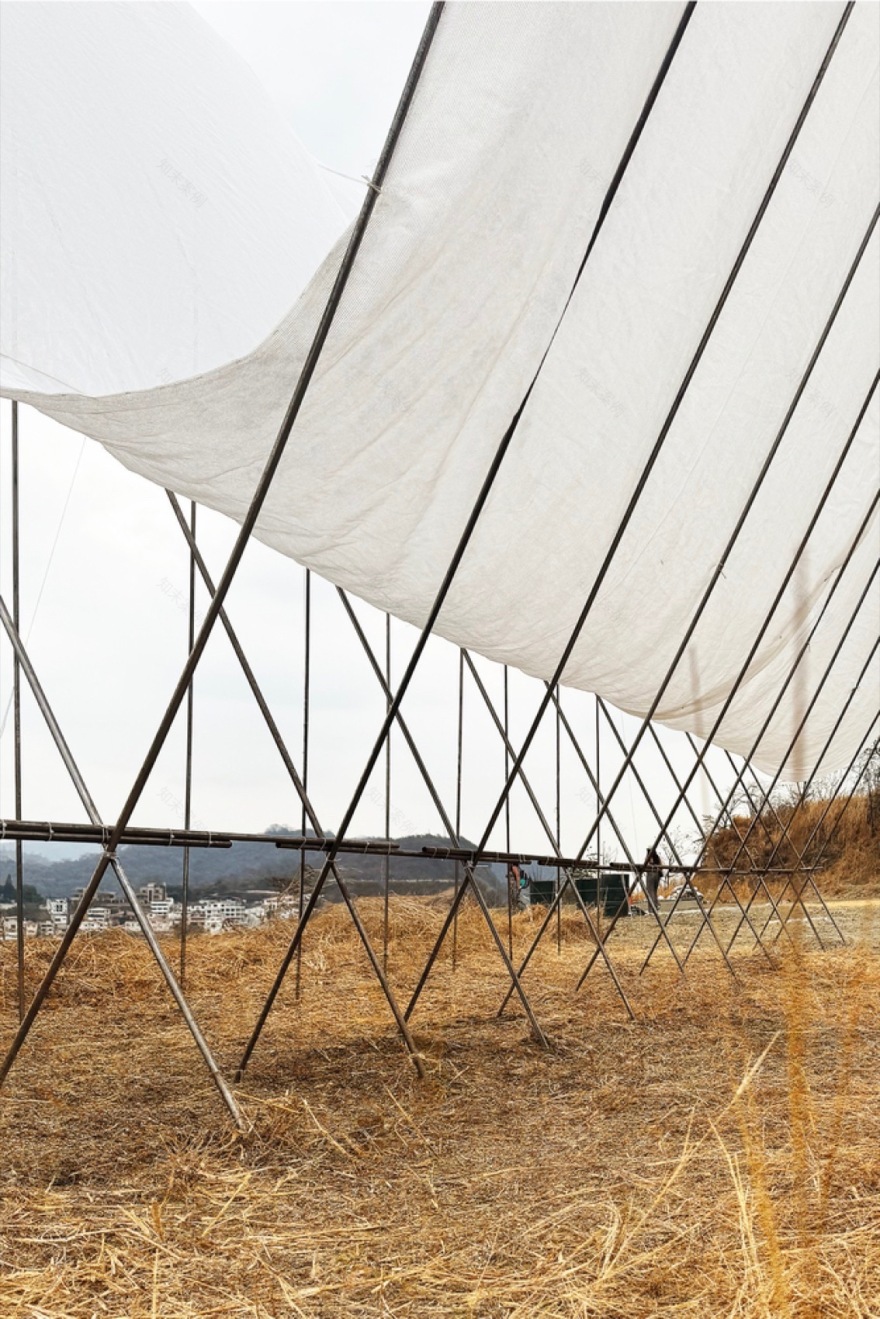
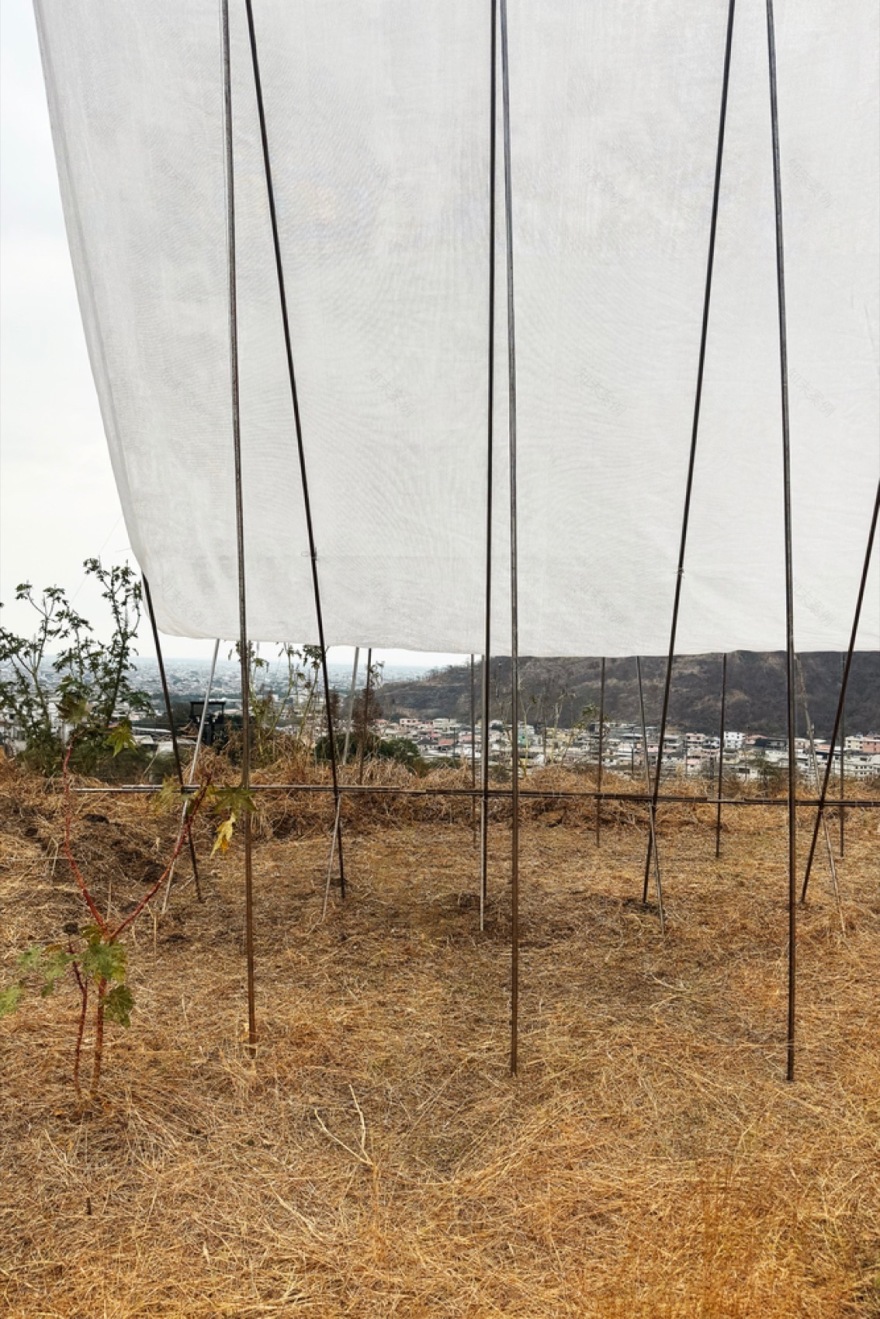
这座4.5米高的展馆采用地下锚固系统,主要由大截面圆形金属管构成,并由一个轻盈、半透明的开放式结构屋顶连接,该屋顶的几何形状基于悬链线。展馆整体采用模块化设计,由十个M形支撑单元组成,这些单元固定在地面锚固件上,顶部通过金属角钢连接边缘并支撑屋顶。为确保展馆的完整性,一个圆形截面水平延伸,支撑所有构件。
▼分析图,analysis diagram© Eletres Studio

The 4.5-meter-high pavilion is organized using underground anchoring systems and constructed primarily of large-section circular metal tubes, joined by a lightweight, translucent, open-structure roof whose geometry is based on a catenary. The overall configuration of the pavilion is a modular design composed of ten M-shaped support units, fixed to ground anchors and metal angles at the top to join the edges and maintain the roof. To ensure the integrity of the pavilion, a circular profile extends horizontally, supporting all the elements.
▼细部,details© Eletres Studio

双重流程|Dual Processes
该项目在秘鲁和厄瓜多尔的万卡约市启动,采用分散式协作模式。流程始于展馆的概念和模块化设计,随后进行1:1比例的模块化测试,最终在与未来展馆位置相似的场地进行组装复制。该项目采用双重组装系统,预组装和预制构件(例如边缘连接件和锚固件)被运送到施工现场,从而缩短了现场组装时间。垂直钢构件则在现场采购,并已预先测试尺寸。
The project began its development in the city of Huancayo, with a decentralized collaborative work structure between Peru and Ecuador. The processes began with the conceptual and modular design of the pavilion, followed by modular testing at a 1:1 scale, and culminated with the replication of the assembly on a site similar to the future location. The project was developed using a dual-assembly system, with pre-assembled and pre-built elements, such as the edge joints and anchors, which were then transported to the construction site, shortening on-site assembly times. The vertical steel elements were purchased on-site with pre-tested dimensions.
▼模型,model© Eletres Studio


▼场地平面图,site plan© Eletres Studio

▼平面图,plan© Eletres Studio

▼立面图,elevations© Eletres Studio


百米线性展馆
100 Linear Meters Pavilion
这座百米长的展馆以一条微妙而富有感染力的线条融入瓦伦西亚的果园景观之中,其结构由重新诠释的门廊以韵律般的重复构成。该建筑的设计灵感源自世代支撑当地番茄种植的传统木制棚架,并通过使用波纹钢条进行现代化改造:这种现代、可回收且可逆的材料既保留了原有的轻盈感,又保持了结构的完整性。
The 100 Linear Meters Pavilion is inserted into the Valencian orchard landscape as a subtle and evocative line, constructed from the rhythmic repetition of a reinterpreted portico. This structure, inspired by the traditional wooden trellises that have supported tomato cultivation in the region for generations, adapts to the present through the use of corrugated steel bars: a contemporary, recyclable, and reversible material that maintains the lightness and structural integrity of the original.
▼百米线性展馆,100 Linear Meters Pavilion© Pablo Paradinas Sastre/Eletres Studio/Gian Franco Pili
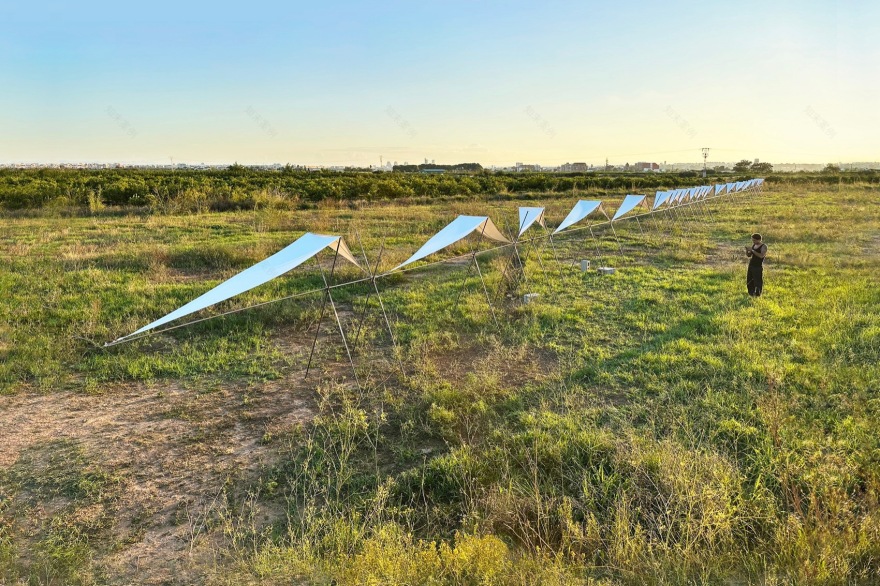

该设计在农业历史与当代艺术之间建立起对话,以一条百米长的线条勾勒出一个非封闭的形态,而是以简约而富有冲击力的姿态激活了周围的景观。这条线条由模块近乎音乐般的重复构成,不仅邀请人们探索,更鼓励人们观察、驻足,聆听果园的声音。
The design establishes a dialogue between agricultural history and contemporary art, articulating a 100-meter line that does not impose a closed form, but rather activates the landscape through a minimalist yet impactful gesture. This line, constructed through the almost musical reiteration of the module, invites not only exploration, but also observation, inhabitation, and listening to the orchard.
▼百米长的展馆线条,100-meter-long exhibition hall with smooth lines ©Pablo Paradinas Sastre/Eletres Studio


轻盈漂浮的纺织屋顶则赋予了建筑第二层含义:遮荫和营造氛围。门廊间延展的织物营造出光影交错的景象,唤起人们对耕作节奏、季节性保护以及土地日常照料的联想。它并非功能性的屋顶,而是一个象征性的建筑:它象征着劳动、庇护以及农业景观悠长而舒缓的韵律。
The light, floating textile roof introduces a second layer of interpretation: that of shade and atmosphere. The fabrics stretched between the porticoes create a play of light and shadow that evokes the rhythms of cultivation, seasonal protections, and the daily care of the land. It is not a functional roof, but a symbolic one: an evocation of labor, shelter, and the long, unhurried rhythms of the agricultural landscape.
▼远景,viewing the project at distance ©Pablo Paradinas Sastre/Eletres Studio/Gian Franco Pili

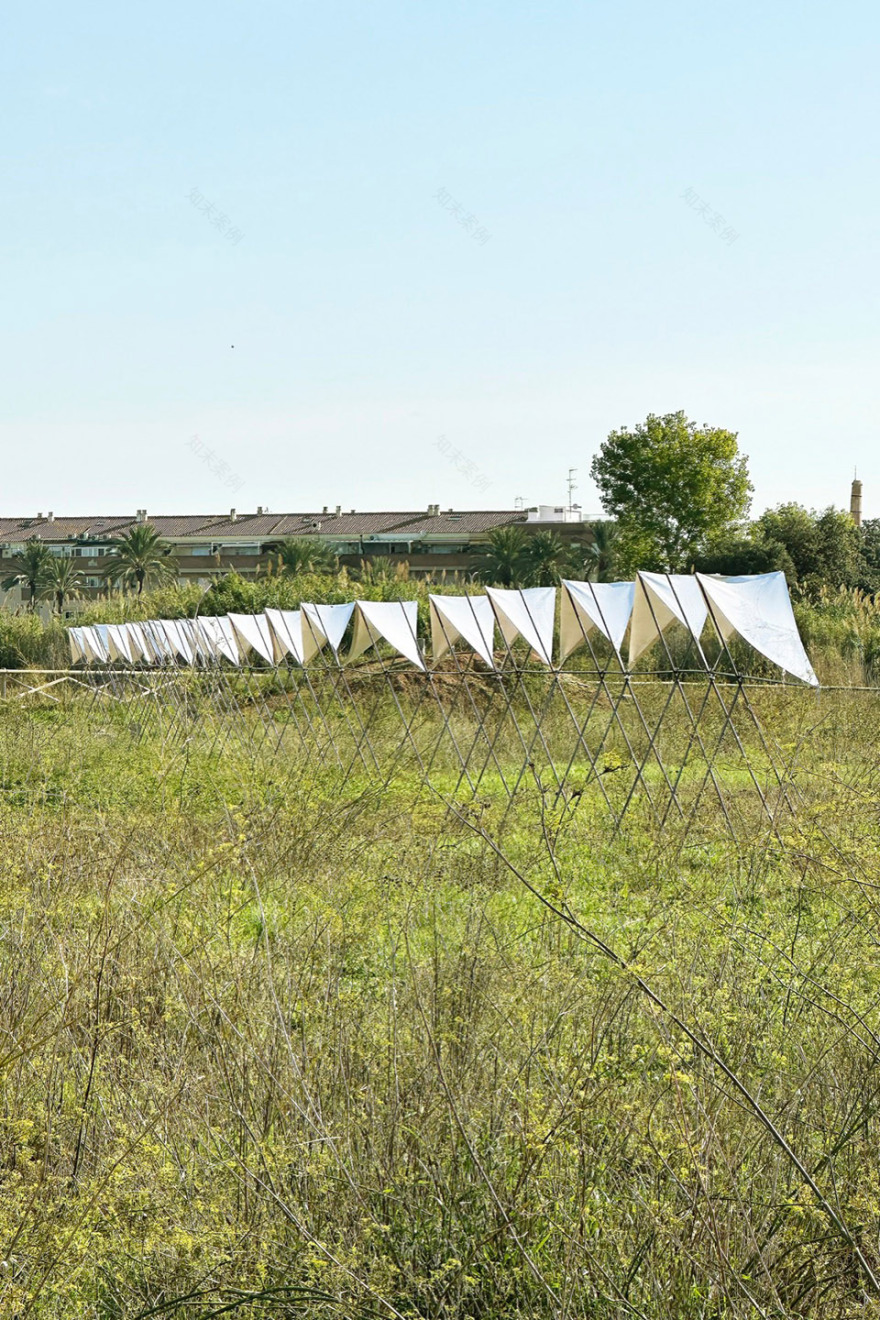

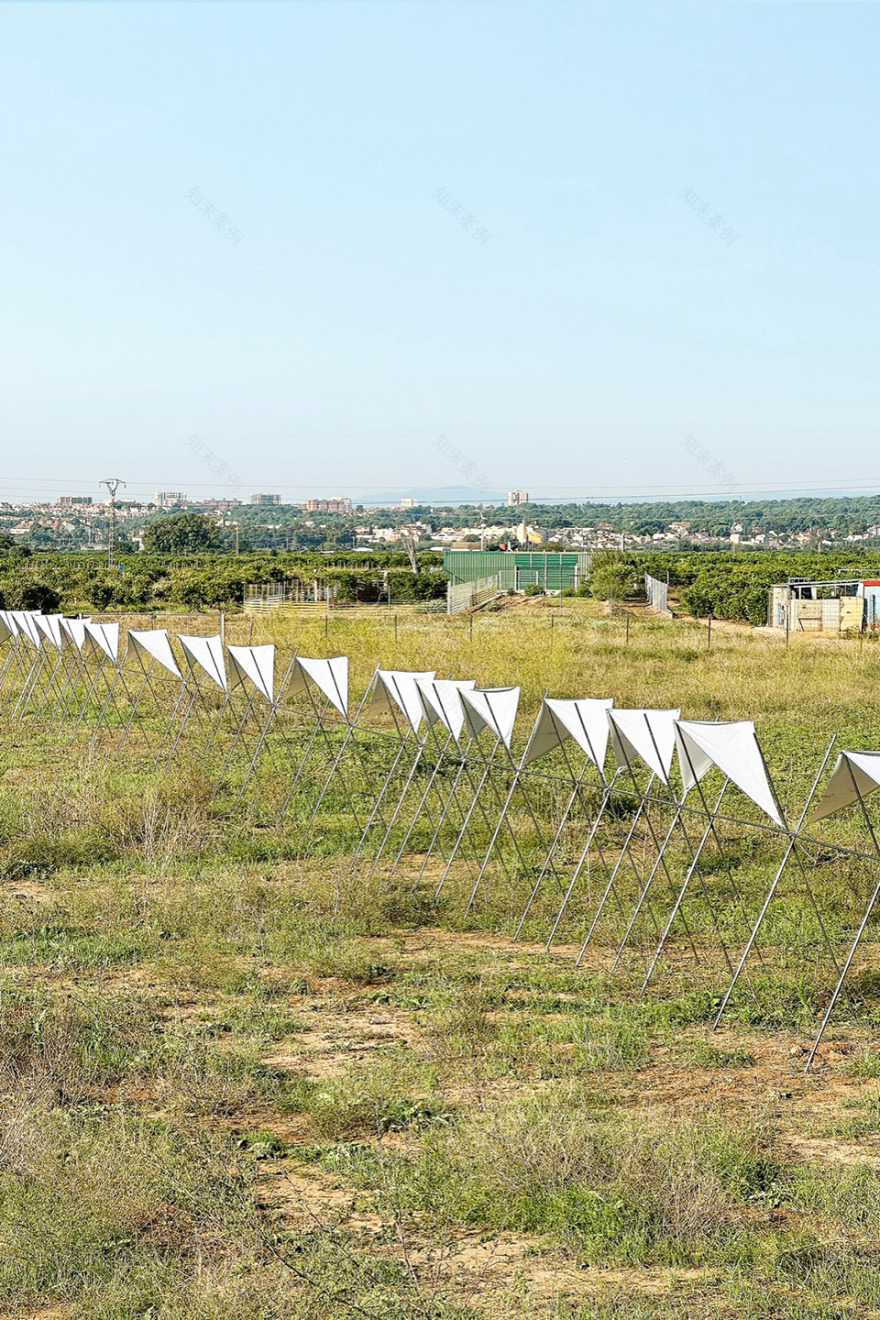

该项目认为,保护农田不仅意味着维护其物理形态,更在于以当代视角激活人们的集体想象力。重新诠释农业建筑并非仅仅是一种形式上的姿态,而是一种将一种正受到城市压力、乡村衰败和气候危机威胁的生活方式带入当下的方式。因此,这座展馆成为一种重要的、诗意的工具,帮助人们重新建立与土地的情感和感官联系。
The project understands that preserving agricultural land involves not only conserving its physical appearance, but also activating its collective imagination through a contemporary perspective. Reinterpreting agricultural structures is not merely a formal gesture, but a way of bringing into the present a way of life threatened by urban pressure, rural abandonment, and the climate crisis. The pavilion thus becomes a critical and poetic tool for recovering the emotional and sensory connection with the land.
▼该装置为人们提供了一个思考和重新诠释景观的框架,this device provides people with a framework for thinking and reinterpreting the landscape© Pablo Paradinas Sastre/Eletres Studio/Gian Franco Pili


凭借其可逆性和极小的生态足迹,该装置为人们提供了一个思考和重新诠释景观的框架。它邀请社区成员以全新的视角去探索、体验和拥抱这片土地。这项干预措施非但没有突兀地强加于人,反而与周围景观相得益彰:它融入田埂,顺应灌溉方向,并任由风、阳光和时间的流逝塑造自身。
With its reversible nature and minimal ecological footprint, the installation offers a framework for contemplation and reinterpretation of the landscape. It invites the community to explore it, inhabit it, and embrace it from a renewed perspective. Far from imposing itself, the intervention complements the landscape: it integrates with the furrows, follows the direction of irrigation, and allows itself to be shaped by the wind, the sun, and the passage of time.
▼装置外观,exterior view of the device© Sergi Villanueva

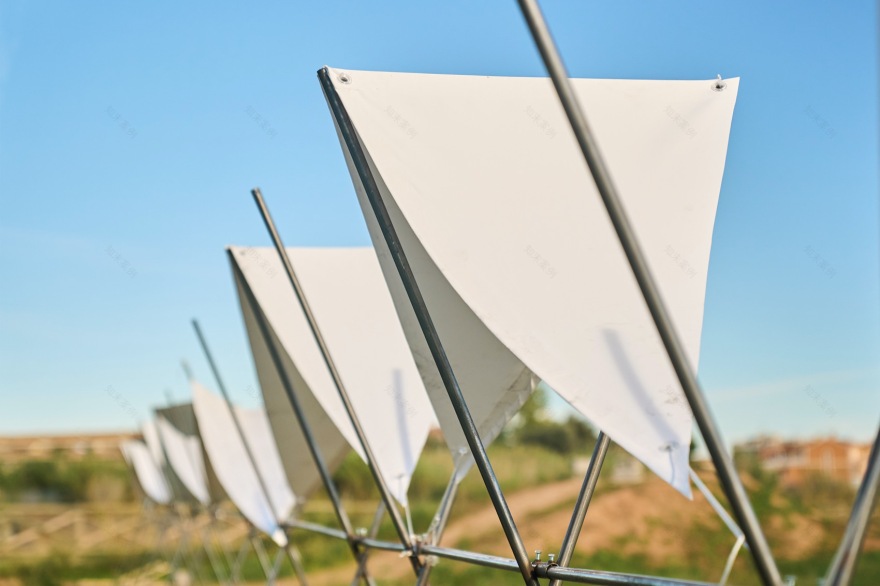
▼外观,exterior view© Gian Franco Pili / Sergi Villanueva
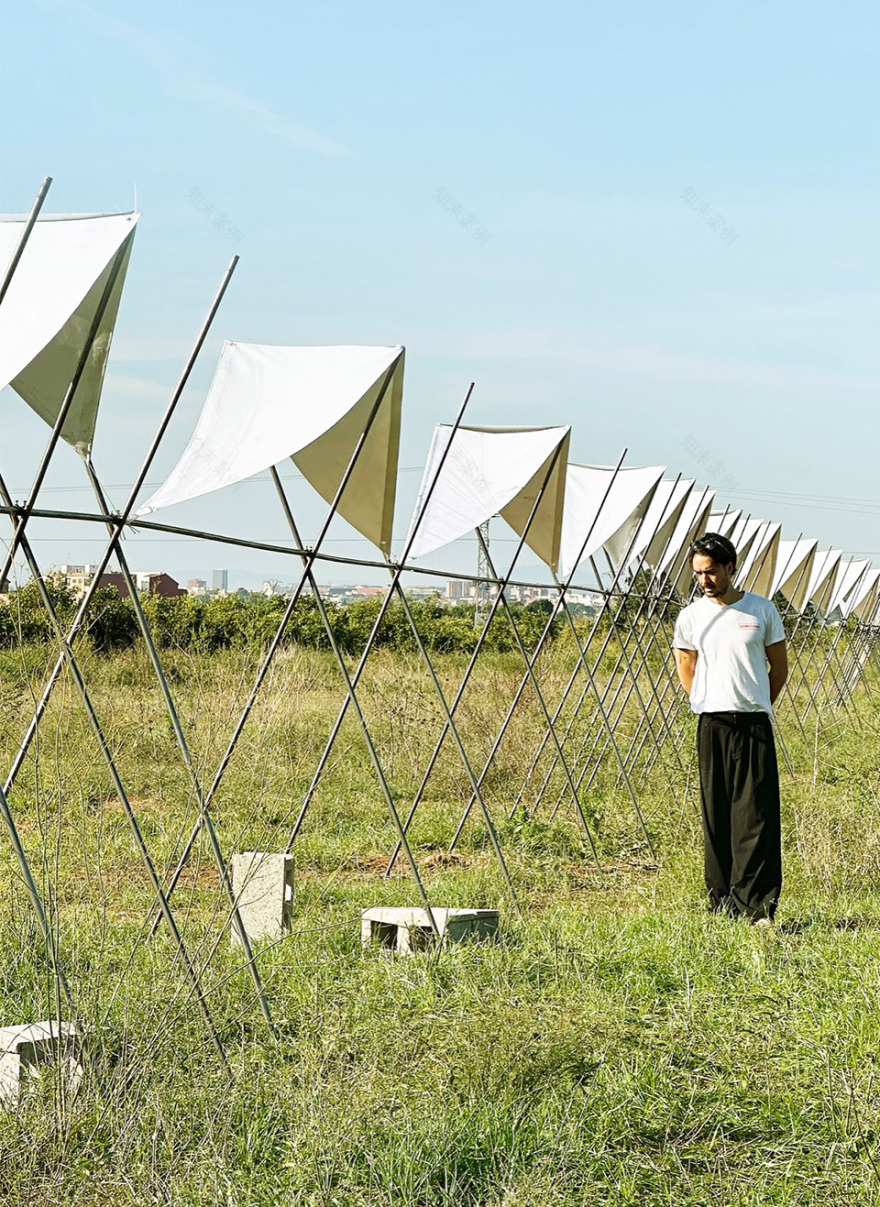

该项目绵延100米,旨在通过脆弱、轻盈和重复来重振传统。它连接了传统与创新、农业实践与艺术表达,以及我们作为一个与这片正在变革的土地紧密相连的社群的过去与未来。
The project, which spans 100 linear meters, seeks to revitalize the heritage through fragility, lightness, and repetition. It bridges tradition and innovation, agricultural practice and artistic expression, what we were and what we can still be as a community linked to a territory in transformation.
▼细部,details©Sergi Villanueva


▼黑白照片,black and white photos© Eletres Studio


▼模型,model© Eletres Studio
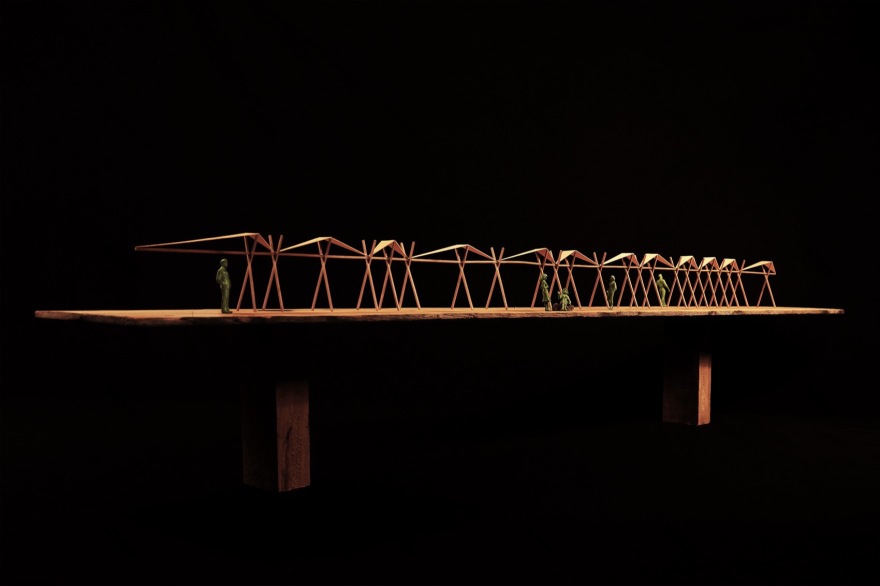

▼模型,model© Eletres Studio


▼模型,model© Eletres Studio

▼初步模型,initial model© Eletres Studio


▼总平面图,site plan© Eletres Studio

▼立面图与平面图,elevation and plan© Eletres Studio


▼局部立面图,detailed elevation© Eletres Studio

▼局部立面图,detailed elevation© Eletres Studio

Project name: Horizon Pavilion
Office of architecture: Eletres Studio
Social networks:
Location of the office (City, Country):(Huancayo, Perú)
Construction completion year: December 2024
Built area (m2): 34
Location: Guayaquil, Ecuador
Architect(s) in charge: Luis Albino Reyes / Danerix Cardenas
Photography
Photographer credits: Eletres Studio
Project Name: 100 Linear Meters Pavilion
Status: Built / Winner of the Miradors de l’Horta 2025 International Competition
Architecture Firms:Pablo Paradinas Sastre – Eletres Studio – Eletres Studio
Social Media: –
Office Location (City, Country):Pablo Paradinas Sastre (Madrid, Spain) – Eletres Studio (Huancayo, Peru)
Year of Completion:October 26, 2025
Built Area (m2) and Project Location:100 m2 / Valencia, Spain
Architect(s) in charge:Pablo Paradinas Sastre + Danerix Cardenas + Luis Albino Reyes
Fotografía
Crédits fotógrafo: ©Sergi Villanueva + ©Gian franco Pili
Website fotógrafo: +


南京喵熊网络科技有限公司 苏ICP备18050492号-4知末 © 2018—2020 . All photos and trademark graphics are copyrighted by their owners.增值电信业务经营许可证(ICP)苏B2-20201444 苏公网安备 32011302321234号
苏公网安备 32011302321234号客服
消息
收藏
下载
最近