

创作上传
VIP
收藏下载
登录 | 注册有礼
查看完整案例

收藏

下载

分享
合法拥有“童话屋”的秘密,并非打破建筑规范,而是在规则内重构光、功能与情感的关系——用设计将性格写进空间,让家成为灵魂的倒影。
The secret to legally owning a “fairytale cottage” lies not in breaking building codes, but in redefining the relationship between light, function, and emotion within the rules—using design to write personality into space, making home a reflection of the soul.
▼项目概览,Overview of the project © 立明


这是一个位于帝都半小时生活圈内的240平联排别墅,连地下室一共4层。业主是一对青年夫妇,喜欢书本喜欢小动物,是非常有爱的两个人,他们的性格也充满善良和童真,于是我们希望给他们打造一个避世的童话小屋。
This is a 240-square-meter terraced villa located within a half-hour living circle of the capital, comprising four floors including the basement. The owners are a young couple who love books and small animals—two very affectionate individuals whose personalities are full of kindness and childlike innocence. Therefore, we aimed to create a secluded fairytale cottage for them.
▼连通的空间,Connected space © 立明
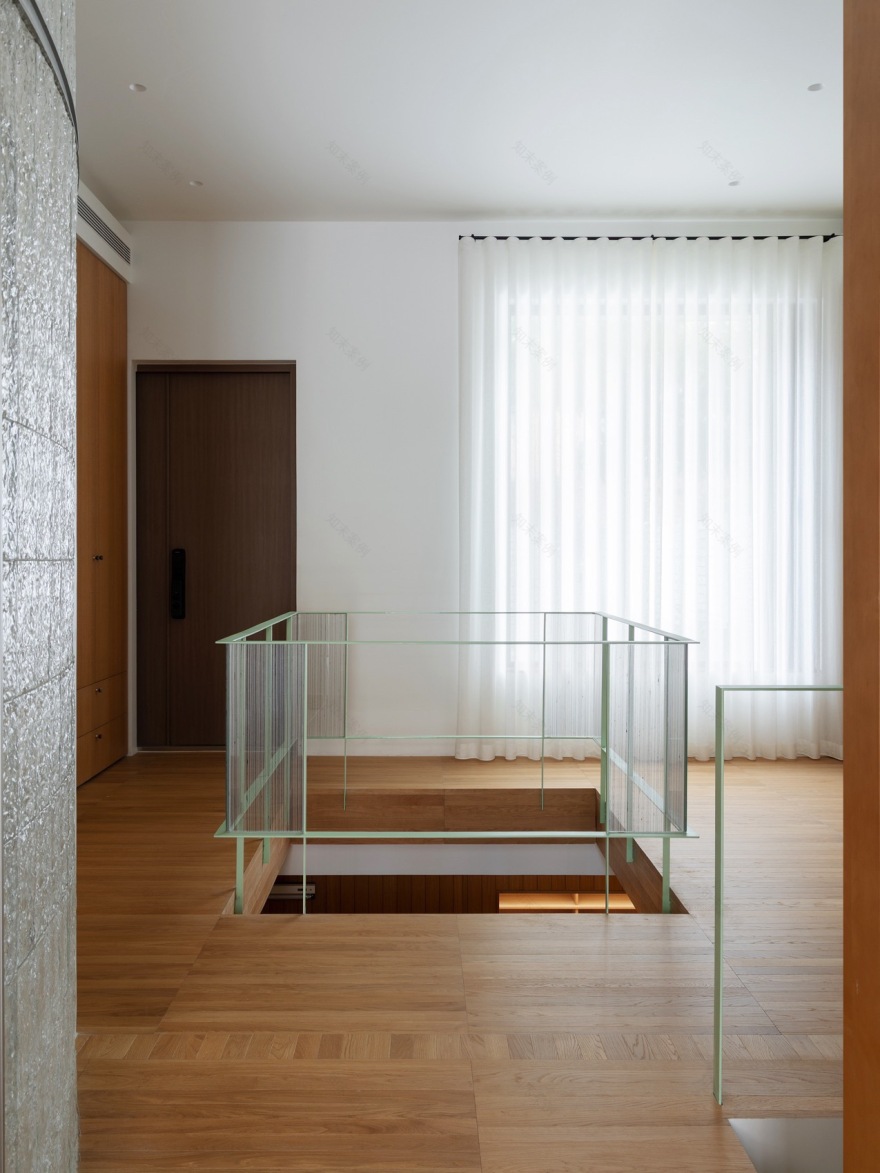

▼童话的室内配色,Vivid interior color © 立明

本项目地处北方,为联排别墅中的中间户型。北方地区多见面宽较窄、进深较大的狭长型住宅平面,其进深常为数倍于面宽,导致空间中部天然采光不足,成为设计需重点解决的核心问题。而业主的需求是:大多数时候需要自己的私人空间,安心舒适放松,保留一部分可以接待朋友的共享空间。
The project is situated in northern China, as a middle unit in a row of terraced villas. Residential layouts in northern regions often feature narrow facades and greater depth, with the depth frequently being several times the width. This results in insufficient natural lighting in the central areas of the space, which became the core issue to address in the design. The owners’ requirements were: most of the time, they needed private spaces for comfort and relaxation, while retaining some shared areas for hosting friends.
▼厨房,Kitchen © 立明

▼用餐区,Dining area © 立明

▼书房,Study room © 立明


▼卧室,Bedroom © 立明
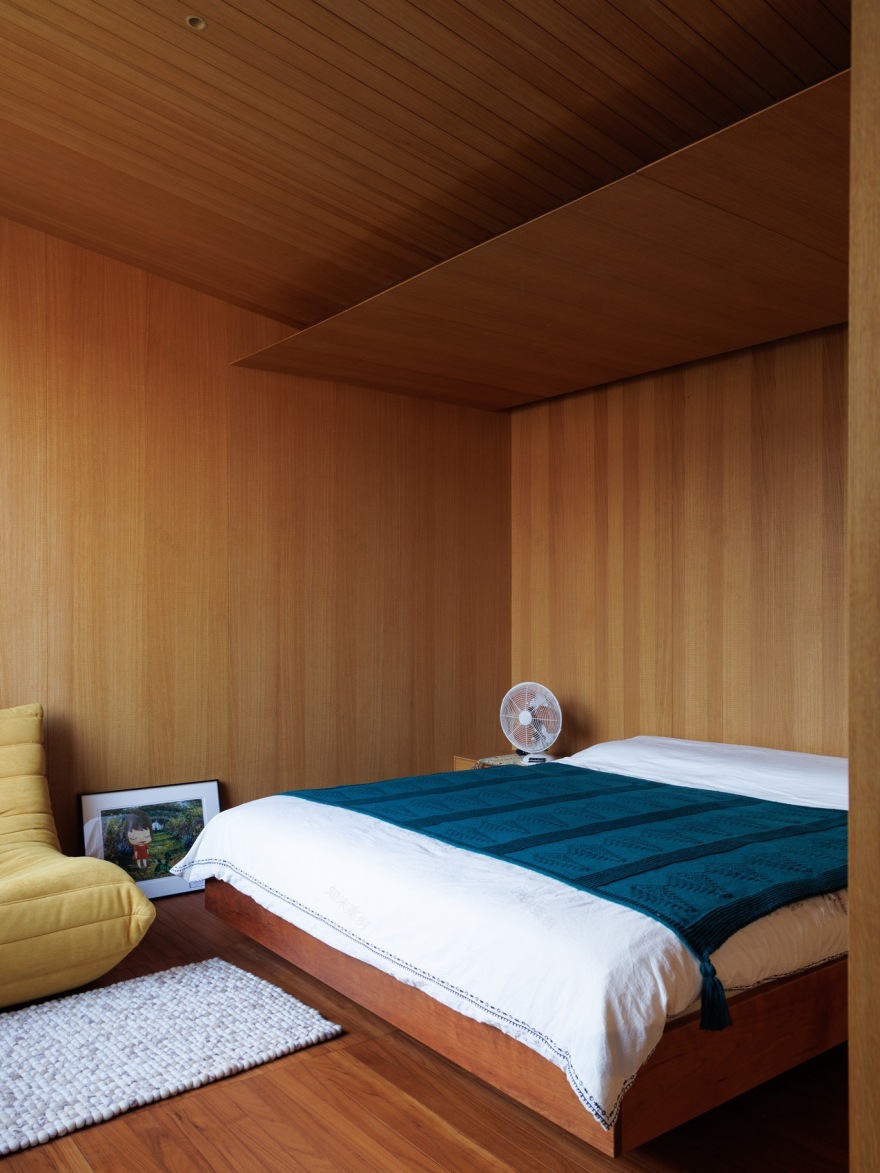
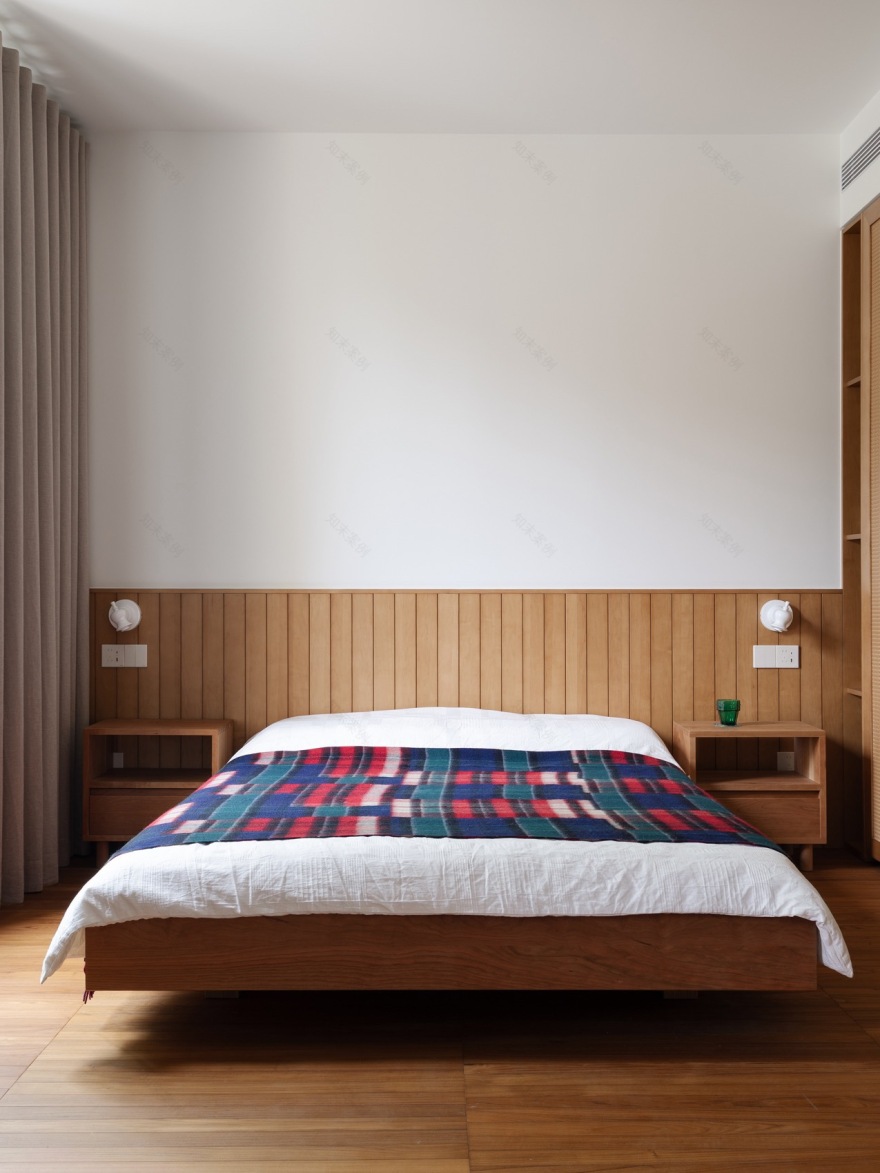
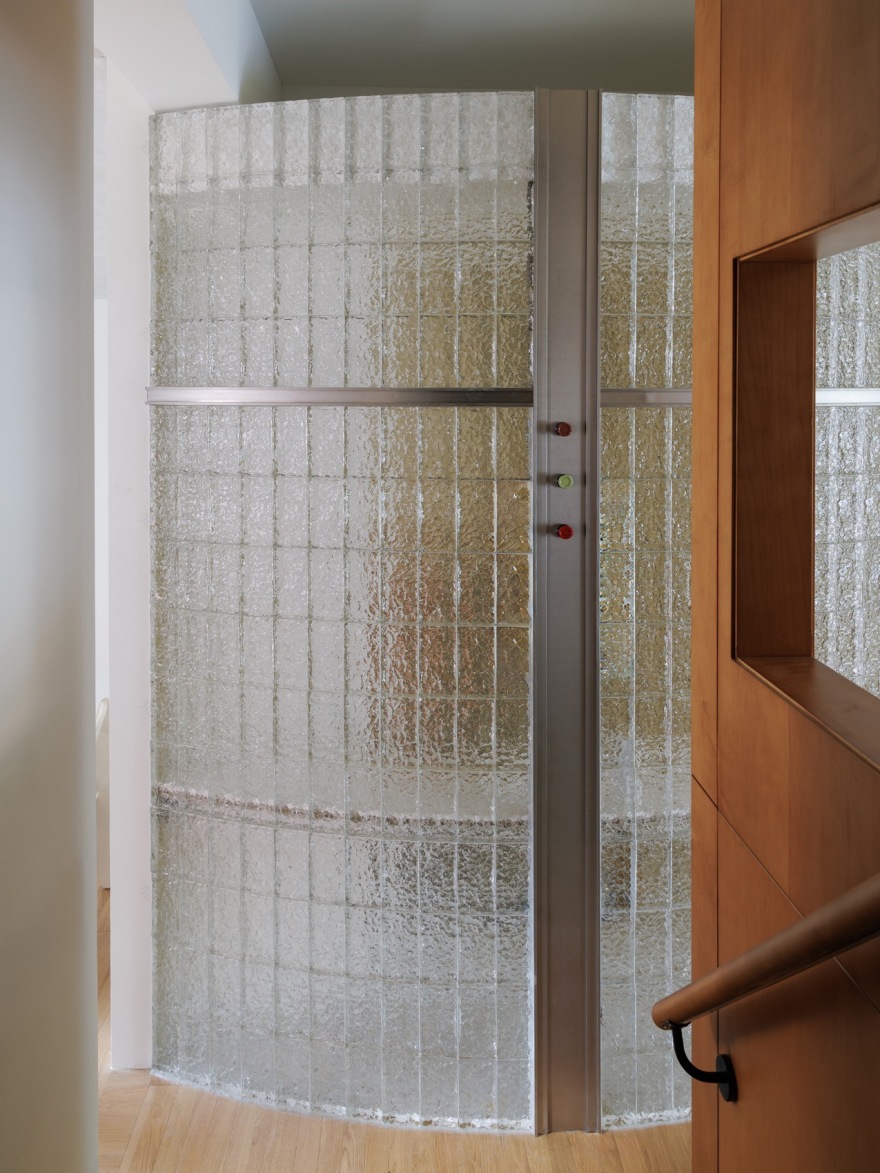
难点在于:中段区域既承载纵向交通功能,又集中布置了淋浴区,在有限面积内面临采光需求与功能密度的双重挤压。为化解这一矛盾,摒弃实体隔墙,转而采用通透的玻璃材质,构建连续的光路引导。弧形墙体柔化了不同功能区之间的硬性界线,在模糊边界的同时保持空间流动感。
The challenge lay in the central area, which serves both as a vertical circulation hub and houses concentrated shower facilities. Within the limited area, it faced dual pressures from lighting needs and functional density. To resolve this contradiction, solid partition walls were abandoned in favor of transparent glass materials, creating continuous light paths. Curved walls softened the rigid boundaries between different functional zones, blurring divisions while maintaining a sense of spatial flow.
▼玻璃弧形墙体,Transparent glass curved wall © 立明

▼卫生间,Toilet © 立明


▼浴室,Bathroom © 立明


改造以后,通过对核心区域的重新组织,原本闭塞的中部空间得以纵向贯通,形成自上而下舒展开放的视觉廊道,亦提升了整体的通透性与明亮度。核心区的重塑,自然强化了各功能板块的界定。在垂直维度上,多层空间依序呈现从“堂”到“室”的清晰过渡,公共区域与私密区域层次分明。
After the renovation, through the reorganization of the core area, the originally confined central space was vertically connected, forming an open visual corridor that extends from top to bottom. This also enhanced the overall transparency and brightness. The reshaping of the core area naturally reinforced the definition of various functional zones. Vertically, the multi-level spaces present a clear transition from “public halls” to “private rooms,” with distinct layers between public and private areas.
▼交通空间,Transportation space © 立明


▼空间层次的过度,Transition with distinct space layers © 立明


▼储物空间,Storage space © 立明


B1层与1层的公共区域不仅通过楼梯进行物理连接,更借助挑空设计引入自然光线,形成视觉与行为流线的双重贯通,增强了空间的功能连续性与使用效率。
The public areas on the B1 and 1st floors are not only physically connected by stairs but also benefit from a double-height design that introduces natural light. This creates a dual integration of visual and behavioral flowlines, enhancing spatial continuity and functional efficiency.
▼挑空设计,Double-height design © 立明

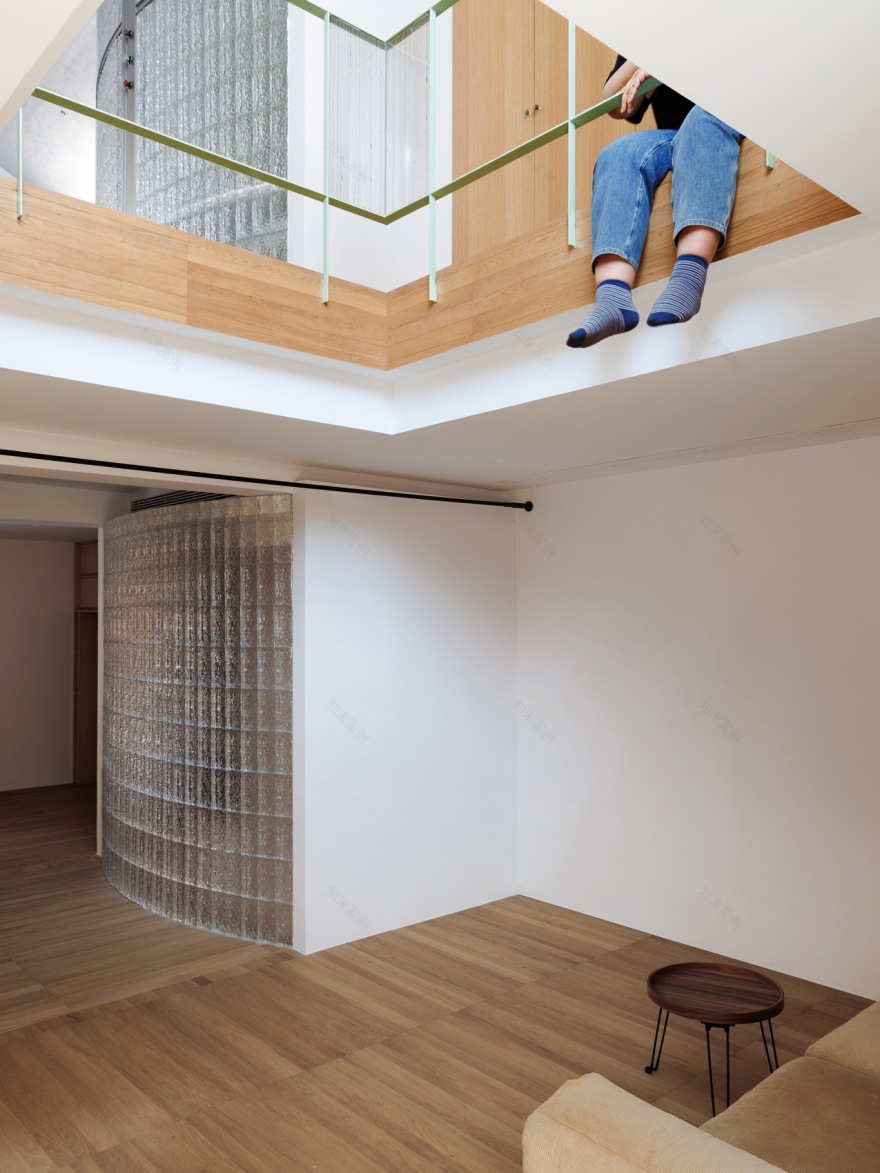
▼增强空间的功能连续性与使用效率,Enhancing spatial continuity and functional efficiency © 立明


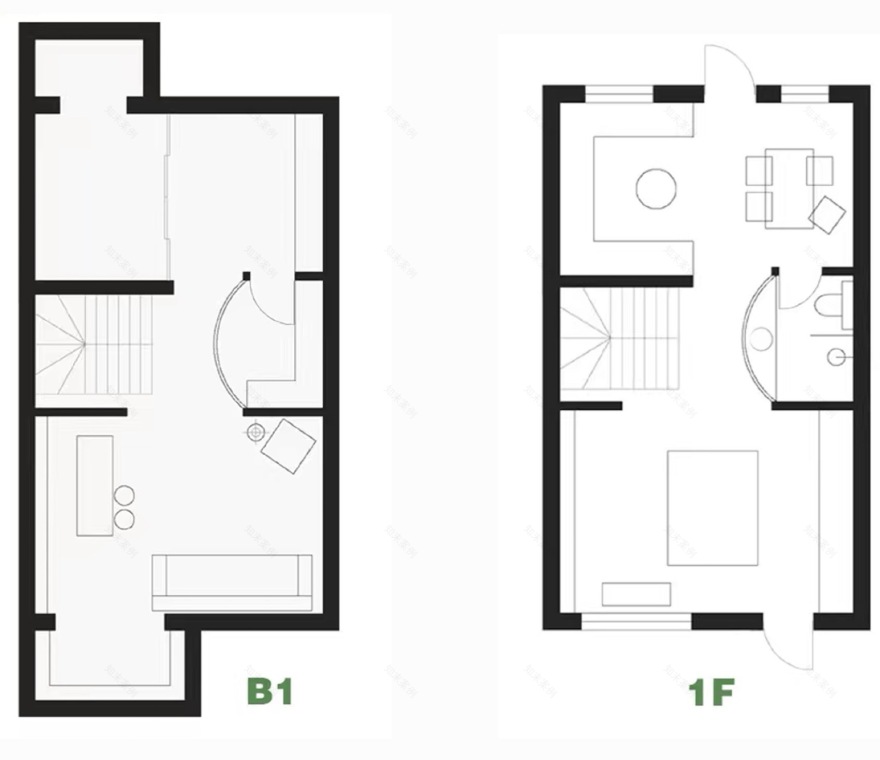
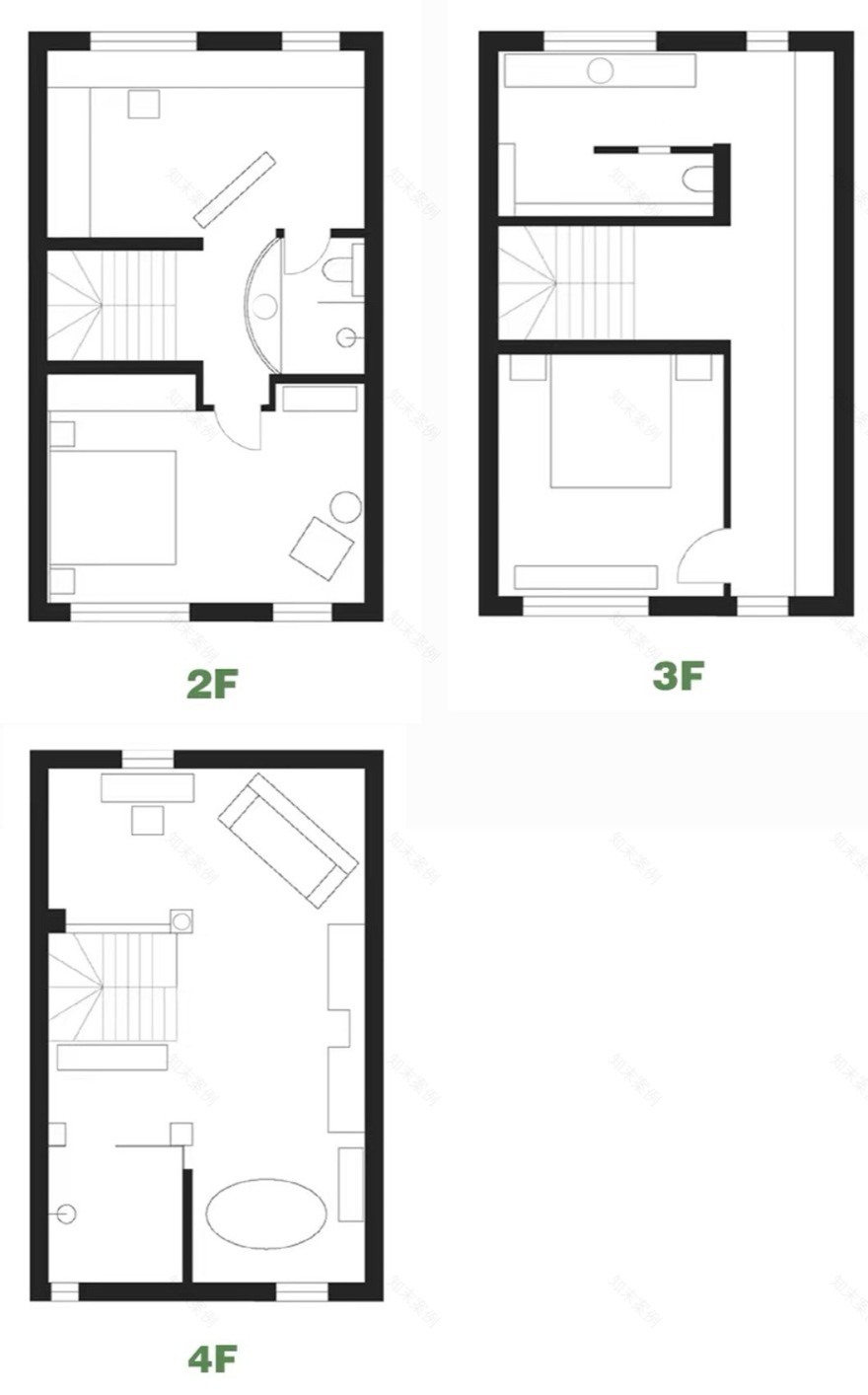
2F、3F与4F则依据居住者个性进行定制化布局:2F设置为男主人专属空间,3F与4F则为女主人所用,使每位家庭成员皆能拥有符合自身需求的“归属域”。而整体空间组织上,既支持以家庭为单位的集体活动,亦充分尊重并容纳个体的独立性与个性化需求。
The 2nd, 3rd, and 4th floors are customized according to the occupants’ personalities: the 2nd floor is designated as the male owner’s exclusive space, while the 3rd and 4th floors are reserved for the female owner. This ensures that each family member has their own “domain of belonging” tailored to their needs. In terms of overall spatial organization, the design supports collective family activities while fully respecting and accommodating individual independence and personalized requirements.
▼平面图,Plan © 乔和桥治建筑实验室
项目名称:多层别墅改造
项目类型:民用住宅
设计方:乔和桥治建筑实验室
项目设计:2023
完成年份:2025
设计团队:刘一汀、王佳
项目地址:天津市武清区
建筑面积:240㎡
摄影版权:立明
Project Name: Multi-Level Townhouse Renovation
Project Type: Residential
Design Firm: Qiao & Qiaozhi Architecture Lab
Design Year: 2023
Completion Year: 2025
Design Team: Liu Yiting, Wang Jia
Project Location: Wuqing District, Tianjin
Floor Area: 240㎡
Photography Credits: Liming


南京喵熊网络科技有限公司 苏ICP备18050492号-4知末 © 2018—2020 . All photos and trademark graphics are copyrighted by their owners.增值电信业务经营许可证(ICP)苏B2-20201444 苏公网安备 32011302321234号
苏公网安备 32011302321234号客服
消息
收藏
下载
最近