

创作上传
VIP
收藏下载
登录 | 注册有礼
查看完整案例

收藏

下载

分享

翻译
Architects:Shenzhen Huahui Design
Area:9500m²
Year:2025
Photographs:Right Angle Image
Lead Architects:XIAO Cheng
Category:Museums & Exhibit
Design Team:LIAO Guowei, LIANG Ziyi, LI Yu, ZHONG Shupeng, WANG Wenkai, XIAO Peimin, XU Mu (Structural), ZHAO Tingting (Structural)
Interior Design:Leaping Creative
Construction Drawings:Guangzhou Xincheng Architectural Design Institute Co., Ltd.,JZFZ Architectural Design Co.,Ltd
Curtain Wall Design:Shenzhen Zhongzhu Technology Curtain Wall Design Consulting Co., Ltd.
Landscape Design:Palm Design Co., Ltd.
Lighting Design:z design and planning, Handu Design Consultants Shenzhen Co., Ltd.
Client:Guangzhou Xuelei Fragrance Museum
City:Guangzhou
Country:China

Text description provided by the architects. The Guangzhou Xuelei Fragrance Museum takes scent—an invisible and intangible medium—as the starting point of its architectural concept. Challenging the visual dominance of conventional museum design, the project introduces smell, memory, and multisensory perception into spatial narration. Guided by principles of openness, collaboration, and sustainability, the museum is conceived not merely as an attractive cultural destination, but as a platform for public engagement with the history of perfumery, traditional craftsmanship, and contemporary technologies. It offers an ideal environment to experience the evolution of fragrance creation. Through architectural expression, the intangible nature of scent is transformed into a tangible, spatial encounter—establishing the museum as a vital venue for dialogue and exchange within global fragrance culture.

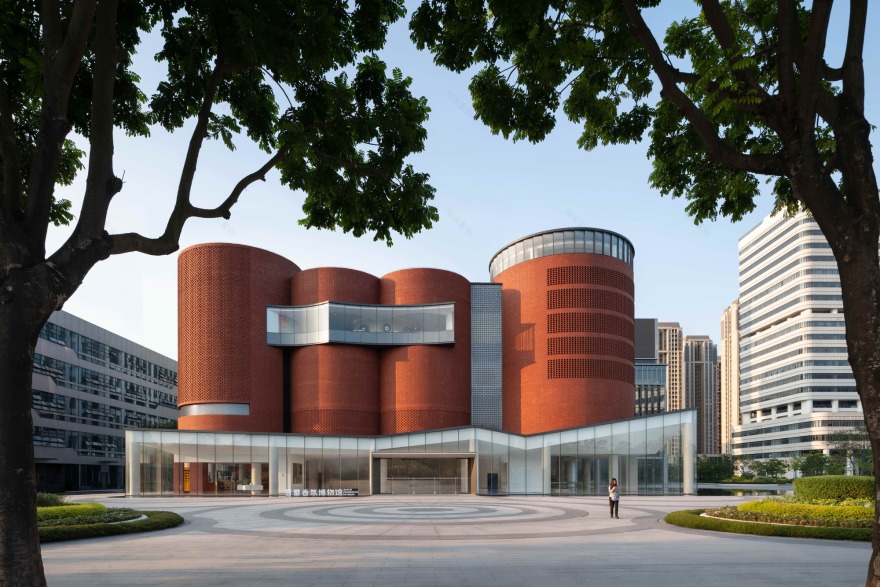

Located in the core area of Guangzhou MinKe Park, the project inserts a cultural institution into a high-density industrial context. The masterplan is developed through a dual logic of "industry and culture," positioning the corporate headquarters alongside the perfume museum. The site is divided into two distinct zones: a compact office campus to the north, defined by low-rise volumes forming a continuous urban edge, and an open museum precinct to the south, where a generous public plaza accommodates exhibitions, events, and everyday urban life.
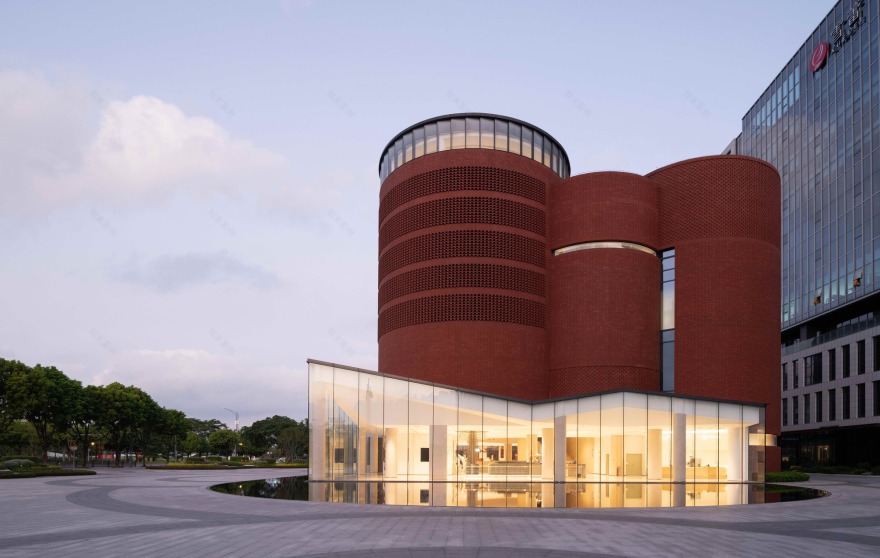

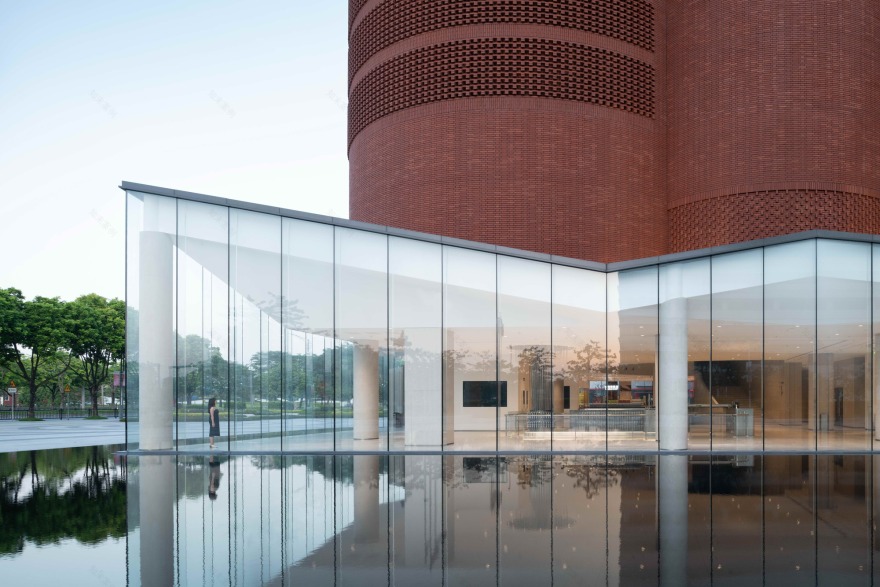
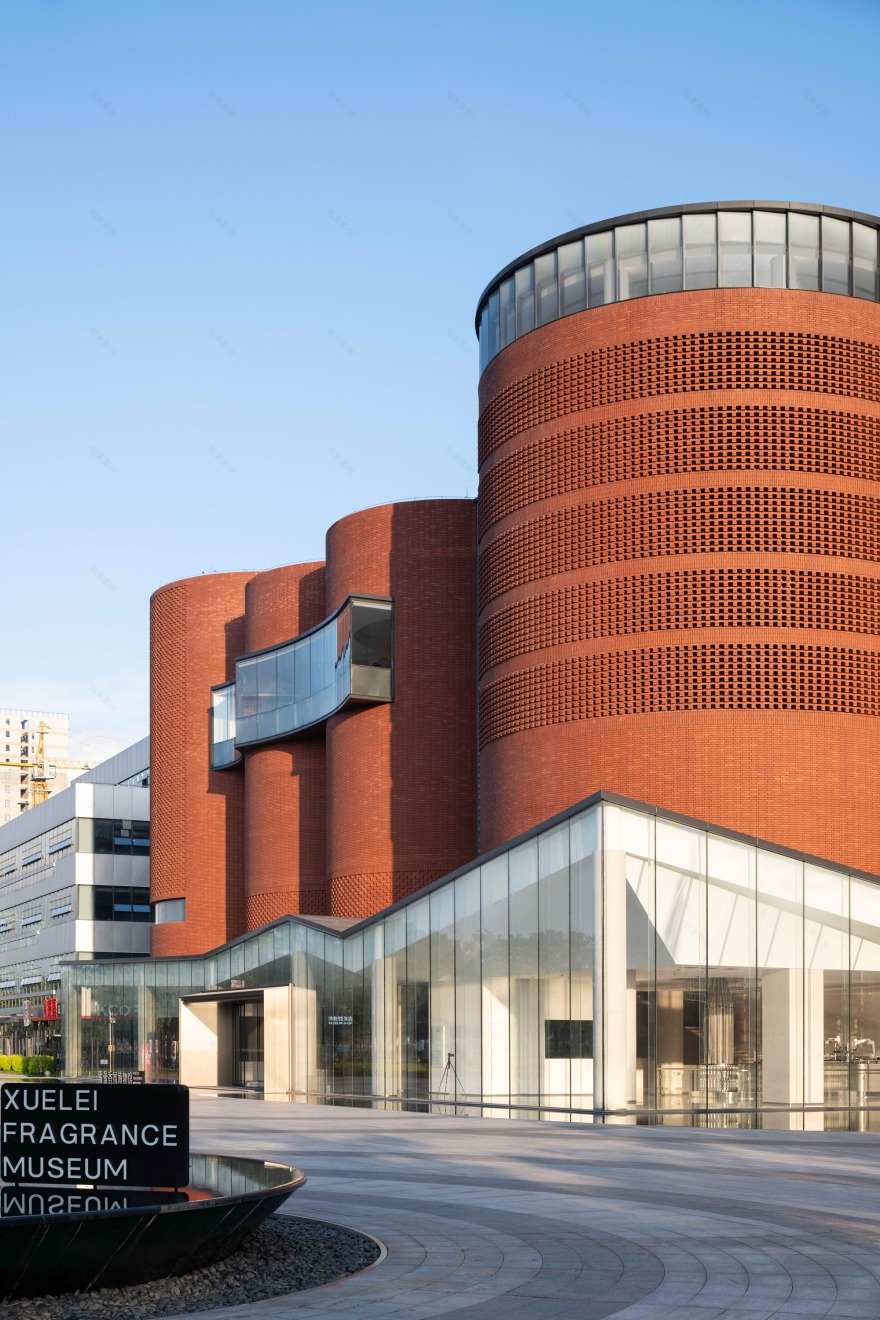
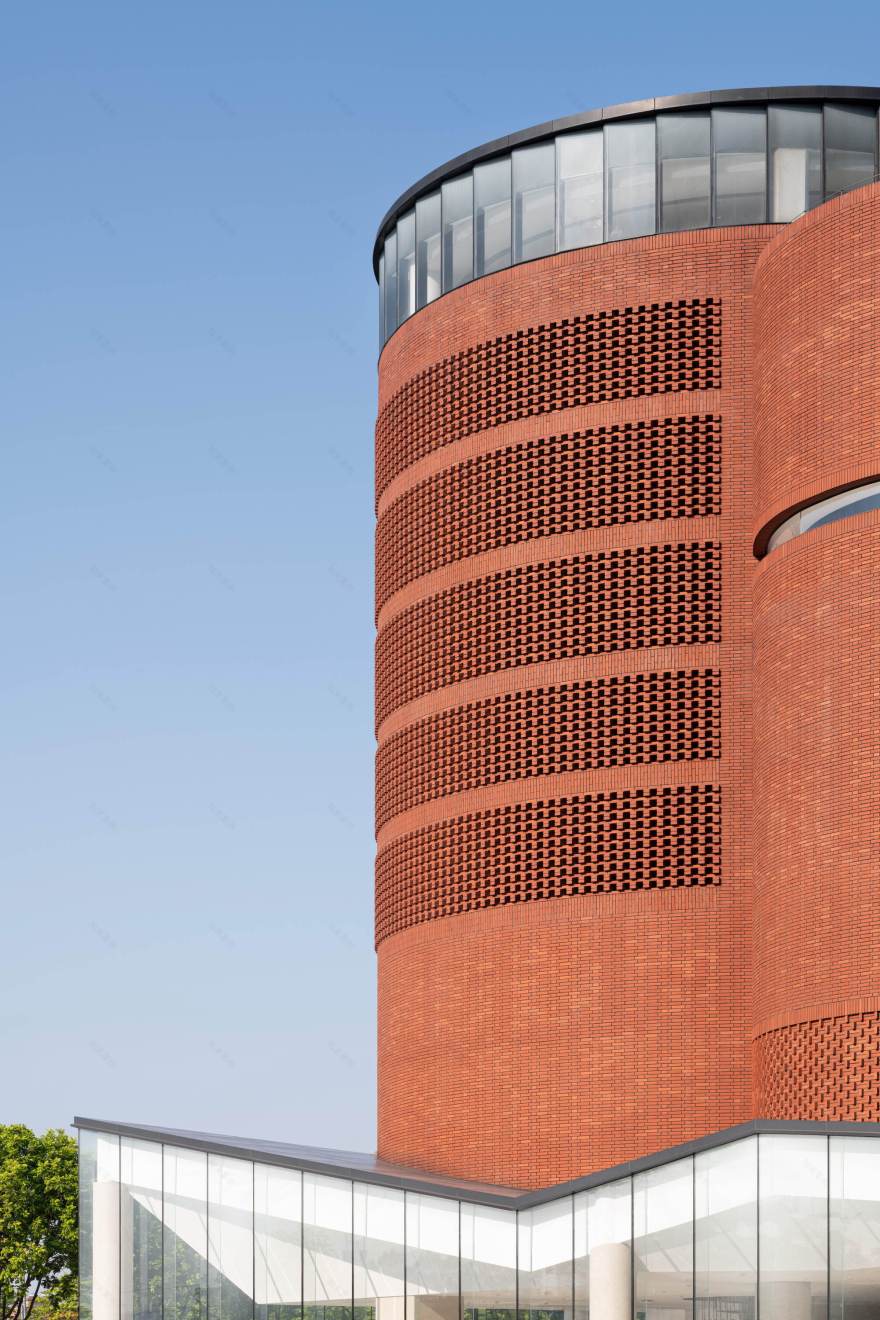
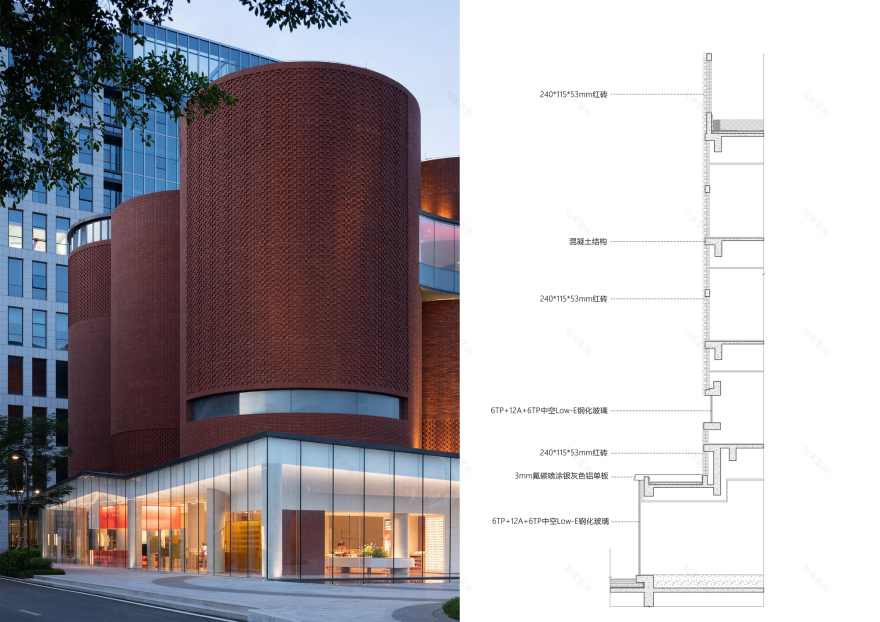
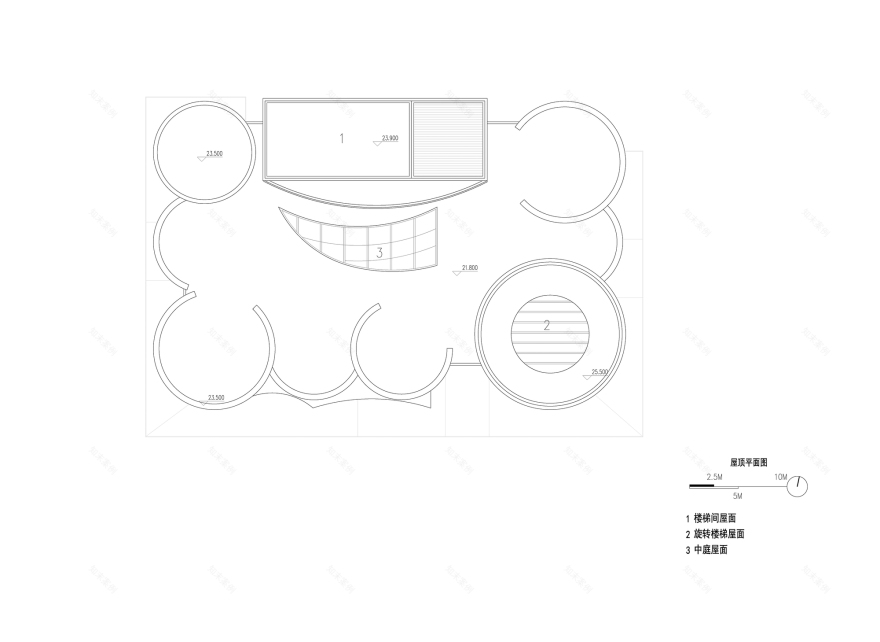
The architectural form of the museum is an abstract translation of perfume-making processes. Eight red-brick cylindrical volumes of varying scales are arranged to form the main body, evoking the transformation of raw materials through distillation and refinement. Red brick is selected as the primary material for its association with the earth and craftsmanship. Through diversified bricklaying techniques—perforation, relief, and recessed courses—the façade allows light, air, and views to permeate, giving the building a porous and breathable character.


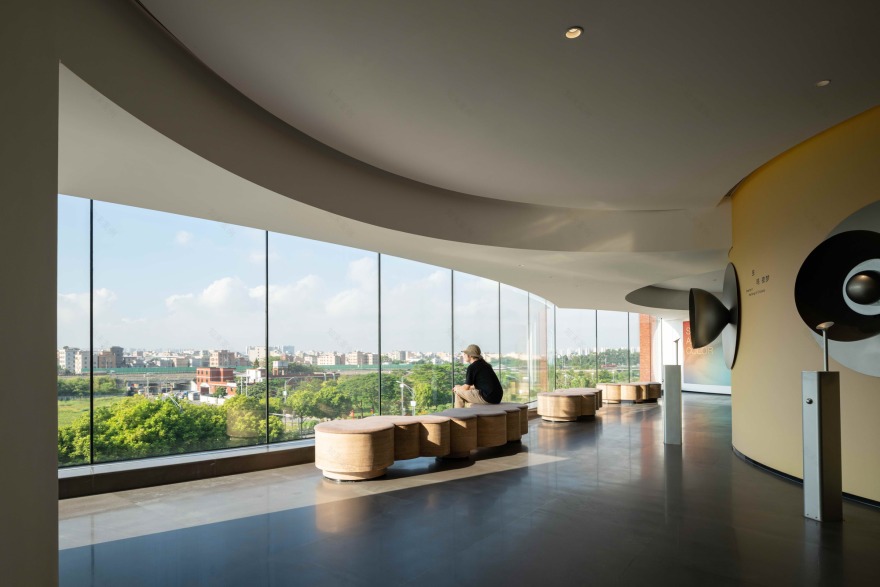
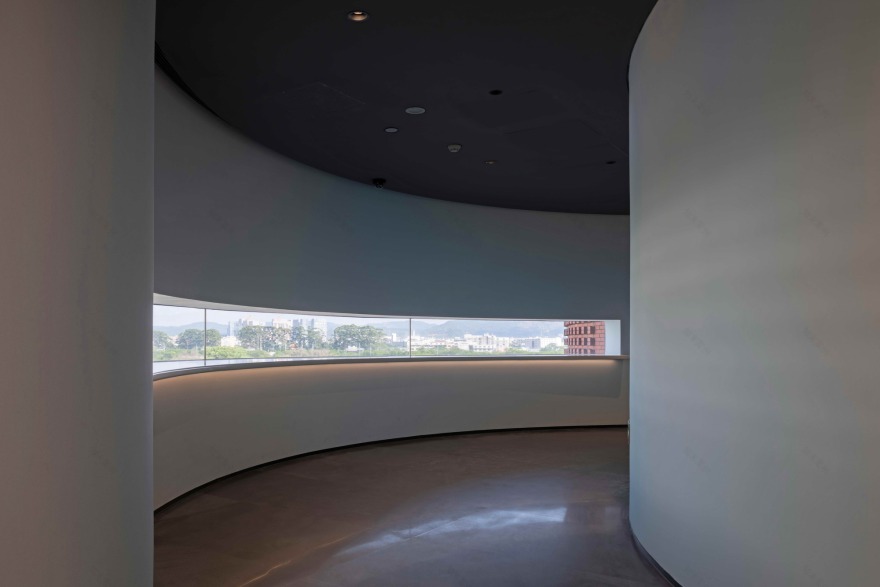
At ground level, transparent glass façades open the museum to the city, creating an inviting public living room. Faceted colored glass and reflecting pools generate dynamic visual layers, merging interior activities with the surrounding urban landscape. The dialogue between the solidity of brick and the lightness of glass establishes a balance between opacity and transparency. A curved glass corridor on the upper level functions both as a viewing platform and as an architectural window into the museum's narrative.

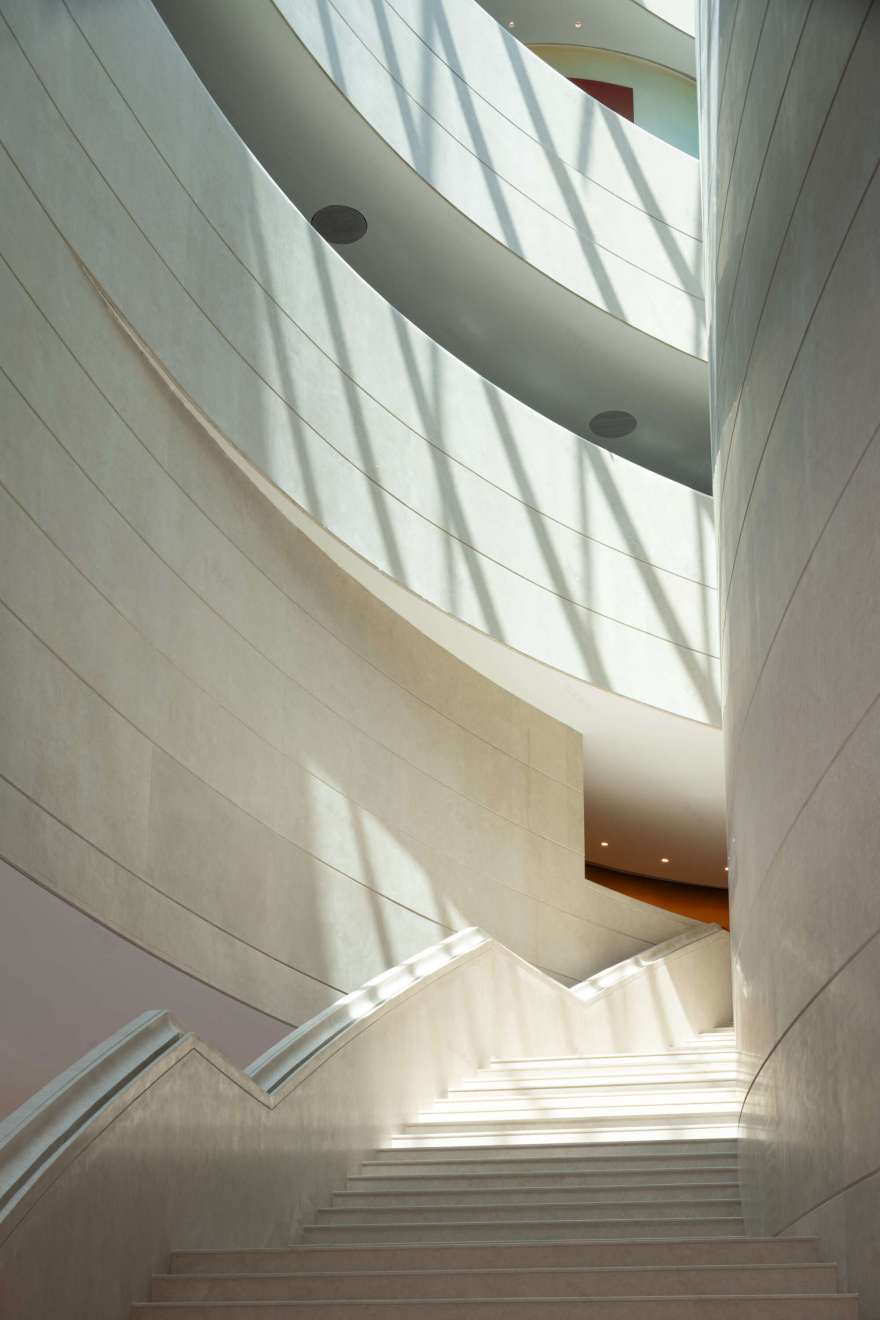
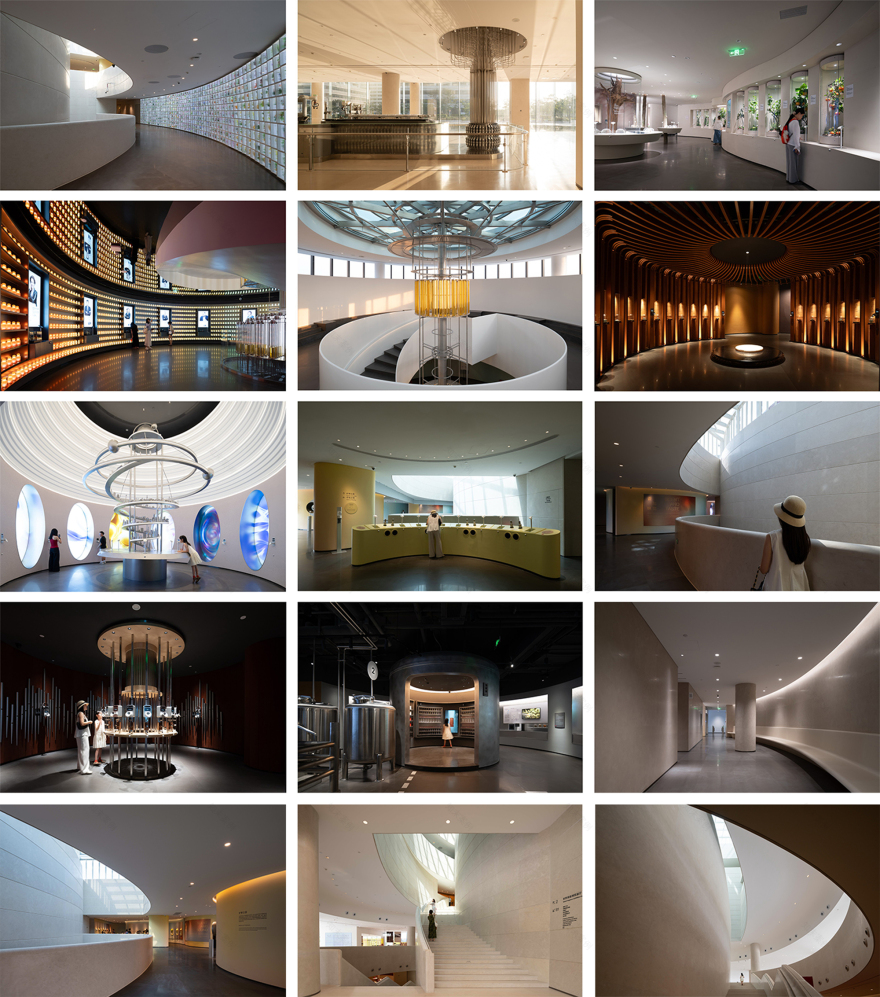
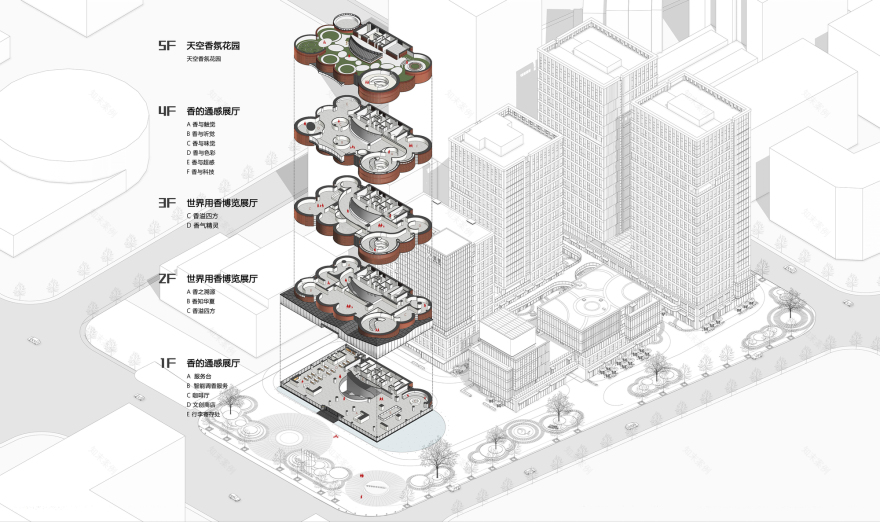
Inside, approximately 9,500 square meters of exhibition space unfold as a continuous sensory journey. A central atrium, curved staircases, and layered galleries choreograph movement through the building, echoing the rhythm of scent diffusion. The rooftop perfume garden concludes the experience, where botanical aromas and contemporary fragrance creation reconnect visitors with nature.


Through architecture, the Xuelei Perfume Museum transforms the invisible art of scent into a spatial and experiential narrative, bridging industry, culture, and the public realm.


Project gallery












南京喵熊网络科技有限公司 苏ICP备18050492号-4知末 © 2018—2020 . All photos and trademark graphics are copyrighted by their owners.增值电信业务经营许可证(ICP)苏B2-20201444 苏公网安备 32011302321234号
苏公网安备 32011302321234号客服
消息
收藏
下载
最近