

创作上传
VIP
收藏下载
登录 | 注册有礼
查看完整案例

收藏

下载

分享
当教育空间离开校园的围墙,与老社区深度叠合,会产生怎样的化学反应?在成都玉林,标榜职业学院与有门建筑联手将一栋老式居民楼改造为实验性教学综合体——C-SCHOOL,以“社区即教室”的理念探索教育空间的更多可能性。
What happens when educational spaces extend beyond campus walls and deeply integrate with an old neighborhood? In Chengdu’s Yulin district, POLUS International College collaborated with nnm+ architects to transform an old residential building into an experimental teaching complex — C-SCHOOL. Embracing the idea that “the community is the classroom,” the project explores new possibilities for educational space.
▼外立面及小庭院,exterior & mini courtyard©李斌

▼主入口,main entrance©李斌


▼外立面全览,exterior overview ©徐嘉韵

▼主入口和门前保留的老树,entrance & the old tree©徐嘉韵
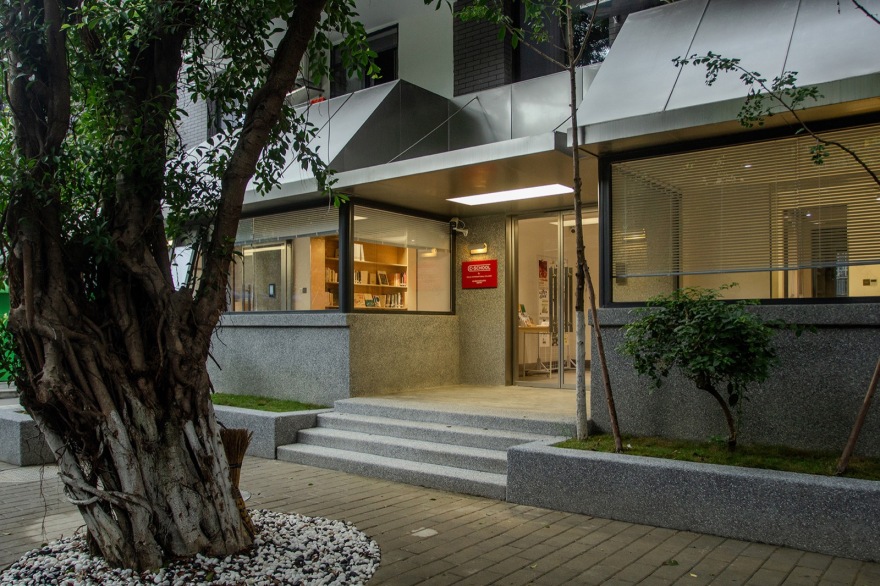
C-SCHOOL取“社区学校”之意。因其处在社区中,课程设置乃至教学空间设计考量,都与社区有着各种层面的联系。首批入驻的设计系学生不再闭门造车,而是参与大量的设计实践与在地研究课题,实现产、学、研一体化循环。
C-SCHOOL, standing for “Community School”, nestled in the community. Its curriculum and spatial design are deeply connected with the community on multiple levels. Students no longer work in isolation; instead, they engage in extensive hands-on design practice and fieldwork, creating a closed loop of production, learning, and research.
▼主入口特写,main entrance details©徐嘉韵

▼学生作品展厅,students’works exhibition©李斌

▼学生作品展厅,students’works exhibition©徐嘉韵

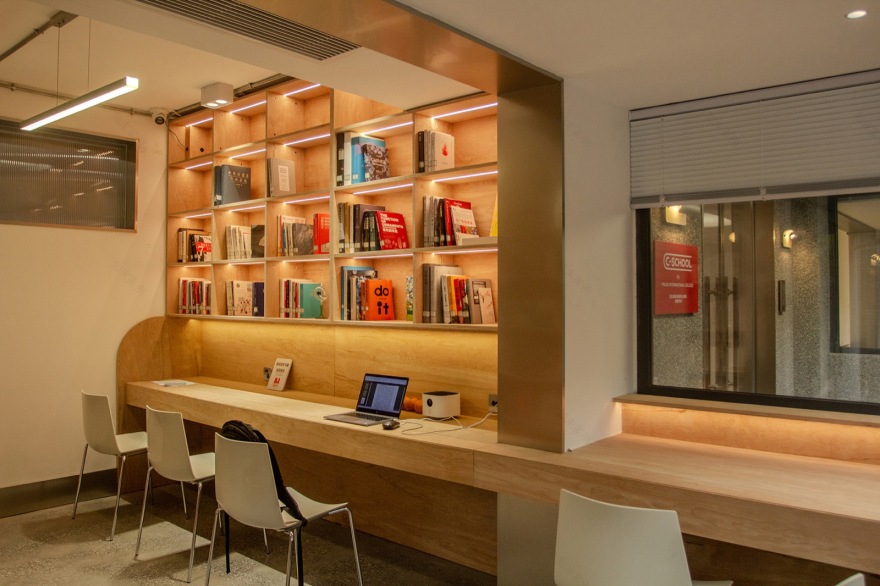
老居民楼原为厂职工宿舍,在原始格局基础上局部改扩建后,首层成为学校的公共空间,兼具教学、工坊、展览、图书室功能。除基本的固定置物架以外,桌椅家具均为模块化设计,可拼合或打散以适应多元场景。改造刻意保留了居民楼的岁月痕迹,老式水磨石地面、走廊高窗等,经打磨修缮后焕发新的生命力。而建于上世纪的昏暗公寓在阳台处被尽可能打开,扩建形成新的沿街界面,在“隐私高度”之上用玻璃引入自然光,同时保留学生靠窗坐下后专注学习的安全感。
▼轴测图,axonometric©有门建筑

The original building, once a factory dormitory, was partially renovated and expanded. The ground floor now serves as a school communal space for teaching, workshops, exhibitions, and a library. Except for fixed shelves, all furniture is modular and can be rearranged for various uses. The design retains traces of time—old terrazzo floors and high corridor windows were restored to bring new life. The formerly dim apartments were opened up at the balcony side, extending toward the street. Glass above eye level allows natural light while maintaining a sense of security for students studying by the windows.
▼讲座教室研讨会模式,lecture room – seminar mode©李斌

▼窗边自习区域,self-study area by the window©李斌
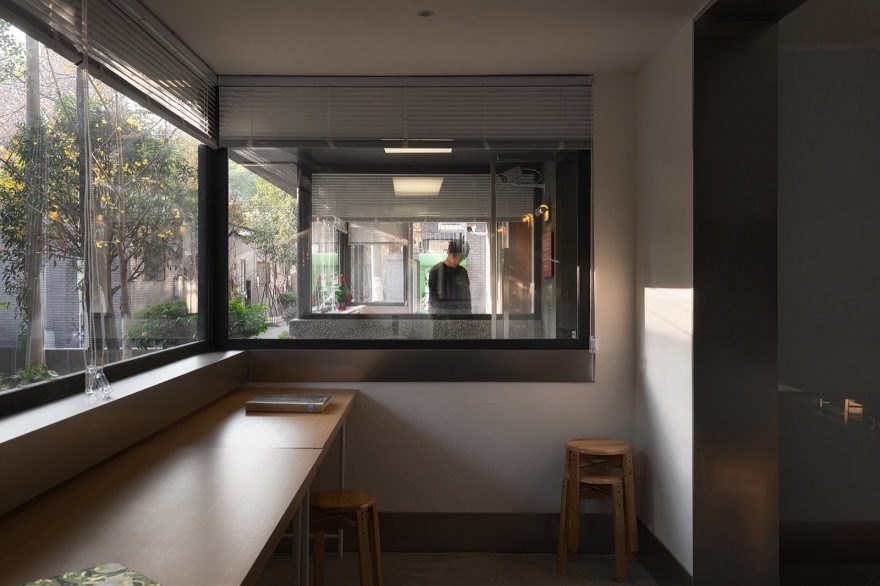
▼电脑教室及学生工作坊,computer room & workshop©李斌

▼学生工作坊,workshop©李斌

▼电脑教室,computer room©李斌
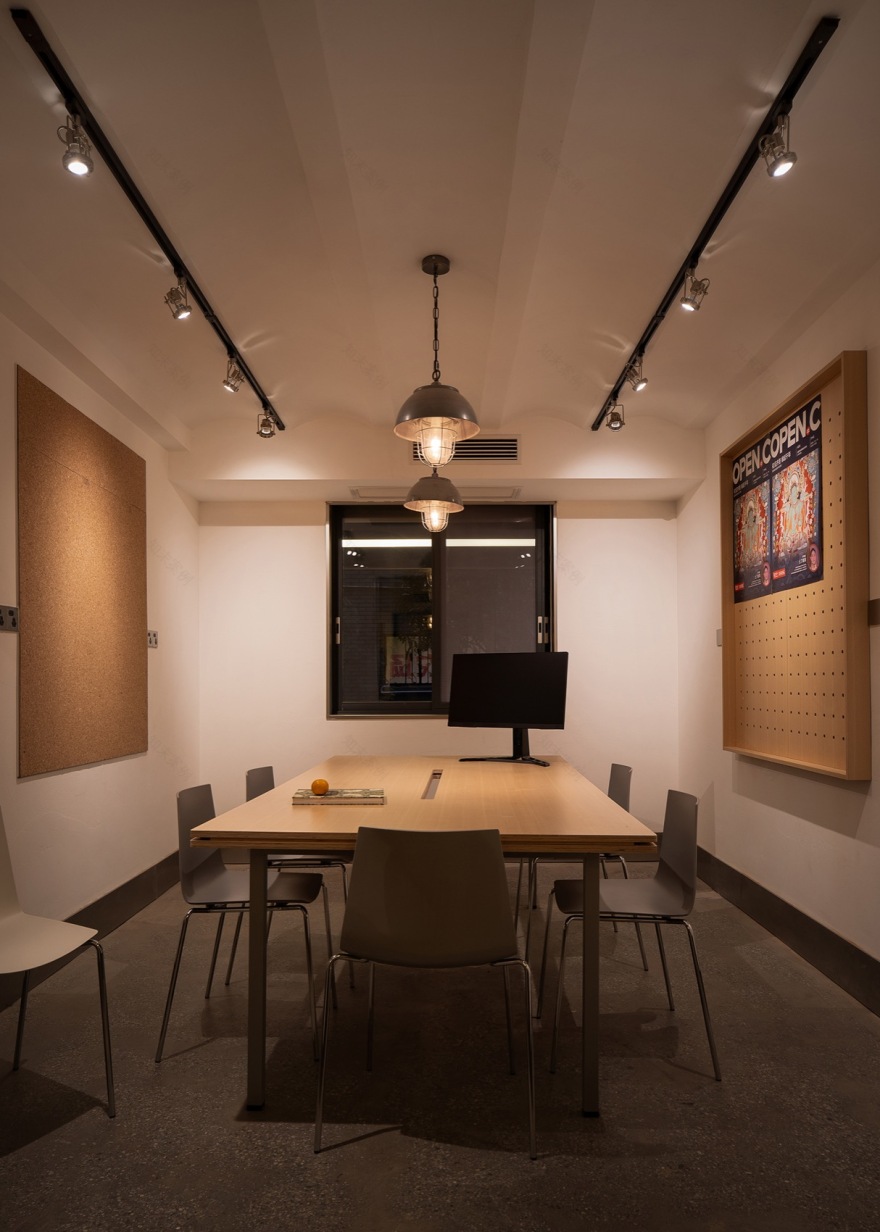
▼局部打开墙面让教室之间通透,create an open flow between classrooms©徐嘉韵

▼学生工作坊细节,workshop details©徐嘉韵


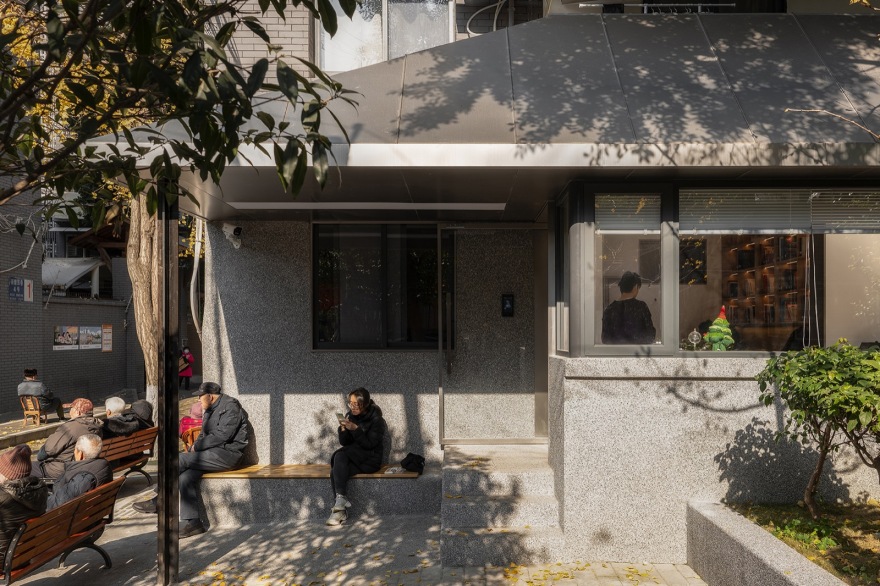
改造设计有意地模糊学校与社区的界线。沿街新增雨棚下方的空间没有被纳入室内,而是设座椅、成为社区街角的微型口袋公园。学校公共空间在教学时间向社区敞开,欢迎居民进门看书、看展或与师生交流。原有绿化带和老银杏树得到保留,树下花坛边常能看到学生闲坐聊天。
The redesign blurs the line between school and community. The area under the new street canopy, with its seating, acts as a small pocket park. During school hours, the public space is open to all—residents can read, visit exhibitions, or talk with students and teachers. The existing greenery and old gingko tree are preserved, often with students sitting and chatting beneath it.
▼图书室,library©李斌

▼图书室自习区域,self-study area in the library©李斌

▼图书室全览,library overview©徐嘉韵

▼面向社区街道的侧入口,side entrance facing the community street©李斌

▼街角微型口袋公园,mini pocket park at street corner©李斌
老居民楼的二至六层被改为宿舍区,根据需求设计了全套模块化家具,包括可自行调整隔层板的衣柜组合、书桌+置物架组合,带隐私隔板的上下铺,方便寒暑假期间改装为青旅或邀请艺术家短期驻地。
▼模块化宿舍家具,modular furniture for dormitory©有门建筑

The second to sixth floors of the old building were converted into dormitories. They are fitted with modular furniture, including wardrobes with adjustable shelves, desk-storage units, and bunk beds with privacy panels. This flexible setup allows the space to be easily adapted into a youth hostel during holidays or to host short-term artist residencies.
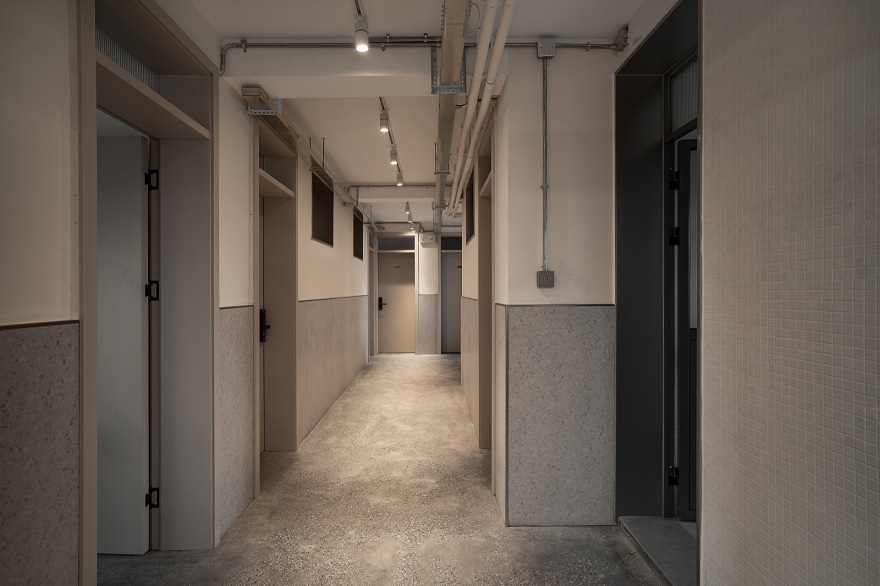
▼公共区域走廊,corridor of the public area©李斌


▼宿舍走廊,dormitory corridor©李斌
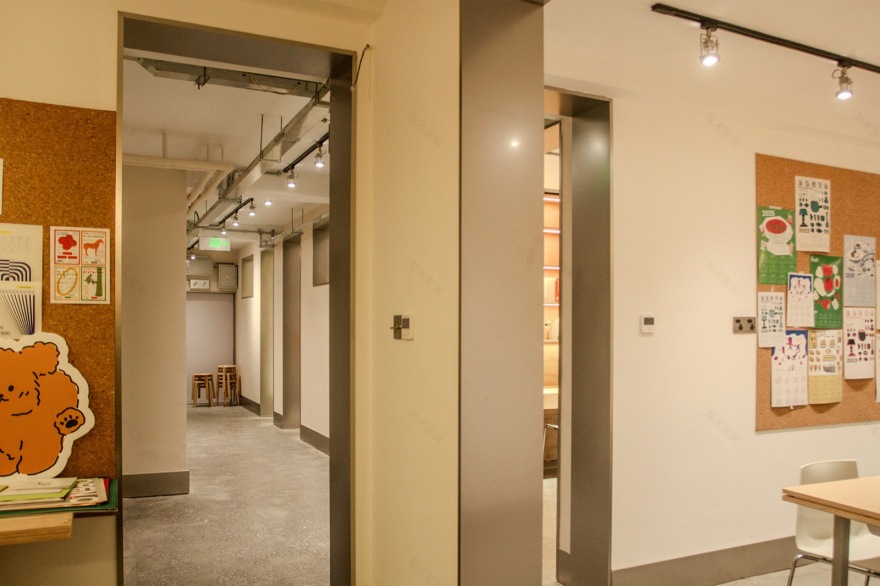
▼面向居民楼的茶水间,pantry facing residential buildings©李斌

▼宿舍洗漱间,washroom©李斌

▼宿舍内部的模块化家具,modular furniture in the dormitory©徐嘉韵

当“传统校园+固定教室”的模式被解构,C-SCHOOL展现出教育空间的社会价值。不仅在于学习行为的场所,更在于其作为社区关系催化剂的潜能。
By deconstructing the traditional “traditional campus + fixed classroom” model, C-SCHOOL reveals the social value of educational space. It functions not merely as a setting for learning activities, but also as a potential catalyst for community relationships.
▼外立面夜景,exterior night view©李斌

▼侧入口与街角微型口袋公园夜景,side entrance& mini pocket park night view©李斌

▼标准层平面图,plan 2-6f©有门建筑

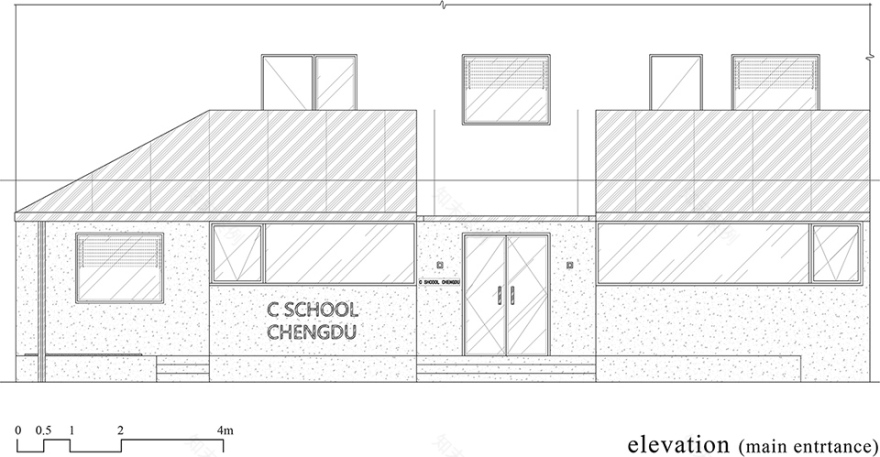
▼主入口立面图,elevation (main entrtance)©有门建筑
▼剖面图a,section a-a’©有门建筑

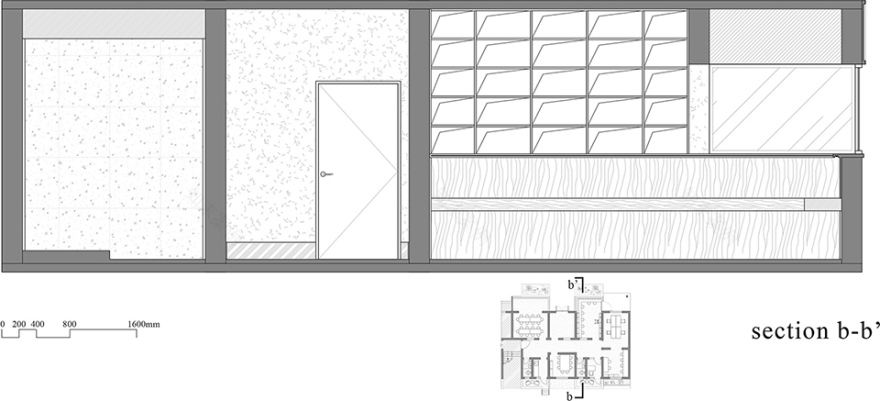
▼剖面图b,section b-b’©有门建筑
▼剖面图c,section c-c‘©有门建筑

项目名称:C-SCHOOL
项目类型:建筑+室内改造,公共空间,教育空间,社区营造
设计方:有门建筑
项目设计:2024
完成年份:2024
设计团队:唐倩文,周柯地,徐嘉韵
项目地址:成都武侯区芳草街道蓓蕾街17
建筑面积:708 ㎡
摄影版权:李斌、徐嘉韵
客户:四川国际标榜职业学院
材料:水泥自流平、艺术涂料、不锈钢、手工砖
品牌:灯具:西铁城照明 / 涂料:立邦 / 插座:施耐德
Project name: C-SCHOOL
Project type: Architecture + Interior Renovation, Public Spaces, Educational Spaces, Community Development
Design: nnm+ architects
Design year: 2024
Completion Year: 2024
Leader designer & Team: Tang Qianwen, Zhou Kedi, Xu Jiayun
Project location: No. 17 Beilei Street, Fangcao Subdistrict, Wuhou District, Chengdu, China
Gross built area: 708 ㎡
Photo credit: Li Bin, Xu Jiayun
Clients: POLUS International College
Materials: Self-leveling cement, Artistic paint, Stainless steel, Handmade brick
Brands: Lighting: Citizen Electronics Co.,Ltd. / Paint: Nippon Paint / Socket: Schneider


南京喵熊网络科技有限公司 苏ICP备18050492号-4知末 © 2018—2020 . All photos and trademark graphics are copyrighted by their owners.增值电信业务经营许可证(ICP)苏B2-20201444 苏公网安备 32011302321234号
苏公网安备 32011302321234号客服
消息
收藏
下载
最近