

创作上传
VIP
收藏下载
登录 | 注册有礼
查看完整案例

收藏

下载

分享

翻译
Architects:SYMBOLPLUS INC.
Area:76m²
Year:2024
Photographs:Keishin Horikoshi
Category:Offices Interiors
Design Team:Satoshi Nobekawa, Sho Watanabe
Construction:SET UP CO.,LTD.
Lighting Planner:Filaments Inc.
Ff&E Constructor:mirai sousaku-jo co.,ltd.
Plasterer:SAKAN TKURA | Tatsuya Tokura
Japanese Wallpaper Supplier:Wajue Inc.
Glass Supplier:Chunichi Stained Art Co.,Ltd.
Stone Supplier:Matsushita Sangyo Co.,Ltd.
Wood Supplier:Yasuta Veneered Surfaces&Design
Carpet Supplier:Sangetsu Corporation
City:Tokyo
Country:Japan
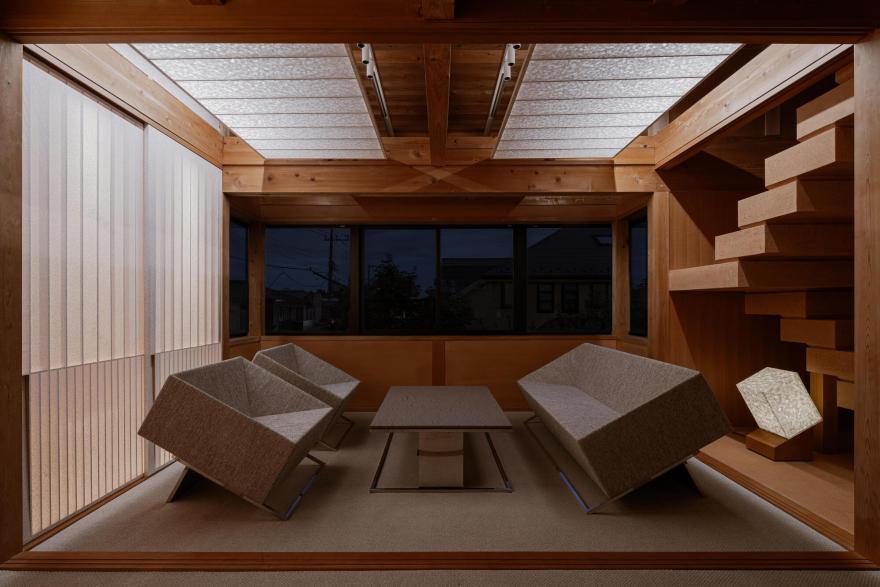
SYMBOLPLUS Office is located in a timber building owned by architect Akio Hayashi, whose long-standing advocacy for natural materials became the starting point of the renovation. The brief was clear: avoid synthetic materials and work with what already existed. Rather than pursuing visual impact, the project focuses on continuity―between architecture, material, and time.

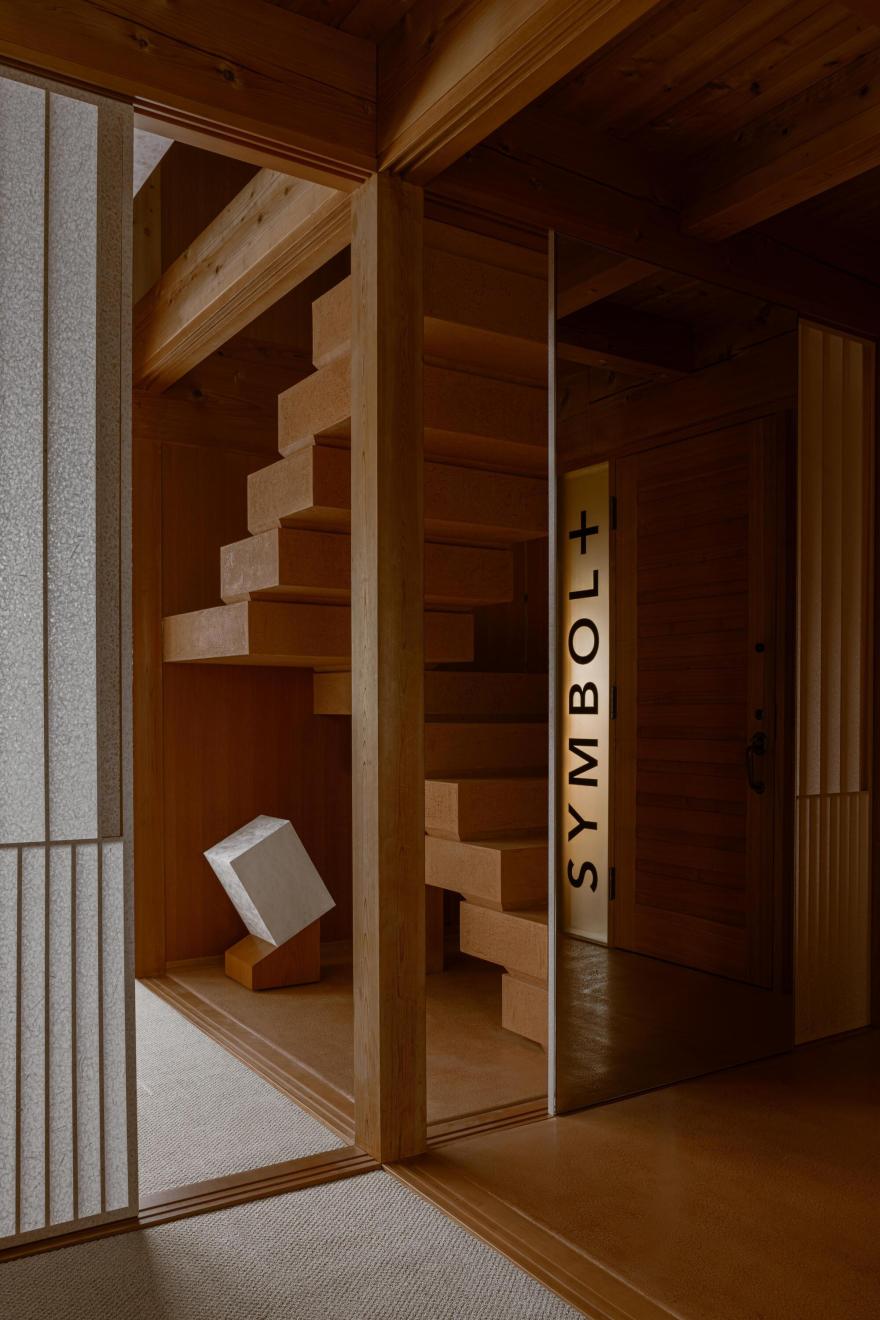
The design preserves the original timber structure as much as possible. New elements follow the building's rhythm, proportions, and warmth, allowing old and new to coexist without contrast. The office becomes a place where work unfolds quietly, shaped by its architectural context rather than imposed upon it.

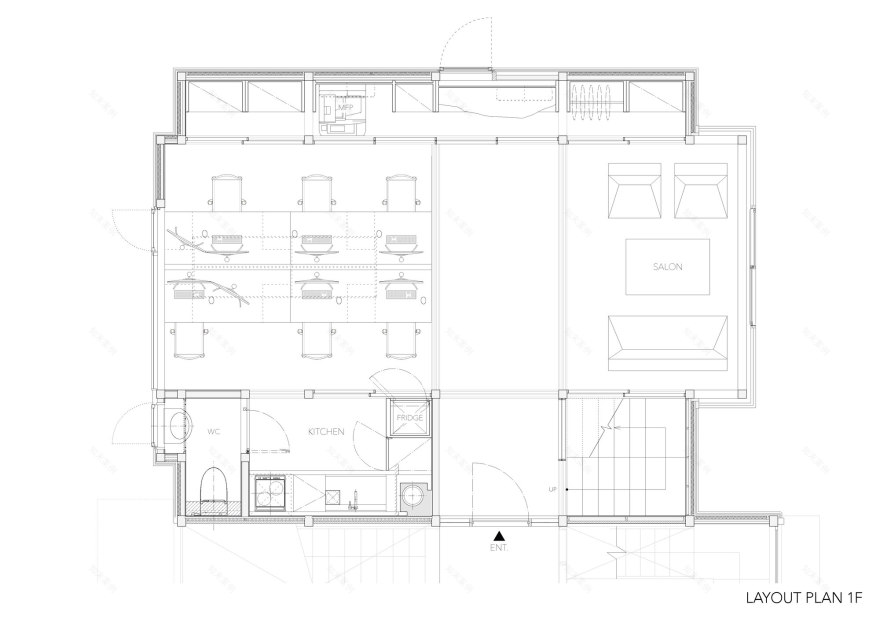

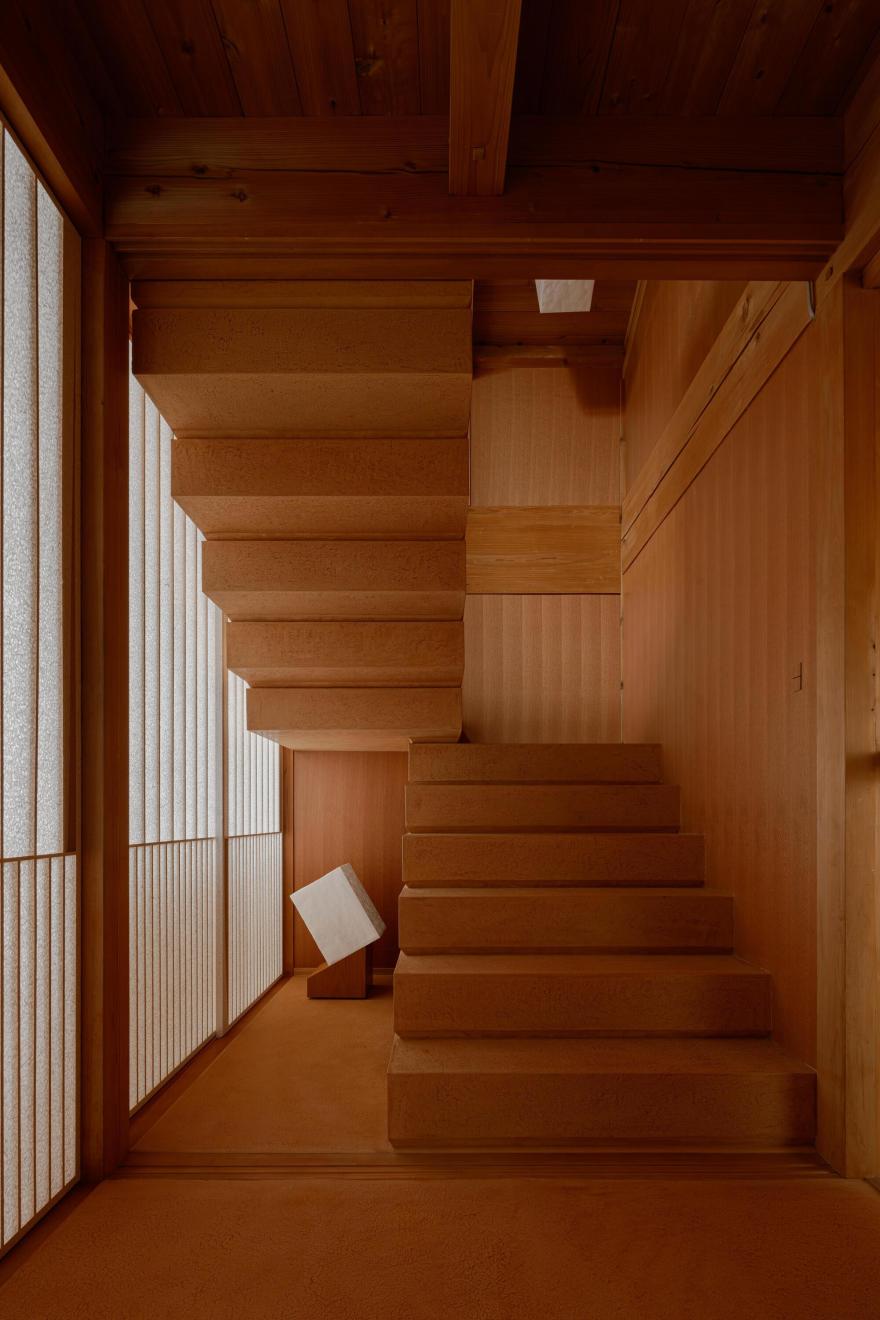
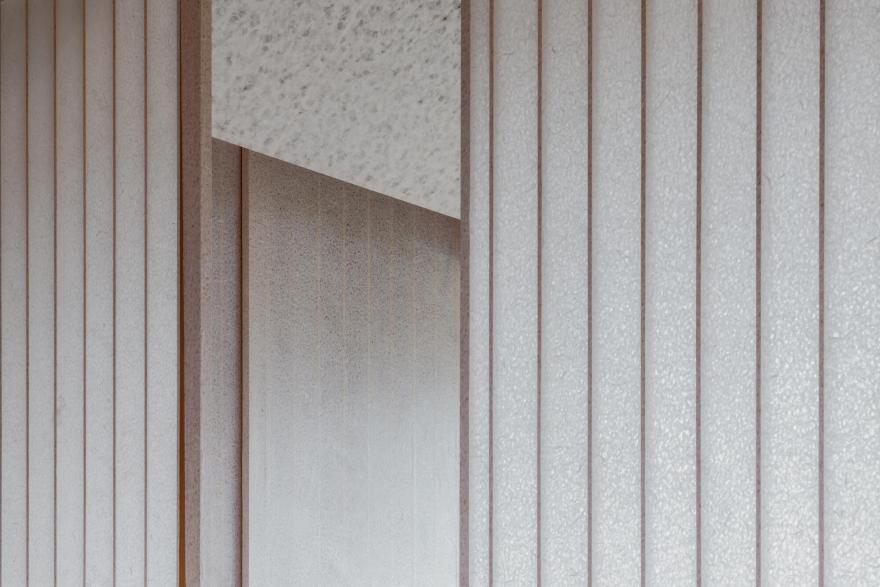
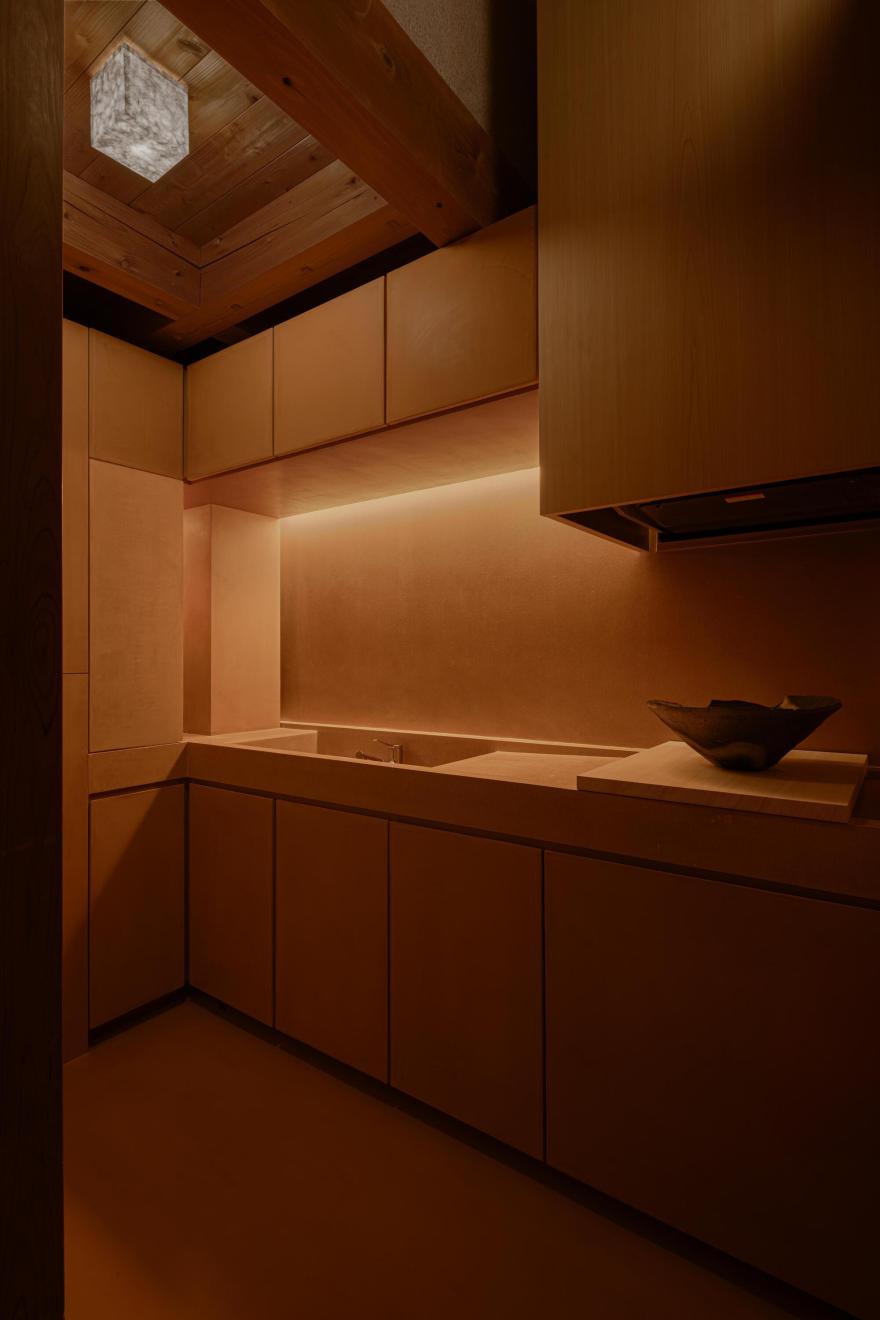
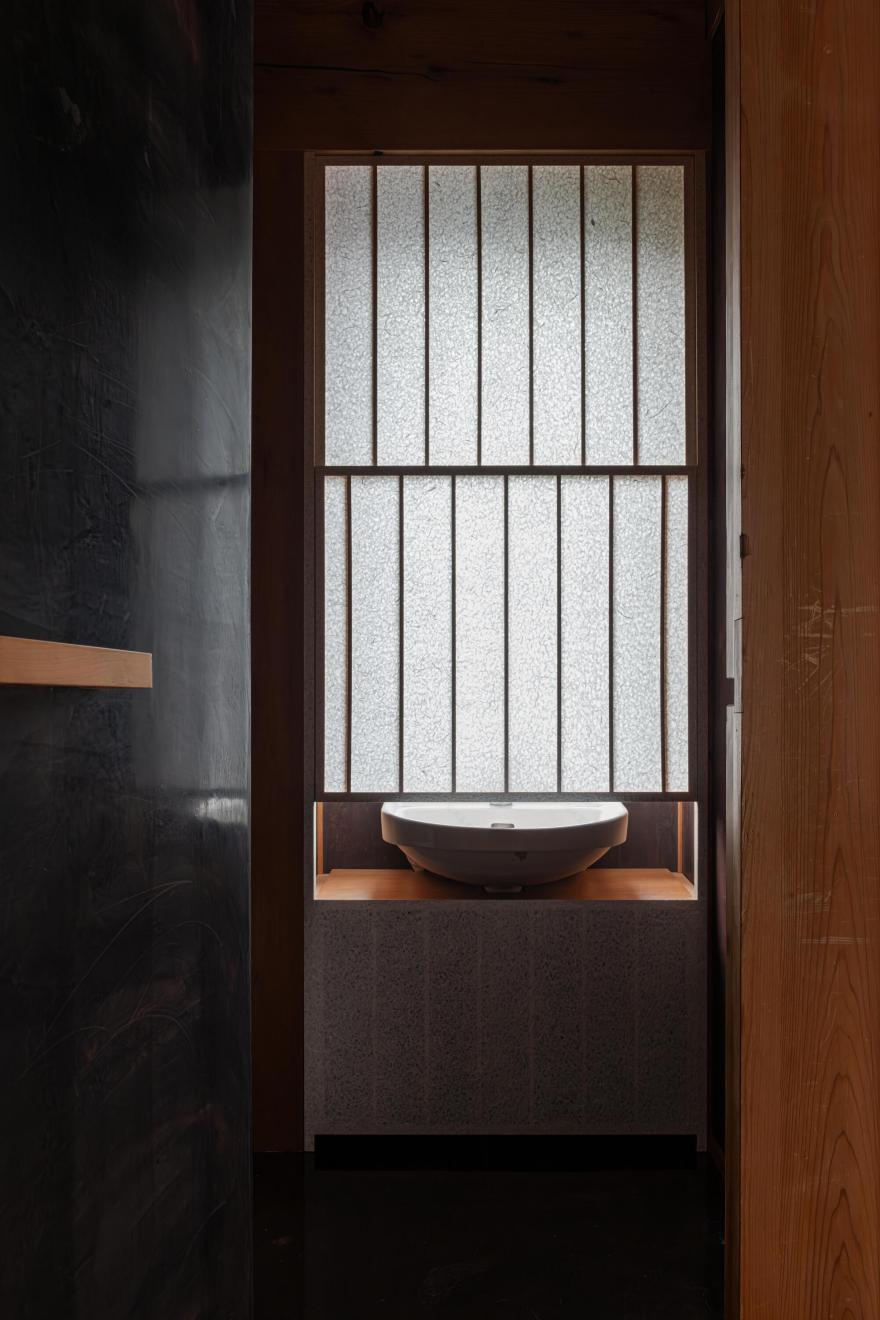
Material as memory – Material choices reinforce this attitude. Red earth sourced from Ishikawa was applied in layered plaster by artisans, its tone carefully adjusted to resonate with the timber structure. Shoji partitions were made from reclaimed Tosa washi originally intended for disposal. As the paper was too thin for architectural use, it was layered to achieve durability and translucency. These shoji serve as flexible partitions, allowing the space to shift between openness and privacy. In meeting areas, they conceal shelving and equipment when needed, maintaining visual calm without erasing function.

Adaptability through restraint – Innovation appears through restraint. Shoji panels slide without metal fittings, relying on traditional carpentry techniques. Rotating ceiling panels reveal lighting only when required, reducing visual noise. These details are not nostalgic gestures, but rather practical systems that allow the office to adapt over time. Rather than over-designing, the project accepts change as part of architecture. The space evolves through use, light, and daily occupation―remaining open to the future while grounded in its past.

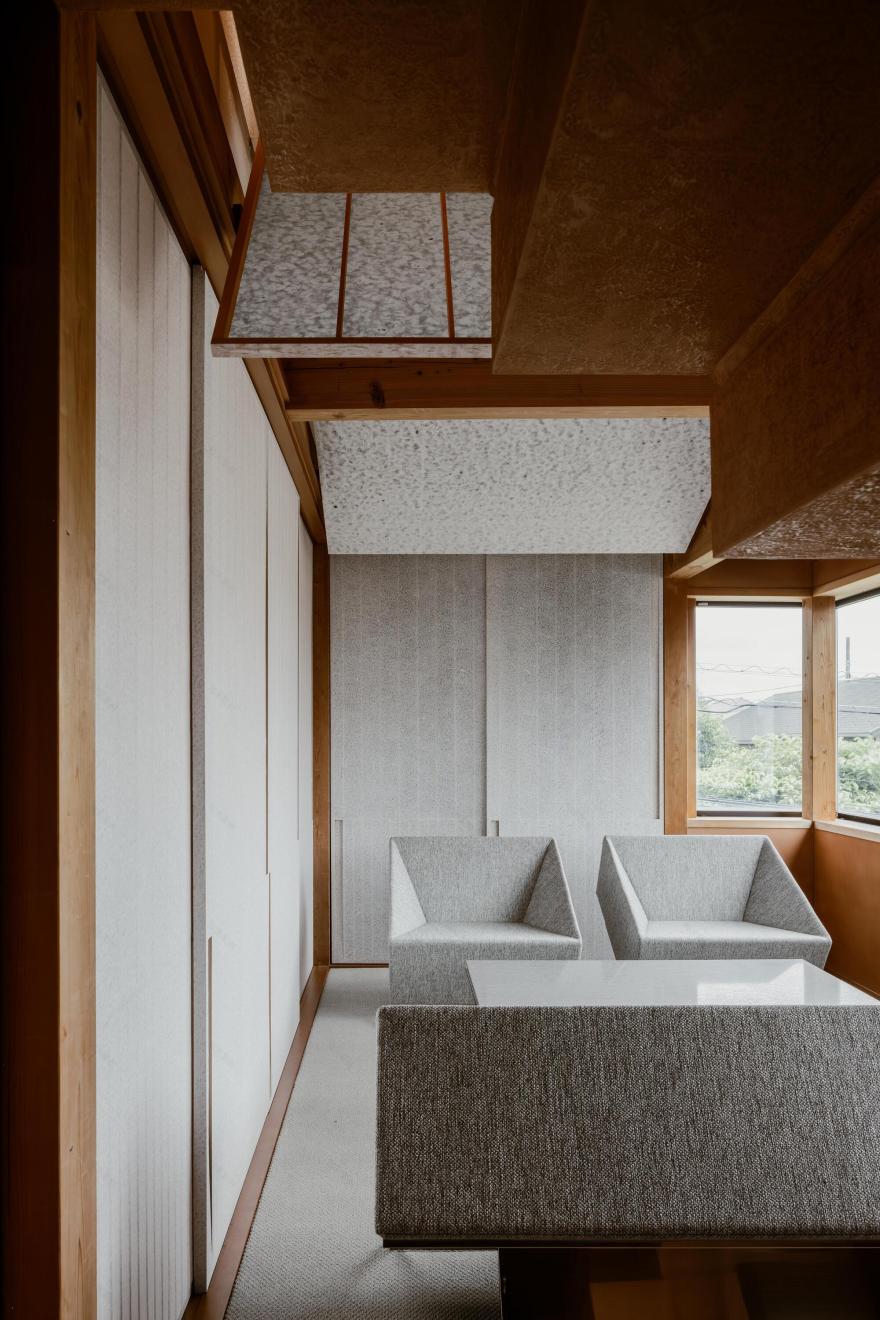

An office as a vessel – SYMBOLPLUS OFFICE is not conceived as a showcase, but as a working environment shaped by values―longevity, reuse, and humility toward existing architecture. By building upon what was already there, the project demonstrates how modest interventions can extend the life of architecture while remaining socially and environmentally responsible.

Project gallery






南京喵熊网络科技有限公司 苏ICP备18050492号-4知末 © 2018—2020 . All photos and trademark graphics are copyrighted by their owners.增值电信业务经营许可证(ICP)苏B2-20201444 苏公网安备 32011302321234号
苏公网安备 32011302321234号客服
消息
收藏
下载
最近