

创作上传
VIP
收藏下载
登录 | 注册有礼
查看完整案例

收藏

下载

分享

© Marcus Bredt
基尔宫音乐厅是不少战后现代主义文化建筑挑战的一个典型范例:在保留其建筑身份的同时,需要在功能与技术层面进行更新。由 gmp·冯·格康、玛格及合伙人建筑设计事务所与 bbp建筑师事务所组成的联合团队于2019年至2025年间对该建筑进行了改造,将其作为原有建筑的概念性延续加以发展。设计目标是在其品质主要源自建筑语言的清晰性与形式克制性的原有建筑基础之上,整合多样而复杂的功能需求。
The Concert Hall at Kiel Castle exemplifies the challenges faced by many cultural buildings of the post-war modern era, which today require functional and technical renewal while preserving their architectural identity. Between 2019 and 2025, a design team comprising gmp · Architects von Gerkan, Marg and Partners and bbp : architekten developed the project as a conceptual continuation of the existing building. The aim of the design was to integrate a wide range of new requirements into an existing structure whose quality derives largely from the clarity and formal restraint of its architecture.

© Marcus Bredt
© Marcus Bredt
该音乐厅建于1961年至1965年,依据汉堡的Sprotte & Neve建筑师事务所的设计,与毗邻的基尔宫共同在基尔老城北部造就了一个新的文化中心。建筑的天然石材立方体体量容纳了明亮、棱柱形的音乐厅空间,按照最初构想是一座以基尔爱乐乐团为主要使用者的多功能艺术建筑。音乐厅内,居中布置、几乎无高差的乐队演奏平台被层层递进的观众看台所环绕,从而在乐队与观众之间形成了紧密的空间联系。此后进行的多次改建、技术加装与功能补充,逐步改变了建筑的整体气质,并遮掩了原始设计中的关键要素。
The concert hall was built between 1961 and 1965 based on designs by the Hamburg architecture firm Sprotte & Neve. Together with the adjacent Kiel Castle it formed a new cultural center on the northern edge of Kiel’s historic old town. Enclosing a bright, prismatically shaped auditorium within its natural stone volume, the building was originally conceived as a multifunctional venue, with the Philharmonic Orchestra of Kiel as its primary user. The auditorium, with its centrally located, nearly level orchestra platform, is surrounded by tiered audience terraces, creating a close spatial relationship between orchestra and audience. Subsequent conversions, technical upgrades, and additions gradually altered the building’s architectural character and overlaid key elements of the original design.

© Marcus Bredt
© Marcus Bredt
本次改造工程的重心在于,在引入现代技术的同时,恢复建筑原有的简洁明确的建筑风格与材质表现。在其建成约六十年后,因老化问题、以往修缮造成的损伤以及日益提高的运营需求,建筑亟需一次全面整修。设计的一项重要原则是最大限度地保留原始建筑实体。原本作为多功能厅使用的空间,随着时间推移已演变为一座纯粹的音乐厅,对声学与技术条件提出了更为明确的要求,而改造方案对此予以充分回应。设计通过精准的、可见与不可见的干预措施,既修正了后期叠加的改动,也弥补了原有建筑中的细微设计缺陷。一方面重建了建筑的整体秩序,另一方面也优化了观众、乐队及运营管理的功能流程。在城市层面上,设计旨在进一步将音乐厅面向城市空间及基尔峡湾开放。
The core objective of the conversion was to restore the building’s minimalist clarity and materiality while integrating contemporary technology. Nearly sixty years after its completion, age-related deficiencies, damage from earlier repairs, and increased operational demands made comprehensive renovation and upgrade unavoidable. A guiding principle of the project was the greatest possible preservation of the original fabric. Over the decades, the space—initially used as a multifunctional hall—had evolved into a dedicated concert hall with specific acoustic and technical requirements, which are now fully addressed. The design strategy relied on precise interventions, both visible and concealed, correcting later alterations as well as minor shortcomings in the original construction. This approach re-establishes the architectural order while optimizing functional flows for audiences, musicians, and operations. From an urban design perspective, the concert hall has also been opened up more toward the city and the Förde.

© Marcus Bredt
对整座建筑外围护结构进行节能升级,是此次改造与修缮的重点之一。经过能效优化的梁柱式玻璃幕墙延续了原建筑精巧的比例尺度,并增强了主立面的通透性。全新的遮阳玻璃改善了能源效率及夏季隔热性能。同时,挪威阿尔塔石英岩制成的天然石材立面与门厅墙面也得到了修复,室内外约70%的石材板块得以保留并重新使用。随着原有青铜铸造大门的拆除,入口区域在视觉上更加向入口广场开放。
The energy-efficient renewal of the entire building envelope was a central focus of the conversion and renovation. The energy-optimized post-and-beam glass façade of the foyer reflects the delicate proportions of the original structure and enhances transparency along the main façade. New solar-control glazing improves energy performance and summer heat protection. The natural stone façades and foyer walls clad in Norwegian Alta quartzite were also restored, with approximately 70 percent of the interior and exterior stone panels retained and reused. The removal of the former cast bronze doors visually opens the entrance area toward the forecourt.
© Marcus Bredt
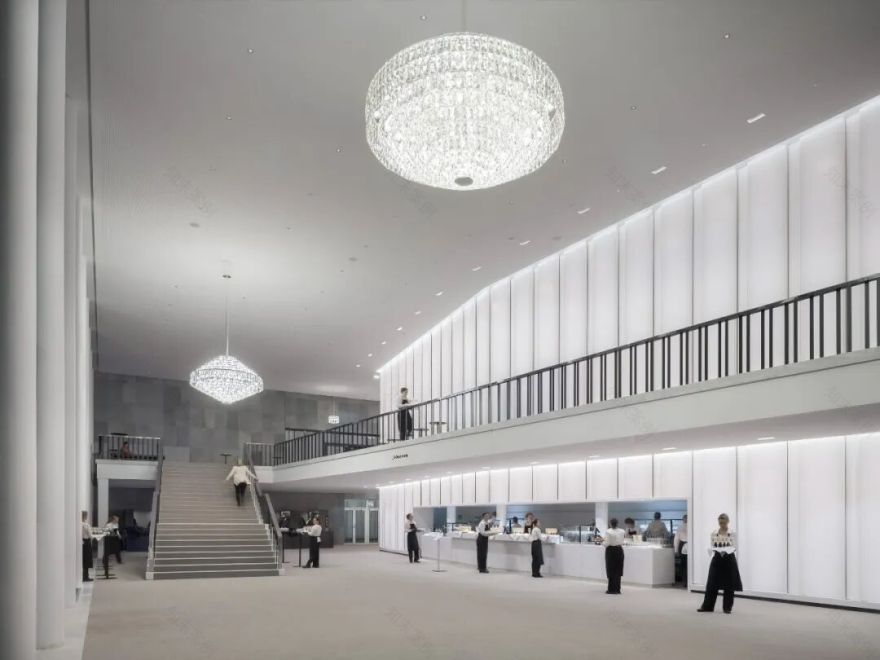
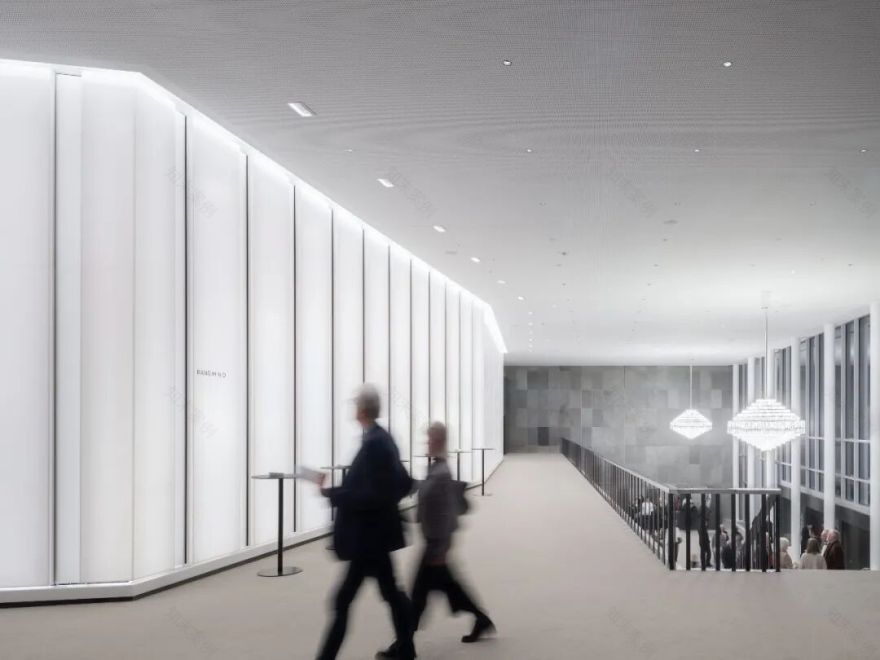
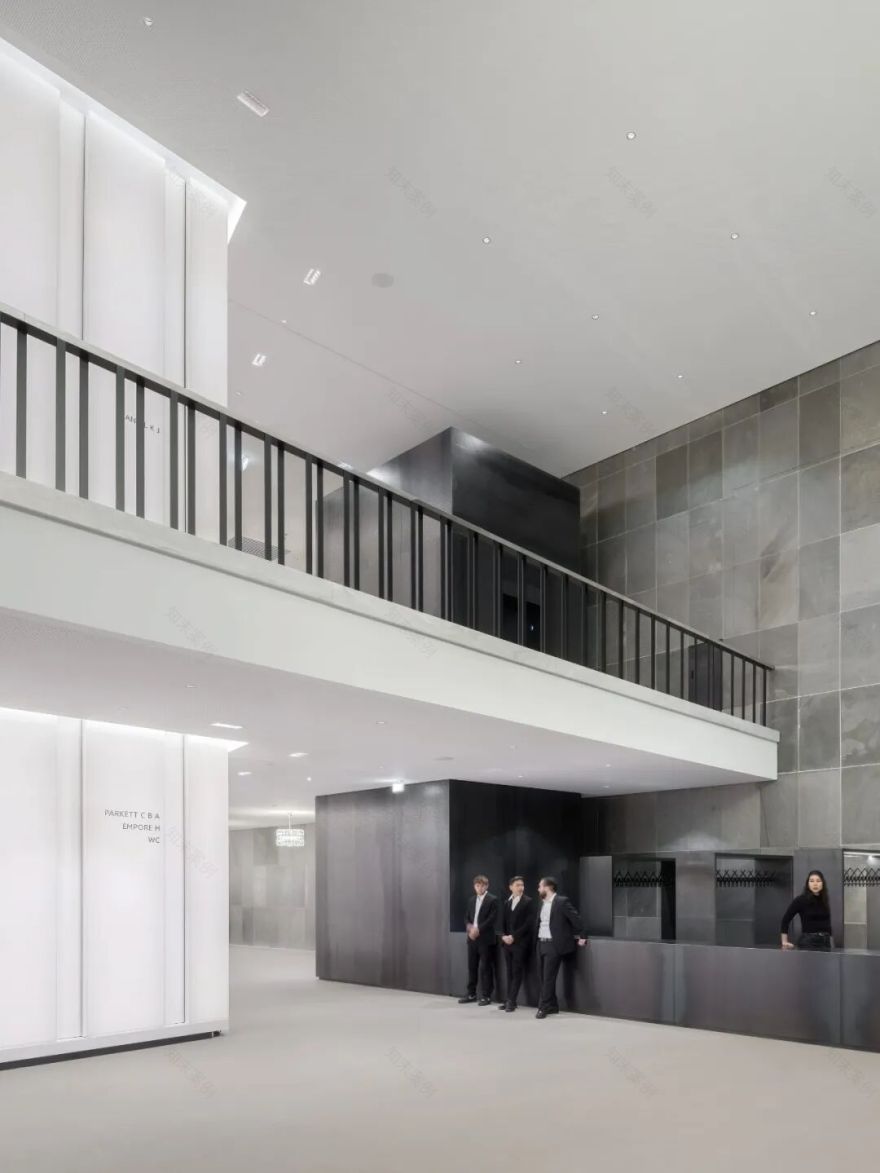
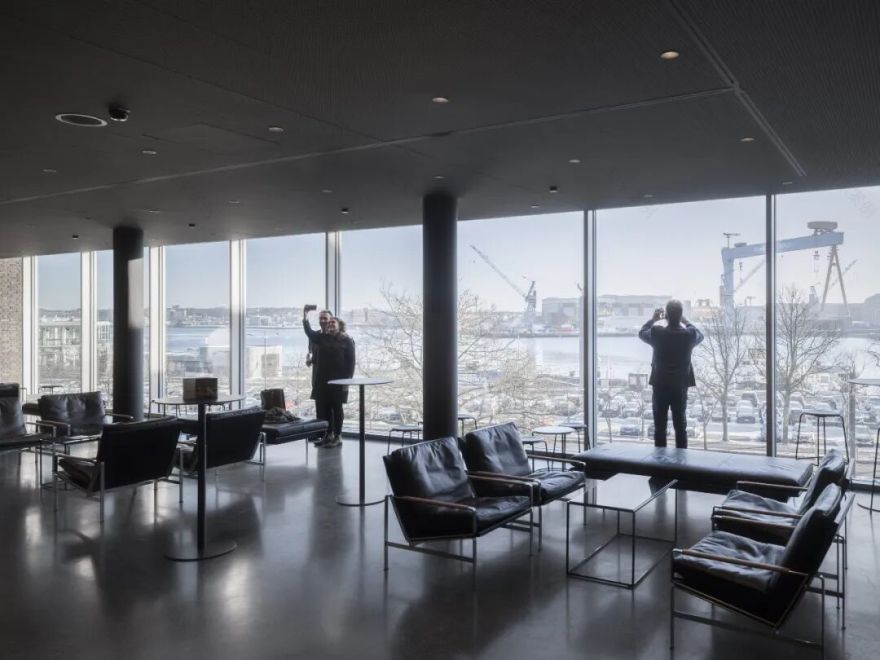
基于音乐厅多年运营所积累的经验,门厅的改造措施着重于其功能的提升。通过酒吧吧台与衣帽间的位置互换,减少了噪声干扰,并重新组织了观众与运营管理的流线。原先南立面外侧附设的通达二层看台的电梯被拆除,并整合于门厅空间之中。与此同时,进一步强化建筑与基尔峡湾的空间联系也是改造的主题之一。门厅北侧新增了一个通往峡湾露台的出口;面向水面的二层峡湾门厅的入口设计得更加开阔。在该空间中,新融入的一处酒吧进一步强化了其作为停留与交流场所的功能。此外,一座侧翼建筑的设置,使这一空间在常规音乐会运营之外也可用于非正式的音乐活动。建筑的功能组成还通过二层新增的一处多功能厅得以扩展,该空间同样拥有面向基尔峡湾的景观视野。新的室内陈设继续使用了原音乐厅内的灯具,照明设计延续了“明亮厅堂建筑”这一概念;可丽耐饰面板的 LED 背透式照明,补充并强化了原有照明系统。
Drawing on many years of operational experience, the foyer interventions focused on functional improvements. By switching the locations of the bar and coat check, acoustic disturbances were reduced and circulation for both visitors and staff was reorganized. The elevator providing access to the upper tier, previously added in front of the south façade, was removed and integrated into the foyer. Another key objective was strengthening the building’s connection to the Kieler Förde. A new exit from the foyer now opens northward onto the Förde Terrace. Access to the upper-level Förde Foyer, oriented toward the water, was significantly expanded. A newly integrated bar enhances the Förde Foyer, establishing it as a space for social interaction and communication. In addition, the provision of a grand piano opens the space to informal musical uses beyond the regular concert program. The building’s range of uses is expanded by a new multifunctional hall on the upper floor, which also offers views of the Kieler Förde. As part of the new interior design, lighting fixtures from the concert hall were reused. The lighting concept continues the idea of the glowing auditorium volume, with LED backlighting of Corian panels complementing the existing lighting.

© Marcus Bredt
在音乐厅内部,改造措施主要集中于声学、舞台及技术设备。大厅原有的良好音乐会声学效果得以保留,同时有针对性地优化了乐队成员之间的相互听辨性。舞台上方新增的十二块高度可调的声学反射板,通过提供新的反射面改善了音乐家之间的交流,并将声学、舞台照明与舞台技术整合于一体。新的升降式舞台平台取代了原先的手动台阶系统,实现了更快速的场景转换及更灵活的空间使用,而对部分看台区域的调整则改善了厅内的观演视线。
In the concert hall itself, interventions focused on acoustics, the stage, and technical equipment. While the hall’s excellent concert acoustics were preserved, the audibility among orchestra members was specifically improved. Twelve height-adjustable acoustic reflectors above the stage enhance musicians’ communication through new sound-reflecting surfaces while integrating acoustics, stage lighting, and technical equipment. New lifting platforms replace the former manually operated stage elements, enabling faster changeovers and more flexible use of the hall. Modifications to selected terrace areas improve sightlines within the auditorium.
© Marcus Bredt
通过对座椅、地坪及楼梯栏杆的更新,音乐厅的整体气质得以延续,同时以现代方式回应了新的功能需求。黑钢构件及穿孔饰面板等新元素,补充了原有克制而简洁的材料体系。建筑机电设备系统得到全面更新。此外,改造也进一步完善了无障碍设施:全新的挡风门及融入建筑体量的电梯取代了以往的附设构筑物,从而重新梳理并强化了建筑的整体形态。
The character of the hall is retained through the refurbishment of the seating, flooring, and stair railings, while functional requirements are implemented in a contemporary manner. The material palette of the existing fabric was reduced, with new components added in black steel and perforated cladding. Building services were completely renewed. In addition, barrier-free accessibility measures were expanded: new vestibule doors and an elevator integrated into the building volume replace earlier additions and reorganize the building’s overall massing.
建筑设计:gmp 总包设计有限公司与 bbp建筑师事务所组成的设计联合体
gmp项目负责人:施特凡·胥茨及尼古拉斯·博兰克和克里斯蒂安·海尔蒙特
bbp项目负责人:比约恩·伯格费尔特及克里斯汀·斯洛姆斯基、布丽塔·斯坦奇
gmp设计团队:米里娅姆·艾库特、延斯·福斯特、比尔特·奥伯博塞尔、安妮特·勒贝尔
bbp设计团队:阿米尔·查拉比、伊冯·迪茨、约翰·詹博尔、约翰娜·卡斯滕斯、妮娜·卡西安
bbp施工监理:斯文·阿伦斯、阿米尔·查拉比、克里斯蒂安·费舍尔、朱利安·霍尔斯特、塞尔达尔·伊斯肯德、科杜拉·穆尔曼、斯蒂芬妮·林巴赫、伊娃·沙芬贝格、朱莉娅·斯米德-韦德金
项目管控:Schmitz.Reichard 有限责任公司
Project Lead (gmp) Stephan Schütz with Nicolas Pomränke and Christian Hellmund
Project Lead (bbp) Björn Bergfeldt with Christine Slomski, Britta Stange
Project Team (gmp) Myriam Aykurt, Jens Förster, Birte Oberbossel, Annette Löber
Project Team (bbp) Amil Chalabi, Yvonne Dietz, Johan Jambor, Johanna Karstens, Nina Kassian
Project Supervision (bbp) Sven Ahrens, Amil Chalabi, Christian Fischer, Julian Holst, Serdar Iskender, Cordula Murmann, Stefanie Rimbach, Eva Scharfenberg, Julia Smid-Wehdeking
Project Management Schmitz.Reichard GmbH

总平面图 © gmp Architekten
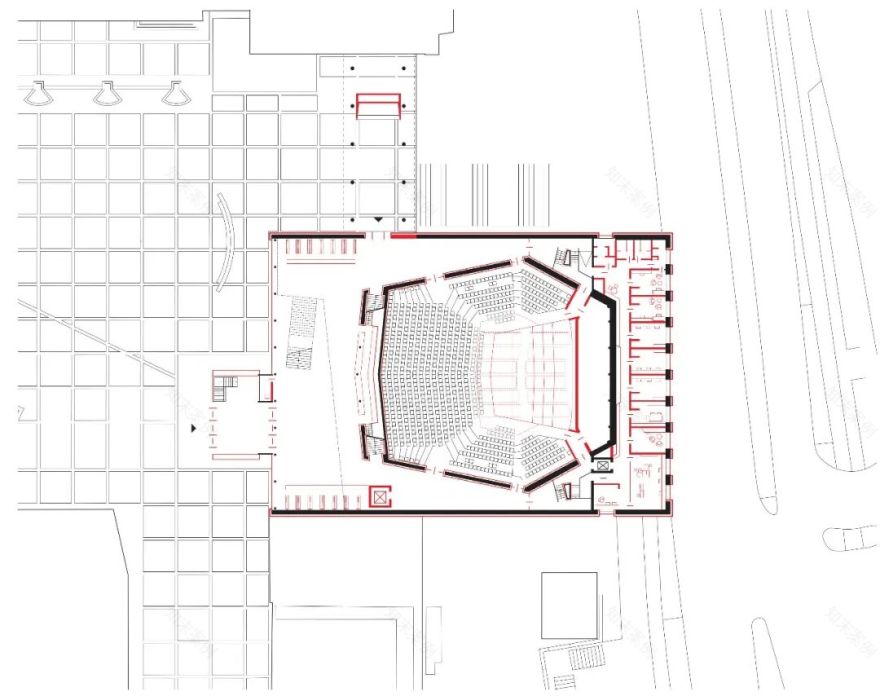
首层平面图 © gmp Architekten

二层平面图 © gmp Architekten
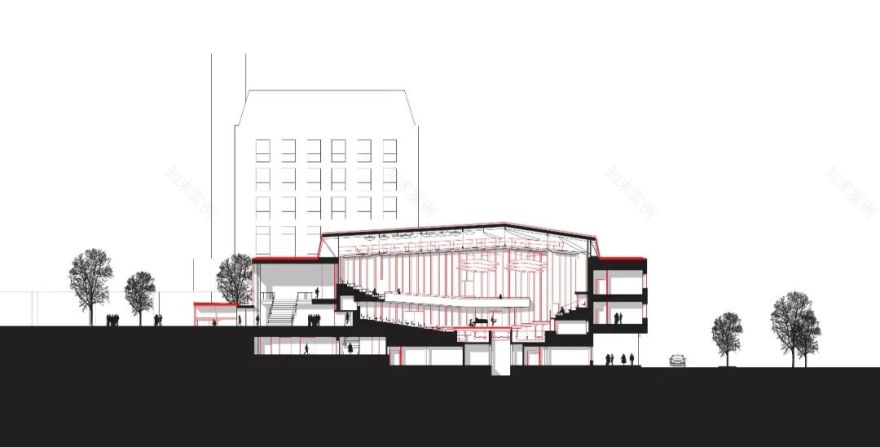
剖面图 © gmp Architekten

剖透图 © gmp Architekten
南京喵熊网络科技有限公司 苏ICP备18050492号-4知末 © 2018—2020 . All photos and trademark graphics are copyrighted by their owners.增值电信业务经营许可证(ICP)苏B2-20201444 苏公网安备 32011302321234号
苏公网安备 32011302321234号客服
消息
收藏
下载
最近