

创作上传
VIP
收藏下载
登录 | 注册有礼
查看完整案例

收藏

下载

分享
背景
Background
午倦宫位于中国南方城市惠州的一处乡村河畔,是环南昆山与罗浮山旅游风景道上的一处驿站。惠州曾是北宋文学家苏轼的流放之地。在流放期间,他并未将生活视为被剥夺的状态,而是在日常的细碎经验中持续书写生活的可能性。他在诗文中总结“人生十六乐事”,其中一句便是“午倦一方藤枕”。
The Noon ReposePavilion is located on the bank of a rural river in Huizhou, a city in southern China, along the scenic route encircling Nankun Mountain and Luofu Mountain. Huizhou was once a place of exile for the Northern Song scholar Su Shi. During his years there, exile did not result in withdrawal from life, but rather intensified his attention to its everyday rhythms. In his writings, he identified what he called the “sixteen pleasures of life,” one of which he described as “resting at noon on a simple rattan pillow.”
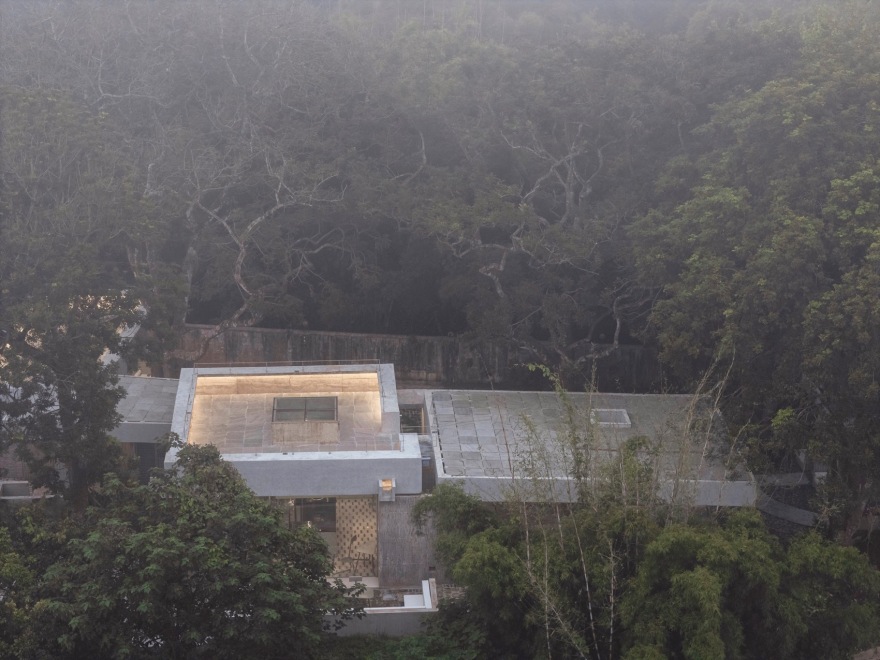
▼项目鸟瞰,aerial view of the project©存在建筑摄影

午倦宫由此得名。这个名称并非复古的修辞,而是一种回溯——将当下的生活经验,重新锚定在一种允许停顿、允许松弛的时间感之中。它指向的并不是具体的历史人物,而是一种仍然可能发生在当下的生活状态。
The pavilion takes its name from this phrase. It is not intended as a nostalgic reference, but as a way of anchoring contemporary experience to a different understanding of time—one that allows for pause, slackening, and repose. What is recalled here is not a historical figure, but a mode of living that remains possible in the present.
▼建筑鸟瞰,aerial view of the building©存在建筑摄影

▼建筑鸟瞰,aerial view of the building©存在建筑摄影

场所:飞地与午倦
Site: An Enclave and the State of Noon
午倦宫的场地,是一处被遗弃的地方。十年前,这里曾是邻近地产项目的临时工棚所在地,工棚拆除之后,场地被长期搁置。人工建造留下的痕迹逐渐被南方湿热环境中迅速生长的荆棘与植物所覆盖,新的秩序在废弃之上自然生成。
The site of the Noon ReposePavilion is, in a literal sense, a place that had been abandoned. A decade earlier, it had served as a temporary construction camp for a nearby real estate development. After the structures were dismantled, the land was left unused. Traces of human intervention remained, but were gradually overtaken by the rapid growth of shrubs, vines, and spontaneous vegetation typical of the humid southern climate. A new order emerged atop the remnants of the old.
▼建筑与环境鸟瞰,aerial view of the site and the project©存在建筑摄影

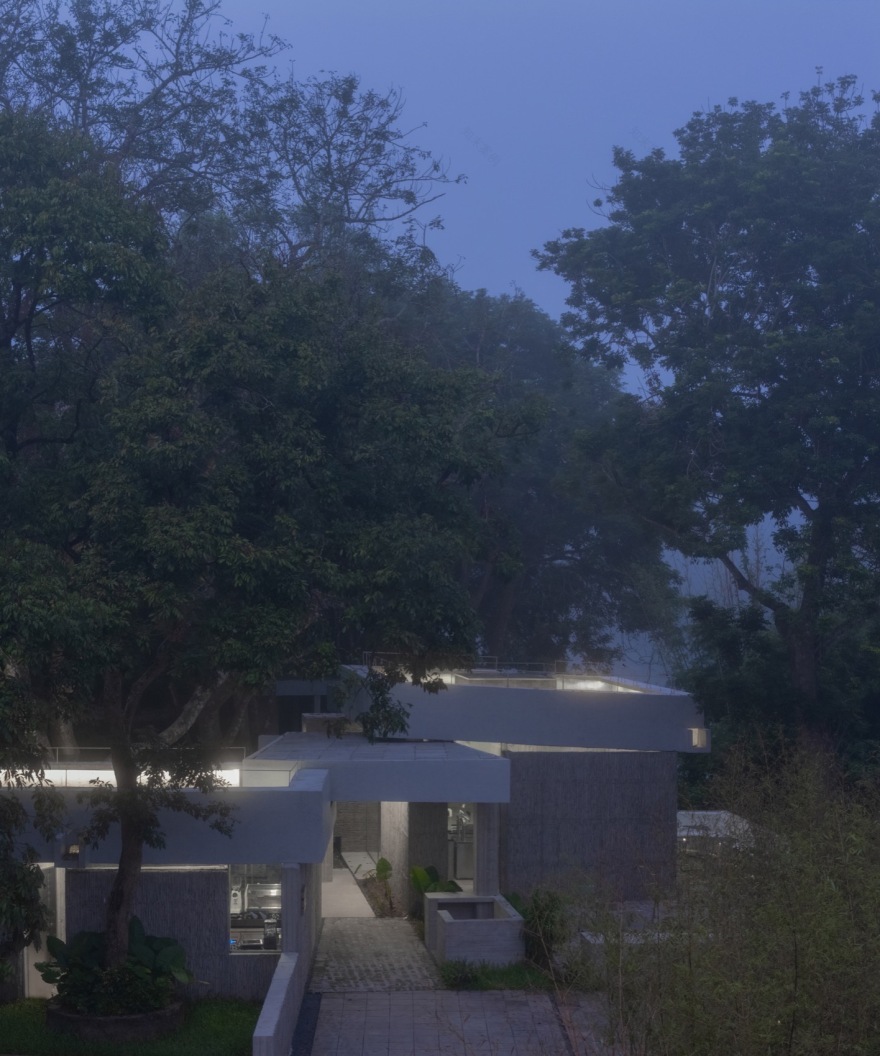
▼林中的建筑,architectural structure in the woods©存在建筑摄影

也正因为这种被遗弃的状态,场地呈现出一种不同于日常空间的氛围。它并非被规划的自然,也并非被持续使用的人工环境,而是一种介于两者之间的混合体。进入场地的入口来自国道旁一个并不起眼的开口,与国道两侧连续而同质的底商建筑形成强烈反差。这里混杂着荒野植物与人工遗留的线索,显得生疏而充满生命力。
It is precisely this condition of abandonment that gives the site its distinct atmosphere. Neither cultivated nature nor continuously maintained urban ground, it exists in an ambiguous state between the two. Accessed through a modest opening along a national highway, the site contrasts sharply with the uniform commercial buildings that line the road. Here, wild vegetation intertwines with residual artificial traces, producing a space that feels unfamiliar yet alive.
▼鸟瞰,aerial view©存在建筑摄影

▼公共卫生间鸟瞰,aerial view of the public toilets©存在建筑摄影

这种空间状态恰好对应了“午倦”这一时间经验。午后的倦意,并不是疲惫的反面,而是现代生活中一段被忽略的时间——它既不服务于效率,也不指向结果,却真实地存在于日常节奏之中。午倦宫所回应的,正是这种被遗忘的时间状态。
This spatial condition resonates with the temporal state suggested by “noon Repose.” The fatigue of midday is not the opposite of productivity, but a suspended moment within the modern rhythm of efficiency—a time that does not serve an outcome, yet persists within everyday life. The pavilion responds to this overlooked interval.
▼夜景鸟瞰,aerial view at night©存在建筑摄影

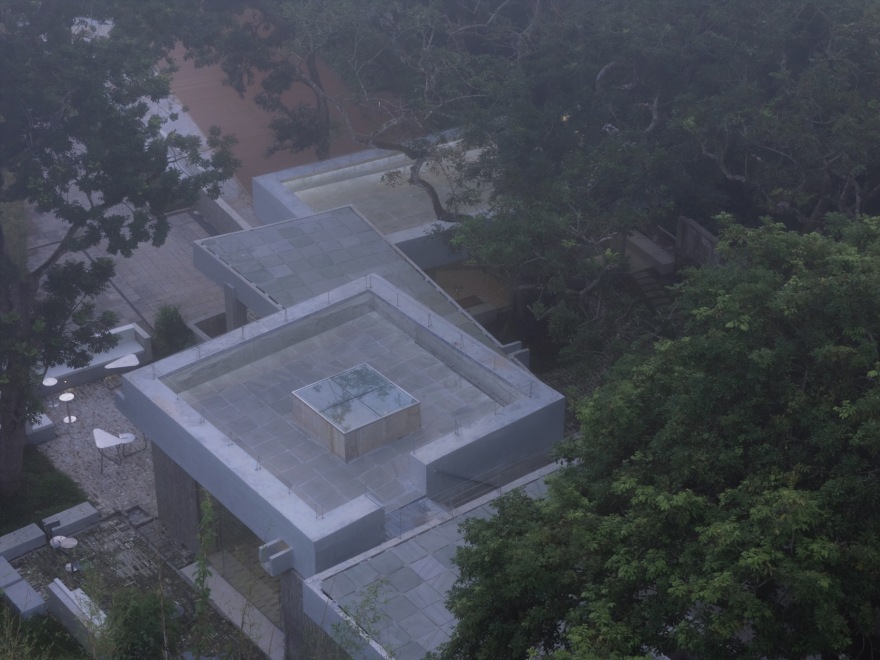
▼隐藏光源,hidden lighting design©存在建筑摄影


功能与形态
Program and Form
在功能意义上,午倦宫并不是一个以明确功能为主导的建筑。它首先是一处地景性的场所,通过游线的展开与空间的围合,形成局部而可停留的气候边界。在这些边界之内,嵌入了一处咖啡店与一处下午茶甜品站。这些功能并不试图制造新的消费场景,而更像是对午后时间的一种温和回应。
▼分析图,analysis diagram©合造社建筑设计事务所
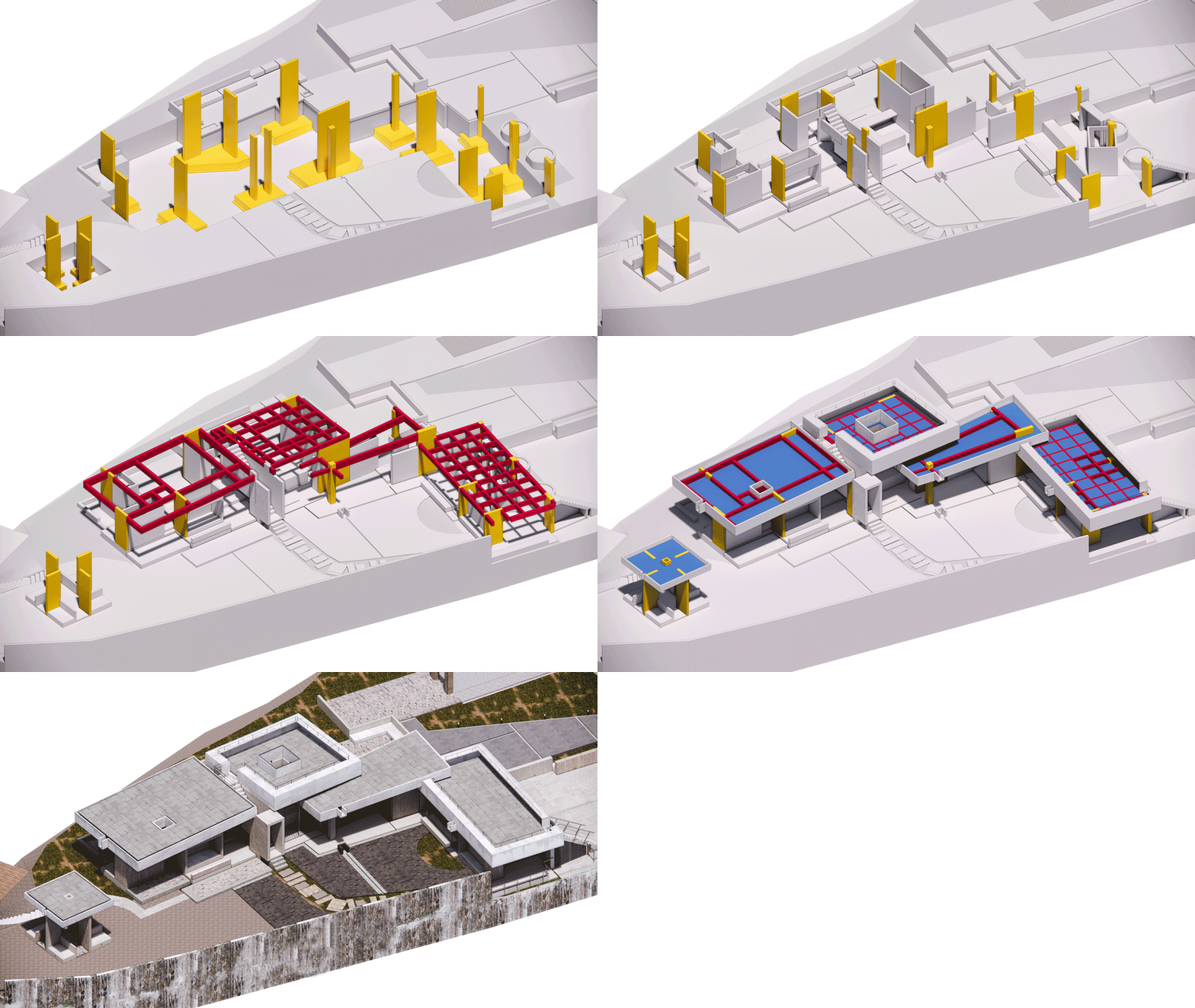
Programmatically, the Noon Repose Pavilion is not a building defined by strong functional imperatives. It operates first as a landscape condition, where a narrative path unfolds and partial climatic boundaries are established for occupation. Within these boundaries are a small café and a dessert station for afternoon tea. These functions do not seek to generate novelty, but gently align themselves with the slow tempo of the afternoon.
▼通往屋顶天台的楼梯,stairs leading to the rooftop terrace©存在建筑摄影


▼游线的展开与空间的围合,unfolding of the route and the enclosure of space©存在建筑摄影

▼连续且相互搭接的“石阵”,continuous, interlocking stone-like volumes©存在建筑摄影

在形态上,场地中的十二棵大树——其中一棵已有百年树龄——成为塑造空间的首要因素。树干在场地中如同柱子般确立垂直秩序,而树冠几乎完全覆盖整个场地,形成一个原始而具有包被感的空间。建筑并未试图削弱这种自然力量,而是顺应其存在展开。
Formally, the site is shaped foremost by twelve mature trees, one of which is over a century old. Their trunks establish a vertical order within the site, while their canopies almost entirely cover it, producing an enclosed space with a primordial sense of shelter. Rather than resisting this natural dominance, the architecture develops in response to it.
▼大树成为塑造空间的首要因素,the site is shaped foremost by twelve mature trees ©存在建筑摄影

▼树冠几乎完全覆盖整个场地,the tree canopy almost completely covers the entire area©存在建筑摄影

▼咖啡厅外摆区,terrace of the cafe©存在建筑摄影

▼由外摆区看树木,viewing the trees from the terrace area©存在建筑摄影
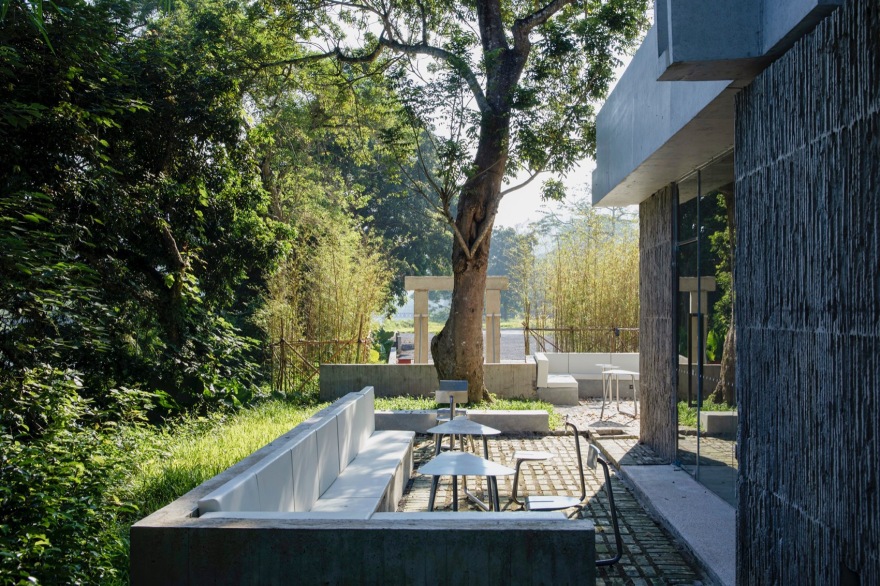
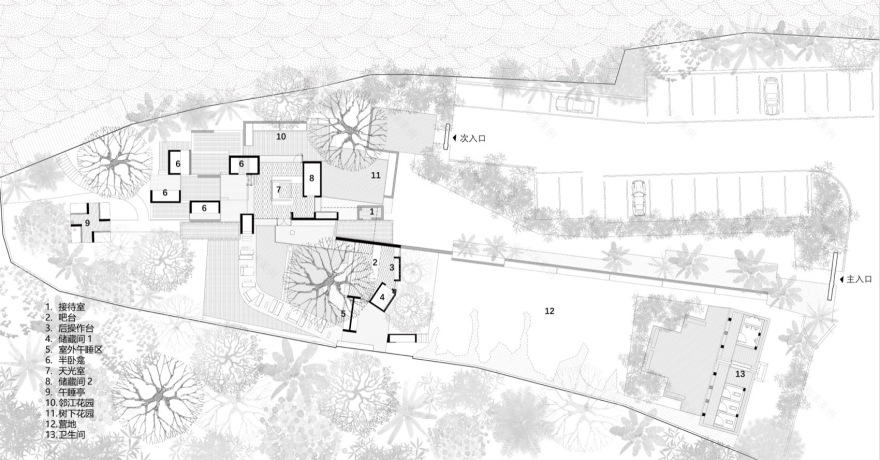
午倦宫由一组连续且相互搭接的“石阵”构成。这些体量与树干共同形成一种穿梭式的空间叙事。入口由一组石门清晰界定内外,进入之后,路径被竹阵与矮墙收紧,视线被限制在前方。随着行进,树木与石阵逐渐压近,在路径尽端,一片被石板覆盖的半包围空间如同洞穴般展开,形成午倦宫的核心场域。粗大的树干与具有体量感的石墩共同构成半户外的停留空间,石墩同时也是可以半躺的睡龛。玻璃在不同石墩之间形成局部的气候界面,其通透与反射在不同角度下交替出现,使实体之外又叠加出一层虚像的空间。
The pavilion is composed of a series of continuous, interlocking stone-like volumes. Together with the tree trunks, they create a spatial sequence that invites movement and pause. The entrance is marked by a stone gate that clearly separates inside from outside. Beyond it, a narrow passage defined by bamboo and low walls constrains the field of vision, compressing the spatial experience. At the end of the path, a partially enclosed, cave-like space formed by stone slabs opens up as the core of the pavilion. Massive tree trunks and concrete blocks define a semi-outdoor resting area; the blocks also function as wide sleeping alcoves. Glass enclosures inserted between certain volumes establish controlled climatic zones, their transparency and reflection alternating with movement, producing a secondary, immaterial layer of space among trees and stones.
▼粗大的树干与具有体量感的石墩共同构成半户外的停留空间,massive tree trunks and concrete blocks define a semi-outdoor resting area©存在建筑摄影

▼建筑近景,closer view of the building©存在建筑摄影


搭接的石阵
Assembled Stones
午倦宫的石阵由混凝土建造,但在建造意义上,更接近于“搭建”而非“浇筑”。尽管混凝土在技术层面必须通过浇筑完成,但“浇筑”往往意味着形态与意义在一次性完成中被固化;而“搭建”则承认物自身具有先于形式的秩序,建造的任务是让这种秩序得以显现。
The stone assemblages of the Noon ReposePavilion are constructed in concrete, yet they are conceived as being assembled rather than cast. Although concrete must, in technical terms, be poured, casting tends to collapse form and meaning into a single, irreversible gesture. Assembly, by contrast, acknowledges that materials possess their own latent order, and that construction is a process of allowing this order to appear.
▼午倦宫的石阵由混凝土建造,the stone assemblages of the Noon ReposePavilion are constructed in concrete©存在建筑摄影


▼混凝土柱廊,concrete colonnade©存在建筑摄影

屋顶由四片独立的矩形混凝土板组成。它们并非水平地置于墙体之上,而是分别以约5%的坡度朝不同方向倾斜。这一微小的倾斜在墙体与屋顶之间形成高度差,使墙柱与屋顶板仅在一个角点发生接触,另一个角点自然分离,在两者之间留下一道楔形缝隙。这道缝隙强化了墙柱与屋顶板作为不同“物”的独立性,也使石阵更接近于由若干石块相互搭接而成的状态,而非被整体浇筑的实体。
The roof consists of four independent rectangular concrete slabs. Rather than resting horizontally atop the walls, each slab is inclined by approximately five percent in a different direction. This subtle adjustment produces varying heights at the junctions between walls and roof, so that each vertical element touches the slab at only one corner, while the opposite corner separates naturally. The resulting wedge-shaped gaps emphasize the independence of wall and roof as distinct entities, reinforcing the image of stones placed in relation to one another, rather than fused into a single mass.
▼屋顶由四片独立的矩形混凝土板组成,the roof consists of four independent rectangular concrete slabs©存在建筑摄影


建造:手工
Construction: Handcraft
午倦宫的清水混凝土墙体,并非通过标准化模板获得其表面,而是在建造过程中逐步生成。建造时,工人使用北方乡村在玉米收割后所遗留的秸秆,将其固定在木模板之上进行浇筑。当混凝土初凝、模板拆除,秸秆的纤维、节理与生长方向被完整地保留在墙体之中,成为一种不可逆的痕迹。这些痕迹并非被预先设计,而是建造行为本身留下的结果。
▼工人将玉米收割后所遗留的秸秆固定在木模板之上,the workers fixed the leftover straw from the corn harvest onto the wooden templates©合造社建筑设计事务所

The exposed concrete walls of the pavilion do not derive their surface from standardized formwork, but from a process that unfolds during construction itself. Corn stalks left over after the annual harvest in northern China were fixed onto wooden panels and used as formwork. When the concrete reached its initial set and the panels were removed, the fibers, joints, and growth patterns of the stalks remained embedded in the surface as permanent traces. These marks were not designed in advance; they are the direct residue of construction.
▼灰空间,grey space©存在建筑摄影

▼由室内看庭院,viewing the courtyard from interior©存在建筑摄影

▼由咖啡吧台看庭院,viewing the courtyard from the bar counter©存在建筑摄影

▼吧台,the bar counter©存在建筑摄影

在这一过程中,建造不再是对既定形态的执行。秸秆无法服从几何秩序,它的弯曲、断裂与不均质迫使建造者放慢节奏,不断调整动作。手工在此并非效率的对立面,而是使建造得以发生的前提。通过身体的介入,材料自身的秩序被允许显现,而非被覆盖。▼建造过程,construction process©合造社建筑设计事务所

In this process, building ceases to be the execution of a predetermined form. Corn stalks resist geometric discipline: they bend, fracture, and vary in thickness, compelling the builder to slow down and continually adjust. Handcraft here is not opposed to efficiency; it is the condition that allows construction to take place at all. Through bodily engagement, the material’s own order is permitted to emerge rather than being suppressed.
▼吧台上方天井,patio above the counter©存在建筑摄影

▼细部,details©存在建筑摄影 /合造社

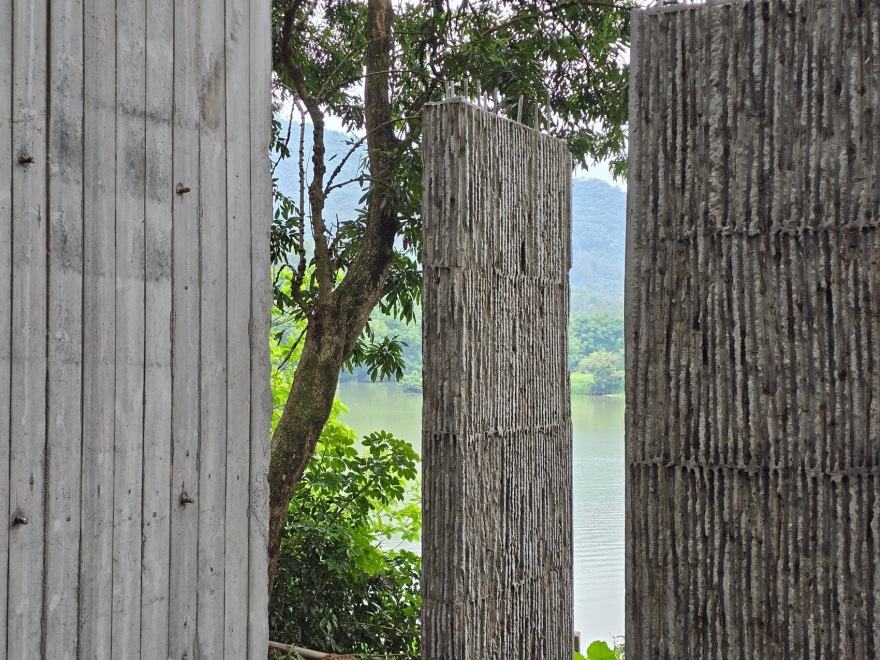
这种建造方式与场地中植物的在场形成了内在的一致性。午倦宫的场所并非被清理后的空地,而是由大树、荆棘与野生植被持续塑造的环境。秸秆作为植物生命周期中被遗弃的部分,被转化为混凝土生成的媒介,使植物以一种负形的方式进入墙体。混凝土因此不再只是指向恒久的无机材料,而成为一种承载时间差异的物质——生命的短暂性以痕迹的形式被保留下来。
▼施工过程,construction process©合造社建筑设计事务所
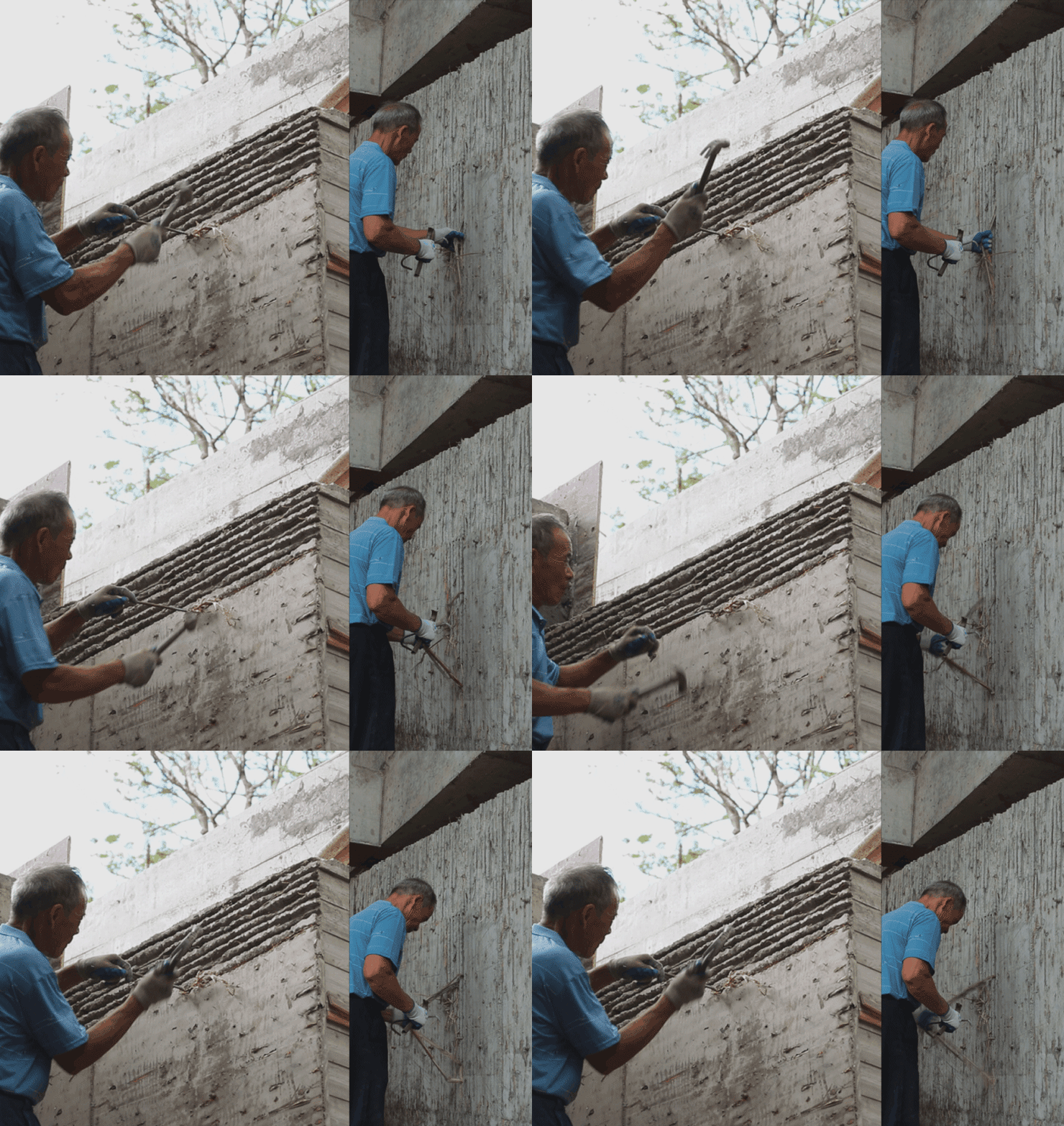
This mode of construction resonates with the presence of vegetation on the site. The pavilion does not stand on cleared ground, but within an environment continuously shaped by trees, shrubs, and spontaneous growth. The corn stalks—discarded remnants of a plant’s life cycle—become mediators in the making of concrete, allowing vegetal form to enter the wall as a negative imprint. Concrete thus ceases to be merely an inert material oriented toward permanence; it becomes a carrier of temporal difference, preserving traces of life that was once present.
▼室内概览,overall of interior©存在建筑摄影

▼壁龛式的座位区,niche-style seating area©存在建筑摄影


▼结构与光影,structure and light©存在建筑摄影


秸秆模板无法被精确复制,也无法被完全预判,其施工过程要求耐心、重复与协作。建造因此成为一种被经历过的时间,而不仅是完成后的结果。正是这些被如实保留下来的建造痕迹,使建筑不再只是完成后的对象,而成为一种持续指向建造本身的存在——它记录了人如何在一个具体的地方,通过缓慢、有限且不可替代的行动,与世界建立关系。
Corn-stalk formwork cannot be precisely replicated or fully predicted. Its use demands patience, repetition, and coordination. Construction becomes a duration that is lived through, rather than a result to be delivered. It is through these faithfully retained traces of making that the building exceeds its status as a finished object, becoming instead a persistent reference to construction itself—a record of how, in a specific place, human beings entered into a relationship with the world through slow, finite, and irreducible acts.
▼夜景,night views©存在建筑摄影


▼入口夜景,night view of the entrance©存在建筑摄影

▼公共卫生间夜景,night view of the public toilets©存在建筑摄影

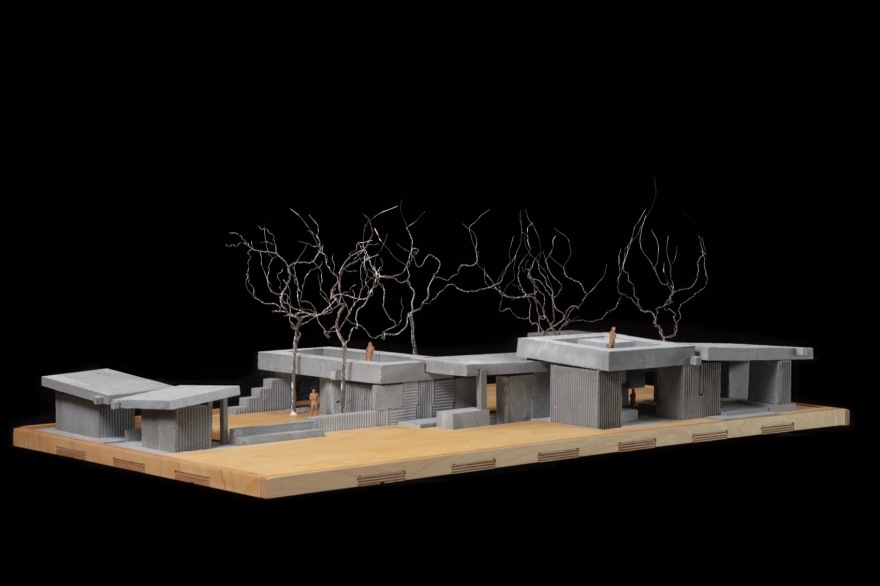
▼模型,model©合造社建筑设计事务所


▼总平面图,master plan©合造社建筑设计事务所

▼平面图,plan©合造社建筑设计事务所
▼立面图,elevations©合造社建筑设计事务所


项目名称:午倦宫
项目类型:文化建筑,商业建筑
设计方:合造社建筑设计事务所
项目设计:2025年1月(设计)
完成年份:2025年8月(建成)
设计团队:徐浪、乔侨、李健、石佳馥伊、谭宏宇(实习)、丁博潮(实习)、梁凯轶(实习)
项目地址:广东省惠州市龙门县麻榨镇,中国
建筑面积:350㎡
摄影版权:存在建筑摄影
合作方:重庆寅创施工
客户:上海风语筑文化科技股份有限公司
南京喵熊网络科技有限公司 苏ICP备18050492号-4知末 © 2018—2020 . All photos and trademark graphics are copyrighted by their owners.增值电信业务经营许可证(ICP)苏B2-20201444 苏公网安备 32011302321234号
苏公网安备 32011302321234号客服
消息
收藏
下载
最近