

创作上传
VIP
收藏下载
登录 | 注册有礼
查看完整案例

收藏

下载

分享
Boso别墅是一座私人住宅,位于日本房总半岛的山脊上,俯瞰太平洋。该项目被构思为一次对零混凝土建筑的探索,质疑当代建筑是否必须依赖钢筋混凝土这一假设。
Villa Boso is a private residence located on a mountain ridge overlooking the Pacific Ocean on Japan’s Boso Peninsula. The project is conceived as an exploration of Zero-Concrete Architecture, questioning the assumption that contemporary construction must rely on reinforced concrete.
▼项目概览,overall of the project© Masao Nishikawa


传统的地方性建筑历史上并未依赖混凝土,而是由本地材料、重力、气候和工艺塑造而成。这个项目在当代背景下重新审视这一传统,通过直接与土地的地质条件互动来实现。地质勘测显示,在经过人工改造的地表下,隐藏着一层非常稳定的更新世泥岩层——这是一块超过两百万年历史的古老山脉表面,现在已深埋地下。
Vernacular architecture historically developed without concrete, shaped instead by local materials, gravity, climate, and craft. This project revisits that lineage in a contemporary context by engaging directly with the land’s geological condition. Geological surveys revealed that beneath the artificially modified surface lies an exceptionally stable Pleistocene mudstone layer—an ancient mountain surface formed more than two million years ago, now buried deep underground.
▼鸟瞰,aerial view© Masao Nishikawa
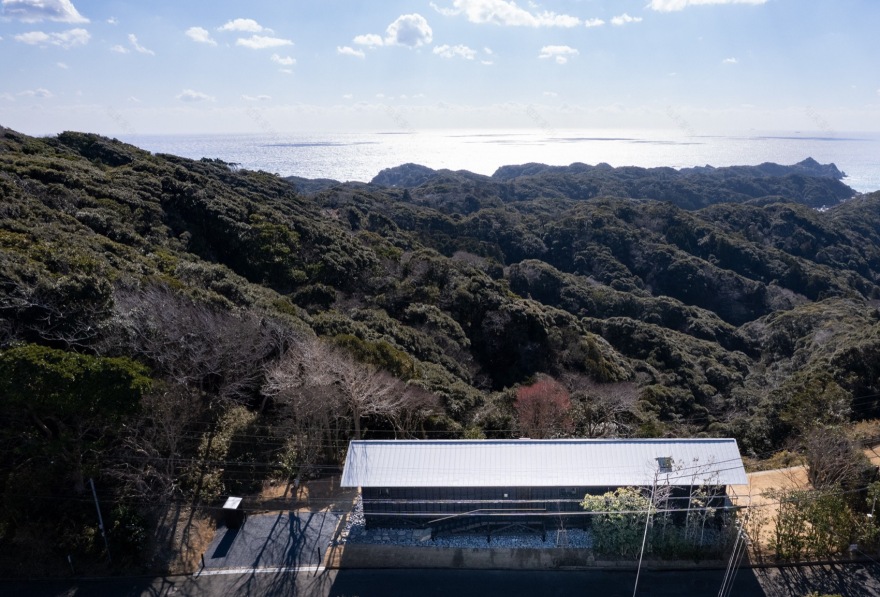
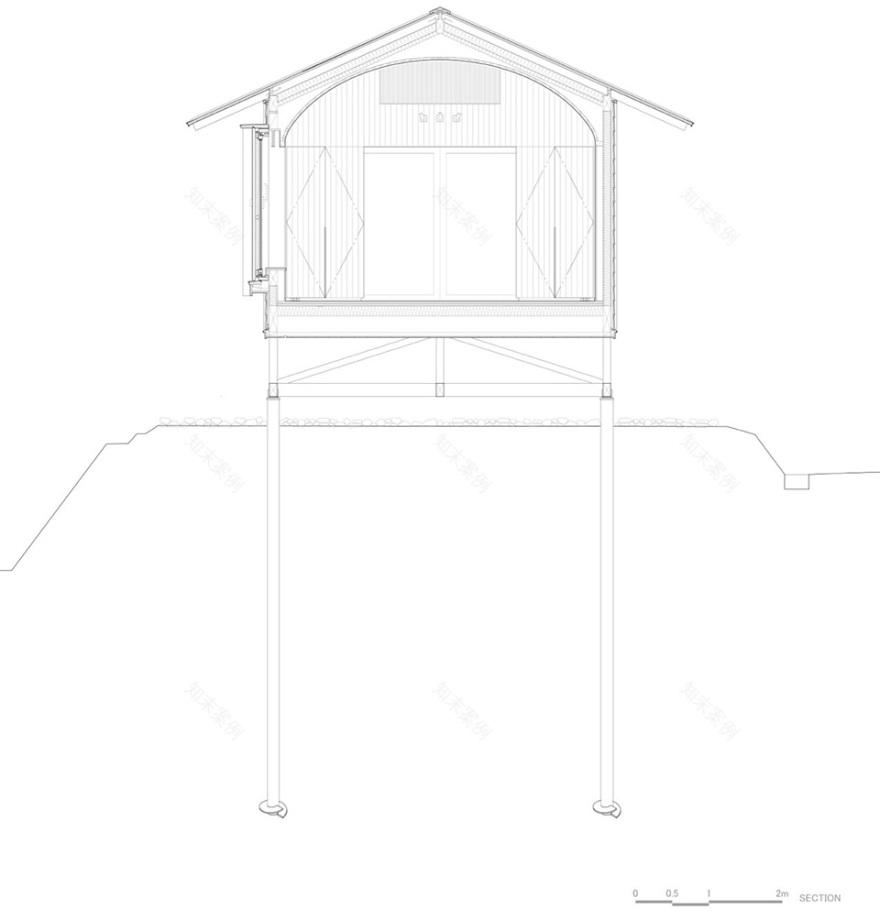
与几十年前建造的混凝土挡土墙不同,建筑的基础直接延伸至这层地质层。小直径钢管桩被旋转压入约七米深的更新世泥岩中,使结构得以稳固支撑——可以说,建筑真正地立足于这块两百万年前的地质表面。这个过程不需要挖掘和混凝土,从而实现了最小化且可逆的干预。
Rather than relying on existing concrete retaining walls constructed decades earlier, the building’s foundation reaches directly to this geological layer. Small-diameter steel pipe piles are rotary-pressed approximately seven meters down into the Pleistocene mudstone, allowing the structure to stand—quite literally—on a two-million-year-old geological surface. This process requires no excavation and no concrete, resulting in a minimal and reversible intervention.
▼外观,exterior view© Masao Nishikawa


▼别墅立面,facade of the villa© Masao Nishikawa


▼外观近景,closer view of the exterior© Masao Nishikawa

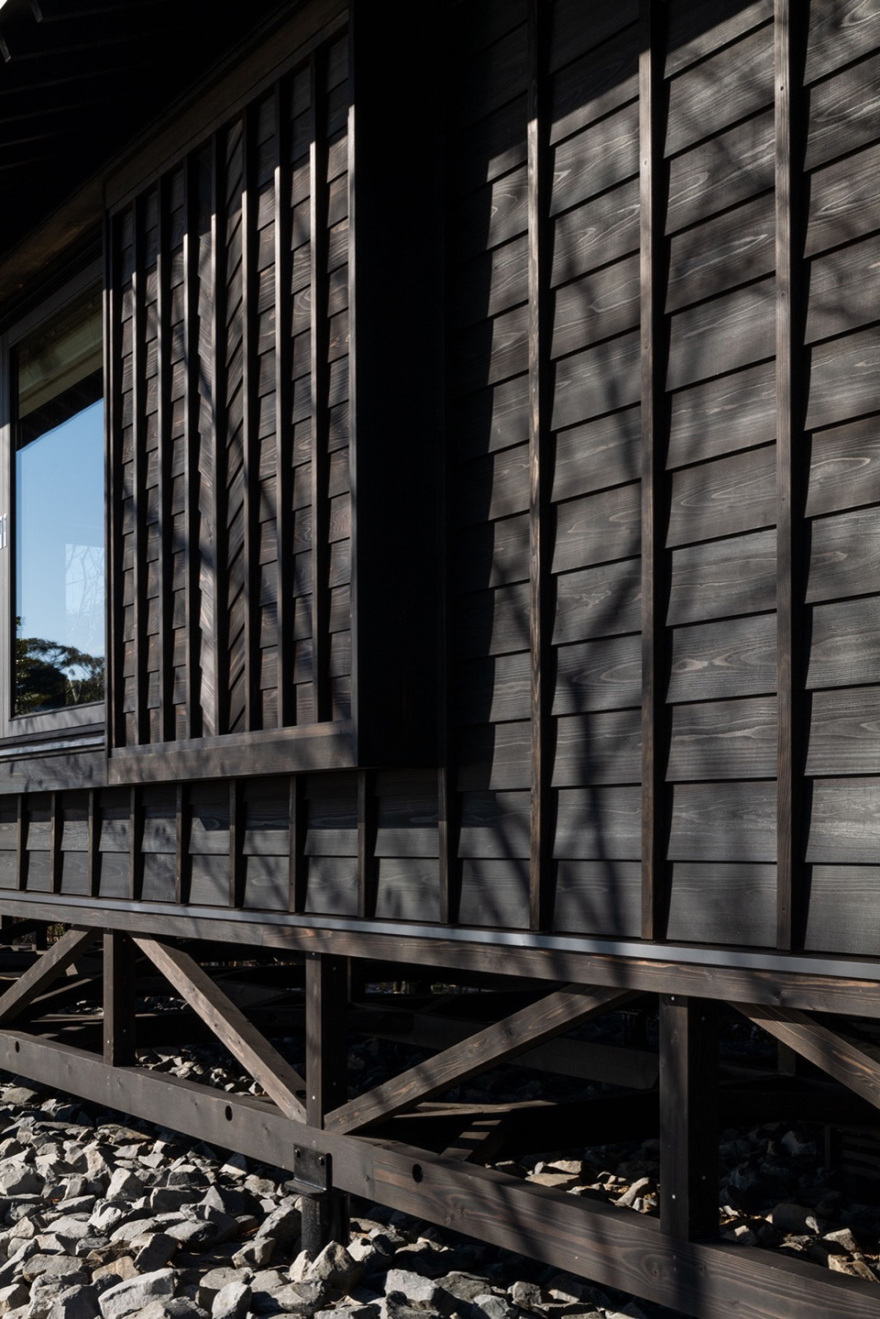
一个现代木结构建立在暴露的钢桩头上,形成类似于吊脚楼的结构,轻盈地悬浮在地面之上。这种做法重新诠释了传统的日本建筑,在传统中,木质建筑往往被温柔地安放在石质基础上。整个项目中,主要结构仅使用了可回收的钢材和木材。
A contemporary timber structure rests on exposed steel pile heads, forming a stilt-like system that lightly hovers above the terrain. This approach reinterprets traditional Japanese construction, where wooden buildings were placed gently on stone foundations. Throughout the project, only recyclable steel and wood are used for the primary structure.
▼山墙立面,facade of the gable© Masao Nishikawa


▼外观近景,closer exterior view© Masao Nishikawa


▼立面,facade© Masao Nishikawa

▼外观细部,detail of the exterior© Masao Nishikawa
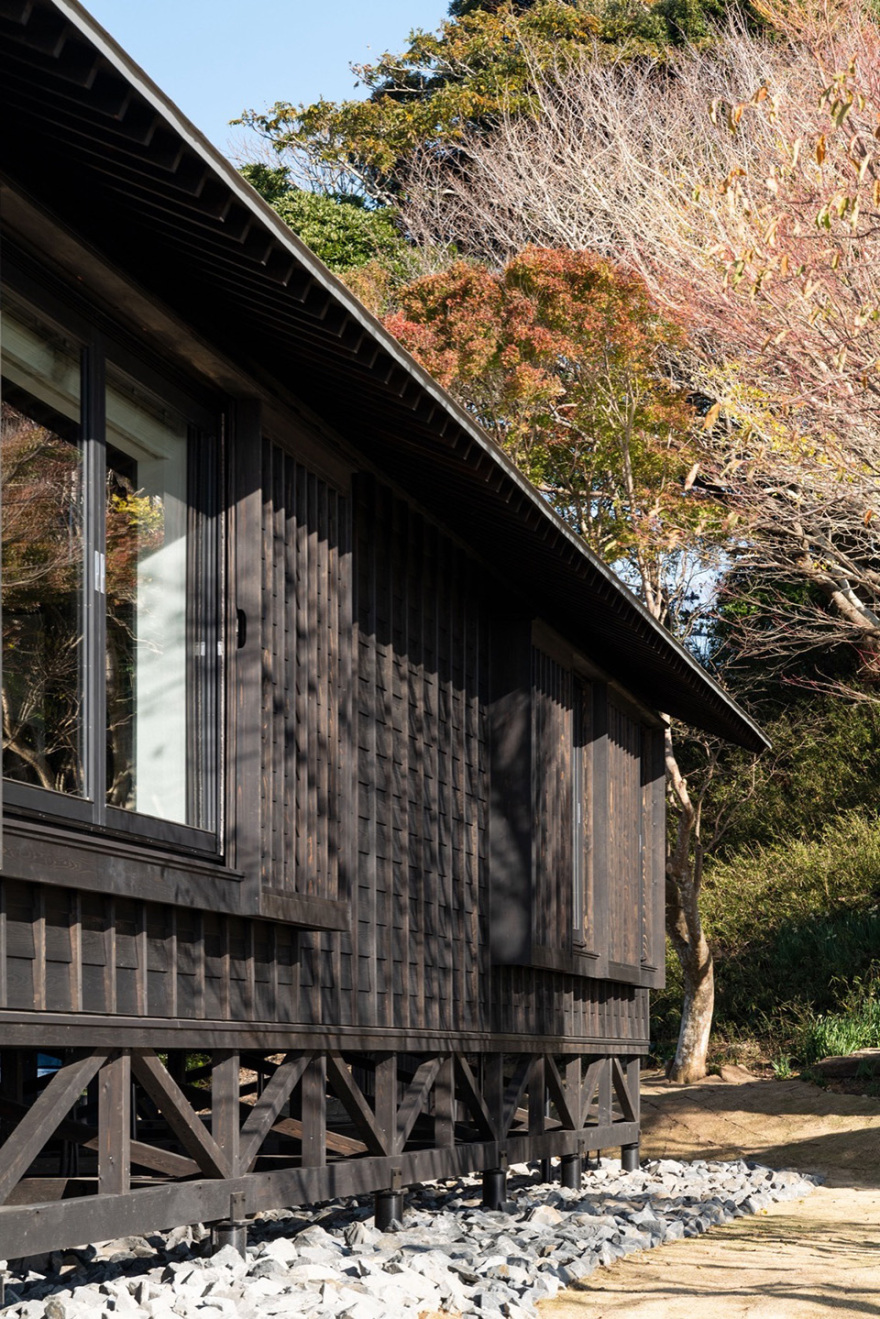
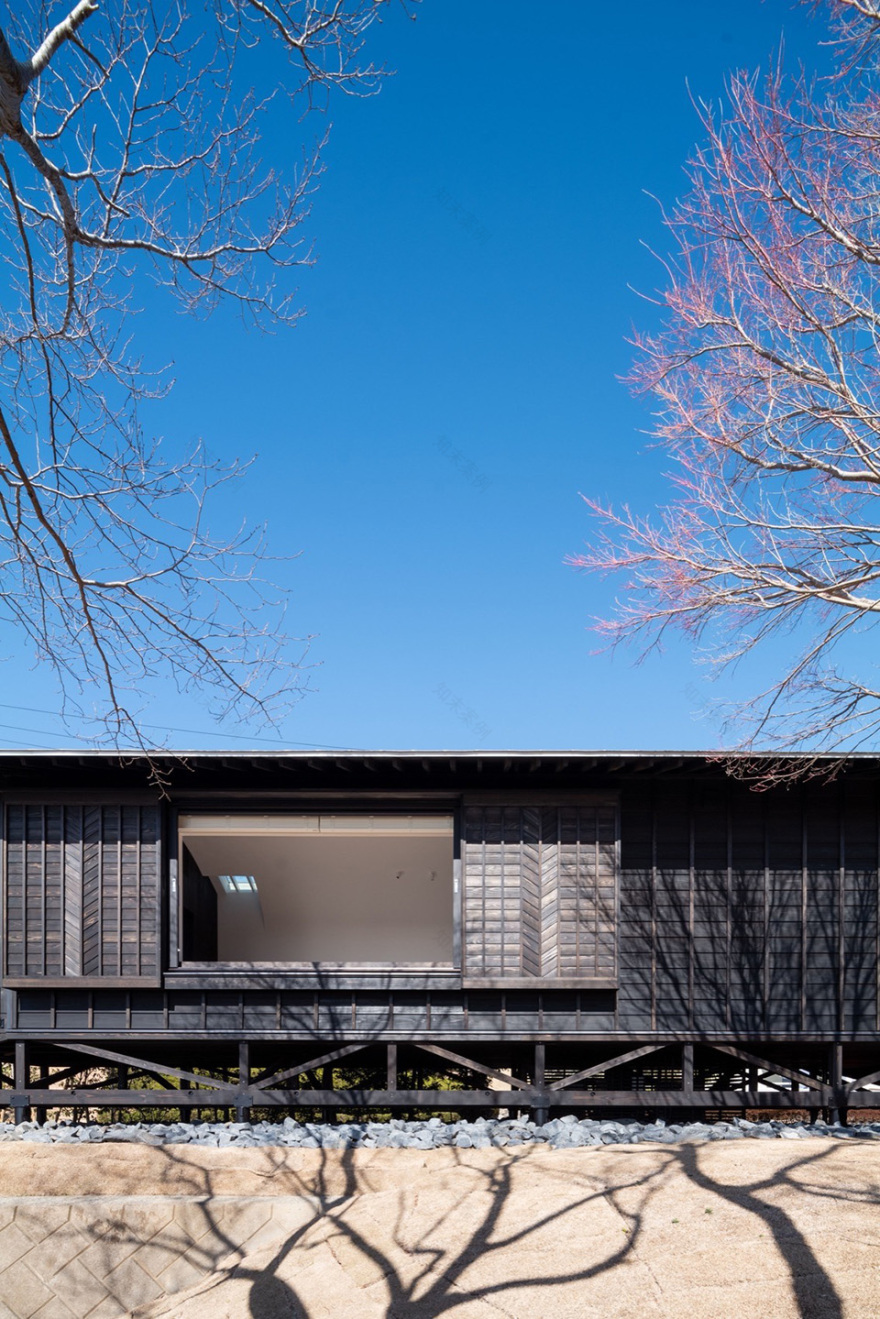

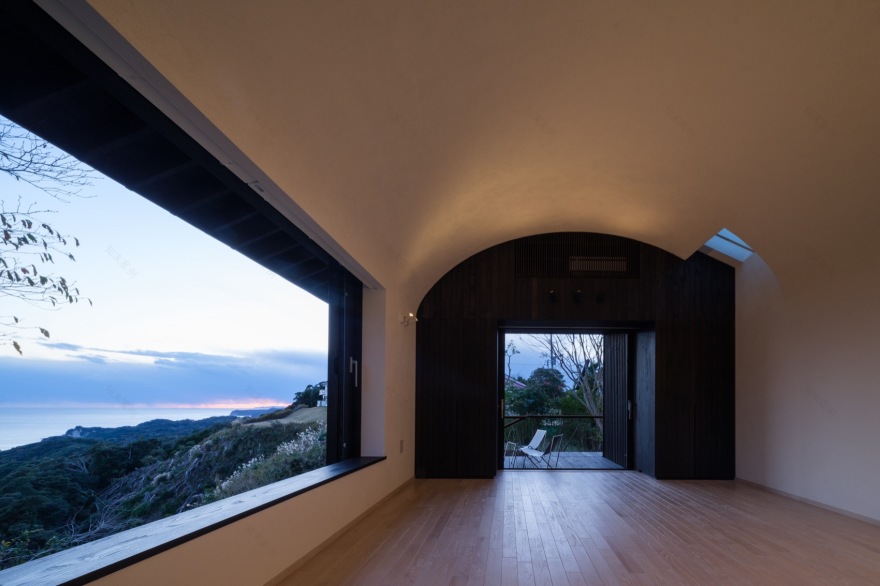
抬高的地板提高了远景的视野、隐私性和自然通风,同时也保护建筑免受该地区湿气的侵袭。简单的山墙屋顶将室内空间封闭,室内由一个圆形曲线天花板定义。白色硅砂的表面处理扩散日光,使光线的微妙变化动态地影响空间,同时保持周围景观的视觉主导地位。
The elevated floor enhances long-distance views, privacy, and natural ventilation while protecting the building from the region’s humidity. A simple gabled roof encloses an interior defined by a cycloid-curved ceiling. White silica sand finishes diffuse daylight, allowing subtle shifts in light to animate the space while keeping the surrounding landscape visually dominant.
▼室内概览,overall of interior© Masao Nishikawa
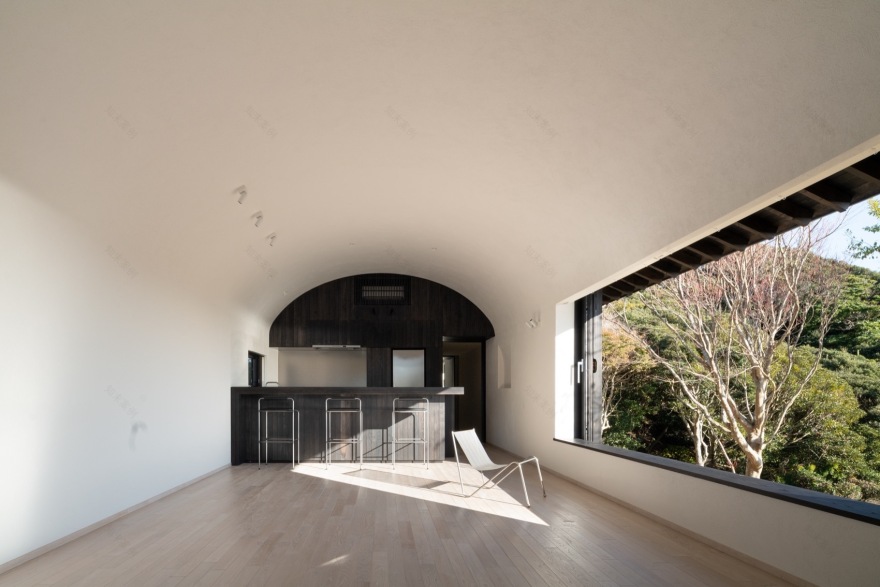

▼大面积的窗口引入绝佳景观视野,the large windows introduce an excellent view of the surrounding scenery© Masao Nishikawa

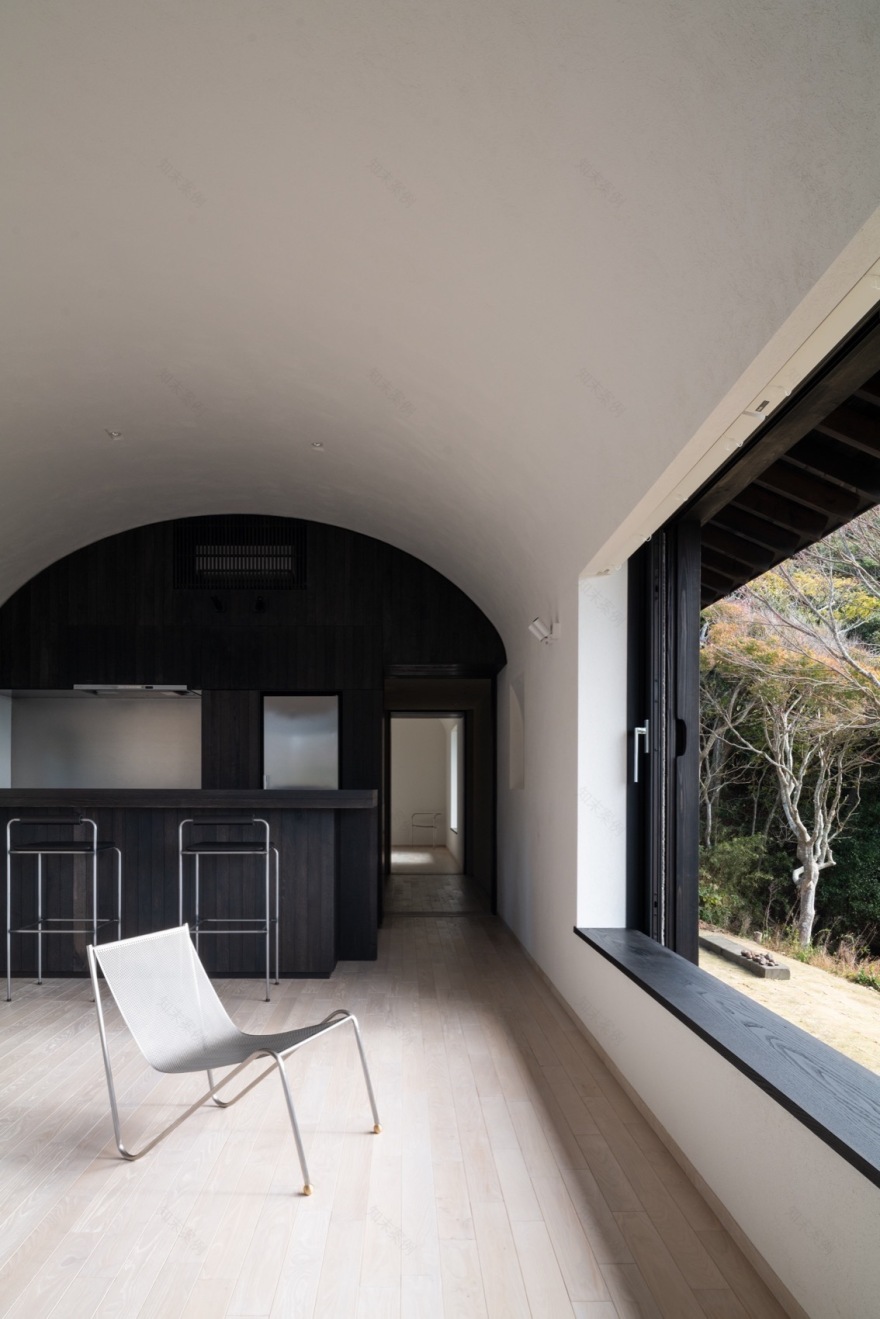

▼圆形曲线天花,circular curve ceiling © Masao Nishikawa

▼由室内看露台,viewing the terrace from interior© Masao Nishikawa

▼由露台看室内,viewing the interior from the terrace© Masao Nishikawa

▼露台,terrace© Masao Nishikawa

入口大厅采用传统的日本土墙,墙面使用当地土壤与麻纤维混合制成,手工刮擦呈现出粗糙的触感表面。在浴室中,使用了来自日本北部的十和田石;湿润时其表面呈深蓝色,静静地通过日常使用记录水、光和时间。
The entrance hall is finished with traditional Japanese earthen walls made from local soil mixed with hemp fiber, hand-scratched to reveal a rough, tactile surface. In the bathroom, Towada stone sourced from northern Japan is used; its surface turns a deep blue when wet, quietly registering water, light, and time through daily use.
▼入口大厅采用传统的日本土墙,the entrance hall is finished with traditional Japanese earthen walls© Masao Nishikawa


▼圆形天窗,the round skylight© Masao Nishikawa


▼窗口,window© Masao Nishikawa


▼圆形曲线天花,circular curve ceiling © Masao Nishikawa

▼浴室,bathroom© Masao Nishikawa

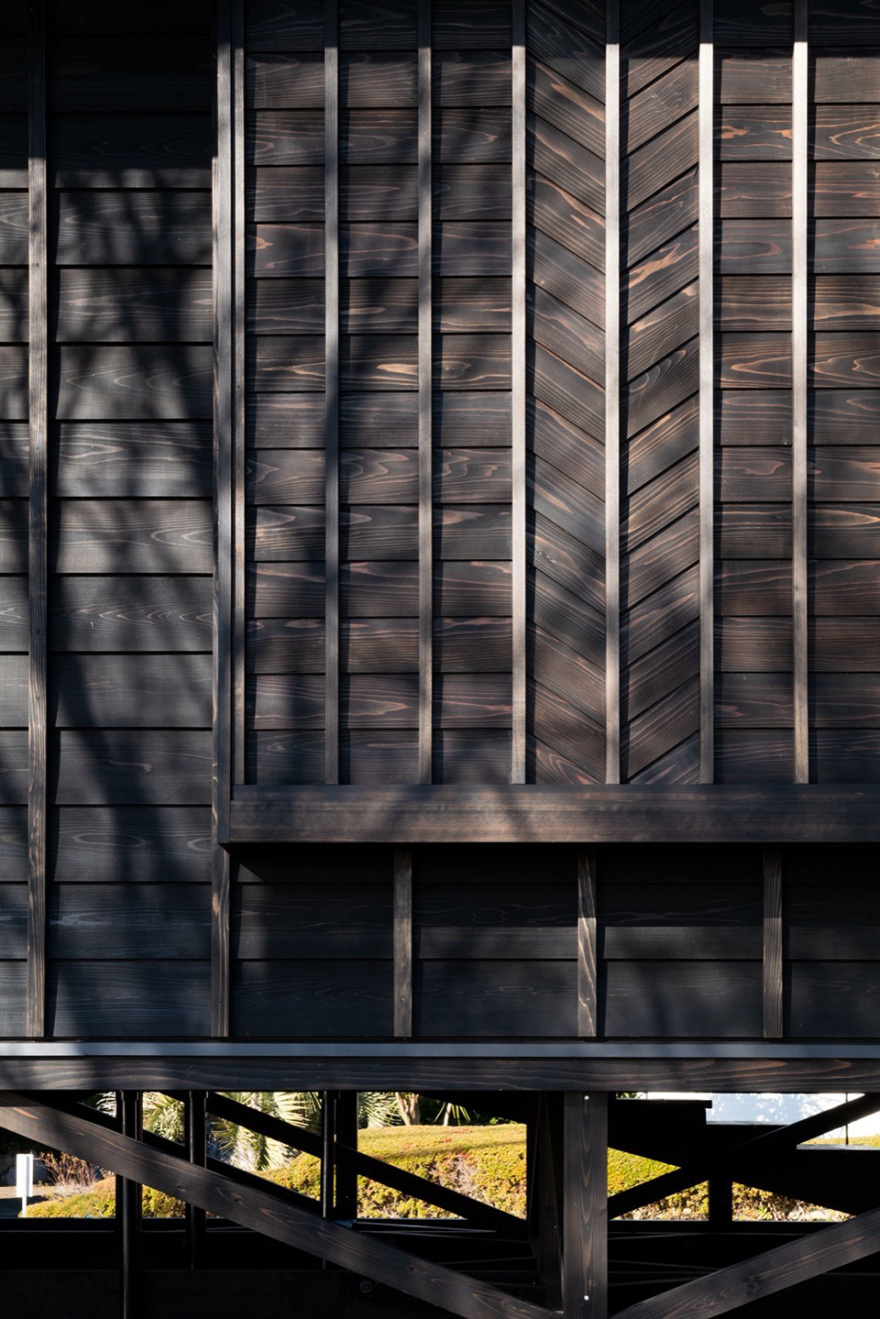
材料的选择优先考虑当地和可再生资源。用铁染剂处理的栗木工艺增强了木材对湿气和虫害的抵抗力,而地板则采用天然油饰的日本栗木。墙面采用硅藻土、柿子单宁和蛋壳,保温材料由回收木纤维制成。外部使用了传统的杉木板条和当地木匠制作的木质风暴百叶窗。
Material selection prioritizes local and renewable resources. Chestnut wood joinery treated with iron mordant improves resistance to moisture and insects, while floors are finished with naturally oiled Japanese chestnut. Walls incorporate diatomaceous earth, persimmon tannin, and eggshells, and insulation is made from reused wood fiber. The exterior employs traditional cedar board-and-batten siding and wooden storm shutters crafted by local carpenters.
▼外观细部,details of the exterior© Masao Nishikawa
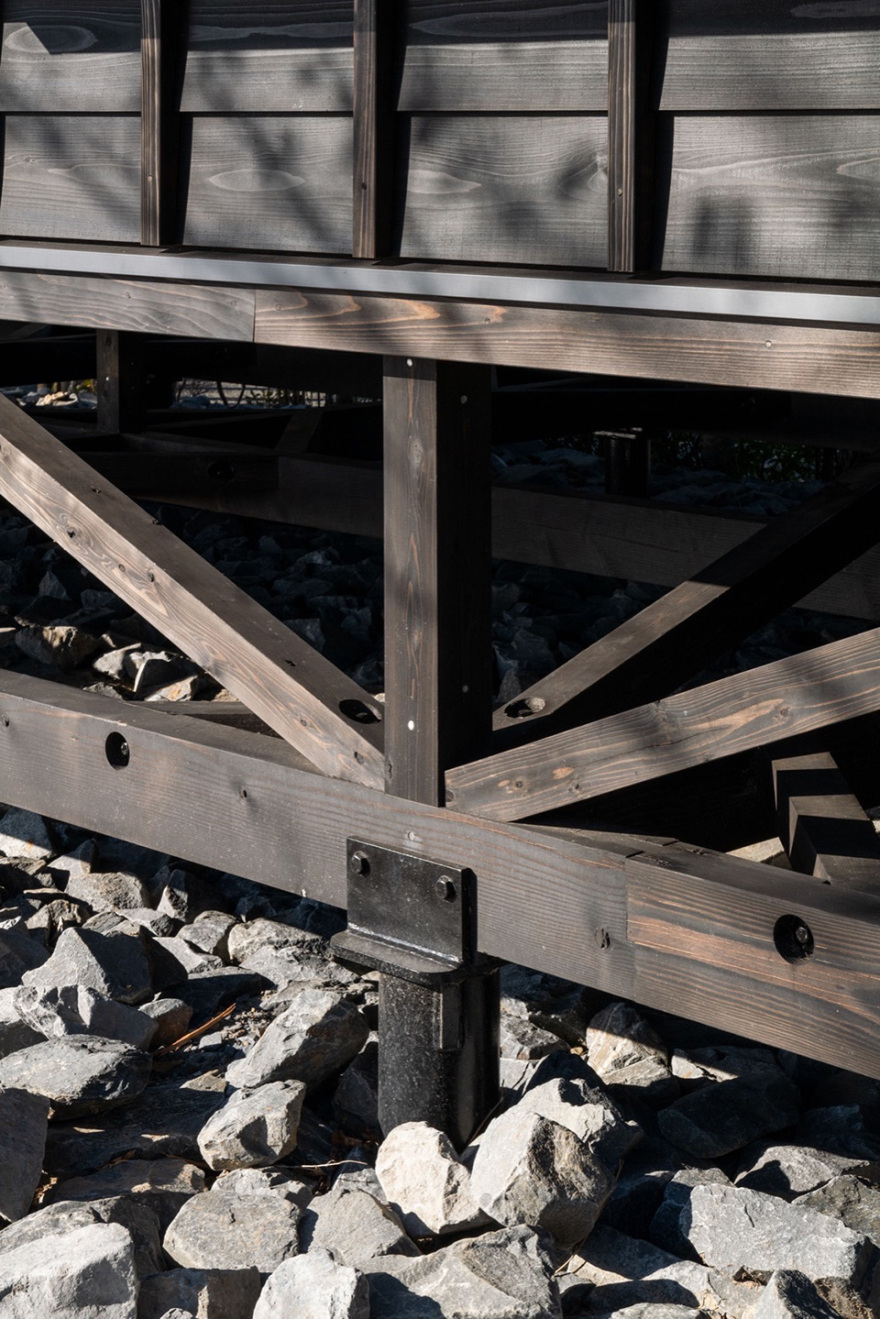


▼屋檐细部,details of the eaves© Masao Nishikawa


▼细部,details© Masao Nishikawa

▼材料细部,details of material© Masao Nishikawa

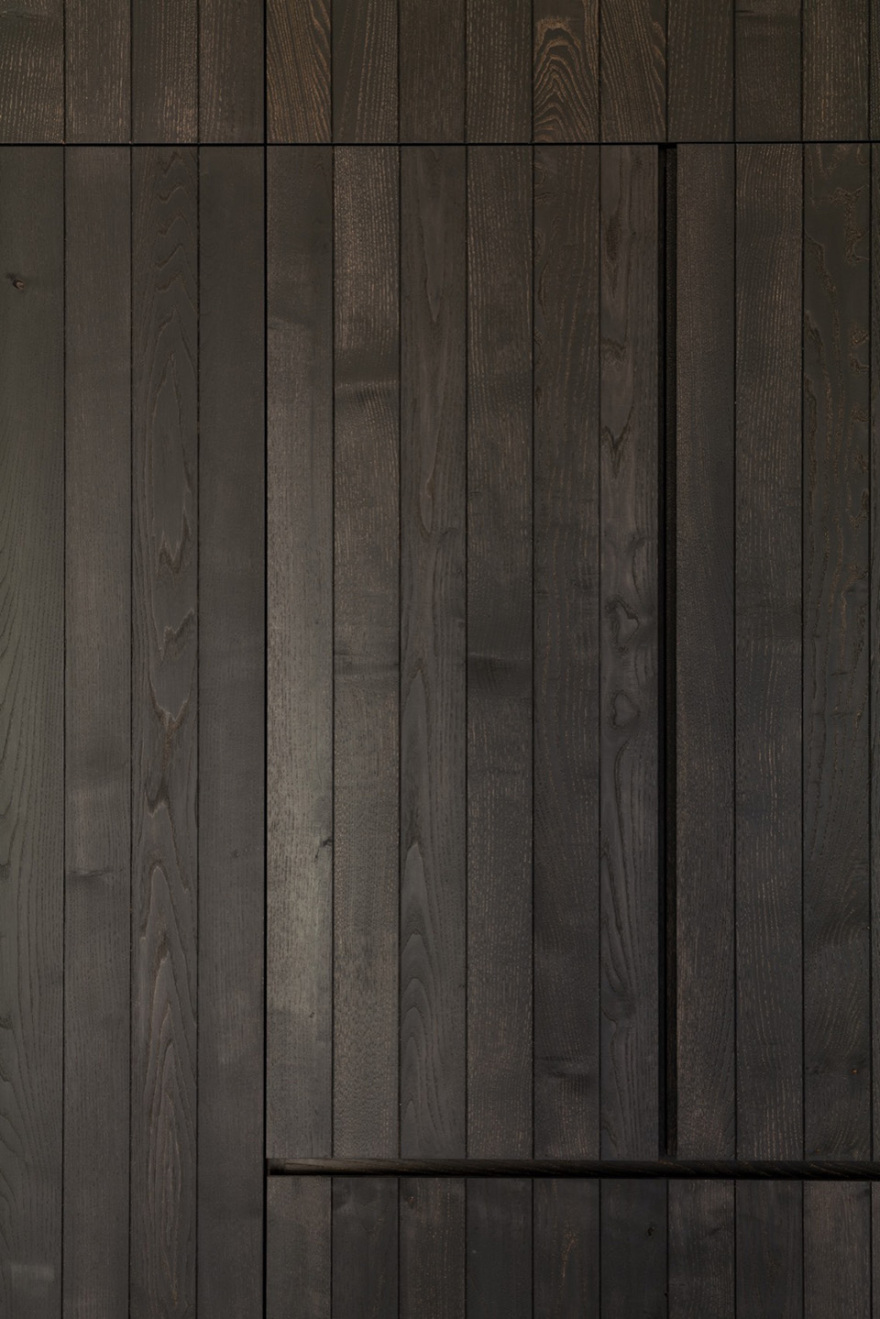


▼细部,details© Masao Nishikawa


通过彻底消除混凝土,Boso别墅提出了零混凝土建筑这一当代地方性建筑理念——这一理念使建筑与地质时间、当地材料智慧和环境节制相契合。站在这个地点,第一次面对这块自地质时代未曾触及的古老景观,建筑的愿景应运而生:在这永恒流动的时间中构思建筑。
By eliminating concrete entirely, Villa Boso proposes Zero-Concrete Architecture as a contemporary vernacular position—one that aligns architecture with geological time, local material intelligence, and environmental restraint. Standing on this site for the first time, facing an ancient landscape untouched since geological time, the aspiration emerged: to conceive architecture within this eternal flow of time.
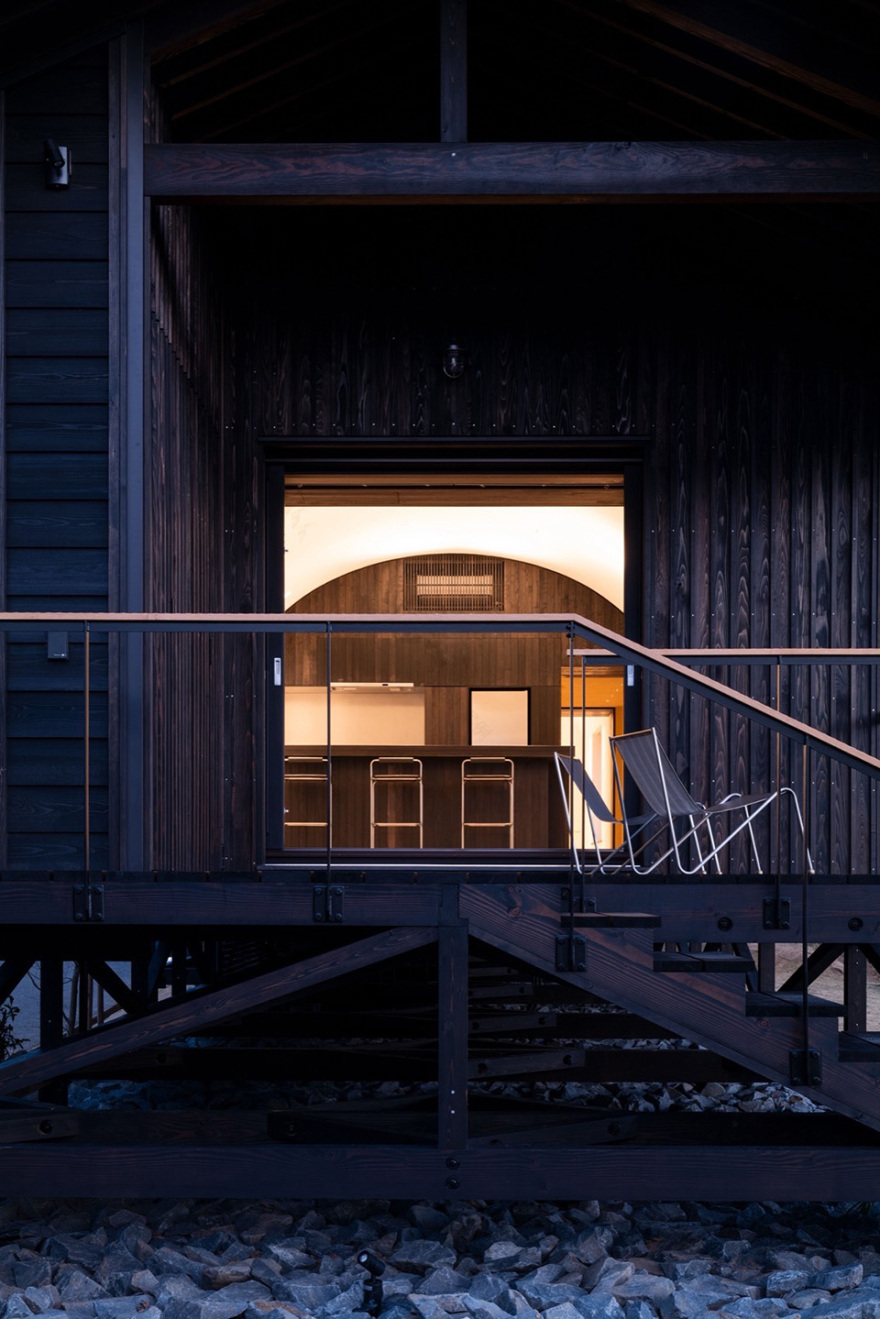
▼外观夜景,exterior view at night© Masao Nishikawa


▼模型,model© Kenichi Teramoto / office of Teramoto

▼轴测图,axonometric drawing© Kenichi Teramoto / office of Teramoto

▼分析图,analysis diagram© Kenichi Teramoto / office of Teramoto

▼平面图,plan© Kenichi Teramoto / office of Teramoto

▼剖面图,section© Kenichi Teramoto / office of Teramoto
Project Name: Villa Boso
Office Name: Kenichi Teramoto / office of Teramoto
Social Media Accounts:
Firm Location: Japan
Completion Year: 2025
Gross Built Area (m2/ ft2): 109sqm
Project Location: Boso Peninsula, Japan
Program / Use / Building Function: Private residence
Structure: Steel pipe piles + timber structure
PrincipalArchitects: Kenichi Teramoto / office of Teramoto
Structure Engineers: Yuko Mihara / Graph Studio
Collaboration: Yoshikazu Takahashi / Hoshigarasu, Shohei Tanaka / office of Teramoto, Sho Hiratsuka / office of Teramoto
Construction: TK base house
Photographer/ Photo Credits: Masao Nishikawa
mnpsjp@yahoo.co.jp




南京喵熊网络科技有限公司 苏ICP备18050492号-4知末 © 2018—2020 . All photos and trademark graphics are copyrighted by their owners.增值电信业务经营许可证(ICP)苏B2-20201444 苏公网安备 32011302321234号
苏公网安备 32011302321234号客服
消息
收藏
下载
最近