

创作上传
VIP
收藏下载
登录 | 注册有礼
查看完整案例

收藏

下载

分享
该项目以工业遗迹的历史肌理为创作原点,通过 “保留 — 重构 — 注入” 的设计策略,将服装零售、咖啡社交、艺术展示三大功能有机整合,打造出一个具有叙事性、冲突感与体验感的复合型商业空间,在工业美学与当代消费场景的碰撞中,重新定义城市商业空间的可能性。
This project takes the historical texture of industrial relics as its creative starting point. Through the design strategy of “preservation – reconstruction – injection”, it organically integrates the three functions of fashion retail, coffee socializing, and art exhibition, creating a composite commercial space with narrativeness, a sense of conflict, and a sense of experience. In the collision between industrial aesthetics and contemporary consumption scenarios, it redefines the possibilities of urban commercial spaces.
▼建筑外景,Exterior of the Building ©智龙


设计背景与理念:从工业遗迹到生活剧场
Design Background and Concept: From Industrial Relics to Life Theater
项目选址于带红砖旧烟囱的厂房砖构空间,设计团队以 “工业记忆的当代转译” 为核心理念,拒绝对空间进行 “精致化抹平”,而是保留红砖的斑驳、砖块的原始排布,让工业遗产的 “时间痕迹” 成为空间的叙事线索。同时,以 “服装 + 咖啡” 的业态组合,注入时尚与人文活力,使空间成为 “工业历史的容器” 与 “当代生活的舞台”,传递 “自然氧化的力量重获平静与活力(The natural power of oxides regains peace and vitality)” 的深层价值主张。
The project is located in a brick-structured space of an old factory with a red brick chimney. Taking “contemporary translation of industrial memory” as its core concept, the design team refuses to “refine and smooth out” the space. Instead, it preserves the mottling of red bricks and their original arrangement, allowing the “traces of time” of industrial heritage to become the narrative clue of the space. Meanwhile, through the business combination of “clothing + coffee”, it injects fashion and humanistic vitality, making the space both a “container of industrial history” and a “stage of contemporary life”, and conveying the in-depth value proposition that “The natural power of oxides regains peace and vitality”.
▼室外区域,Exterior area©智龙


空间叙事:三层维度的场景构建
Spatial Narrative: Scene Construction from Three Dimensions
历史维度:工业遗迹的保留与强化
Historical Dimension: Preservation and Enhancement of Industrial Relics
红砖塔作为工业时代的标志性遗迹,设计团队未做过多修饰,仅以混凝土矮墙进行框景式呼应,使其成为空间的 “历史锚点”,在现代建筑与城市高楼的环绕中,诉说场地的过往。
混凝土墙面的模板痕迹、裸露的管道与电线、原始的门窗洞口,均被保留并作为 “工业美学” 的组成部分,让空间自带 “未完成的艺术感”。
As a landmark relic of the industrial era, the red brick tower has not been over-decorated by the design team. It only uses a low concrete wall to echo it in a framing way, making it a “historical anchor” of the space. Surrounded by modern buildings and urban high-rises, it tells the past of the site. The formwork traces on the concrete walls, exposed pipes and wires, as well as the original door and window openings, have all been preserved and incorporated as part of the “industrial aesthetics”, endowing the space with an inherent “sense of unfinished art”.
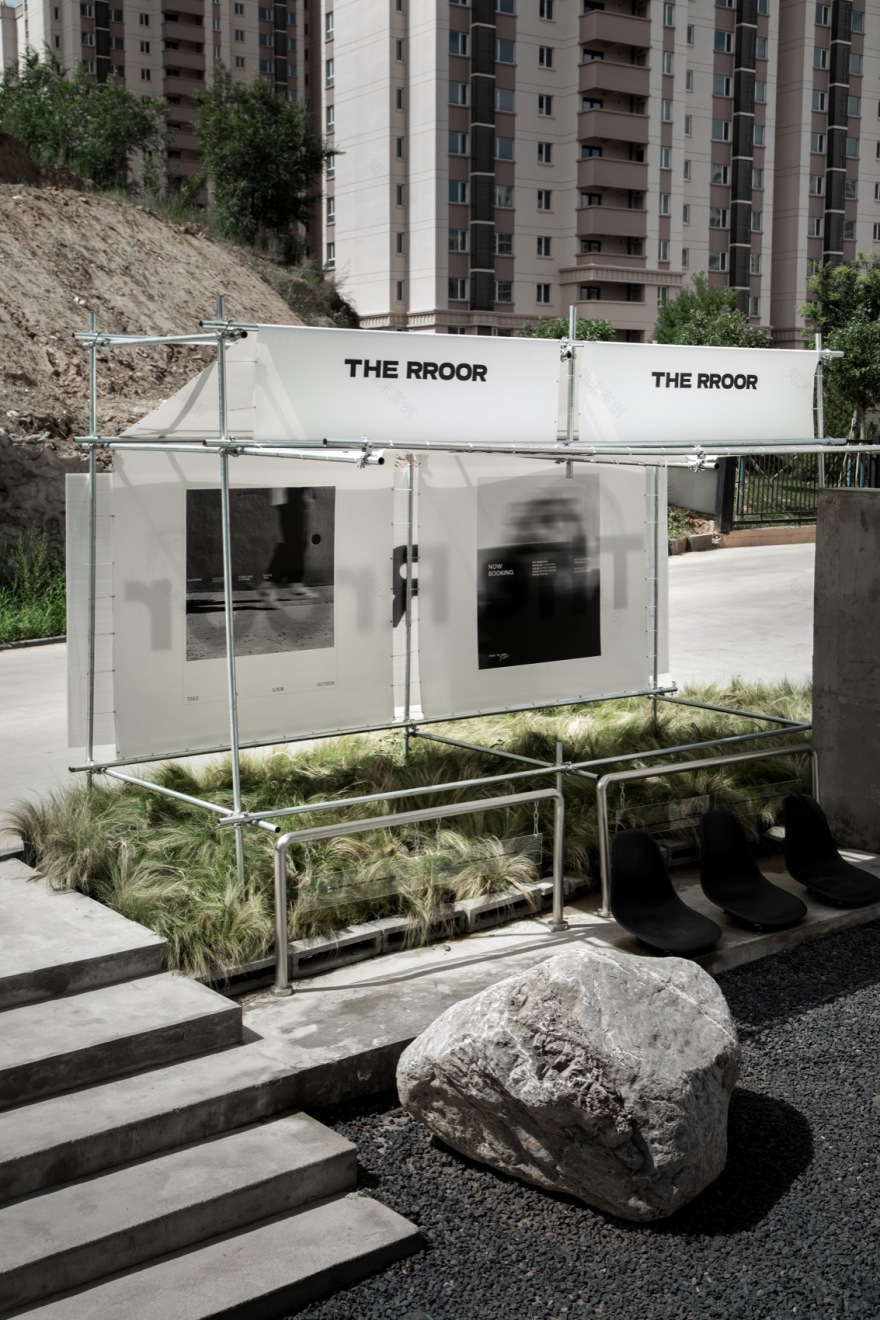
▼室外区域细节,Exterior areadetails ©智龙

视觉维度:品牌符号的沉浸式植入
Visual Dimension: Immersive Implantation of Brand Symbols
从建筑外立面的巨型 “THE RROOR” 立体字,到室内墙面的 “CLOTHES COFFEE” 巨型文字,再到展陈架上的品牌标语,通过重复、放大的视觉策略,将品牌识别深度植入空间肌理,形成强烈的视觉冲击力。艺术装置如户外庭院的主题海报、室内的阳光板“FOR LOOKING 802” 概念墙,以艺术化表达强化空间的文化属性,让商业空间升华为艺术场域。
From the giant three-dimensional “THE RROOR” letters on the building’s facade, to the massive “CLOTHES COFFEE” text on the indoor walls, and further to the brand slogans on the display racks, the design adopts a visual strategy of repetition and magnification to deeply implant brand recognition into the spatial texture, creating a strong visual impact. Art installations such as the thematic posters in the outdoor courtyard and the polycarbonate panel “FOR LOOKING 802” concept wall indoors use artistic expressions to enhance the cultural attribute of the space, elevating the commercial space into an artistic field.
▼入口细节,Entrance details©智龙


▼圆形开窗,Circular opening©智龙

体验维度:多感官的冲突与融合
Experience Dimension: Conflict and Integration of Multiple Senses
材质冲突:混凝土的 “冷硬粗粝” 与再生海绵的 “柔软温暖”、金属脚手架的 “工业感” 与服装面料的 “时尚感”、碎石的 “原始感” 与咖啡器具的 “精致感”,在触觉与视觉上形成持续的冲突美学,激发用户的探索欲。
动线设计:从户外庭院的 “过渡感”,到服装区的 “探索感”,再到咖啡区的 “松弛感”,空间动线串联起 “逛 — 选 — 享” 的完整消费逻辑,同时通过楼梯、新建层等设计制造空间层次,让每一次转弯都充满惊喜。
Material Conflict: The “cold, hard and rough” concrete contrasts with the “soft and warm” recycled sponge; the “industrial feel” of metal scaffolding clashes with the “fashion sense” of clothing fabrics; the “primitive texture” of gravel stands against the “exquisiteness” of coffee utensils. These create a continuous conflict aesthetics in touch and vision, stimulating users’ desire to explore. Circulation Design: From the “sense of transition” in the outdoor courtyard, to the “sense of exploration” in the clothing area, and then to the “sense of relaxation” in the coffee area, the spatial circulation connects the complete consumption logic of “wandering — selecting — enjoying”. Meanwhile, designs such as stairs and new floors create spatial layers, making every turn full of surprises.
▼室内空间,Interior space©智龙


功能分区:业态共生的场景创新
Functional Zones: Scene Innovation for Symbiotic Business Formats
服装零售区:装置化的时尚实验室
Fashion Retail Area: An Installative Fashion Laboratory
以固定金属脚手架为核心展陈架构,不可调节的衣架巧妙缀以杜邦纸装饰,与买手店LOGO形成视觉呼应,共同构筑成空间内极具辨识度的打卡装置。墙面装置海报可灵活更替,为空间注入“快闪式”新鲜活力;再辅以镜面反射装置,搭配DIY木质座椅、金属边几及再生海绵坐垫等多元元素,让服装展示跳出传统陈列桎梏,升华为沉浸式艺术装置体验。
With fixed metal scaffolding as the core exhibition structure, non-adjustable clothes racks are subtly adorned with DuPont paper decorations, forming a visual echo with the buyer’s store logo to jointly construct a highly recognizable check-in installation in the space. Wall-mounted installation posters can be flexibly updated, injecting “pop-up style” fresh vitality into the space. Complemented by mirror reflection devices, along with diverse elements such as DIY wooden chairs, metal side tables and recycled sponge cushions, the clothing display breaks free from the constraints of traditional exhibition, elevating into an immersive artistic installation experience.
▼收银台,checkout counter©智龙

咖啡体验区:工业风的人文社交场
Coffee Experience Area: An Industrial-style Humanistic Social Venue
吧台设计采用 “工业棚屋” 概念,磨砂阳光板与做旧灰砖形成虚实对比,内部嵌入专业咖啡设备与透明甜品展示柜,既满足咖啡、甜品制作及展示的功能性,又成为空间的视觉焦点。多层社交区:一层为吧台前的高凳社交区以及低矮休闲区,适合快速咖啡体验;二层通过金属钢结构楼梯可达,设置皮质沙发与景观窗,提供 “俯瞰式” 的休闲视角,让咖啡场景兼具互动性与私密性。
The bar design adopts the “industrial shed” concept. Frosted polycarbonate panels and weathered gray bricks form a contrast between virtual and solid; professional coffee equipment and transparent dessert display cabinets are embedded inside. It not only meets the functional needs of coffee and dessert production and display, but also becomes the visual focus of the space. Multi-layered Social Area: The first floor includes a high-stool social area in front of the bar and a low seating lounge, suitable for a quick coffee experience. The second floor is accessible via a metal steel structure staircase, equipped with leather sofas and landscape windows. It offers an “overlooking” leisure perspective, endowing the coffee scene with both interactivity and privacy.
▼咖啡区,Coffee area©智龙

艺术互动区
Art Interaction Area
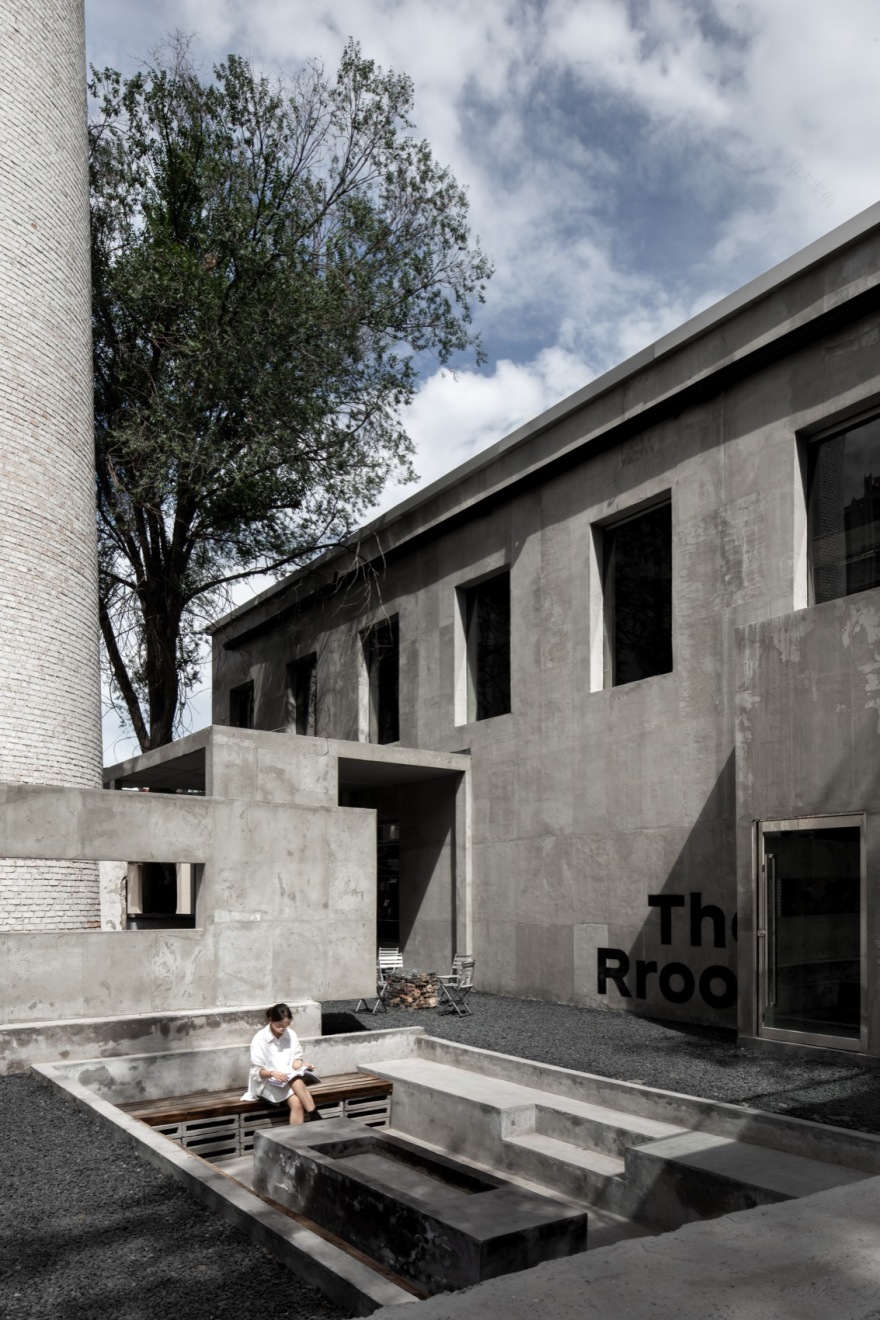
室外混凝土围合的狭长空间,以简洁的直线、方块形态围合空间,如带矩形镂空的矮墙、分层式体块,既呼应工业遗迹的理性基因,又通过 “框景” 手法(如镂空墙对砖塔的取景)营造艺术感,让硬朗的混凝土成为空间的叙事骨架。下沉式庭院以混凝土台阶过渡,搭配防腐木空心砖基底,形成 “半围合” 的私密休闲区。这种高低错落的设计打破平面单调感,既强化空间层次,又为用户提供了 “沉浸式” 的休憩与打卡视角,成为用户自发打卡的 “艺术秘境”,模糊了商业与艺术的边界。在 “The Rroor” 的空间体系中,户外混凝土墙面、建筑转角留白处,乃至室内的艺术墙区,都被精心打造为动态艺术展场。户外区域悬挂概念化艺术海报,与工业风建筑、白色砖塔形成视觉共振;室内留白区域则定期更新装置艺术,例如金属脚手架与艺术布料的创意组合,与服装零售区的展陈语言形成呼应。从庭院的艺术海报到室内的装置迭代,这种 “周期性艺术介入” 策略,让空间始终保持创作活力 —— 既强化了 “工业美学 × 当代艺术” 的品牌基因,又为用户营造出 “每次到访皆有新感知” 的探索式体验,使商业空间持续成为艺术与生活对话的前沿场域。
The narrow space enclosed by outdoor concrete features a simple layout of straight lines and square blocks—such as low walls with rectangular hollowouts and layered volumes. It not only echoes the rational genes of industrial relics but also creates an artistic atmosphere through the “framing” technique (e.g., the hollowed-out walls framing the brick tower), making the tough concrete the narrative backbone of the space. The sunken courtyard transitions via concrete steps and is paired with a base of anti-corrosion wooden hollow bricks, forming a “semi-enclosed” private leisure area. This undulating design breaks the monotony of the flat surface, enhances spatial layers, and provides users with an “immersive” resting and check-in perspective. It has become a spontaneously visited “artistic secret realm” for users, blurring the boundary between commerce and art. In the spatial system of “The Rroor”, outdoor concrete walls, blank corners of the building, and even indoor art wall areas are elaborately crafted into dynamic art exhibition venues. Conceptual art posters are hung in outdoor areas, creating a visual resonance with the industrial-style architecture and white brick tower; indoor blank areas regularly update installation art, such as the creative combination of metal scaffolding and art fabrics, which echoes the exhibition language of the fashion retail area. From the art posters in the courtyard to the iteration of indoor installations, this “periodic art intervention” strategy keeps the space full of creative vitality—it not only strengthens the brand gene of “industrial aesthetics × contemporary art” but also creates an exploratory experience for users where “every visit brings new perceptions”, making the commercial space a frontier field for the dialogue between art and life.
▼人与空间,Human and space©智龙

▼外摆区使用,Using the outdoor display area ©智龙

材质与工艺:粗粝美学的精细化呈现
Materials and Craftsmanship: Refined Presentation of Rough Aesthetics
整体采用 “清水混凝土 + 做旧处理”,保留浇筑时的模板痕迹与细微裂缝,通过局部打磨与色差控制,让粗犷中透出精致。金属运用:脚手架采用定制化节点设计,确保结构稳定的同时保持 “临时感” 的艺术表达;新建楼梯以银色金属为主体,采用网格状护栏设计,结构简洁且富有机械感。楼梯与粗犷的混凝土墙面形成强烈材质对比,线条利落硬朗,既承担了上下层的交通功能,又以工业感的视觉语言成为空间内的装置艺术,强化了整体的工业美学氛围;吧台金属面采用手工做旧工艺,模拟工业设备的使用痕迹。原生树木被混凝土包裹,成为建筑的有机组成部分;碎石、金属网笼的选择兼顾美学与实用功能性,让自然材质在工业空间中焕发新价值。
Overall, “fair-faced concrete + weathering treatment” is adopted. The formwork traces and fine cracks during pouring are preserved, and through local polishing and color difference control, refinement is revealed through roughness. Metal Application: The scaffolding adopts a customized joint design to ensure structural stability while maintaining the artistic expression of a “temporary sense”. The new staircase is mainly made of silver metal with a grid-like guardrail design, featuring a simple structure and a strong mechanical sense. The staircase forms a sharp material contrast with the rough concrete walls, with neat and tough lines. It not only undertakes the transportation function between upper and lower floors but also becomes an installation art in the space with an industrial visual language, strengthening the overall industrial aesthetic atmosphere. The metal surface of the bar adopts a manual weathering process to simulate the usage traces of industrial equipment. Native trees are wrapped in concrete to become an organic part of the building. The selection of gravel and metal mesh cages balances aesthetics and practical functionality, allowing natural materials to radiate new value in the industrial space.
▼材料细节,Material detail©智龙

灯光设计:工业氛围的情绪塑造
Lighting Design: Emotional Shaping of Industrial Atmosphere
工业风格栅灯、明装筒灯提供全域照明,强化空间的冷峻感;装展区的轨道射灯、咖啡吧台的局部吊灯,突出商品与场景的质感;暖色灯膜、灯管以及墙面艺术装置的背光设计,营造出 “工业冷峻” 与 “人文温暖” 交织的光影层次。该设计通过对工业遗产的创造性激活,将 “历史肌理”“商业功能”“艺术表达” 三者深度融合,使 “THE RROOR” 不仅是一个消费空间,更成为城市中传递工业美学、激发生活灵感的 “文化发生地”。它证明了商业空间可以突破功能的桎梏,以 “场景叙事” 与 “美学表达”,成为当代人探索自我、对话城市的精神场域。
Industrial-style grid lights and surface-mounted downlights provide full-area lighting, enhancing the coldness of the space. Track spotlights in the exhibition area and local chandeliers at the coffee bar highlight the texture of products and scenes. Warm light films, light tubes, and the backlighting design of wall art installations create a light and shadow layer intertwined with “industrial coldness” and “humanistic warmth”. Through the creative activation of industrial heritage, the design deeply integrates “historical texture”, “commercial functions” and “artistic expression”, making “THE RROOR” not only a consumption space but also a “cultural hub” in the city that conveys industrial aesthetics and inspires life inspiration. It proves that commercial spaces can break through the constraints of functions and become a spiritual field for contemporary people to explore themselves and dialogue with the city through “scene narrative” and “aesthetic expression”.
▼一层平面图,First Level floor plan ©BLEND DESIGN

▼二层平面图,SecondLevel floor plan ©BLEND DESIGN

▼剖面图,Section ©BLEND DESIGN


项目名称:THE RROOR服装买手店
项目设计:BLEND DESIGN
项目地址:山西太原
项目年份:2024年
项目面积:85㎡(室内)
南京喵熊网络科技有限公司 苏ICP备18050492号-4知末 © 2018—2020 . All photos and trademark graphics are copyrighted by their owners.增值电信业务经营许可证(ICP)苏B2-20201444 苏公网安备 32011302321234号
苏公网安备 32011302321234号客服
消息
收藏
下载
最近