

创作上传
VIP
收藏下载
登录 | 注册有礼
查看完整案例

收藏

下载

分享
将神田川两岸的神田和秋叶原连为一体的城市开发
Bridging Kanda and Akihabara Through Integrated Urban Development Across Both Riverbanks
该项目位于东京的神田与秋叶原的交界地带。神田至今保留着江户时代以来东京下町(商业手工业者居住区,老街)的风土人情,而秋叶原则早已从传统市场转型为世界著名的电器街、动漫街和外国游客的打卡圣地。近年来,神田川对岸的“旧万世桥站(1912~1943年)”红砖建筑遗迹被重新改造为商业设施。本项目不仅是千代田区役所(区政府)万世桥办事处的重建,更是在神田与秋叶原两岸一体的城市发展愿景中被定位为连接二者的桥梁,这也是该项目的一大特征。神田与秋叶原的街区功能和外观截然不同。我们认为,位于如此特殊位置的公共建筑,不应只向一边开放或封闭,而应同时向内与外开放,成为一个连接自然环境、与城市景观相呼应的界面。本项目旨在以神田川为中心关注两岸地区,将承载街区记忆的砖块作为城市历史遗产加以传承和利用,以丰富和支持当地居民的生活。
▼场地立面动画,facade site program anime© 日建设计
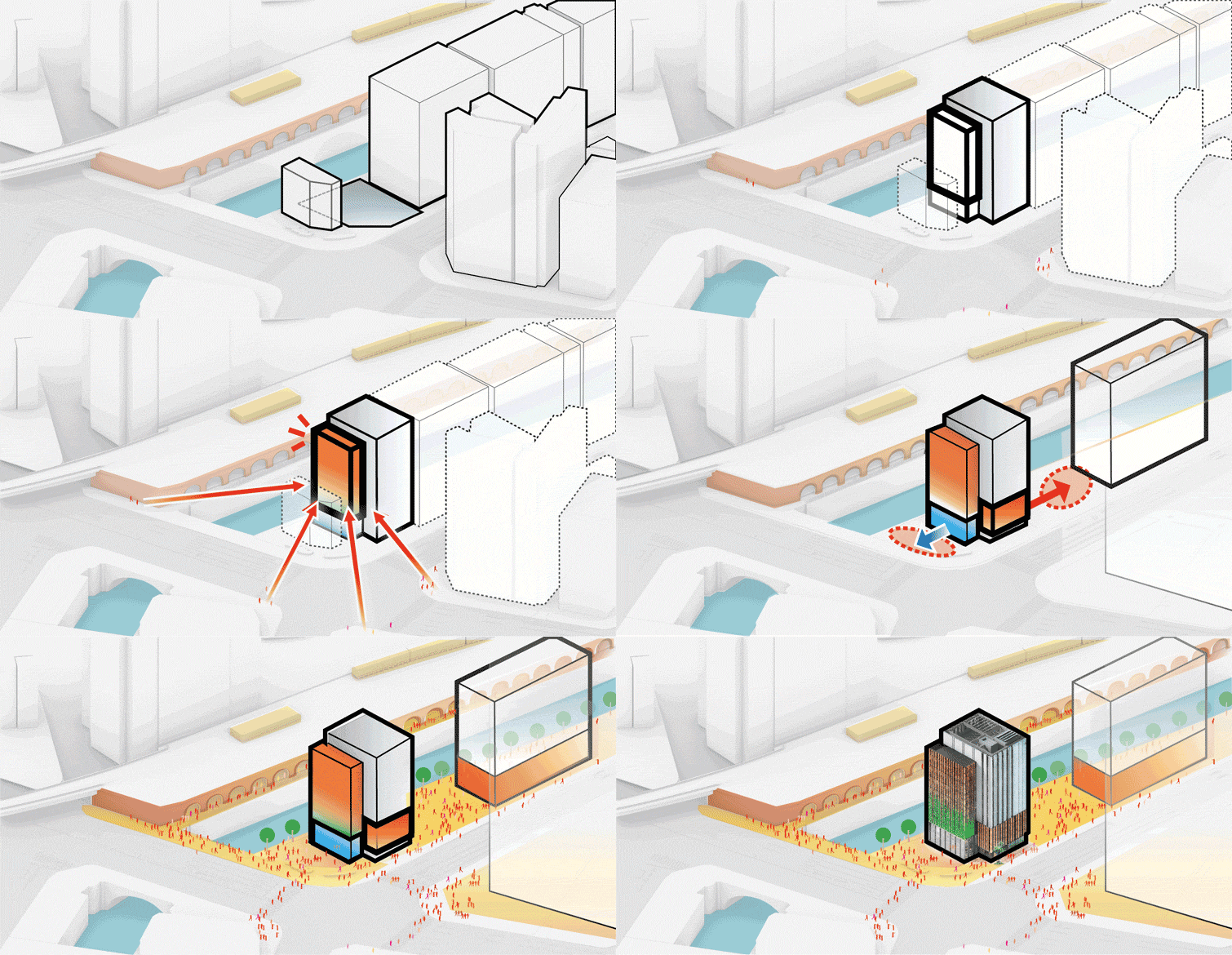
The site is located on the border between Kanda, an area that has retained the charm and human warmth of Tokyo’s traditional downtown since the Edo period, and Akihabara, which has evolved from a market district into a world-renowned hub for electronics, anime culture, and inbound tourism. On the opposite bank of the Kanda River, the red-brick remains of the Old Mansei-bashi Station (1912 – 1943) have recently been repurposed into a revitalized commercial facility. This project is more than a simple reconstruction of the Mansei-bashi branch of the Chiyoda City Office. It has been conceived as a critical element in a broader urban development vision, aiming to bridge the Kanda and Akihabara districts and foster cohesion on both sides of the river. Kanda and Akihabara are fundamentally different in both functions and appearances. Within this unique context, the envisioned architecture does not favor one side over the other. Instead, it seeks to open simultaneously inward and outward, establishing connections with the natural environment while resonating with the urban fabric. By emphasizing the Kanda River as a central axis and using bricks that carry the memory and historical legacy of the area as a shared heritage, the project aims to create a facility that enriches and supports the lives of local residents.
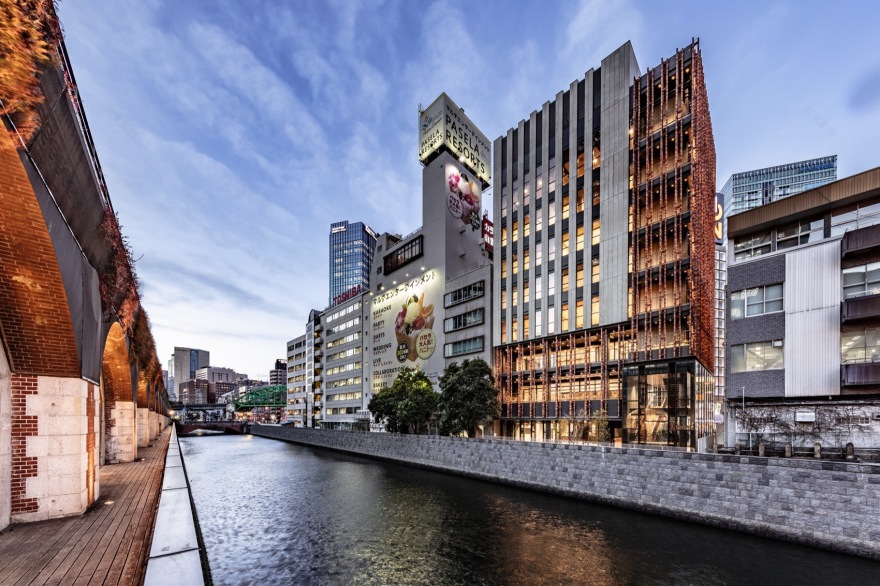
▼外观,exterior view ©SSCo., Ltd.

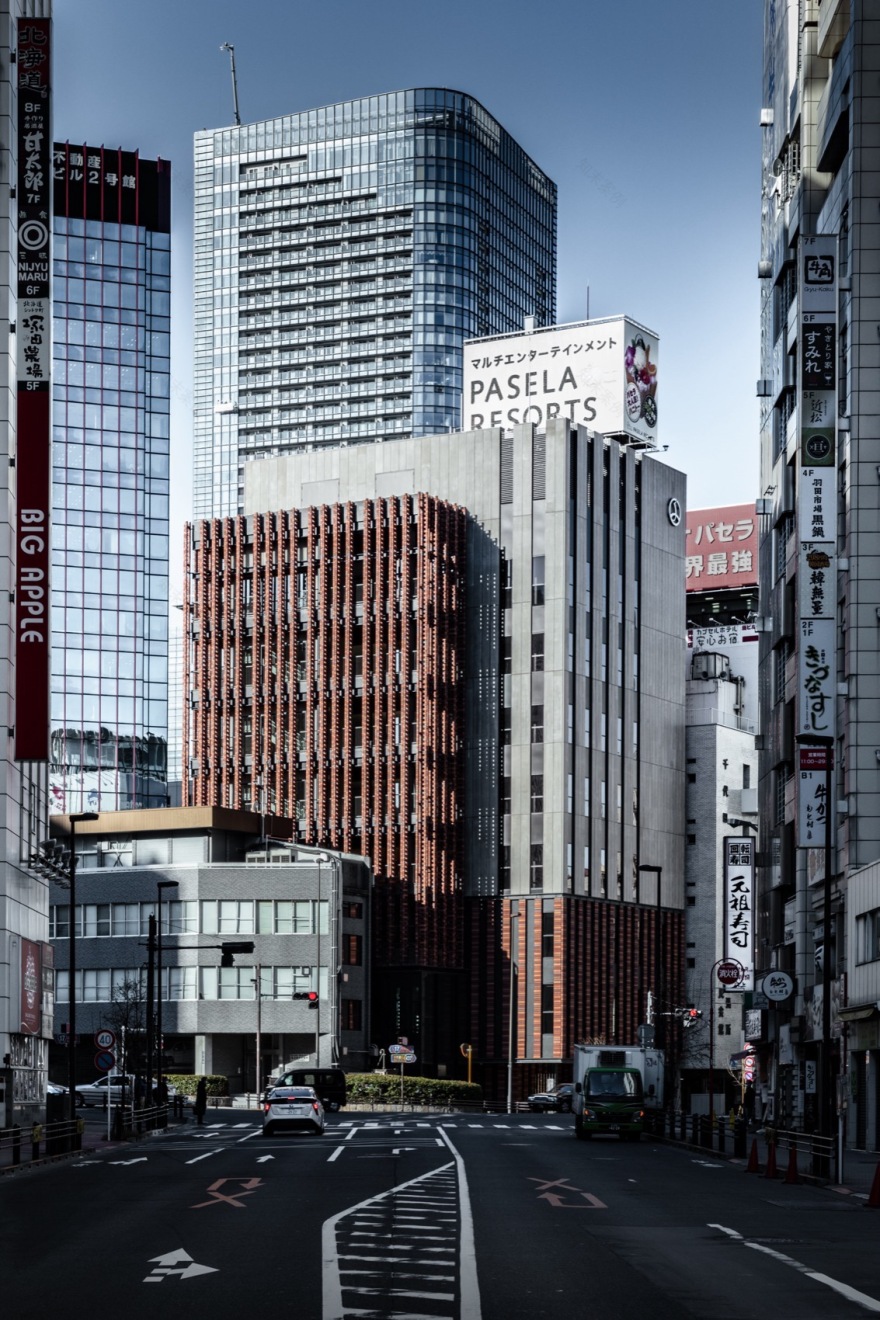
▼远观,distant view©SSCo., Ltd.
与城市和环境相呼应的灵活界面
A Flexible Interface Resonating with City and Environment
外观设计的目标是在万世桥打造一个新地标,与秋叶原和神田川沿岸独特的城市景观相呼应。秋叶原是二次元文化、数字文化及流行趋势的最前沿,其特征是具有无法控制的多样性的动态景观;而神田川沿岸则以历史文化遗产旧万世桥站站房为代表,呈现出端庄内敛的静态景观。因此,需要在外观上体现这两种不同文化的融合。另一方面,经人工堆砌的砖块,每一块都是独创的烧制砖,可以说是极为生动的材料。设计团队通过将砖块堆砌成具有动态图形效果的三维空间来呼应城市环境。
▼立面堆砌动画,facade stacking anime© 日建设计
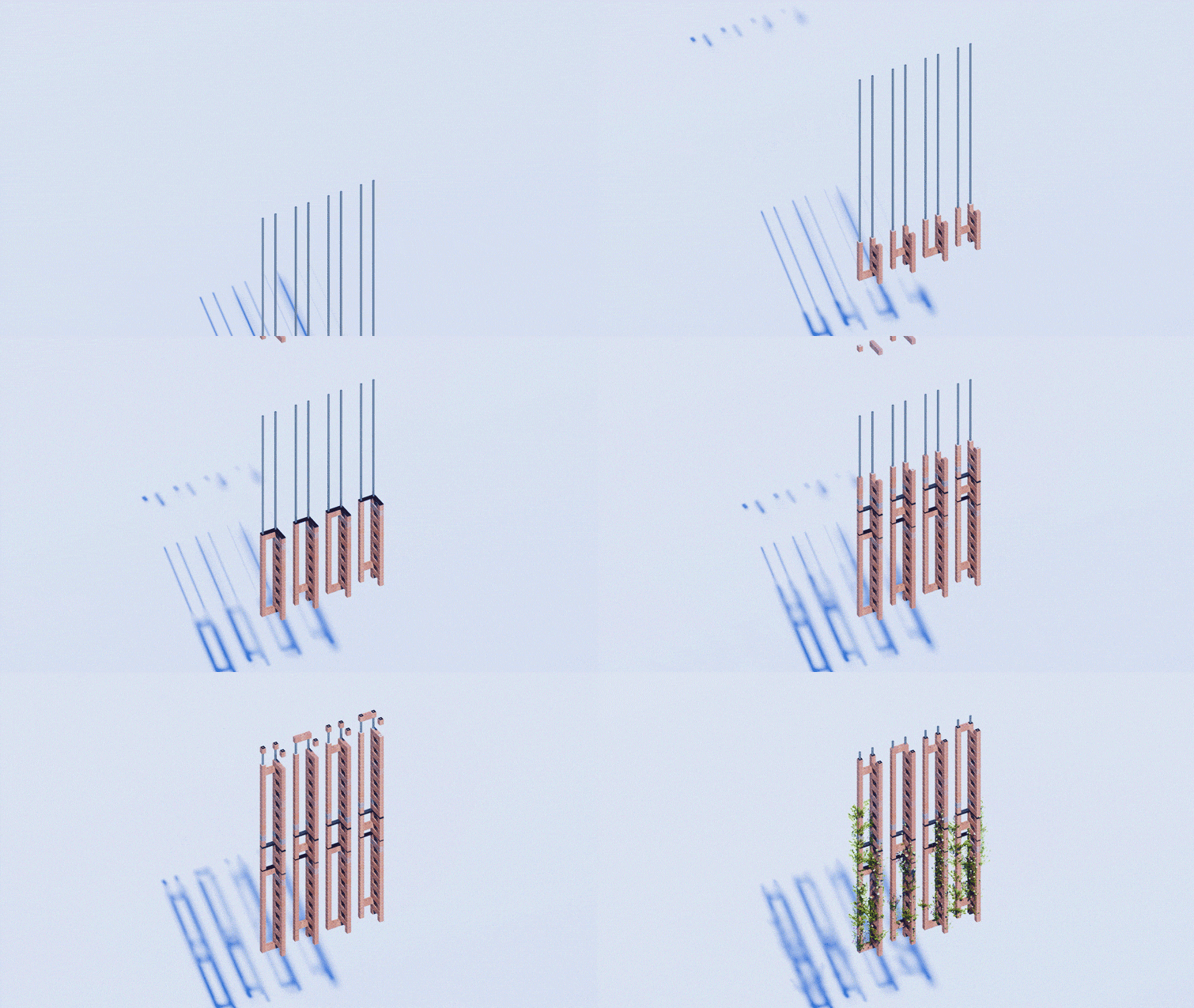
The exterior design was conceived as a new landmark for Mansei-bashi, harmonizing with the contrasting urban landscapes of Akihabara and the Kanda River. Known as a global hub of digital culture and cutting-edge trends, Akihabara is defined by its dynamic, diverse energy, often characterized by an uncontrollable vibrancy. In contrast, the banks of the Kanda River, characterized by the calm and stately heritage of the Old Manseibashi Station, present a more subdued and static atmosphere. The design seeks to merge these two disparate identities through its architectural expression. Brick, as a material, carries a unique tactile authenticity, with each piece individually crafted and laid by hand. By layering these bricks into dynamic, three-dimensional forms, the façade responds to the duality of its urban context, capturing the vibrancy of Akihabara while respecting the historical gravitas of Kanda.
▼办事处,branch office© SSCo., Ltd.

由这些砖块三维堆砌而成的“Brick Shade”,旨在作为环境、风景和时间的地标和谐融于街区。神田川沿岸计划以本项目为开端进行再开发,本项目通过以河流为中心关注两岸的建设方式,利用承载街区历史资产的砖块,有望为两岸一体的城市开发和景观建设树立新标杆。▼立面SEC动漫循环,facade sec anime loop© 日建设计
The “Brick Shade,” a structure formed by layering bricks in three dimensions, is intended to serve as a landmark that harmonizes with the surrounding environment, the urban fabric, and the passage of time. As the redevelopment along the Kanda River begins with this project, its approach—integrating the river, embracing the historical heritage, and bridging both riverbanks – positions it as a flagship initiative for cohesive urban development and landscape design.
▼公共空间,public space©SSCo., Ltd.


▼开放空间,open space©SSCo., Ltd.


循环用水与培育绿色植物的环保装置“Brick Shade”
The “Brick Shade”: An Environmental Device Promoting Water Circulation and Green Growth
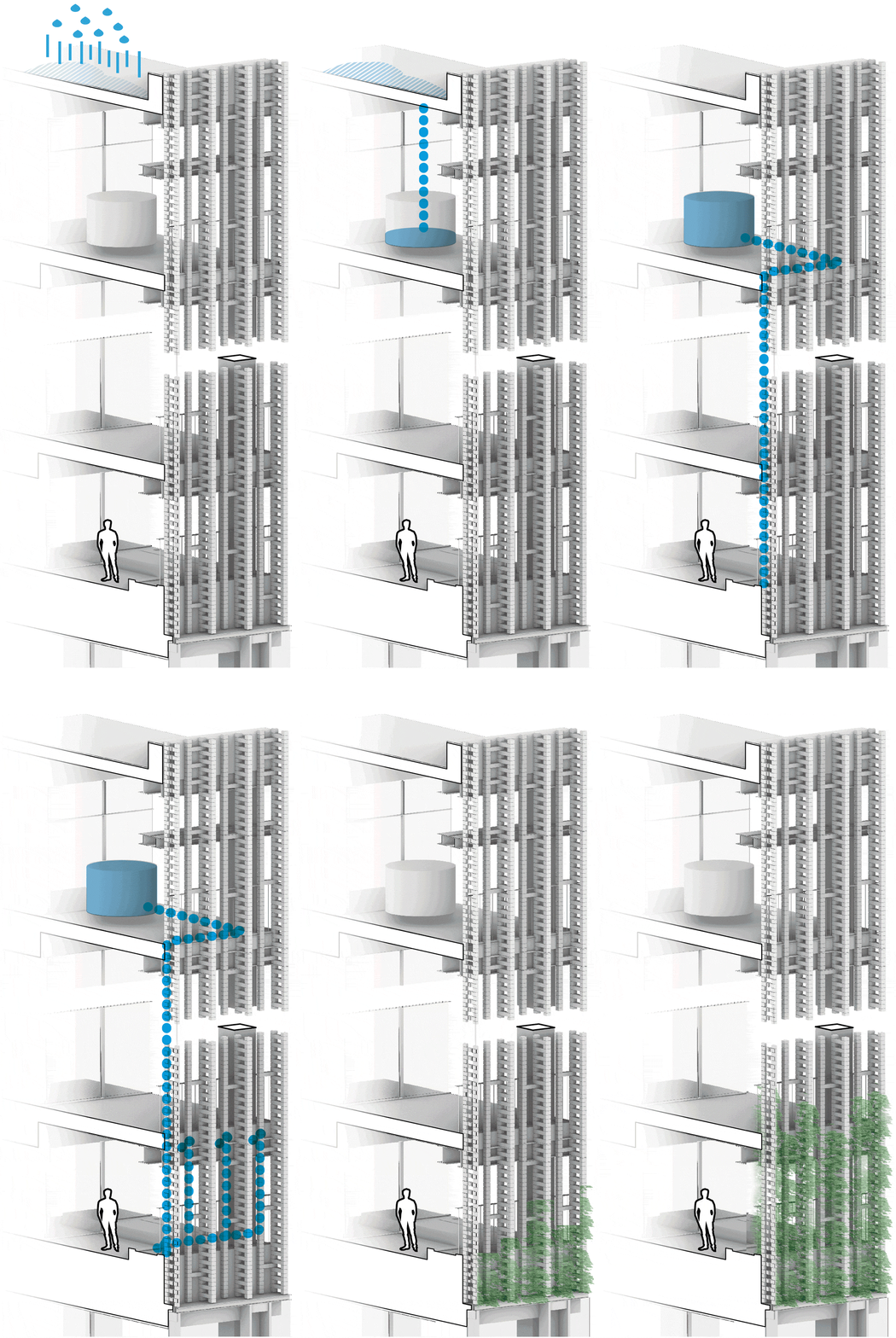
“Brick Shade”是一种循环用水和培育绿色植物的环保装置,以100mm的方砖为最小单位立体堆砌而成,不仅具有遮阳、控制视线、通水通风的功能,还能通过保水系统为植物提供生长条件。保水系统是一种被动式生态系统,利用结构支柱作为水管,结合了通过屋顶所储存雨水的重力下流进行保水的结构设备,作为公共设施中环保装置的象征发挥着重要作用。此外,还积极展示安装在屋顶上的雨水桶和排水系统,希望借此为来访的区内居民和儿童提供一个了解环保的机会。通过采用Brick Shade等被动式环保措施,整个建筑的二氧化碳减排率预计可超出计划目标的40%。
▼流动系统,flow system© 日建设计


The “Brick Shade” employs 100mm square bricks as its fundamental unit, layered into three-dimensional structures that serves as an environmental system that circulates water and fosters greenery. This passive ecological mechanism provides shading, controls sightlines, facilitates airflow and water drainage, and incorporates a water-retention system. It serves as a symbol for environmentally friendly equipment in public facilities and is intended to promote green growth. The retention system channels rainwater collected on the rooftop through structural columns, that function as water pipes, enabling a gravity-fed irrigation process. This passive system underscores the building’s commitment to environmental sustainability while serving as a visual educational tool for visitors. Exposed rain barrels and drainage systems on the rooftop invite residents and children to engage with the building’s environmental functions, encouraging learning and awareness. The adoption of passive environmental strategies, including the Brick Shade, has enabled the building to achieve a planned CO2 reduction rate in excess of 40%.
▼阳台,balconies ©SSCo., Ltd.


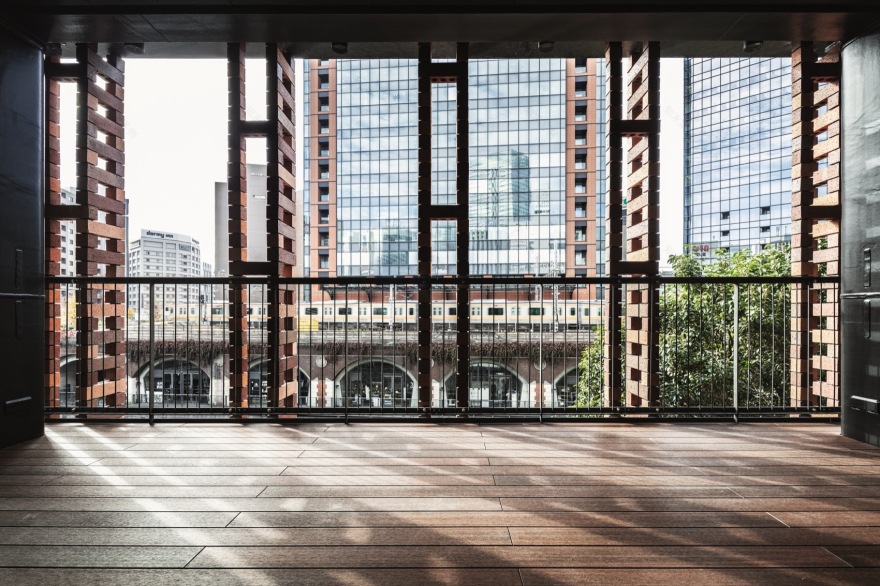
促进社区发展的区民馆
A Community Hub for Connection and Growth
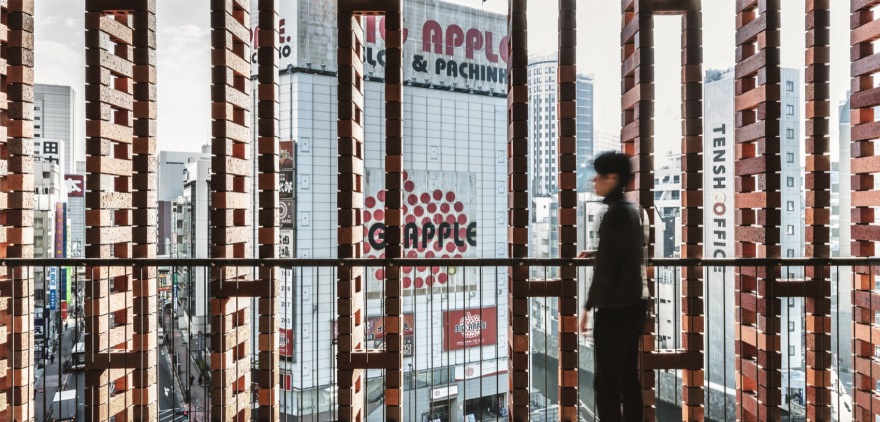
该建筑规模虽小,却由八个不同用途堆叠而成:办事处、多功能空间、厨房、儿童福祉设施、观光协会办公室、社会福祉协会、区民馆用房及区民礼堂,是一座典型的用户和功能多样化的多用途建筑。通过对区民的详细说明和深入调研,设计团队有意识地规划出适合各楼层使用方式的独特布局,并通过“Brick Shade”覆盖的檐廊空间将各层有机连接起来,使整栋大楼更具整体感。各楼层的共性在于,它们都像街区“客厅”一样,聚集了区民、老人、孩子、上班族和育儿家庭等人群,是一个培育各年龄层社区的场所。其中,发挥核心作用的是以阳台(檐廊)为中心的开放式空间设计。
Despite its compact scale, the building accommodates eight distinct functions: a branch office, multi-purpose spaces, a kitchen studio, a child welfare facility, a tourism office, a social welfare council, community center rooms, and a civic hall. Embracing the diversity of its users and purposes, the design celebrates its multi-functional nature, transforming a typical mixed-use building into an intentional and cohesive structure. The design of each floor was informed as a result of grassroots hearings and community research, ensuring that spaces respond to their specific uses while being unified through verandas clad in the Brick Shade. A “living room” concept for the community is central to the design, serving as inviting space where residents, seniors, children, professionals, and families can gather, fostering intergenerational connections. Balconies, envisioned as semi-outdoor engawa spaces, are key to this open and inclusive design.
▼楼梯,staircase© SSCo., Ltd.
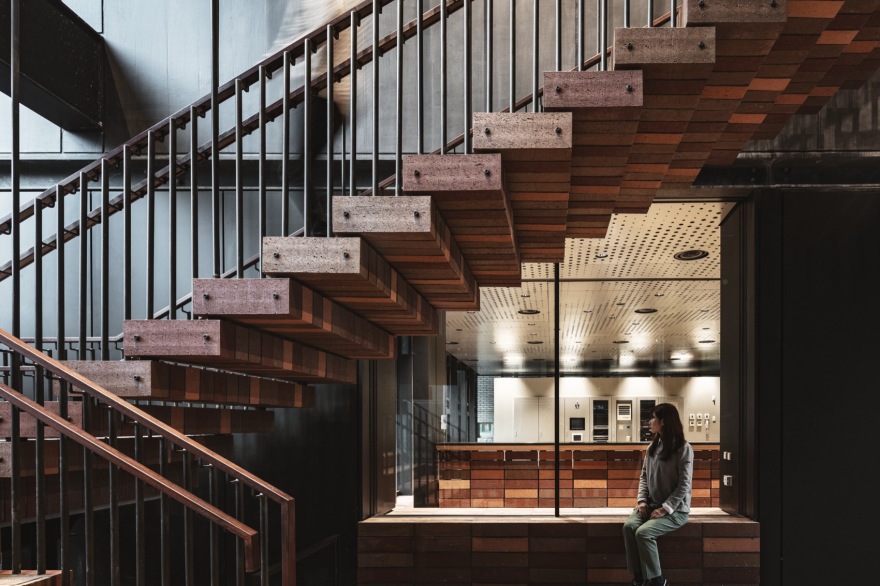


▼材料细部,material details© SSCo., Ltd.
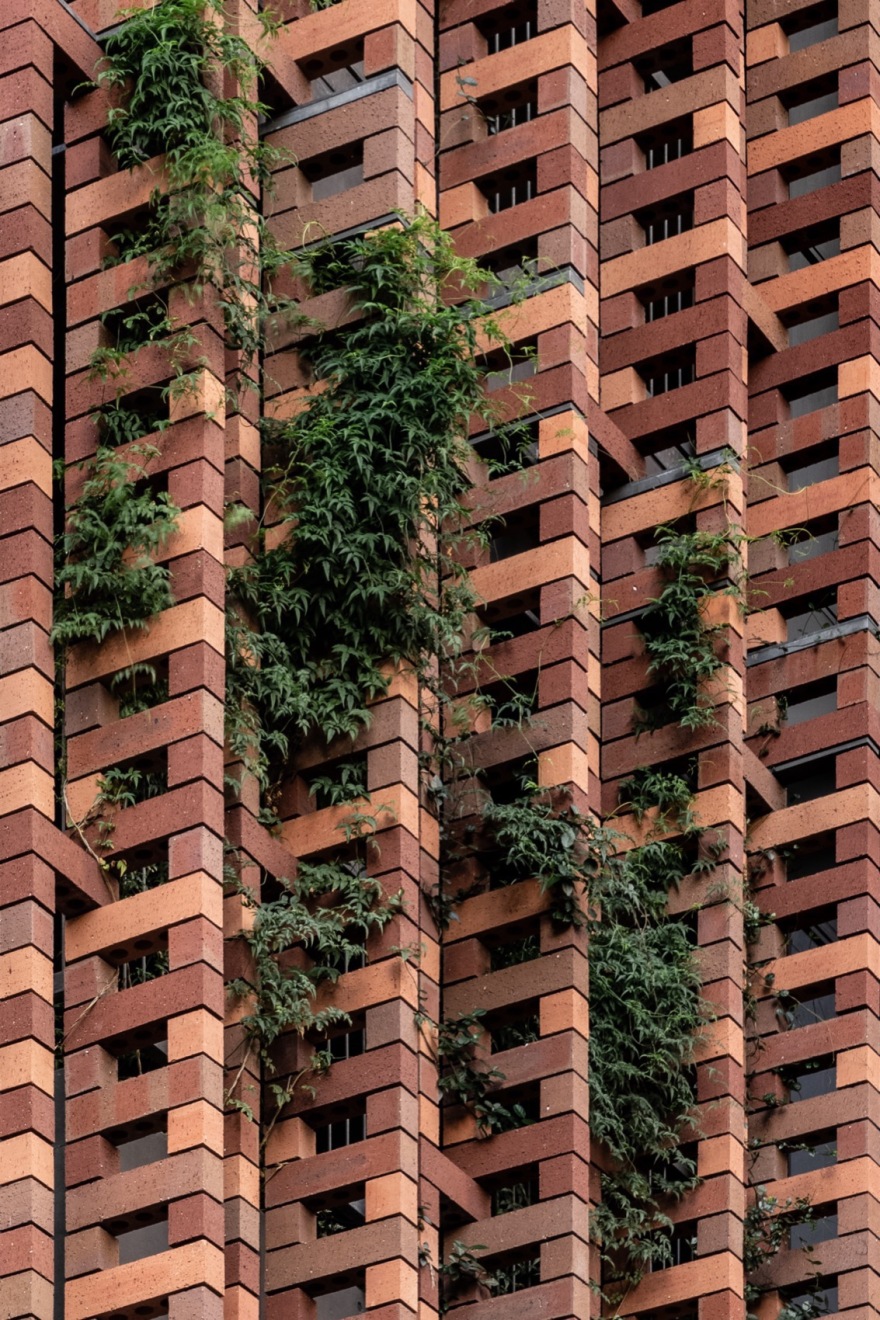

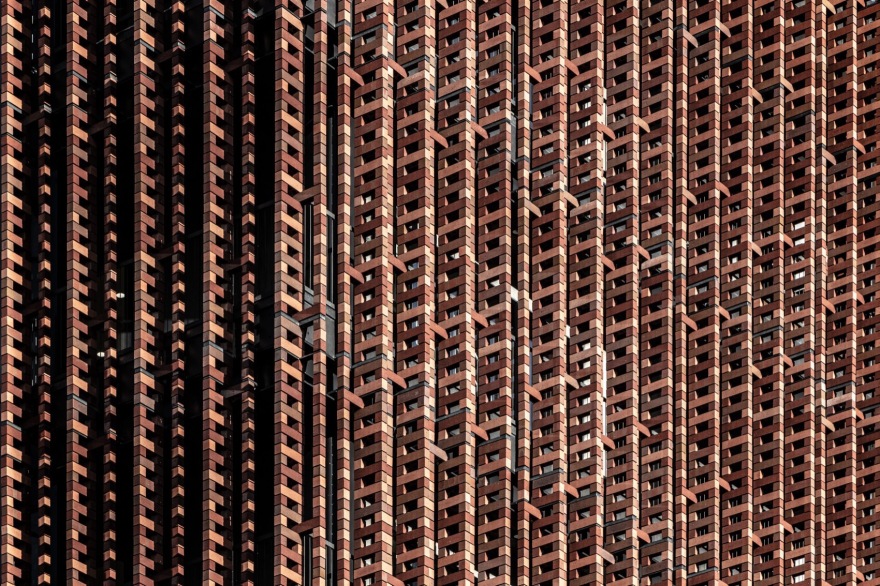

▼材料细部,material details© 日建设计

檐廊空间作为半室外的第三空间
Semi-Outdoor Third Spaces as Engawa
建筑平面设计非常简洁,由可容纳办公区、楼梯、卫生间和电梯等最小限度的核心筒和走廊构成。在面向路口的转角处设有大进深的阳台,阳台具有遮阳(屋檐)、安全疏散通道和第三空间(檐廊空间)功能。阳台被定位为可以松散分隔内外的开放型公共空间。巧合的是,在新冠疫情期间,这座公共建筑拥有的可以遮雨和直连外部空气的半室外阳台,作为独一无二的安全保障,在非常时期促成了建筑公共性及多功能性的实现。
The floor plan is elegantly simple, comprising essential office spaces, a minimal core housing staircases, restrooms, and elevators, and connecting corridors. At the intersection-facing corner, a deep balcony offers a multi-functional engawa space, providing shading, a safe evacuation route, and a welcoming semi-public third space. This balcony, capable of being subtly enclosed, exemplifies an open yet adaptable public space. During the period of COVID-19 pandemic, its unique semi-outdoor design—being both ventilated and sheltered—proved invaluable, offering a rare combination of safety and versatility. This feature underscores the building’s role as a resilient and multi-purpose public facility in times of both normalcy and crisis.
▼夜景,night view© 日建设计

▼平面图,plan© 日建设计

▼剖面,section© 日建设计

▼剖面,section© 日建设计

▼材料细部,material details© 日建设计

项目名称(中文) 千代田区万世桥办事处・区民馆
项目名称(英文) Mansei-bashi Branch Office/Citizen Hall
用途 市政府办公楼・办公室・儿童福祉设施
所在地(都道府县、市) 日本东京都千代田区外神田
用地面积(m2) 551.15 ㎡
建筑面积(m2) 3653.68 ㎡
层数 地上9层、地下1层
檐口高度/最高高度(m) 37.885/39.35
主体结构 钢结构,部分为钢骨钢筋混凝土结构
竣工年月 2020/12/12
Project Name Mansei-bashi Branch Office/Citizen Hall
Usage Municipal Office, Administrative Office, Child Welfare Facility
Location (Prefecture, City) Sotokanda, Chiyoda City, Tokyo
Site Area (m²) 551.15 ㎡
Total Floor Area (m²) 3653.68 ㎡
Number of Floors 9 above ground, 1 below ground
Height to Eaves / Maximum Height (m) 37.885/39.35
Primary Structure Steel (S) with partial Steel Reinforced Concrete (SRC)
Completion Date 2020/12/1




南京喵熊网络科技有限公司 苏ICP备18050492号-4知末 © 2018—2020 . All photos and trademark graphics are copyrighted by their owners.增值电信业务经营许可证(ICP)苏B2-20201444 苏公网安备 32011302321234号
苏公网安备 32011302321234号客服
消息
收藏
下载
最近