

创作上传
VIP
收藏下载
登录 | 注册有礼
查看完整案例

收藏

下载

分享
位于阿尔施维尔的瑞士创新园区(Switzerland Innovation Park)是生命科学企业的重要聚集地,并仍在持续发展中。可持续办公建筑 Hortus 为新一代落户巴塞尔都市圈的科技企业创造了一个现代且灵活的工作环境。业主Senn委托Herzog & de Meuron设计一座由可再生、可回收建筑材料建造的高度可持续办公建筑。
The Switzerland Innovation Park, Allschwil, home to life sciences enterprises, continues to grow. The sustainable Hortus office building creates a modern and flexible working environment for a new generation of technology companies that are settling in the Basel metropolitan region. Our client, Senn, commissioned us to design a radically sustainable office building made of renewable and recyclable building materials.
▼项目概览,overall of the project© Maris Mezulis
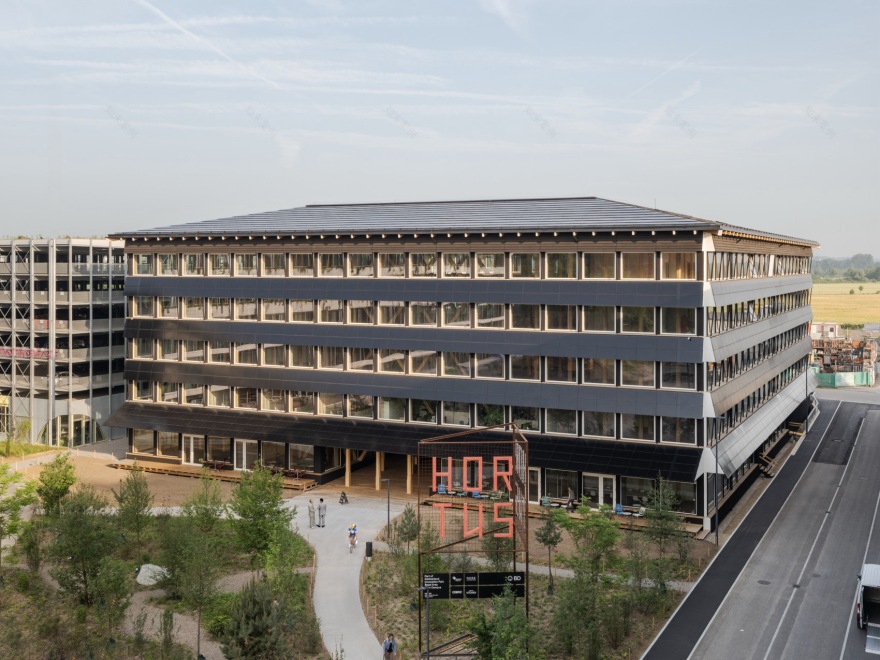
▼项目鸟瞰,aerial view of the project© Maris Mezulis

该项目的目标是在施工阶段尽可能降低灰色能耗,在运营阶段实现能源优化,并实现自发能源的盈余。这座可容纳约600个工作岗位的建筑将在31年内完全抵消其建造过程中消耗的能源。Herzog & de Meuron与Senn及一支经验丰富的专业规划团队的合作,最终促成了德语区最具可持续性的办公建筑之一。
The brief initiated a design process aimed at combining the lowest possible grey energy during construction, an energy-optimized concept during operation, and a surplus of self-generated energy. After 31 years, the building, which has around 600 workplaces, will have fully offset the energy used during its construction. Our collaboration with Senn and a team of experienced specialist planners has resulted in one of the most sustainable office buildings in the German-speaking world.
▼外观视角,exterior view© Maris Mezulis

中庭作为绿色核心
Atrium as Green Oasis
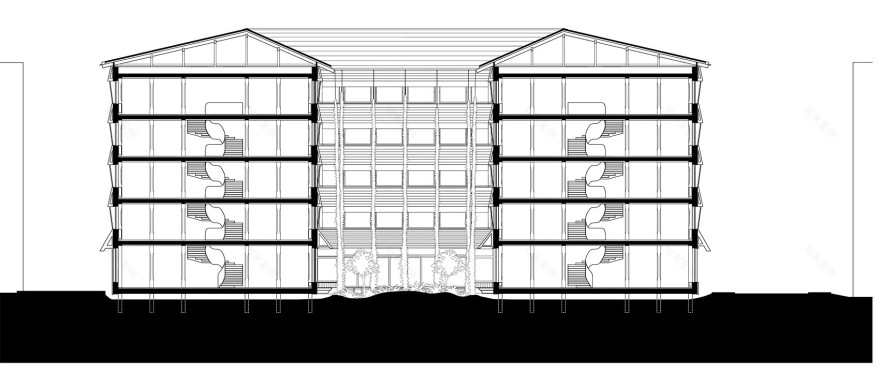
建筑围绕一个绿色中庭展开,并以柱脚架空,轻盈地悬浮于地面之上。四层木结构体系结合夯土楼板,在南侧形成一条通往 Piet Oudolf 设计花园的开放通道。庭院内种植高灌木、草本植物与攀援植物,沿弧形碎石路径形成层次丰富的绿化景观。中庭下方设置雨水收集系统,用于植物灌溉及卫生用水。设有木质廊道的中庭成为员工与访客的休憩空间。首层同时向公众开放,容纳餐厅、健身房、咖啡吧及共享座位区,并提供可对外租用的会议空间。
▼分析图,analysis diagram©Herzog & de Meuron

The building wraps around a green atrium. It stands on stilts, floating slightly above the ground. The four-storey timber-frame construction with rammed-earth ceilings opens to a wide passageway in the south that leads to a garden designed by landscape architect Piet Oudolf. Tall shrubs, grasses, flowering perennials, and climbing plants on the courtyard façades provide dense greenery along a curved gravel path. Underneath the garden is a rainwater collection tank that is used for watering the plants and for the sanitary facilities. The atrium, with its covered wooden veranda, serves as a recreational area for employees and visitors to take a break. In addition to other meeting rooms available for external parties to rent, the ground floor provides a restaurant, a gym with a café bar, and seating niches for the public.
▼中央庭院,central courtyard© Maris Mezulis

▼建筑围绕绿色中庭展开,the building wraps around a green atrium© Maris Mezulis


▼檐下空间,space under eaves© Maris Mezulis

灵活协作的办公方式
Collaborative Use
上部四层共约10,000平方米的办公空间采用开放式布局,鼓励交流与协作,并支持多样化使用方式。不同尺度的开放或半私密工作区可根据团队需求灵活配置,既分布于室内,也延伸至室外廊道。每层均设置公共休息区与茶水间,部分空间为多用户共享。首层及朝向南侧公园的廊道对所有访客开放。
The open plans of the four upper floors, which offer approximately 10,000 m² of office space, encourage employee engagement and exchange. The open layouts allow for flexibility and variety in use. Depending on their needs, teams have access to protected or open seating areas of various sizes, either inside or outside on the veranda. Some areas are shared with the other users. Each floor has communal lounges and kitchenettes. The ground floor and the veranda facing south towards the park are accessible for all visitors.
▼木制支撑结构,wooden support structure© Maris Mezulis

▼有室内看庭院,viewing the courtyard from interior© Maris Mezulis

▼底层休闲空间,ground floor leisure area© Maris Mezulis
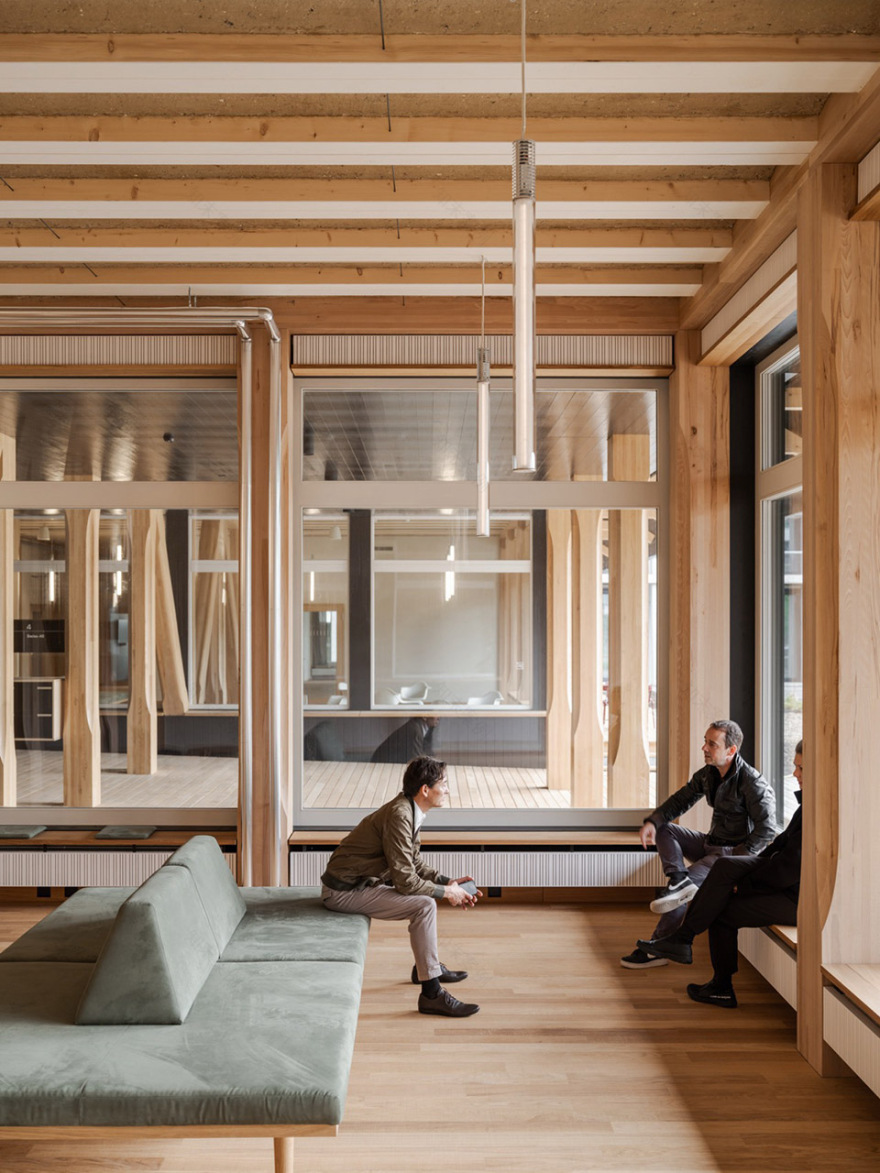
▼底层咖啡厅,ground floor cafe© Maris Mezulis


▼明亮开放的空间氛围,bright and open ambiance© Maris Mezulis

▼多样化的座位区,various type of seating area© Maris Mezulis
可循环的材料体系
Materials in Circulation
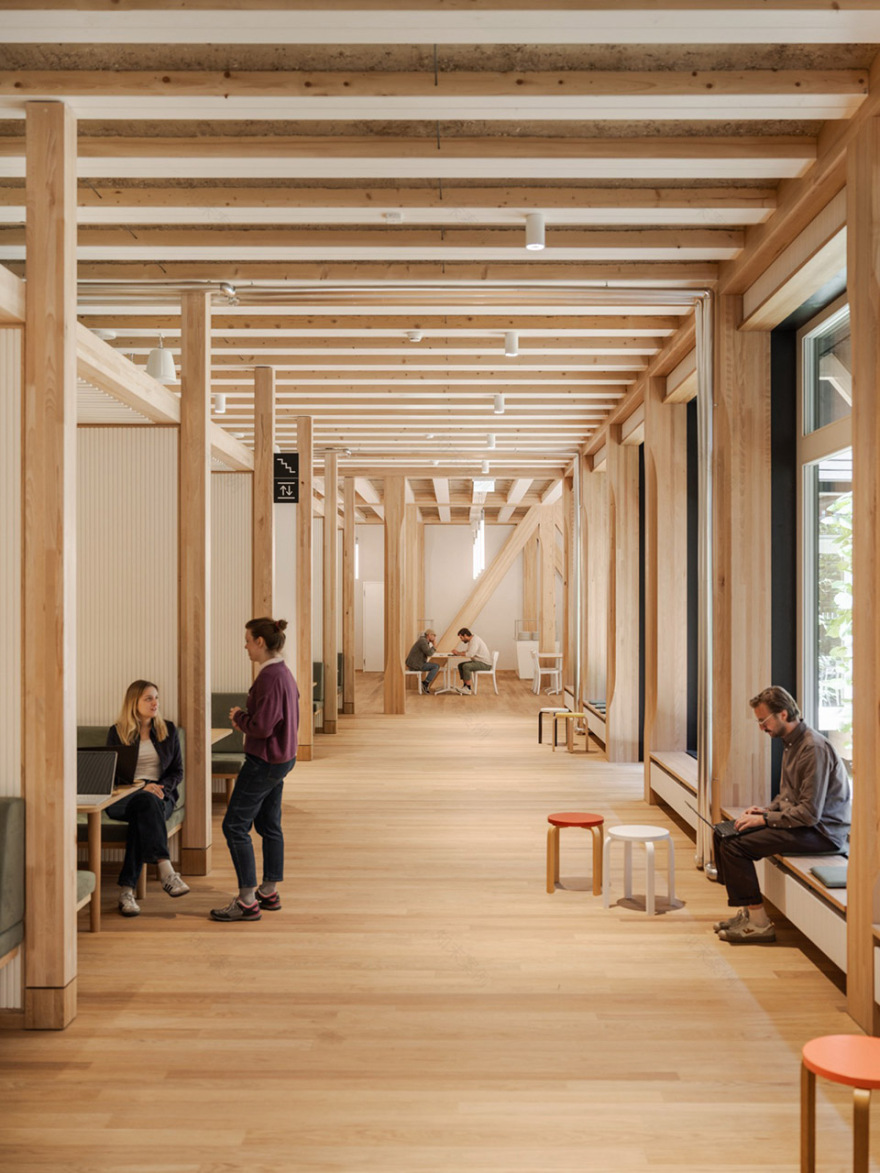
HORTUS 是 “House of Research, Technology, Utopia, and Sustainability” 的缩写,项目以材料循环与生态建造为核心议题。设计伊始即对建筑材料进行系统分析与比较,重点考察其环境影响与物理性能,优先选用天然、可再生材料。遵循“从摇篮到摇篮”的原则,所有构件均被系统登记,以便未来拆解与再利用。楼板中的黏土可直接回归土壤。项目采用以木材、压实黏土和纤维素为主的简化材料体系。木构节点避免使用金属连接,使建筑在生命周期结束后能够被完整拆解并再次利用。
HORTUS stands for House of Research, Technology, Utopia, and Sustainability. It focuses on innovative sustainability concepts. The design process began with a scientific analysis of materials, in which construction materials were tested and compared based on their environmental and physical characteristics. One of the main criteria was that they be naturally sourced from renewable materials. Following the “cradle-to-cradle” principle, all building components were cataloged for future reuse. The clay from the ceiling modules can be returned directly to the ground. The reduced palette of renewable materials, including wood, compressed clay, and cellulose, highlights the ecological principles of Hortus’s modular timber-frame construction. Timber joinery was employed to avoid metal connections so that, at the end of the building’s lifespan, the components can be easily dismantled and reused.
▼走廊上的洽谈/工作区,meeting/working area in circulation space© Maris Mezulis


混合楼板系统
New Floor System
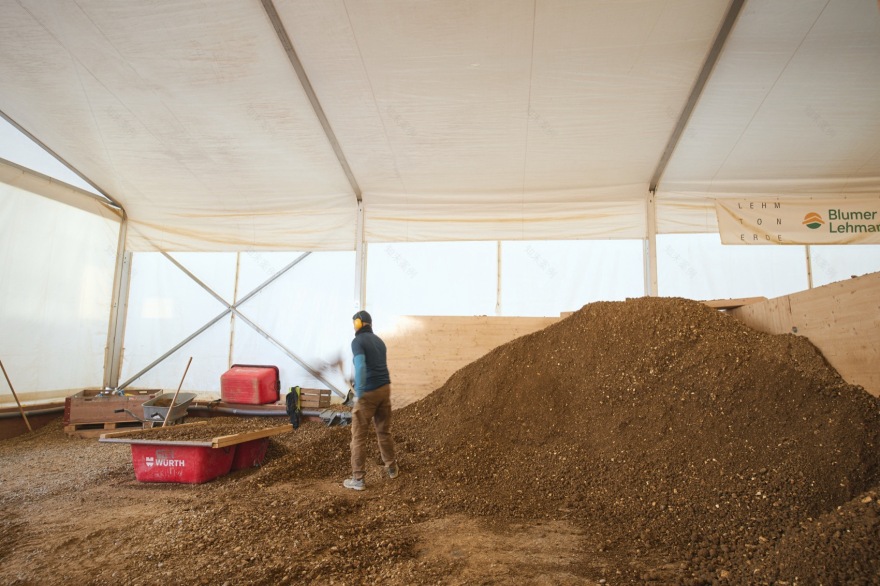
项目与 ZPF Engineers 合作开发了一种由木构框架与压实黏土组成的混合楼板系统,并与 Blumer Lehmann 及 Lehm Ton Erde 共同完善。每个混合单元由取材自周边森林的预制木框架构成,黏土以拱形形式填充于框架内的木梁之间。高密度黏土不仅具备防火性能,同时在夏季作为热惰性体,吸收多余热量。楼板在本地生产,所用黏土直接取自施工现场,并在建筑旁的临时工厂中完成制作。通过 Lehm Ton Erde 为 Hortus 专门开发的工艺,黏土混合物在现场制备并夯实至木模块中。与承载能力相当的传统混凝土平板相比,该黏土—木结构楼板系统的碳排放量低约十倍。
In collaboration with ZPF Engineers, we developed a hybrid floor system consisting of rectangular timber elements and compressed clay. We perfected the ceiling modules with the help of Blumer Lehmann and Lehm Ton Erde. Each hybrid element consists of a prefabricated wooden frame made with timber harvested from nearby forests. Clay is compressed in the form of a vault between the inlaid wooden beams of the frame. The dense clay provides fire protection and serves as a thermal mass in the summer, absorbing excess heat. The floor slabs have been produced locally. The clay is excavated from the construction site, and each floor slab was manufactured in a field factory next to the building. Using a process specially developed for Hortus by Lehm Ton Erde, the clay mixture was produced directly on site and tamped into the wooden modules. The carbon emissions of the clay-timber floor system are ten times less than a conventional flat concrete floor with a comparable load capacity.
▼架空空间,grey space© Maris Mezulis

▼办公空间,working space© Maris Mezulis


▼楼梯,staircase© Maris Mezulis
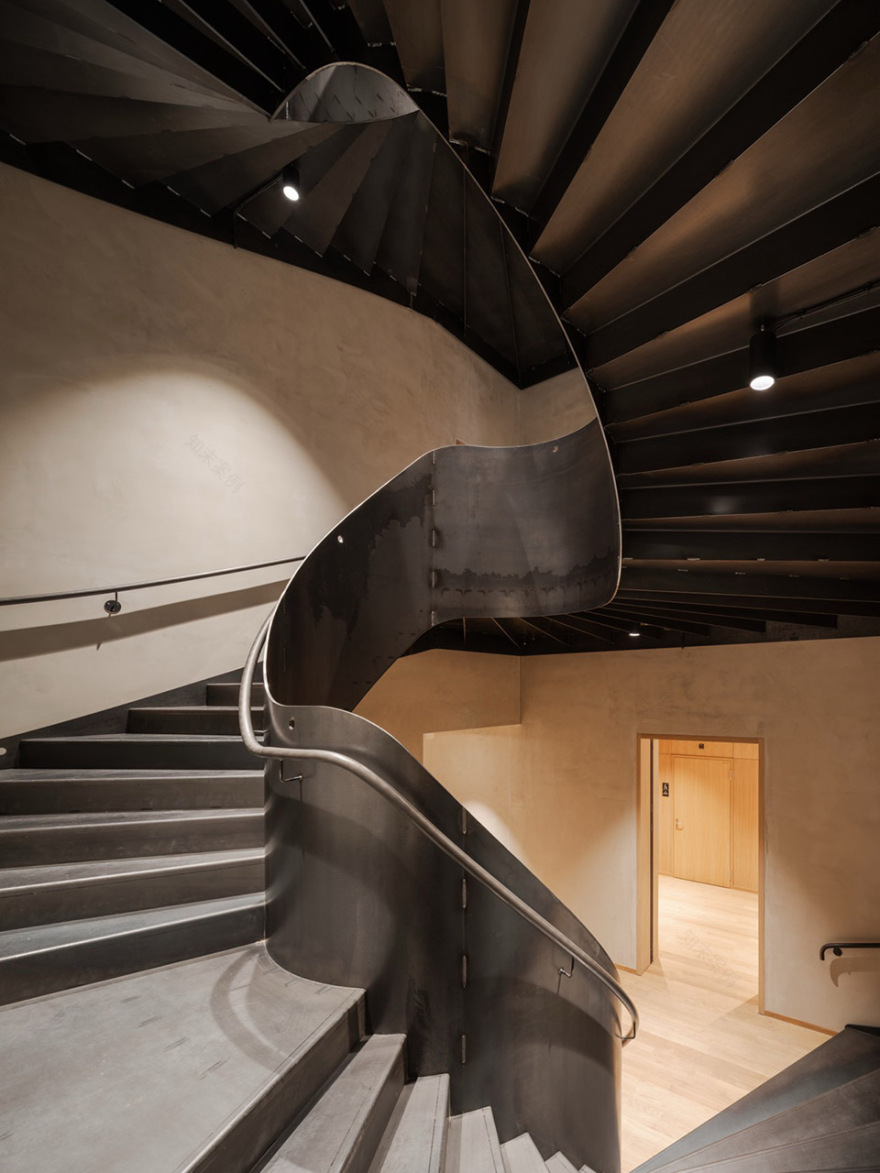
正能量建筑与能源策略
Energy Positive and Carbon Reduction
项目旨在大幅降低建筑的碳足迹,并整合一套整体性的可持续设计策略,其标准显著高于 SIA 2040 等环境可持续建筑规范。紧凑的建筑体量减少了能量损耗。由于没有混凝土地下室,建筑仿佛悬浮于地形之上,下方空气在夏季保持凉爽、冬季相对温暖,与地热供能系统共同调节室内温度。约5,000平方米的光伏板布置于屋顶及女儿墙位置,用于生产可再生能源。该系统从启用第一天起即产生能源盈余,使建筑施工阶段所消耗的隐含能量可在31年内完全抵消。
The design aims to drastically minimize the building’s carbon footprint and incorporates a holistic sustainability concept. It substantially exceeds guidelines for environmentally sustainable buildings, such as SIA 2040. The compact building form reduces energy loss. Not having a concrete basement, the building essentially floats over the landscape. The air underneath the building is cool in the summer and warm in the winter. Together with geothermal energy for heating and cooling, it regulates the room temperature. A photovoltaic surface of approximately 5,000 square meters on the roof and along the parapets provides renewable solar energy. This system generates a surplus from day one; therefore, the embodied energy necessary for constructing the building will be fully amortized within 31 years.
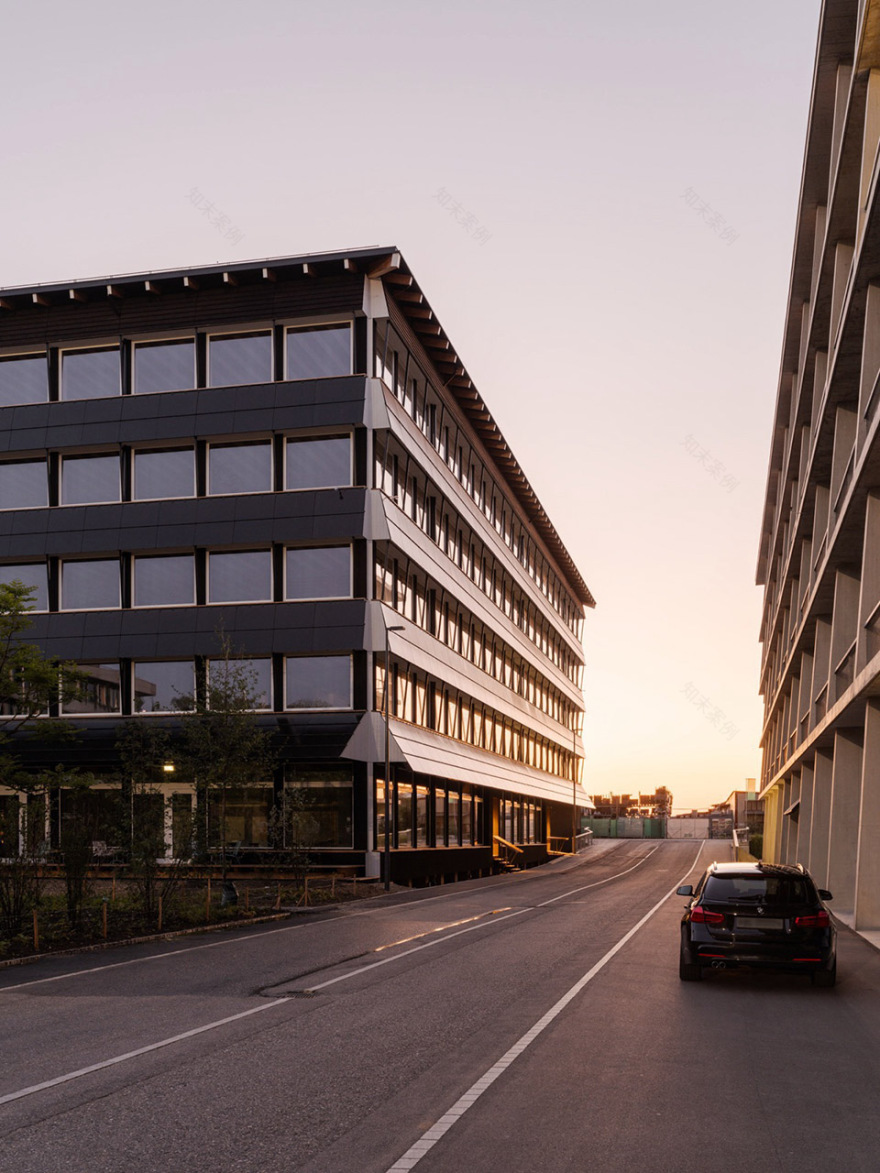
▼街景,street view© Maris Mezulis

▼立面,facade© Maris Mezulis

▼夜景,night view© Maris Mezulis
Herzog & de Meuron 的可持续理念
Sustainability at Herzog & de Meuron
Herzog & de Meuron 将可持续性视为建筑行业面临的核心挑战。可持续性不仅应体现在建成环境中,也应体现在我们的生活方式中,其核心在于整体性思维。根据国际能源署(IEA)和世界经济论坛(WEF)的研究,建筑行业约消耗全球40%的原材料与能源,同时也是全球碳排放的主要来源之一。作为建筑师,我们认为有责任改变这一现状。实现气候中和建筑不仅需要环境友好的建造原则,更需要持续的设计探索,并针对具体的地理、城市与文化语境量身定制解决方案。Hortus 的实践表明,可持续建筑既能成为本地能源与材料的来源,同时也可以在美学、健康性、使用价值以及对经济、环境与社会的贡献之间取得平衡。
Herzog & de Meuron understands sustainability as a key challenge of the building industry. Sustainability should be a feature not only of our built environment but also of how we live in it, with a focus on a holistic approach. According to studies by the IEA (International Energy Agency) and the WEF (World Economic Forum), the construction sector is responsible for approximately 40 percent of global raw material and energy consumption and is simultaneously one of the main producers of carbon emissions worldwide. As architects, we see it as our task to influence this statistic. Planning climate-neutral buildings requires environmentally sound building principles and a commitment to an ongoing design process that responds to each geographic, urban, and cultural context.The example of Hortus demonstrates that sustainable architecture can act as a local source of energy and raw materials while remaining aesthetic, healthy to build and occupy, and beneficial for the economy, the environment, and society.
▼木制建筑结构,wooden structure© Maris Mezulis


▼细部,details© Maris Mezulis


Herzog & de Meuron, 2025
“我们需要重新思考:可持续性应当成为我们所创造一切事物的核心——事实上,是我们所做的一切。这将催生出意想不到且令人惊喜的建筑,并呈现出其独特的美。这既是一项挑战,也是一种激励,因为它质疑既有的审美规范,并为我们开启新的路径。”—— Jacques Herzog
“Hortus 代表了生态可持续性的极致追求,这一主张几乎难以再被推进。建筑遵循‘乐高原则’,所有构件均为模块化,可完全拆解,回归自然或用于其他建筑。我们将疗愈型建筑的理念引入办公建筑,对天然材料、光线、空气质量、通过绿色中庭与自然的联系,以及社会互动的促进,共同营造了一个健康而富有启发性的环境。”—— Stefan Marbach,Herzog & de Meuron 高级合伙人
“Hortus 展示了建筑中实现激进可持续性的可能性,并以人的福祉为核心塑造了一个具有吸引力的场所。该项目促成了 Herzog & de Meuron 内部可持续团队的成立。我们将可持续性视为设计早期不可分割的一部分,并通过专业团队、概念性思维、经验与最新数字工具参与决策。”—— Alexander Franz,Herzog & de Meuron 可持续设计负责人
“We need to think anew: sustainability should be at the forefront of everything we produce—indeed, everything we do. This will result in unexpected and surprising architecture with a beauty of its own. It is a challenge, but it is also a stimulating incentive, because it questions aesthetic norms and opens up new approaches for us.”
— Jacques Herzog
“Hortus stands for maximum ecological sustainability—the claim can hardly be extended any further. The architecture follows the Lego principle: all elements are modular. They can be completely disassembled and either returned to nature or reused for other buildings…”
— Stefan Marbach, Senior Partner, Herzog & de Meuron
“Hortus has shown how radical sustainability in architecture is possible… The project initiated the formation of an internal Herzog & de Meuron Sustainability Team…”
— Alexander Franz, Lead Sustainability, Herzog & de Meuron
▼施工过程,construction process© Maris Mezulis


▼轴测图,axonometric drawing©Herzog & de Meuron

▼总平面图,site plan©Herzog & de Meuron
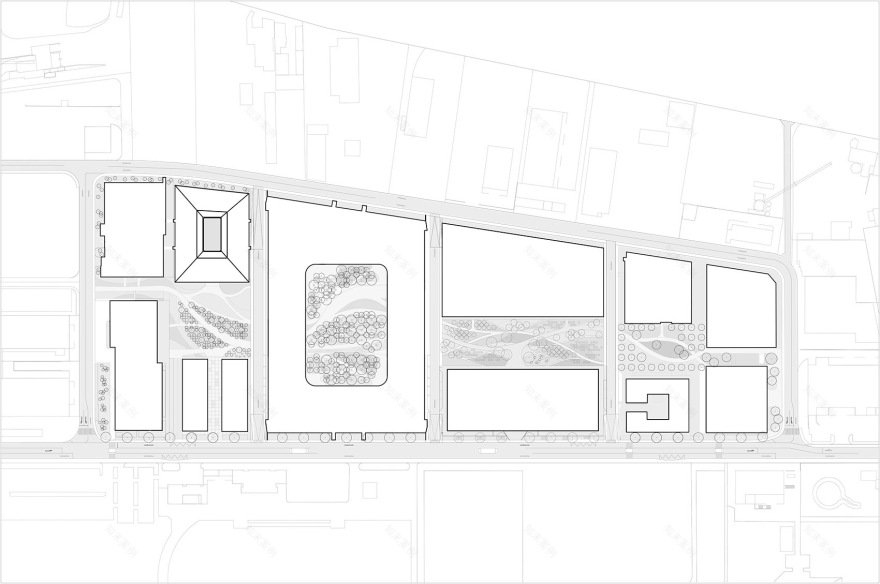
▼一层平面图,level 0 plan©Herzog & de Meuron

▼二层平面图,level 1 plan©Herzog & de Meuron

▼结构平面图,structure plan©Herzog & de Meuron

▼立面图,elevation©Herzog & de Meuron

▼剖面图,sections©Herzog & de Meuron

▼细部详图,construction details©Herzog & de Meuron

Project Number 543
Project Official Name Hortus
Location Allschwil, Switzerland
Project Phases Concept Study Apr 2020 – Oct 2020
Schematic Design Jan 2021 – Nov 2021
Design Development Jan 2022 – Jul 2022
Construction Documents Aug 2022 – Jun 2023
Construction Services Dec 2022 – May 2025
Client Senn Resources AG, St. Gallen,Switzerland



南京喵熊网络科技有限公司 苏ICP备18050492号-4知末 © 2018—2020 . All photos and trademark graphics are copyrighted by their owners.增值电信业务经营许可证(ICP)苏B2-20201444 苏公网安备 32011302321234号
苏公网安备 32011302321234号客服
消息
收藏
下载
最近