

创作上传
VIP
收藏下载
登录 | 注册有礼
查看完整案例

收藏

下载

分享

翻译
Architects:Tectoniques
Area:5180m²
Year:2025
Photographs:Maxime Verret,Salem Mostefaoui
Contractor:Eco Urbain for the city of Colombes
Landscape Architect:Altitude 35
Ecologist:Biodiversita
Structural Engineering:Tectoniques Ingénieurs
Category:Schools
Architecture Mandataire:Maître Cube
Economy:Tectoniques Ingénieurs
Fluides:Tectoniques Ingénieurs
Environmental Quality:eEgenie
Acoustics Engineering:Gamba
Kitchen Designer:PK
Roads And Networks:Ivoire
Fire Sprinkler Design:SPK
City:Colombes
Country:France

Text description provided by the architects. Tectoniques' recently completed Dominique Frelaut school group in Colombesis is notable for its verticality. Its staggered upper floors and varied pathways create a close relationship between the architecture and the landscape.

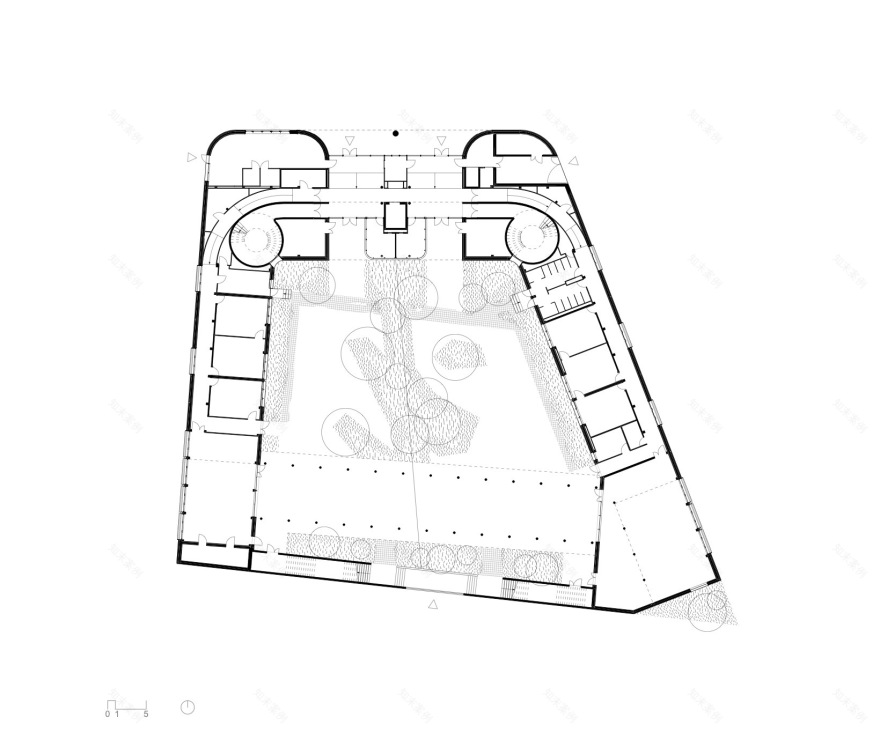
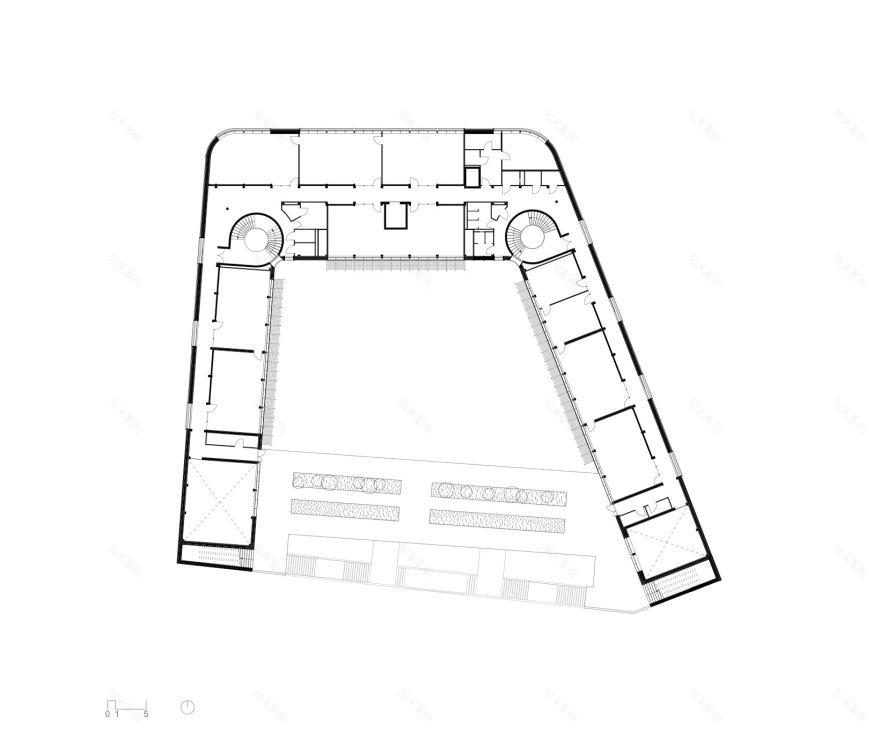
Situated in a heterogeneous and dense urban context, the school group rises on a relatively small plot, formerly part of an Ericsson industrial site, of which nothing remains. The significant size of the facility and the added requirement of a green playground offered the opportunity to propose a vertical school with singular pathways, in an interweaving of architecture and landscape. Presenting a clear and easily recognizable form, at once monumental and familiar, the building coils around the playground like a protective enclosure.
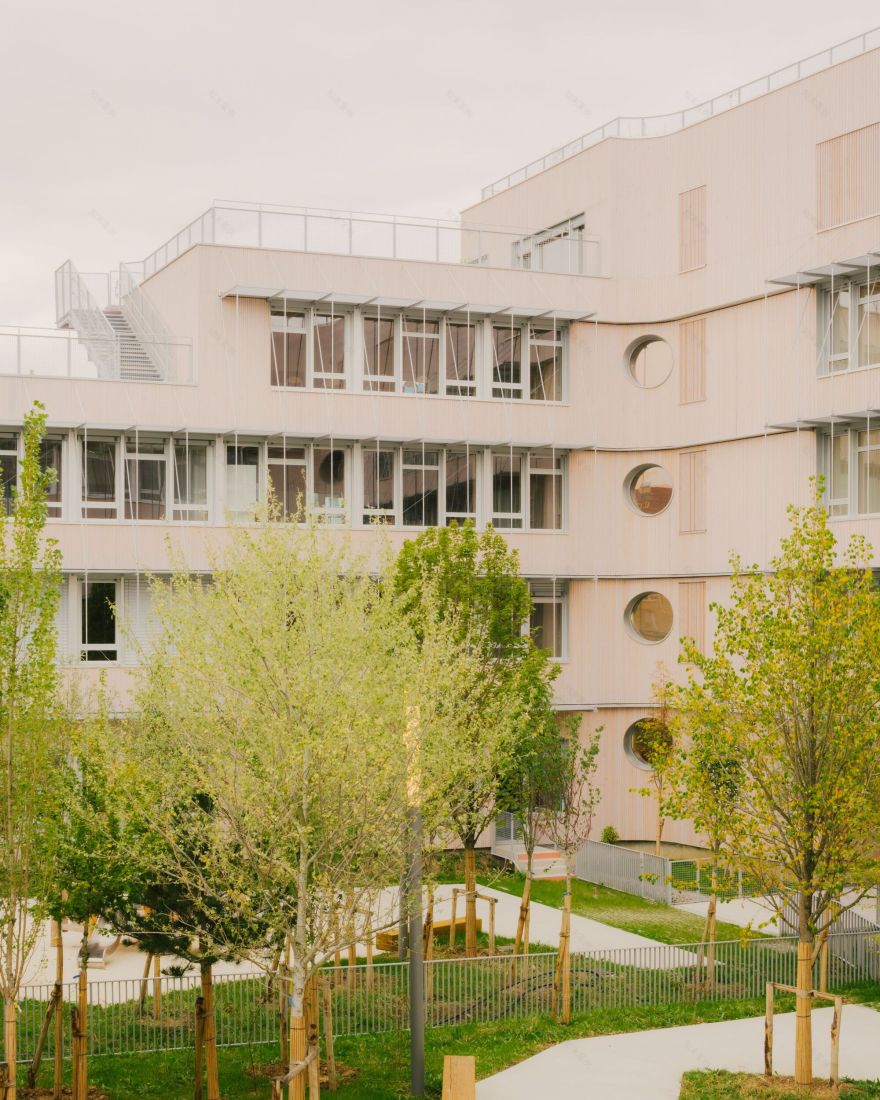
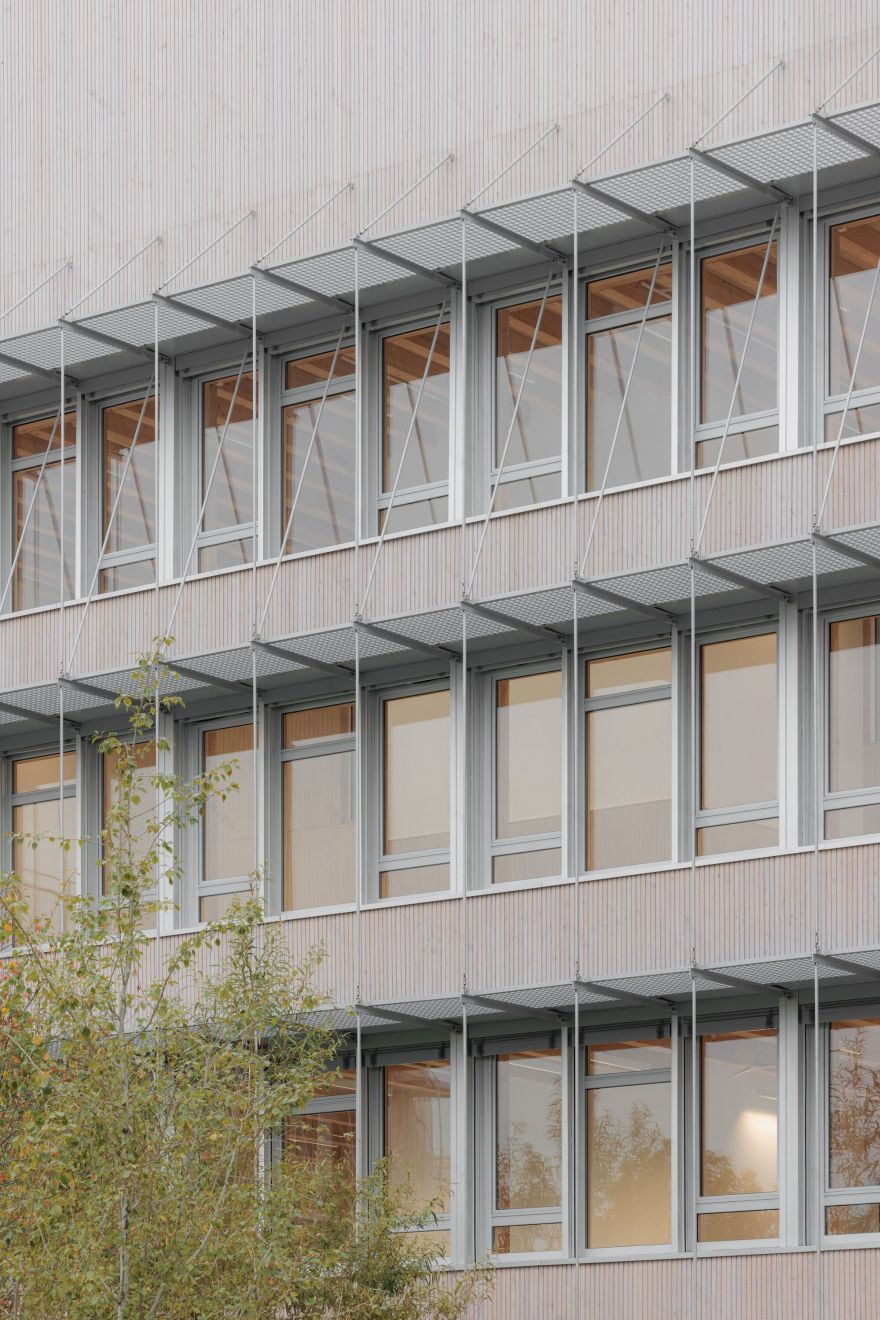
Double Façade - On the city side, the façades form a terracotta enclosure, echoing the brick heritage of the Ile de France region with Alvar Aalto's influence fully acknowledged. The plaquettes are placed vertically to emphasize their status as cladding. Alternating flat and convex plaquettes create a ribbed texture, giving relief to the façade and changing its perception depending on the view and daylight. The façades are made of wood on the courtyard side and the uppermost floor. They have an ultra-thin hanging metal structure holding wooden slats, providing shade and supporting climbing vines rooted in the courtyard soil.

Miniature Parisian Basin - A classroom is removed on each floor to create space for a hanging garden balcony overlooking the town. On the south side, the roof of the playground serves as a vast platform laid out asa teaching garden, linking the building's two wings. The building's footprint leaves a large area of exposed soil in the courtyard, partially clad in reused materials, echoing the landscapes of the Seine's alluvial plain and riparian forest.


The central space, the focal point of the composition, collects and filters rainwater falling on the site. The terraces are a miniature arboretum, presenting the different natural environments of the Paris Basin and the variety and depth of its soils, enhanced by differences in the physical chemistry of its substrata. This stratified landscape follows an altitudinal gradient specific to the Paris Basin: below, the Seine; above, woods and dry grasslands.


Pleasant Pathways - The staggered organization of the floors creates a network of pathways through the architecture. Two large concrete cylindrical volumes house monumental, open, and helicoidal staircases that benefit from natural light. A playful and intriguing mirror disk on the ceiling invites one to climb it. Exterior staircases cascade down to the courtyard, linking all the terrace levels and offering an open-air path with multiple panoramic city views.

Seeing Big - Natural light floods the corridors through picture windows whose diagonal distribution on the façade follows the pattern of staggered volumes. Entrances to classrooms, in the same proportions and largely glazed, are located facing vast frameworks that overlook the city. This organization sets up deep perspectives through the building, floods classrooms with indirect sunlight, and ensures natural ventilation through the premises. Thus, all the classrooms, identical in their proportions, are different in their configuration and their relationship with the exterior. On the fourth and last floor, the lunchroom enjoys a panoramic view of the Paris skyline.


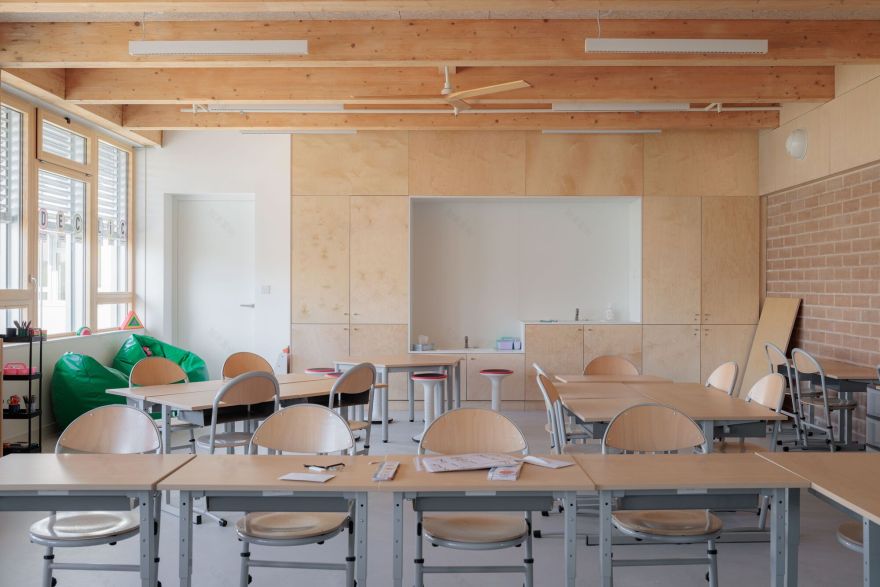
Learning from the Inside - Partition walls between corridors and classrooms are clad in compressed earthen bricks. Exposed on both sides, the brick brings character to the spaces whilst also contributing to optimizing inertia and hygrometry. The built-in furnishings, designed and produced with poplar plywood, soften the brutalism of some equipment and service features. In furtherance of this goal, the structure and utility networks remain exposed for learning purposes, enabling users to grasp how the building was constructed and how it functions. This simplicity also ensures less costly upkeep and maintenance.

Project gallery









南京喵熊网络科技有限公司 苏ICP备18050492号-4知末 © 2018—2020 . All photos and trademark graphics are copyrighted by their owners.增值电信业务经营许可证(ICP)苏B2-20201444 苏公网安备 32011302321234号
苏公网安备 32011302321234号客服
消息
收藏
下载
最近