

创作上传
VIP
收藏下载
登录 | 注册有礼
查看完整案例

收藏

下载

分享
Testing Ground: Adapting Fairways to Resilient Barrier Isle Ecosystems | Design Workshop, Inc.
项目陈述
Project Statement
杰基尔岛(Jeykll Island)的生态修复项目将一座老化的高尔夫球场转变为具备韧性的滨海景观,为低效利用土地的再开发树立了全国性范例。曾经支离破碎、生态退化的场地,如今正被重塑为生机勃勃的本土栖息地体系,包括长叶松稀树草原、滨海盐沼、海岸森林及香草草原。在景观建筑师的主导下,项目在生态修复与文化遗产之间取得平衡。通过恢复生境、提供休闲与科研机会、增强生态韧性并制定适应性管理策略,该项目不仅保护了岛屿的自然遗产,也使其成为美国沿海生态修复的范例。
Jeykll Island’s ecological restoration transforms an aging golf course into a resilient coastal landscape, setting a national precedent for repurposing underutilized land. Once a fragmented and degraded site, the landscape is being revitalized into thriving native habitat that includes longleaf pine savannas, coastal salt marshes, maritime forest, and sweetgrass prairie. Led by landscape architects, the project balances ecological restoration with cultural heritage. By restoring habitats, providing recreation and research opportunities, ensuring ecological resilience, and developing adaptive management strategies, this effort not only protects the island’s natural heritage but also positions it as a model for coastal restoration nationwide.
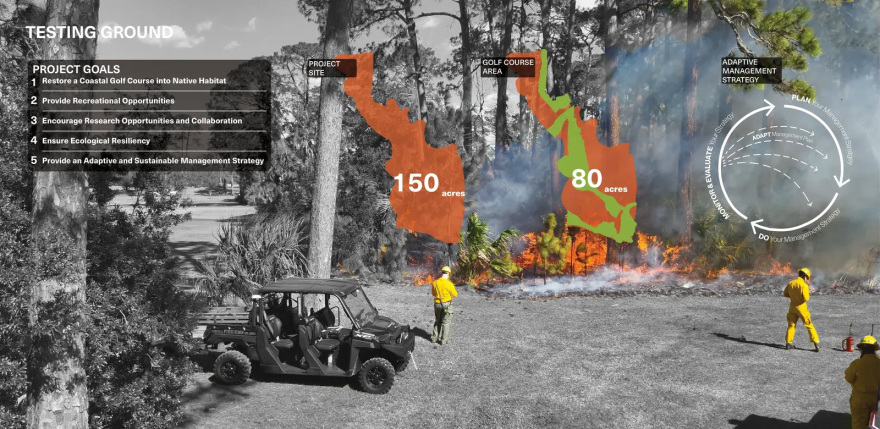
▲一处占地68英亩的高尔夫球场被转化为本土生态栖息地,将生态修复、气候韧性与社区主导的复育实践有机融合。A 68-acre golf course transforms into native habitat, blending ecology, climate resilience, and community-driven restoration. © Jekyll Island Authority / Design Workshop, Inc.
项目说明
PROJECT NARRATIVE
修复生态遗产:重塑杰基尔岛的本土生态系统
数百年的城市化进程使美国东海岸生态系统高度破碎,长叶松稀树草原的保留面积已不足原始覆盖的3%。位于乔治亚州海岸外的屏障岛——杰基尔岛,在气候变化、海平面上升、生物多样性丧失及文化景观消退的多重背景下,提供了逆转这一趋势的难得契机。项目将一处老化的高尔夫球场转化为健康的本土生境,恢复长叶松稀树草原、盐沼和香草草原。通过尊重岛屿的生态遗产与韧性特征,项目为沿海修复与可持续发展树立了国家级示范。
针对韧性与生物多样性的生态修复
项目通过有针对性的生态修复与适应性管理,提升生物多样性、气候韧性与土壤健康。通过移除草坪与外来入侵物种、重新引入耐火的本土植物,并为重点物种设计适宜生境,场地逐步转化为相互连通的生态网络,为受威胁与高风险物种提供支持,同时增强生态系统稳定性。项目还对现有基础设施进行再利用与改造,以应对海平面上升与风暴潮风险,例如改造沟渠与涵洞,以改善潮汐交换、水质与生境连通性。这些举措强化了岛屿的雨洪管理能力、防侵蚀能力及对气候变化的适应性,展示了景观建筑在恢复生态功能、降低环境风险方面的潜力。
创新的气候适应性设计
设计基于杰基尔岛的地形、水文条件及自然过程,对当前与未来的生态系统进行战略性布局。高地区域恢复为长叶松稀树草原,并重点保护关键淡水资源;低洼区域逐步过渡为半咸水湿地,以支持生境多样性、盐沼迁移及气候适应能力。传粉者草甸与香草草原等附加生态系统的引入,进一步恢复了生态复杂性并延续文化关联。这种分层式策略构建了一个具有韧性、可自我维持、能够适应环境变化的景观体系。
文化遗产与社区联结
生态修复同样致敬杰基尔岛深厚的文化历史,尤其是Gullah Geechee族群。香草的重新引入,是对其传统手工艺的致敬;解说步道、艺术装置与教育展示则引导访客深入理解岛屿复杂的生态与文化叙事。高架栈道与“活的课堂”为公众提供了直观的学习体验,有助于培养环境责任意识,增强社会对沿海生态系统的认知与珍视。
科学、设计与公众参与的融合
景观设计师主导了整个修复过程,将生态科学、气候适应与社区参与有机结合。通过深入的场地分析,团队制定了系统性的修复策略,用于恢复高地稀树草原与滨海湿地,并通过再利用现有基础设施提升生境连通性。教育与解说元素的设计在生态修复与公众可达性之间取得平衡,确保杰基尔岛在未来持续作为集保护、休闲与文化叙事于一体的重要场所。鉴于区域内高尔夫球场转型案例极为有限,业主也对该项目作出了长期承诺,将研究与经验传播作为项目的重要组成部分。

▲乔治亚州拥有美国东海岸约三分之一的重要盐沼资源,这些生态系统在保护野生动物、固存碳汇及抵御风暴方面发挥着关键作用。Georgia holds one-third of the East Coast’s vital salt marshes, protecting wildlife, storing carbon, and buffering storms. © Google Earth / Design Workshop, Inc.

▲杰基尔岛上的高尔夫球场割裂了生态系统;本次修复通过重建野生动物廊道,支持数量下降及迁徙性物种的生存与繁衍。Jekyll Island’s golf courses fragment ecosystems—restoration reconnects wildlife corridors, aiding declining and migratory species. © Adobe Stock / Design Workshop, Inc.
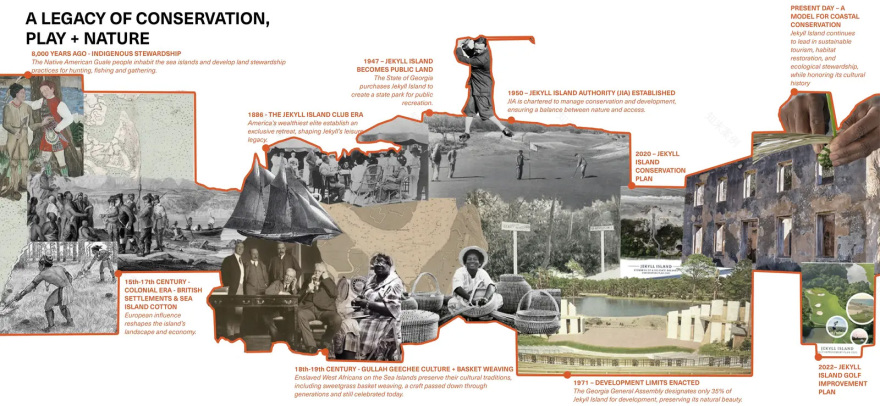
▲从原住民文化到精英度假胜地,杰基尔岛的历史不断演进,在历史传承、遗产保护与生态治理之间寻求平衡。From Indigenous heritage to elite retreats, Jekyll Island’s story evolves—balancing history, preservation, and ecological stewardship. © Multiple Sources / Design Workshop, Inc.

▲随着高尔夫球场逐步关闭,本项目将土地转化为关键生态栖息地,修复生态系统并增强应对气候变化的韧性。As golf courses close, this project transforms land into vital habitat, restoring ecosystems and resilience against climate change. © Design Workshop, Inc.
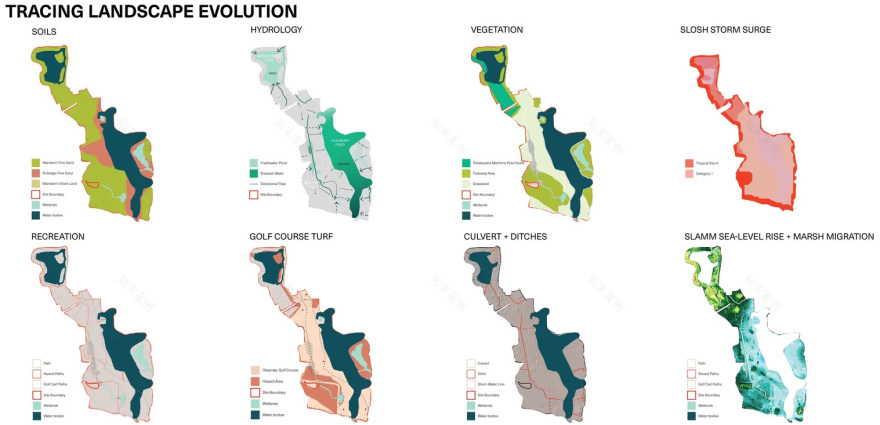
▲对生态系统与人类系统的综合分析,指导了修复策略的制定,重点回应海平面上升、盐沼迁移与咸水入侵等挑战。Ecological and human systems analysis shapes restoration strategies, addressing sea-level rise, marsh migration, and saltwater intrusion. © Design Workshop, Inc.

▲总体蓝图具有高度适应性,整合了生态、文化与专家意见,指导植物群落与生境的设计,以应对未来气候变化。A flexible blueprint integrating ecology, culture, and expert input to design plant communities and habitats for future climate resilience. © Design Workshop, Inc.

▲通过重塑植物群落与生态栖息地,为实现长期的社会、环境与经济可持续性提供了可量化的机遇。Transforming plant communities and habitats offers measurable opportunities for long-term social, environmental, and economic sustainability. © Design Workshop, Inc.

▲适应性策略引导了高地生态系统转型与盐沼迁移,在淡水保护与咸水扩张之间取得平衡。Adaptive strategies guide upland conversion and marsh migration, balancing freshwater protection with saltwater shifts. © Design Workshop, Inc.
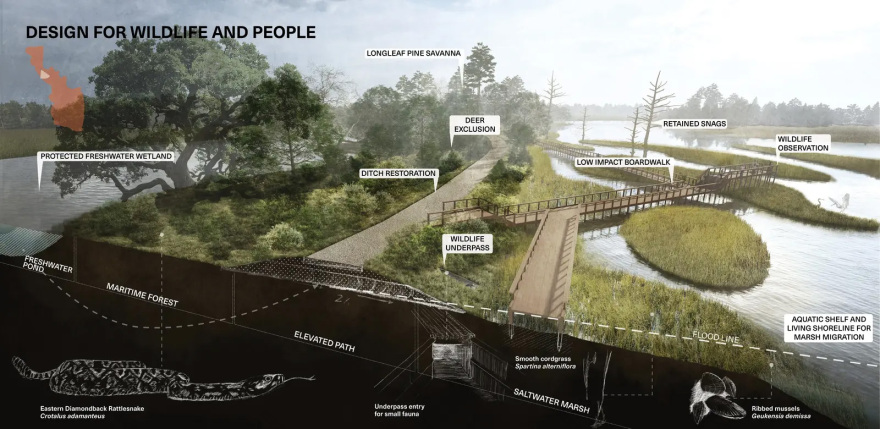
▲设计同时回应了野生动物与人类使用需求,通过动物通道与低干扰栈道,在提升生境质量的同时减少人兽冲突。The design integrates wildlife and human needs, enhancing habitats and minimizing conflicts, with fauna underpasses and low impact boardwalk. © Design Workshop, Inc.

▲通过观测掩体、浮动湿地与曝气装置的设置,实现了对野生动物与公众的共同修复,为各类物种营造安全的庇护空间。Restoring for wildlife and people with blinds, floating wetlands, and aerators—creating refuge for all species. © Design Workshop, Inc.
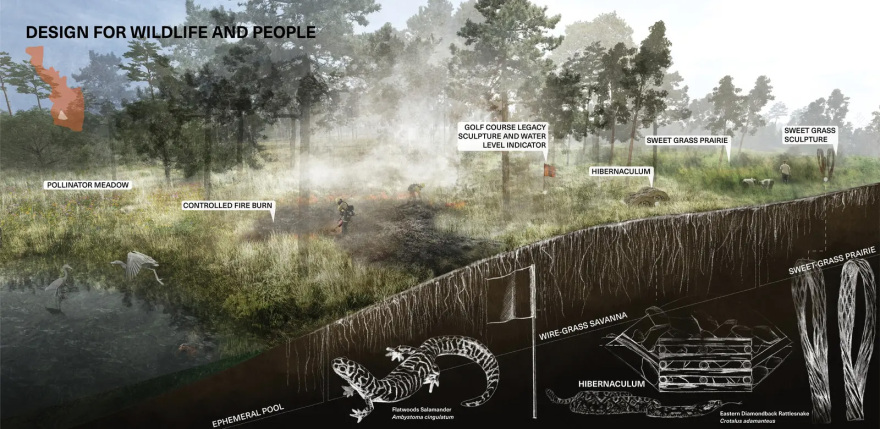
▲雕塑与导视系统致敬了包括Gullah Geechee社群在内的屏障岛居民与自然之间深厚而持久的联系。The project honors the deep connection of barrier island communities to nature, including the Gullah Geechee, through sculptures and wayfinding. © Design Workshop, Inc.
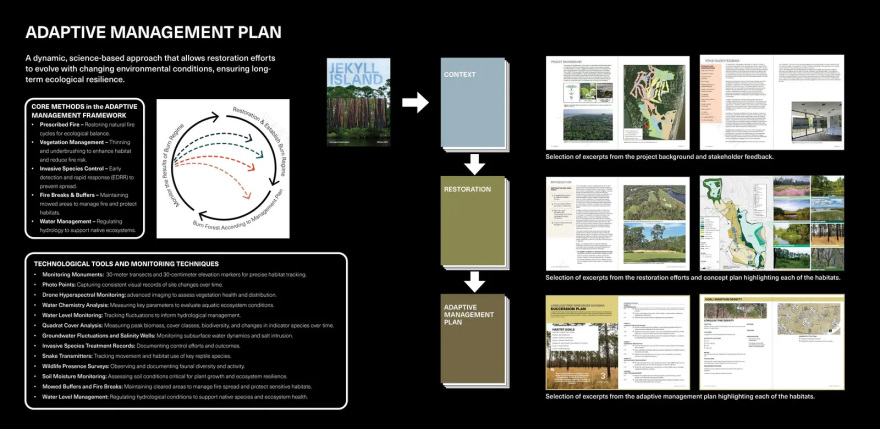
▲适应性规划随着新数据与环境条件变化不断演进,通过监测与反馈机制持续调整策略,确保长期成效。The adaptive plan evolves with new data and shifting conditions, integrating monitoring and feedback to adjust strategies for long-term success. © Design Workshop, Inc.

▲长叶松生境被恢复至其历史分布范围,重新引入耐火物种,促进生物多样性并提升抗风暴能力。Longleaf pine habitats are restored to their historic range, reintroducing fire-adapted species and fostering biodiversity and storm resilience.

▲动态森林系统的修复能够应对咸水与风暴影响,在支持独特物种的同时增强沿海韧性与生物多样性。The dynamic forest is restored to withstand saltwater and storms, supporting unique species while enhancing coastal resilience and biodiversity. © Design Workshop, Inc.

▲关键盐沼生境的修复旨在抵御咸水入侵,为多种物种提供避难空间,并改善养分循环与水质状况。This vital marsh habitat is restored to combat saltwater intrusion, providing refuge for species and enhancing nutrient cycling and water quality. © Design Workshop, Inc.
PROJECT NARRATIVE
Restoring a Legacy: Reclaiming Jekyll Island’s Native Ecosystems
Centuries of urbanization have fragmented U.S. East Coast ecosystems, reducing longleaf pine savanna to less than 3% of its original range. Jekyll Island, a barrier island off Georgia’s coast, offers a rare opportunity to reverse this decline amid climate change, sea-level rise, biodiversity loss, and the loss of cultural landscapes. This project transforms an aging golf course into thriving native habitats—restoring longleaf pine savannas, salt marshes, and sweetgrass prairies. By honoring the island’s ecological heritage and resilience, the project sets a national model for coastal restoration and sustainable development.
Ecological Restoration for Resilience and Biodiversity
This project employs strategic restoration and adaptive management to enhance biodiversity, climate resilience, and soil health. By removing turfgrass and invasives, reintroducing fire-adapted native plants, and designing habitats for target species, the landscape transforms into interconnected habitats that support threatened and at-risk species while increasing ecosystem stability. Repurposing existing infrastructure to anticipate sea-level rise and increased storm surge, such as converting ditches and culverts, improves tidal flows, water quality and habitat connectivity. These efforts fortify the island’s ability to manage stormwater, prevent erosion, and adapt to climate change, demonstrating how landscape architecture can restore ecological function while mitigating risks.
Innovative Climate Adaptive Design
This design strategically places habitats based on Jekyll’s topography, hydrology, and natural processes, both today and in the future. Upland areas are restored as longleaf pine savannas while critical freshwater resources are protected. Lower elevations transition into brackish wetlands, supporting habitat diversity, marsh migration, and climate adaptability. Additional ecosystems, like pollinator meadows and sweetgrass prairies, restore ecological complexity and cultural ties. This layered strategy creates a resilient, self-sustaining landscape that adapts to shifting environmental conditions.
Cultural Heritage and Community Connection
The restoration honors Jekyll Island’s rich cultural history, especially the Gullah Geechee people. Reintroducing sweetgrass pays homage to their traditional craft, while interpretive trails, art, and educational displays immerse visitors in the island’s complex ecological and cultural narratives and legacies. Elevated boardwalks and a living classroom provide firsthand learning experiences, fostering environmental stewardship and public appreciation for coastal ecosystems.
Merging Science, Design and Engagement
The landscape architect led the restoration, blending ecological science, climate adaptation, and community engagement. Through in-depth site analysis, the team developed a strategic approach to restoring upland savannas and coastal marshes, repurposing existing infrastructure to improve habitat connectivity. Educational and interpretive elements were thoughtfully designed to balance ecological restoration with public access, ensuring that Jekyll Island remains a place of conservation, recreation, and cultural storytelling for generations to come. Since there are very few examples of golf course conversions in the region, the client has made a long-term commitment to research and dissemination of the process as a critical component of the project.
南京喵熊网络科技有限公司 苏ICP备18050492号-4知末 © 2018—2020 . All photos and trademark graphics are copyrighted by their owners.增值电信业务经营许可证(ICP)苏B2-20201444 苏公网安备 32011302321234号
苏公网安备 32011302321234号客服
消息
收藏
下载
最近