

创作上传
VIP
收藏下载
登录 | 注册有礼
查看完整案例

收藏

下载

分享
莲花会所被构想为一个“有生命的有机体”,在呼吸之间与地形和周边自然环境保持和谐共生。建筑并未以孤立的体量出现,而仿佛从大地中自然生长而出,顺应原有的地势起伏、植被层次以及面向湖面的空间朝向。自最初的概念阶段起,项目便被定义为建筑形态、景观环境与在地文化之间持续展开的对话,体现了MIA Design Studio一贯倡导的设计理念——让建筑与自然共存。在这一过程中,建筑与环境的边界逐渐消融:莲花会所既是建筑,也是景观;既为人提供庇护,也成为自然延展的栖息地。
Lotus Clubhouse was conceived as a living organism, breathing in harmony with the terrain and the surrounding natural environment. Rather than appearing as an isolated architectural mass, the building seems to emerge from the ground itself, shaped by natural slopes, layers of vegetation, and its orientation toward the lake. From the earliest conceptual sketches, the project was defined as an ongoing dialogue between architectural form, landscape, and local cultural context, reflecting MIA Design Studio’s design philosophy of creating architecture that coexists with nature. As such, the boundaries between the structure and its environment gradually dissolve. Lotus Clubhouse is at once architecture and landscape; a place of shelter for people and an extended habitat for nature.
▼项目鸟瞰,Ariel view of the project © Hiroyuki Oki

在这一理念引导下,建筑由多个小尺度体量组成,总使用面积约2,000平方米,分散地编织在林冠之下。各功能单元以不同标高错落布置,通过蜿蜒的路径与映射天光的水面相互连接,形成一段在开放与静谧、明亮与阴影之间不断转换的空间行走体验。行走其中,仿佛漫步于自然之中:餐厅与儿童活动区等较为活跃的空间向湖面敞开,而水疗、休息厅与冥想空间则退入树影婆娑的静谧角落。由于整体布局的分散与低调,建筑在远观时几乎隐没于环境之中,既降低了视觉存在感,也强化了由光、风与水共同引导的感官体验。
▼体量生成,volume formation ©MIA Design Studio
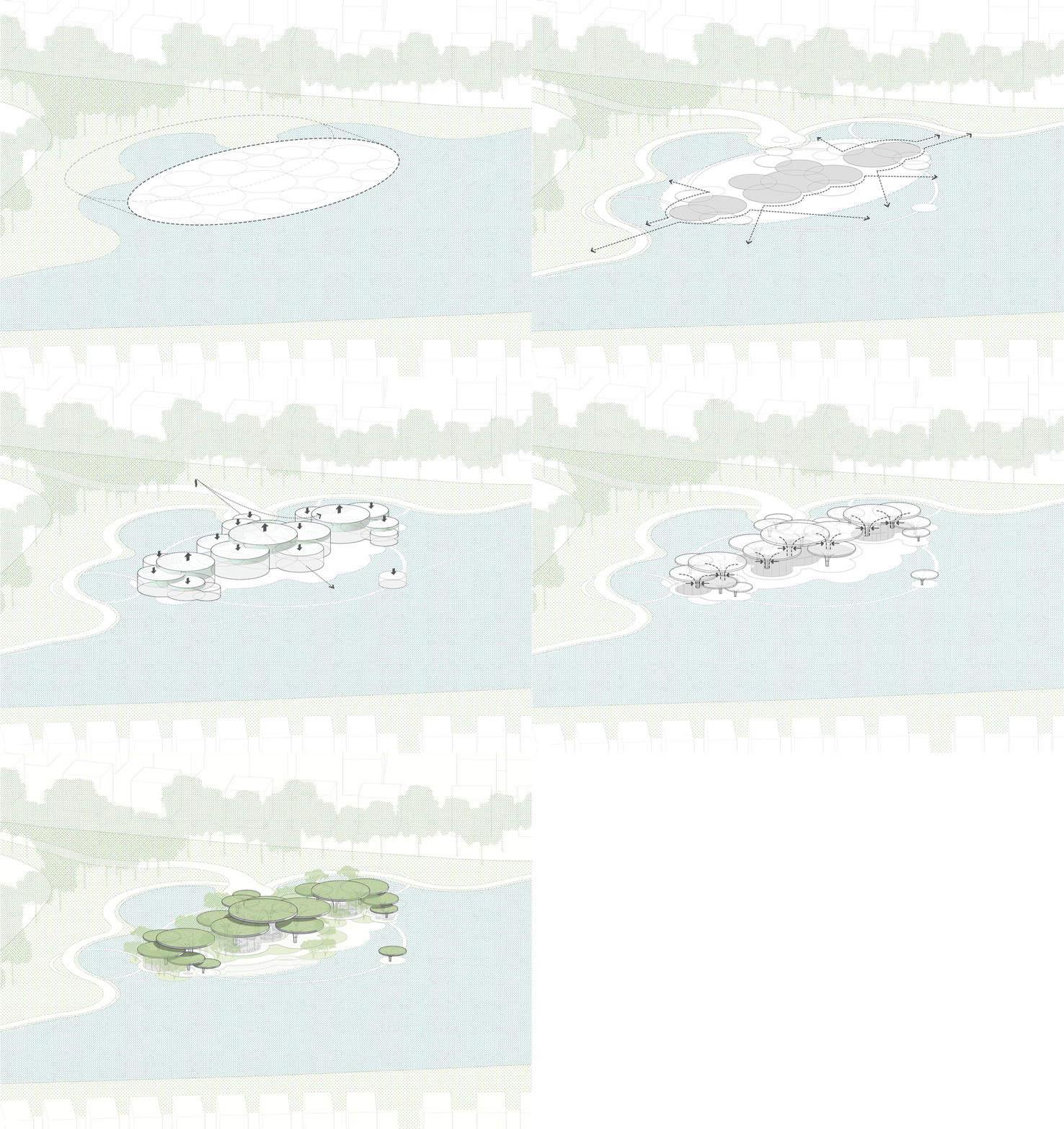
Guided by this spirit, the building is composed of multiple small volumes interwoven beneath the forest canopy across a usable area of approximately 2,000 square meters. Each functional block is positioned at varying elevations and connected through curving pathways and reflective water surfaces, forming a spatial journey that shifts continuously between openness and stillness, brightness and shade. Moving through the clubhouse feels like strolling through nature itself: energetic zones such as the restaurant and children’s play area open widely toward the lake, while quieter areas like the spa, lounge, and meditation spaces retreat into shaded pockets of greenery. With its dispersed layout, the building nearly disappears when seen from afar, minimizing visual impact while enriching the sensory experience, where light, wind, and water subtly guide each step.
▼建筑与环境鸟瞰,aerial view of the site and the project © Hiroyuki Oki

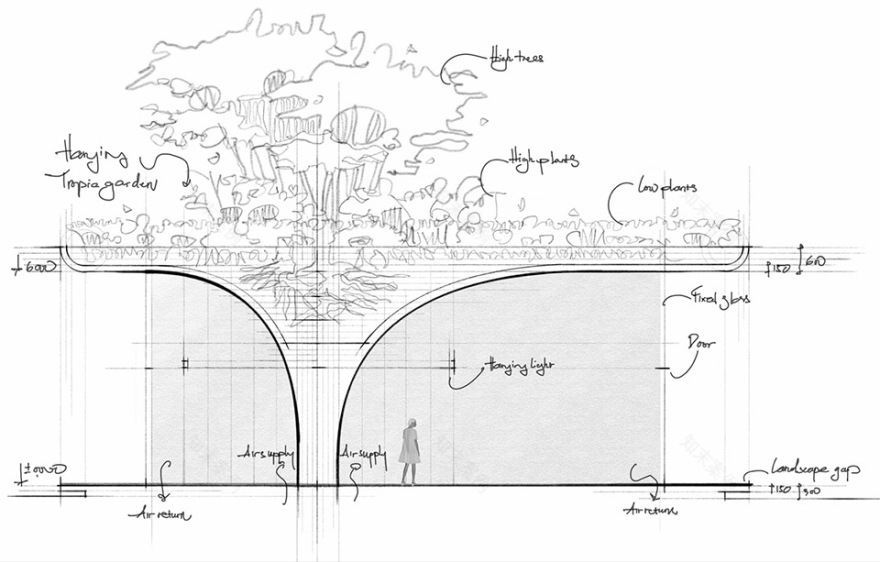
项目的可持续特质最集中地体现在其多层次的绿色屋顶系统上,这也是建筑最具辨识度的设计特征之一。由三组不同高度的圆形屋顶构成的整体屋面,形成起伏柔和的“人工地形”,自然融入周围的林冠景观。屋顶完全覆以本土植物,构建起一个可自我维持的微型生态系统:既降低热量吸收、提升自然通风与降温效果,也为鸟类与小型动物提供栖息空间,同时在雨水回流湖泊之前进行自然过滤。屋顶边缘缓缓下压、中央略微抬升,使自然光在一天之中被柔化与调节,减少直射辐射,营造出凉爽而稳定的微气候。通过这一策略,热带适应性建筑不再是一种形式化表达,而是让形态、生态与功能在同一节奏中自然运作。
▼分析图,analysis diagram ©MIA Design Studio

▼分析图,analysis diagram ©MIA Design Studio

The project’s sustainable character is expressed most clearly through its multi-layered green roofs, one of its defining design features. Three main roof clusters composed of circular forms at varying heights create a soft, undulating topography that blends naturally into the surrounding forest canopy. The roofs are entirely covered with native plant species, forming a self-sustaining micro-ecosystem. This living layer reduces heat absorption, enhances natural cooling, provides habitat for birds and small wildlife, and filters rainwater before returning it to the lake. The roof profile gently lowers at the edges and rises toward the center, allowing daylight to be moderated throughout the day, reducing direct solar radiation and maintaining a cool microclimate. Through this approach, tropical adaptive architecture is expressed naturally, with form, ecology, and function operating in the same rhythm.
▼顶视图,top view © Hiroyuki Oki

从水面望去,莲花会所轻柔地停驻在地景之上,宛如漂浮其间。建筑与湖泊的直接关系,使人能够真切感知水面、光线与地平线之间的微妙互动。7.2米的建筑高度经过精确控制,在与周边别墅尺度保持和谐的同时,确保场地范围内的视线通透与景观完整。设计所传达的态度十分明确:建筑的身份并非来自视觉奇观,而源于克制、精致与对场所的敏感回应。这是一种当代度假建筑的表达方式,在室内与室外、人造与自然、光明与阴影之间,建立起柔和而流动的过渡。
▼草图,sketch ©MIA Design Studio
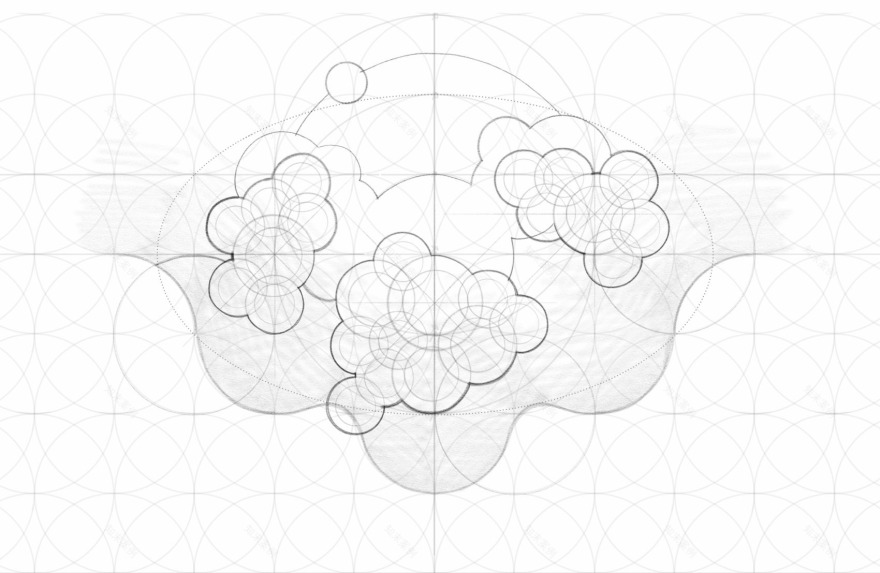
▼草图,sketch ©MIA Design Studio

Viewed from the water, the clubhouse rests lightly on the landscape, almost as if floating. Its direct relationship with the lake allows users to sense the interplay of water, light, and horizon in a tangible way. The building’s height of 7.2 meters is carefully calibrated to maintain harmony with the surrounding villas while opening uninterrupted views across the entire site. The design conveys a clear message: architectural identity does not come from spectacle, but from restraint, refinement, and sensitivity to context. It introduces a contemporary approach to resort architecture, where the boundaries between inside and outside, between human and landscape, between light and shadow, are handled with softness and fluidity.
▼水岸远观,viewing the project from the water © Hiroyuki Oki

在更深层面上,莲花会所是一种关于建筑未来的宣言:真正的进步不在于对自然的主宰,而在于与自然的共振。可持续性在此并非单纯依赖技术系统,而是一种对环境本质的理解,以及在形体塑造上的自律与敬畏。建筑以安静的姿态回应自然——静止却不凝滞,轻盈却深植于地,明亮却无须炫耀。
At a deeper level, Lotus Clubhouse becomes an architectural statement: the future of architecture lies in resonance with nature, not dominance over it. Sustainability here is not defined merely by systems or technology, but by an understanding of the environment’s essence and a disciplined, respectful approach to form-making. The building honors nature through its quiet presence: still yet never static, light yet deeply grounded, luminous without the need to dazzle.
▼室内概览,overall of interior © Hiroyuki Oki

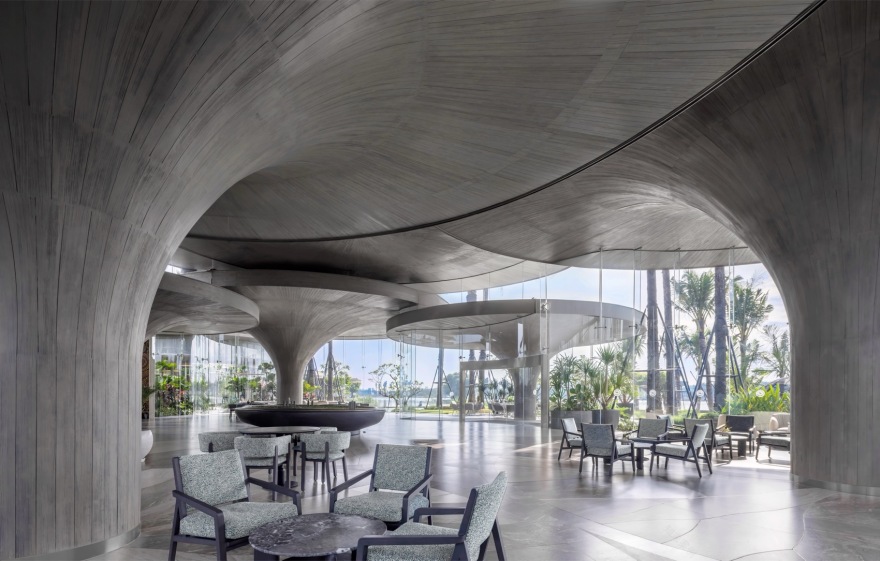
▼柔和而流动的空间氛围,gentle and flowing spatial atmosphere © Hiroyuki Oki


这一设计立场贯穿始终:建筑被视为一个“活的生态系统”,而非孤立的物体;分散的布局降低了对环境的干扰,同时促进生物多样性;绿色屋顶作为第二层景观,将艺术、生态与气候响应融为一体;建筑形象在表达与谦逊之间取得平衡。莲花会所不仅是一座度假建筑,更是一种思维方式与生活态度,讲述着人与自然和谐共生的另一种可能。
This design ethos is evident throughout: architecture is shaped as a living ecosystem rather than a singular object; the dispersed layout reduces environmental impact and promotes biodiversity; the green roof acts as a second landscape layer, uniting art, ecology, and climate responsiveness; and the architectural identity finds balance between expression and humility. Lotus Clubhouse is more than a resort building – it is a way of thinking, a way of living, a new way of telling the story of harmony between people and the natural world.
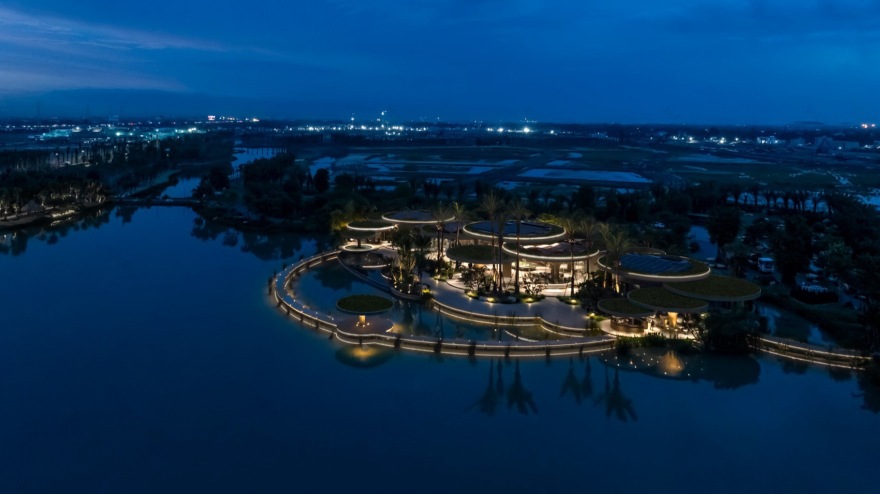
▼夜景,night views © Hiroyuki Oki

▼场地分析图,analysis diagram ©MIA Design Studio

▼总平面,master plan ©MIA Design Studio
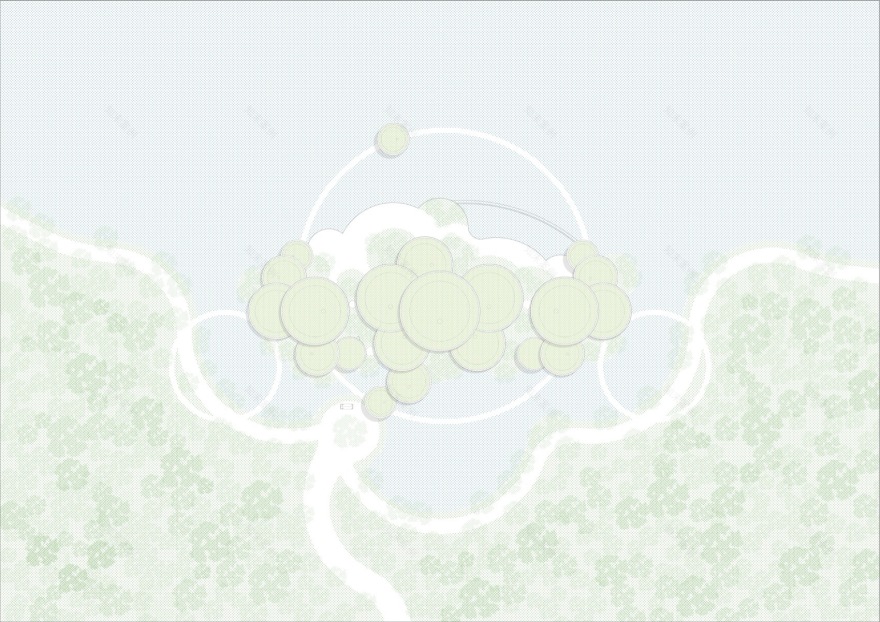
▼平面图,floor plan ©MIA Design Studio
▼立面图,elevations ©MIA Design Studio

▼剖面图,sections ©MIA Design Studio

PROJECT INFORMATION
Project: Lotus Clubhouse
Location: Eco Retreat Long An, Vietnam
Client: Ecopark
Designed in: 2023
Completed in: 2025
GFA: 2000 m²
Principal Architect: Nguyen Hoang Manh
Architecture Concept Design: Nguyen Quoc Long, Nguyen Hong Quan, Phan Thi Xuan Hong
Architectural Schematic Design: Bui Hoang Bao
Technical Design: Ecopark
Photo: Hiroyuki Oki



南京喵熊网络科技有限公司 苏ICP备18050492号-4知末 © 2018—2020 . All photos and trademark graphics are copyrighted by their owners.增值电信业务经营许可证(ICP)苏B2-20201444 苏公网安备 32011302321234号
苏公网安备 32011302321234号客服
消息
收藏
下载
最近