

创作上传
VIP
收藏下载
登录 | 注册有礼
查看完整案例

收藏

下载

分享
Liget Center(原MÉMOSZ总部)是匈牙利建筑史上的重要成果之一,也是该国少数被广泛认可的现代建筑成功案例之一。该建筑由Károly Perczel、Imre Perényi、Gábor Preisich、Lajos Gádoros和György Szrogh共同设计,于1950年建成,并自1999年起被列入历史保护名录。历任业主均认可其建筑品质,使其保存状况从未像许多其他现代主义建筑那样出现严重退化。尽管如此,现代建筑在匈牙利整体上并未获得良好评价。其中一个主要原因在于,现代建筑发展的高峰——大规模住宅区建设——在建筑质量上与使现代主义得以被接受、甚至令人喜爱的品质标准存在明显偏离。尽管这些住宅区的建筑品质与 MÉMOSZ大楼及其他高水准现代主义建筑相距甚远,但它们仍被统一归类为“现代建筑”,由此导致公众对现代建筑的负面印象长期占据主导。
The Liget Center, formerly the MÉMOSZ headquarters, is one of the outstanding achievements of Hungarian architecture and one of the few widely accepted modern architectural successes in Hungary. Designed by Károly Perczel, Imre Perényi, Gábor Preisich, Lajos Gádoros, and György Szrogh, the building was completed in 1950 and has been under historic protection since 1999. All of its owners have recognized its architectural quality, ensuring that its condition has never deteriorated as much as many other modernist buildings. Despite this, modern architecture in Hungary is generally not well regarded. A major contributing factor is that the culmination of modern architecture, the large-scale housing estates, diverged significantly from the architectural quality that makes modernism both acceptable and lovable. Although the architectural quality of housing estates is far removed from that of the MÉMOSZ building and other high-quality modernist structures, they are all categorized under the same “modern” label. As a result, negative perceptions of modern architecture have largely prevailed.
▼室内概览,overview of the interior space © Dániel Dömölky
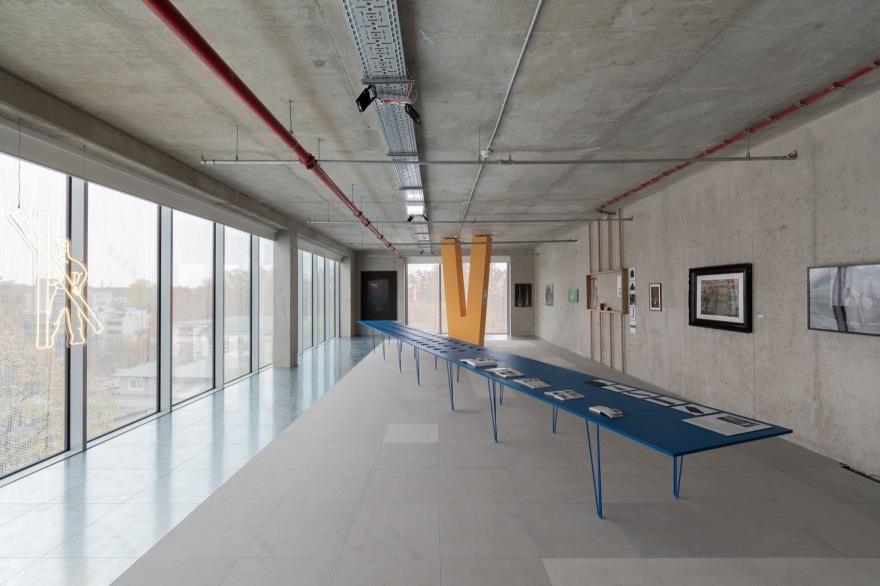
这进一步造成了一种状况,即现代建筑往往被置于与历史建筑相对立的位置。这种对立本身就内嵌于现代主义的发展脉络之中——作为现代建筑最早的倡导者之一,勒·柯布西耶曾在其1923年出版的著作中,将现代建筑称为一种“不同的建筑”。从更宏观的角度来看,起源于20世纪20至30年代的现代建筑在第二次世界大战后达到顶峰。尽管在20世纪70至80年代被后现代主义与地域主义所取代,但现代主义的影响依然深深嵌入当代建筑之中。钢筋混凝土建造方式、立面技术以及以功能为中心的设计方法,均源自现代主义,尽管这些特征并非历史建筑所固有。然而,人们对现代建筑的认知正在逐渐变化。如今,现代建筑不再仅被视为一种不得已的现实选择,而是越来越多地被视为20世纪最具标志性的建筑风格之一。本次展览试图通过MÉMOSZ建筑的具体建筑特征,说明现代建筑与历史建筑之间并非如通常认为的那样彼此对立。MÉMOSZ的柱式、屋顶、立面构成、装饰与结构要素均可追溯至明确的历史先例。每一项要素都引导观众探索其建筑渊源,并重新审视现代主义与历史之间的关系。
This has led to a situation where modern architecture is often defined in opposition to historical architecture. This contrast is inherent in modernism itself—Le Corbusier, one of its earliest pioneers, described modern architecture as a “different architecture” in his 1923 book. Broadly speaking, modern architecture, which originated in the 1920s and 1930s, reached its peak after World War II. Even though postmodernism and regionalism replaced it in the 1970s and 1980s, modernist influences remain deeply embedded in contemporary architecture. The reinforced concrete construction methods, façade technologies, and function-centered design approach all stem from modernism, even though the latter was not characteristic of historical architecture. Nevertheless, perceptions of modern architecture are evolving, and today, rather than seeing it as an unfortunate necessity, it is increasingly regarded as one of the defining architectural styles of the 20th century. This exhibition attempts to demonstrate, through the architectural features of MÉMOSZ, that modern and historical architecture are not as opposed as often believed. The pillars, roof, façade composition, ornamentation, and structural elements of MÉMOSZ all have deep historical precedents. Each of these elements invites visitors to explore their architectural origins and reconsider modernism’s relationship with history.
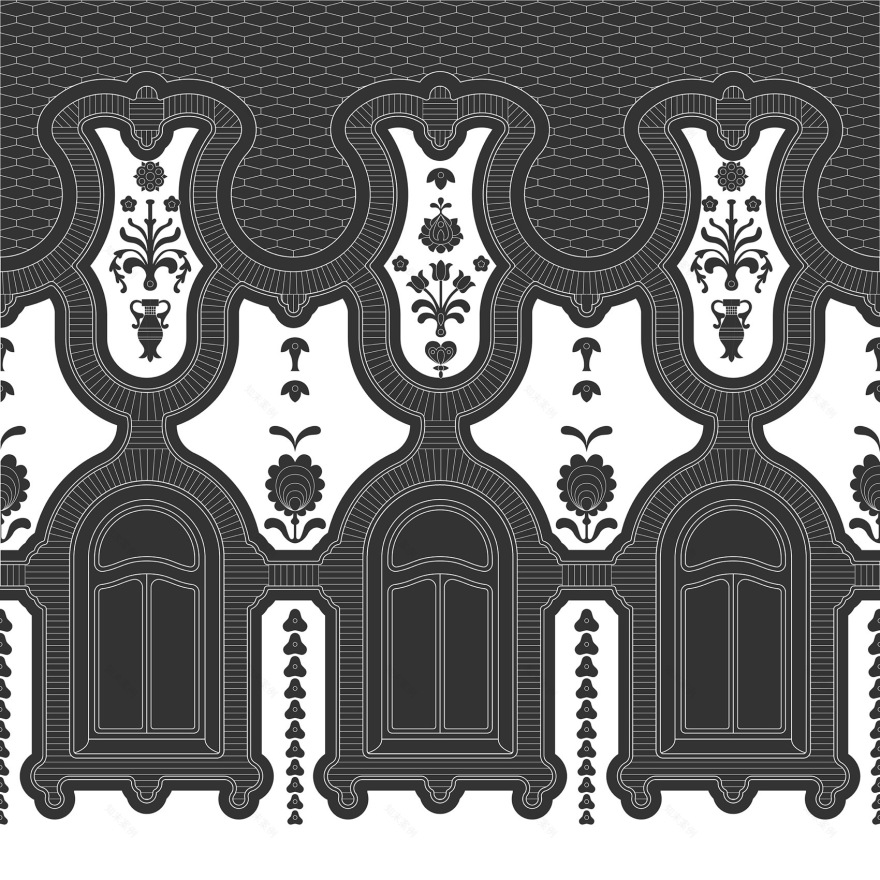
▼建筑历史先例要素,elements of historical precedents in architecture © Virág Kiss

现代建筑中的装饰
Ornamentation in Modern Architecture
在现代建筑中,装饰并未消失,而是其与建筑构件之间的关系发生了转变。在历史建筑中,装饰往往直接融入柱头、檐口或窗框等结构元素;相比之下,现代建筑将装饰视为相对独立的雕塑性要素,通常由艺术家而非建筑师完成。MÉMOSZ建筑中包含多件此类装饰作品。本次展览重点呈现其中一例——位于面向城市公园一侧、附属于大会堂立面的浮雕,由István Tar创作,题为《建造者(Builders)》。此外,建筑内还包括János Kass创作的布达佩斯城市天际线浮雕,以及即将修复的Dezső Lányi的《建筑工人》雕塑。这些装饰作品延续了通过艺术表达建筑原始功能的传统。
In modern architecture, ornamentation has not disappeared, but rather, its relationship with architectural elements has changed. In historical architecture, decorations are integrated into structural elements such as capitals, cornices, and window frames. In contrast, modern architecture treats ornamentation as independent sculptural elements, often created by artists rather than architects. The MÉMOSZ building features several such decorative elements. This exhibition highlights one example—a relief on the City Park-facing façade of the congress wing, created by István Tar and titled “Builders”. Other works in the building include János Kass’s relief depicting the Budapest skyline and the soon-to-be-restored “Construction Worker” statue by Dezső Lányi. These decorations continue the tradition of reflecting the building’s original function through artistic embellishments.
▼装饰,decorations © Dániel Dömölky


立面构成
The Façade Composition
MÉMOSZ总部清晰地体现了立面构成在建筑史中的重要性。面向多饶·久尔吉路(Dózsa György Road)的立面具有代表性与秩序性,其构成原则可追溯至文艺复兴以来立面设计中长期延续的重要理念,尽管这一点并不直观。沿整段立面布置着一列由14根圆柱构成的柱廊。从二层至五层,一个以石材包覆的矩形框架将上部楼层统一起来,同时与首层形成区分。在这一框架内部,一处悬挑阳台以非对称方式设置于二、三层之间,刻意形成视觉焦点。为阐释这一设计特征,展览中呈现了一件受MÉMOSZ原有家具启发而设计的当代橡木家具作品。
The MÉMOSZ headquarters clearly reflects the historical importance of façade composition. Facing Dózsa György Road, the façade is representative and structured, incorporating principles that have been significant in façade design since the Renaissance—although not immediately apparent. A colonnade of 14 cylindrical columns runs along the entire façade. From the second to the fifth floors, a rectangular stone-clad frame unites the upper levels while separating them from the ground floor. Within this frame, a cantilevered balcony protrudes asymmetrically between the second and third floors, creating an intentional visual accent. To illustrate this aspect of the building’s design, the exhibition includes a contemporary oak furniture piece inspired by MÉMOSZ’s original furnishings.
▼展览空间,exhibition space © Dániel Dömölky


屋顶设计
The Roof Design
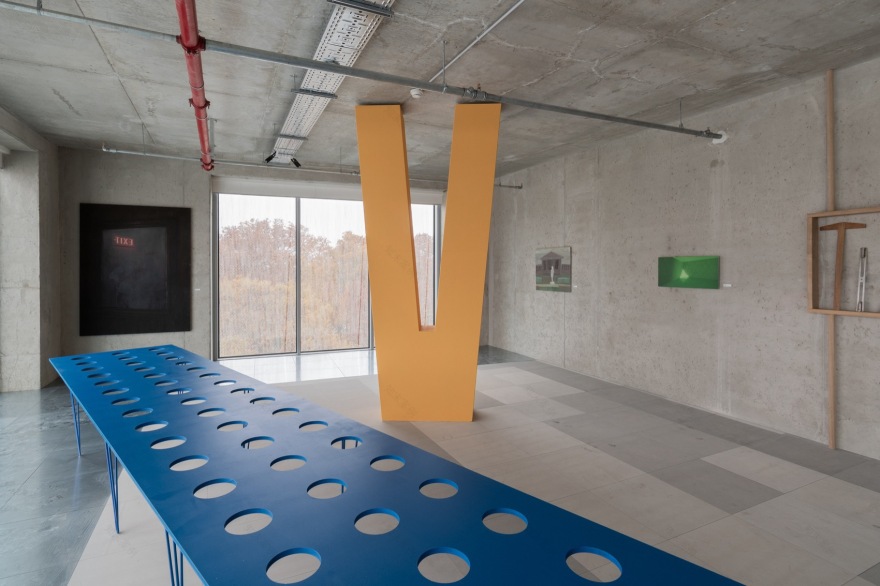
多饶·久尔吉路一侧建筑的平屋顶是一项极具辨识度的建筑特征。顶层的后退形成了一处全景露台,使屋顶的穿孔结构即便从街道层面亦清晰可见。这是对历史建筑中通过装饰性檐口完成立面视觉收束这一传统的现代诠释。然而,与传统的垂直檐口不同,MÉMOSZ通过“缺失”的方式实现视觉收尾,使屋顶本身及其圆形开窗成为突出的建筑要素。为强调这一点,展览以桌面装置的形式再现了 MÉMOSZ穿孔平屋顶的结构特征。
The flat roof of the Dózsa György Road wing is a striking architectural feature. The setback of the top floor creates a panoramic terrace, making the roof’s perforated structure a visible design element even from street level. This is a modern reinterpretation of the historical tradition in which building façades were visually completed with decorative cornices. However, unlike traditional vertical cornices, MÉMOSZ achieves its visual closure through absence, making the roof and its circular windows a prominent feature. To highlight this, the exhibition recreates MÉMOSZ’s perforated flat roof structure in the form of a table installation.
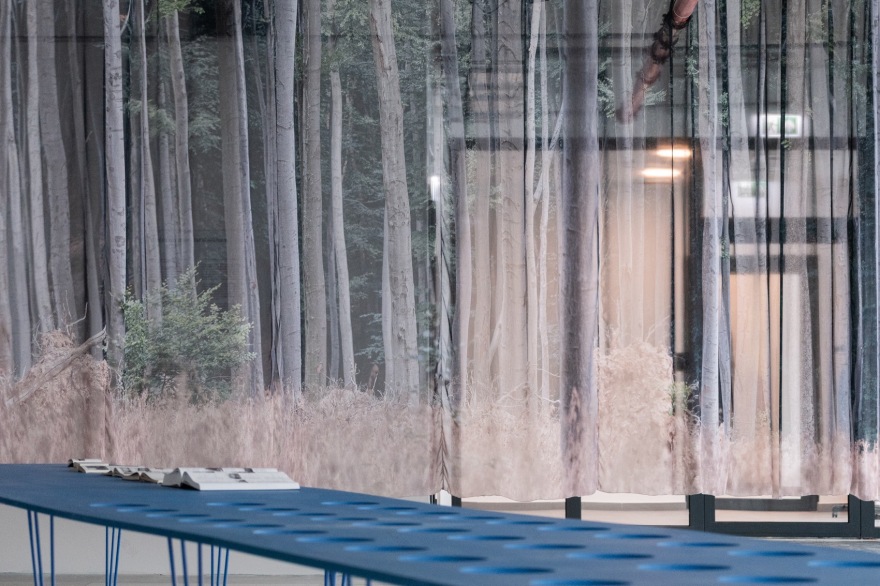
▼展览以桌面装置的形式再现了 MÉMOSZ穿孔平屋顶的结构特征,the exhibition recreates MÉMOSZ’s perforated flat roof structure in the form of a table installation © Dániel Dömölky


▼桌面细部,table details © Dániel Dömölky

柱式
The Pillars
柱子在MÉMOSZ的立面设计与空间组织中均具有重要作用。面向多饶·久尔吉路的立面由14根圆柱构成,清晰呼应了柱式在历史建筑中的角色。尽管这些柱子并未设置传统意义上的柱基与柱头,它们仍然构成立面的关键元素。另一项显著特征是V形柱,其既出现在建筑内部,也出现在面向城市公园的一侧。这种对结构支撑的几何化处理,是现代主义对历史传统进行重新诠释而非否定的典型例证。展览中设置了一件以V形柱为灵感的展品,以强调这一建筑思路。
Pillars play a significant role in both façade design and spatial organization at MÉMOSZ. The Dózsa György Road façade features a row of 14 cylindrical columns, a clear reference to the role of pillars in historical architecture. Despite lacking traditional bases and capitals, these columns remain a defining element of the façade. Another distinctive feature is the V-shaped pillar, present both inside the building and on the City Park-facing wing. This geometric interpretation of structural support is a key example of modernism reimagining rather than rejecting historical traditions. The exhibition features a V-shaped pillar-inspired element to highlight this architectural approach.
▼V形柱,V-shaped pillar © Dániel Dömölky


▼V形柱近景,V-shaped pillar close view © Dániel Dömölky

建筑的双层属性
The Dual-Layered Nature of Architecture
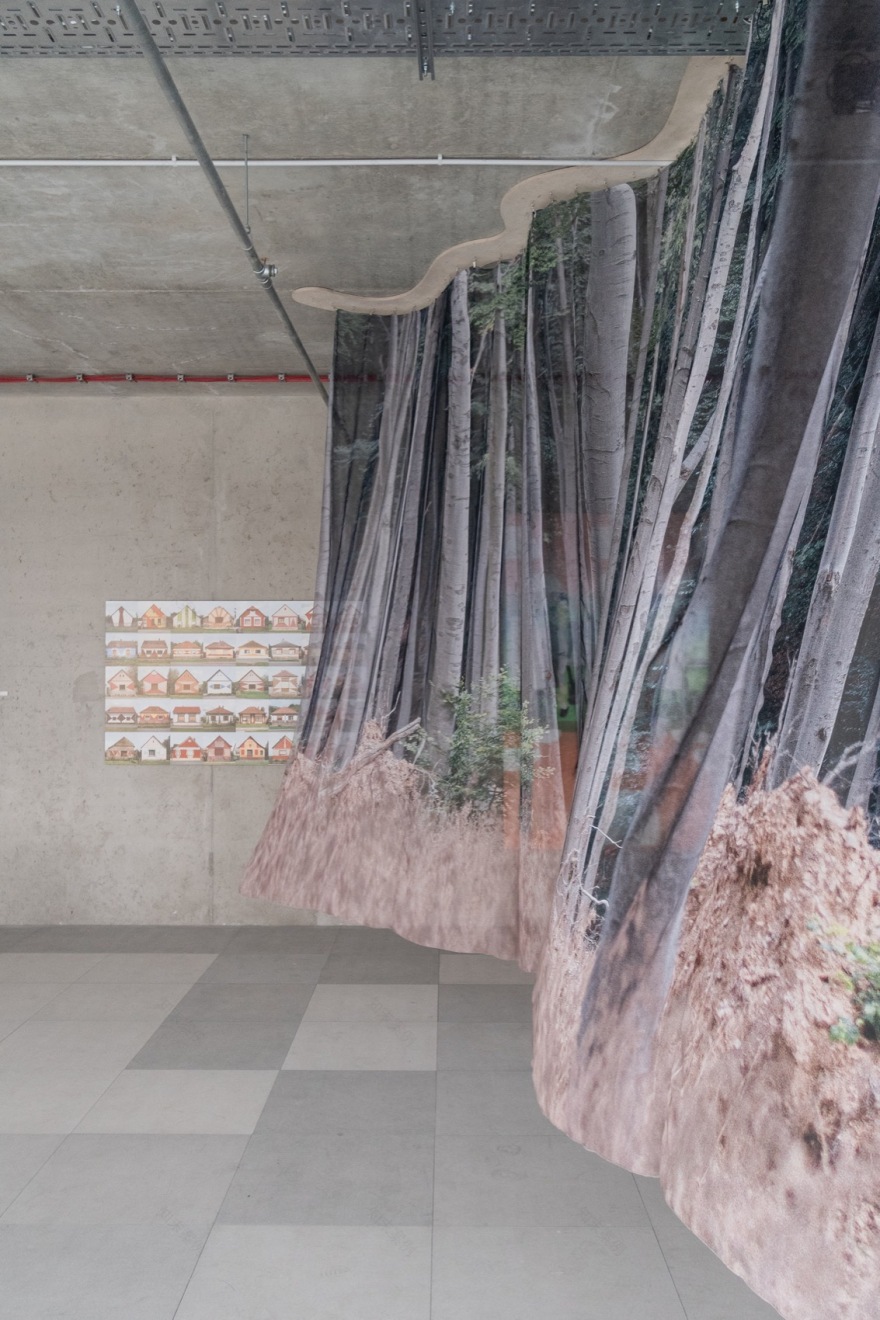
纵观建筑史,外部空间与内部空间之间的关系始终是一项核心议题。建筑在塑造自身内部空间的同时,也形成了一个清晰的外部体量。在MÉMOSZ中,这种双层属性在大会堂的悬挂式天花中表现得尤为明显。其自由流动、起伏变化的形态塑造了大厅的空间氛围,但在结构上却与建筑的实际屋顶相分离;后者主要承担抵御气候影响的实用功能。两者之间形成了类似阁楼的空间,用于安置支撑如此规模公共场所所需的机电系统。为呼应这一概念,展览设置了一幅印有森林图像的帘幕,借此指代原始天花所使用的木质材料。
Throughout history, the relationship between exterior and interior spaces has been a fundamental architectural challenge. While a building defines its own internal spaces, it also forms a distinct external volume. At MÉMOSZ, this dual-layered nature is especially evident in the congress hall’s suspended ceiling. Its free-flowing, undulating design shapes the hall’s atmosphere, yet it is structurally separate from the building’s actual roof, which is designed for practical weather protection. This creates an attic-like space between the two layers, housing the mechanical systems necessary for a venue of this size. To reflect this concept, the exhibition features a curtain printed with a forest image, referencing the wooden material of the original ceiling.
▼印有森林图像的帘幕,a curtain printed with a forest image © Dániel Dömölky


Project Details:
Commissioner: WING
Exhibition Concept: Paradigma Ariadné, Art is Business
Architectural Historians: Kristóf Kelecsényi, Márton Székely
Illustrations: Virág Kiss
Photography Used in the Exhibition: Dániel Dömölky



南京喵熊网络科技有限公司 苏ICP备18050492号-4知末 © 2018—2020 . All photos and trademark graphics are copyrighted by their owners.增值电信业务经营许可证(ICP)苏B2-20201444 苏公网安备 32011302321234号
苏公网安备 32011302321234号客服
消息
收藏
下载
最近