

创作上传
VIP
收藏下载
登录 | 注册有礼
查看完整案例

收藏

下载

分享
艺术场域
Art District
北京798艺术区由上世纪五十年代工业厂区建筑群转型而来,是北京最重要的当代艺术发生地之一。混凝土厂房、连续梁架与开放街区共同构成了这片区域独有的工业语境,也形成了一个持续生成创作与文化能量的城市场域。POP MART Gallery正是在这样的语境中展开其对当代IP文化与潮流艺术的探索,以艺术家与IP形象为核心,通过展览与跨界合作,将大众文化的创意能量实现为具有时代表达的现实场景,持续激活青年文化精神在当代生活中的位置。
The 798 Art District in Beijing evolved from an industrial complex built in the 1950s into one of the city’s most important sites for contemporary art. Concrete factory buildings, truss structures, and an open urban fabric form a distinctive industrial context that continues to generate creative and cultural energy. Within this setting, POP MART Gallery explores contemporary IP culture through exhibitions and cross-disciplinary collaborations. Centered on artists and IP figures, popular culture is translated into spatial experiences that reassert the presence of youth culture within contemporary life.
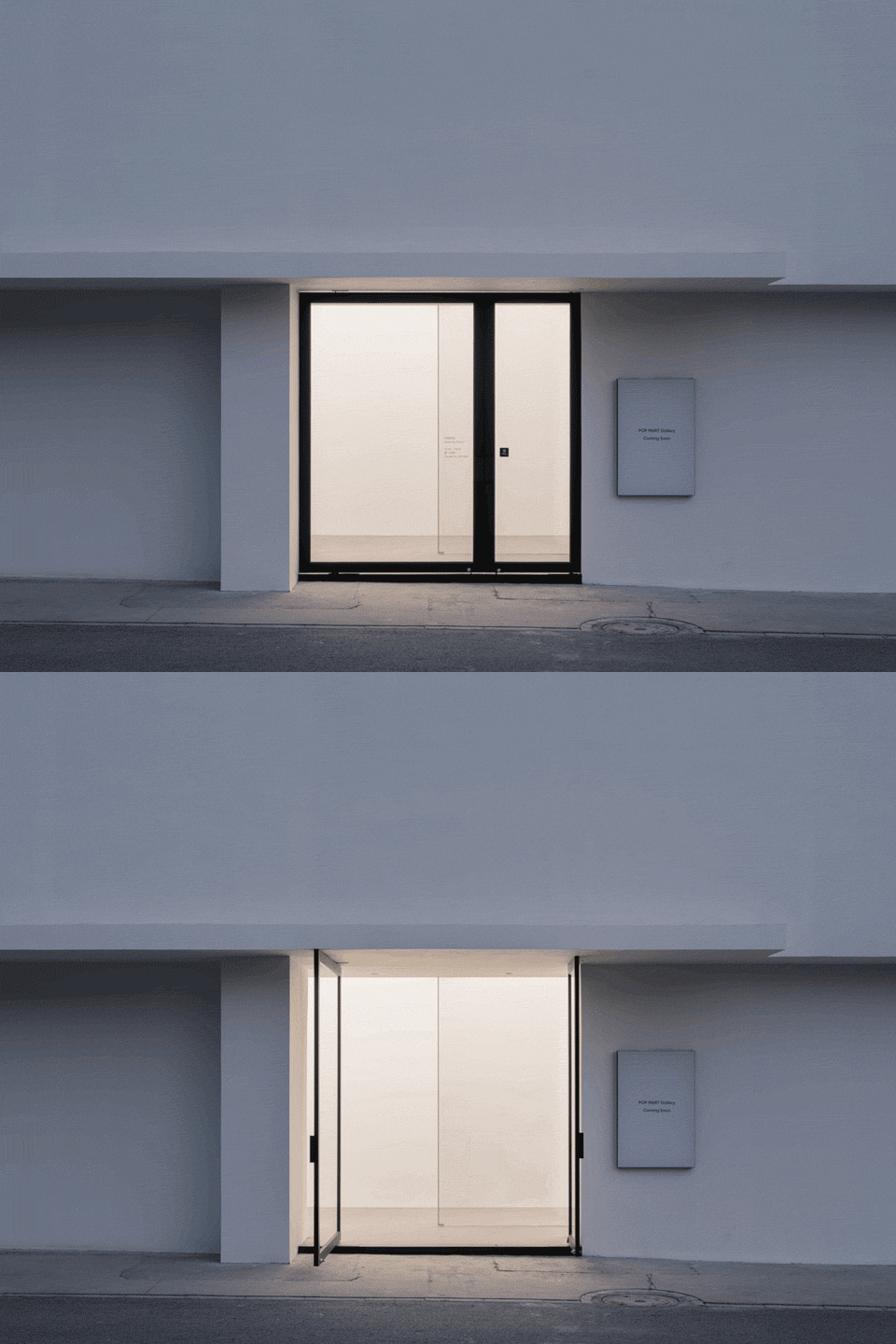
▼项目外观,exterior of the project © Wen Studio

▼入口,entrance © Wen Studio
文化发生器
A Cultural Generator
空间改造概念来源于ARCHIVE陈列室,原指保存历史记录与重要文献的场所。在这里,它被重新定义为一处对公众开放的“ 文化陈列室”。陈列室归纳、整理并保存POP MART与艺术家们的创作成果,同时以创意零售的方式向公众开放。空间既承担“实体保存”的角色,也成为IP文化持续发生与被重新观看的场所。消费者不再只是购买者,而是以参观者的身份进入POP MART的收藏系统,在行走与观看中,理解IP创作作为当代文化内容的价值。
The spatial concept originates from archive rooms. Here, the archive is redefined as a publicly accessible cultural repository. The gallery collects, organizes, and preserves the creative output of POP MART and its collaborating artists, while opening this system to the public through a mode of creative retail. Visitors are positioned not only as consumers, but as participants entering a collection system, walking, observing, and encountering IP creation as a form of contemporary cultural production.
▼室内空间,Interior space © Wen Studio


▼展览空间,Exhibition space © Wen Studio


灵活空白
Flexible Openness
改造画廊空间需要大量留白以允许不同展览的发生,在一楼,我们将原始闭塞的大门重新打开 让更多自然光重新透进空间,两道门的设计不仅重新规划了展览动线也为不同天气条件下的运营增添一份保障。在二楼,零售和展陈系统上采用高度灵活的开放式展示系统策略。连续的陈列模块、可重组的展示单元与可调整的层级关系,使空间能够在“展览 / 归档 / 零售”之间自由切换。当它用于系统陈列时,空间是档案馆;当展示结构被重新编排,它成为展览现场;当人与IP发生交易关系,它则转化为一处零售空间。空间由此成为一个可以被持续更新、被记录、被再次归档的文化容器。
To accommodate changing exhibition formats, the renovated space maintains a high degree of openness. On the ground floor, previously enclosed entrances are reopened to introduce natural light and reorganize circulation, while providing operational flexibility under different conditions. On the upper floor, flexible display systems allow the space to shift between archive, exhibition, and retail. Continuous modules, reconfigurable units, and adjustable programs enable the space to be repeatedly reorganized, operating as a cultural container that can be updated, recorded, and re-archived over time.
▼一角,A corner © Wen Studio

▼细部,Details © Wen Studio


实体保存与文化显影
Material Preservation and Cultural Visibility
这个陈列室并非展示商品的空间,而是一座面向公众开放的IP文化档案馆。在这里,实体IP作品以接近“文献与藏品”的状态被呈现。它们被纳入关于创作、版本、时间与记忆的收藏体系之中,不再只是潮流商品,而成为可被保存、被归档、被研究的文化实体。THE ARCHIVE 因此成为POP MART Gallery对“当代IP文化”最直接的物理回应,一处记录创意生成、文化流通与青年精神演进的真实场所。
This space is conceived not as a conventional retail environment, but as a public IP archive. Physical IP works are presented as cultural artifacts—classified by creation, version, time, and memory—rather than as commodities alone. The archive becomes POP MART Gallery’s direct spatial response to contemporary IP culture: a site that records creative production, cultural circulation, and the evolving conditions of youth culture.
▼概念模型,Concept model © Studio Profile


▼平面图,Plan © Studio Profile

项目业主:POPMART泡泡玛特
项目地点:中国北京
建成时间:2025.11
建筑⾯积:50平方米
设计范围:建筑立面改造、室内设计
设计总监:任笑言、王尤宝儿
项目团队:张佳馨,殷柏圣
空间摄影:Wen Studio
Client: POPMART
Location: Beijing, China
Completion: NOV 2025
GFA: 50 sqm
Scope: Facade renovation, Interior design
Design Team: Josh Ren, Baoer Wang
Project Intern:Jiaxin Zhang, Joshua In
Photography: Wen Studio
南京喵熊网络科技有限公司 苏ICP备18050492号-4知末 © 2018—2020 . All photos and trademark graphics are copyrighted by their owners.增值电信业务经营许可证(ICP)苏B2-20201444 苏公网安备 32011302321234号
苏公网安备 32011302321234号客服
消息
收藏
下载
最近