

创作上传
VIP
收藏下载
登录 | 注册有礼
查看完整案例

收藏

下载

分享
在过去几十年里,建筑界始终被一种根深蒂固的误解所困扰:仿佛建筑的“高贵存在”只发生在已建成的世界之中。在这种叙事里,建筑物本身被视为学科真正的核心与主体,而其他一切——展览、陈设、临时性空间实践——都被当作轶事、边缘甚至装饰性的存在,多少带着轻视的意味。卡洛·斯卡帕(Carlo Scarpa)之所以被记住,并非因为他一生中真正投入与奉献的工作——展览设计;正如菲利普·迪布瓦在《卡洛·斯卡帕:展览的艺术》(Carlo Scarpa, L’Art d’Exposer,Les Presses du Réel)一书中所揭示的那样。事实上,在意大利一个极其复杂的文化时代,策划与建构展览本身就是一种政治立场,就如同维多利亚时代英国的威廉·莫里斯通过壁纸设计所做的那样。还有一些人,比如莉莉·赖希(Lilly Reich),几乎从大多数建筑史书中消失,被掩盖在某位“建筑大师”的阴影之下。
One of the many misconceptions that has preoccupied the world of architecture in recent decades is that architecture’s noble existence occurs only in the built world. Buildings, in this narrative, are what constitute the real heart and body of the field. Everything else is anecdotal, peripheral, decorative, some would say with a touch of condemnation. If Carlo Scarpa’s work is remembered, it is not for what he did for most of his life and what he was truly dedicated to: Exhibition design, as Philippe Duboy has shown in his book “Carlo Scarpa, L’Art d’Exposer” (Les Presses du Réel). Making exhibitions was a political commitment in a particularly complex cultural moment in Italy, as was making wallpaper for William Morris in Victorian England. Others, like Lilly Reich, have literally disappeared from most architectural books, hidden behind a “master”.
▼项目概览,overall of the project © Dylan Perrenoud


展览,本质上是一种公共空间。任何人都可以进入其中,去体验、讨论、学习,或获取关于特定议题的信息。如果说博物馆是这些公共时刻的制度性容器,那么展览则是内容真正被展示、被分享、被使用的公共“会面场所”——人们在这里停留、来去、交流,并被不断激发。展览空间的演变并不存在某种绝对真理:从挂满彩色织毯的古典博物馆,到今日司空见惯的“白盒子”,它们共同构成了一段历史,而这段历史恰恰可以为当下日益同质化的展览空间注入新的生命力。在这种多样性的可能之中,在无数优秀的展览空间里,有一些来到了 Garagem Sul。它们“降落”在里斯本,庆祝一种当代的、严肃却不拘谨的文化机构观看方式。机构究竟该如何定义?它是否真的需要一个清晰而封闭的定义?
▼轴测图,Axonomy © BUREAU
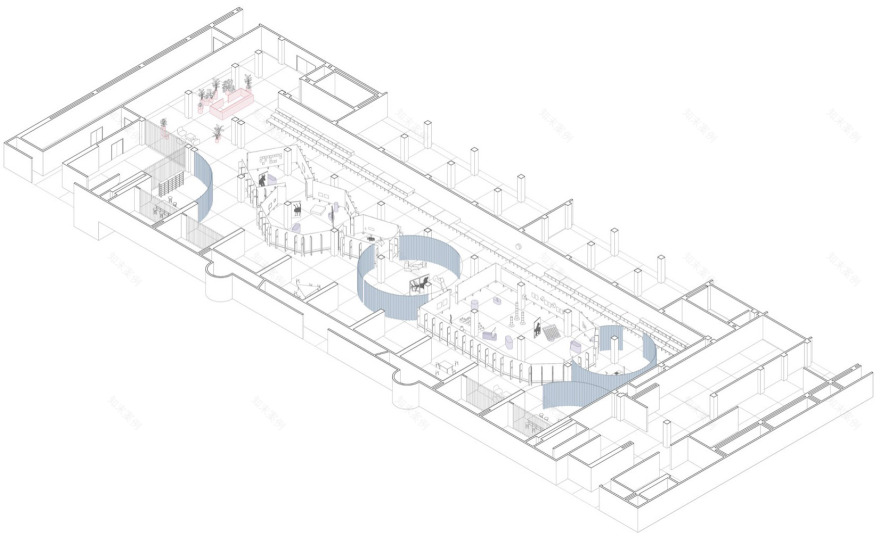
Exhibitions are public spaces. Everyone is allowed in to experience, discuss, learn or be informed about certain topics. If museums are the institutional containers of these public moments, exhibitions are the operational, public “rendez-vous” where the content is displayed and shared and where people hang out, come and go to be stimulated. There is no absolute truth in the way exhibition spaces have evolved, from classical museums with walls of colorful tapestries to today’s conventional white cube. They are all part of a history that can revitalize today’s rather standardized exhibition spaces. Within the diversity of possibilities, within the vast number of great exhibition spaces, some of them have come to Garagem Sul. They have landed in Lisbon to celebrate a contemporary, serious but relaxed way of looking at what is supposed to be a cultural institution. How should an institution be defined? Does it need a clear definition?
▼接待空间,reception area © Dylan Perrenoud

这里仿佛是一场关于空间的朋友聚会:有的宏大庄重,有的朴素亲密。它们来到了 Garagem 的派对——来自波尔图的塞拉尔维斯博物馆(Serralves)、伦敦的约翰·索恩博物馆(John Soane)、马德里的普拉多博物馆(El Prado)、佛罗伦萨的乌菲齐美术馆(Uffizi)。这些空间承载着数以百万计的人所经历过的历史片段。当它们被移置、被重新演绎,制度性的外壳似乎被削弱了一些,也不再那么僵硬。为了证明自身的非正式性,它们甚至“展示了自己的器官”:后台与前台不再对立,而是构成一个非二元的整体;技术与展示合为一种态度,聚焦于“建构的过程”,正如哈拉尔德·塞曼1969年在伯尔尼策划的展览《当态度成为形式》(When Attitude Becomes Form)所体现的那样。
Here is a small gathering of friends of space, some large and imposing, some modest and intimate. They have come to the Garagem party: Serralves from Porto, John Soane from London, El Prado from Madrid, the Uffizi from Florence. Fragments of multiple histories lived by millions. Displaced and re-enacted, they become less institutional, perhaps a little less stiff. To prove their informality, they show their organs. Backstage and frontstage are part of a non-dichotomic ensemble. The technical and the representational are also merged in a single attitude to focus on the process of making, as in Harald Szeemann’s 1969 exhibition in Bern, “When Attitude Becomes Form”.
▼展览空间,exhibition area © Dylan Perrenoud
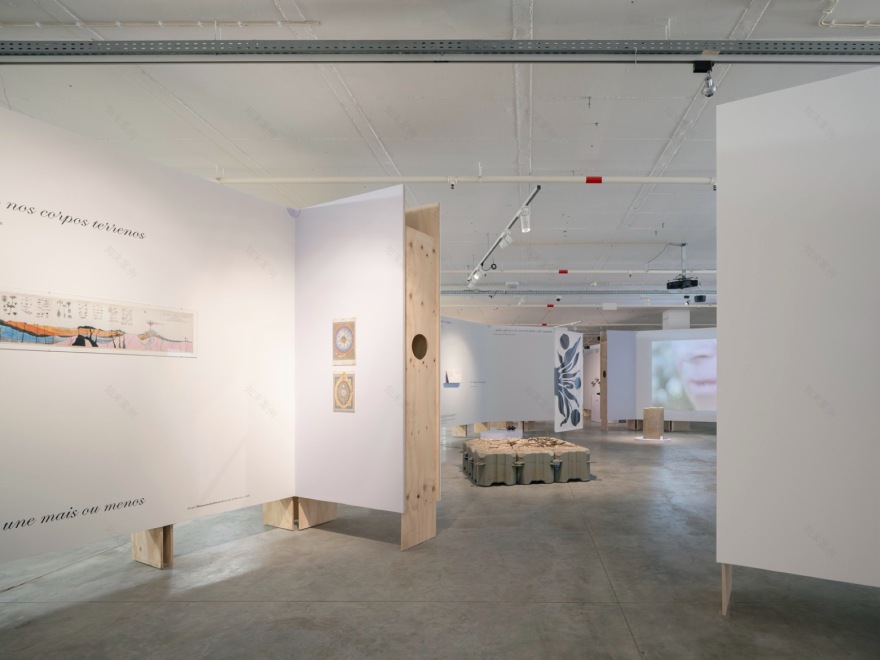

▼展览现场,exhibition site © Dylan Perrenoud

▼展览现场,exhibition site © Dylan Perrenoud


在很大程度上,整个空间的建构使用了以往展览中留下的材料,重演特定的文化时刻,并重新占用场地历史中的既有元素。但在派对开始之前,为了迎接这些“朋友”,空间被重新整理:清理掉建筑中心历史中不断叠加的附属物。自然光原本就存在,却被遮蔽、被隐藏、无法触及;而原始的材料与构造,也在时间中经历了层层覆盖。
And to a great percentage, the whole construction has used passed exhibition materials, re-enacting cultural moments and reclaiming existing elements from the space’s history. But before the party, and to give all these friends a proper welcome, the place was tidied up. Cleared of a number of elements that had appeared throughout the history of the architecture center. Natural light was there, but covered, inaccessible, hidden. And the original materials and configurations had suffered the normal layering of time.
▼整个空间的建构使用了以往展览中留下的材料,
the whole construction has used passed exhibition materials © Dylan Perrenoud
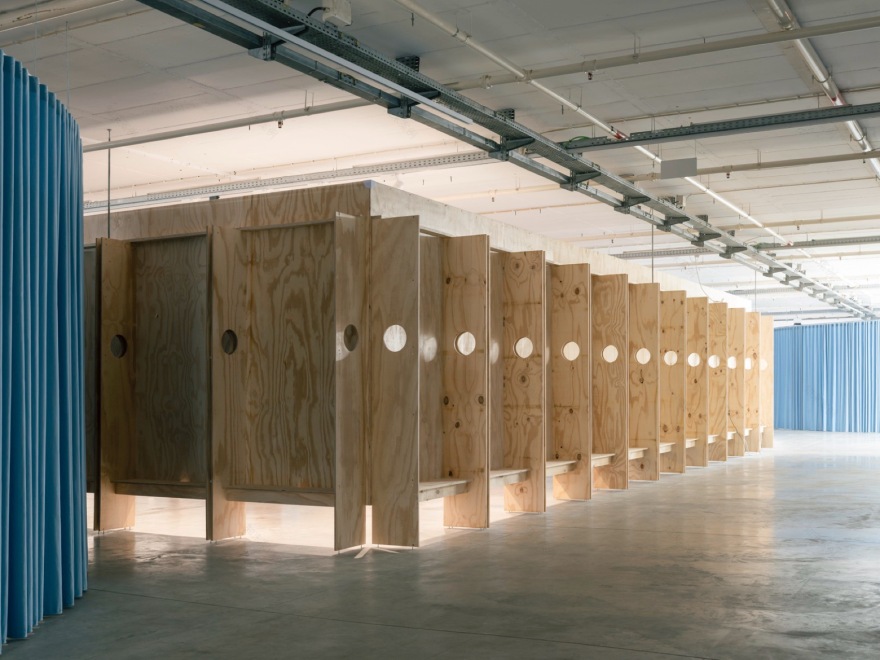

▼灵活的空间分隔模式与回收材料,
flexible space partitioning methods and the use of recycled materials © Dylan Perrenoud

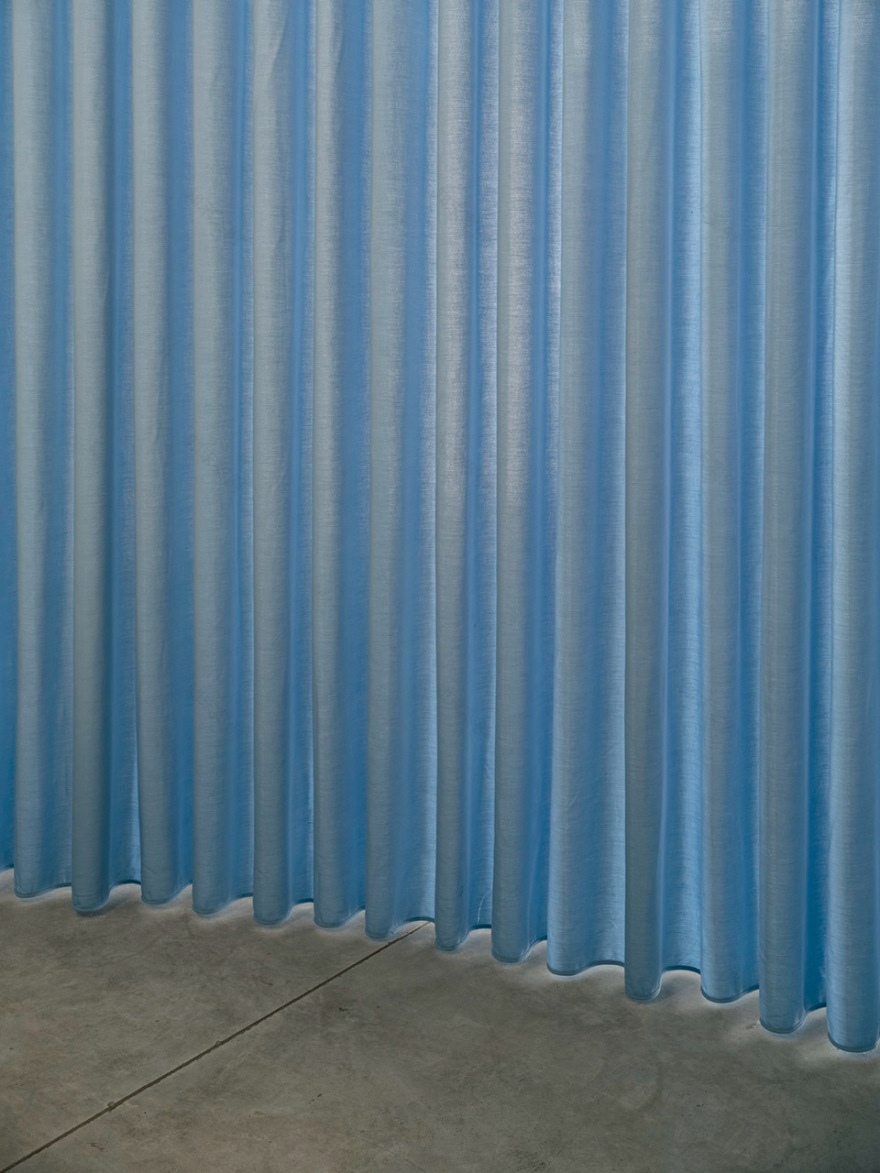

▼展览现场,exhibition site © Dylan Perrenoud

▼回收材料,recovered materials © Dylan Perrenoud


为这一空间揭幕的展览并非中立之作——《跨物种》(Interspecies)。它将建筑的视野打开,指向一种不可或缺的、超越人类中心的视角与态度。如果说在建筑史中,许多“人”的角色曾长期隐身,那么非人类的存在几乎从未被真正纳入讨论。由此,这座车库也将准备好迎接各类漫游者,与历史并肩行走,穿梭于构成它的无数故事之中。
The exhibition that inaugurates this space is far from neutral: Interspecies. One that opens the world of architecture to necessary more-than-human approaches and attitudes. If many actresses and actors have been invisible in architectural history, other-than-humans were practically inexistent. The garage will then be ready to welcome wonderers of all kinds, to walk with history and the infinite stories that make it up.
▼展览细部,details of the exhibition © Dylan Perrenoud


▼平面图,plan © BUREAU

GARAGE ENCOUNTERS
Project: BUREAU (Daniel Zamarbide, Carine Pimenta, Galliane Zamarbide) | | @daniel_zamarbide
Concept design: Daniel Zamarbide, Carine Pimenta
Project execution: Daniel Zamarbide / Carine Pimenta (project managers), Lujza Lehocká, Finia Sonderegger, Valentin Racine, Romane
Guillou
Construction supervision: Carine Pimenta
Publication drawings: Valentin Racine
Context: Transforming Garagem Sul (80% reused materials) to host “Interspecies ” public program
Location: MAC/CCB – Museum of Contemporary Art and Architecture Centre, Lisbon, Portugal (PT)
Program: Semi-permanent scenography, exhibition and furniture design
Area: 2200 m2
Status: Completed, 04-2025
Photography: Dylan Perrenoud
Curator: Mariana Pestana
Producers: Ideawood, Metalúrgica Frontal
Graphic design: Joana Lourencinho
南京喵熊网络科技有限公司 苏ICP备18050492号-4知末 © 2018—2020 . All photos and trademark graphics are copyrighted by their owners.增值电信业务经营许可证(ICP)苏B2-20201444 苏公网安备 32011302321234号
苏公网安备 32011302321234号客服
消息
收藏
下载
最近