

创作上传
VIP
收藏下载
登录 | 注册有礼
查看完整案例

收藏

下载

分享

翻译
Architects:Benzhe Design
Area:320m²
Year:2025
Photographs:Shengliang Su
Lead Architects:Huajian Jiang
Category:Houses
City:Nantong
Country:China

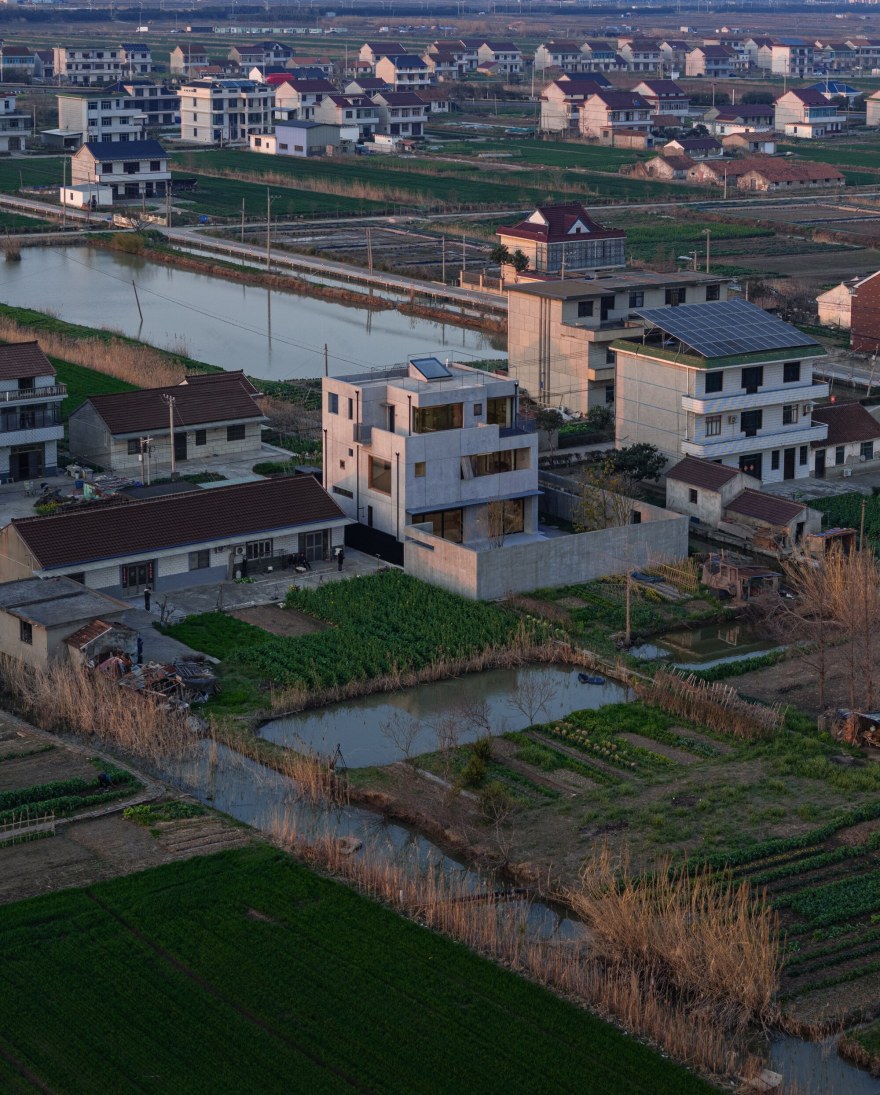
Text description provided by the architects. The East Courtyard is located in Qidong, Jiangsu, near the city and facing the sea. Commissioned by children who work away from home year-round, Benzhe Architecture rebuilt this residence for their parents, who are over sixty. It uses modern design language to respond to new rural construction—preserving rural simplicity while improving the quality of living. Qidong is located on the north wing of the Yangtze River estuary, where the Yangtze unloads its last mouthful of sediment and turns to flow into the East China Sea. The original site was a typical fishing village homestead, surrounded by arrays of wind turbines and tidal flat landscapes.
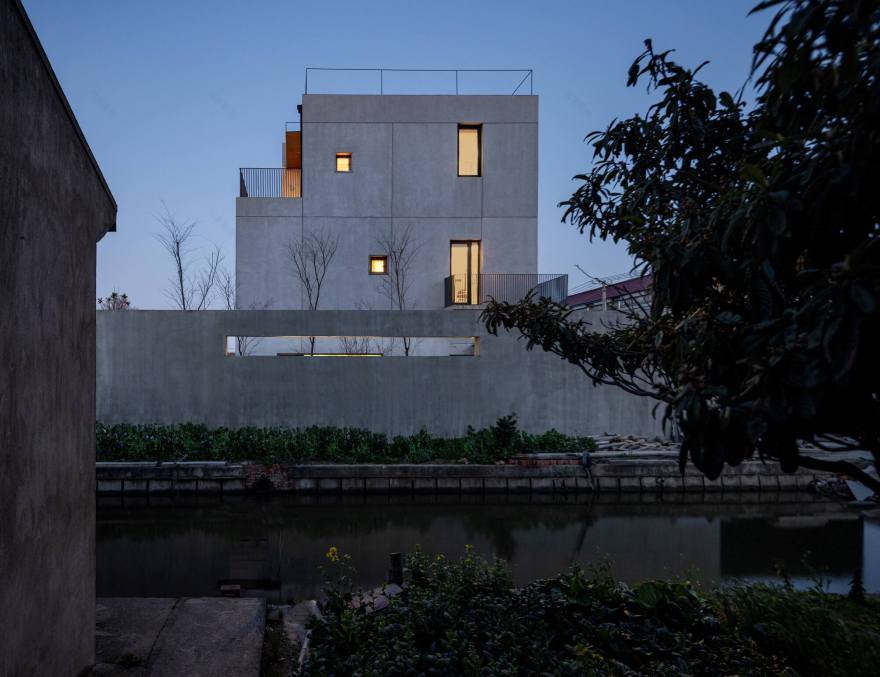
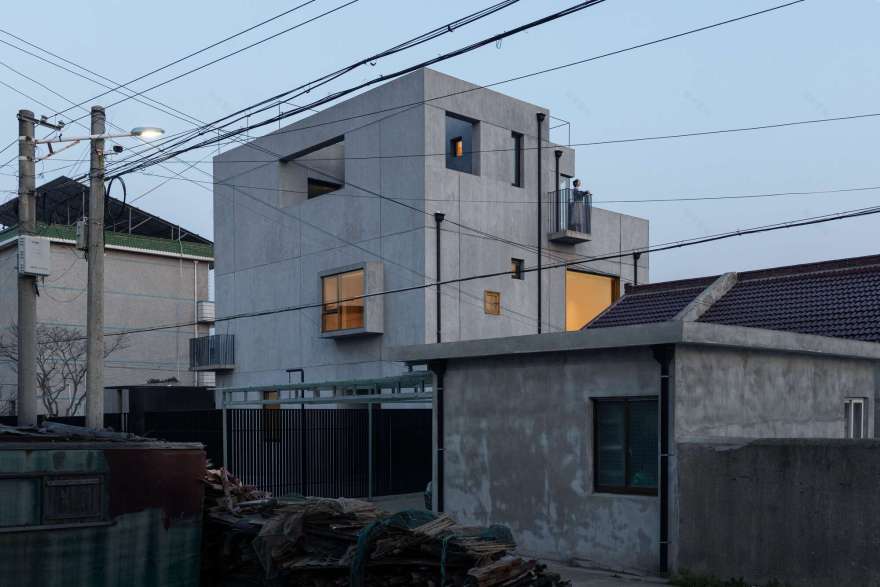
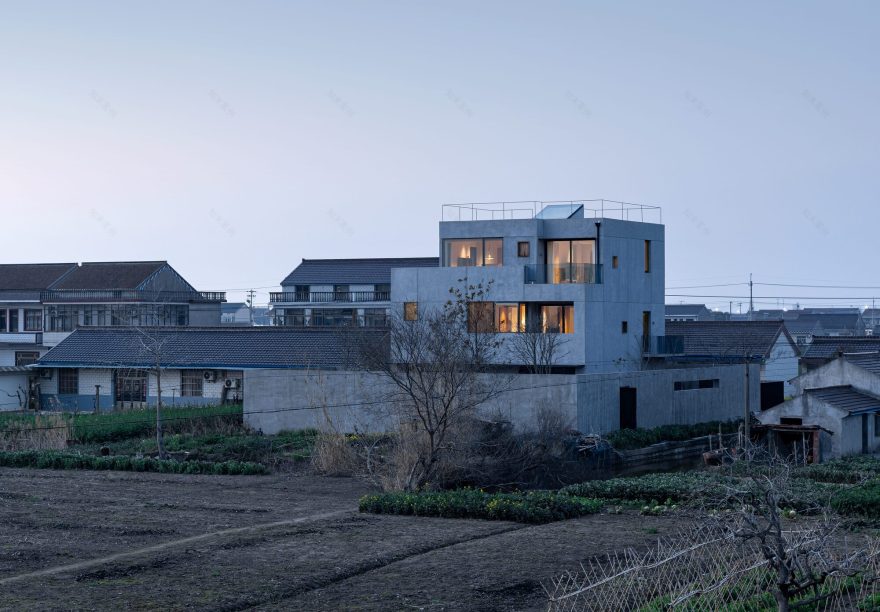
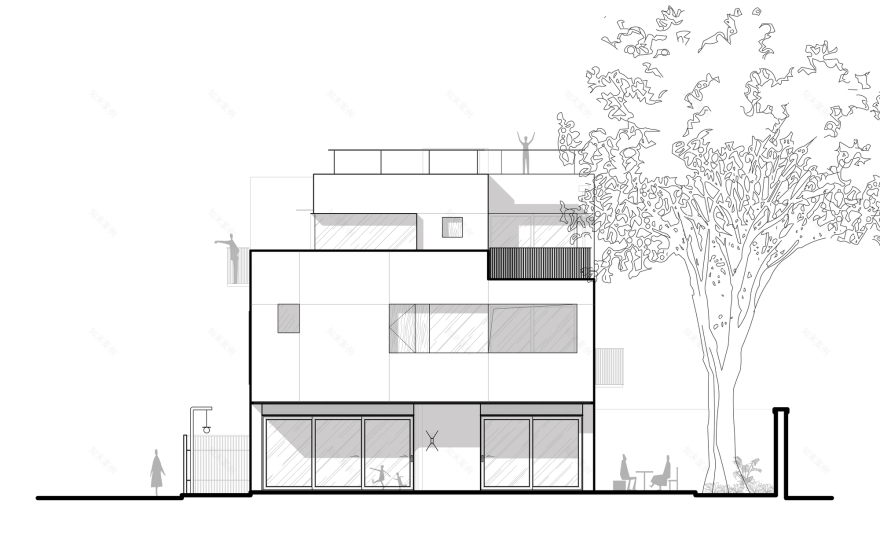
Blending with Neighbors - The building utilizes a three-story frame structure, adhering to the volume proportions of surrounding farmhouses, and dissolves its mass through multiple view corridors. The roofline is flush with neighboring houses, intervening humbly in the village. Unlike the enclosed nature of traditional courtyard walls, the architect used low walls and trees to define the boundaries, ensuring privacy while allowing the courtyard to blend naturally into its surroundings. In the old days, fishermen rammed oyster shells into walls; today, the exterior walls use shells mixed with washed stone, revealing a coarse texture over time. Moderate in cost yet carrying the breath of the sea, it also allows soil from farming to enter. Without pursuing symbolization, it extends rural memories through materials and scale. It does not seek to build a "foreign" house, but seeks to live in symbiosis with the village and breathe with nature.

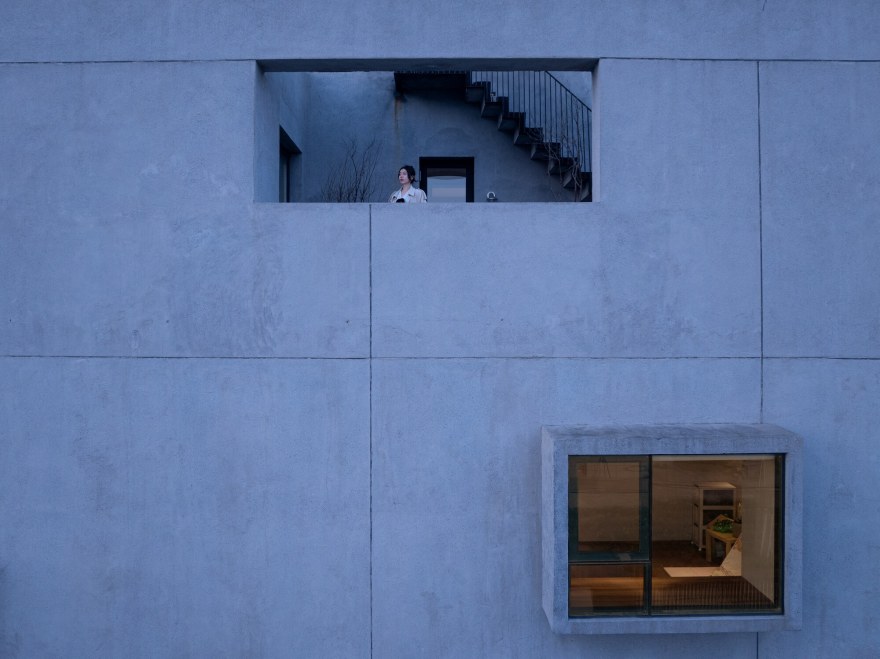

Roaming with Nature - Beneath the humble exterior form lies a rich combination of internal spaces. Functionally restrained, the three-story space has only 6 rooms, with the remaining area reserved for public zones. With the skylight as the axis, living rooms, sleeping areas, and leisure areas are scattered across the three floors, connected by stairs and windows, creating a sense of flow and connectivity. The interior of the building presents a "sandwich-style" vertical settlement.


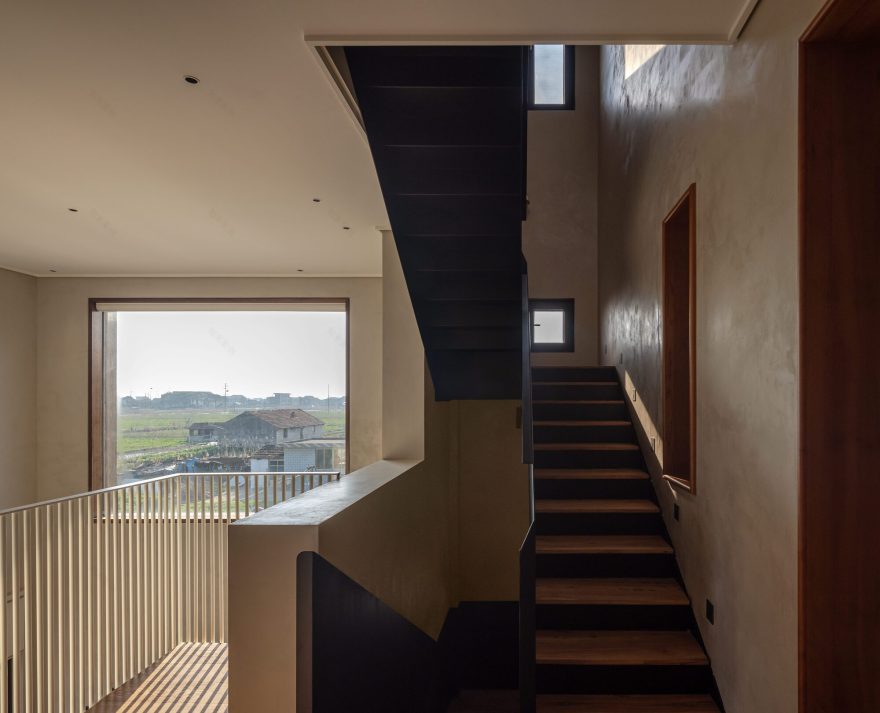
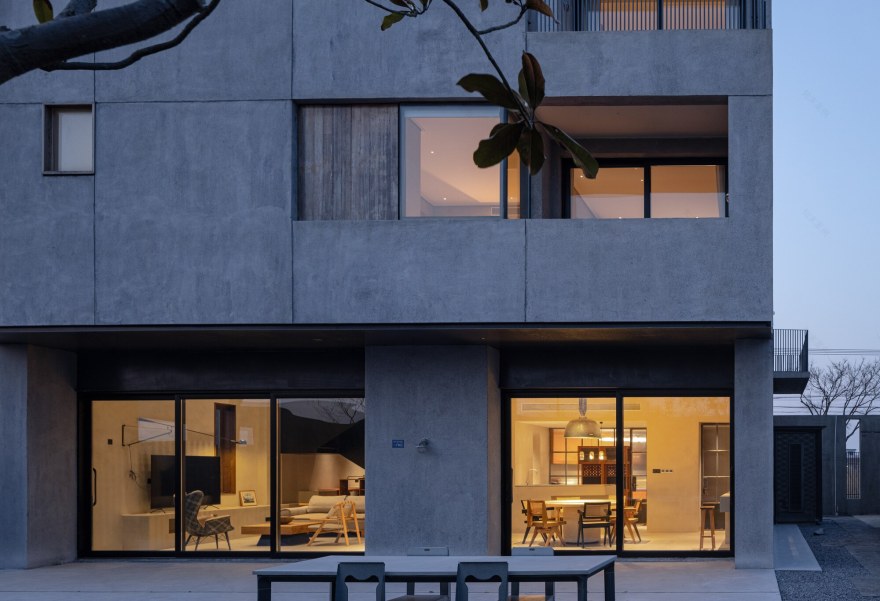
Bottom "Soil Layer": The interior washed stone floor extends outside the courtyard, blurring the boundary between public and private, presenting a semi-open courtyard.Middle "Living Layer": As the stairs turn and windows shift, the fields of the four seasons enter as paintings, hanging upon the coarse walls. The terrace extending outward melts the boundary between architecture and nature, allowing one to step out at any time and dwell between heaven and earth. Top "Cloud Layer": A square skylight casts cloud shadows onto the tea mat, allowing one to feel the passage of time indoors. Watching rain on rainy days, watching clouds on sunny days—the sky is high and the land is wide.

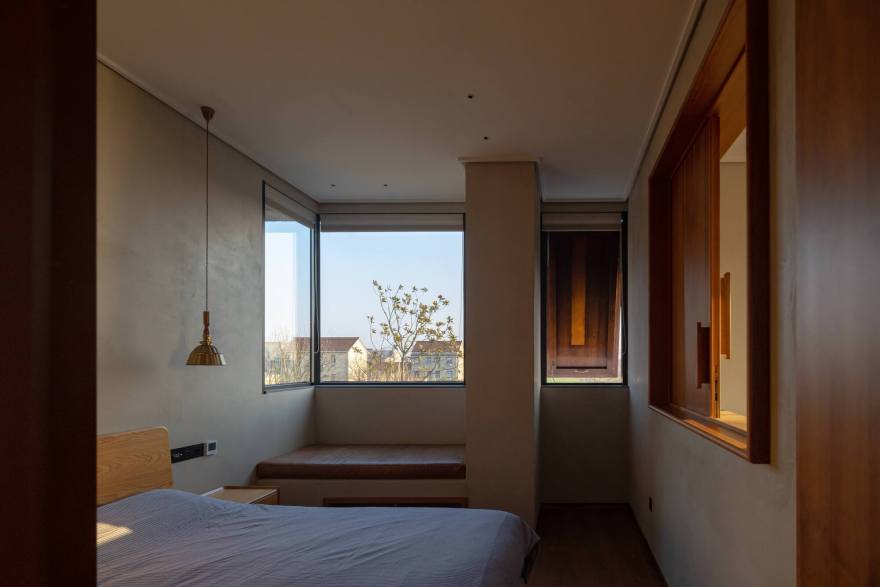

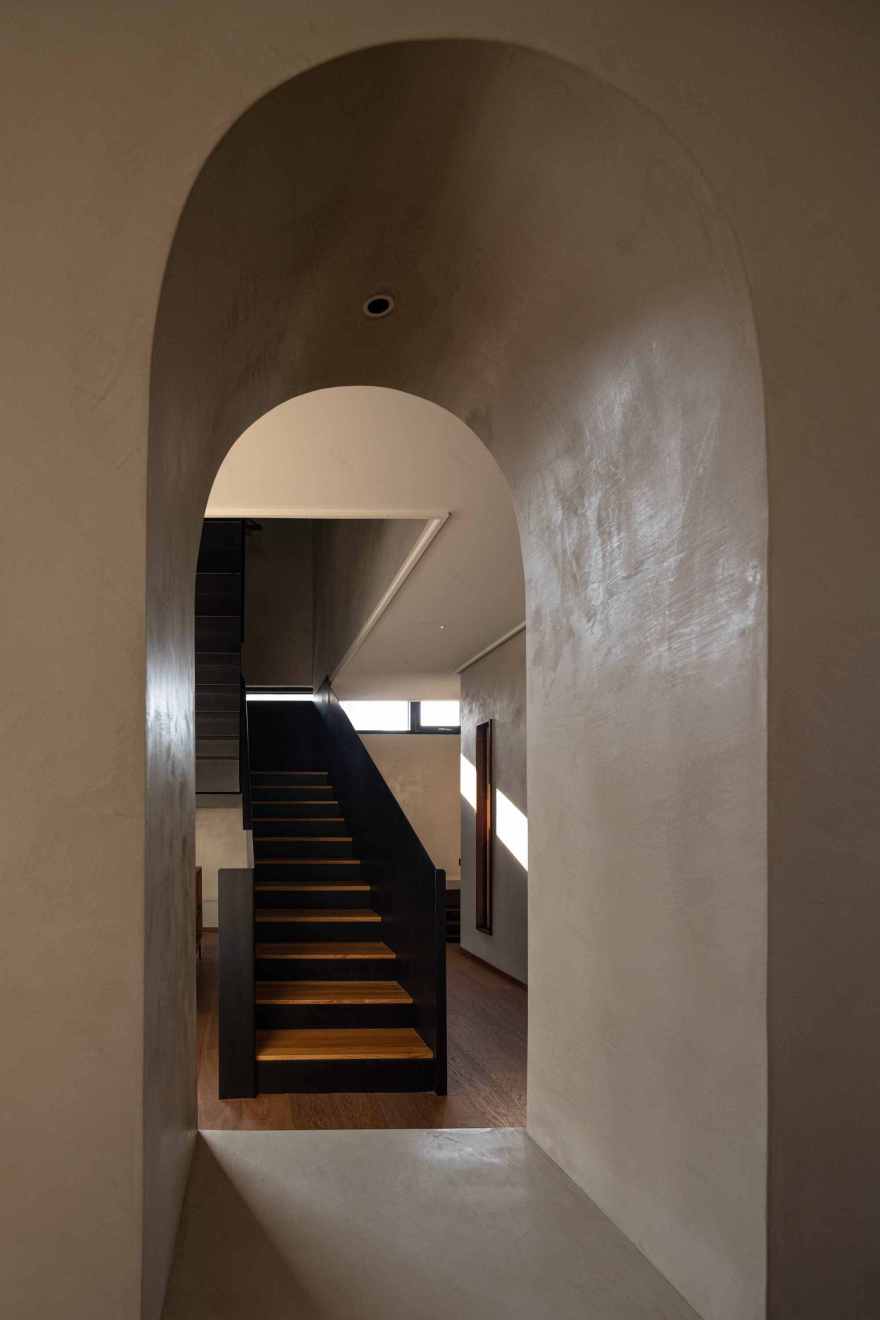
The building features windows of different scales internally: ground-floor floor-to-ceiling windows eliminate indoor-outdoor boundaries; horizontal long windows look towards tree trunks and also allow morning light to spread onto the dining table; the third-floor skylight casts diamond-shaped light spots, descending onto the tea room wall in summer; while the vertical slit window in the stairwell compresses sunlight into a "light blade," blending with the wall texture to create a "divine place" in the stairwell. Leaving room between the daily and the spiritual.


Harmony with City and Countryside - There is a river in front of the door, fields behind the courtyard, trees beside the yard, and neighbors near the house. A corner of the courtyard is kept as a vegetable patch, so the parents can still "plant flowers and beans, finding joy in the garden." As Lin Yutang once wrote: "A garden within a house, a house within a garden, a courtyard within the house, trees within the courtyard, the sky seen above the trees, and the moon within the sky"—it is just so. The East Courtyard responds to rural texture in form, meets intergenerational needs in function, lives in symbiosis with nature in aesthetics, and reconstructs traditional courtyard relationships in space.
Project gallery






南京喵熊网络科技有限公司 苏ICP备18050492号-4知末 © 2018—2020 . All photos and trademark graphics are copyrighted by their owners.增值电信业务经营许可证(ICP)苏B2-20201444 苏公网安备 32011302321234号
苏公网安备 32011302321234号客服
消息
收藏
下载
最近