

创作上传
VIP
收藏下载
登录 | 注册有礼
查看完整案例

收藏

下载

分享
本项目对印度尼西亚望加锡(Makassar)常见的“Ruko”(店屋)建筑类型进行了重新定义。通过一系列精准而克制的“微创式”设计介入,将一栋进深幽暗、仅4.8米宽的建筑,转化为一座能够自由“呼吸”的共居(Co-living)空间。
This project redefines the standard “Ruko” (shophouse) typology in Makassar, transforming a dark, 4.8-meter-wide structure into a “breathing” co-living facility through precise, microsurgical interventions.
▼项目概览,overall of the project© Agung Fadriansyah & Zailan Jailani

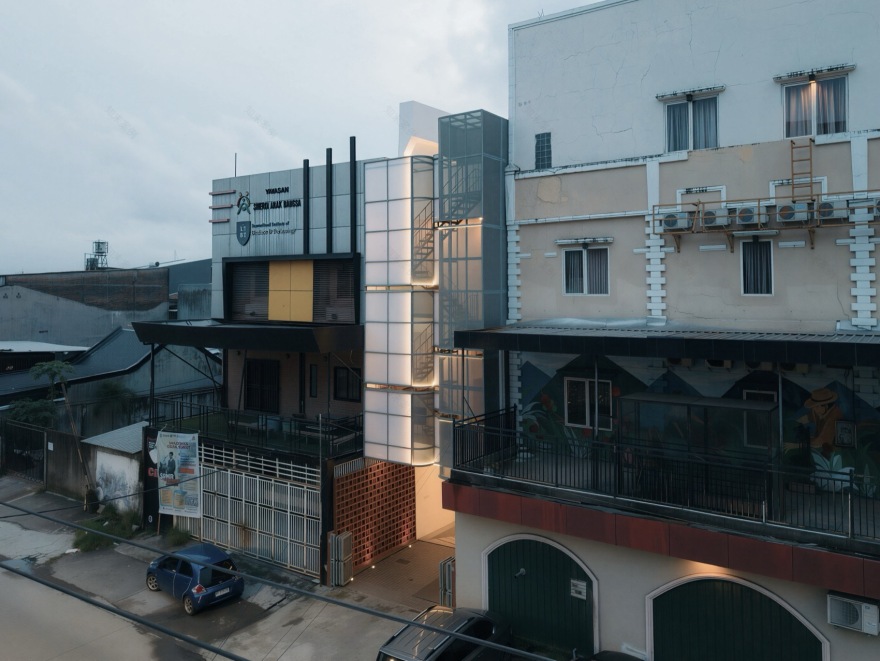
在高密度的城市肌理中,Ruko是最普遍、却也最具问题性的商业建筑类型之一。其典型特征是极深的平面尺度(最深可达30米)与狭窄的立面开口,往往导致自然采光不足、空气流通不畅。
Amidst the dense urban grid, the “Ruko” stands as the most common, yet often problematic, commercial typology. Characterized by extremely deep floor plates (up to 30 meters) and narrow facades, these buildings frequently suffer from poor air circulation and a scarcity of natural light.
▼沿街立面,facade along the street© Agung Fadriansyah & Zailan Jailani

项目所在地原本是一栋三层老旧Ruko,空间昏暗、潮湿而封闭。设计的核心挑战在于:在保留原有混凝土结构及附加钢结构、并经过结构评估的前提下,将这座“失去生命力”的建筑转变为一个健康、有活力的高密度居住空间,而非简单拆除重建。
The project site itself was an old three-story ruko, dark, damp, and rigid. The primary challenge was to transform this “dead” structure into a healthy, vibrant, high-density residential space without demolishing its original framework and additional steel structure with analysis of the existing structure.
▼原状与俯瞰,original state and aerial view of the project© Agung Fadriansyah & Zailan Jailani
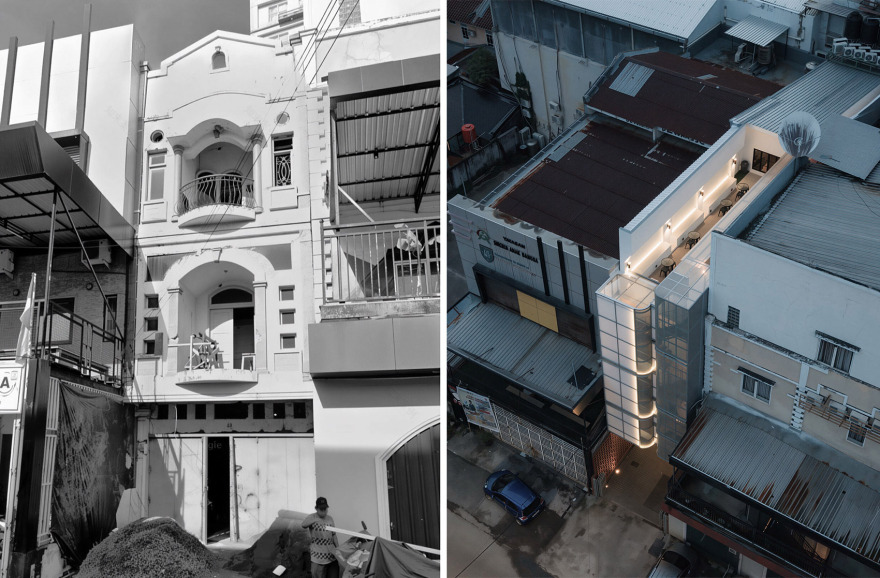
对此,建筑师提出了“外科手术式介入”的策略。设计保留了原有的主体结构,却在建筑体量中实施了一道垂直的“切口”:从二层一直延伸至屋顶,开辟出一条宽度约30至50厘米的连续竖向空隙。
Architects responded to this challenge with a strategy of “surgical intervention.” Opting against total demolition, the design preserves the existing concrete structure but executes a vertical “incision” through the building’s mass. A continuous void, ranging from 30cm to 50cm in width, is cut from the second floor up to the roof.
▼室内概览,overall of the project© Agung Fadriansyah & Zailan Jailani

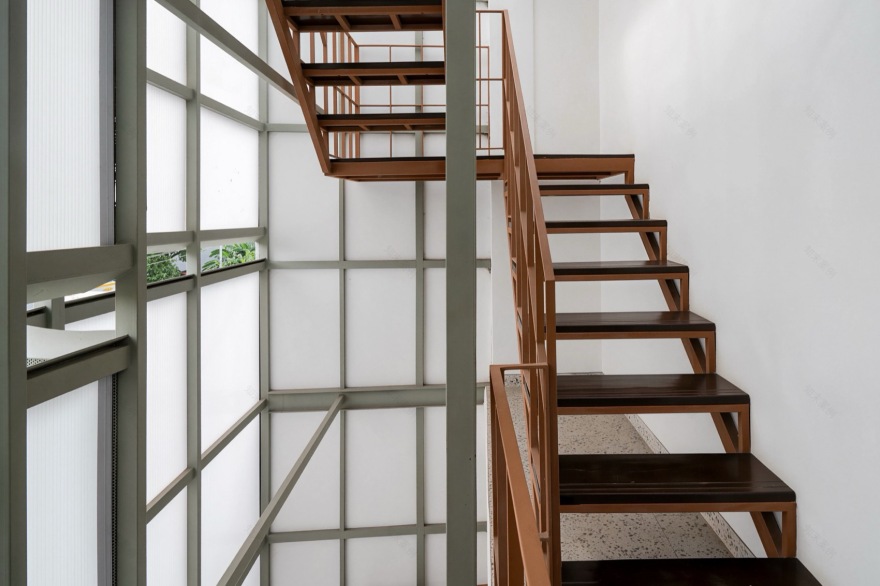
▼楼梯,staircase© Agung Fadriansyah & Zailan Jailani
▼走廊,hallway© Agung Fadriansyah & Zailan Jailani
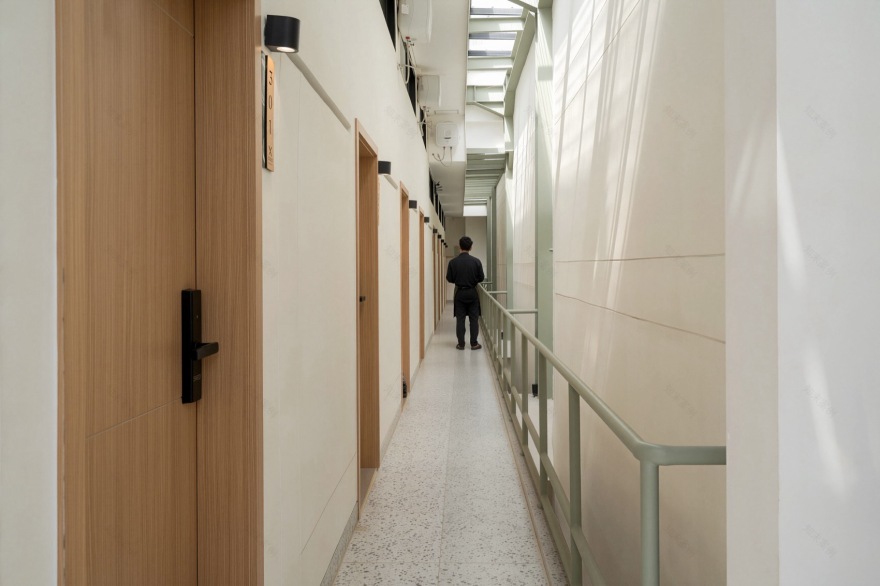

这道“切口”如同建筑的肺部,通过烟囱效应将热空气引导至顶部天窗与通风口排出,同时将自然光引入原本最幽暗的走廊深处,使昔日昏暗的交通空间转变为明亮而富有层次的公共通道。
This “surgical incision” acts as the building’s lungs, generating a stack effect that draws hot air out through the skylight and ventilation while allowing natural light to wash over the deepest parts of the corridor. The once-dark hallway is thus transformed into a luminous circulation space.
▼通高的“切口”,vertical “incision” through the building© Agung Fadriansyah & Zailan Jailani


在仅4.8米的用地宽度限制下,居住单元采用夹层(Mezzanine)与错层咬合的剖面设计,将睡眠空间布置于上层,活动与卫浴空间置于下层,营造出一种“微型奢享”的空间体验,使紧凑的居住单元在尺度感受上显得出乎意料地宽敞。
To address the constraint of a mere 4.8-meter site width, the residential units utilize a mezzanine configuration with an interlocking section. This design separates the sleeping quarters on the upper level from the activity and sanitation areas below, creating a sense of “micro-luxury” that makes the compact units feel surprisingly spacious.
▼住宅单元,the residential unit© Agung Fadriansyah & Zailan Jailani


▼上层睡眠空间,sleeping space on the mezzanine© Agung Fadriansyah & Zailan Jailani

对细节的关注同样体现在卫浴设计中。浴室墙体设置了带有上扬角度的水平缝隙,使湿热空气能够自然排入通风走廊,同时完全阻隔外部视线,在不牺牲隐私的前提下实现良好的空气质量。
Attention to detail extends to the sanitation strategy. Bathroom walls feature discrete horizontal gaps with an upward-sloping geometry. This angled ventilation allows humid air to escape naturally into the ventilated corridor while completely blocking visual access from the outside, preserving privacy without compromising air quality.
▼剖透视图,perspective sections© MIV Architects

▼无夹层的住宅单元,residential unit without mezzanine© Agung Fadriansyah & Zailan Jailani


与高效紧凑的居住空间形成对比,夹层中的咖啡厅与共享办公区则通过刻意压低的层高与柔和、间接的照明,营造出亲密而安静的空间氛围。这种“压缩感”使商业空间成为远离街道喧嚣的宁静庇护所。
In contrast to the efficiency of the residential units, the café and co-working space on the mezzanine level offer intimacy through intentionally low floor-to-ceiling heights and dim, indirect lighting. This creates a comfortable sense of compression, transforming the commercial area into a tranquil sanctuary away from the hustle and bustle of the street.
▼夹层中的咖啡厅与共享办公区,
café and co-working space on the mezzanine level© Agung Fadriansyah & Zailan Jailani


从空中俯瞰,线性延展的白色屋顶仿佛切开了城市的高密度肌理,清晰标示出内部为建筑注入生命的通风中庭。夜幕降临,当周边建筑逐渐隐入黑暗,AVIRA Co-Living 散发出柔和的光芒,既成为城市中的视觉锚点,也以克制而现代的姿态融入周围环境。
Viewed from above, the distinctive white linear roof appears to slice through the urban density, marking the position of the internal void that breathes life into the building. At night, as neighboring structures fade into darkness, the building emanates a soft glow, acting as a visual anchor and a beacon of modernity without overpowering its surroundings.
▼顶视图,top view© Agung Fadriansyah & Zailan Jailani
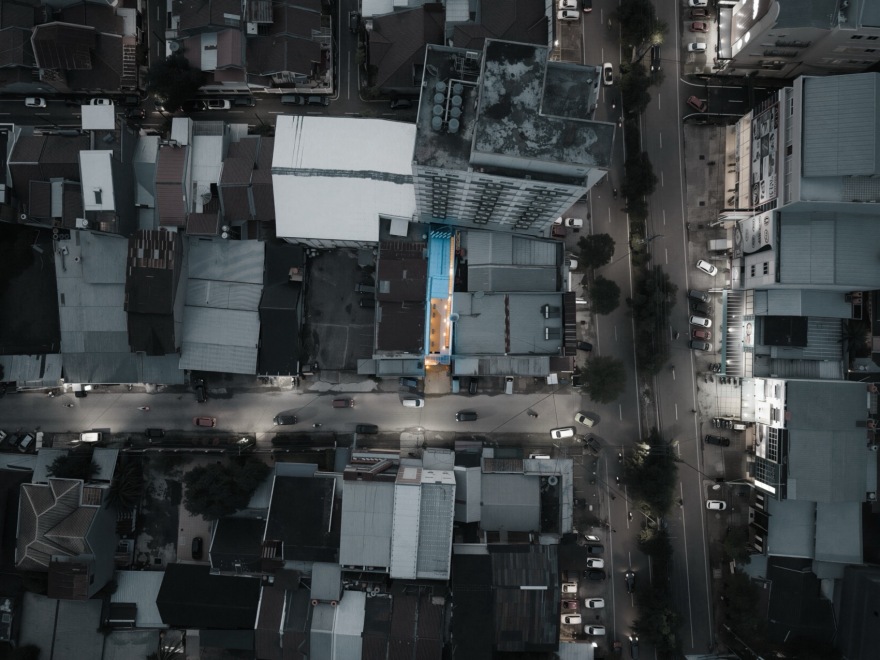
▼总平面图。master plan© MIV Architects

▼底层平面图,ground floor plan© MIV Architects

▼二层平面图,first floor plan© MIV Architects

▼三层平面图。second floor plan© MIV Architects

▼三层夹层平面图,second floor mezzanine plan© MIV Architects
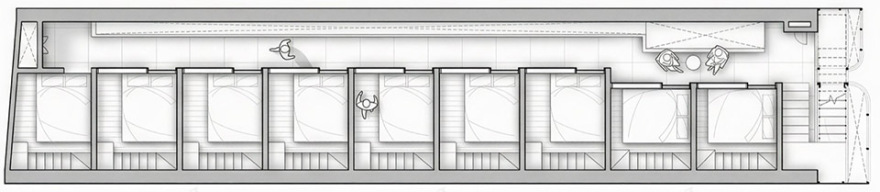
▼四层平面图,third floor plan© MIV Architects

▼四层夹层平面图。third floor mezzanine plan© MIV Architects
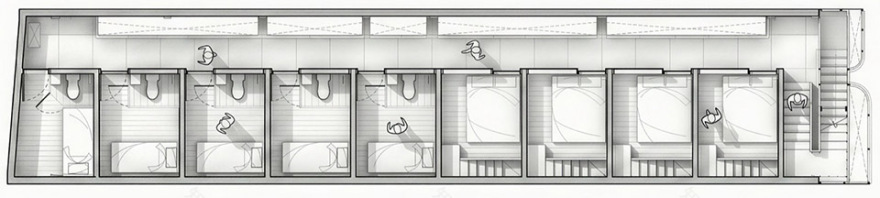
▼顶层平面图,top floor plan© MIV Architects
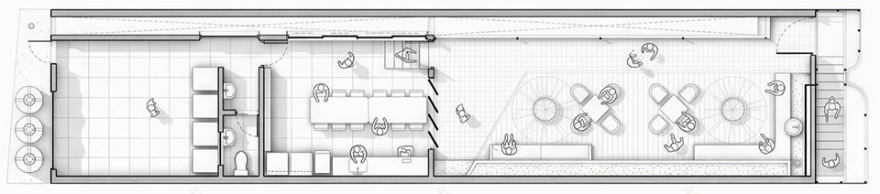
▼剖面图,section© MIV Architects

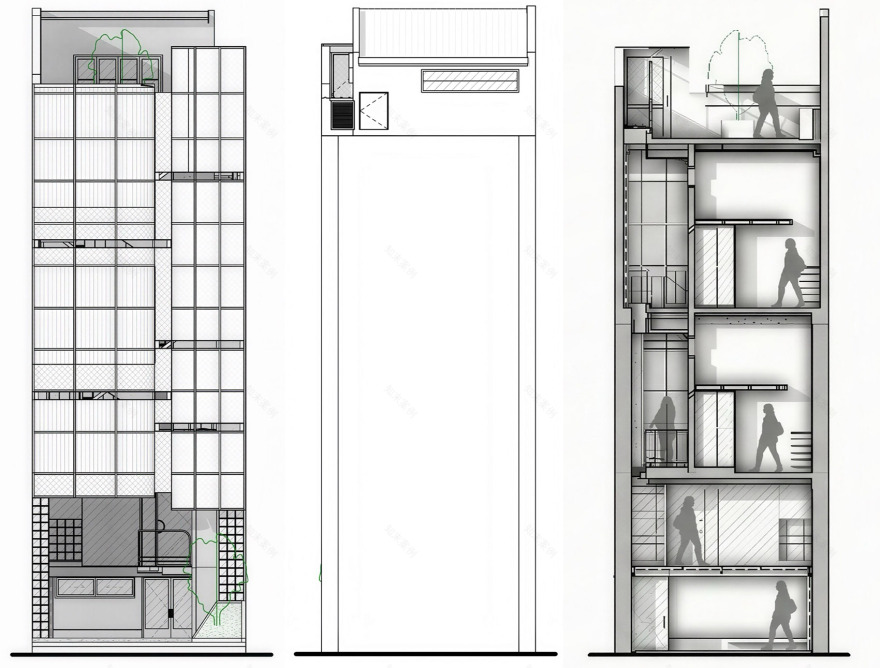
▼立面图与剖面图,elevations and section© MIV Architects
Project name: AVIRA CO-LIVING
Architecture firm: MIV Architects
Principal architect: Ikhsan Hamiru
Project location: Makassar City, Indonesia
Built area: 420 m2
Site area: 129 m2
Photography: Agung Fadriansyah & Zailan Jailani
Visualization: Yudha Dharma
Tools used: AUTO CAD, SKETCHUP, REVIT, ENSCAPE
Design team: Alfachri Kamarullah, Andi Nindyah Ekananda, Syafrian, Izan, Fitri Abbas, Yudha Dharma
Design year: 2023
Completion year: 2025
Structural engineer: Halil Mubaraq
Construction: Rudy Ishak
Client: AVIRA PROPERTY
Status: Built
Typology: Hospitality


南京喵熊网络科技有限公司 苏ICP备18050492号-4知末 © 2018—2020 . All photos and trademark graphics are copyrighted by their owners.增值电信业务经营许可证(ICP)苏B2-20201444 苏公网安备 32011302321234号
苏公网安备 32011302321234号客服
消息
收藏
下载
最近