

创作上传
VIP
收藏下载
登录 | 注册有礼
查看完整案例

收藏

下载

分享

翻译
Architects:mtthw
Area:197m²
Year:2024
Photographs:Koichi Torimura
Manufacturers:ENDO Lighting Corporation,IKEDA CORPORATION,LIXIL,MATEX,NSG INTERIOR,nanik
Lead Architects:Namiko Matsubara, Hiromu Tanaka
Category:Restaurants & Bars,Adaptive Reuse
Lead Team:Namiko Matsubara, Hiromu Tanaka
Engineering & Consulting > Structural:Hirokazu Osaka Structural Design Office (OSD)
Engineering & Consulting > Mep:Maeda Equipment Design Office
General Contractor:CWC
Landscape Architecture:UNIMAT RIK
Engineering & Consulting > Other:Katomokuzaikogyo, Ishinomori Woodworks, NUB creative works, YAWATA KOGYO, TESUKI WASHI TANINO, Hoshinokensho, THREE’s LIEN, Yabusun Metal Craft, MARUKI
Engineering & Consulting > Lighting:ENDO Lighting Corporation
City:Tokyo
Country:Japan

Text description provided by the architects. This renovation transforms a former residence into a restaurant while preserving traces of its residential use accumulated over time. In the renovation of existing architecture, the act of design is always situated between the past and the future. Unlike new construction, such projects already contain an accumulation of time, requiring the designer to engage in dialogue with the memory of the space. Beyond physical information such as changes in form, materials, and spatial configuration, carefully reading the traces of everyday life once lived there holds significant meaning when envisioning a new spatial reality.


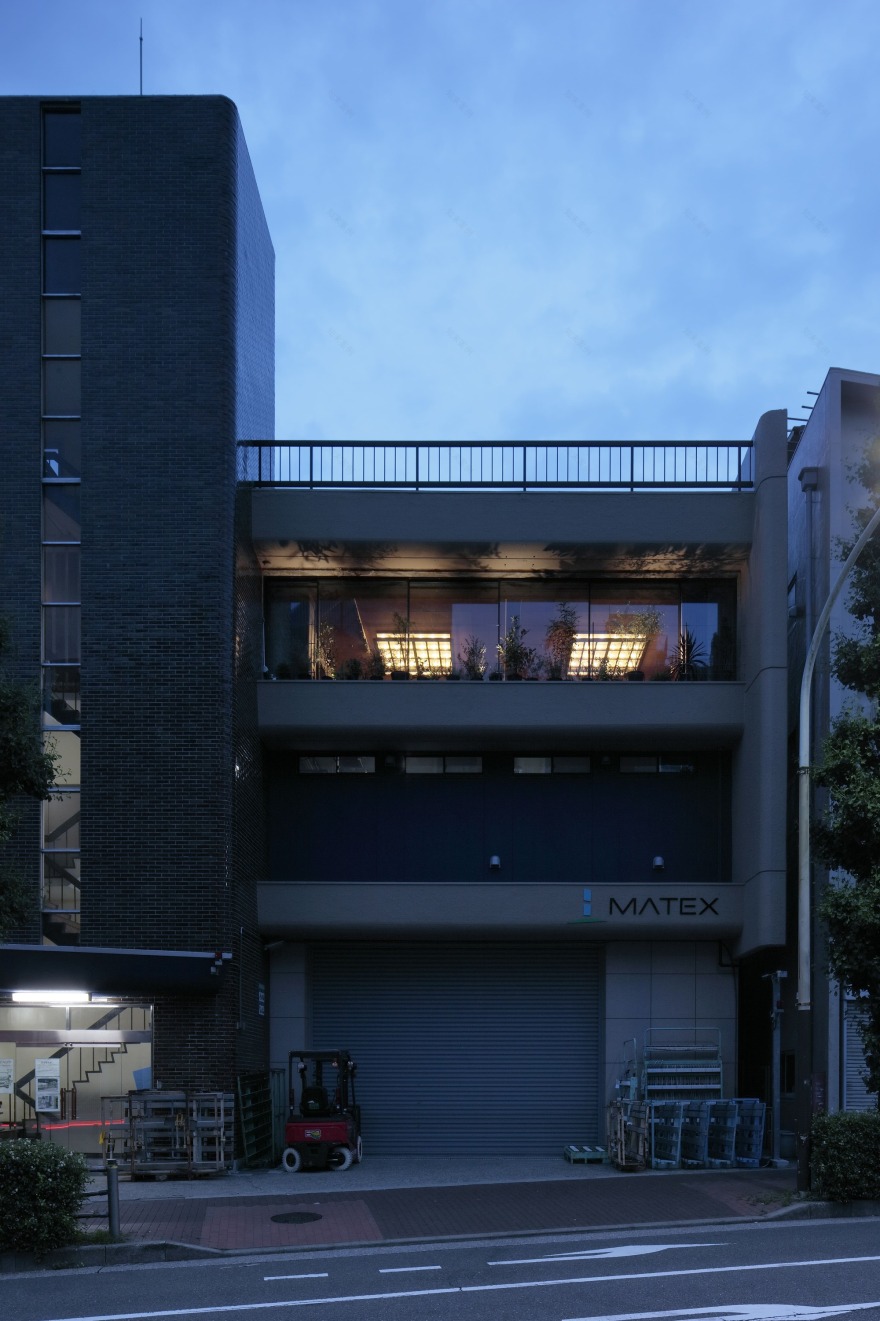
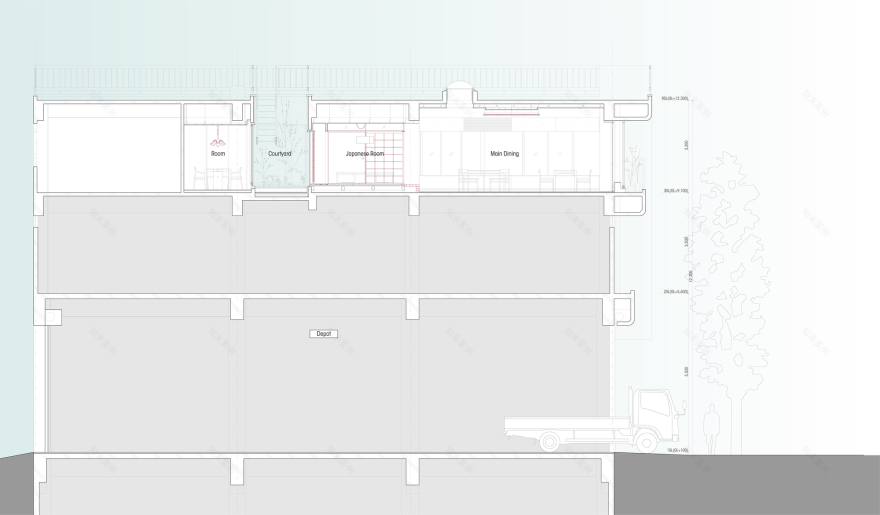
The subject of this project is the top floor of a three-story warehouse building in Kami-Ikebukuro, Toshima Ward, constructed 58 years ago. After being used as the owner's residence until around 2005, the space remained vacant, and its conversion into a restaurant was proposed in this project. Early-stage investigations revealed that the residence had undergone a full renovation approximately ten years after its original construction. The original layout—placing reception rooms and private rooms on the southwest side and family spaces around the courtyard—had been reorganized into a configuration in which private rooms surrounded the courtyard, while communal living spaces were relocated to the south.

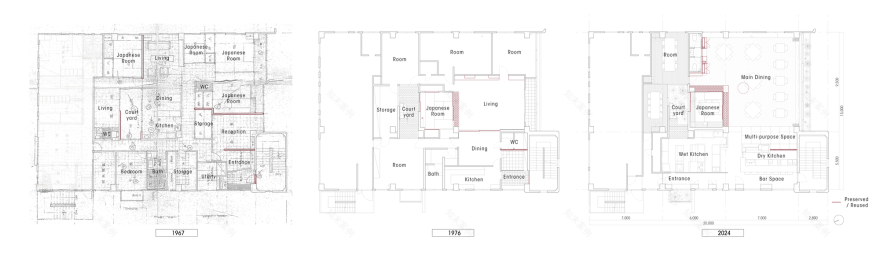

The structure is a rigid-frame system with a column span of approximately 8.5 meters. Taking advantage of this structural characteristic, large openings were introduced, and the kitchen, bar, multi-purpose space, and dining area were integrated into a single open-plan layout. A Japanese-style room and restrooms are also contained within the unified space, carefully planned so as not to diminish the sense of openness.


The entrance evokes the image of a kitchen door, and upon stepping inside, visitors are greeted by an open kitchen unfolding before them. As guests sense the activity of cooking and the aromas of food, they build anticipation in the bar area before moving into the main dining space. The multi-purpose space accommodates activities such as live music performances, gently transforming the atmosphere of the place. In the private rooms facing the courtyard, guests can spend quiet moments while enjoying views of seasonal plantings.


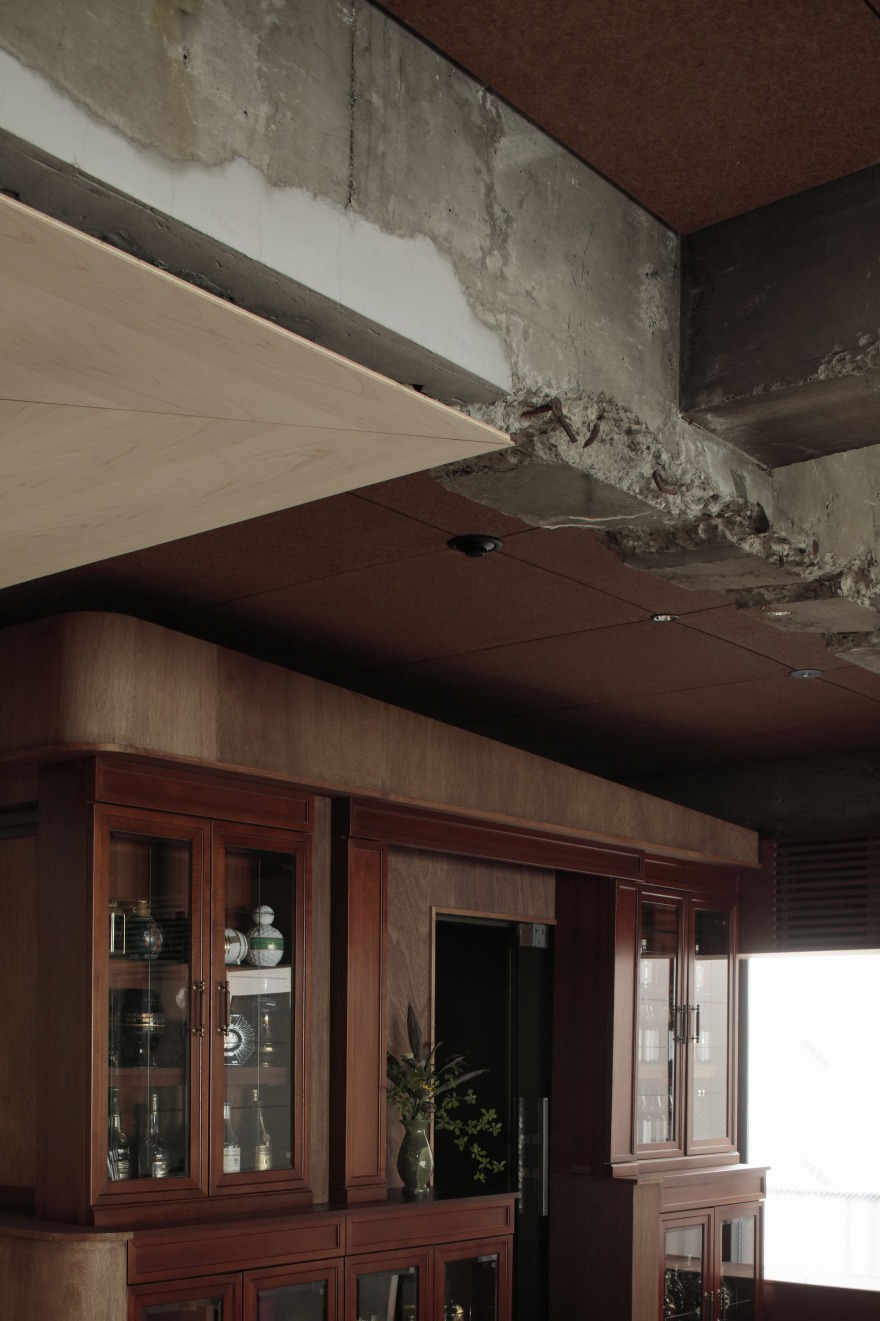
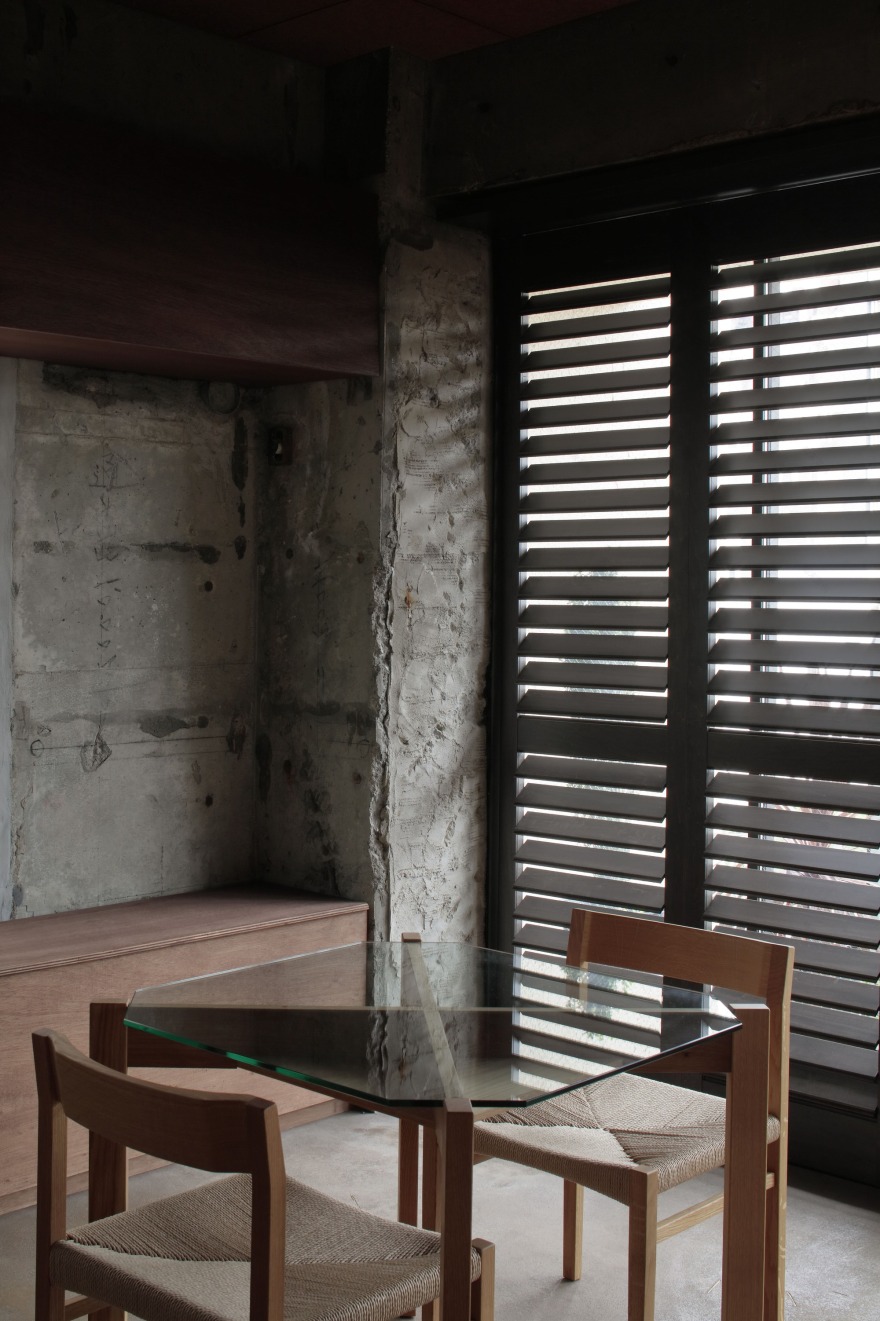
This project seeks not to erase the memory of the former residence, but to reinterpret the space as an event within time by reconfiguring it through the interplay of accumulated elements from the past and newly introduced interventions. Rather than a simple renewal, the design explores an approach to renovation that allows memory to remain embedded in the place, quietly weaving it forward into the next era.
Project gallery




南京喵熊网络科技有限公司 苏ICP备18050492号-4知末 © 2018—2020 . All photos and trademark graphics are copyrighted by their owners.增值电信业务经营许可证(ICP)苏B2-20201444 苏公网安备 32011302321234号
苏公网安备 32011302321234号客服
消息
收藏
下载
最近