

创作上传
VIP
收藏下载
登录 | 注册有礼
查看完整案例

收藏

下载

分享

翻译
Architects:movs studio
Area:480m²
Year:2025
Photographs:Ilya Ivanov
Lead Architects:Ruben Movsisian, Catherine Tarasova
Category:Coffee Shop,Refurbishment
Lead Team:Ruben Movsisian, Catherine Tarasova
Technical Team:Artem Lebedev
Design Team:Ivan Gorbunov, Tatiana Kurochkina
City:Hail
Country:Saudi Arabia

Text description provided by the architects. Set against a dramatic natural backdrop, this Peacock café in Ha'il redefines contemporary Arabian hospitality by weaving handcrafted interiors around a courtyard carved directly into a real rock formation.

Context and Challenge – The project is located in Ha'il, Saudi Arabia, within a rapidly developing urban fabric shaped by both modern construction and striking natural landscapes. The site initially consisted of an unfinished concrete frame adjacent to a tall rock formation, which immediately became the project's defining feature and primary architectural challenge. The client, Peacock, a growing café chain, sought to create a space that would feel welcoming and intimate while remaining recognizable as part of the brand. Rather than pursuing a highly decorative or theme-driven interior, the brief emphasized authenticity, warmth, and a strong connection to place.

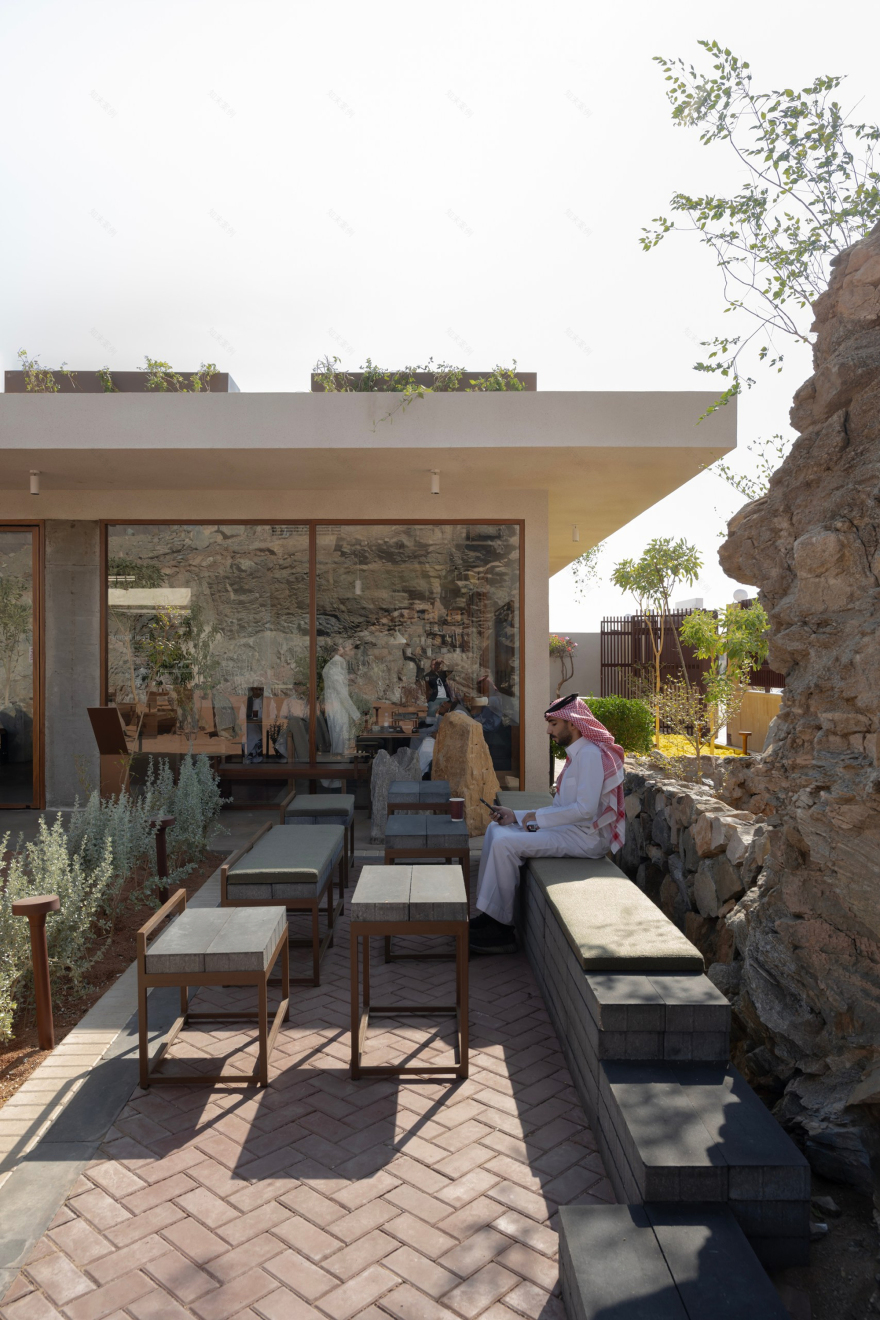
One of the main challenges was integrating the existing rock into the spatial experience without turning it into a superficial visual attraction. During construction, part of the rock was carefully removed to create a small, secluded inner courtyard with trees. This intervention required precise coordination between architectural intent and structural feasibility, as well as sensitivity to the natural context.


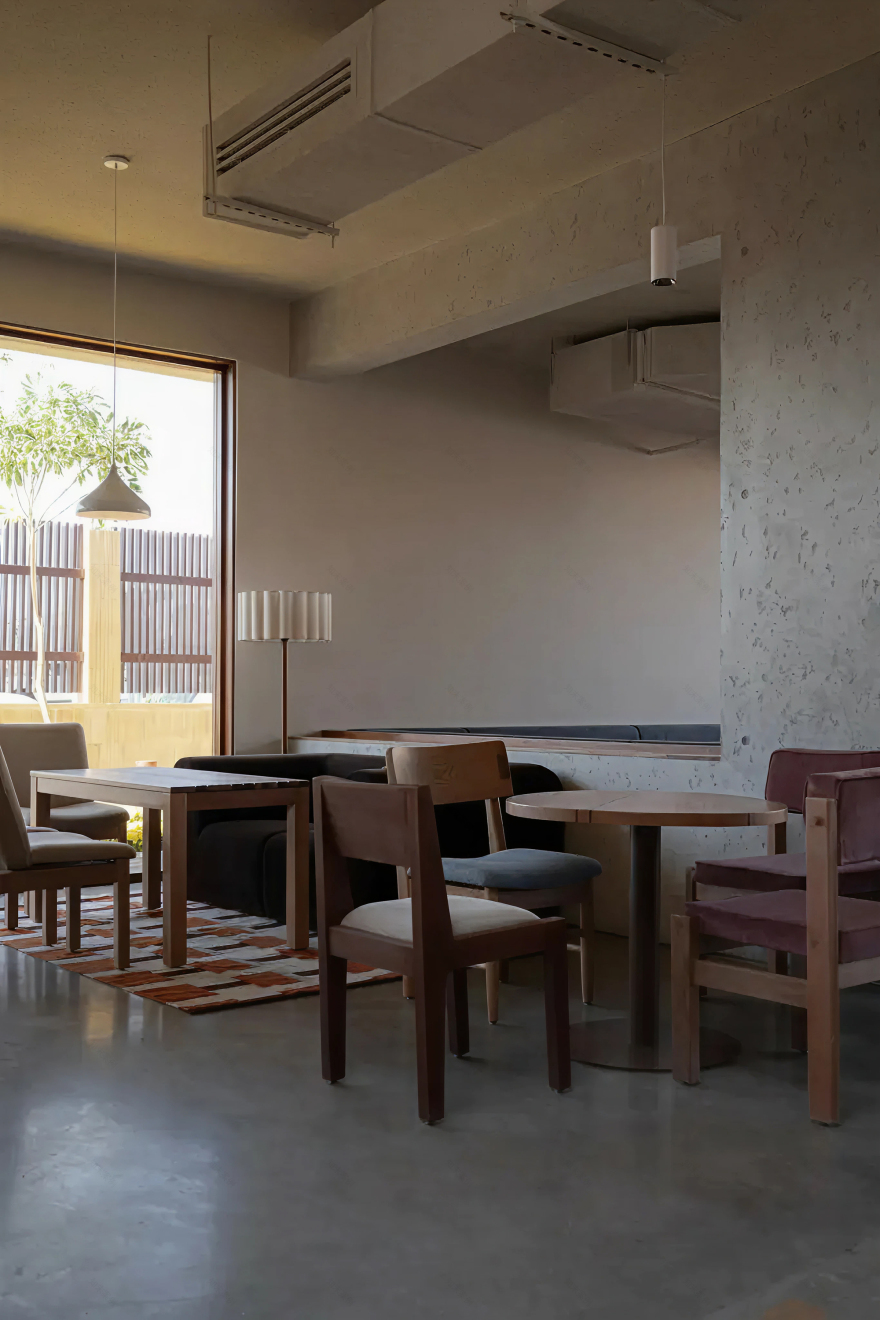
Design Concept and Solution – The core design idea was to create an honest, architectural interior that acknowledges the presence of the rock without attempting to compete with it. The courtyard became the heart of the project, visually connected to the interior through large panoramic windows that bring daylight deep into the space and blur the boundary between inside and outside.


Several stones left over from the partial demolition of the rock were intentionally reintroduced into the interior. By polishing flat surfaces on their tops and bases, these stones were transformed into sculptural elements that function both as art objects and as high tables for short coffee breaks, reinforcing the narrative of continuity between nature and architecture. To support a friendly, home-like atmosphere — as if visiting a friend rather than a commercial venue — the interior avoids excessive decoration and complex bespoke details. Instead, almost all furniture was handcrafted by local artisans. The design team developed a deliberately utilitarian furniture language, taking into account local fabrication methods from the outset. The result is simple yet expressive furniture that meets ergonomic requirements while maintaining visual clarity.
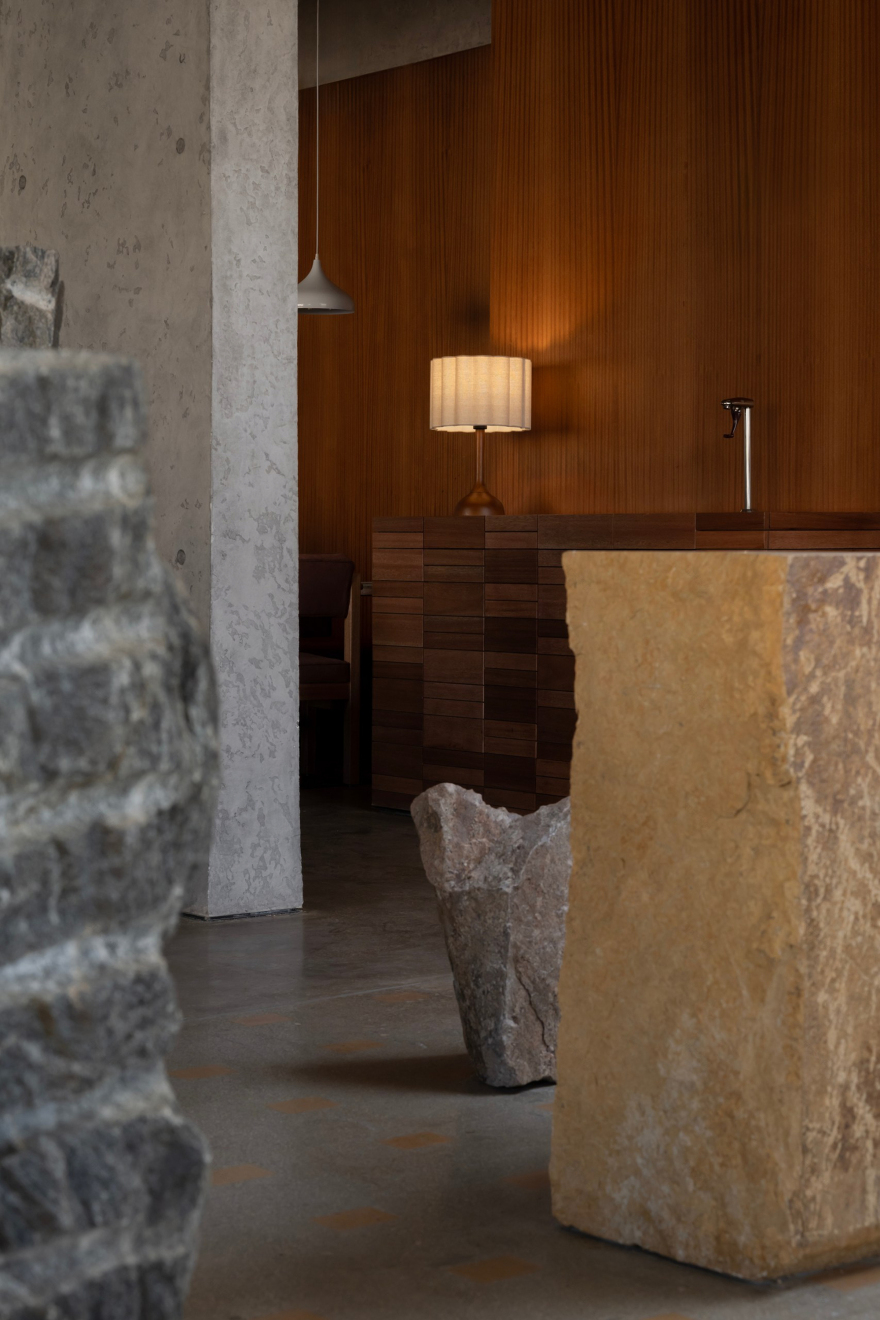

Material choices further emphasize this approach: exposed ceilings and visible ventilation, smooth gray plaster walls, dark-toned wood, polished concrete floors with brass inlays, and broad burgundy accents in upholstery and bar-area tiles. Together, these elements form a restrained yet distinctive palette.
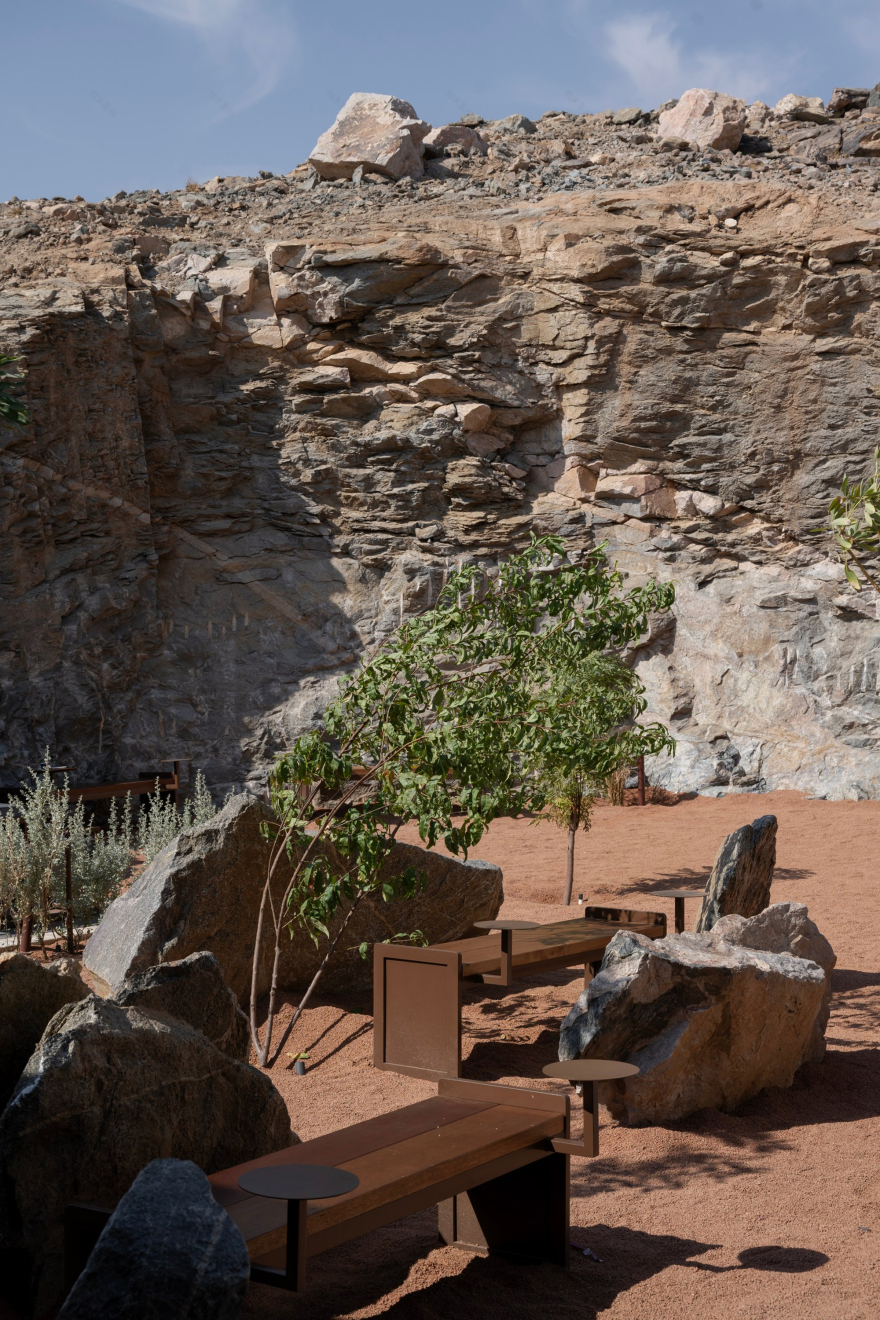
Impact and Conclusion – The completed café offers a calm, intimate environment that celebrates material honesty, local craftsmanship, and the unique geological character of the site. By integrating the rock into both the spatial layout and the interior narrative, the project establishes a memorable identity while contributing a contemporary interpretation of Arabian hospitality rooted in place, simplicity, and human scale.

Project gallery




南京喵熊网络科技有限公司 苏ICP备18050492号-4知末 © 2018—2020 . All photos and trademark graphics are copyrighted by their owners.增值电信业务经营许可证(ICP)苏B2-20201444 苏公网安备 32011302321234号
苏公网安备 32011302321234号客服
消息
收藏
下载
最近