

创作上传
VIP
收藏下载
登录 | 注册有礼
查看完整案例

收藏

下载

分享
在国际设计竞赛之后,Snøhetta 于2012年受委托设计釜山歌剧院。项目以突破“歌剧作为精英文化机构”的传统认知为出发点,将表演建筑重新定义为一个开放、互动且具民主精神的公共空间——不仅服务于演出本身,更鼓励日常使用与集体体验。作为韩国第二大城市的首座歌剧院,该项目有望成为具有标志意义的文化地标,其影响力将远远超越舞台之内。
Following an international design competition, Snøhetta was commissioned in 2012 to design the Busan Opera House. Conceived as a shift away from the opera as an exclusive institution, the project reimagines performance architecture as an open, interactive, and democratic space one that invites collective experience and everyday use. As the first opera house in South Korea’s second-largest city, the project is set to become a defining cultural landmark, extending its relevance far beyond the stage.
▼项目概览(效果图),Project Overview (Rendering) © MIR, Tegmark


▼鸟瞰(效果图),Bird’s-eye view (rendering) © MIR, Tegmark

釜山歌剧院坐落于北港滨水区的填海用地之上,将一片具有工业历史的区域转化为充满活力且包容的公共场所。这座富有亲和力的建筑宣告了韩国当代建筑的新篇章,回应开放性、可达性与公共慷慨精神等核心价值。柔和包覆的建筑形体、可对公众开放的屋顶,以及分别面向城市公园与海岸的入口,共同构成一个连续而开放的建筑姿态,将城市自然地引入其中。项目总建筑面积约48,000平方米,包含一座1,800座的大剧场、一座300座的多功能剧场、排练空间及多处公共广场。
Located on reclaimed land along Busan’s North Port waterfront, the new opera house converts a historically industrial area into a lively and inclusive public realm. The inviting building announces a new chapter in contemporary architecture in South Korea, reflecting values of openness, accessibility, and civic generosity. With a soft wrapping, a publicly accessible rooftop and entrances from both the park and seaside, the Opera House establish a continuous architectural gesture that welcomes the city in. At a scale of 48,000 square meters, the Busan Opera House will host an 1,800-seat grand auditorium, a 300-seat multipurpose theater, rehearsal spaces, and public plazas.
▼夜景(效果图),Night view (rendering) © MIR, Tegmark

▼屋顶步道(效果图),Roof walkway (rendering) © MIR, Tegmark
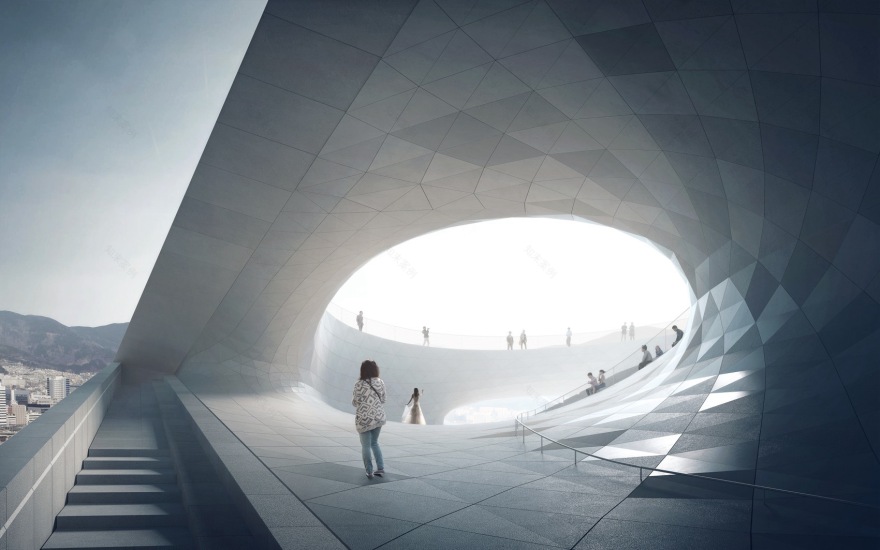
▼大厅(效果图),Hall (rendering) © MIR, Tegmark

▼上层走廊(效果图),Upper Corridor (rendering) © MIR, Tegmark
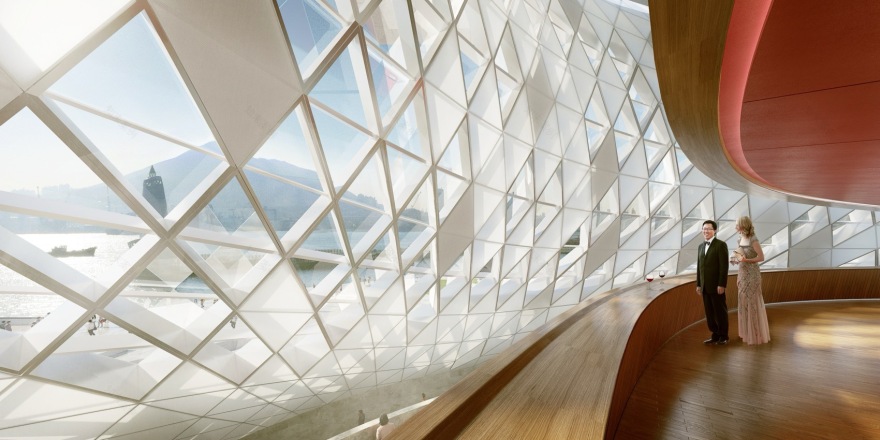
▼歌剧院室内(效果图),Interior of the Opera House (rendering) © MIR, Tegmark
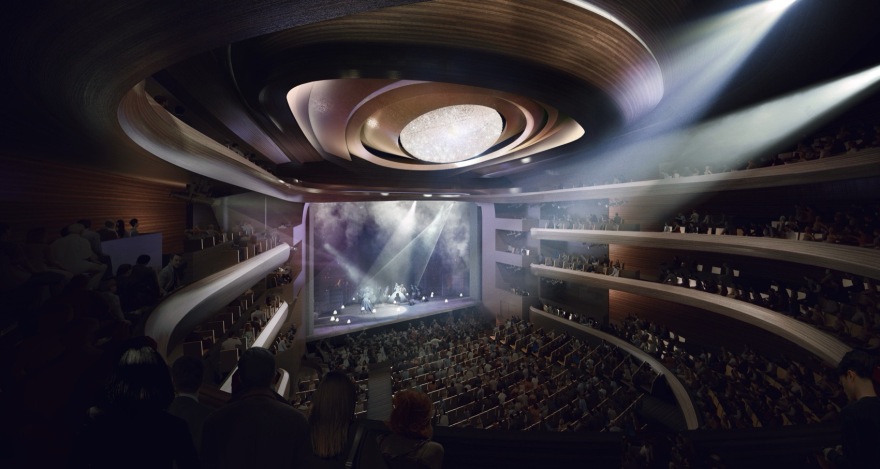


近几个月来,工程进展迅速。随着主体结构与立面框架的完成,施工重点已转向外立面安装、室内工程及景观营造。项目主体施工预计于2026年底完成,并计划于2027年正式开放。
Construction has advanced rapidly in recent months. With the primary structure and façade framework now in place, the focus has shifted to façade installation, interior works, and landscaping. The major construction is set to be completed in late 2026 and open in 2027.
▼鸟瞰(施工照片),Bird’s-eye view (construction photos) © StudioSZ Photo | Justin Szeremeta


▼鸟瞰近景(施工照片),Bird’s-eye view (construction photos) © StudioSZ Photo | Justin Szeremeta

釜山歌剧院的几何形态由两条相向而行、连续延展的曲面所定义。下方的拱形平面将建筑锚定于大地之上,连接场地,贯通城市与海洋;上方的曲面则向上展开,拥抱天空。歌剧院正是在这两重平面之间的张力与对话中生成——大地与天空、群山与海水在此交汇。
The geometry of the Busan Opera House is defined by two opposing, continuous curves. The lower, arching plane anchors the building to the ground, bridging the site and connecting city to sea. Above it, a second surface opens upward, embracing the sky. The opera house emerges within the tension and dialogue between these two planes—where earth meets sky, and mountains meet water.
▼连续延展的曲面(施工照片),Continuous extended curved surface (construction photos) © StudioSZ Photo | Justin Szeremeta

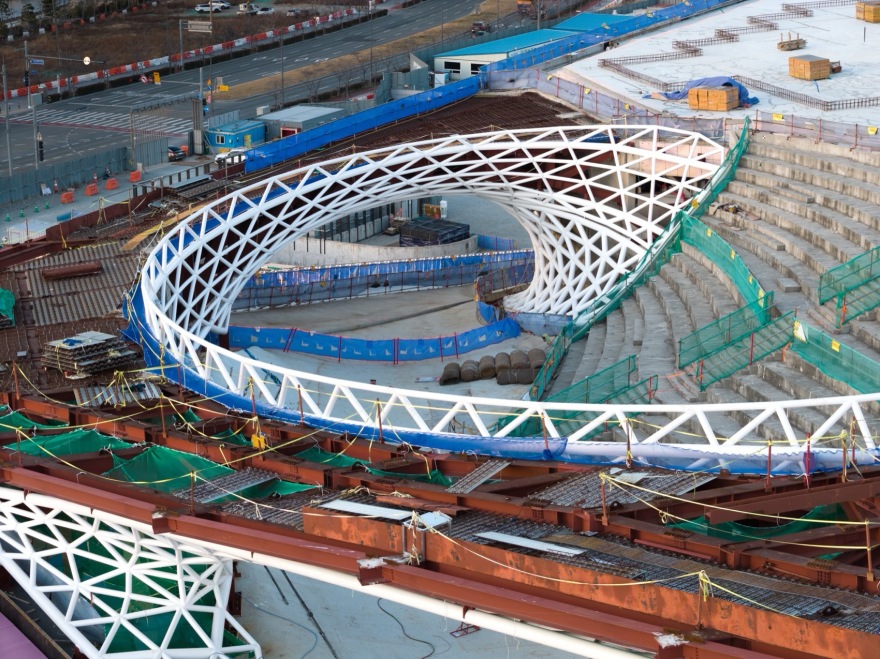
建筑的四个角部向海延展,在物理与视觉层面上将城市与海岸线紧密相连。其中相对的两个角部被抬升,形成分别来自城市一侧与滨水一侧的入口。这两处入口通过一条流动的公共步道相互连接,环绕建筑并延伸至周边广场。上部曲面则在另一条对角线上被抬升,以容纳内部功能体量,并形成一处外部平面:它一方面向城市与海洋俯落,另一方面又向上剥离,与海天相接。
The four corners of the building extend toward the sea, physically and visually linking the city to its maritime edge. Two opposing corners are lifted to create distinct entrances: one from the urban side and one from the waterfront. These entry points are connected by a fluid public promenade that wraps around the building and extends into the surrounding plaza. The upper plane is lifted on the opposite diagonal to accommodate the programmatic volume and to create an exterior plane that both arches down to the city and the sea at the same time as it peels upwards to meet the sea and the sky.
▼海面远景(施工照片),View of the sea from afar (construction photo) © StudioSZ Photo | Justin Szeremeta

▼建筑的两个角部被抬升(施工照片),The two corner parts of the building have been raised (construction photos) © StudioSZ Photo | Justin Szeremeta


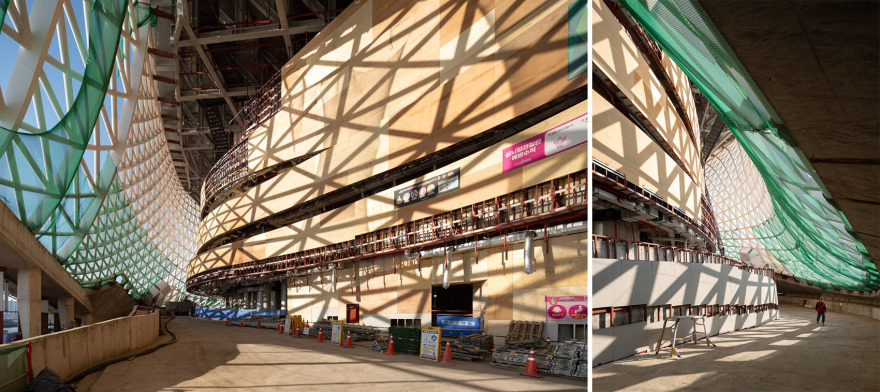
在地面层,歌剧院被构想为一个开放且具有渗透性的城市公共空间。主门厅沿建筑两侧展开,使室内空间朝向海景,并模糊了室内与室外的边界。这一层集中了主要的公共功能,包括主门厅、餐厅以及通往池座的公共流线。建筑核心的歌剧厅被视作一件“精密调校的乐器”。其空间形态经过细致的声学工程设计,以满足世界级歌剧演出的需求;内部采用实木樱桃木饰面,通过材料与形态的协同,营造出饱满、温润且清晰的声学效果。
At ground level, the opera house is conceived as an open and permeable civic space. The main foyer wraps around two sides of the building, orienting the interior toward the sea and blurring the boundary between inside and out. This level houses the primary front-of-house functions, including the main foyer, restaurant, and public access to the parterre. At the heart of the building, the opera hall is designed as a finely tuned musical instrument. Its form is meticulously engineered to support world-class operatic acoustics, with solid cherry wood panels shaping the interior and enhancing resonance, warmth, and sonic clarity.
▼室内(施工照片),Interior (construction photos) © StudioSZ Photo | Justin Szeremeta


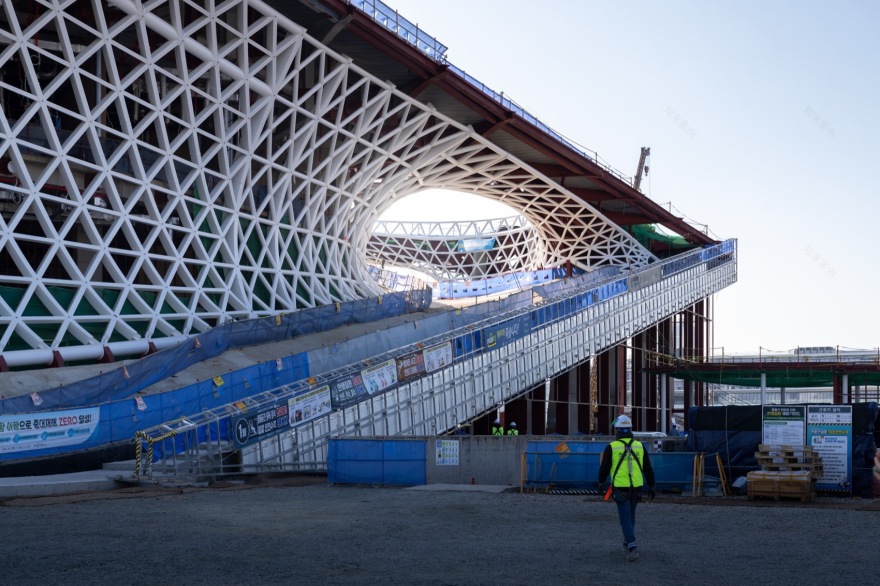
沿着缓缓上升的步道,访客穿过一个圆形天窗(oculus),抵达位于建筑顶部的第二重公共空间。可步行的屋顶景观将歌剧院的建筑占地“归还”给城市,成为一片用于凝视与沉思的场所,与地面层的繁忙形成鲜明对比。屋顶空间对所有人开放,坐拥群山与海洋的壮阔视野。
Gently sloping visitors are lead through an oculus to a second public realm atop the building, returning the footprint of the opera house to the city through a walkable rooftop landscape. Designed as a plane of reflection and contemplation, the rooftop is a stark contrast to the bustle of the ground. Open and accessible to all, the roof level enjoys unrivalled views to the mountains and ocean.
▼圆形天窗(施工照片),Oculus (construction photos) © StudioSZ Photo | Justin Szeremeta
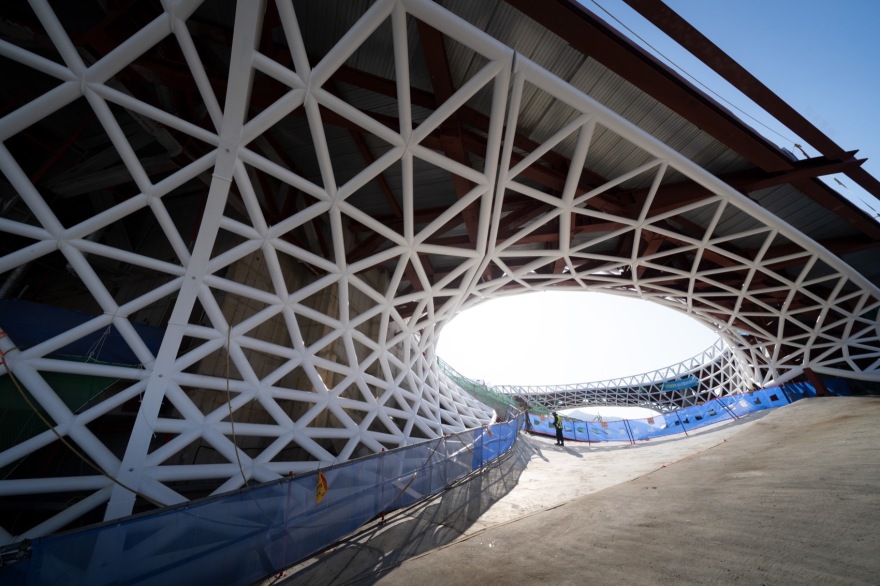

一层柔软、流动的建筑表皮横跨两处公共平面,同时包覆内部的公共功能空间。这一连续的外覆界面在通透与庇护之间取得平衡,在视觉与空间上将上下两层公共领域联结为一个完整、连贯的运动轨迹,成为对开放性、连续性与公共生活的建筑性表达。
A soft, flowing skin spans the two public planes while also enveloping the public functions. This flowing envelope mediates between transparency and protection, visually and spatially linking the two public levels in a single, uninterrupted movement—an architectural expression of openness, continuity, and civic life.
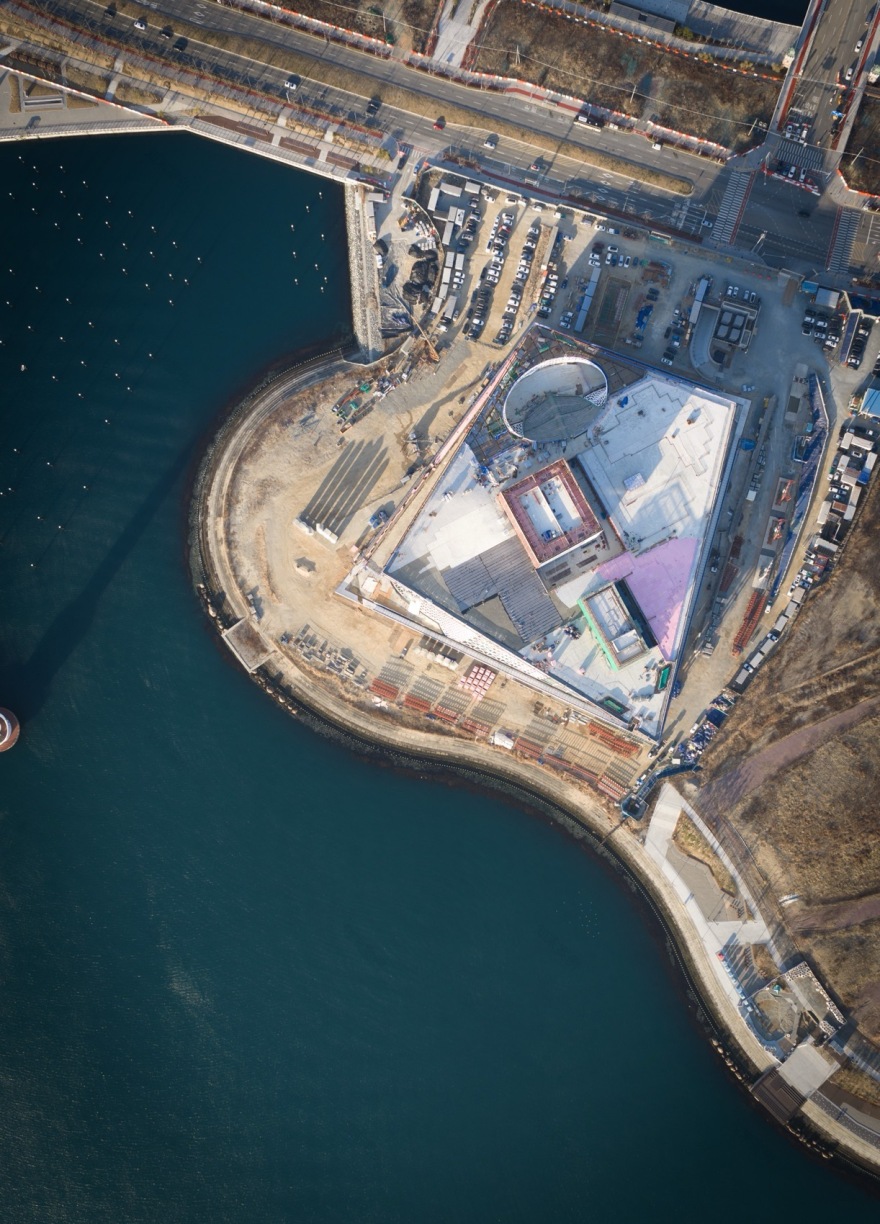
▼顶视图(施工照片),
Top view (construction photo) © StudioSZ Photo | Justin Szeremeta
▼总平面图,Master plan ©Snøhetta

Busan Opera House
Year: 2012–2026
Status: Under Construction
Location: Busan
Size: 48,000 sqm
Client: Busan Metropolitan City Government
Collaborator: Ilshin Architects
Scope: Architecture, Landscape Architecture, Interior Architecture
Typology: Performance Space, Public Space, Destination
Photos: StudioSZ Photo | Justin Szeremeta
Images: MIR, Tegmark

南京喵熊网络科技有限公司 苏ICP备18050492号-4知末 © 2018—2020 . All photos and trademark graphics are copyrighted by their owners.增值电信业务经营许可证(ICP)苏B2-20201444 苏公网安备 32011302321234号
苏公网安备 32011302321234号客服
消息
收藏
下载
最近