

创作上传
VIP
收藏下载
登录 | 注册有礼
查看完整案例

收藏

下载

分享
丹麦海宁(Herning)新建的工匠学院被构想为一座“活的教学工具”——一座旨在激发灵感、培育社群的建筑。项目由丹麦建筑事务所 Dorte Mandrup 设计,通过建筑回应工艺与建造之间的紧密联系,同时针对近年来职业教育报名人数持续下降的现实,提供一个让年轻工匠在个人、社会与职业层面共同成长的场所。
The new Crafts College in Herning, Denmark, is conceived as a living teaching tool, formed to inspire and nurture community. Designed by Danish architecture studio Dorte Mandrup, the building celebrates the close connection between craftsmanship and architecture while responding to the decline in vocational training enrolment by offering a place where young craftspeople can thrive both personally, socially and professionally.
▼鸟瞰,aerial view© Adam Mørk

从我们居住的住宅,到日常生活所依赖的学校、工作场所与文化机构,建成环境在根本上依赖于技艺娴熟的工匠。然而在丹麦,正如在许多其他国家一样,工匠职业的价值正逐渐被忽视,职业教育项目在近年出现了明显的衰退。作为建立学徒专属居住与学习空间这一整体倡议的一部分,海宁工匠学院旨在重塑职业教育的尊严与现实意义。建筑不仅致力于提升年轻工匠的福祉与归属感,更通过形体、材料与建造方式本身,直观展现工艺在文化与社会层面的重要性。
From the homes we inhabit to the schools, workplaces, and cultural institutions that frame our everyday life. Our built environment relies profoundly on skilled craftspeople. Yet in Denmark, as in many other countries, the value of crafts professions has been increasingly overlooked, with vocational programmes experiencing a marked decline in recent years. As part of a broader initiative to establish dedicated residences for apprentices, the Crafts College in Herning aims to restore pride and relevance to vocational education. It is designed to not only foster wellbeing and a sense of belonging among young craftspeople, but also to demonstrate – through form, materials, and construction – the cultural and societal significance of crafts.
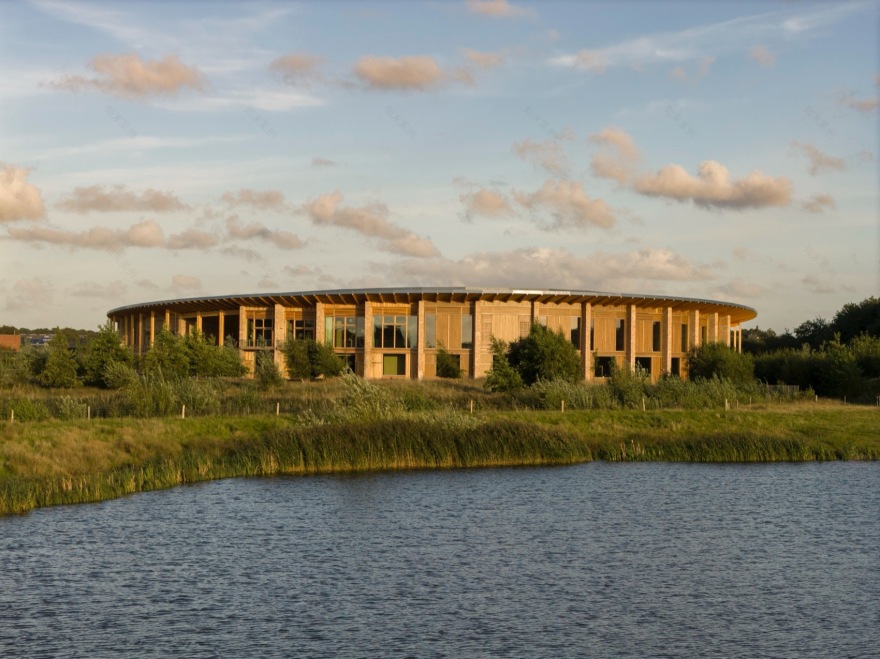
▼远景,viewing the project at distance© Adam Mørk
“建筑与工艺之间始终存在一种相互影响的关系。没有对材料与工法具有深刻理解的熟练工匠,建筑根本无法实现。通过工匠学院,我们希望滋养这一共同的职业领域,创造一个让年轻工匠能够发现自身工作的影响力与可能性的空间。设计中的一个关键,是材料表达的诚实性——让所使用的材料以其自然、裸露的状态被感知,并成为灵感与知识的来源。由此,形式与材料既是教学工具,也是不同工种之间建立社群与相互支持的框架。” 创始人兼创意总监Dorte Mandrup说道。
“There is a relationship of mutual influence between architecture and craftsmanship. Without skilled craftspeople with deep knowledge of materials and methods, architecture simply cannot be realised. With the Crafts College, we wanted to cultivate our common profession and create a space where young craftspeople can discover the impact and possibilities of their work. An important aspect of the design is the honesty in materiality – allowing the materials we use to be experienced in their natural, exposed state and become sources of inspiration and knowledge. In this way, form and materiality act both as didactic tools and a frame for community building and mutual support among the different crafts,” says Dorte Mandrup, Founder and Creative Director.
▼顶视图,top view© Adam Mørk

统一的形体
A unifying form
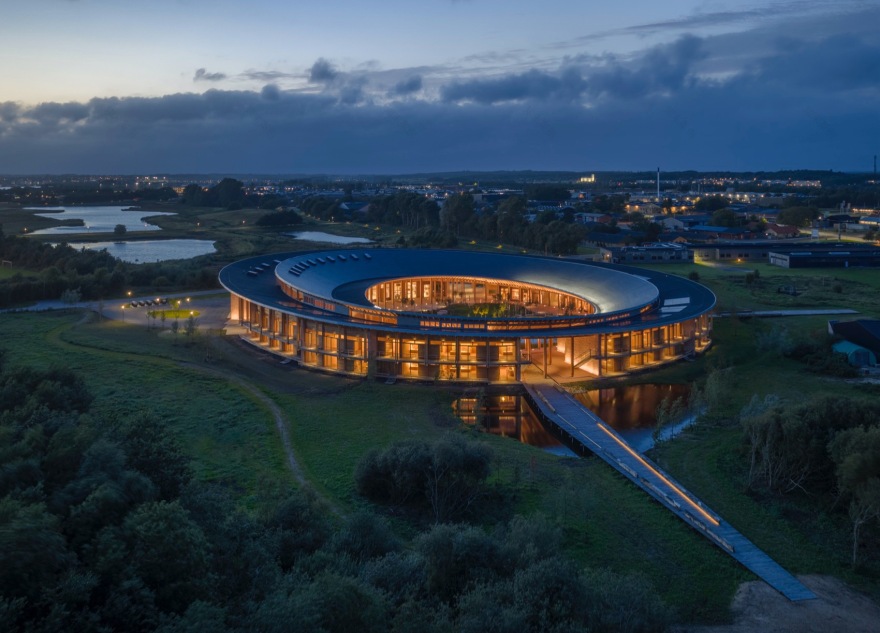
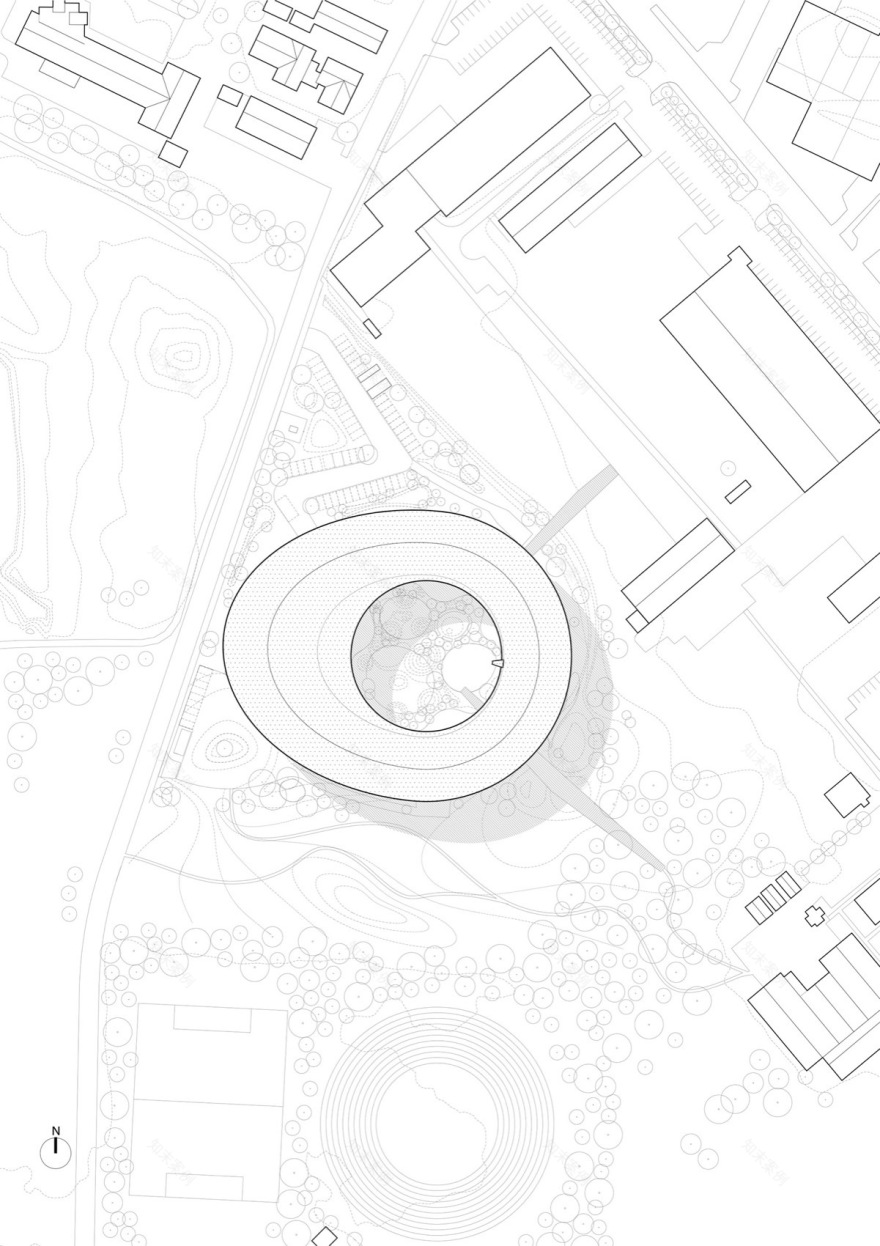
工匠学院以一片巨大的椭圆形屋顶为整体形象,将居住、工作坊与公共空间整合于同一建筑姿态之中,强化协作与共处的精神。椭圆形界定出一个内向的圆形庭院,形成一处绿意环绕、免受荒原强风侵扰的公共空间。庭院中央设置了一张大型木质长椅,成为自然的聚集点,鼓励日常交流与互动。屋顶内侧同时承担雨水收集功能,通过可控的“水帘”将雨水引入开放式雨水池,既增强场地的生态韧性,也将功能性设施转化为可感知的空间体验。
Designed as a large elliptical roof, the Crafts College brings together housing, workshop facilities, and communal spaces in a gesture that promotes collaboration and togetherness. The elliptical form defines an inner circular courtyard, creating a green communal place, sheltered from the harsh winds of the heathland. A large wooden bench is placed at its centre to form a natural meeting point and encourage social interactions. The inner part of the roof collects rainwater, channelling it to an open rainwater basin via a controlled waterfall, contributing to a resilient landscape and transforming a functional element into a sensory experience.
▼夜景鸟瞰,aerial view at night© Adam Mørk
▼立面,facade© Adam Mørk

▼外观,exterior view© Adam Mørk

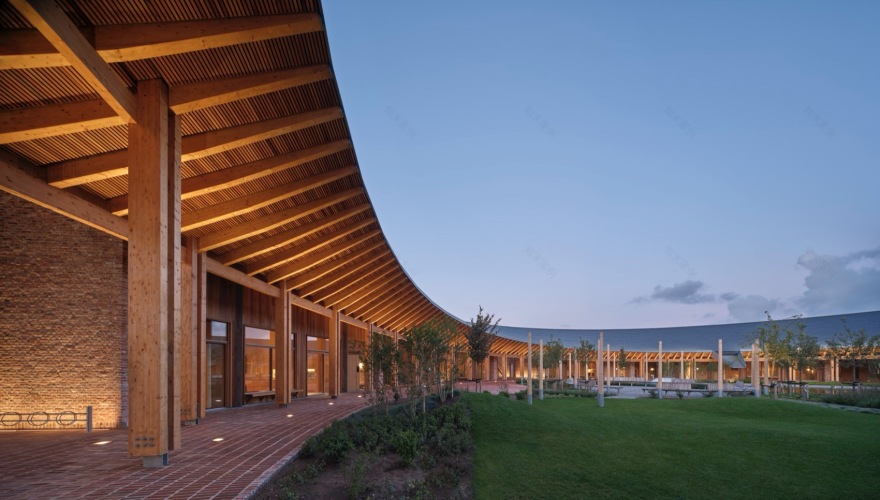
▼庭院夜景,night view of the courtyard© Adam Mørk
建筑通过四个大型开口与周边环境相连,将学徒与邻近的职业学校、Lillelund Engpark 的自然景观以及海宁市区紧密联系起来。尽管主要服务于居住其中的学员,建筑设施同样向更广泛的公众开放——举办工作坊与公共活动,吸引学校、当地居民与政策制定者参与,共同强化围绕工艺与教育的社会对话。
▼分析图,analysis diagram© Dorte Mandrup

Four large openings connect the building to its wider surroundings, linking apprentices with the nearby vocational school, the natural landscape of the nearby Lillelund Engpark, and the city of Herning. While primarily serving its residents, the building’s facilities are also intended to engage the wider community – hosting workshops, and public events that bring together schools, local residents, and policy makers to strengthen dialogue around crafts and education.
▼庭院夜景,night view of the courtyard© Adam Mørk

▼内向的圆形庭院,the introverted circular courtyard© Adam Mørk

▼庭院局部夜景,night view of the courtyard© Adam Mørk
一次关于工艺的建筑实践
A study in the art of crafts
工匠学院通过跨学科的共创过程逐步形成,设计重点始终放在建筑与工艺之间的互动关系上。项目在设计与材料层面都经过细致推敲,旨在展示高质量工艺与建筑如何共同塑造以人的福祉与生活品质为核心的功能性与审美性空间。建筑被设想为可长期使用、适应变化的载体,优先采用天然、耐久、低环境负荷的材料,根植于多样的工艺传统之中,包括经认证的木材、板岩、花岗岩以及再生砖。超过一百万块回收砖被用于内外墙体与地面铺装,这些砖块保留了使用痕迹、砂浆残留与旧漆层,为建筑引入了叙事性的时间层次,形成富有触感与肌理的空间表达。
The Crafts College has been developed through a co-creative process across disciplines, with a particular focus on the interplay between architecture and craftsmanship. Every aspect of its design and materiality has been carefully considered to highlight how high-quality craftsmanship and architecture combine to create functional, beautiful spaces centered on human wellbeing and quality of life. Designed to withstand use and change for many years, the design prioritises natural, durable, and low-impact materials rooted in different crafts tradition, including various types of certified timber, slate, granite, and recycled bricks. More than one million reclaimed bricks have been used for both exterior and interior walls and flooring. Bearing visible traces of wear, mortar residue, and paint, these bricks introduce narrative layers to the architecture, creating a tactile, textured expression.
▼立面局部,closer view of the facade© Adam Mørk

▼木制立面,wooden facade© Adam Mørk
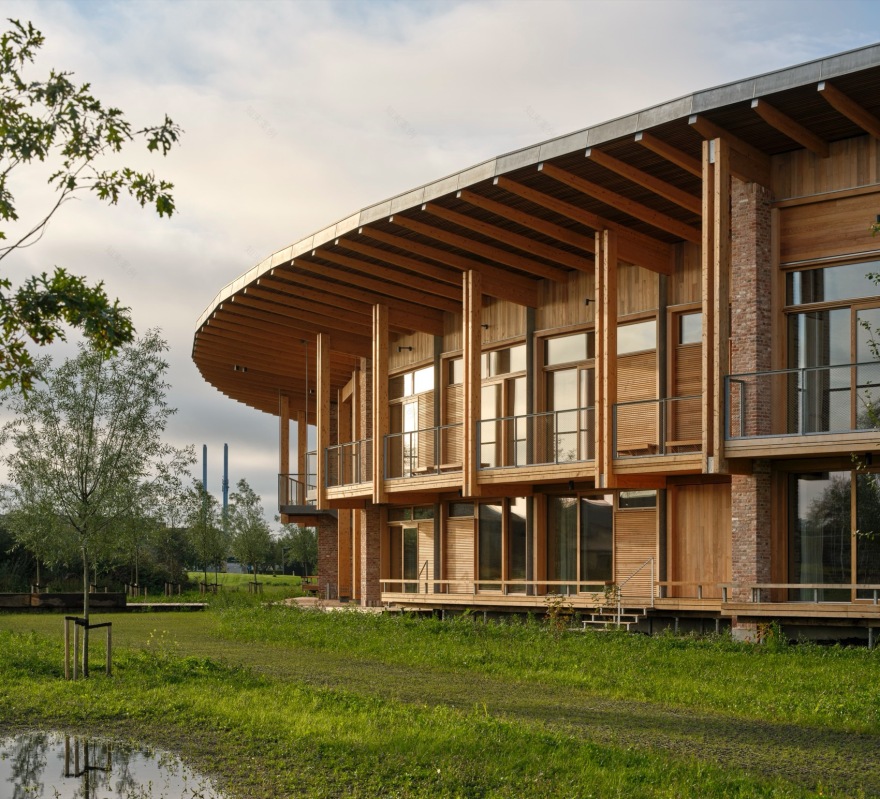
▼屋顶内侧同时承担雨水收集功能,
the inner side of the roof also serves the function of collecting rainwater© Adam Mørk

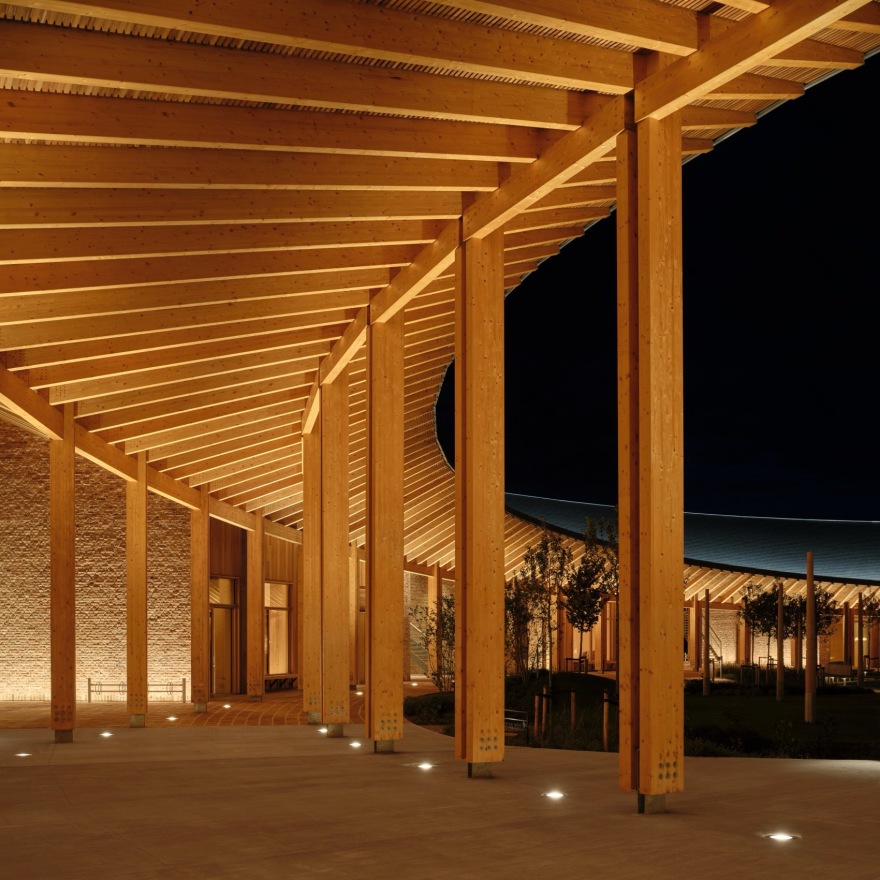
材料的裸露使建造方式对使用者清晰可读。随着时间推移,木材、砖、板岩与石材表面的磨损与包浆将不断累积,成为建筑性格的一部分;“老化”本身也转化为一种教学工具,让年轻工匠切身理解材料如何回应气候、使用与时间。清晰可见、在结构逻辑上被充分表达的节点,构成了建筑的“装饰”,揭示建造的内在秩序,并引导人们对工艺的理解超越纯粹的审美层面。
The exposed materiality makes construction methods legible to occupants. Over time, wear and patina on the different surfaces – timber, brick, slate, stone – will add to the character and aging itself becomes an educational tool, giving young artisans a tangible understanding of how materials respond to climate, use, and the passing of time. Visible, tectonically clarified joints are part of the architectural ornamentation, revealing the logic of the construction and encouraging an understanding of artisanship that extends beyond aesthetics.
▼屋顶下的灰空间,gray space under the eaves© Adam Mørk

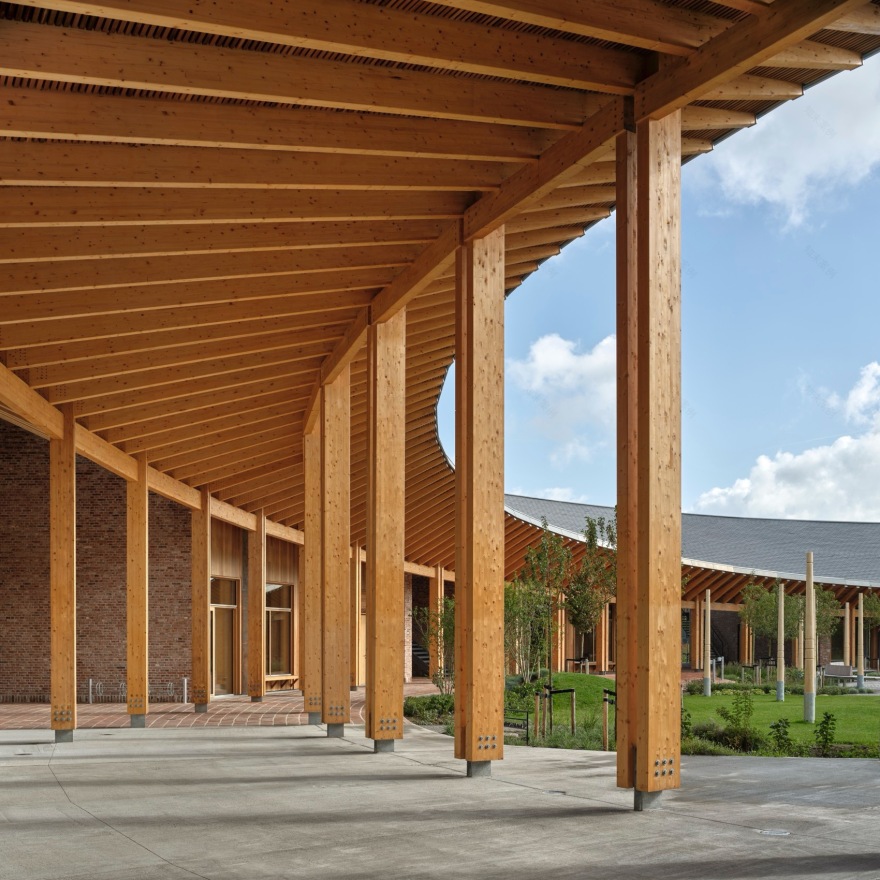
▼支撑结构细部,details of the structure© Adam Mørk

共居、共学、共作
Living and learning together
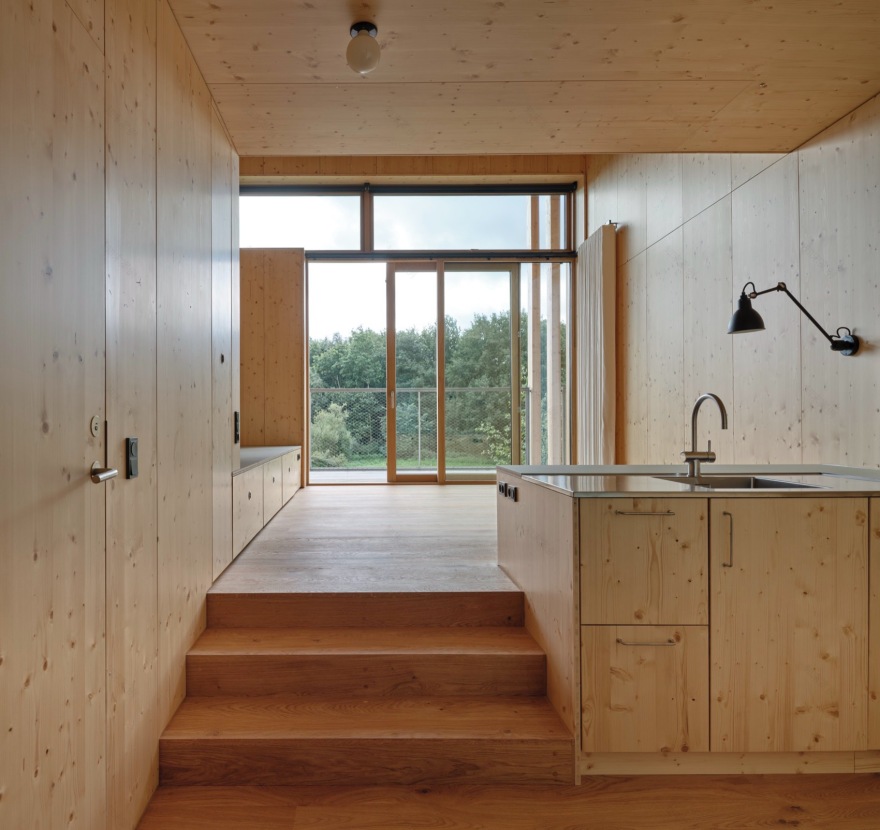
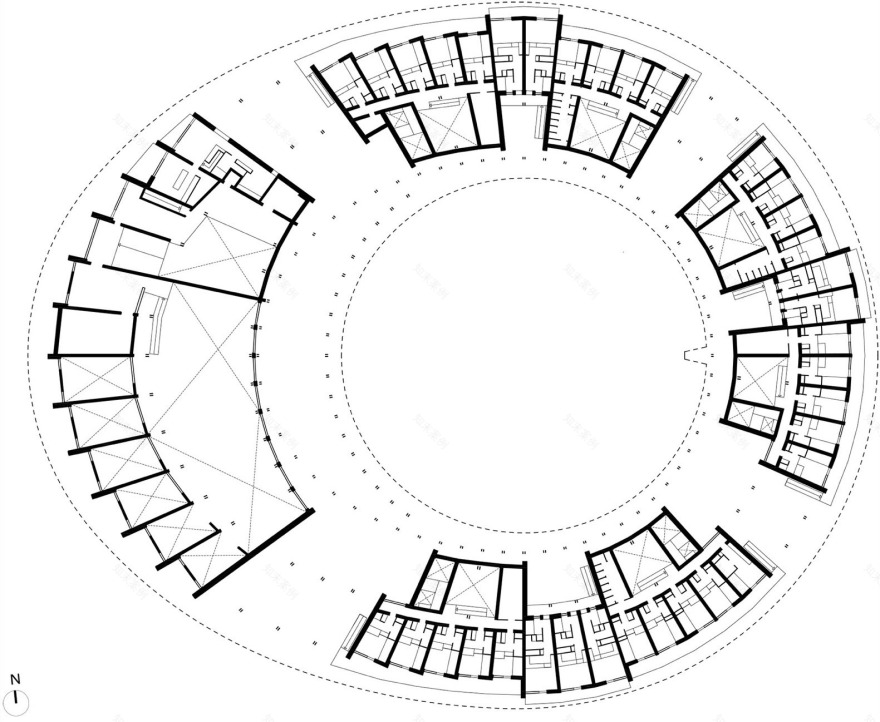
通过在同一屋檐下编织居住、学习与工作的关系,工匠学院强化了不同工种之间的归属感与交流。建筑容纳了70名年轻工匠的宿舍单元、工作坊空间以及用于社交、交流与非正式学习的公共区域。整体布局形成自然的层级结构:由中心的集体功能逐步过渡到边缘更为私密的空间。工作坊与公共设施沿内环布置,面向庭院展开;而单间公寓则位于外环,每一户都拥有面向自然景观的独立露台。
By weaving together living, learning, and working under one roof, the Crafts College strengthens the sense of belonging and exchange between different disciplines. The building combines dormitory accommodations for 70 aspiring craftspeople, workshop areas, and communal spaces for social life, conversation, and informal learning. A natural hierarchy shapes the layout, moving from collective functions at the centre to more private areas at the perimeter. Workshops and collective facilities are placed side by side along the inner ring, facing the courtyard, while the studio flats occupy the outer perimeter, each with its own terrace that opens toward the landscape.
▼公共厨房,public kitchen© Adam Mørk
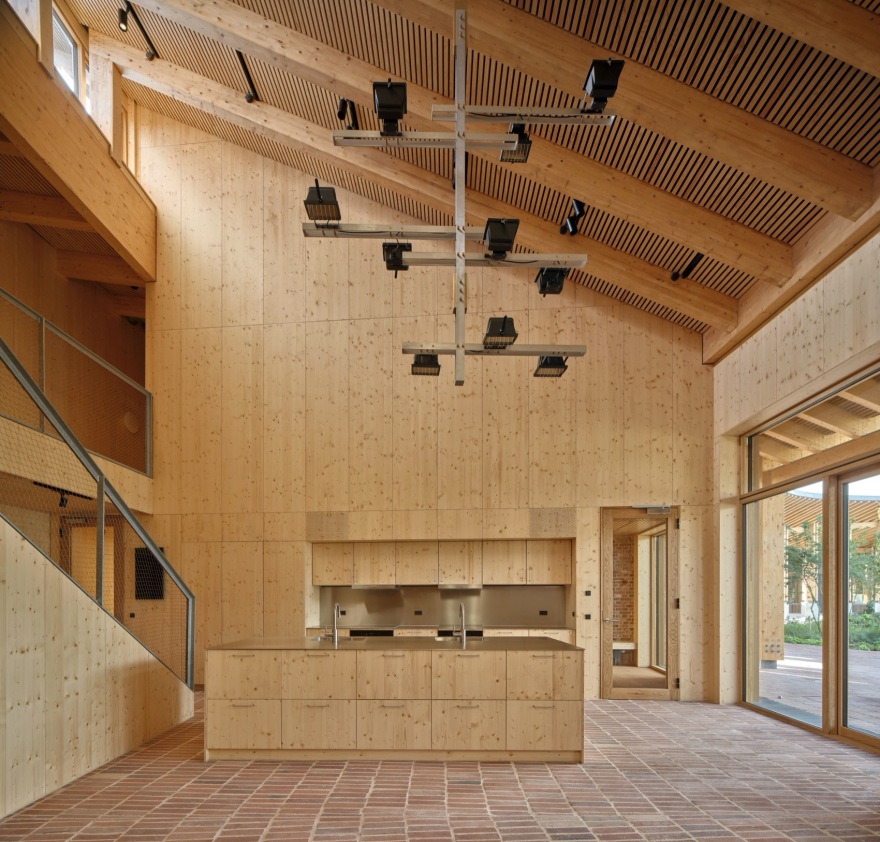
▼由室内看向室外,viewing the exterior from interior© Adam Mørk
“通过工匠学院,我们的目标是为‘建造世界的人’打造一个家——也就是未来的工匠。他们将建筑师的构想转化为现实中的标志性建筑,也承担着丹麦人日常生活中大小项目的实施。现在以及未来,我们都迫切需要技艺精湛的工匠。我们希望通过最高水准的工艺与建筑品质,向年轻学徒展示他们的职业同样具有吸引力与声望,并在专业层面给予他们启发。学院也将帮助他们与志同道合的伙伴建立稳固的社群,为学徒生涯注入类似普通青年教育中的社会维度。”工匠学院基金会首席执行官Kristian May说道。
With the Crafts College, our ambition is to build a home for those who build the world around us – the craftsmen of the future. They are the ones who turn architects’ visions into iconic buildings and carry out both large and small projects for everyday Danes, and we need skilled craftsmen now and, in the years, to come. We want to show young apprentices that their trades are both attractive and prestigious, by offering them housing of the highest craftsmanship quality, designed to inspire them professionally. The college should also help them build strong communities with like-minded peers, adding a social dimension to their apprenticeships similar to what we see in general youth education,” says Kristian May, CEO of The Foundation of Crafts Colleges.
▼工坊空间,workshop area© Adam Mørk

▼餐厅,canteen© Adam Mørk

海宁工匠学院是丹麦工匠学院基金会计划建设的三所学院中的第二所。每一座学院都体现了对建筑、可持续性与社群营造的长期承诺,为年轻工匠提供一个既能成长为专业技艺者、也能成长为完整个体的场所。
The Crafts College in Herning is the second of three planned colleges in Denmark by the Foundation for Crafts Colleges. Each embodies a commitment to architecture, sustainability, and community-building, offering young artisans a place to grow both as craftspeople and as individuals.
▼走廊,hallway© Adam Mørk

▼分析图,analysis diagram© Dorte Mandrup

▼总平面图,master plan© Dorte Mandrup
▼一层平面图,ground floor plan© Dorte Mandrup

▼二层平面图,upper floor plan© Dorte Mandrup
▼立面图,elevations© Dorte Mandrup


▼剖面图,sections© Dorte Mandrup


Other credits: Client: Fonden for Håndværkskollegier (FFHK)
Sponsor: BRF Fonden
Architect: Dorte Mandrup
Landscape architect: Kristine Jensen Landscape & Henning Larsen
Lighting design: fortheloveoflight
Engineer: Artelia
Contractor: CC Contractor
Photos & Drawings ©Adam Mørk ©Dorte Mandrup.
Cecilie Frydenlund Nielsen
Communication Manager, Dorte Mandrup
+45 23 95 41 74 / ceni@dortemandrup.dk
南京喵熊网络科技有限公司 苏ICP备18050492号-4知末 © 2018—2020 . All photos and trademark graphics are copyrighted by their owners.增值电信业务经营许可证(ICP)苏B2-20201444 苏公网安备 32011302321234号
苏公网安备 32011302321234号客服
消息
收藏
下载
最近