

创作上传
VIP
收藏下载
登录 | 注册有礼
查看完整案例

收藏

下载

分享

翻译
Architects:T_M.spaceDesigners:Tara Lal
Year:2026
Category:Installations & Structures,Pavilion,Sustainability
Design Team:Tara Lal, T_M Space
City:New Delhi
Country:India

Text description provided by the architects. Taking its name from the forest goddess of the Rigveda, one of ancient India's sacred texts, the Aranyani Pavilion is conceived to deepen public connection to nature and advance urgent conversations around ecology. Aranyani launches one of South Asia's most ambitious ecological art and architecture pavilions at Sunder Nursery in New Delhi, opening Wednesday, 4th February 2026. Founded by conservation scientist and creative director Tara Lal, Aranyani is a conservation and creative arts initiative dedicated to renewing human connection with the natural world.


Named after the forest deity of the Rigveda, the sacred Vedic text composed over 3,000 years ago that shaped early Indian ideas of nature, Aranyani enters the built environment for the first time. With this new annual commission, the organisation extends its ecological research into the physical world, using architecture to translate restoration science into grounded expression and to create space for urgent ecological conversations in the urban realm.

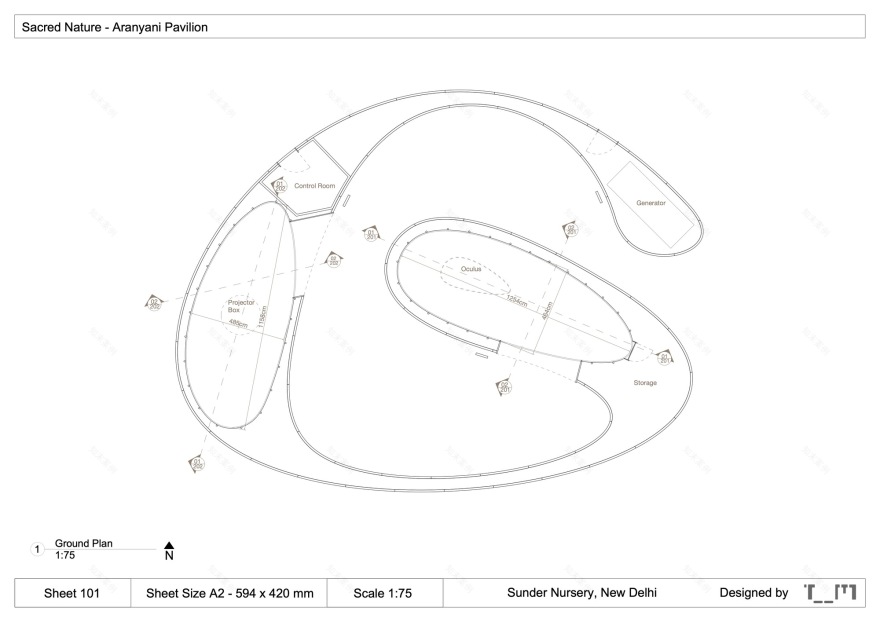
Aranyani Pavilion 2026: Sacred Nature. The inaugural edition of the Aranyani Pavilion, titled Sacred Nature, is conceptualised by Aranyani founder Tara Lal and designed in collaboration with T__M.space, the architectural studio led by Tanil Raif and Mario Serrano Puche, known for creating lightweight, digitally crafted structures shaped by ecological thinking and local materials. Set within the gardens of Sunder Nursery in the heart of New Delhi, and conceived as a spiral walk through installation, the Pavilion draws from the spatial logic of India's sacred groves, ancient, community-protected forest sanctuaries that functioned as early bio-reserves long before modern conservation law. Preserved through spiritual belief and social custom, these groves safeguarded biodiversity, water sources, and local ecologies, and are now recognised as key biodiversity hotspots as well as among the earliest models of community-led conservation in the subcontinent.

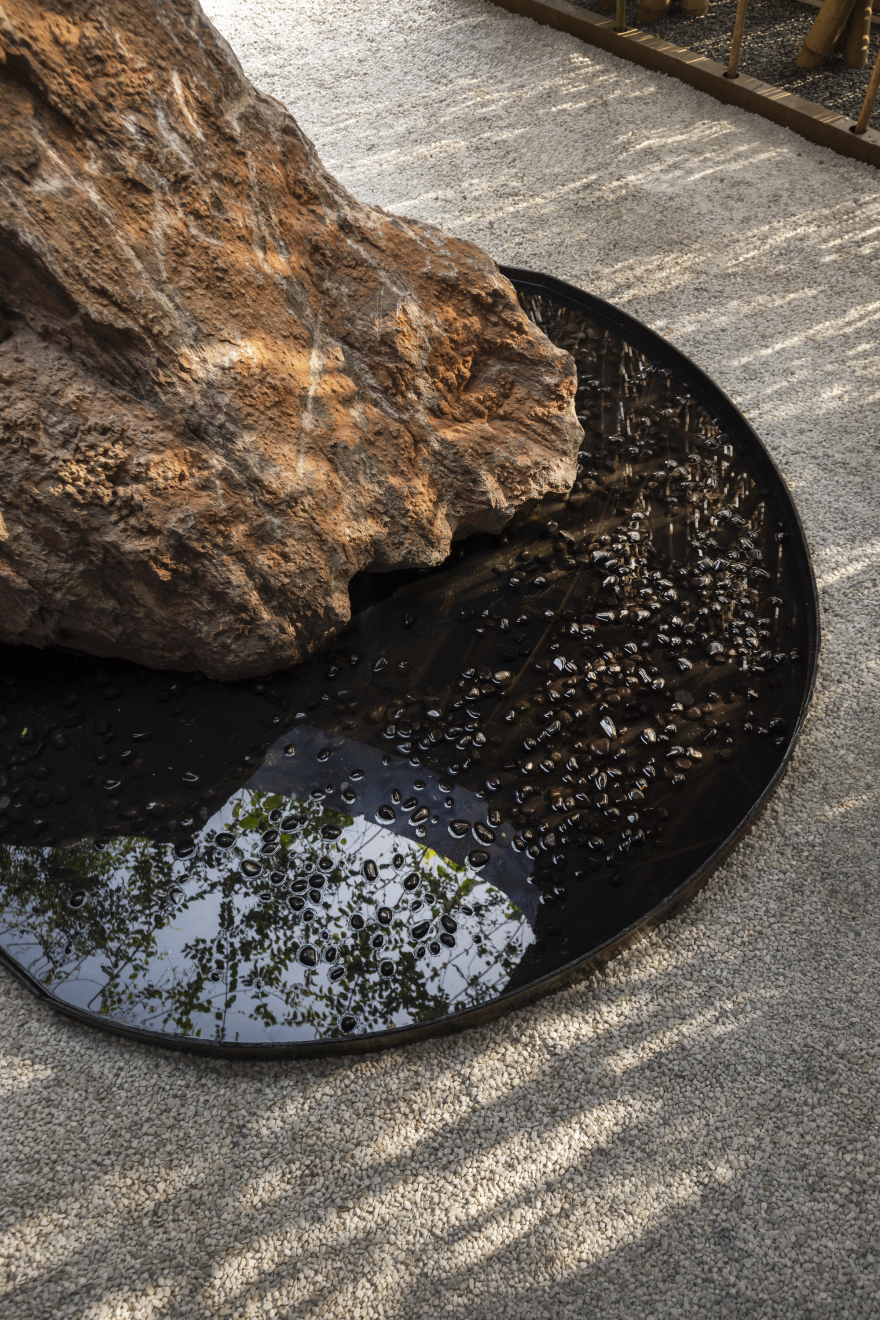
Guided by principles of sacred geometry and movement, the Pavilion leads visitors along a continuous path of shifting light, shadow, texture, and sound. Its architecture choreographs an inward journey that echoes the rhythm of a living forest. The procession culminates in a central shrine anchored by a large stone monolith, recalling the ritual cores of sacred groves, where stone markers traditionally signify the symbolic meeting of earth and sky. The Pavilion's intricate technical realisation was executed by The Works, led by Guillaume Lecacheux, and complemented by sound design from Gaurav Raina and Komorebi.

Decolonizing Architecture Through Material. Through its architecture, the Pavilion opens a dialogue on decolonising approaches to nature and biodiversity. The spiral structure is built from upcycled invasive Lantana camara, an invasive shrub introduced to India through Portuguese and British colonial trade in the 18th century. Lantana now covers more than 13 million hectares and threatens nearly half of India's forest cover. In the Pavilion, it is recast as a structural material, its latticed form crafted by Ekarth Studio, specialists in natural-material construction. Above this framework, a living canopy of more than 40 native plant species, a mix of edible, medicinal, and culturally significant varieties, forms a functioning micro-habitat. By layering invasive Lantana beneath and an indigenous species above, the Pavilion embeds restoration into its structure, recognising India's colonial ecological past even as it gestures toward renewal.

Tara Lal, Founder, Aranyani, says: "We are living through a moment where the distance between people and the natural world has never been greater. So many of our ecological crises are rooted in colonial histories and systems that separated us from land, from Indigenous knowledge, and from one another. The Aranyani Pavilion is an invitation to repair that rupture, to experience ecology not as abstraction but as something we walk through, feel, and belong to. By bringing invasive and native species into conversation, we hope to create space for local and international dialogue on how we might restore not only ecosystems, but the relationships that sustain them."

Public Programme. The Pavilion will host a public programme of performances, talks, workshops, and guided tours that extend its ecological and decolonial themes. Highlights include lectures by Vandana Shiva, internationally renowned environmental activist on biodiversity and food sovereignty, and Sathnam Sanghera, the historian whose work examines the legacies of empire. A conversation on women in business and ecology will bring together Roshni Nadar Malhotra (Chairperson, HCLTech), Nyrika Holkar (Executive Director, Godrej & Boyce), and Simran Lal (Co-founder, Nicobar). Natural fragrances and landscape memory will be explored in a session with Anita Lal (Founder, Good Earth) and Vivek Sahni (Founder, Kama Ayurveda), alongside a talk by architects working at the intersection of ecology and design, including Martand Khosla, Rahul Bhushan, and Shonan Purie Trehan, amongst others. In another session, rising creatives Ansh and Raghav Kumar (Founders, Tiny Farm Lab), Ritwik Khanna (Rkive City), and Nidhi Agarwal will share case-study presentations on their practices and how they are redefining a new ethics of making.


Workshops will range from sound healing and pranayama with Life Yoga to building home gardens with Nabanita Bajaj. The programme also features performances by a line-up of leading indie electronic and experimental sound artists, including Karsh Kale, Goya, Curtain Blue, Komorebi, Gaurav Raina and Yuhina, as well as a special photo studio offering on-the-spot portraits by renowned filmmaker and photographer Aradhana Seth.

Continuing Life. After its presentation at Sunder Nursery, the Aranyani Pavilion will be permanently installed at the Rajkumari Ratnavati Girls' School in Jaisalmer, an award-winning model of ecological architecture shaped by desert climate and local materials designed by New York-based Diana Kellogg Architects, where it will serve as a living classroom for students, researchers, and emerging naturalists. The Pavilion's edible and medicinal plants will be transferred to ongoing community-led environmental projects in Delhi, including the Basti Gardens of Hope in Nizamuddin and Swechha's urban forest restoration initiatives, which create dense, climate-resilient micro-gardens and forests in under-resourced neighbourhoods. Together, these partnerships extend the Pavilion's ethos of repair into the landscapes and communities that shaped it.

Project gallery


南京喵熊网络科技有限公司 苏ICP备18050492号-4知末 © 2018—2020 . All photos and trademark graphics are copyrighted by their owners.增值电信业务经营许可证(ICP)苏B2-20201444 苏公网安备 32011302321234号
苏公网安备 32011302321234号客服
消息
收藏
下载
最近