

创作上传
VIP
收藏下载
登录 | 注册有礼
查看完整案例

收藏

下载

分享

翻译
Architects:Mestizo Estudio Arquitectura
Area:150m²
Year:2025
Lead Architect:Frank Espinoza Barrera
Category:Houses
Collaborators:Jorge Ardila, Raúl Ramos, Maricela Guamán, David Álvarez, Carlos Soledispa, Marcelo Mayancha.
Country:Ecuador
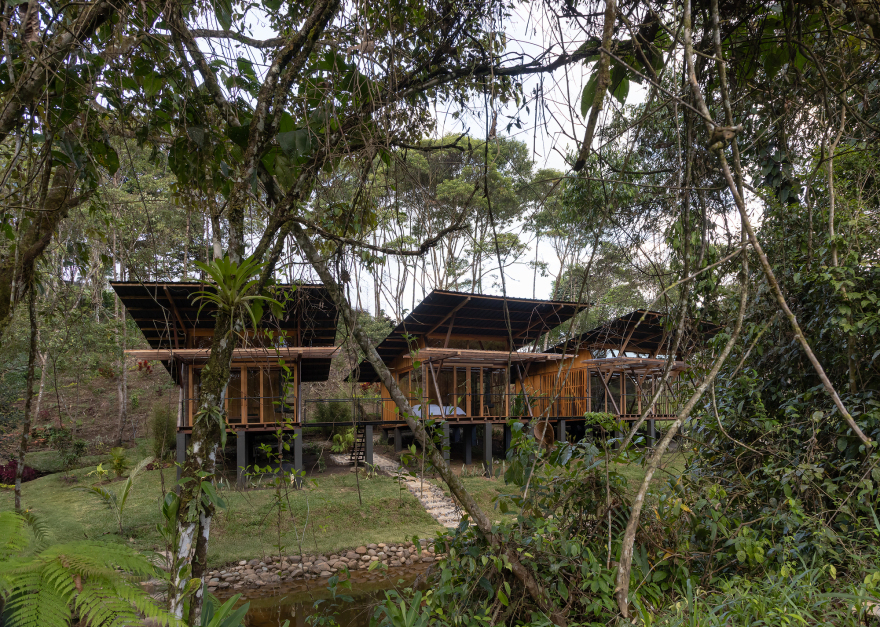
Hoguera de Madera is conceived as a shelter for a family who chooses to rethink their conventional way of living within the city. This reflection leads them to seek an alternative lifestyle, envisioning a space integrated with nature, a place capable of renewing and enhancing their human and professional qualities.

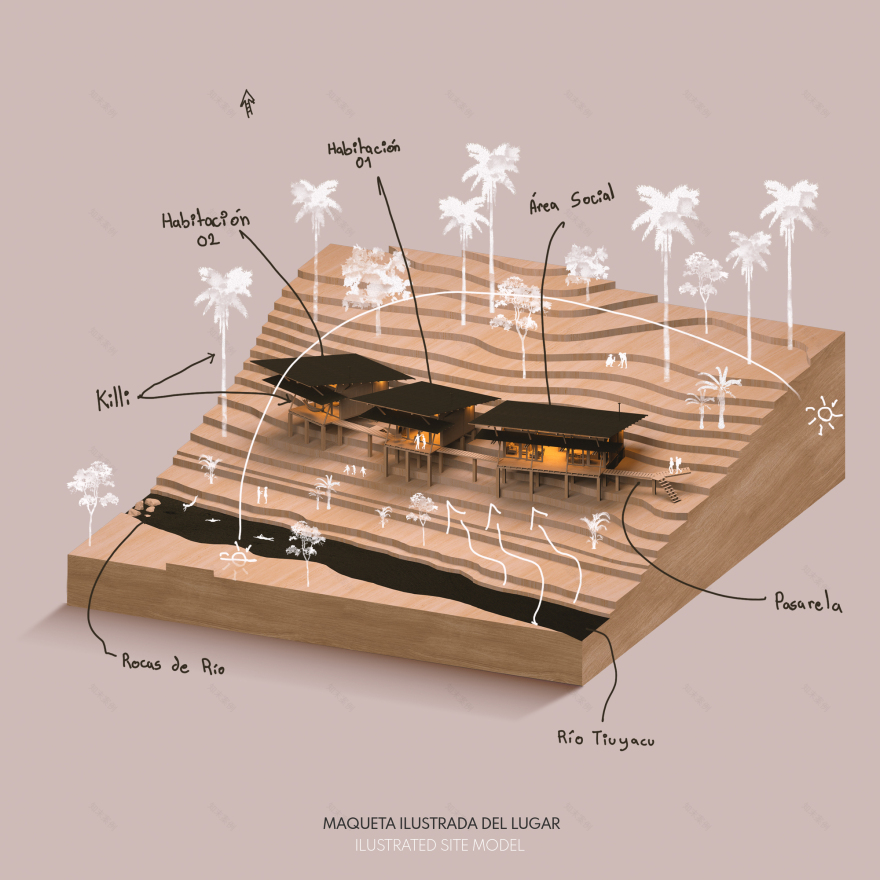
Located 6 km from the city of Puyo, in the province of Pastaza (Ecuador), the house is immersed in a natural environment, set on the edge of a ravine and defined by a small river. This body of water becomes one of the natural elements guiding the project.


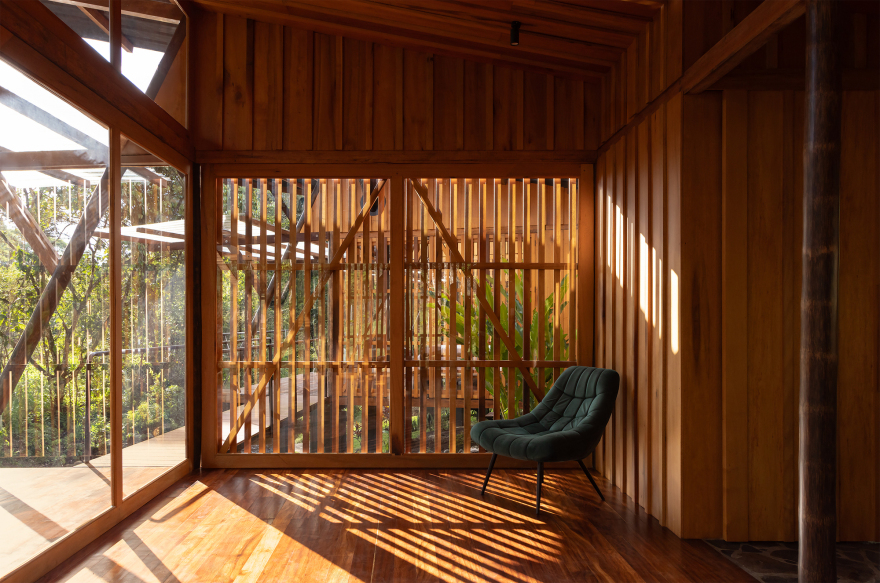

Through an elevated walkway running parallel to the riverbed, three wooden modules are articulated, using voids as a strategy for privacy. The lateral modules are rotated in relation to the central module, generating the required intimacy while simultaneously fostering direct relationships and experiences with the surrounding natural environment, without losing internal connection among its inhabitants.


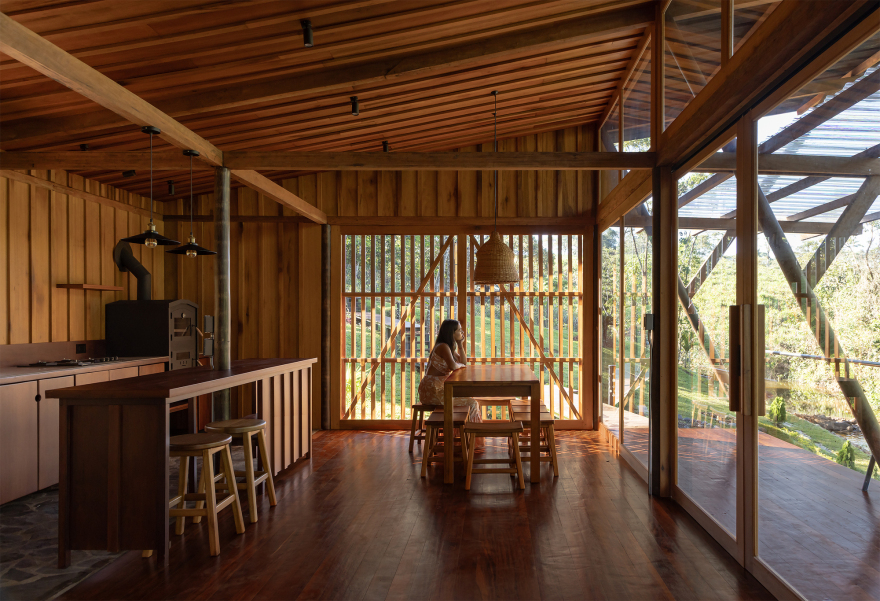
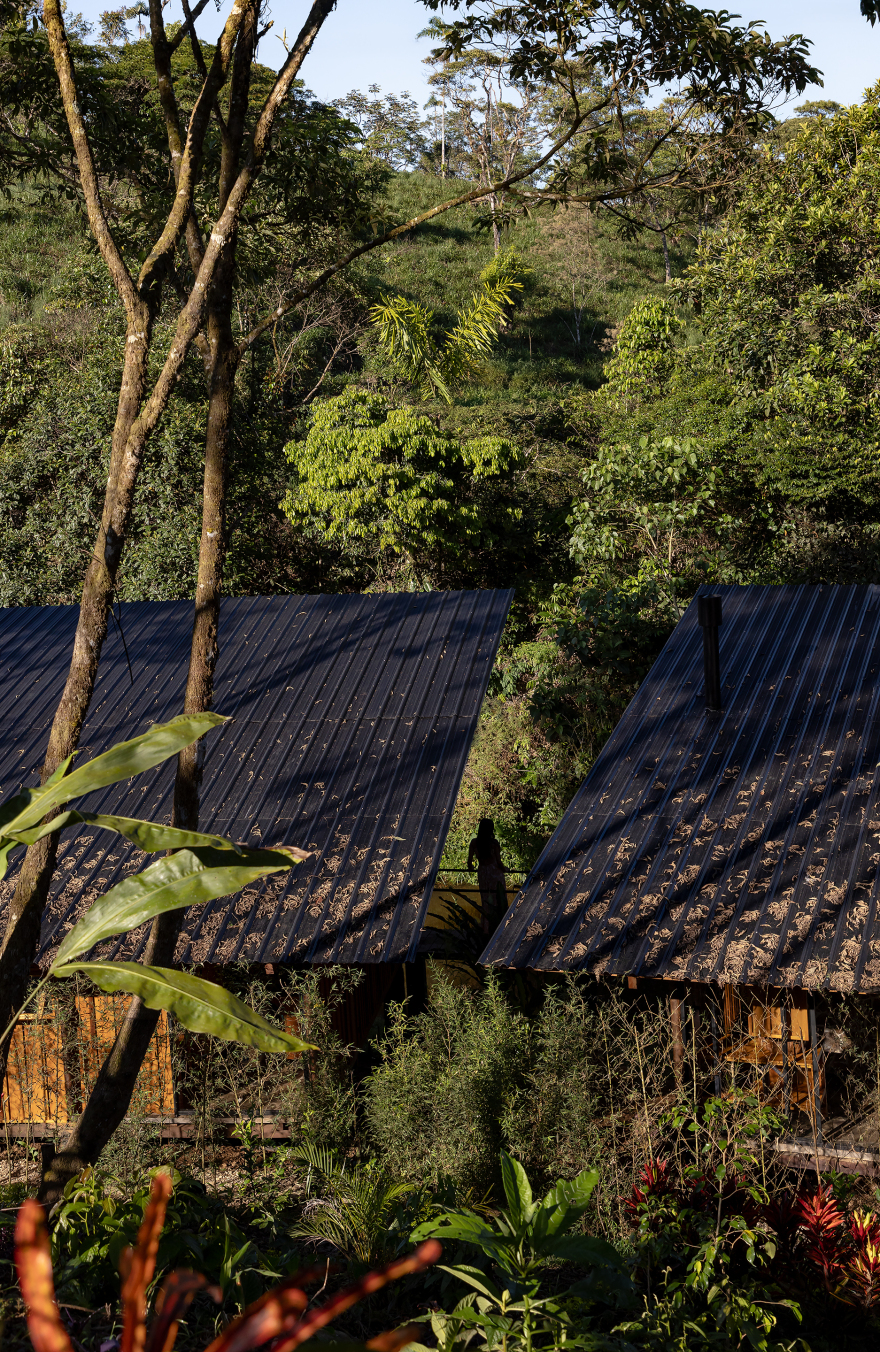
The first module, with an area of 58 m², contains the social spaces: living room, dining area, kitchen, and guest bathroom. The following two modules, each measuring 28 m², house the bedrooms. With single-pitch roofs, the project opens toward the river, while narrowing at the rear to control privacy in the wet areas, without losing its connection to the native context. Wastewater is treated through a biological reactor, completing a cycle that leads to an infiltration field, protecting local water sources.


The natural resources available in the area guide the overall approach of the project. Wood once again becomes the protagonist in the construction of a dwelling, as it was in the past, through work developed by artisans who promote and transmit knowledge. This time, wood envelops most of the building envelope and is also used in the creation of both fixed and movable furniture. Rocks from geological faults located 2 km from the site are used for walls and floors in wet areas, while three river stones are selected and carved into washbasins. These small actions revive local craftsmanship, highlighting the ability to transform raw matter into materials and resources that reclaim a sense of identity.

“To return to being what has been left undone.”

Project gallery





南京喵熊网络科技有限公司 苏ICP备18050492号-4知末 © 2018—2020 . All photos and trademark graphics are copyrighted by their owners.增值电信业务经营许可证(ICP)苏B2-20201444 苏公网安备 32011302321234号
苏公网安备 32011302321234号客服
消息
收藏
下载
最近