

创作上传
VIP
收藏下载
登录 | 注册有礼
查看完整案例

收藏

下载

分享

翻译

New York studio WaCa Design and local studio Julia Kosciuk Arquiteta have used local materials and low-carbon methods for an expansive waterfront compound in Santa Catarina, Brazil, which bridges the beach and mountainous landscape.
Designed by New York City-based WaCa Design with Brazilian studio Julia Kosciuk acting as the architect of record, the Rochas Floridas Beachside Compound was completed on a sprawling rocky site outside of Florianopolis, Brazil.
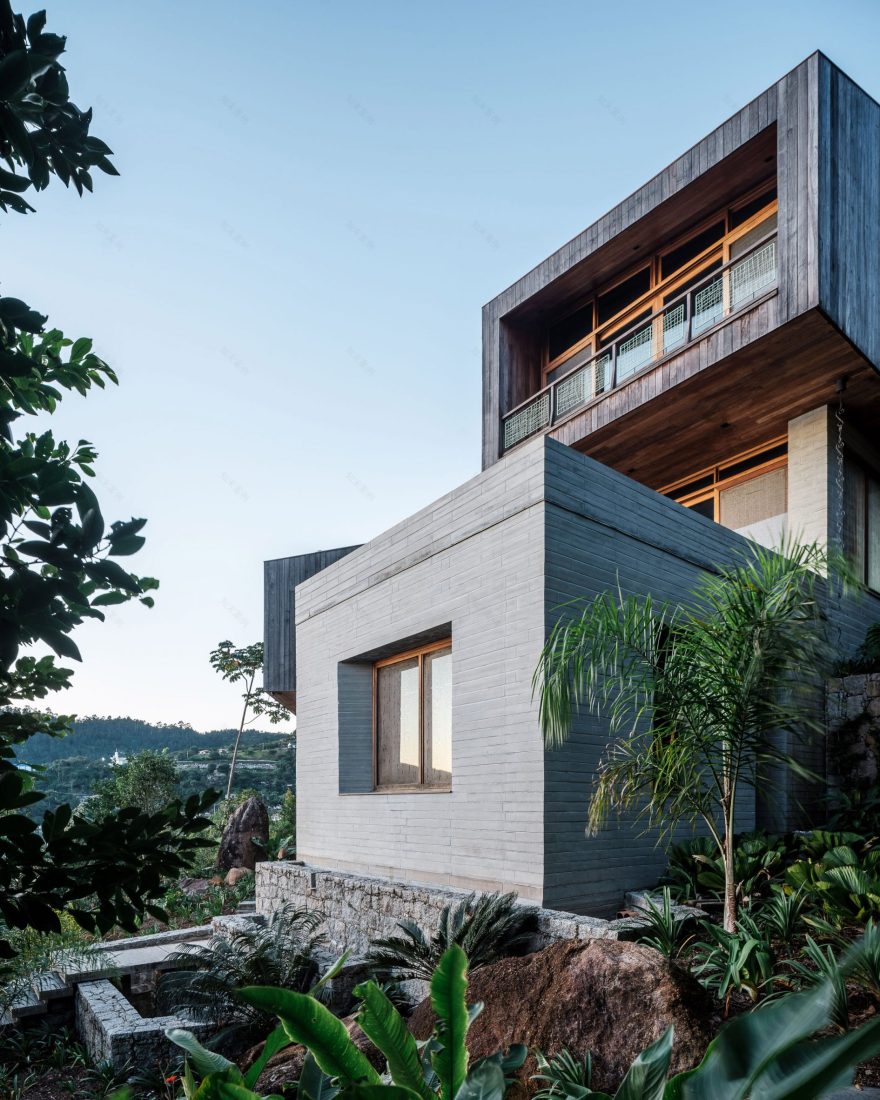
WaCa Design worked with Brazilian studio Julia Kosciuk to design a compound in Brazil
Spanning 8,000 square feet (743 square metres), the private residence was informed by two primary elements: the landscape that sweeps down a steep, rocky slope to an expansive view of the ocean and the embodied carbon of each material. It features a series of boxy forms that radiate out like a shell, protruding outwards and upwards from the hill.
"The formal design frames views, encompassing ocean vistas in one direction and boulders amidst tropical gardens in the other," WaCA Design founder Walter Cain told Dezeen. "Roof angles are oriented to maximise solar collection, while deep overhangs provide shade and large windows capture ocean breezes."

Multiple volumes are stacked and angled apart as the house swoops down the coastal hill
The team pulled some materials from the landscape – including granite from the site. It also utilised slate blocks from a nearby quarry, Brazilian hardwood and salvaged items to reduce the carbon costs associated with manufacturing and shipping.
"Every surface of the house, inside and out, expresses these materials," the team said.

Several different vistas look out over the ocean
The team also salvaged materials from the owner's childhood home that were reused – like the front door, floor tiles and plumbing features – or repurposed – metal details transformed into railings and rain chains and flooring that became the dining room table.
"We actively avoided using reinforced concrete and minimized metal fixtures wherever possible," Cain said, explaining that designing with LEC materials goes beyond sustainability to foster differentiated architecture.

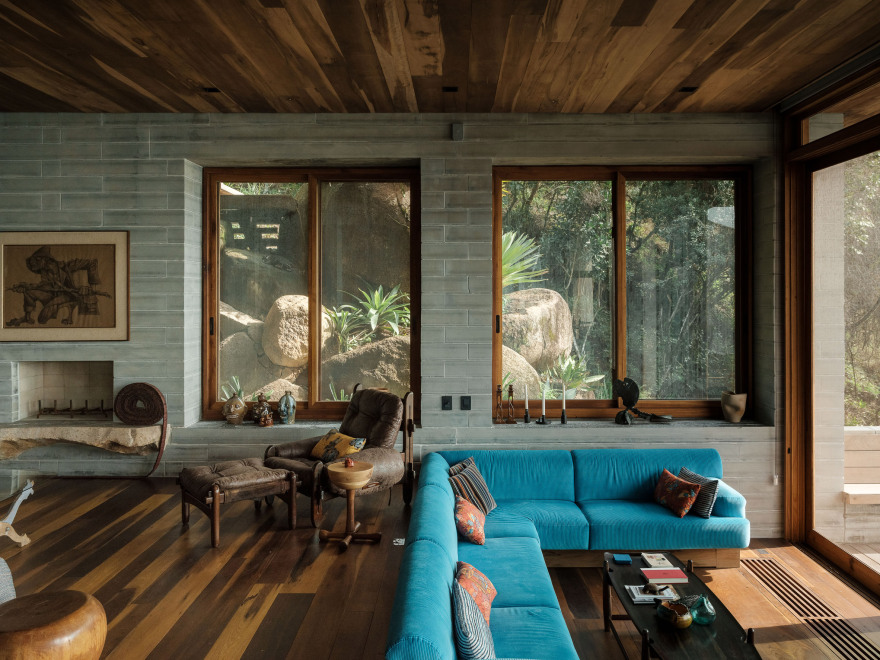
Local stone meets Brazilian hardwoods on the interior
"In this project, focusing on LEC materials required innovative workarounds – designing doorknobs without metal, detailing all wood windows that can withstand harsh ocean-front conditions, repurposing closet doors as headboards, designing visually porous railings from reused steel and recycled plastic rope, and on and on," Cain continued. said.
"Figuring out these workarounds was a lot of fun for me."

Salvaged materials were used throughout
The main house is split into three floors that descend down the hillside.
Accessed by descending an outdoor staircase made of stone, the top floor contains the entry, primary suite, a home office and guest room space – as well as the swimming pool and pool pavilion that maximise ocean views from the high vantage point.
Below, the main social spaces include an open kitchen, dining room and living room that open to outdoor terraces on the second level. The lowest floor houses two guest suites and a home theatre.
"The level's organization responds to the steep site, adding features that mimic the natural water flow such as cascading rainwater systems, waterfalls, natural pools and water gardens," the team said.
A multi-storey staircase connects the sprawling residence
Held together by the multi-story staircase, the design's section is defined by split roof forms that follow the slope of the hill, define the individual interior spaces and direct views through floor-to-ceiling windows outward to the water.
Every material was chosen for its low embodied carbon (LEC) footprint.
"Slate block structural walls are all exposed on the interior – a brutalist aesthetic – juxtaposed with warm tones of Canela preta salvaged hardwood covering floors, walls and ceilings," the team said, explaining that the exterior is wrapped in sustainably harvested tropical hardwood from the Brazilian Amazon.

Pools and solar panels were included throughout the terraced site
Other residences recently completed in Brazil include a cross-laminated timber, modular house by Nitsche Arquitetos outside of São Paolo, a screened vacation home by Estudio Rossi Arquitetos in São Sebastião and a contemporary cabin by Cornetta Arquitetura in the Atlantic Forest.
The photography is by Pedro Kok.
Project credits:
Design architect: WaCa Design
Architect of record: Julia Kosciuk
Construction manager: Engenho Construindo com Arte
南京喵熊网络科技有限公司 苏ICP备18050492号-4知末 © 2018—2020 . All photos and trademark graphics are copyrighted by their owners.增值电信业务经营许可证(ICP)苏B2-20201444 苏公网安备 32011302321234号
苏公网安备 32011302321234号客服
消息
收藏
下载
最近