

创作上传
VIP
收藏下载
登录 | 注册有礼
查看完整案例

收藏

下载

分享

翻译
Architects:23o5Studio
Area:122m²
Year:2023
Photographs:Hirouyki Oki
Manufacturers:Areus by BM Windows,TOTO LTD.,Unios Vietnam
Lead Architects:Ngô Việt Khánh Duy
Category:Houses
Design Team:Võ Thanh Linh
General Contractor:Nguyên Bản Construction
Landscape Architecture:Cảnh Quan Hoàng Phi
City:Ho Chi MInh City
Country:Vietnam

Text description provided by the architects. In Vietnam's accelerating urbanization, particularly in Ho Chi Minh City, the proliferation of new residential quarters has alleviated acute housing shortages yet frequently perpetuated obsolete typologies. Many developments recycle standardized house models from two to three decades past, failing to address contemporary demands adequately for spatial comfort, natural ventilation, daylight penetration, aesthetic sophistication, and personalized habitation.

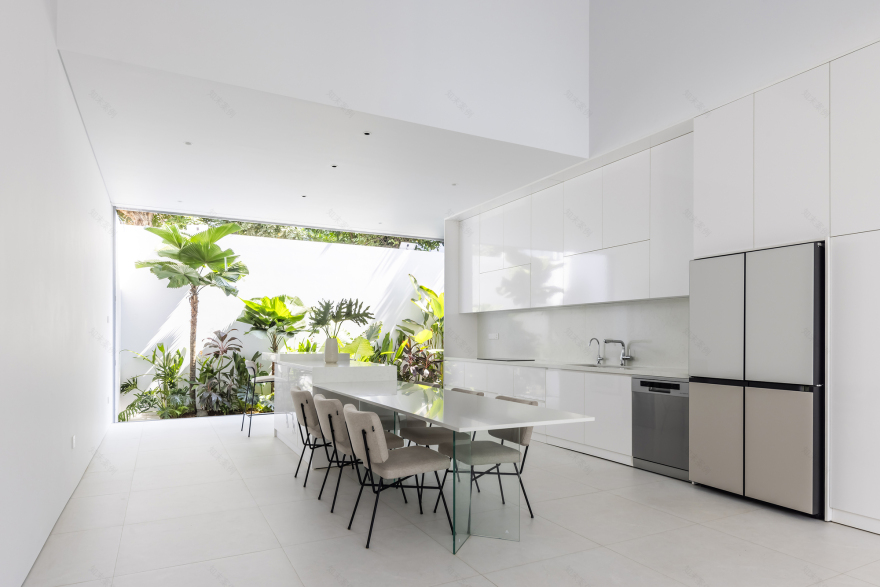
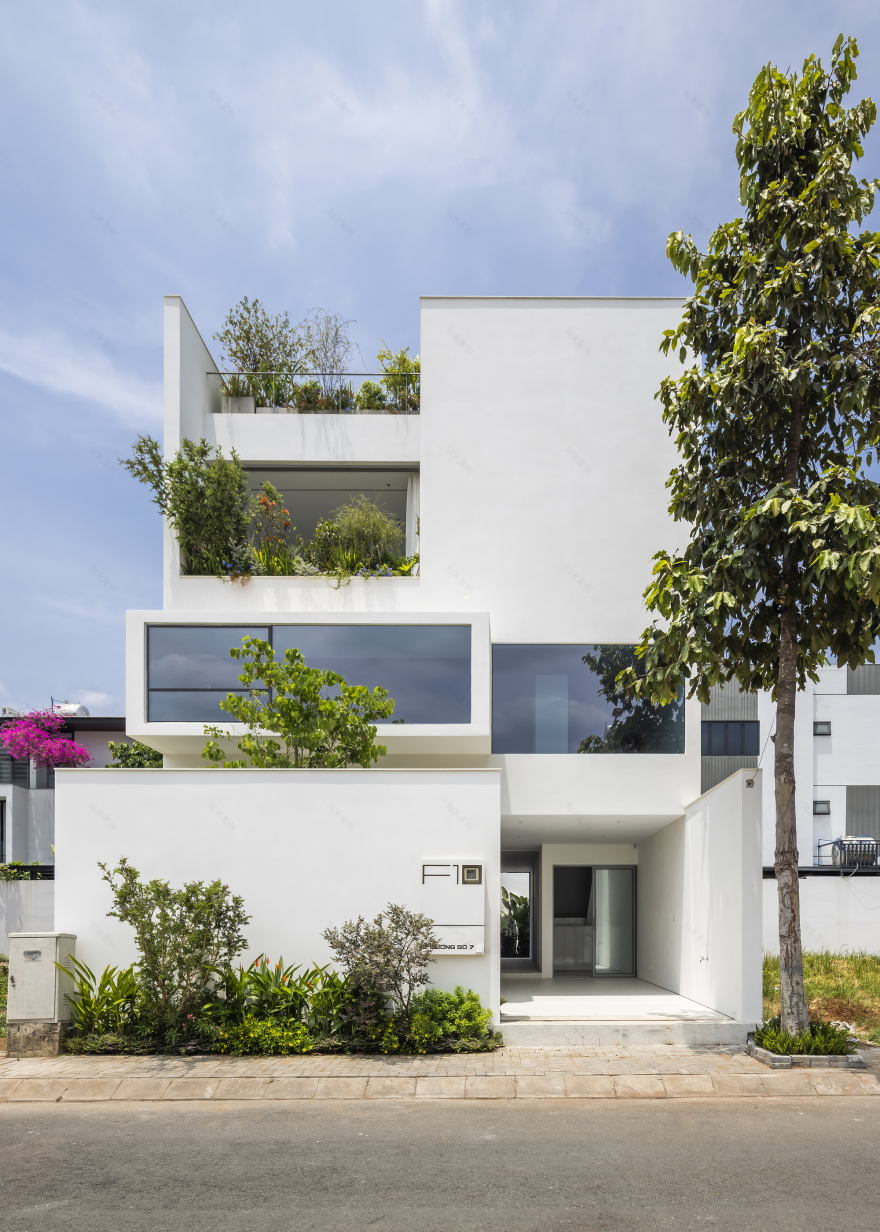
House F10 occupies a conventional 9 × 18 m subdivided lot, authorized for three stories plus a rooftop terrace, observing mandatory 3 m front and 2 m rear setbacks. The design re-utilizes the project's pre-driven piled foundation while rigorously conforming to all planning controls on height, levels, and coverage.


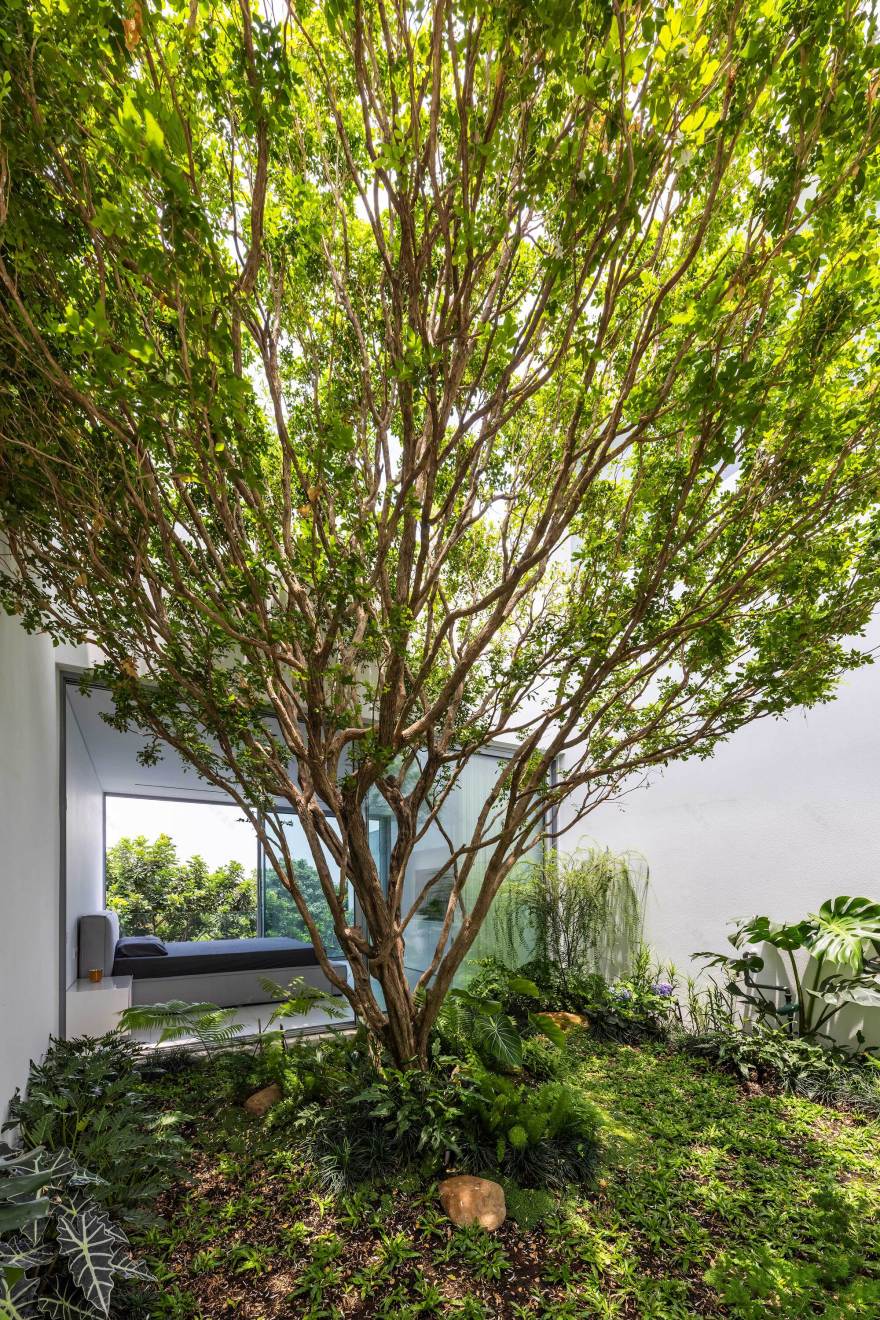
The sectional organization is stratified with precision:• Ground floor: a fluid, expansive communal domain integrating living, dining, and kitchen functions. Conceived as an overarching shaded veranda, it cultivates a tranquil, introspective domestic realm with limited external social engagement.• Second floor: divided into a serene rear zone for grandparents, opening intimately onto the rear garden canopy, and a flexible front area supporting the brothers' multifaceted activities—play, study, rest—through intelligent spatial adaptability within modest dimensions.• Third floor: dedicated to the homeowner couple, centered on a pivotal courtyard garden that links living, meditative, and work spaces. Veranda-like volumes dissolve interior-exterior boundaries, permeating the dwelling with nature to generate a consistently fresh, restorative atmosphere.• Rooftop terrace: allocated to productive planting of vegetables and fruit trees.


Post-COVID shifts have reinforced preferences for inward-focused, minimalist residences that privilege greenery, air quality, and serenity—tendencies increasingly dominant among younger cohorts. Although tailored to one family's distinct requirements, House F10 offers a prototypical model with replicable potential, advancing a greener, more humane urban residential morphology in alignment with the architect's and client's shared aspiration.
Project gallery


南京喵熊网络科技有限公司 苏ICP备18050492号-4知末 © 2018—2020 . All photos and trademark graphics are copyrighted by their owners.增值电信业务经营许可证(ICP)苏B2-20201444 苏公网安备 32011302321234号
苏公网安备 32011302321234号客服
消息
收藏
下载
最近