

创作上传
VIP
收藏下载
登录 | 注册有礼
查看完整案例

收藏

下载

分享
01 项目缘起:被遗忘的老城界面
01 Project Origin: The Forgotten Urban Interface
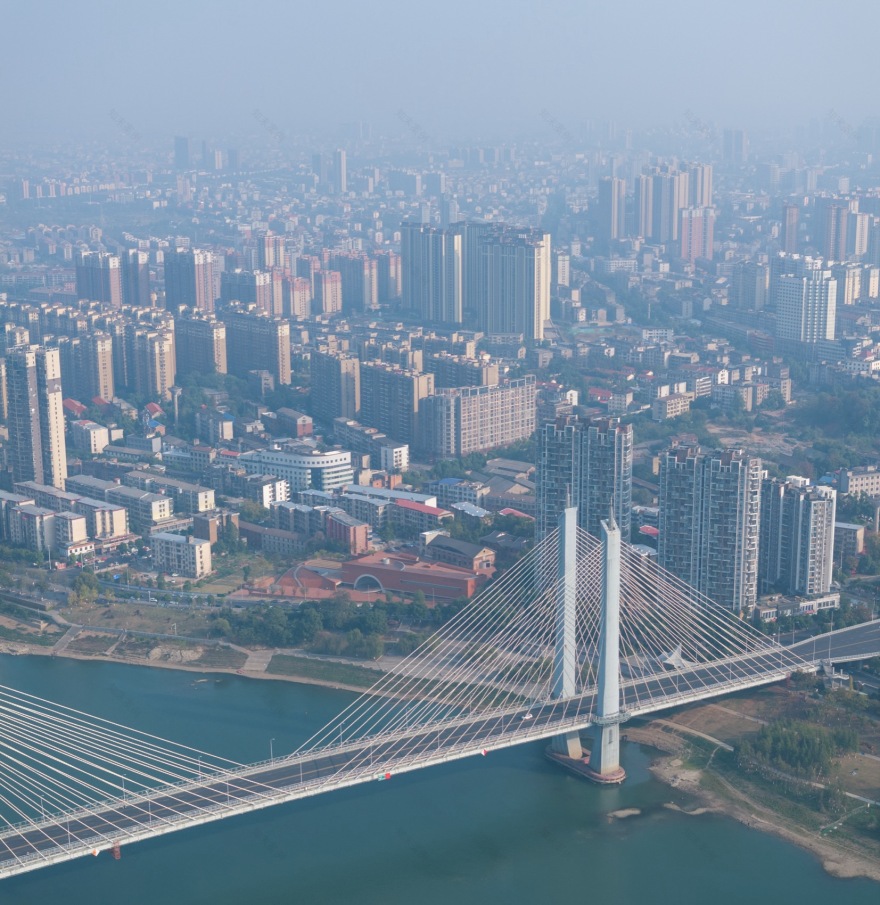
场地位于资江南岸的临江山坡地带,介于水岸、防洪道路与老城区居住片区之间。地形起伏陡峭,植被茂密但缺乏系统维护,从城市尺度上看,它既不完全属于滨水公共空间,也未被有效纳入周边居住区的日常使用体系,是一种被基础设施与规划逻辑“夹置”的边缘地带。
The site is located on a riverside hillside along the southern bank of the Zijiang River, sandwiched between the waterfront, flood control roads, and the old residential district. The terrain is steep and densely vegetated but lacks systematic maintenance. From an urban perspective, it belongs neither fully to the waterfront public realm nor effectively to the daily use system of the surrounding neighborhoods—a marginal zone “sandwiched” by infrastructure and planning logic.
▼项目概览,overall of the project©孔锦权


临江山坡在近代曾是资江重要的渡口与码头节点,“碧津晓渡”所代表的是典型的滨水交通与城市生活界面;20世纪初,信义大学与信义医院建筑群的建设,使这里进一步成为连接水岸、教育与城市文化的重要场所,水路、台阶、坡道与建筑共同构成了活跃的滨水公共领域。▼片区原有建筑,the original buildings in the area© 地方工作室
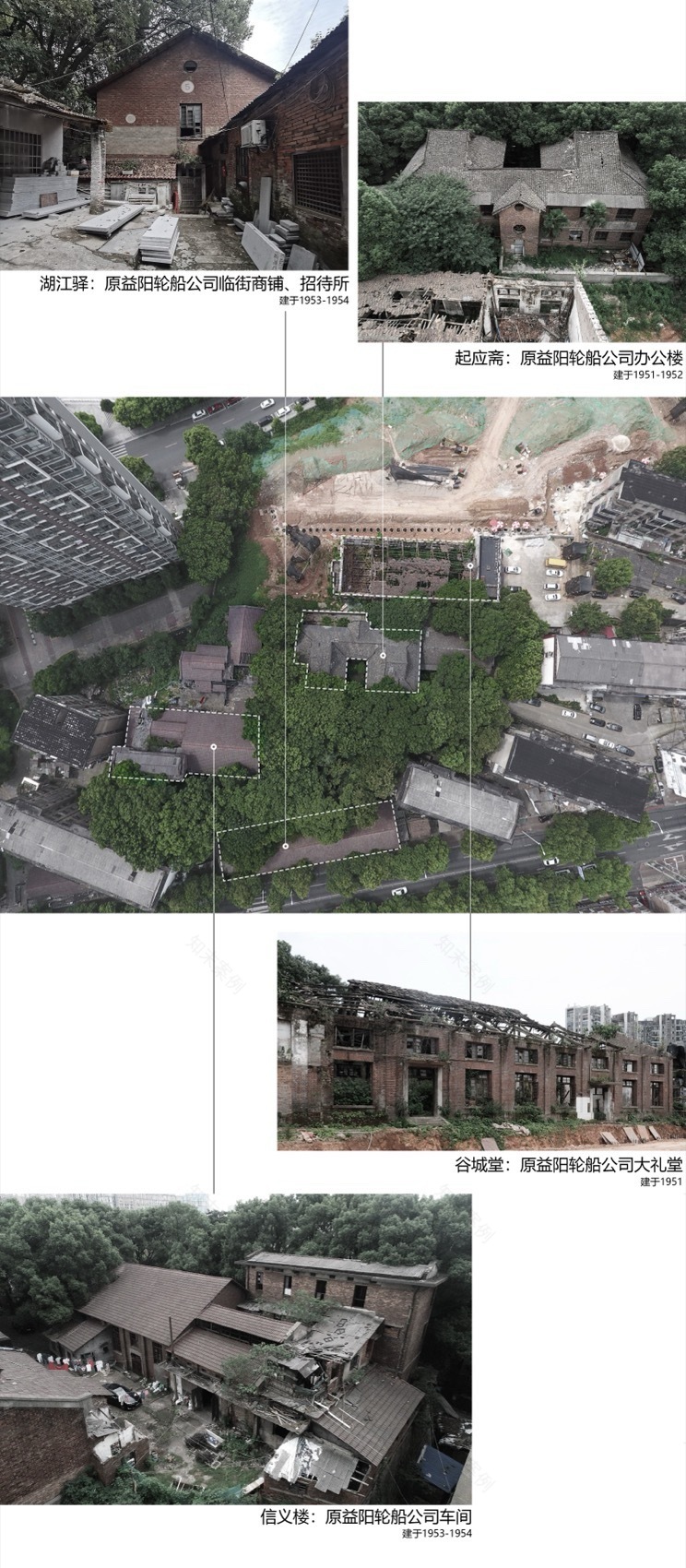
In modern times, the riverside slope was once a major ferry and dock node on the Zijiang River. “Bīnjīn Morning Ferry” embodied a typical interface of waterfront transportation and urban life. In the early 20th century, the construction of Xinyi University and Xinyi Hospital further elevated the area as a vital link connecting the waterfront, education, and urban culture. Waterways, steps, ramps, and buildings together formed an active waterfront public domain.
▼顶视图,top view©孔锦权
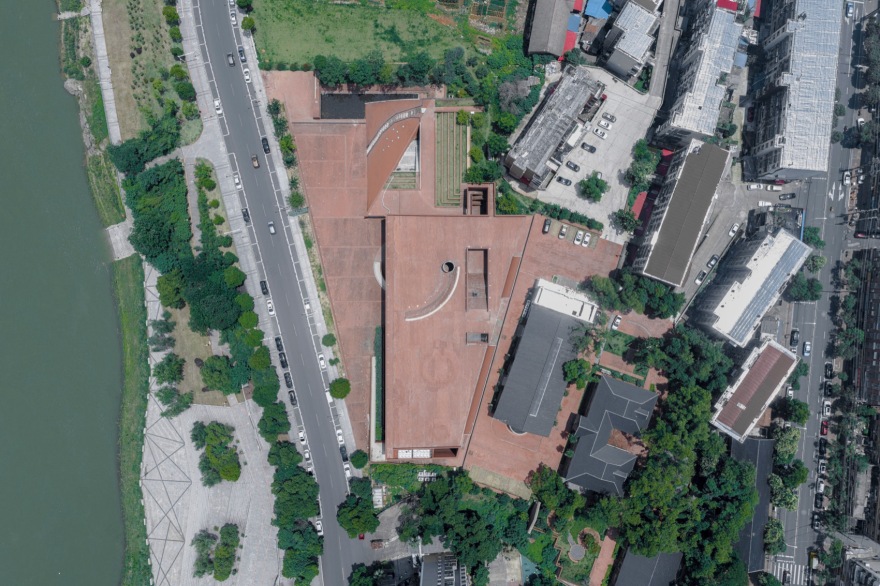
历史建筑年久失修,周边居民仅将其视为城市背面与过渡地带。缺乏明确功能定位与公共进入方式,使其逐步沦为被遗忘的城市夹缝空间。既无法承载高强度开发,又失去了作为滨水公共空间的活力,最终呈现出衰败、破旧、杂糅的空间面貌。
▼改造前的原始地形及“覆土”改造介入策略,the original terrain before the renovation and the “soil covering” intervention strategy used in the renovation© 地方工作室
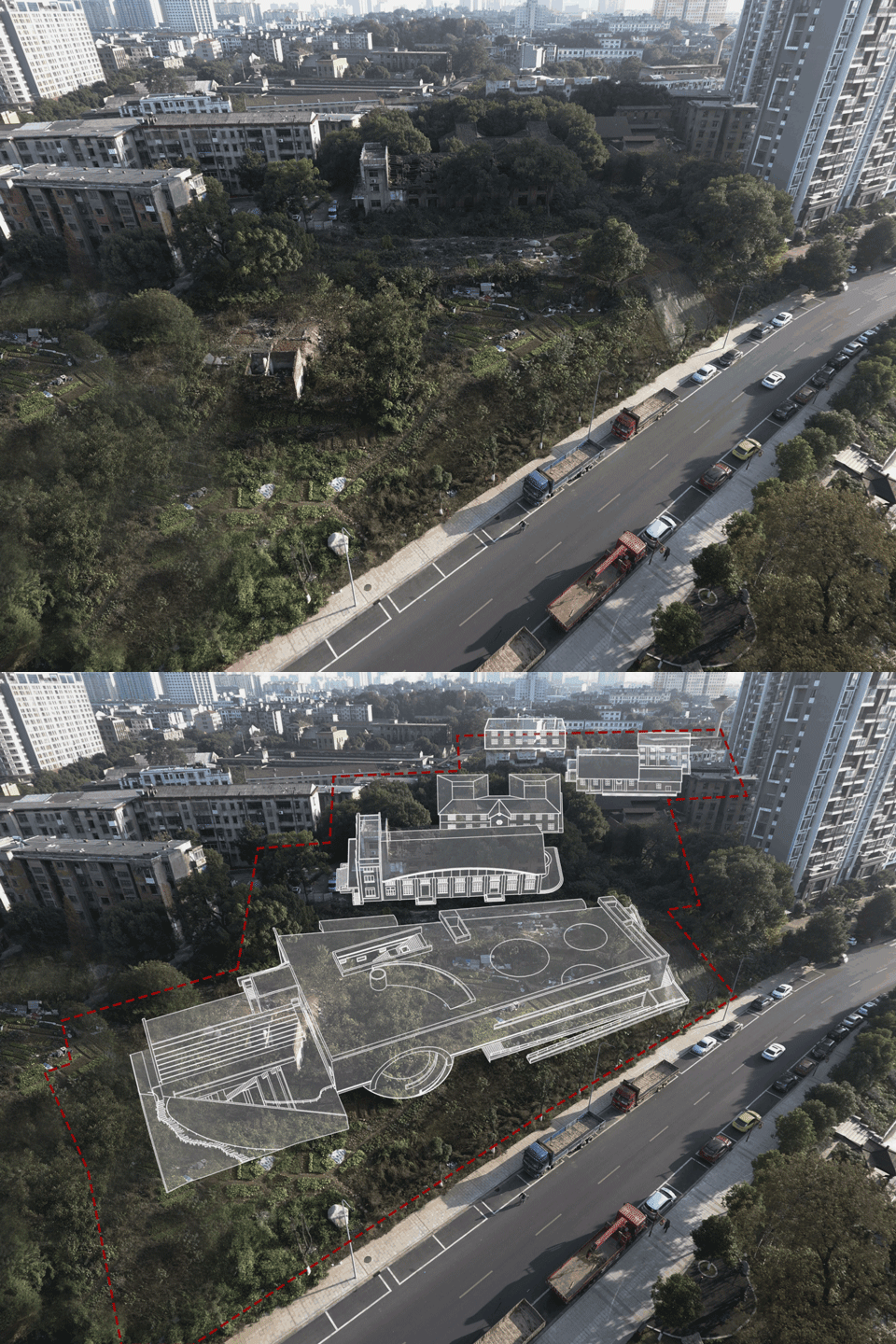
As historic structures fell into disrepair, local residents gradually regarded the area as an urban backwater and transitional zone. Lacking a clear functional identity and public access, it became a forgotten interstitial space. Unable to support high-intensity development yet deprived of the vitality of a waterfront public space, the site eventually presented a dilapidated, fragmented, and chaotic spatial condition.
▼屋顶鸟瞰,aerial view of the roof©孔锦权


02 消隐与共生
02 Disappearance and Symbiosis
三周文化广场的设计摒弃了纪念碑式的视觉语言,选择以“地景化”方式介入江岸陡坡,将主体空间倚靠在山体的断崖深处,通过覆土的生态思维使新建体量成为地形演变的自然延续。
The design of Sanzhou Cultural Square rejects monumental visual language and adopts a landscape-integrated approach to intervene in the steep riverbank. The main volume is embedded deep into the cliff face, and the ecological logic of earth covering allows the new construction to appear as a natural continuation of the landform.
▼场地鸟瞰,aerial view of the site© 存在建筑


▼项目鸟瞰,aerial view of the project© 存在建筑
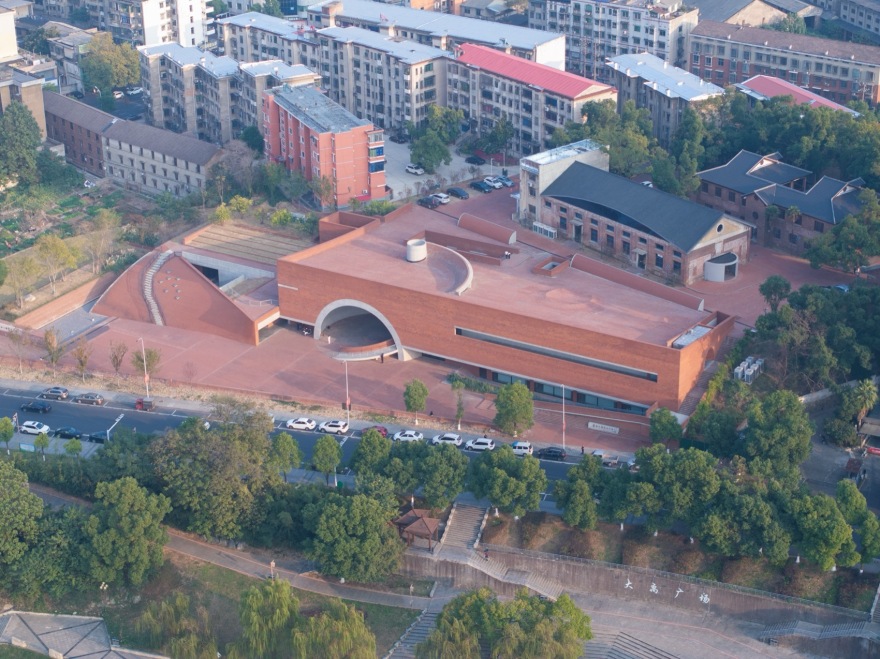

▼半鸟瞰,half-aerial view© 存在建筑

▼三周文化广场,overall of the site© 存在建筑


▼立面半鸟瞰,aerial view of the project© 存在建筑


▼新旧的融合,integration of the old and the new© 存在建筑

屋顶界面最低点与山顶历史建筑地坪精确衔接,微起伏的红砖铺装分别在色彩上与肌理上呼应山坡的红壤土层。场地中散布的圆形洼地打破了铺装的均质秩序,雨时映照天空,晴日则转化为儿童与滑板的活动场所。▼分析图,analysis diagram© 地方工作室

The lowest point of the roof surface aligns precisely with the historic building’s ground level on the hilltop. The gently undulating red brick paving echoes the color and texture of the hillside’s laterite soil. Scattered circular depressions break the homogeneity of the paving: they reflect the sky when it rains, and become playgrounds for children and skaters on sunny days.
▼微起伏的红砖铺装分别在色彩上与肌理上呼应山坡的红壤土层, the gently undulating red brick paving echoes the color and texture of the hillside’s laterite soil© 存在建筑

▼半鸟瞰,half-aerial view© 存在建筑

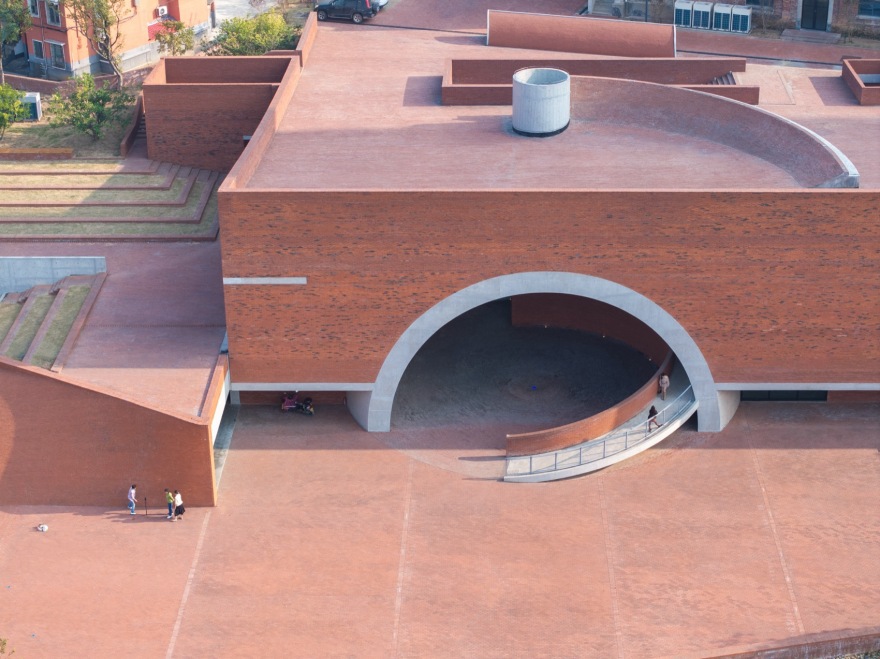
自江面远望,建筑呈现出水平延展的断崖姿态,与资江河岸层积地貌相互嵌合。底部通体内收架空,营造出轻盈的悬挑意象,借鉴湘中滨水吊脚楼的构造逻辑,强化滨水界面的公共性。▼分析图,analysis diagram© 地方工作室

▼分析图,analysis diagram© 地方工作室

Viewed from the river, the building stretches horizontally like a cliff edge, interlocking with the stratified landforms of the Zijiang bank. The base is deeply recessed and elevated, creating a light, cantilevered effect. Drawing on the structural logic of stilted buildings along the central Hunan waterfront, the design reinforces the public character of the riverside interface.
▼由项目看资江南岸,viewing the river and the bridge from the project© 存在建筑

▼屋顶鸟瞰,aerial view of the roof© 存在建筑


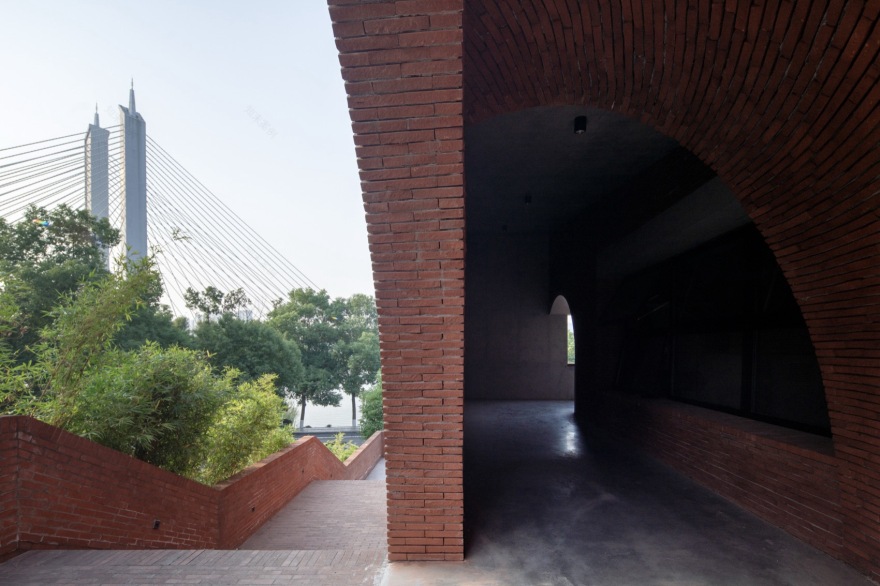
嵌入断崖的半球穹窿空间源自地质溶洞的原型意象,其内部盘旋而上的弧形坡道隐喻山区码头的高台阶形态,串联起江岸入口、屋顶观景平台与城市腹地,构成完整而连续的立体流线体系。
The hemispherical domed space embedded in the cliff derives its archetype from geological karst caves. The spiraling curved ramp inside metaphorically evokes the high steps of mountainous river docks, connecting the riverfront entrance, rooftop viewing platform, and urban hinterland to form a complete and continuous three-dimensional circulation system.
▼嵌入断崖的半球穹窿空间源自地质溶洞的原型意象,thearchetype from geological karst caves© 存在建筑


03 多孔性空间
03 Porous Space
非常规的地形拟态策略促使建筑内部空间组织摆脱传统、程式化的功能分区。设计通过强化整体的多孔性,使建筑呈现孔洞化的腔体结构,形成开放共享的空间机制。
The unconventional topomorphic strategy liberates the internal spatial organization from traditional, formulaic functional zoning. By enhancing overall porosity, the design transforms the building into a perforated, cavity-like structure with an open and shared spatial mechanism.
▼开放共享的空间机制, open and shared spatial mechanism© 存在建筑


▼楼梯间,staircase© 存在建筑

多个异形筒拱与生态竖井被植入其中,构建出类似洞穴的空间基质,使气流、光线、雨水、雾气与自然声景在室内外自由流动。主入口处18米跨度的混凝土半球穹顶空间以其原始而沉浸的体量感,既承担公共集会的城市功能,又作为起伏屋面的结构与空间核心。▼分析图,analysis diagram© 地方工作室

▼分析图,analysis diagram© 地方工作室

Multiple irregular barrel vaults and ecological shafts are integrated, creating a cave-like spatial matrix that allows airflow, light, rainwater, mist, and natural soundscapes to flow freely between interior and exterior. The 18-meter-span concrete hemispherical dome at the main entrance, with its primal and immersive volume, serves both as an urban space for public assembly and the structural and spatial core of the undulating roof.
▼异形筒拱,irregular barrel vaults© 孔锦权
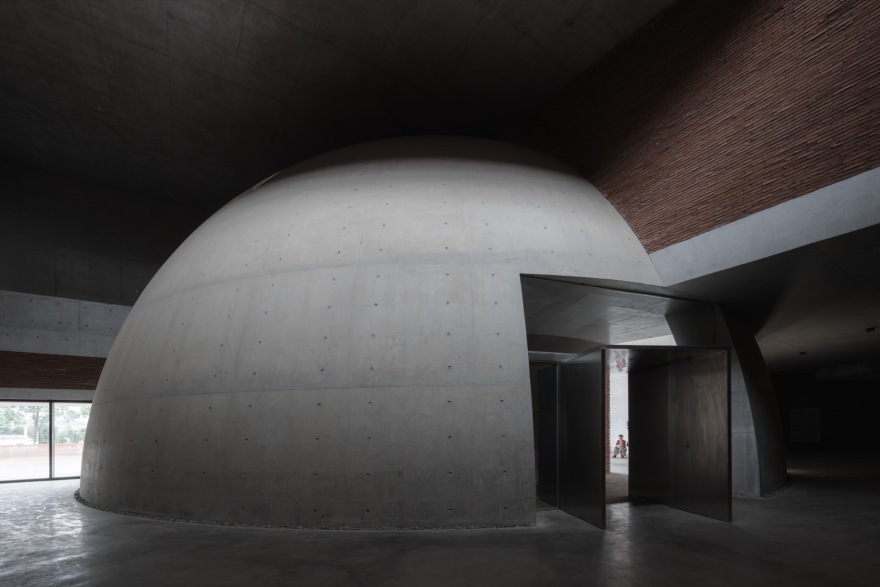

▼天窗,skylight© 存在建筑
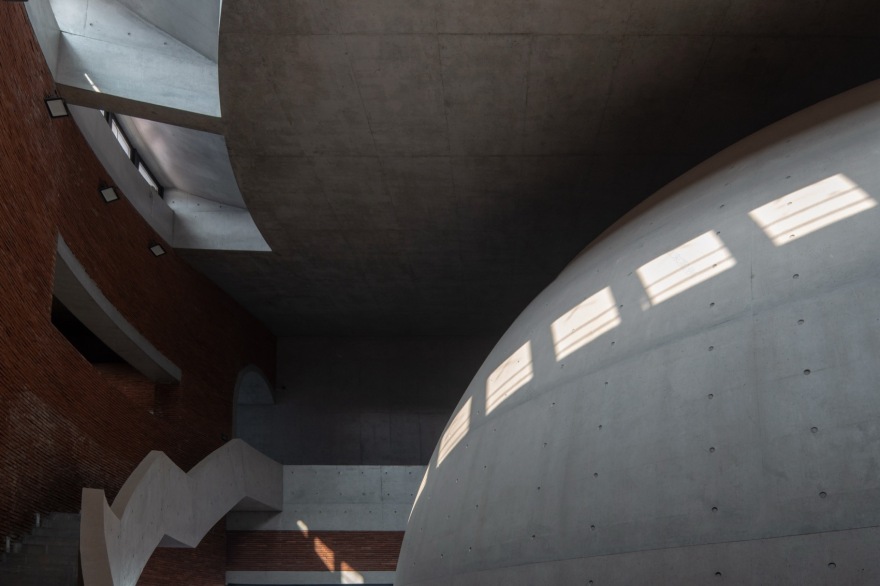
▼拱形元素,arch element© 孔锦权

▼室内视角,interior views© 孔锦权


这些形态各异的洞穴腔体形成的多孔结构体系,使建筑既呈现出具有仪式感的空间氛围与美学体验。无论是晨暮的民间曲艺表演还是自发的运动集会,都使文化传播超越了既定功能区的界限,在日常流动中自然发生。
This porous system of diverse cave-like chambers fosters a spatial atmosphere and aesthetic experience with a sense of ritual. Whether for folk performances in the morning and evening or spontaneous sports gatherings, cultural transmission transcends fixed functional boundaries and occurs naturally in daily movement.
▼具有仪式感的空间氛围, spatial atmosphere and aesthetic experience with a sense of ritual© 存在建筑

▼混凝土与砖材的和谐组合,the harmonious combination of concrete and brick materials© 孔锦权

04 多维路径
04 Multidimensional Paths
如果将建筑视为联结城市与自然的空间媒介,三周文化广场的路径系统打破对传统游走逻辑的简单重构,而是通过行走本身,编织起市民日常活动与场地历史记忆相互叠合的空间网络。
If the building is understood as a spatial medium connecting city and nature, the circulation system of Sanzhou Cultural Square goes beyond simply restructuring conventional movement logic. Instead, walking itself weaves a spatial network overlapping citizens’ daily activities and the site’s historical memory.
▼鸟瞰,aerial view of the project© 存在建筑
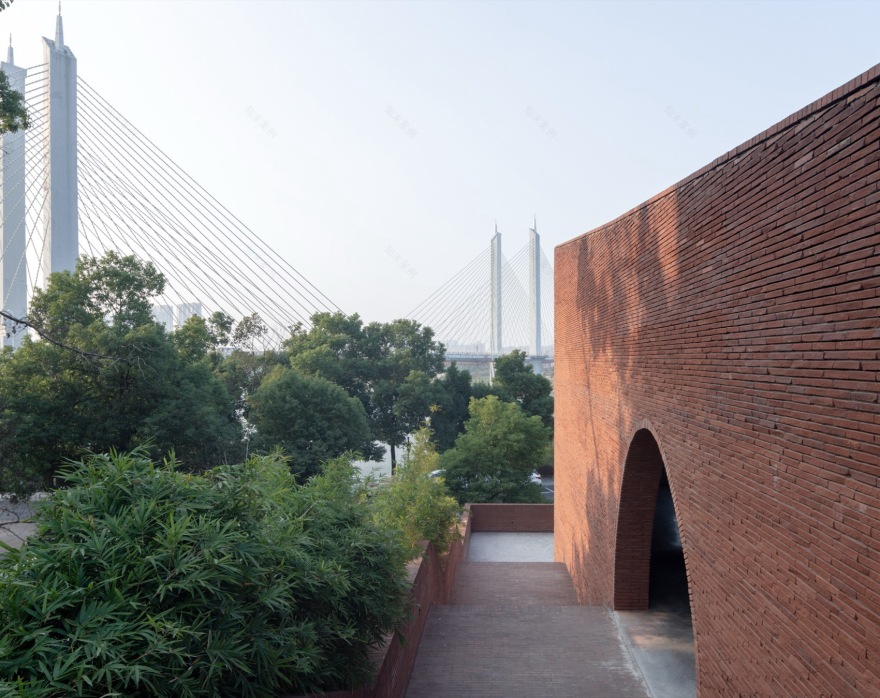
首先是“穿越之径”。嵌入山体的建筑体量横向延展,客观上削弱了城市与江岸的直接联系,设计借助穹窿空腔植入环形坡道,使行人得以在半空中穿行于建筑内部。
First, the Path of Transversal Penetration. The building volume embedded in the mountain extends horizontally, which would otherwise weaken the direct connection between the city and the riverfront. The design inserts a circular ramp through the domed void, allowing pedestrians to traverse the building at mid-height.
▼“穿越之径”,the Path of Transversal Penetration © 存在建筑
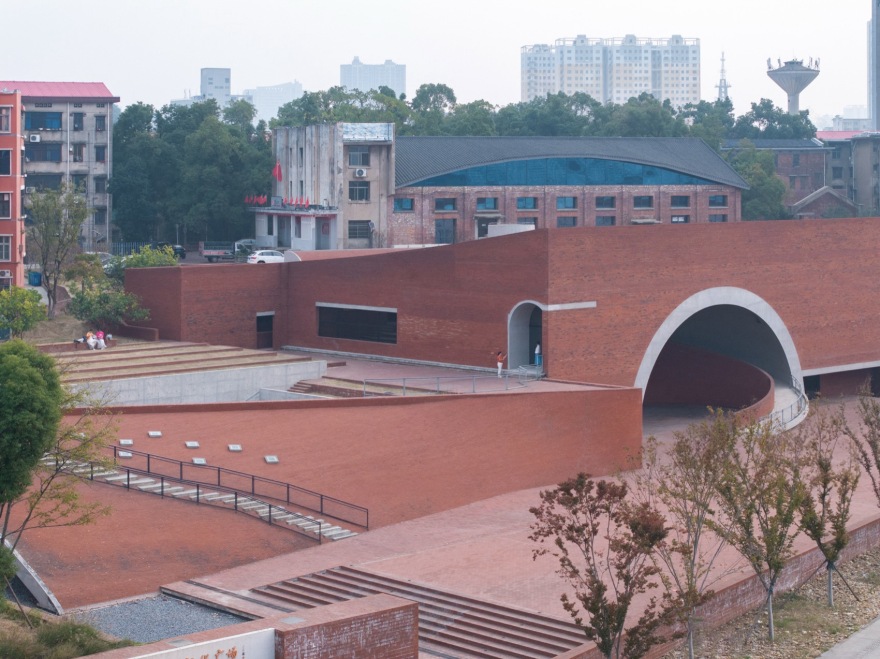

路径依次串联圆形天井与矩形中庭,前者引入流动的自然光影,形成短暂停留的感知节点,后者则作为空间过渡,引导行走最终抵达屋顶广场,完成一次由江岸地面向高点延展的垂直体验。▼剖面分析图,analysis sections© 地方工作室

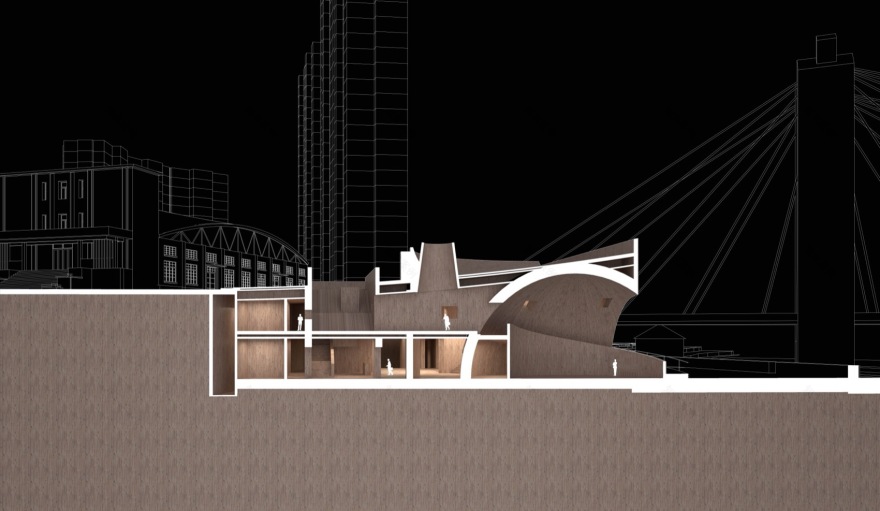
The path sequentially connects circular courtyards and rectangular atria: the former introduce dynamic natural light and shadow as perceptual nodes for brief pause, while the latter act as spatial transitions, guiding movement toward the rooftop plaza and completing a vertical ascent from the riverbank to the high point.
▼入口,entrance area© 存在建筑
▼坡道,ramp© 存在建筑

▼通廊,corridor© 存在建筑

▼穹窿之下的灰空间,grey space beneath the dome© 存在建筑


▼屋面出口,exit of the ramp on the roof© 存在建筑

其次是“攀爬之径”。东侧抬升的弧拱连接广场与覆土屋顶,其形态宛如镶嵌于江畔的巨石,不规则踏步与倾斜坡面强化了身体的攀爬参与,使路径兼具挑战性与停留、观景的可能。
Second, the Path of Ascent. An arched vault on the east links the plaza to the earth-covered roof, resembling a massive boulder set into the riverbank. Irregular steps and sloped surfaces emphasize physical engagement, making the path both challenging and suitable for resting and viewing.
▼“攀爬之径”,the Path of Ascent© 存在建筑

▼屋面广场,rooftop square© 存在建筑


最后是“徐行之径”,西侧长坡栈道以平缓连续的坡度回应不同人群的使用需求,斜向展开的路径延伸至自然坡地,使行走回归从容而无碍的徐行状态。三类路径在垂直与水平维度上形成互补,通过差异化的身体介入方式,持续生成富有层次的空间体验。
Third, the Path of Leisurely Stroll. A long sloped walkway on the west adopts a gentle, continuous gradient to accommodate diverse users. The diagonal path extends into the natural slope, returning movement to a calm, unobstructed state. These three paths complement each other vertically and horizontally, generating layered spatial experiences through differentiated bodily engagement.
▼由周边环境看建筑,viewing the project from surrounding environment© 存在建筑

▼外观,exterior view© 存在建筑
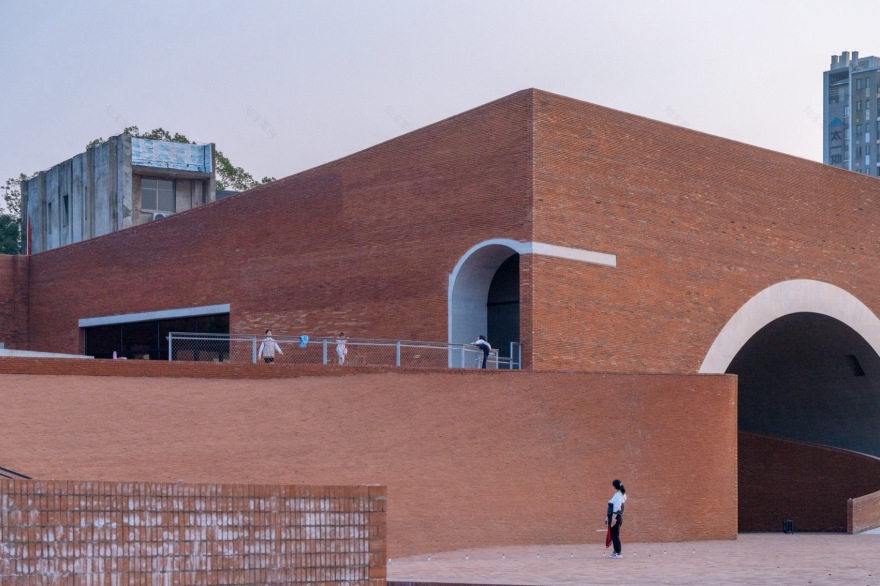
▼西侧长坡栈道,the long slope walkway on the west side© 存在建筑

▼水平线条,horizontal lines© 存在建筑
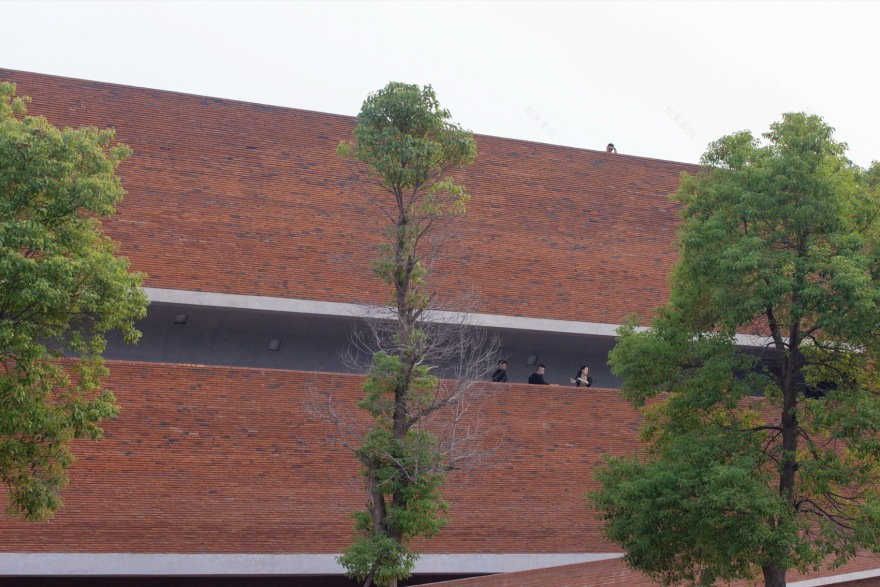
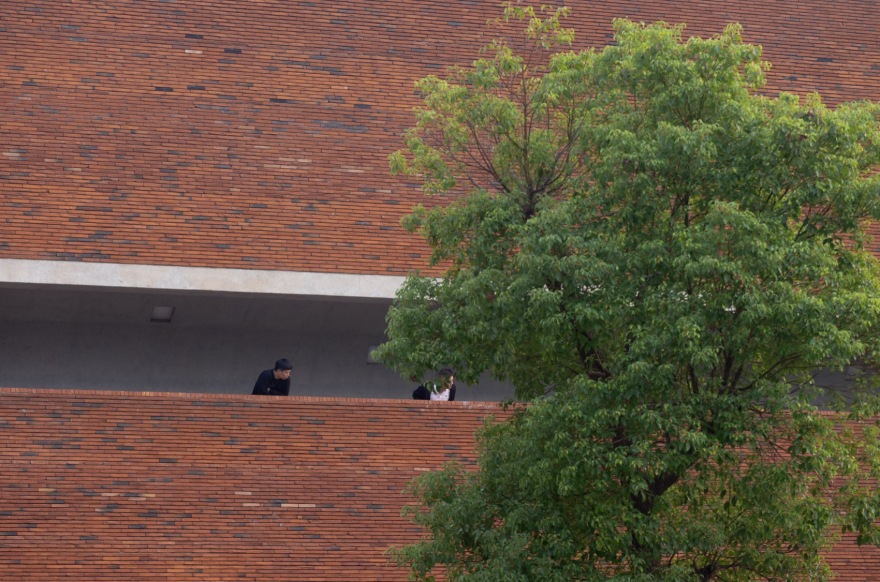
▼户外楼梯,outdoor- staircase© 存在建筑
05 改造更新
05 Renovation and Regeneration
将视野进一步延展至其背后长期被忽视的老旧片区,设计以文化介入作为触媒,对原有废弃建筑进行系统性的再激活。新的空间秩序在废墟肌理、自然生长与结构修复之间建立新的平衡关系,使历史遗存转化为公共活动的新载体,推动三周项目由单一纪念空间转向具有社会意义的城市实践。
Extending the vision to the long-neglected old district behind the site, the design uses cultural intervention as a catalyst to systematically reactivate abandoned existing structures. The new spatial order strikes a balance among the ruined fabric, natural growth, and structural repair, transforming historic relics into new carriers of public activity. This shifts the Sanzhou project from a single commemorative space to an urban practice with social significance.
▼改造后的老旧片区,the renovated old area© 存在建筑


▼历史遗存转化为公共活动的新载体,historical relics transformed into a new medium for public activities© 存在建筑


在内部空间组织上,设计以一条连续的旋转路径作为核心线索,将原本破碎、断裂的老建筑内部重新串联。旋转上升的坡道与阶梯穿插于既有砖墙与新植入的结构之间,在回旋中不断遭遇不同高度的视线关系、光影变化与历史构件,引导人在行走中完成一次由遗存走向更新的空间体验。
Internally, a continuous spiraling path serves as the core organizing element, reconnecting the fragmented and disjointed interiors of the old buildings. The ascending ramps and stairs weave between existing brick walls and newly inserted structures, creating shifting sightlines, changing light and shadow, and encounters with historic fragments at every turn. Visitors are guided through a spatial experience from relic to renewal.
▼改造前后,before and after renovation© 地方工作室
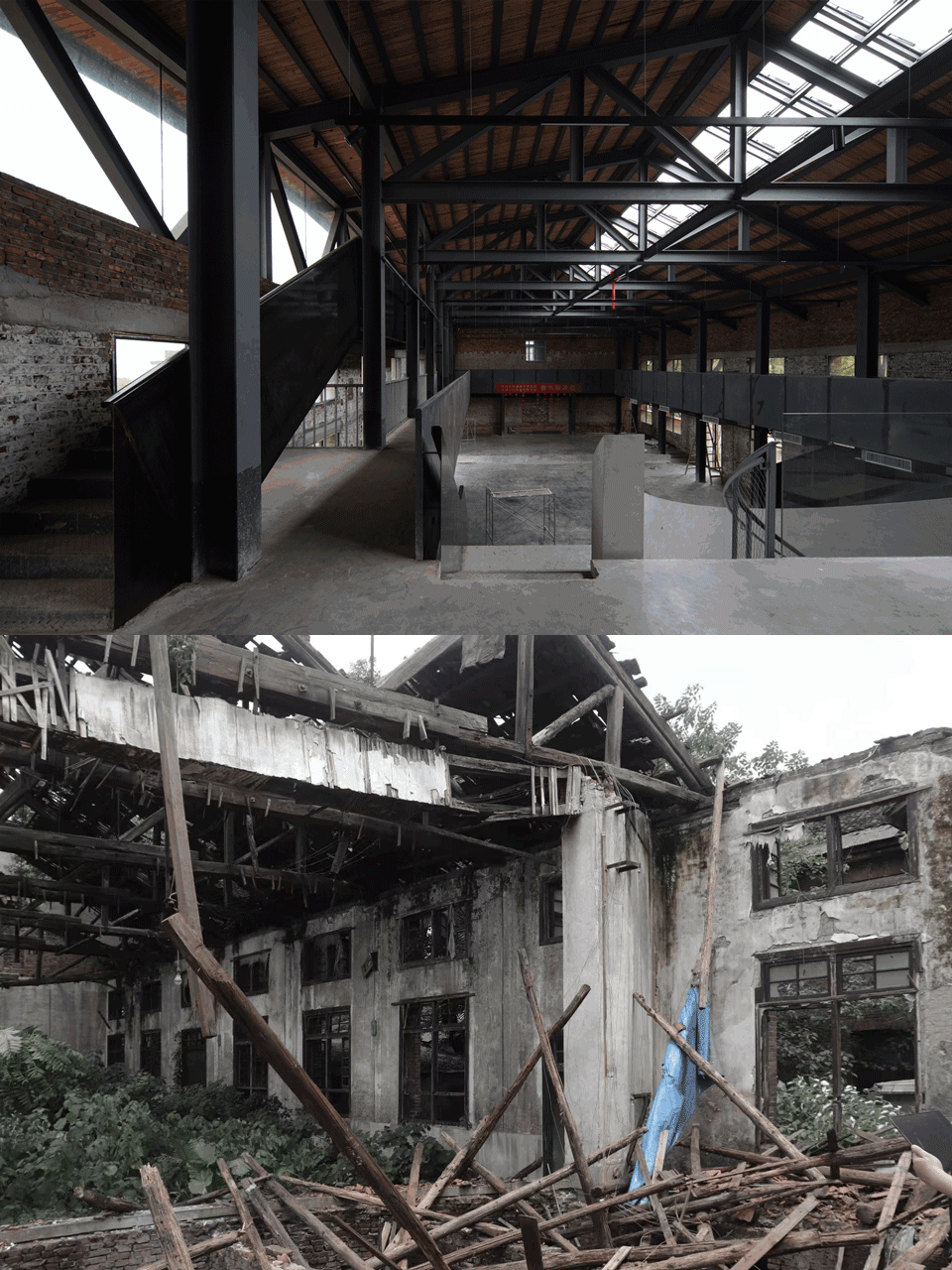
▼改造后的室内视角,interior view of the renovated space© 孔锦权
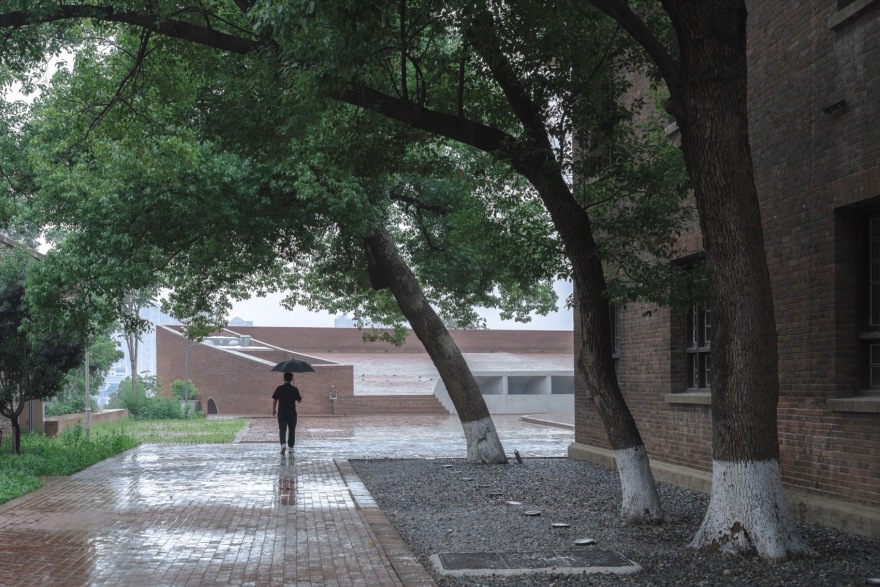
屋顶采取“微微掀起”的设计策略,并未以完整覆盖的方式封闭建筑,而是在保留原有体量轮廓的基础上,局部抬升屋面,引入自然光与城市视线。掀起的屋顶在尺度上保持克制,将公共活动显露于城市之中,使老旧建筑重新获得呼吸,形成介于修复与再生之间的暧昧状态。
The roof employs a strategy of “subtle lifting” rather than full enclosure. While preserving the original volume profile, sections of the roof are partially raised to introduce natural light and urban views. The lifted roof maintains a restrained scale, exposing public activities to the city and allowing the old building to “breathe” again, forming an ambiguous state between restoration and regeneration.
▼雨天视角,views of the project on rainy days©孔锦权

新植入的钢架结构作为清晰可辨的当代构件体系,与原有砖石墙体保持结构与时间上的分离关系。在承担结构功能的同时,对历史建筑形成保护性重组,建立起可持续的更新秩序。
Newly inserted steel frames form a legible contemporary structural system, maintaining structural and temporal separation from the original masonry walls. While fulfilling structural functions, they protectively reorganize the historic fabric and establish a sustainable renewal order.
▼混凝土与砖材的对比,comparison between concrete and brick materials© 存在建筑


结语
Conclusion
三周文化广场在形态上采用削弱体量感的地形延展策略;在材料上选择具有地方质感且可随时间风化的红砖,以呼应场地肌理;在空间组织上引入多孔性结构以增强环境要素的渗透与循环;在动线上构建多元化的行走路径以丰富身体体验。
Sanzhou Cultural Square adopts a land-extending strategy that minimizes volumetric presence; uses red brick with local texture and weathering capacity to respond to the site’s fabric; introduces porous structures to enhance the infiltration and circulation of environmental elements; and constructs diverse circulation paths to enrich bodily experience.
▼夜景,night views©孔锦权


由此在文化建筑与市民生活、历史保护与当代创新、人工秩序与自然演替之间,建立起充满张力的共生关系。这种实践以开放的姿态邀请时间、自然与人们来共同书写,正如资江水般不停止的水蚀雕刻,让我们深刻的觉察到地方的文化传承永远处于动态的野性生长之中。
In doing so, it establishes a dynamic and tense symbiosis between cultural architecture and civic life, historic preservation and contemporary innovation, artificial order and natural succession. This practice openly invites time, nature, and people to inscribe their stories together. Like the continuous erosion and sculpting of the Zijiang River, it makes us acutely aware that local cultural heritage is always in a state of dynamic, wild growth.
▼环境鸟瞰,aerial view of the site© 存在建筑
▼总平面图,master plan© 地方工作室

▼改造前平面,master plan before renovation© 地方工作室

▼改造后平面,master plan after renovation© 地方工作室

▼一层平面图,ground floor plan© 地方工作室
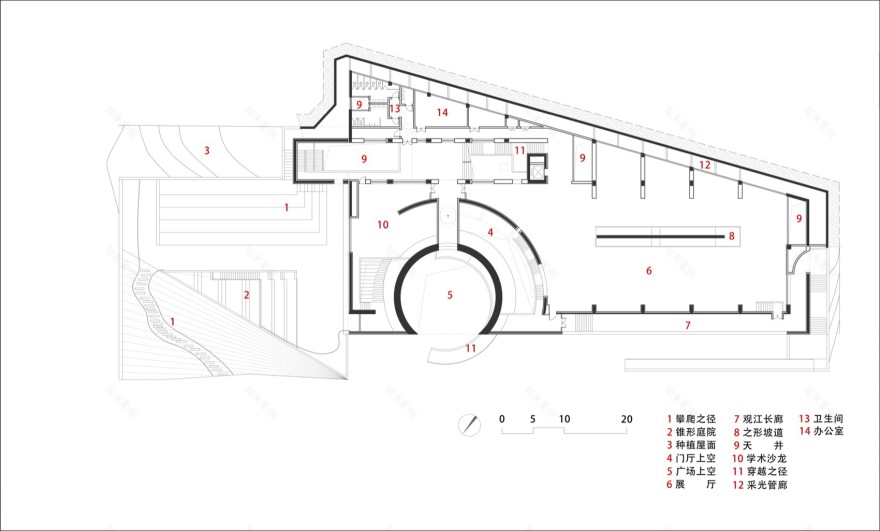
▼二层平面图,upper floor plan© 地方工作室

▼立面图与剖面图,elevation and section© 地方工作室

▼立面图与剖面图,elevation and section© 地方工作室

▼细部详图,construction details© 地方工作室

设计单位:地方工作室
项目地点:湖南,益阳
项目规模:5005.74㎡
建成时间:2025年
主要设计人:魏春雨,黄斌
设计团队:彭修远、尤志川、顾紫薇、方琳玲、叶鹏、胡安娜、刘维、凌紫嫣、张懿、轩圣武、林煜芸、袁艺韬、许熠峰、张乾、张瑞、郭毅、杨汝艳,周欢、张俊杰
Design Institute: Regional Studio
Location: Yiyang, Hunan
Project Area: 5005.74 m²
Completion: 2025
Principal Designers: Wei Chunyu, Huang Bin
Design Team: Peng Xiuyuan, You Zhichuan, Gu Ziwei, Fang Linling, Ye Peng, Hu Anna, Liu Wei, Ling Ziyan, Zhang Yi, Xuan Shengwu, Lin Yuyun, Yuan Yitao, Xu Yifeng, Zhang Qian, Zhang Rui, Guo Yi, Yang Ruyan, Zhou Huan, Zhang Junjie


南京喵熊网络科技有限公司 苏ICP备18050492号-4知末 © 2018—2020 . All photos and trademark graphics are copyrighted by their owners.增值电信业务经营许可证(ICP)苏B2-20201444 苏公网安备 32011302321234号
苏公网安备 32011302321234号客服
消息
收藏
下载
最近