

创作上传
VIP
收藏下载
登录 | 注册有礼
查看完整案例

收藏

下载

分享
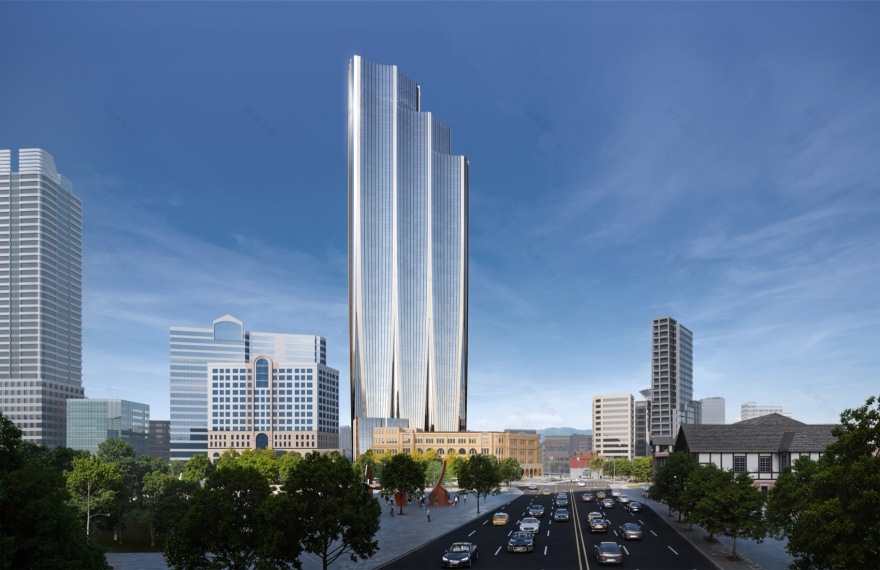
在国际设计竞赛后,扎哈·哈迪德建筑事务所(ZHA)与李祖原建筑事务所(C.Y. Lee & Partners)联合设计的台北国家创新、创意与金融中心(NICFC)方案正式公布。该中心位于台北北门区的核心地带——台北的金融中心。NICFC将容纳金融监督管理委员会的四个机构,包括证券交易所、期货交易所、存托与清算公司。项目坐落于忠孝西路与博爱路交汇处,周边为台北车站、历史悠久的邮局大楼和铁路博物馆、北门门楼及捷运站等多个文化地标。
Following the international design competition, Zaha Hadid Architects (ZHA) in collaboration with C.Y. Lee & Partners have been announced as designers of the new NICFC (National Innovation, Creativity and Finance Center) in Taipei. Located in the heart of Taipei’s Beimen district-the city’s financial hub-NICFC will house four institutions of the Financial Supervisory Commission that include the stock exchange, futures exchange, depository & clearing corporation. Situated at the intersection of Zhongxiao West Road and Bo’ai Road, NICFC is within one of the city’s busiest districts encompassing Taipei Main Station, the historic post office building and railway museum, Beimen Gate and MRT Station, as well as the many cultural venues around Zhongshan Hall.
▼项目概览,overall of the project© Render by X Universe Visual Design

NICFC的设计遵循台北西区门户计划的要求,旨在提升城市的公共空间。项目总建筑面积达17.5万平方米,优先考虑可步行性和可达性。设计通过一系列相互连接的步行广场、庭院和通道,将该区域现有的市民中心与周围环境串联起来,保留北门区的城市景观,确保历史文化得到现代化城市中的传承。NICFC毗邻台北北门邮局(该建筑于1930年修建并近期已完成修复),新建项目将保留原有装饰精美的建筑,同时拆除其后期不再使用的扩建部分。现存95年的邮局大楼将改造为博物馆和文化场馆,保存其历史价值的同时为城市创造一个新的公共空间。
Adhering to requirements established by Taipei’s Western Gateway Project to upgrade the city’s public realm, NICFC’s 175,000 sq.m design prioritises walkability and accessibility. Linking the district’s existing civic hubs with a series of interconnected pedestrian plazas, courtyards and walkways, the design preserves Beimen’s urban vistas and streetscapes to ensure the district’s heritage remains legible within the modern city. Adjacent to the Taipei Beimen Post Office (a recently restored heritage site that opened in1930) NICFC will retain the ornate original building and replace its later extensions which are now obsolete. The existing 95-year-old building will be transformed into a museum and cultural venue-preserving its history while creating an important new public space for the city.
▼项目与周围城市环境,the project and surrounding environment© Render by X Universe Visual Design

为了适应21世纪的邮政服务需求,原有邮局的邮政服务、包裹与行政业务将迁至配备现代设施的新建筑,而老建筑将重新利用,恢复其拱门区域,成为新的社区中心。内部将被改造为邮政通讯博物馆,展示沉浸式展品、文学档案和历史遗物,使该建筑成为居民与游客的重要文化地标,体现其在城市历史与发展中的重要性。NICFC的五层基座呼应了相邻的1930年代邮局建筑,多个褶皱柱子支撑着一个雕塑般的玻璃雨篷,形成一个大型新庭院,作为公共表演与活动的场所。塔楼设计为47层,向后退让,灵感来自岛屿原生的蝴蝶兰花朵的有机褶皱结构。
Relocating its parcel, mail and administrative services to a new facility with the necessary infrastructure for postal services in the 21st century, the post office’s heritage building will be repurposed with a community hub within its restored portico. Its original interiors will be restored as a postal communications museum with immersive displays, literary archives and artefacts - converting the site into a focal point for residents and visitors that reflects its importance within the city’s history and development. NICFC’s five - storey podium mirrors the scale of the adjacent 1930’s post office and includes multiple pleated columns supporting a sculptural glazed canopy that shelters a large new courtyard between the old and new buildings for public performances and events. Stepped back from the adjacent heritage building, the tower’s 47 - storey design is informed by the organic fluting structures within the flower of the island’s native Phalaenopsis Orchid.
▼向东一侧,塔楼对齐城市主轴,俯瞰台北101和信义区,to the east, the tower aligns with the city’s primary axis with views to Taipei 101 and the Xinyi District© Render by X Universe Visual Design

塔楼外形随着设计的延展而生长,精致的褶皱结构支撑着兰花的花瓣和花萼。为了优化空间使用效率、灵活性和舒适度,塔楼的每个区域为四大金融机构提供了独立的工作空间,同时提供共享的灵活办公和会议空间,以及一个会议中心。塔楼的设计特别注重隐私保护、垂直整合与适应性,确保日常运营的流畅性和活动的安全物流。三部独立的电梯井分别为金融机构楼层、租赁办公楼层以及贵宾和服务人员提供专用电梯。塔楼北立面的凹湾设计提供了台北市区及远至七星山和观音山的全景。向东一侧,塔楼对齐城市主轴,俯瞰台北101和信义区。
Unfurling and extending outwards as it grows, this delicate fluting supports the petals and sepals of the Orchid’s flower. Designed to optimise efficiency, flexibility and comfort-achieving floor area usage rates over 70%—distinct zones within the tower are provided for each of the four financial institutions. Offering privacy, vertical integration and adaptability, multiple floors of the tower will provide shared flexible office and meeting spaces, in addition to a conference centre. Ensuring seamless daily operations and secure event logistics, three independent elevator banks serve the financial institution floors, the rental office floors, together with elevators for dignitaries and services. Concave bays within the tower’s northern façade give panoramic views of Taipei and beyond to the Qixing and Guanyin mountains. To the east, the tower aligns with the city’s primary axis with views to Taipei 101 and the Xinyi District.
▼垂直褶皱系统在塔楼西立面上形成几何图案与节奏,asystem of vertical pleats generates a geometric pattern and rhythm within the western façade© Render by X Universe Visual Design
设计中的垂直褶皱系统在塔楼西立面上形成几何图案与节奏,俯瞰淡水河沿岸的自然景观。塔楼南立面则根据城市现有的规范,适应南侧行政区的市民机构。高层的塔楼通过逐层退让,提供遮阳并减少横向风力。NICFC的设计采用了响应式褶皱立面系统,以调节太阳辐射和气流。该系统根据塔楼的曲线精密设计,适应不同的深度和角度,减缓太阳热量的吸收,并引导气流,使建筑像有生命的有机体一样“呼吸”,提升建筑在台北湿润亚热带气候中的环境表现。
A system of vertical pleats generates a geometric pattern and rhythm within the western façade overlooking the natural landscapes along the banks of the Tamsui River. The tower’s southern façade follows the city’s existing guidelines that accommodate the civic institutions of the administrative district to the south. At higher floors, the tower steps back in layers to provide shading and reduce lateral wind forces. NICFC’s design incorporates a responsive pleated façade system to regulate solar irradiation and airflow. Defined by the curvature of the tower, this precision engineered system adapts to varying depths and angles to mitigate solar heat gain and guide air flow-enabling the architecture to ‘breathe’ like a living organism, enhancing the tower’s environmental performance in Taipei’s humid subtropical climate.
▼项目夜景,night view of the project© Render by X Universe Visual Design

NICFC项目目标获得双重可持续认证(LEED铂金级和EEWH钻石级),并设计为零碳排放建筑,成为该地区的新标杆。在能源效率与舒适性之间找到平衡,建筑外壳结合了高性能的双层玻璃单元化幕墙系统与褶皱立面。为了实现现场能源自给,立面将整合光伏电池,而塔楼顶部将安装太阳能阵列。通过精确的数字建模与3D制图,优化了建筑的方向、构成和立面表现。塔楼的设计使用了可回收、低VOC材料和模块化结构系统,以最小化碳排放并提升生命周期耐用性。此外,雨水收集、储存和再利用系统将有效减少市政供水的需求。
Targeting dual sustainability certification (LEED Platinum and EEWH Diamond), NICFC is designed to operate at net-zero carbon emissions as a new benchmark for the region. Balancing energy efficiency with the comfort of occupants, the architectural envelope combines a high-performance double-glazed unitised curtain wall system within a pleated façade. Providing on-site energy generation, photovoltaics will be incorporated within the façade while solar arrays will be installed on the tower’s roof. Employing detailed digital mapping and 3D modelling of the site to optimise orientation, composition and façade performance, the tower’s design incorporates recyclable, low-VOC materials and modular structural systems that will minimise embodied carbon and enhance lifecycle durability. A system of rainwater collection, storage and reuse will reduce water demand from the municipal supply.
▼底层空间,ground floor space© Render by X Universe Visual Design

Architect: Zaha Hadid Architects (ZHA)
ZHA Principal: Patrik Schumacher
ZHA Competition Project Directors: Paulo Flores (Design), Shao-wei Huang (Overall)
ZHA Competition Commercial Director: Charles Walker
ZHA Competition Project Architects: Mei-Ling Lin, Sebastian Andia
ZHA Competition Project Design Lead: Harry Spraiter
ZHA Competition Team: Abhilash Menon, Aditya Ambare, Aleksander Mastalski, Alex Nap, Arjun Kaicker, Bahaa Alnassrallah, Barbara Schickermueller, Berkin Islam, Bogdan Zaha, Carlos Bausa Martinez, Chales Walker, Christoph Geiger, Daniel Hamdan, Disha Shetty, Harry Spraiter, Henry Louth, Huiyuan Li, Jing Xu, Karina Linnsen, Lorena Espaillat Bencosme, Martin Gsandtner, Mei-Ling Lin, Ningxin Zheng, Patrik Schumacher, Paulo Flores, Sebastian Andia, Shao-wei Huang, Shajay Bhooshan, Shardul Awasthi, Shibani Choudhury, Teodor Andonov, Tommaso Casucci, Uli Blum, Vishu Bhooshan, Yusuf Rafi
ZHA Environmental & Sustainability Team: Abhilash Menon, Aleksander Mastalski, Bahaa Alnassrallah, Carlos Bausa Martinez(Team Lead), Disha Shetty, Jing Xu, Shibani Choudhury
ZHA CODE: Henry Louth, Shajay Bhooshan(Team Lead), Teodor Andonov, Tommaso Casucci, Vishu Bhooshan
ZHA+I: Arjun Kaicker (Team Lead), Christoph Geiger, Daniel Hamdan, Lorena Espaillat Bencosme, Uli Blum (Team Lead), Yusuf Rafi
Consultants
Executive Architect (JV): C.Y.Lee & Partners
Associate Architect (JV): Oneness & Associates Architects Planners
General Engineering Consultants (JV): CECI Engineering Consultants, Inc.
Structural Design and Seismic Supervision: Evergreen Consulting Engineering, Inc.
Structure Concept: Cundal Hong Kong Limited
Sustainability Consultants: Arup Group Ltd.
Geotechnical Consultant: Sino Geotechnology INC
MEP: Cheng-Yi United Engineering Consultants Co., Ltd.
Environmental Consultant: Segreene Sustainable Design & Consulting, Inc.
Façade Design Consultant: VS-A Facade Engineering
Traffic consultant: EasyGoGo Technology Inc.
Landscape Consultant: Environmental Arts Design
International Workplace Consultant: Cushman & Wakefield
Historic Restoration Consultant: Pu-Ming Tseng Architect & Associates
Cultural Consultant: Yichung Chan Architects & Associates
Property Management Consultant: Professor Kung-Jen Tu
Interior Design: Olin International Design Co. Ltd.
Lighting Design consultant: Unolai design
南京喵熊网络科技有限公司 苏ICP备18050492号-4知末 © 2018—2020 . All photos and trademark graphics are copyrighted by their owners.增值电信业务经营许可证(ICP)苏B2-20201444 苏公网安备 32011302321234号
苏公网安备 32011302321234号客服
消息
收藏
下载
最近