

创作上传
VIP
收藏下载
登录 | 注册有礼
查看完整案例

收藏

下载

分享
WORKS with Nature: Low-Carbon Adaptation for a Changing World | Climate Positive Design
项目陈述
PROJECT STATEMENT
2024 年成为一个重要的临界点——全球年平均气温首次比工业化前水平高出1.5°C。在这一背景下,生物多样性持续下降的问题也愈发严峻,减缓与适应气候变化的行动已刻不容缓。为应对这一挑战,景观建筑专业与联合国展开了创新性的合作实践。
《WORKS with Nature: 面向变化世界的低碳适应策略》的出版正是此次合作的重要成果。该指南由ASLA气候行动计划创始主席Pamela Conrad与联合国获奖景观建筑师Kotchakorn Voraakhom共同牵头编制,旨在强化景观建筑专业在全球气候与生物多样性应对体系中的作用与影响力。
2024 marked a critical turning point, as the planet exceeded an annual temperature average of 1.5°C above pre-industrial levels. This milestone coupled with devastating biodiversity loss highlights the urgent need for action to mitigate and adapt to these threats. In response, landscape architects have led innovative collaboration with the United Nations. This effort culminated in the publication of WORKS with Nature: Low-Carbon Adaptation Techniques for a Changing World, a guide developed under the leadership of ASLA Climate Action Plan founding Chair Pamela Conrad and UN-award-winning landscape architect Kotchakorn Voraakhom. The guide aims to elevate the role of landscape architects in global climate and biodiversity solutions.

▲《WORKS》是一部里程碑式的指南,由景观建筑师Pamela Conrad与Kotchakorn Voraakhom在与联合国合作框架下共同编制完成。“WORKS” is a landmark guide developed by landscape architects Pamela Conrad and Kotchakorn Voraakhom in collaboration with the United Nations. © Image: Climate Positive Design. GREENinc landscape architecture, South Africa. UNFCCC
项目说明
PROJECT NARRATIVE
引言
《WORKS with Nature》指南的核心目标是弥合发达与发展中国家、城市与乡村之间的实践鸿沟。指南系统展示了多种低碳适应与生物多样性策略,体现景观建筑专业在同时应对气候危机与生物多样性丧失方面的独特优势。出版物汇集了来自不同地域背景的100项策略案例,覆盖38个国家、60余家景观设计机构与组织的实践成果。指南在阿塞拜疆巴库举行的COP29联合国气候大会上正式发布,并配套举办专题工作坊,以促进知识交流与跨领域协作。
背景
《WORKS with Nature》的构想源于COP28期间的一次重要对话。当时Pamela、Kotchakorn与ASLA首席执行官Torey Coneen - Carter与联合国气候变化框架公约(UNFCCC)负责人Paul Desanker讨论景观建筑师如何参与全球气候解决方案。Desanker指出,当前存在显著的知识共享缺口——许多国家缺乏景观建筑专业力量,且尚未认识到该专业以自然为基础的方法在应对气候与生物多样性挑战中的独特价值。
内容结构
《WORKS with Nature》通过基于自然的策略体系提供可操作的解决路径,内容按六大主题组织:
· 城市降温、防火与抗旱
· 海岸适应
· 内陆洪水管理
· 粮食安全与人类聚居
· 生物多样性
· 低碳设计
每个案例均围绕具体技术策略展开,并配有社区参与方式、项目团队构成、经验总结、技术或流程图示及项目图片,使内容更易被广泛受众理解与应用。
COP29工作坊
指南发布同期在巴库举办了实施导向型工作坊,重点推动原则落地应用。与会各国代表围绕自然本位解决方案的实施障碍展开讨论,涉及粮食安全、城市热环境、水资源危机、洪涝风险及文化遗产保护等议题。识别出的主要障碍包括:跨部门协调困难、技术能力不足、法规冲突以及政治支持不充分。针对这些问题,与会者提出应加强能力建设、设立跨学科咨询委员会、将自然本位策略纳入国家政策体系,并提升行业协同水平。同时强调在技术培训、公众认知推广、监测工具、投资评估机制及政策承诺方面需要更多支持。
未来展望
与联合国相关负责人的持续讨论表明,下一步重点包括:通过更多工作坊扩大指南影响力、为缺乏景观建筑专业能力的国家制定配套政策策略,并建立面向自然本位适应项目的资金机制。随着气候与生物多样性危机持续加剧,对自然本位解决方案的需求将不断增长。景观建筑师具备引领这一转型的独特能力,而《WORKS with Nature》既是一份行动号召,也是一张可持续转型的路线图。
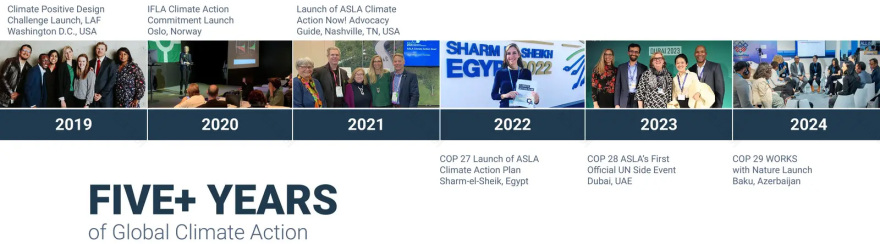
▲该出版物呈现了一项历时多年的系统性工作,旨在提升景观建筑师的专业影响力,并巩固其在综合性解决方案中的核心角色。This publication represents a multi-year effort aimed at raising the profile of landscape architects and solidifying their role in holistic solutions.© Image: LAF. Pamela Conrad, Climate Positive Design. Kotchakorn Voraakhom

▲入选项目经过严格筛选,确保在解决路径、参与团队、开发密度及地域分布等方面具有广泛代表性。Projects were carefully selected to include a wide range of solutions, contributors, development density, and geographic distribution.©Climate Positive Design

▲由景观建筑师、学生、编辑团队、支持机构与赞助方组成的专业协作网络,使这一宏大目标项目得以顺利实现。A dedicated collective of landscape architects, students, editors, supporters, and sponsors made meeting the ambitious project goals a reality.©Climate Positive Design

▲文档按主题类别组织内容,在总结实践经验的同时,推动全球范围内对景观建筑专业的认知提升。The document is organized by categories, sharing lessons learned and raising awareness of the landscape architecture profession globally.©Climate Positive Design

▲本部分概述了每项技术策略的标准展示内容,信息涵盖项目要点、关键发现及技术可实施性等方面。This outlines the typical content shown for each technique. Information ranges from project details to key findings and technical constructability.©Image: Cooking Sections. Drawing: Climate Positive Design. Harvard University Graduate School of Design (GSD), Climate by Design (CxD): Amy Whitesides, Wynne (Yongxin) Yu, Zoë Hicks, Ashutosh Lohana

▲指南同时提供应对海岸环境变化与内陆洪水管理的多种适应性技术路径。The guide provides techniques for adapting coastal conditions as well as inland flood management.©Image: Superpositions, Fabio Chironi, Atelier Descombes Rampini. Drawing: Climate Positive Design, Lucas Dobbin. Harvard GSD CxD: Pedro Brito, Flora Klein

▲文件中系统呈现了传统原住民实践方法与知识共享经验。Traditional Indigenous practices and knowledge sharing are highlighted throughout the document.©Image: ECOAN. Drawing: Climate Positive Design, Lucas Dobbin. Harvard GSD CxD: Fearghal Rooney, Isabel Andrews, Lucia Gordon

▲多样化项目案例展示了在乡村、城市及城乡过渡区提升生物多样性的多种实施策略。A wide range of projects highlight approaches for increasing biodiversity in rural, urban, and peri-urban areas.©Image: Danehy Park Pocket Forest, Cambridge, MA, SUGi, Dino Kužnik. Drawing: Climate Positive Design, Lucas Dobbin. Harvard GSD CxD: Dora Mugerwa, Janet Liu, Jie Zheng

▲应联合国要求,指南中至少50%的技术策略案例来自发展中国家,其中相当部分聚焦粮食安全议题。As requested by the UN, 50% or more of the techniques are shown in developing countries, many of which address food security.©Image: Seaweed Farm, Uroa, Zanzibar, Wikimedia Commons, Moongateclimber 2010. Drawing: Climate Positive Design, Adriana Ramirez Cuebas.

▲所收录技术涵盖低碳材料与施工方法、碳汇提升策略,以及对可再生能源转型的支持路径。Techniques range from low-carbon materials and construction methods, to increasing carbon sequestration, and supporting a renewable energy transition.©Image: ©Edward Birch, ©Luigi Rosselli Architects, Luigi Rosselli Pty Ltd, Sydney Australia. Drawing: Climate Positive Design, Adriana Ramirez Cuebas. Drawing Modified from Endeavour Centre.

▲该指南以“自然本位解决方案”技术目录形式编排,读者可按任意顺序阅读,或根据主题分类选择查阅。The guide is a catalog of Nature-based Solutions that can be read in any order, or by section category depending on the reader’s interest.©Climate Positive Design

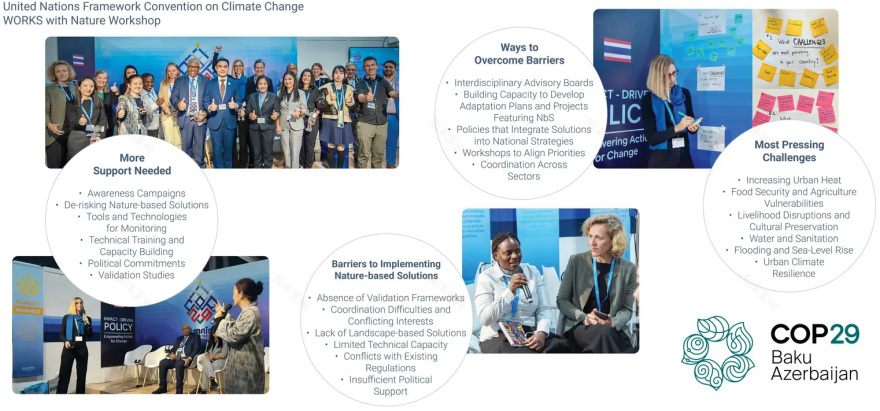
▲指南于2024年联合国气候大会期间正式发布,并配套举办由联合国主持的专题工作坊,支持各国决策者突破实施障碍。The guide launched at the UN climate conference in 2024, with a UN hosted workshop to support national leaders in overcoming implementation barriers.©Images: Pamela Conrad, Climate Positive Design. Kotchakorn Voraakhom, Landprocess.

▲2024年全年,多家定向媒体持续报道相关策略,提升了对自然本位解决方案与景观建筑专业的公众认知,并为COP29做出铺垫。Throughout 2024, targeted media highlighted strategies, raising awareness of Nature-based Solutions and landscape architecture, building to COP29.©Climate Positive Design

▲此次成果离不不开众多合作伙伴的投入与支持,谨向所有参与者致以特别感谢。This work would not have been possible without the collaboration and dedication of many. Special thanks to all that contributed.©Climate Positive Design
PROJECT NARRATIVE
Introduction
The WORKS with Nature guide’s primary objective is to bridge the gap between developed and developing nations and between urban and rural areas. It showcases a range of low-carbon adaptation and biodiversity strategies that demonstrate how landscape architects are uniquely equipped to address both the climate crisis and biodiversity loss. Featuring 100 strategies from diverse contexts, this publication includes contributions from 38 countries and over 60 landscape architecture firms and organizations. Officially launched at the UN Climate Conference COP29 in Baku, the guide was accompanied by a workshop aimed at facilitating knowledge exchange and fostering cross-sector collaboration.
Backstory
The origins of WORKS with Nature trace back to COP28, where Pamela, Kotchakorn, and ASLA CEO Torey Coneen-Carter had a pivotal conversation with Paul Desanker, UNFCCC Manager, on how landscape architects could contribute to global climate solutions. Desanker identified a critical gap in knowledge sharing, emphasizing that many countries lack landscape architects and are unaware of the profession’s unique, nature-based approach to climate and biodiversity challenges.
Details
The WORKS with Nature guide offers actionable solutions through nature-based strategies organized into six thematic sections:
· Urban Cooling, Fire, and Drought Mitigation
· Coastal Adaptation
· Inland Flood Management
· Food Security and Human Settlement
· Biodiversity
· Low-Carbon Design
Each project showcases a technique with insights on community engagement, project team, lessons learned, a technical detail or process drawing and a project image that makes the content accessible to a broader audience. Key findings have been shared through various publications and social media. The guide is available for download on the UN, Climate Positive Design, ASLA, and IFLA websites.
COP29 Workshop
The official launch was accompanied by an implementation workshop in Baku designed to facilitate real-world application of the guide’s principles. The workshop involved leaders discussing the challenges and barriers their countries face in implementing nature-based solutions, such as food security issues, increasing urban heat, water crises, flooding, and cultural heritage preservation. They identified key obstacles, including coordination difficulties, lack of technical capacity, regulatory conflicts, and insufficient political support.
To overcome these challenges, the leaders emphasized the importance of building capacity, creating interdisciplinary advisory boards, integrating nature-based solutions into national policies, and enhancing sector coordination. They also highlighted the need for more support in areas such as technical training, awareness campaigns, monitoring tools, investment validation, and political commitments.
What’s Ahead
Ongoing discussions with UN leaders highlight the need to expand the guide’s reach through workshops, develop policy strategies for governments lacking landscape architecture expertise, and establish funding mechanisms for nature-based adaptation projects.
As the climate and biodiversity crises intensify, the demand for nature-based solutions will grow. Landscape architects are uniquely positioned to lead this transformation, with WORKS with Nature serving as both a call to action and a roadmap for sustainable change.
南京喵熊网络科技有限公司 苏ICP备18050492号-4知末 © 2018—2020 . All photos and trademark graphics are copyrighted by their owners.增值电信业务经营许可证(ICP)苏B2-20201444 苏公网安备 32011302321234号
苏公网安备 32011302321234号客服
消息
收藏
下载
最近