

创作上传
VIP
收藏下载
登录 | 注册有礼
查看完整案例

收藏

下载

分享
The Little Project | Ping Design LLC
项目陈述
PROJECT STATEMENT
“小项目”(The Little Project)是一项示范性的实践,展示了小尺度城市住宅景观设计所具备的转化力量。项目位于美国圣保罗的一处历史街区,占地约40×150英尺,通过对整个场地的重新设计,将传统、以草坪为主的前后院转变为一个充满自然体验的多功能庭院空间。项目将可持续理念、自然游戏、可食性种植与户外教育相结合,在有限预算条件下充分利用每一寸土地。设计强调全年可用性与观赏性,旨在为一个有幼龄儿童的家庭创造长久而珍贵的生活记忆,同时促进邻里交流,为社区提供一个可停留、可聚集、可亲近自然的共享场所。
The Little Project is a pilot initiative demonstrating the transformative power of small-scale urban residential design. Situated on a 40×150-foot lot in St. Paul’s historic neighborhood, this full-site redesign reimagines a traditional lawn-covered front and backyard into a dynamic, nature-rich sanctuary. Blending sustainability, nature play, edible gardening, and outdoor education, the project maximizes every square foot within a modest budget. Designed for year-round beauty and enjoyment, it aims to create lasting memories for a family with a young child while fostering community connections—offering neighbors a place to pause, gather, and immerse themselves in nature.

▲长椅与木质攀爬设施巧妙嵌入场地原有高差之中,塑造出富有活力且亲切宜人的街道界面。Benches and wood climbers are thoughtfully integrated into the existing grade change, creating a dynamic and inviting street edge. © Post-design Condition: Round Three Photography; Pre-design Condition: Ping Design LLC
项目说明
PROJECT NARRATIVE
“小项目”是为圣保罗的一户有幼龄儿童的家庭所实施的整体场地改造。在经历疫情期间的社会隔离后,这个家庭希望打造一个户外空间,让社区里的孩子能够聚在一起玩耍,直接接触土地与自然,并从小学习可持续理念。
为在紧凑的城市用地中实现这些目标,场地被划分为三个功能明确的区域:“小草原”、“小花园”和“小农场”。
位于前院的“小草原”面向街道,强调低维护管理,既是自然游乐场,也是自然学习课堂,结合本土植物、再利用材料与雨水管理策略。“小花园”位于后院,营造出被传粉植物环绕的沉浸式休憩空间。“小农场”同样设于后院,配置可食性种植的高架菜床与户外用餐区,使家庭成员能够共同参与种植,享用自家收获的新鲜食物。
以再利用材料塑造活跃的街道界面
在“小草原”区域,设计充分利用场地原有的高差,打造出兼具座椅与攀爬功能的活跃街道界面,邀请邻里停留交流,同时照看孩子玩耍。长椅、踏步、水槽与平衡木均由因病害被移除的树木制作而成。项目共再利用了三棵树木:两棵刺槐和一棵栎树,并在其表面刻录了原生位置,以纪念其来源。
挡土墙则由两块从明尼阿波利斯市中心一座教堂回收的穿孔铜板构成。所有再利用材料均在项目场地24英里范围内完成获取与加工。
雨水收集
场地内设计了一条浅沟与雨水花园,用于收集来自相邻地块的地表径流,避免雨水侵入地下室。传统落水管被雨链取代,引导雨水进入储水桶。降雨结束后,收集的雨水被释放至一系列水渠中,为儿童提供参与和体验自然水循环的游戏机会。
种植策略:强调可食性与传粉生境
“小草原”的植物配置灵感源自明尼苏达本地草原生态系统,精选物种以强化季相变化并支持野生动物栖息,同时突出多种本土植物作为茶饮或香草的可食属性。
“小花园”则选用能够吸引传粉昆虫的适应性植物,以支持“小农场”中可食植物的授粉需求。
“小农场”内不规则形态的耐候钢高架菜床以不同角度布置,将蔬菜呈现为“活的艺术品”,并创造出适合儿童捉迷藏与探索的趣味空间。种植内容包括一年生叶菜及源自东亚的香草植物,呼应家庭的文化背景与饮食习惯。
社区聚集的“吸引点”
“小项目”逐渐演变为社区的聚集点。夏季期间,场地定期为邻里儿童开设户外学习课程,内容涵盖雨水管理、本土植物与树木生命周期等主题。这些动手参与的体验不仅加深了孩子们与自然的联系,也在无形中拉近了社区成员之间的关系。
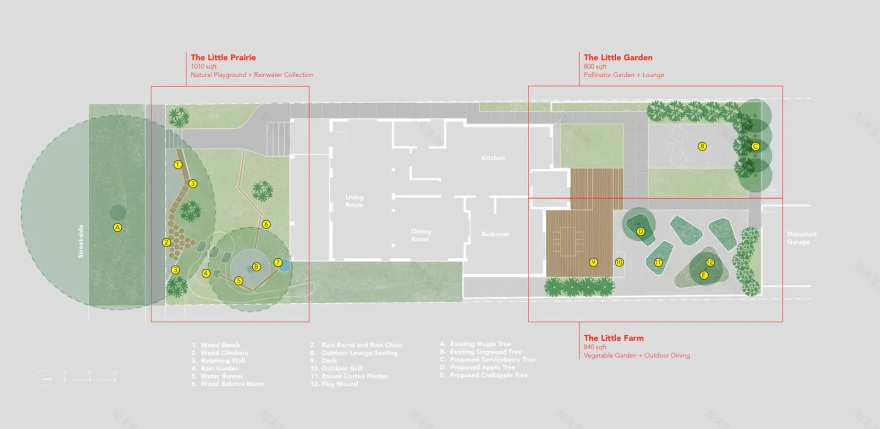
▲在紧凑的用地尺度内,同时实现自然游戏、雨洪管理、传粉生境营造、园艺活动、户外学习与社区聚集等多重功能。Achieve natural play, stormwater management, pollinator habitats, gardening, learning and community gatherings—all within a compact site.©Ping Design LLC

▲三处花园区域各司其职,却共同指向同一目标——为儿童创造富有吸引力的游戏与自然学习体验。The three garden zones serve distinct functions but share a common goal: creating engaging play and nature-learning experiences for children.©Left and Bottom Right: Round Three Photography; Top Right: Britton Jones

▲木材取自因病害被移除的树木,挡土墙则由当地教堂回收再利用的铜板构成。Wood is sourced from trees removed due to disease, while the retaining wall is constructed from copper panels repurposed from a local church.©Diagram and Graphic: Ping Design LLC; Photo on the right: Round Three Photography

▲长椅邀请邻里与朋友驻足交流,营造出社区共享的聚集场所。The benches invite neighbors and friends to pause and connect, creating a gathering place for the community.©Round Three Photography

▲雨链将雨水引入储水桶,用于储存并供儿童玩耍;雨水花园则收集来自邻居屋顶的径流,实现就地滞蓄。A rain chain channels water into a rain barrel, storing it for play. A rain garden capture runoff from the neighbor’s roof, retaining water on site.©Ping Design LLC
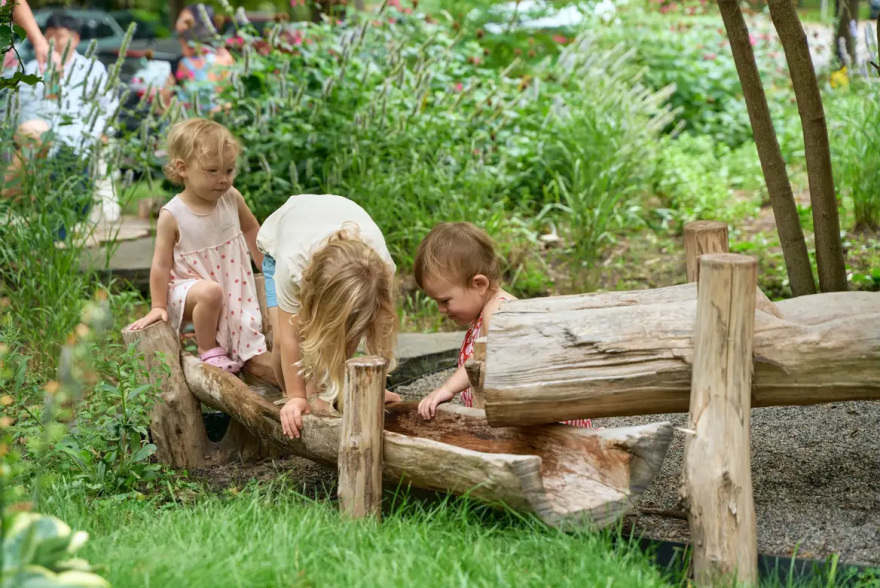
▲降雨结束后,储存的雨水沿水渠缓缓流动,形成沉浸式、可互动的自然游戏体验。After a rain event, stored rainwater flows through runnels, offering an immersive and interactive play experience.©Round Three Photography

▲前院的植物配置彰显了明尼苏达州的本土草原生态,通过引入可食性物种,构建多样且复合功能的景观。The front yard planting palette celebrates the native Minnesota prairie, featuring edible species to create a diverse and multifunctional landscape.©Image on the left: Round Three Photography; Diagram on the right: Ping Design LLC

▲本土植物在四季中呈现出鲜明的色彩与质感变化,同时全年为野生动物提供庇护与食源。The native planting showcases each season with distinct colors and textures, while providing shelter and sustenance for wildlife year-round.©Left: Round Three Photography; Middle and right: Ping Design LLC

▲项目为社区儿童设计了一系列户外课程,内容涵盖雨水管理、本土植物以及树木的生命周期。A series of outdoor classes has been designed for neighborhood kids, focusing on stormwater management, native species, and the life cycle of trees.©Left and bottom right: Lori Nyberg; Others: Ping Design LLC
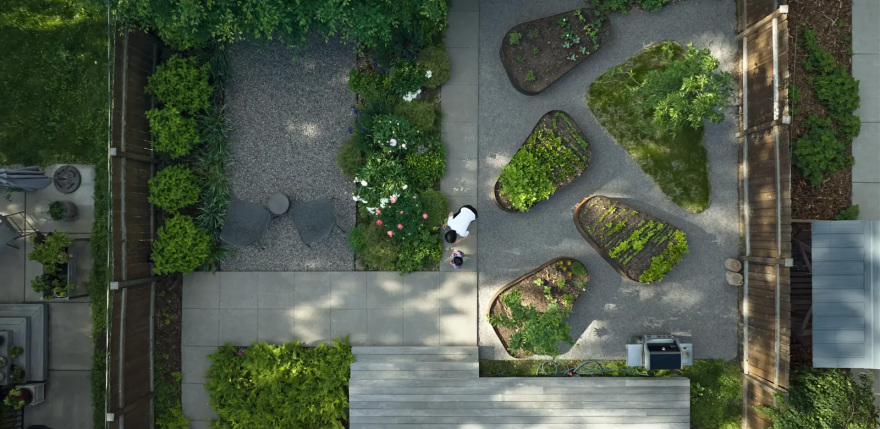
▲后院被打造为适合家庭聚会、户外用餐、游戏与共同园艺体验的多功能空间。The backyard is designed as a space for family gatherings, outdoor dining, play, and shared gardening experiences.©Round Three Photography

▲受艺术家Richard Serra作品的启发,花园种植池采用不规则耐候钢模块设计,将园艺活动转化为艺术体验。Inspired by Richard Serra’s art, the garden planters are designed as irregular Corten steel modules, transforming gardening into art.©Post-design Condition: Round Three Photography; Pre-design Condition: Ping Design LLC

▲“小农场”中的轮作种植与“小花园”的季相变化,使场地不断演化,并在季末呈现出自然、繁茂的景观状态。The space evolves with plant rotations in the Little Farm and seasonal changes in the Little Garden, culminating in a wild, lush end-of-season display.©Round Three Photography

▲高架种植池内种植源自东亚的香草与叶菜类植物,呼应家庭的文化根源与饮食传统。The raised planters feature herbs and leafy greens of East Asian origin, reflecting the family’s cultural roots and culinary traditions.©Ping Design LLC

▲不规则形态的种植池为儿童创造了躲藏、玩石头及沉浸于菜园探索的趣味空间。Irregularly shaped planters create spaces for kids to hide, play with rocks, and immerse themselves in the vegetable gardens.©Round Three Photography

▲覆雪后的景观凸显大胆的几何形态与独特的空间形式,在漫长的冬季中持续激发好奇心与视觉兴趣。This snow-covered landscape highlights bold geometry and unique forms, sparking curiosity and visual interest throughout the long winter months.©Ping Design LLC
PROJECT NARRATIVE
The Little Project is a full site redesign in St. Paul for a family with a young child. Having navigated the isolation of the pandemic, the family aims to create an outdoor space where neighborhood kids can gather to play, engage directly with the earth and nature, and learn about sustainability from an early age.
To bring these goals to life on a compact urban lot, the site is divided into three distinct zones: The Little Prairie, The Little Garden, and The Little Farm.
The Little Prairie, located in the front yard, is public-facing and designed for lower maintenance. It functions as both a natural playground and a nature-learning classroom, featuring native plants, repurposed materials, and stormwater management solutions. The Little Garden, tucked away in the backyard, offers an immersive lounge area surrounded by a pollinator garden. The Little Farm, also in the backyard, includes raised beds for edible gardening and an outdoor dining space. This area allows family members to garden together and enjoy fresh, homegrown produce.
Active Street Edge with Repurposed Material
In the Little Prairie, the existing grade change was utilized to design an active street edge with benches and climbing features, inviting neighbors to socialize while watching children play. The benches, steppers, runnels and balance beams were crafted from trees that were removed due to disease. In total, three trees were repurposed: two black locusts and one bur oak. To honor their origins, the trees’ locations have been engraved onto their surfaces.
The retaining walls are constructed from two perforated copper panels salvaged from a local church in downtown Minneapolis. All repurposed materials were locally sourced and fabricated within a 24 - mile radius of the project site.
Rainwater Harvesting
A swale and rain garden have been designed to capture stormwater runoff from the neighboring property, keeping water away from the basement. A rain chain replaces the traditional downspout, directing water into a rain barrel. After a rain event, the collected water is released into a series of water runnels, offering children the opportunity to play and engage with the natural water cycle.
Planting Palette: Celebrates Edibility and Pollinator Habitat
The planting palette of The Little Prairie is inspired by the native Minnesota prairie, carefully selected to maximize seasonality and support wildlife habitats, while also highlighting the edible qualities of many native species as tea plants or herbs.
In The Little Garden, adaptive species that attract pollinators were chosen to support the pollination of the edible plants in The Little Farm.
The irregular shaped Corten steel raised beds in the Little Farm are rotated in various directions, presenting vegetables as living art and creating playful spaces for children to engage in hide-and-seek. The food grown includes annual leafy greens and herbs from East Asian origins, reflecting the family’s roots and diet.
Magnet for Community Gathering
The Little Project has transformed into a gathering spot for the community. During the summer months, a series of outdoor learning classes are offered to neighborhood children, covering topics like stormwater management, native species, and the life cycles of trees. These hands-on experiences not only deepen the kids’ connection to nature but also help bring the community closer together.
南京喵熊网络科技有限公司 苏ICP备18050492号-4知末 © 2018—2020 . All photos and trademark graphics are copyrighted by their owners.增值电信业务经营许可证(ICP)苏B2-20201444 苏公网安备 32011302321234号
苏公网安备 32011302321234号客服
消息
收藏
下载
最近