

创作上传
VIP
收藏下载
登录 | 注册有礼
查看完整案例

收藏

下载

分享

翻译
Architects:District Development Unit
Area:100m²
Year:2023
Lead Architects:Joshau Bolchover (Director), Jersey Poon (Project Lead)
Category:Houses
Project Team:Minjmaa Enkhbat
Implementation Partner:Energy Efficient Design Build LLC (Dulguun Batkhishig and Erdembileg Nemekhbaatar)
Community Partner:Gerhub NGO (Uurtsaikh Sangi, Temuulen Enkhbat)
City:Ulaanbaatar
Country:Mongolia

Text description provided by the architects. Over 840,000 people live in the ger districts of Ulaanbaatar, Mongolia, sprawling districts of gers (traditional felt tents) and self-built houses. Most households use an average of 4.1 tons of coal or coke briquettes for heating each winter as temperatures drop below -30°C. There is no sewage or sanitation infrastructure: 95% of residents use pit latrines, 1% have access to piped water, and air pollution is extremely debilitating to health.


The Ger Plug-In 3.0 is an energy-efficient house that provides the ger with everything it does not have – access to sanitation, water, and electric heating. The Plug-In is designed to be built incrementally, residents can connect their existing ger to an infrastructural core at a low price, then extend with living and sleeping spaces when they have the financial capacity to do so.


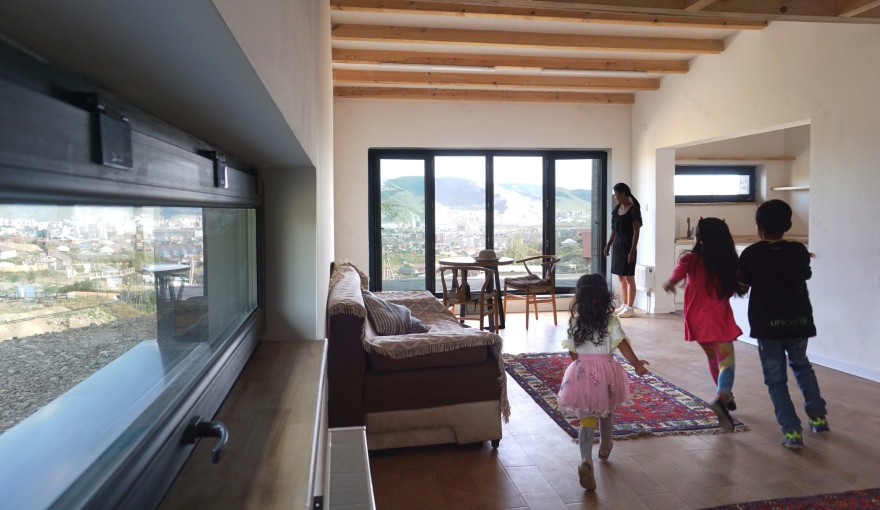
The project addresses challenges facing Mongolians as they transition from a traditional nomadic to a sedentary urban lifestyle. The Plug-in 3.0 harnesses the advantages of the ger as an affordable house and upgrades its performance to reduce energy use by 36% compared to local regulations and reduce CO2 emissions by 7.8 tons compared to a self-built house using coal.


Ger Plug-In 3.0 is the result of over 10 years of research and prototyping to design a scalable housing product that qualifies for green mortgages offered by national banks. The aim is to initiate a new building block for the city that maintains the cultural significance of the ger but can pivot development towards a more sustainable future.

Project gallery


南京喵熊网络科技有限公司 苏ICP备18050492号-4知末 © 2018—2020 . All photos and trademark graphics are copyrighted by their owners.增值电信业务经营许可证(ICP)苏B2-20201444 苏公网安备 32011302321234号
苏公网安备 32011302321234号客服
消息
收藏
下载
最近